
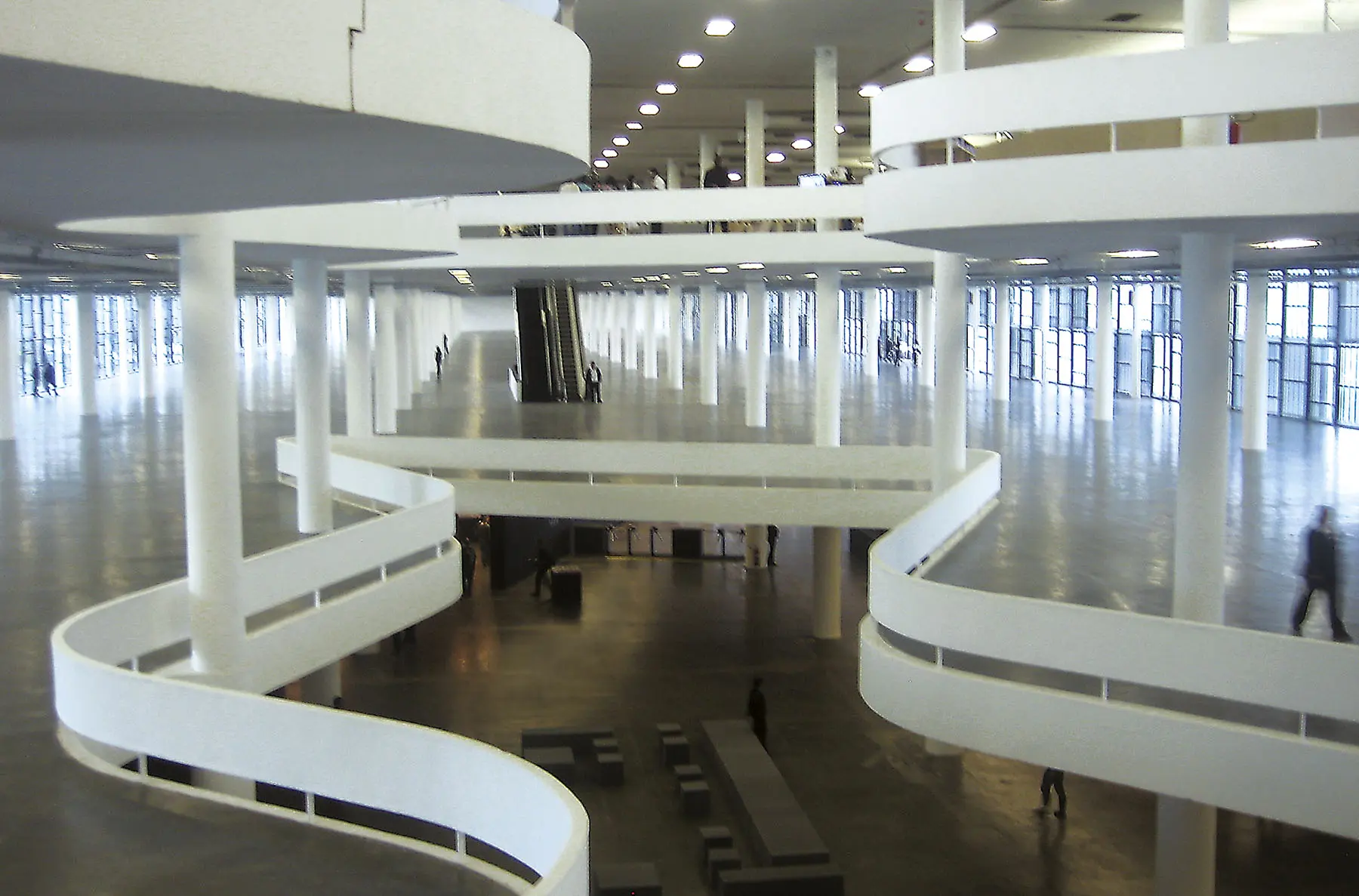
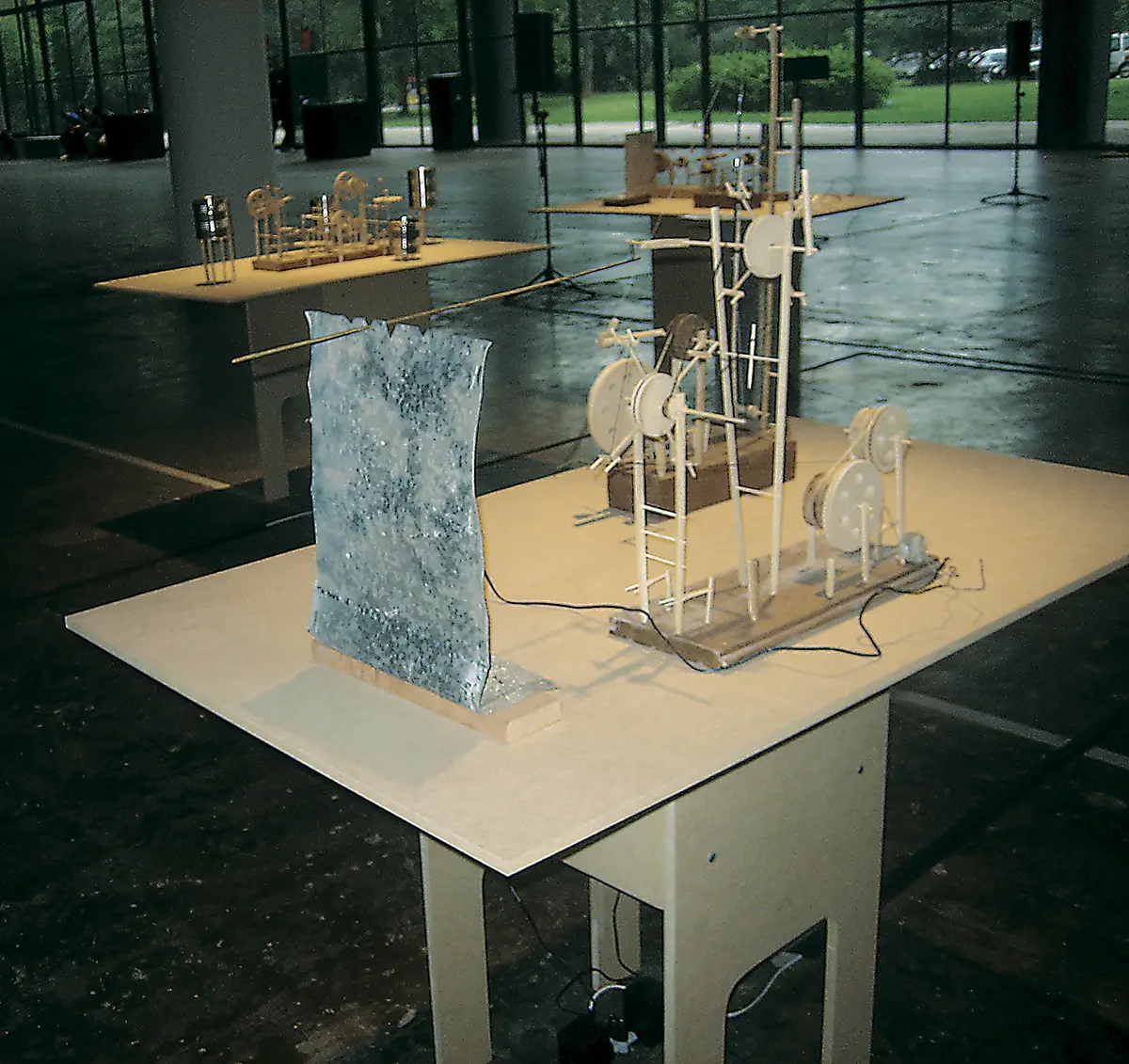
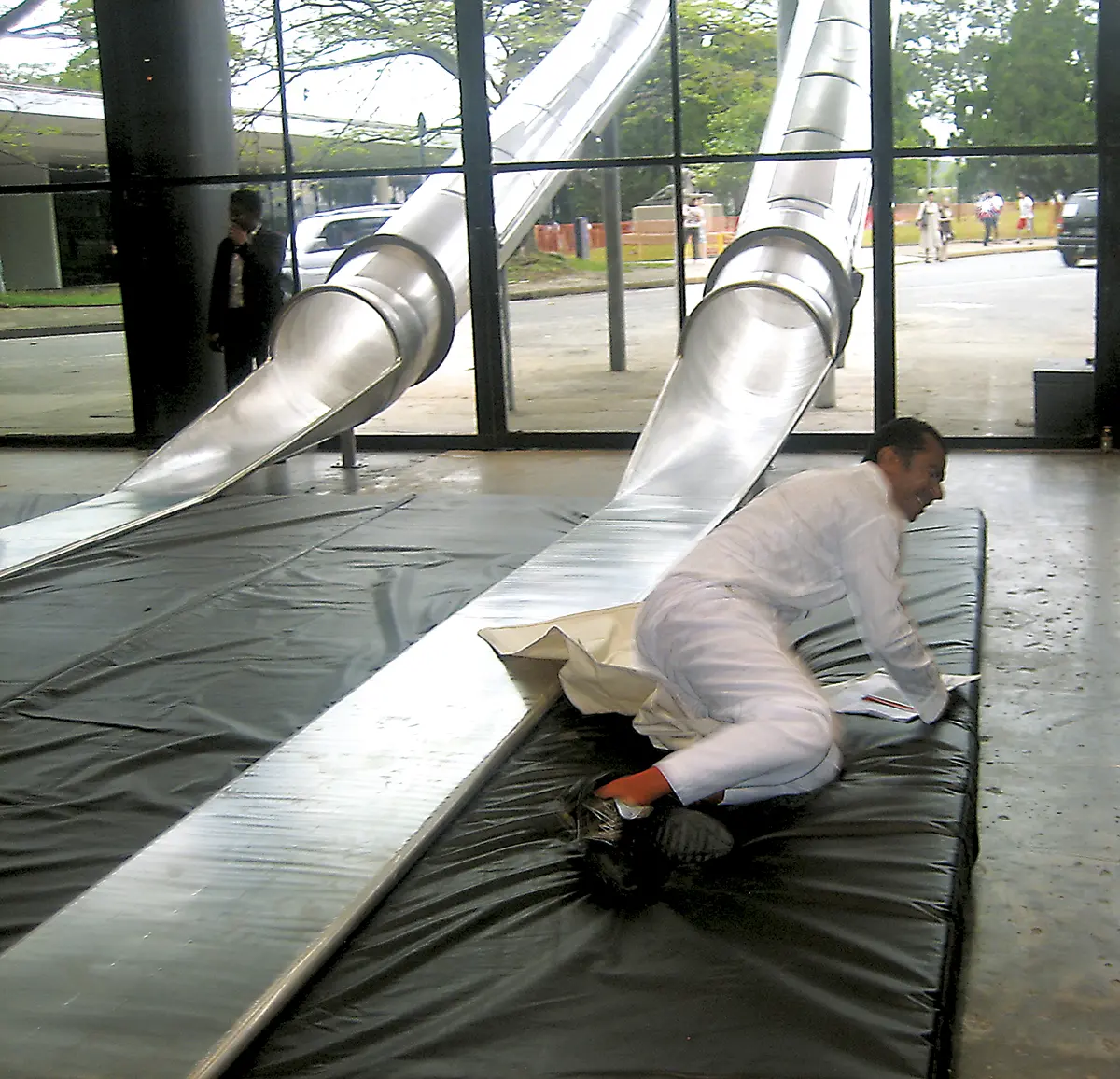
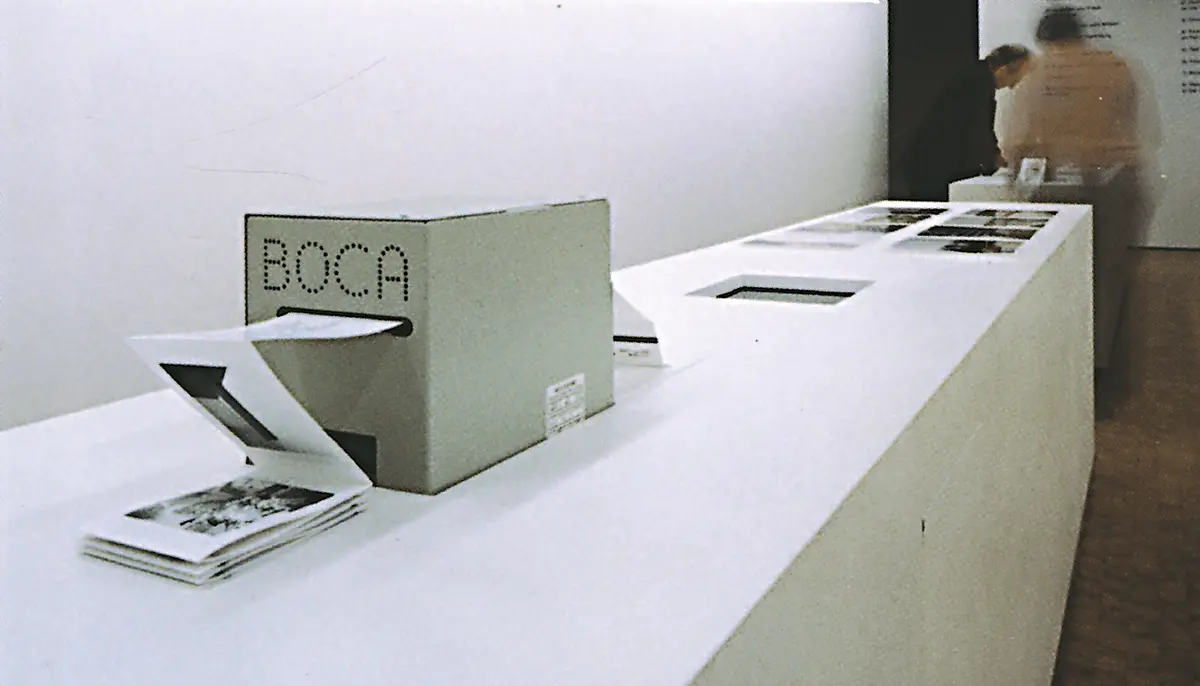
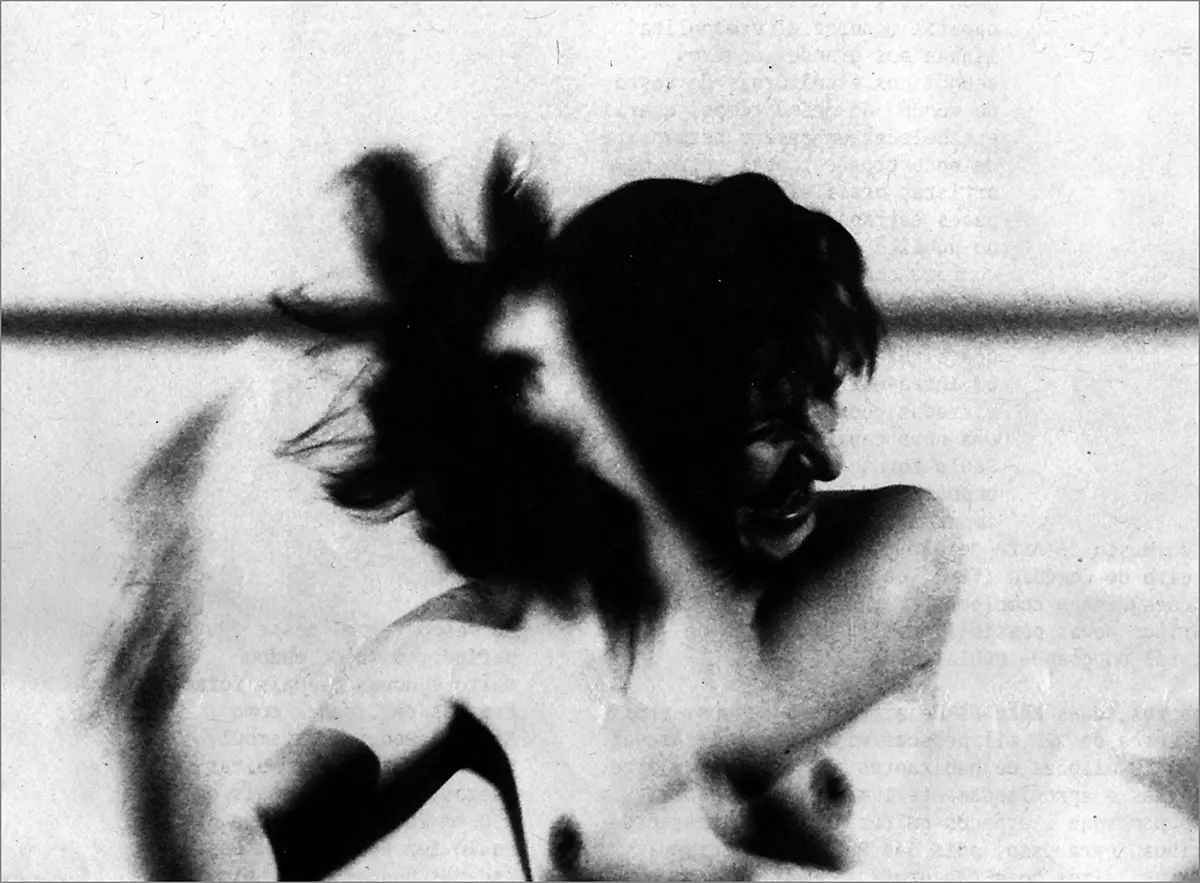
The 8th São Paulo Biennial was announced as the biennial of emptiness, yet it presented 36 artists and 14 performances, as well as concerts, a video lounge, conferences, and interviews. Its promotion as a biennial of emptiness added to the economic crisis resulted in the absence at the inauguration of many international collectors, curators, and intellectuals who were there in previous years.
Editor’s note
The proposal for the twenty-eighth São Paulo Biennial is an art exhibition without works of art: a contradiction in terms that has, in my view, a clearly baroque bent, inasmuch as the Baroque period arose precisely on contradictions in meaning. Such contradictions, however, were not built by chance; on the contrary, they were grounded on the fact that we, the inhabitants of the New World, had no place in history and had no place in the Bible—that we were not, in sum, part of the very past we had just bloodily, fierily adopted.
Now, three centuries later, the issue is different: it is no longer about the past but the future. At this point, we have no place in the future of the nineteenth century’s national projects, a memory that seems to survive only in our passports and visas. We have no place either in the future of Progress, which threatens to destroy us with its promise of systematic exploitation of nature for man’s benefit.
Now, as in the Baroque, we continue on our feet even as we realize we no longer fit in them. And, again as in the Baroque, all we can do is play with contradiction and the opportunities it affords for the creation of alternative pathways.
To propose an art exhibition without works of art is to erect a baroque contradiction. Yet, in its very baroque character, this contradiction is not a general or abstract one but rather absolutely specific, since such a vacuum would make no sense outside the space in which it is proposed: the pavilion designed by Oscar Niemeyer for the São Paulo Biennial in 1957. With this space, Ivo Mesquita’s idea brings into our present a building that was created at a time when the future was still possible.
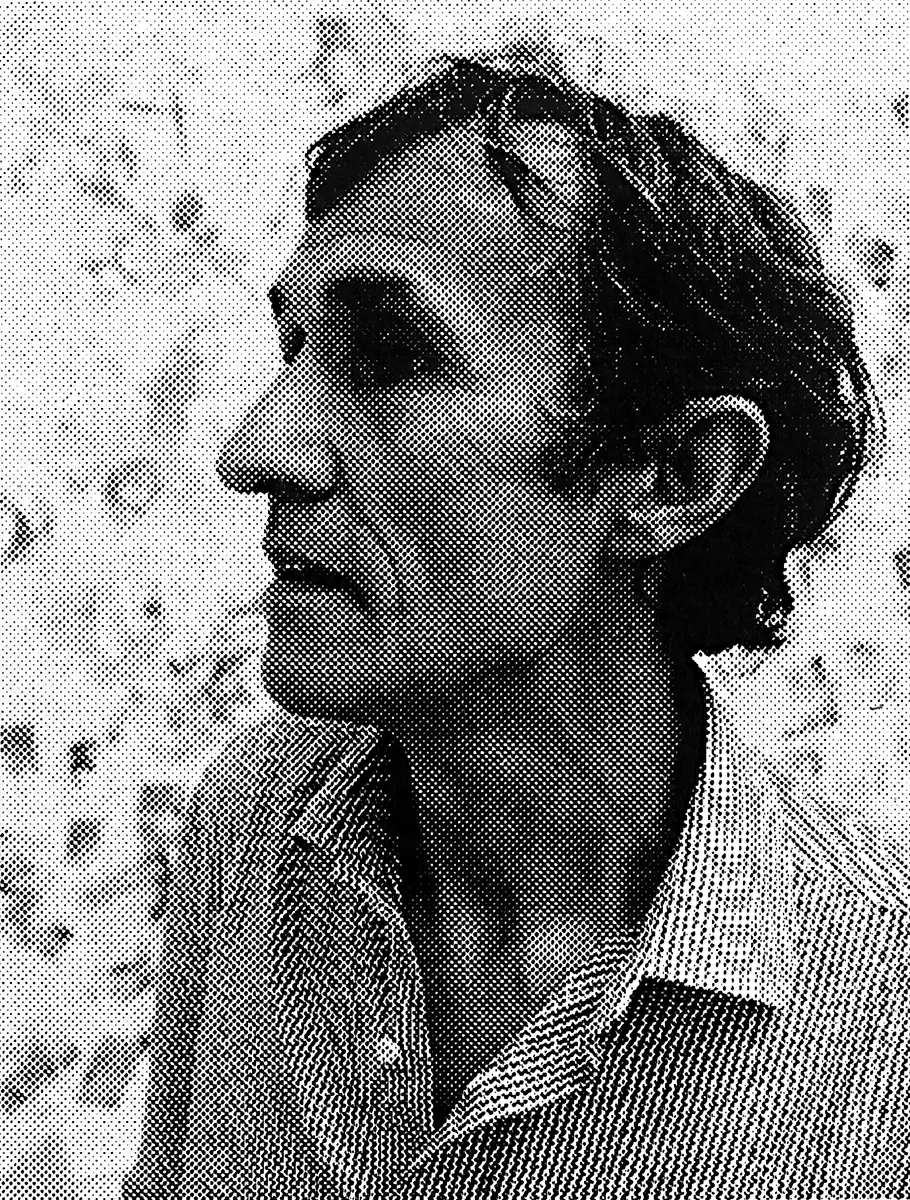
I went to the Pinacotheca in early August to interview Mesquita.
Julia Buenaventura: The biennials were born as mechanisms to display the latest developments from different countries—their future, progressive proposals—since countries, as national projects, went hand in hand with the notion of progress. Given this, how does one do an empty biennial? How is it related to the forsaking of progress and, in consequence, of national projects?
Ivo Mesquita: Well, there are two issues there. First, the issue of what is national, what is a nationality, one that can be seen in a biennial exhibition. We tried to erase this in a process that actually began a long time ago: not organizing the Biennial in terms of national delegations even if the selection of works by country was still retained. At this point, the selection by country has also officially ended, which has transformed the very organization of the event.
It never occurred to us to think in terms of national representations because in this day and age, nationality doesn’t seem to reside within geographic or geopolitical borders but, on the contrary, on certain nuances of identity such as language. For instance, Brazil belongs alongside Portugal, Mozambique, and Angola in a Lusophone community, in the same way, that there very clearly is a Hispanic-American community or in the same way that there is an Ibero-American community, which we all form together: Portugal, Spain, and Latin America. So, I think that it is more in that sense that you see and perceive communities. In fact, at the very moment the European Community was established, it exploited the fragmentation of Eastern Europe, especially Yugoslavia, into small identities, while Basques, Catalans, Scots, and Galicians clamored for their identity.
JB: They join together, and at the same time peculiarities appear.
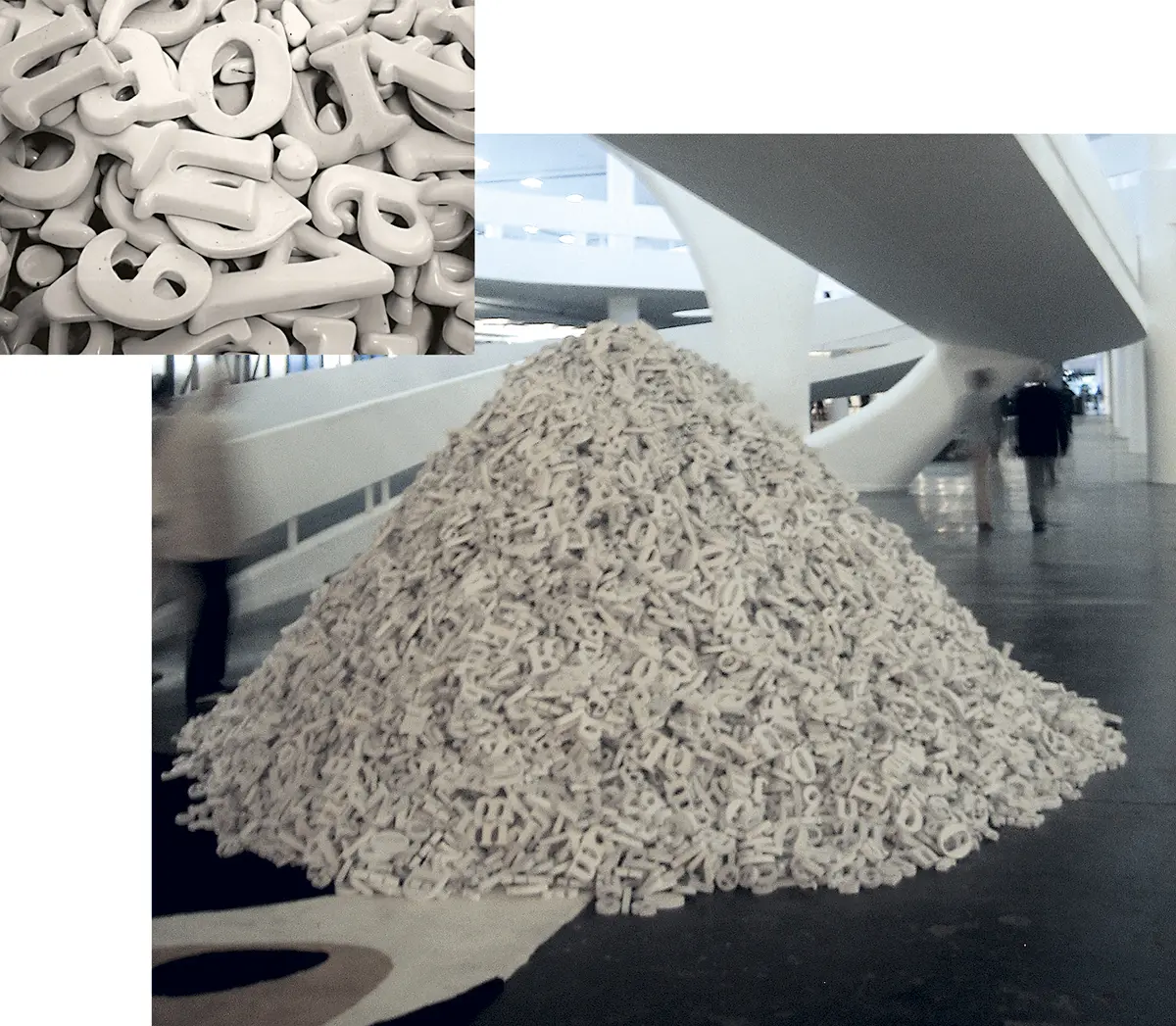
IM: Exactly, so I think that identity resides precisely in the territory of language and not in that of nationalities. Also, something else needs to be clarified: emptiness is not a topic; it is an experience. It is to have an entire floor of the pavilion empty, something that is possible because the Biennial is strongly identified with that pavilion. It has been held there since 1957, so the idea is to create the possibility for people to see the building in an empty state—something they have never seen. Yet, is this to propose a non-experience? Or is it an experience of opposition to the baroque? No, never—what happens is rather the opposite, a baroque experience.
JB: Also, it is on the second floor, and it is as if it were absolutely tensed between the history of the Biennial and what is happening on the first floor, below, which is the social space: the public, the city.
IM: Yes, sure, it is under pressure. But at the same time, this second floor works as a buffer to protect the impact.
JB: Like a spring?
IM: No, like a pillow. That floor is a space for a break, a caesura, between substance and space: energy generated between the social space and the space organized by reason.
JB: By reason... how?
IM: Because the third floor is a library, an archive.
JB: I see that third floor as a reorganization of the past, which is what we need to do now, at the dawn of the twenty-first century.
IM: It is that, also. But to do that, you need a library and an archive. So let’s say that those are instruments, the tools of reason, in a sense. It is not a product of pure energy.
JB: In fact, the library will have to be arranged alphabetically, or by date.
IM: That’s right, there is an order; it is a town square below, where there is a certain disorder.
JB: How does it work, the tension between the library upstairs and the first floor?
IM: It is just that: downstairs is a space for the production of new air.
JB: And how does this take place in a building designed by Oscar Niemeyer?
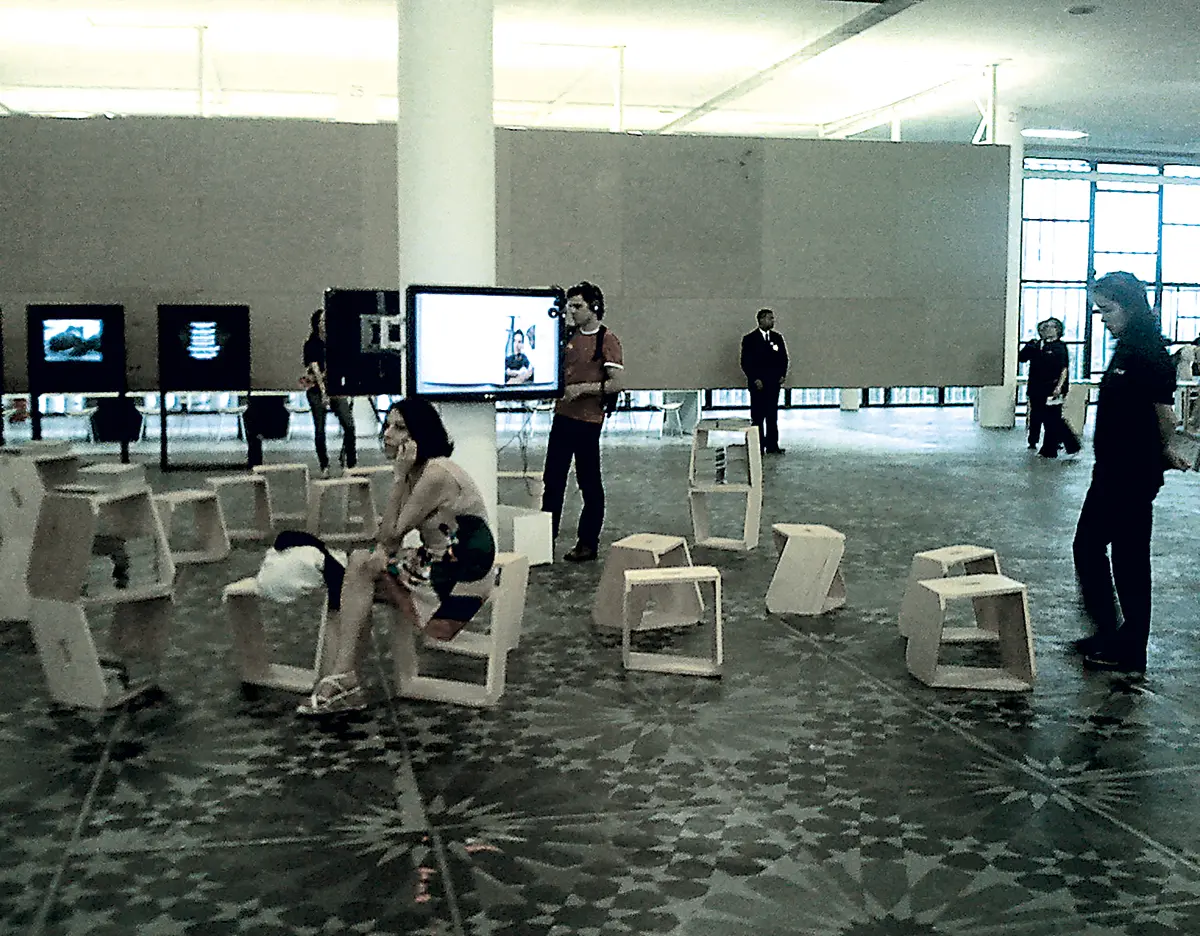
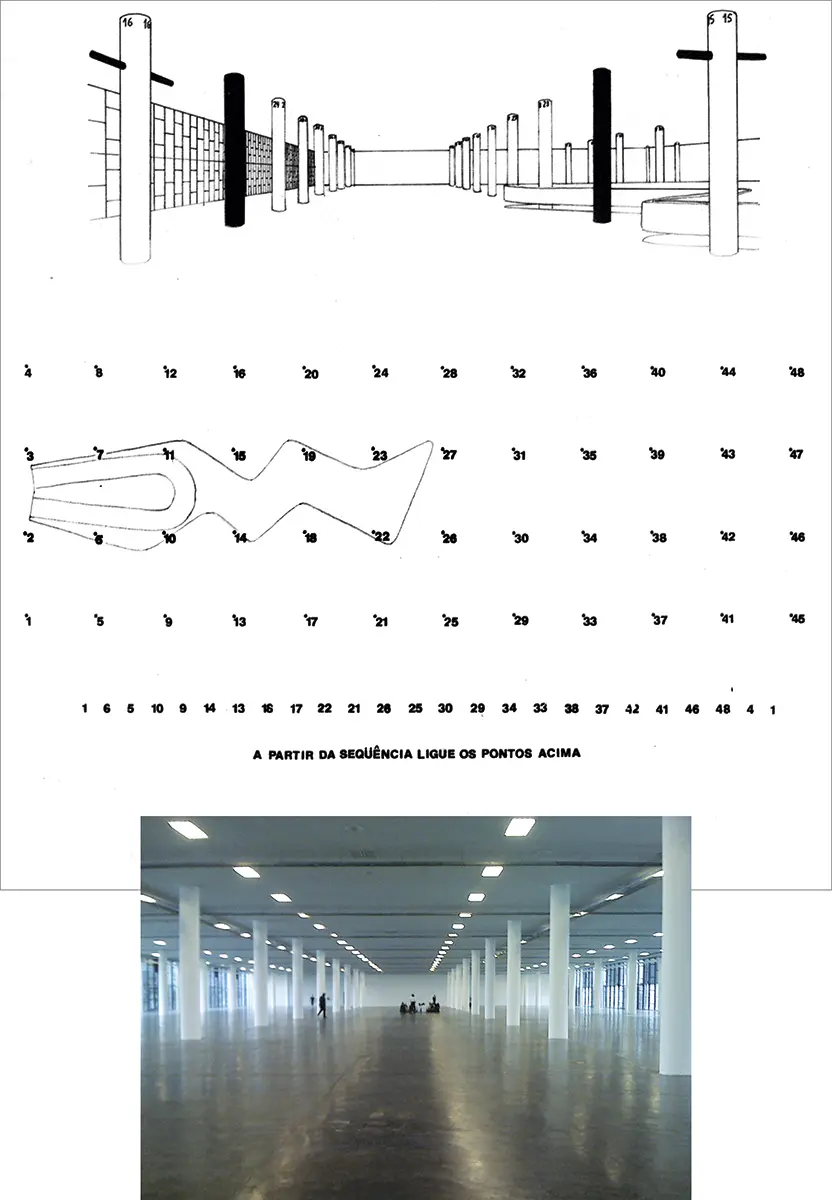
IM: By transforming the building not physically but in the use of the space, which has always been an exhibition space; we are proposing to use it as a town square, a meeting point. We are proposing to leave it empty. We are proposing architecture for the third floor that doesn’t follow the structure dictated by the building’s columns because the long pavilion is all marked by columns that are highly ordered, which breaks up the exhibition space. There are no walls; we are not building any walls. So the proposal comes as an actualization of the building.
JB: I see the proposal this way: Marx said that revolutions were the locomotives of history, and Benjamin answered that perhaps it wasn’t so—that maybe, on the contrary, a revolution was the moment when humanity, traveling on that train, reached for the emergency brakes. I see your proposal as an opportunity to stop in the middle of this absurd race, to stop and think things over, to reorganize things.
IM: Yes, but it is not to reorganize, it is not a matter of reorganizing; the idea is to stop—yes, to pause, to suspend, to create a hiatus in a process that is already over fifty years long, in the sense of thinking of what we have done so far—but it is, let’s say, looking back into the past, because we feel the need in the present to change something that is moving forward. It is not a question, then, of reorganizing but of bringing forth that memory so that it can activate the present because that memory is alive; it is not dead. The past isn’t something dead. So, the idea of one of these platforms is to produce a dialogue between the São Paulo Biennial and the Brazilian art world. We begin with things that are very personal, and the idea is to create an oral history, a history or memories that are activating the present.
JB: How is that done?
IM: Every Thursday, we invite two people who come and answer questions sent to them beforehand—their recollections of the São Paulo Biennial and what they expect of the Biennial in the future—to make a kind of cartography of symptoms and constants perceived in the Brazilian art world in relation to the Biennial.
JB: Now, going back to the issue of the baroque, how is that experience of emptiness that you propose an experience that is baroque but not irrational?
IM: Why am I interested in the baroque? The baroque comes from our traditions; the origin of our visual culture and of our literary culture is in the Baroque period. That was the first time we had a language, the first time we found the possibility of representing and thinking about ourselves. What is interesting is that, despite the whole of modernity, I believe that the baroque is not form. I am more with Severo Sarduy in believing that it is a way of thinking, of strategies for thinking that allow us, for instance, to never entirely reveal ourselves. To always leave escape options open—folds to turn around and go back. This is how the rhetoric of our conversations and our literature is built; it is not formed, as the gringos would have it, who label it, for instance, as decorative. No, this is a way of thinking. Are we difficult because of that? Yes, we are difficult, and one has to have a taste to appreciate it.
JB: And you have to have the patience to read it.
IM: For everything, and that is our matrix. So when I proposed to leave an empty space, I was going against the grain of our tradition of always filling the eye. I had to leave behind those biases and propose a new experience. But I do believe that the reasoning that drives the proposal is baroque.
JB: And how do you see the issue of Latin America, from cartographies and from your work in the 1990s to now?
IM: Well, I continue to work with cartography as a strategy. However, the idea of the Latin American in the 90s, which I defended in a text, has changed a bit indeed. At the time, I didn’t think it was pertinent to accept the notion of the Latin American that was being imposed on us by the North, on the basis of the literary and visual arts boom. This is not to say that we are not baroque, that we are not surrealists; yes, we are indeed, but we are also much more, and we can be other things. It seemed to me that it was the moment to reject that possibility, of a final, totalizing category of the Latin American, which is how Anglo-Saxon minds operate.
JB: Making us homogeneous?
IM: Yes, because they want to homogenize, to create drawers to put people in. Because that way they dominate the world: they think they know and understand. No. Although being from Latin America has given me great professional opportunities (it has given me jobs and things like that), I have rejected that for a long time. Now, today, I think somewhat differently. I believe the debate has become more sophisticated and differences are perceived.
We are Latin American; we come from the same matrix: Judeo-Christian, the Baroque, Iberian colonization, sailors, traders. Although there are fundamental differences between Portugal and Spain, we do have a common matrix. But they also now perceive that we are not all the same: we have the same matrix but that doesn’t make us identical. We share things but we also like to share our differences, our peculiarities. I think that today this is perceived. When I was teaching at Bard College, I began to realize that it was possible to read and group certain works based on their sharing of a sensibility, in the use of the different languages in literature and in painting, not only by identity. Yes, we are a third way; we are a between. But that doesn’t say it all. It doesn’t solve the issue of how nationality is articulated in Xul Solar, in Pedro Nel Gómez, in Di Cavalcanti, in Tarsila, or in the Mexicans.
JB: Things that are shared, but not devoid of uniqueness.
IM: Yes, but my point is that only we are entitled to say this because this is our work. Also, you can’t coordinate everything, because it is moving. So it might be that one hundred years into the future, we will no longer have the same landscape; we might have something else. I think it is possible to say that we share a sensibility, that we have points and projects and utopias, that we share very similar identities and politics. For example, we are all republics founded in the nineteenth century, based on the same French Revolution principles, with the tradition of Catholicism, with Latin languages; we have the tradition of the Enlightenment, of the “Century of Light,” and the beginnings of the encyclopedia. These are all bases for how our pedagogy is organized, the common themes, and there are other things that we surely shared before the arrival of the colonizers.
JB: Finally, the roles of the curator and the historian: the curator proposes and the historian organizes. Is this Biennial a historical proposal or a curatorial one? Is it a visual proposal? Or is it a mix?
IM: The curators in this Biennial have a strong hand in the selection of artists, the use of spaces, the kind of works included, how everything is arranged, the publications, the website, everything. But there is also something of the historian, bringing the Biennial’s archive as a base, as a reference, like a veneer for the development of a reflection about possible future changes in this organization, in this model, given the context of some two hundred biennials. So, you need an archive: that is a historian’s strategy.
JB: And how do you view the fact that there are around two hundred biennials in the world?
IM: Well, I think it is a fashion, something that will pass at a point not too far into the future. We shall see which ones survive. It is a whole topic of its own. We also talked about the voracity of the biennial, the voracity that pervades the cultural world, where everything has to be a lot: a lot of representation is produced, reproduced, multiplied. Yes, we need to think about where we are going, to see which biennials will be the most effective, whether the strategy is still useful, and how long will it be useful. I think that the survivors will be those biennials that have a more critical view of artistic production and are not simply organizing reams and reams of work. It seems to me that they need to impress a more reflective work to differentiate themselves from fairs, which are also interesting and good, and which are also different from museums.
JB: You point out the fact of super-production and super-reproduction of all kinds of things and objects—something that goes, paradoxically, hand-in-hand with insecurity regarding the future. I see this as profoundly connected with this Biennial’s proposal.
IM: Yes, we need to think about what we can expect in the future, at least on the part of the Biennial: what services it can offer, what role it can play in the context of the city, the country, the continent, and the world.
Photos: León Birbragher.
JULIA BUENAVENTURA
Latin American Art History Professor. She graduated in Literature and obtained a Master’s Degree in the History and Theory of Art and Architecture from Universidad Nacional de Colombia.