
Hydroponic, Lucrecia Troncoso’s first one-woman exhibition in New York provided a sampling of the artist’s varied and technically demanding imbrications of nature and culture. At Garson Baker Fine Art in Chelsea from May 21 to June 22, the show highlighted two recent techniques devised by the Argentina-born, San Francisco-based artist: elaborate floral patterns cut and glued together from paper towels, and forest landscapes painted using hierba mate tea. Troncoso’s art teases out natural forms through the laborious combination of unexpected materials. Like the horticultural process to which the title refers, in which plants are fed water through a soil-less, artificial means, natural and manmade forms are placed in symbiotic and mutually generative relationships.
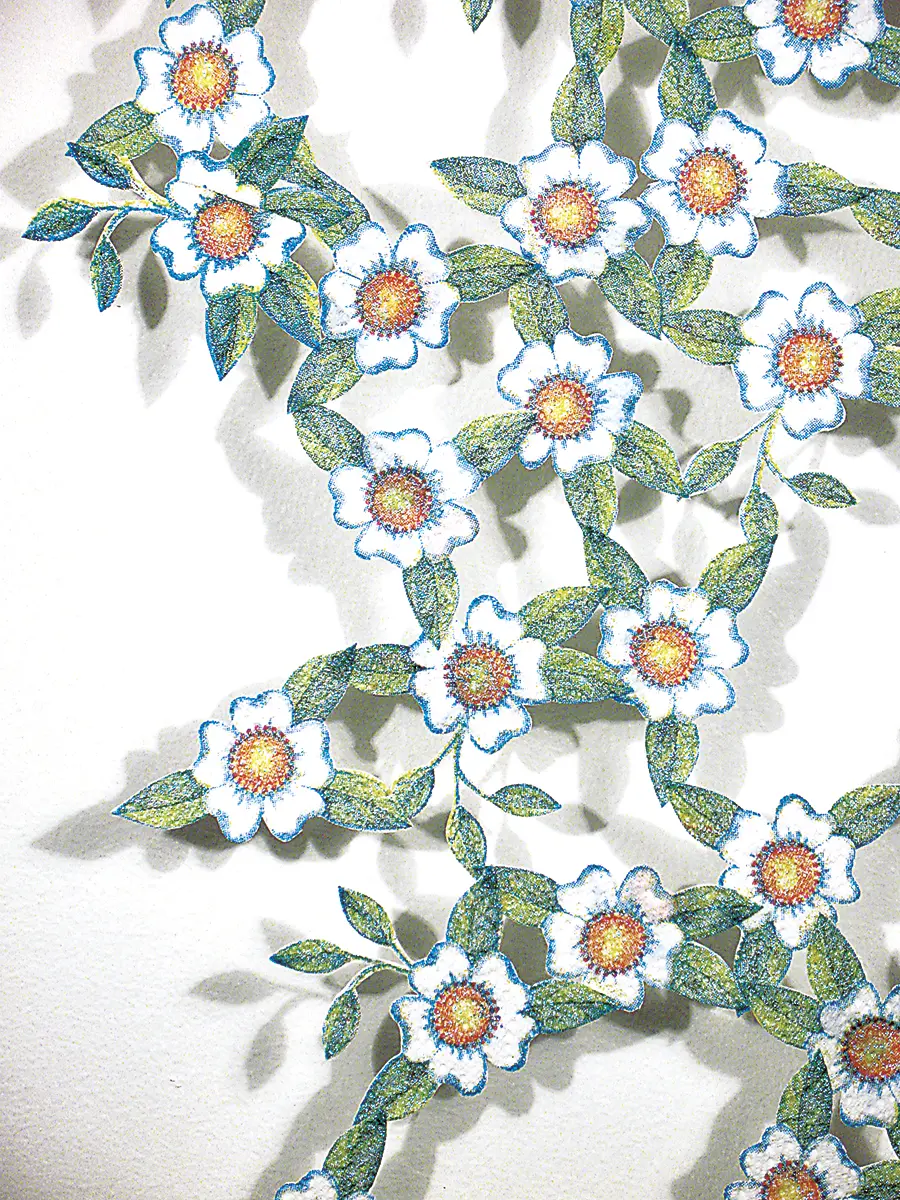
For Not Cut Out for This (2008), Troncoso cut around preexisting floral patterns on paper towels as guides for where to cut, isolating this ordinarily inconspicuous type of decoration. After gluing together a 90 x 100-inch tapestry of different flowers and branches, the artist applied sparkling nail polish to stiffen the paper and leave a sickly sheen. The work is pinned to the wall so that it hangs one or two inches in front, yielding intricate patterns of shadows. The title references this unexpected use of a normally functional medium while also hinting at the unappealing drudgery of the medium’s original purpose. Untitled (A Forest) (2007) is the largest of a group of works using the novel painterly idiom of hierba mate tea. The quintessentially Argentine drink is applied to unprimed canvas in a surprising range of different tonalities of greenish-brown. The resulting undulating monochrome landscape has depth suggested via darkening shades of mate; trees in the farthest background are darkest. Mate, whether tea or ink, is activated, as it were, via hot water; here this transformed natural material is used to represent its original state—but in the manner of a meticulous imagining of “unpopulated landscape” that renders it utterly cultural. At first glance, it seems that Troncoso has conjured a reproduction of the industrially produced images she gleans from paper towels, transposing this “low” visual culture into a high art context. But on a further glance, curious forms can be found lurking among and beneath the trees. Shadowy areas underneath the landscape, presumably representations of soil or root systems, also suggest countries or continents (one in the center particularly resembles South America).
Troncoso’s disparate offerings might be united by the notion of the stain. As the scourge of the ideal modern kitchen, the stain is mopped up by the paper towel, yet no ink drawing or painting is possible without a basic act of staining a substrate with a colored liquid. In This Will Be You and Me (2008), a nine-minute video accompanying the exhibition, black ink slowly saturates one of the artist’s paper towel cut-outs from the edges in. The ink swiftly turns the colored floral pattern black and opaque in a vanitas of “dying” flowers, while leaving room for a more optimistic reading. The stain appears as an operation: the very instance of contact between ink and support. Both mess and mark, spilling-forth and self-containment, the stain is recuperated by Troncoso to mediate between nature’s tendency toward excess and culture’s desire for regulation.
DANIEL R. QUILES