
Chin-tao
Wu: I told a friend from Tate Modern that you were coming to see
eight biennials in Asia. His first reaction is: is Daros going to collect Asian
art? What on earth does someone like you want to see all the biennials in a
crazy trip like this?
Hans-Michael Herzog: I think there’s one biennial missing, in Nanjing, China. I didn’t know about this one. This is an information trip for me, a part of it is of course, Latin American interest, because there is almost none of those triennials and biennials in Asia, which do not present Latin American artists. I even found in one of the biennials a work by a Cuban artist which I am supposed to buy. But my main purpose was to get a deeper and better understanding of what is going on in Asia, exhibition-wise, and of course, also to understand a little bit as far as possible in the short time, the background, the surroundings, the context in which each of the biennials tries to embed itself: who is being invited as the curator; what are the developments of these biennials like; do they gradually become better in any sense; is there a decline; is there a budget cut or political problems, etc. Censorship in China, of course, is very direct; you would not see anybody naked represented in China. But in Korea, you bump into bodies. This is also interesting to see. For example, here in Taipei, you have quite a certain amount of Eastern European artists, which is due to the choice of the curator, in another place, there were Venezuelans, in Gwangju, I think. It is interesting to see what is growing
everywhere, how people are taking care or not of their biennials.
C.W.: To start with some common grounds, as I will not see all the biennials you see, and I doubt who will, could you please say something about each of the biennials you have seen so far?
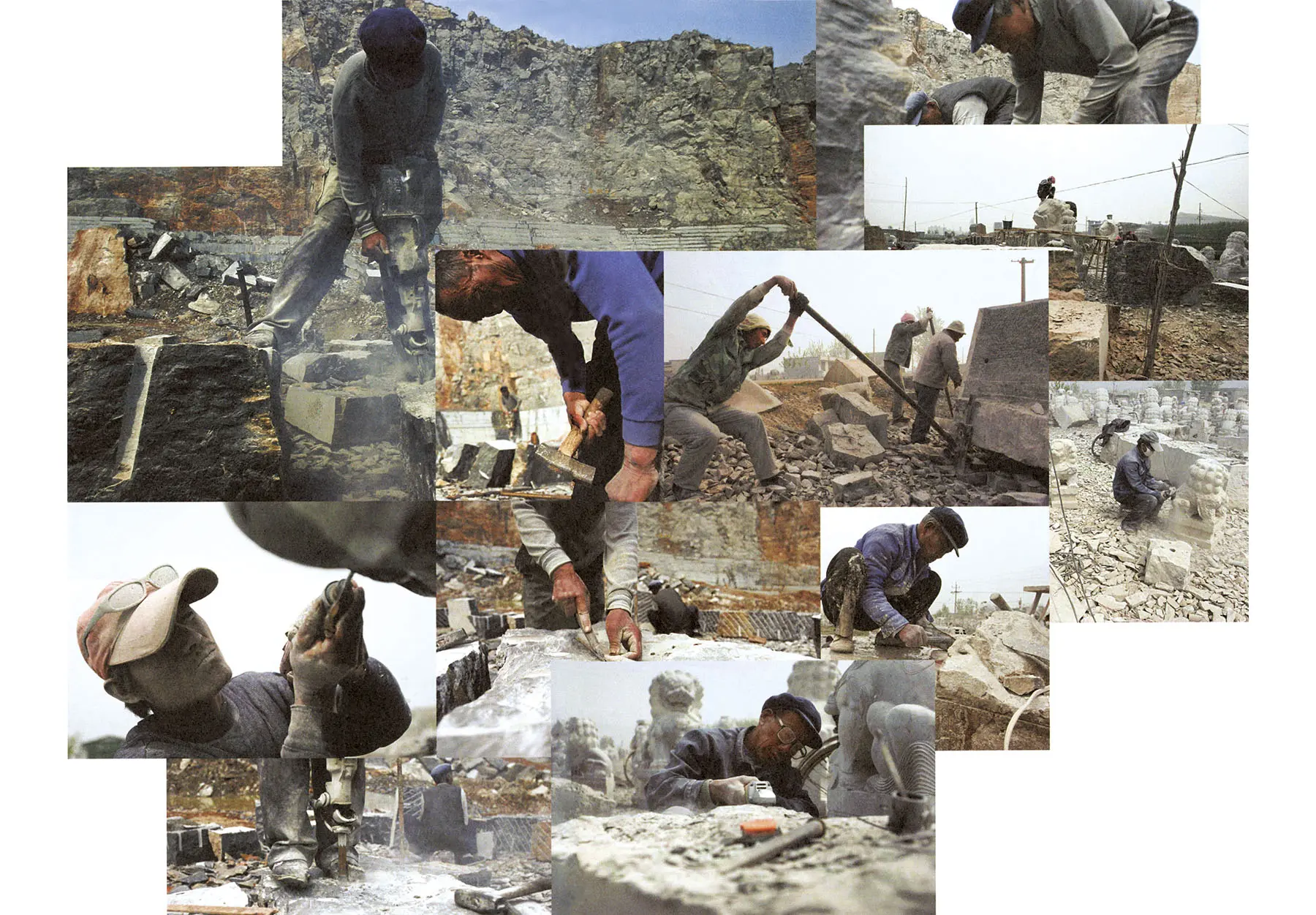
H.H. : Of course, there is a couple of things that most of those places have in common. But I will try to start with the way I did it. That means, Guangzhou in China will be the first (Farewell to Post-Colonialism, curated by Gao Shiming, Sarat Maharaj and Chang Tsong-zung). I’ve seen there an outstanding piece by Yang Fudong, a Chinese artist, is a beautiful and huge installation with videos about workers in a mine, cutting stones. It was very poetic and brutal at the same time, it combines a real social critique and political critique as well, with something that is just aesthetic and artistic. In the same context, I am so bored and fed up with all those politically correct commentaries on anything which try to reproduce a reality without putting into this reproduction any artistic value. This has been going on for years and years now, and this is what you will find in all of those biennials. I think artists should not be social workers. If you want to be a social worker, you have to become one; if you want to be a documentarist, then become a documentarist. But then go to school and find out how a documentary movie/film has to be made because this is a long school and it is quite difficult to learn and understand. What you are confronted with many times is what you call in French petitesse (6.20) ‘a little nothingness’, a smallish idea, which is blown up to a certain extent. To go back to Guangzhou, they had one venue which supposedly should be converted into a permanent museum, called Time Museum, which was a failure. Then they have this big venue at the Guangdong Museum of Arts, which was well organized, well arranged. At the entrance hall of the museum, you would find a huge installation by Barthélémy Toguo from Cameroun, a bricolage work as you have seen it a hundred times before, protesting against western oil exploitation in Africa. In Guangzhou they still, I would say, have not really found their identity, but they are in a certain way, so there is hope.
Shanghai I think is always the same situation (artistic director: Zhang Qing, curators: Julian Heynen and Henk Slager). Blown up, huge effects at the entrance of the museum, there’s a whole, steam locomotive, with a car behind, which is talking about, the deportation of the people during the time of Mao Zedong, when they had to go to the country and to serve there. This in itself could be a mighty instrument, but inside there’s a very playful, toyish installation, which is like a counterweight, taking out the power of the symbolic image of the huge locomotive. In Shanghai, you have all these spectacular installations, like one large room full of painted dinosaurs, presented by Yue Minjun.
C.W.: Three dimensional?
H.H. : They are made out of plastic material, so they are real so to speak. This would fit very well in a children’s park. This is something I find mostly in Shanghai, the oversize and dimension presentation of things, which do not attribute to any further understanding. You should not put a luna park into a museum. In China in general there is a huge misunderstanding in terms of what art could be and might be. Everybody is trying to take advantage, the art cake is becoming bigger still every day, so more and more people are attracted to it, like flies. So you have that Chinese fast express art train, which is over-populated, with a production which is extreme and enormous. Everything is possible, thinkable, and realizable. You see the result, which is fascinating, on the one hand, but on the other hand, there is, no content behind it, it’s just going for the market. For good reasons, the Shanghai people opened one day after the biennial, the new Shanghai Art Fair. I haven’t seen that; I didn’t have the time and I didn’t want to see it either. It’s amazing how tasteless and crude without any criteria art is being dealt with. The whole quarter where all those galleries are brought together, I cannot call what is being sold there ‘art’ anymore. Sorry, this is beyond my limit. One day China will stumble over this progress because there is no counter value in terms of criteria. That is interesting as a phenomenon, that permanent explosion which one day has to collapse. Chinese art today is quite frivolous.
C.W.: Chinese art or the biennials? Or both?
H.H. : Both, because it’s connected.
One thing I consider to be highly interesting in Shanghai was that they had a whole section, in between, about the urban development of the city of Shanghai. This is something quite revolutionary to put into a biennial, in order to make clear, maybe for the first time in public, what is happening now. Because in all of those Asian cities and places, urban development should be much more controlled. So this is an interesting first step and attempts to try to make clear that urban development does not have to be wild and uncontrolled.
C.W.: So your impression of Shanghai and Guangzhou is slightly different? Shanghai is a show-off?
H.H. : Yes, totally. Shanghai is really the place for showing off, for glamour, for social events, etc., which in Guangzhou is not the case.
There is something all over: you have those curators being invited and they give a proposal, like a theme for the show, which was very nice in Guangzhou, China, called the Farewell to Post-Colonialism. But the problem always is the artworks do not really correspond with the thesis and the themes the curators are claiming. So I think you really should give up those themes, and talk about them separately. It’s also a problem in all the biennials that different curators try to fish for a couple of artworks that might illustrate their ideas, but this is just the wrong way to start to present art. But this is another issue. What I want to say is that the reality of the artworks does not correspond at all with what is being claimed by the curators. What is being talked about in round tables afterward, during the inauguration process, has got nothing to do with what you see next step. That’s really quite a gap also for an audience that only wants to see artwork and have some explanation as a plus. I think it is impossible for any thinking human to bridge this gap between what the curators would love to express and what the artworks really express themselves.
In Busan (artistic director: Wonbang Kim, plus six international curators) you can see repetitions of what has been produced over the last fifty years. There is little nothingness all over. They had invited Bruce LaBruce, I think he is Canadian, showing erected penises. I was thinking my god, sorry, what is that, do we need this, in which sense? Of course, they wanted to provoke, but this provocation is not that interesting. The artists in Busan are like walking through art history and try to plunder, to get, and combine whatever. It’s meaningless and senseless. The only work I liked was a video by the Uruguayan artist Martin Sastre, as ever very fresh and witty, about North Korean dictator Kim Jong Il, showing his presumed obsession with Liz Taylor.
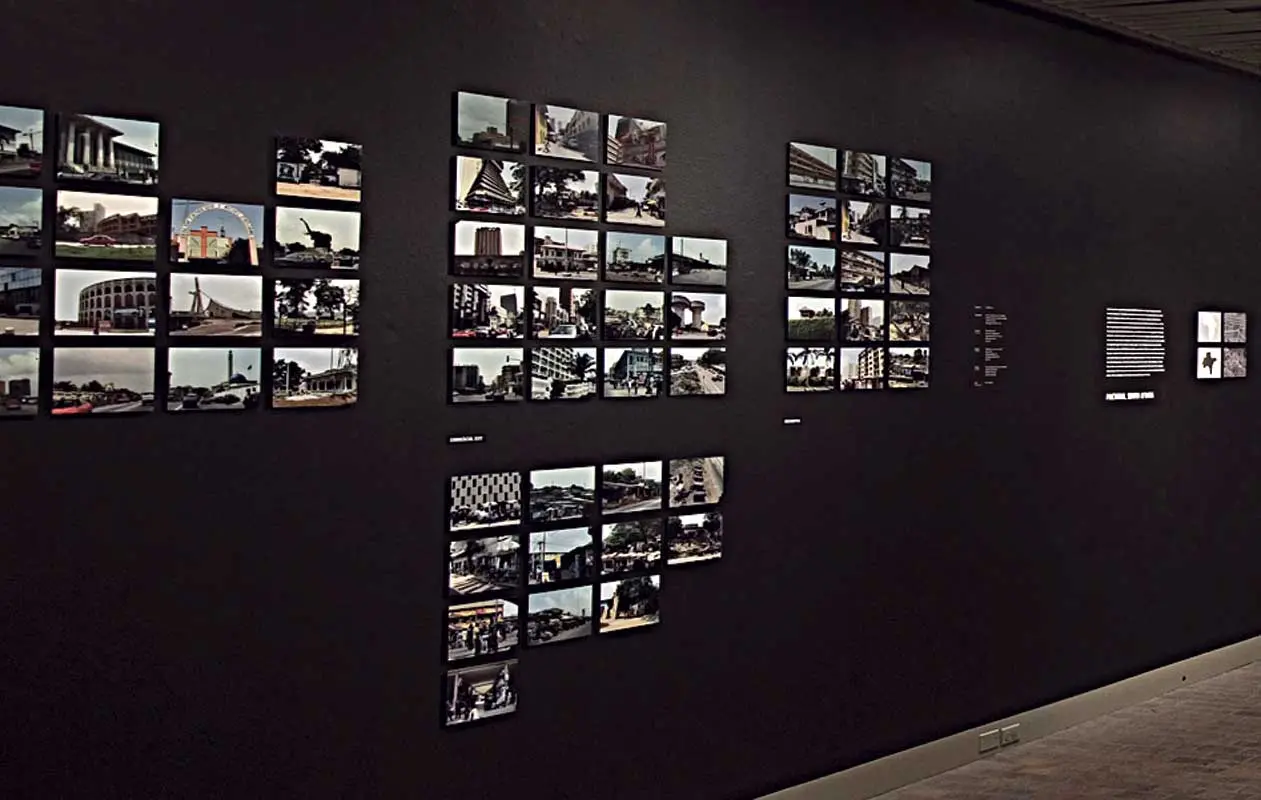
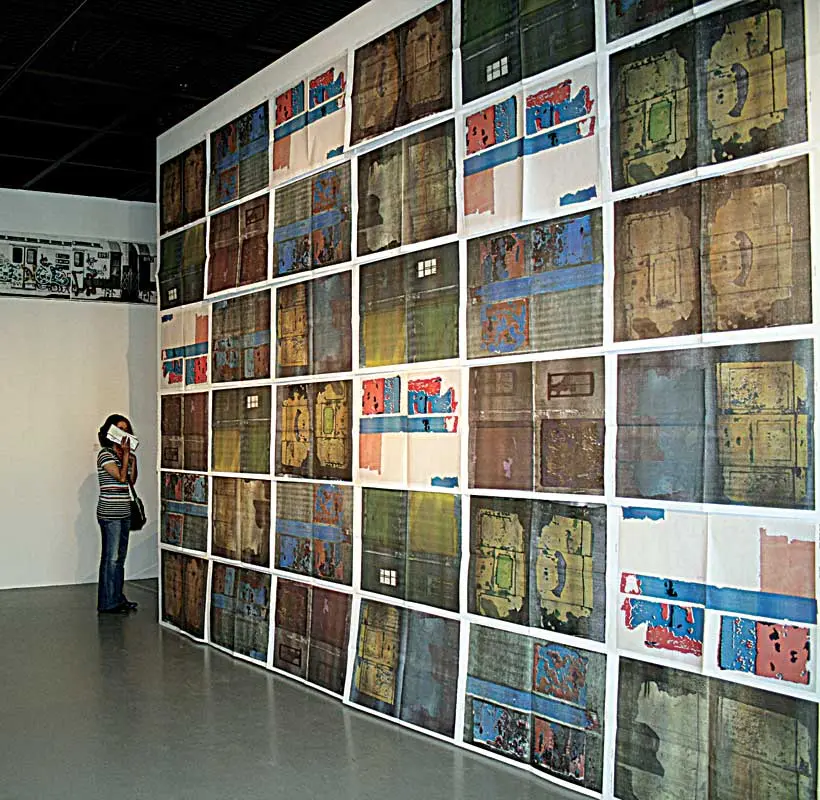
Then I went on to Gwangju, Korea (Annual Report, curated by Okwui Enwezor). Gwangju is well-organized, concentrated in a way. They had this time a very beautiful show about Gordon Matta-Clark, which I highly appreciate, very well done, really talking and explaining and showing his work to him. Already last time there was some historical section, which was well done. I like a couple of things in Gwangju and I think it is quite solid. It’s not revealing something totally new but could work. But it was not boring, from time to time, you would fall into some work which would at least draw your attention, like Isaac Julien’s video Western Union about African boat people arriving at Italian islands, or Cuban artist José Toirac, presenting Opus, a sound installation where you hear Fidel Castro’s voice shouting numbers that try to evoke great achievements. As well you can find interesting photography by Sungyoon Yang (Security Tour, featuring the South Korean paranoic fear of an atomic war with their northern neighbor, showing installations and architecture for civil protection) and the almost amusing photos of Colombian Narco Architecture by Luis Molina Pantin. Of course, again, you have that politically correct stuff like Francis Alys finally discovered the Palestinian conflict for himself. I have to take a note of David Adjaye, The African Cities. I too have, like five, six thousand nice positives at home which I’ve taken twenty, thirty years ago. If I make it a slide show, I could really show it in a biennial easily, and my material is even better than most of I see. Honestly. If Mr. Adjaye, is making small photos of African cities, then joining a little description of how many people living there, about the basic social conditions of every town, this is childish, infantile, because of no depth, no research, no nothing.
C.W.: Presented in a huge space…
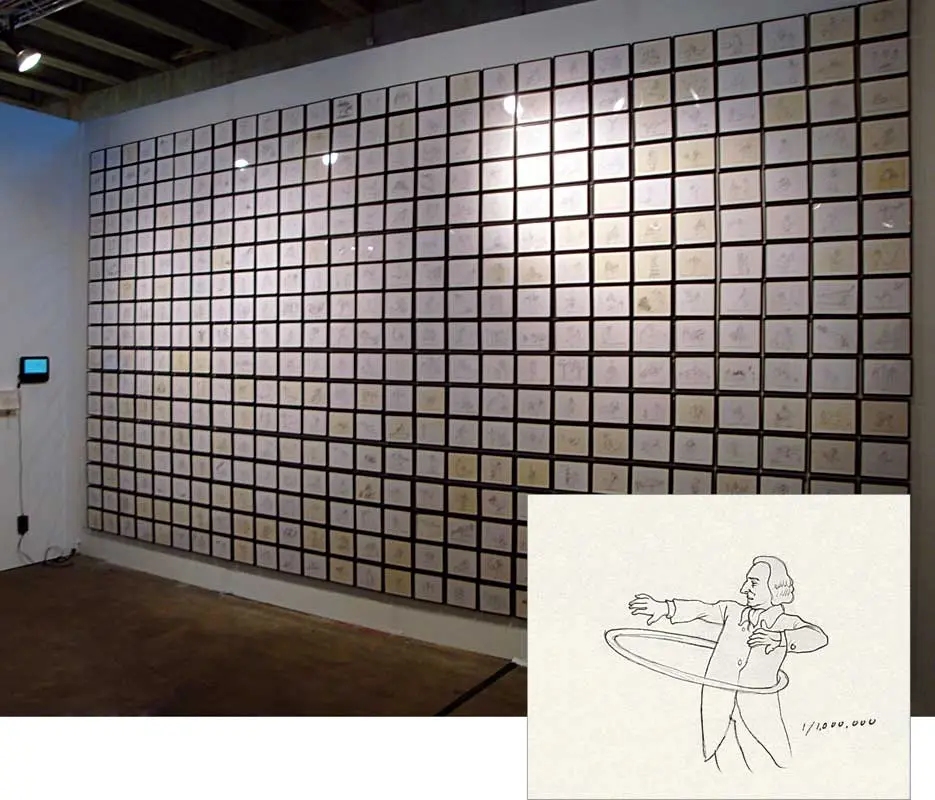
H.H. : I liked ‘The 5th Seoul International Art Media Biennale’ (Turn and Widen, artistic director: Ilho Park, plus four international curators, amongst them Raúl Zamudio), which of course in itself bears a problem. Because already the 2nd day after the opening, when I visited it, about six works did not work anymore. If you make a media biennial, you have to care every day for every single work. If media work isn’t taken care of, it does not exist. They had separated into three sections: light, communication, and time. My observation is, but this has nothing to do with Asia, as we have also seen here at the Contemporary Art Museum in Taipei, many works have stumbled over the technical sophistication, and they get trapped into the technique. Then what is resulting is kind of a funny, display, but the idea, if there was ever one, is getting lost. For example, in the work of Matsuo Takahiro (Phantasm) you take a red lantern in your hand, and then images of butterflies will appear on the wall... Good ideas not necessarily do need a huge room, with many lights, blinking and flickering things, as a visitor I am asking myself what is this effect made for? What does he or she want to convey to me? That’s a general problem with media art. Also one problem I noticed all over, but nothing to do with Asia is the soundtrack, the audio for all media art, and also for the videos and films is very badly produced and thought about. It’s almost always you have these space sounds. We used to have this for the last 50 years and there’s no change. So really art needs to reflect about - if it wants to come with a sound - with which kind of sound it wants to come. But what you listen to is just abominable and boring and no fantasy behind it. Every film producer is learning about sound because it’s essential. But these artists just think it’s enough to put something on the surface. But anyway, I think there have been some witty, funny, nice things you could laugh at times and then things that were merely aesthetic, and then you have also social implications. After all, quite an interesting mixture. Besides apparently inevitable artists like the Russian AES+F-Group (Last Riot) with their tasteless puerile fantasies and a weakish colorful projection of Anish Kapoor, you also can find highly inspiring artworks from Latinamerica: Carlos Amorales’ animation Useless Wonder (which almost looks Asian in its context), Rafael Lozano's Shadow Boxes with their interactive display, Miguel Angel Rios with a video featuring tops, Teresa Serrano’s suspense movie Boca de Tabla and Damián Ontiveros Ramírez’ animation with drawings A Million of Good Reasons.
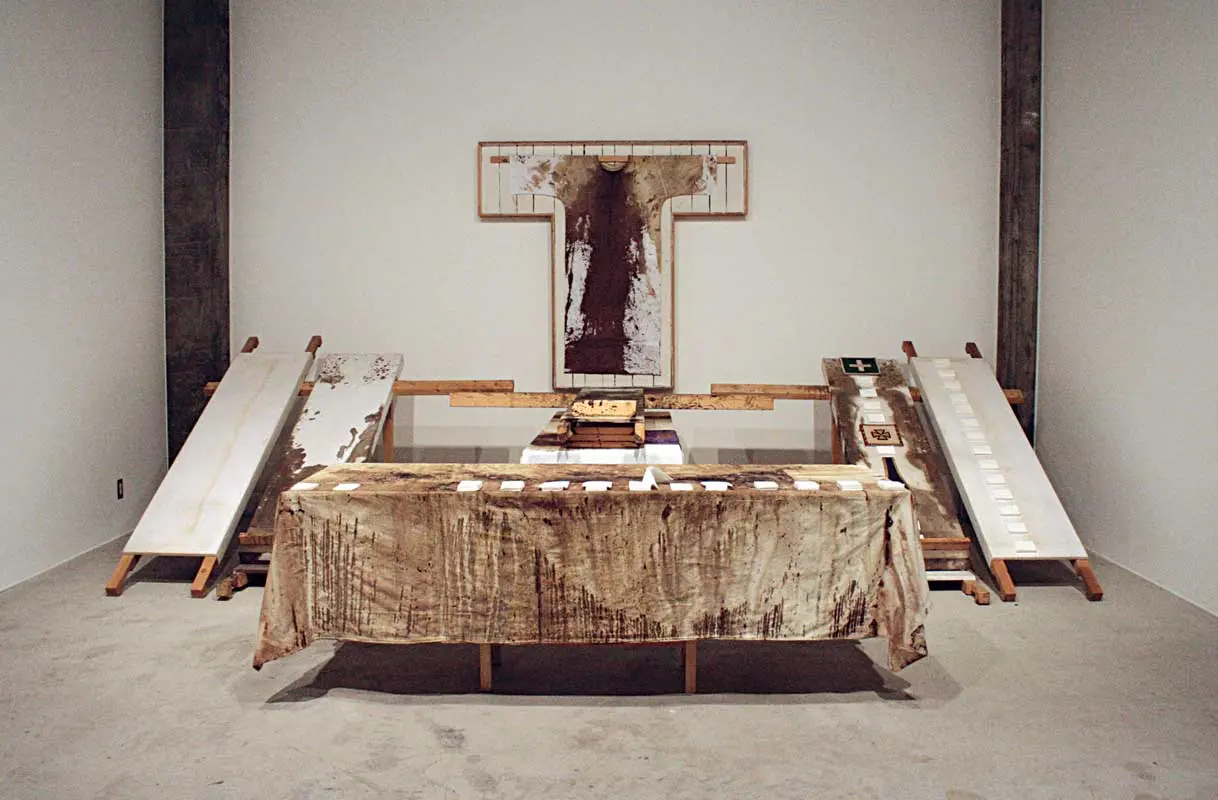
The Yokohama Triennale tried to be really international (Time Crevasse, artistic director: Mizusawa Tsumoto, plus five international curators). So they have a whole set, like fifteen, of good old names of European and US-American artists (Armleder, Fischli/Weiss, Kelley, Meese, Pistoletto, Prina, Abramovic, Barney, Gordon, R. Graham, Parreno, et. al.). But these big names are just represented by works that everybody knows already. The rest is very shallow. The only thing which was good in Yokohama was where they had a historical section, showing old films of the ’60s. Throughout the world you have the rediscovery of the ’60s, so I thought this was interesting to confront, in this case, the Japanese with their own history. Then you have, what we call, bricolage in French, just putting together things. That’s also something I cannot see anymore, like all the artists “discovering” the void... Also, personal fantasies, you find too much all over at Yokohama. I think artists should really learn to filter their personal things and to put them into another dimension. But those people can’t. Also in Yokohama, they had to have the shockers, like Hermann Nitsch, with the Orgien-Mysterien Theater, and Paul McCarthy with his Caribbean Pirate Party, on 6 or 8 screens. I am wondering why the curators put those things. I believe this is just in order to create a scandal for the press or something like that. Soothing in the context was an old work by Hanne Darboven (Schreibarbeit) and Elmgreen/Dragset’s work Catch me should I fall, a young boy standing on a 10 meters high springboard displayed in the huge hall of a shopping center in the city.
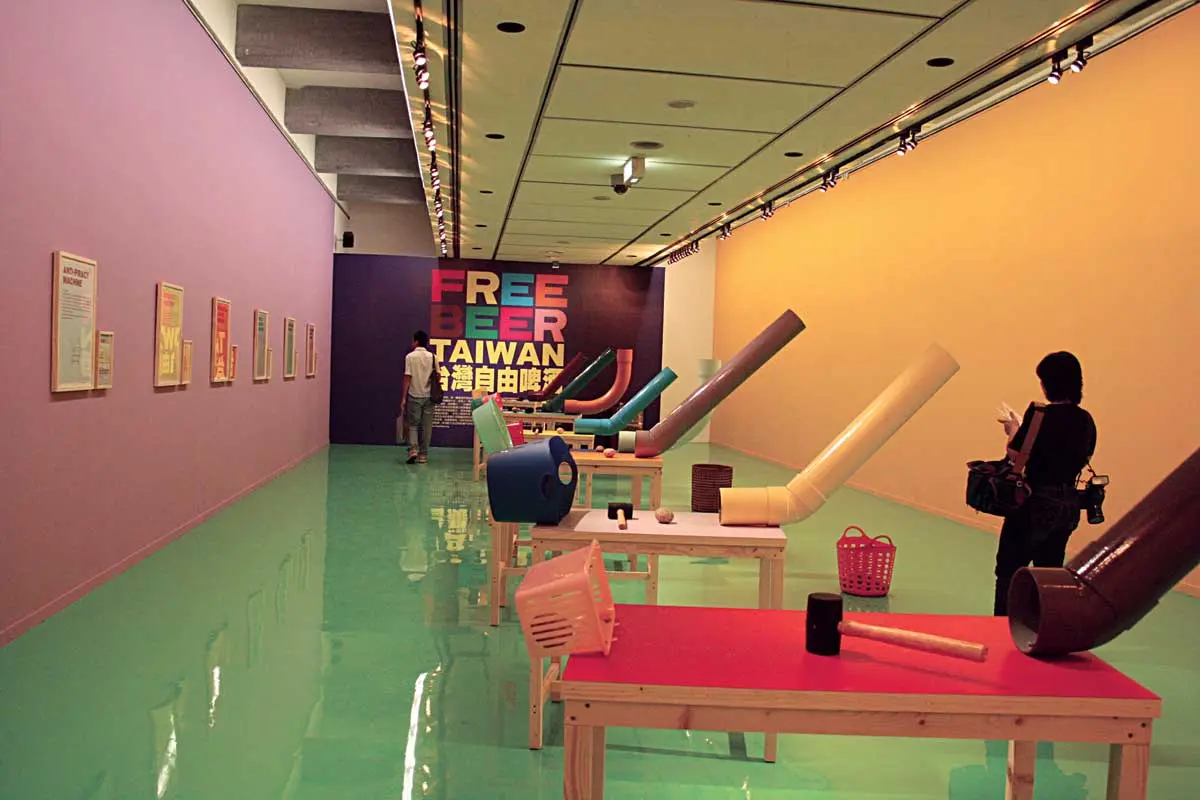
In Taipei (organized by the Taipei Fine Arts Museum, curators: Manray Hsu and Vasif Kortun) I liked some of the very political, direct statements, like the huge area which is giving comments on the G8 Summit, and what happened in Geneva, Italy and Vancouver. There were also very witty commentaries on the way, US businessmen behave, dealing with something, wanting to sell something. I’ve seen a couple of beautifully done, ironic commentaries questioning the existing system of marketing, of business, of power, and of behavior as well (Superflex and The Yes Men). Recently more and more artists really target that business world and try to reenact those very void attitudes of behavior, which have been produced all the time in the business world. I think it’s much more interesting than showing, for example, this was also in Taipei, a little green island on the river, which is ecological and should be preserved or whatever. This is something, sorry, for me he or she become an ecologist. Just transform it in another way, the issue about the green island. But if you look at those stereotyped games and cynical plays of people we are confronted with every day and every time, in all of our countries, this is much more revealing. If this is being ridiculed, that’s a much bigger step. I need the subversive element in political art to make it interesting, not reproduce one problem, one by one, and there we are. What I would love if art could escape from being trapped as a degenerate tool for moral correction. I think art should not be moral or moralist. Art should also be witty, tongue-in-cheek, playful. This is many times getting lost over that political correctness.
C.W.: So what do you think about the Singapore Biennial?
H.H. : The biennial was smaller than last time. I would say, like two-thirds. This is due to financial cuts; they had to suffer because when they opened for the first time it was congruent in time with the World Bank meeting. So the government would have given much more money. I think there is still a kind of censorship there. You don’t see it, I’ve not heard anything about it, but I have the feeling that the censorship is in people’s minds, the scissors in your head already before choosing the artworks. The Biennale’s title is called Wonder. Wonder is nice, but there’s no wonder happening. What you see is kind of, sometimes tasteless and always harmless movies or installations about nice landscapes, much photography, slightly altered landscapes, but nothing really cruel. At other venues, you can see artists really trying to deal with ecological disasters and those things. There’s nothing at all, in this biennial that could hurt. So it’s kind of plastified and infantile, not even very well done, in some cases I really could not understand the curatorial eye or position (curator: Fumio Nanjo). I remember one piece which shows state television from Kyrgyzstan, a Central Asian state, propagation films, showing scenes of daily lives at people’s homes, and showing how beautifully old people live together with young people. This is like Russian and Nazi propaganda films, but it’s done yesterday, and it’s not filtered, it’s not commented, just presented as an artwork. So I am asking myself what does that mean? That’s the whole issue about that biennial. Last time they had chosen some interesting spots, in terms of venues. And now it has diminished quite a lot. There’s one place which could be interesting, built by containers by some contemporary architect, but there’s no space. There’s very little work to be seen, like five or six, and they are redundant. So you really ask yourself what’s going on, what the criteria are, and where the voyage goes.
C.W.: What is the future of the Asian biennials?
H.H. : They will develop more and more. It’s good to have those biennials growing, because many times even if I am not content with what I see, it’s still a very important tool and instrument to bring people to art. Beautiful is that most of those venues are quite crowded by people, and there’s enormous interest and really people want to have the information and see and experience the art, and try to understand what art might be about. There are many evolutions and crossovers happening at the moment and much more, than in Europe. Europe is still considering itself to be at the top, but it is not anymore. Europeans have become lazy; they are not curious enough to investigate, most of them.
C.W.: Would you like to see a similar phenomenon of the Asian biennials in Latin American countries? They are already there?
H.H. : Biennials are things that have to develop with time and organically. So, therefore, you cannot push something. What’s being pushed, what’s coming up widely in all of Latin America is art fairs, which also in itself has a certain quality. People really visit there art fairs like in Bogota, Mexico, São Paulo, Buenos Aires, like they would visit the biennials. It’s the same kind of pilgrimage phenomenon The biennial of Porto Alegre, in the south of Brazil, is very good over the last 10 years, better than most what you find elsewhere. This is due to, a good selection of interesting curators over the years.
C.W.: So you have done all these 8 biennials. Was it worth the effort?
H.H. : Yeah. In retrospect, it was really worth the effort. It was not worth the effort in terms of finding a lot of new, to me, so far unknown artists or artworks, but it was very interesting to see and understand how each of the venues was preparing and realizing its biennial differently. Also, of course, to see the cultural differences. I had a strong feeling that there’s a lack of historical tradition, not in all places, but in many places, people don’t really care about their past. I am talking about their past, their traditions, and their cultures. I find this absolutely terrible because there’s a loss of identity. This was a strong feeling that overcame me in many different places. Another perception was, about the museums. I suppose museums had not existed in Asia in the 19th century, could it be the case? Europe has a century-long tradition, was really developing organically from private collections into the public, like the Opera before, when the Opera went public. This step has never been made in Asia, so I have this idea that you encounter in many Asian places the most beautiful hardware, in terms of good museums which are functioning very well on the highest standards. But the curators many times don’t have any idea how to fill it in, what to present. This is something which I found quite disturbing. I was asking myself about the history, the tradition of museums in Asia generally. It seems to me as if Asia would have adopted a scheme, more from the US than from Europe, without the criteria and the historical ideas about what to do with this container. The biennial idea has been developed first in Europe, and then it swept over years ago, now of course increasingly, because it’s also money factor, city marketing issues, etc. Everybody seems to know that it has to be done, but not to know the reason. Therefore all those foreign curators are being imported and invited. There’s no relation at all, between this very theoretical group of international curators, and the reality in situ, the place, the city, the country. They fly in and fly out; they give lectures about something which has no real relationship with the existing situation.
CHIN-TAO WU
Contemporary art and culture specialist. The author's most recent book, Privatizing Culture, published by Verso in 2002, has been translated into Turkish (2005), Portuguese (2006) and Spanish (2007). She currently works as Assistant Member of Research at the Sinica Academy in Taiwan.