
In pursuing a form of immersion art
that embraces representational, conceptual, abstract, and environmental arts,
Carla Herrera-Prats confronts dualities. Her commissioned show at Art in
General, Prep Material posed a challenge to our current politico-economic
hegemony. Known for her documentation style, Herrera-Prats’ meticulous study of
standardized testing and its dusty archives acted as an armature for an
engrossing exhibit.
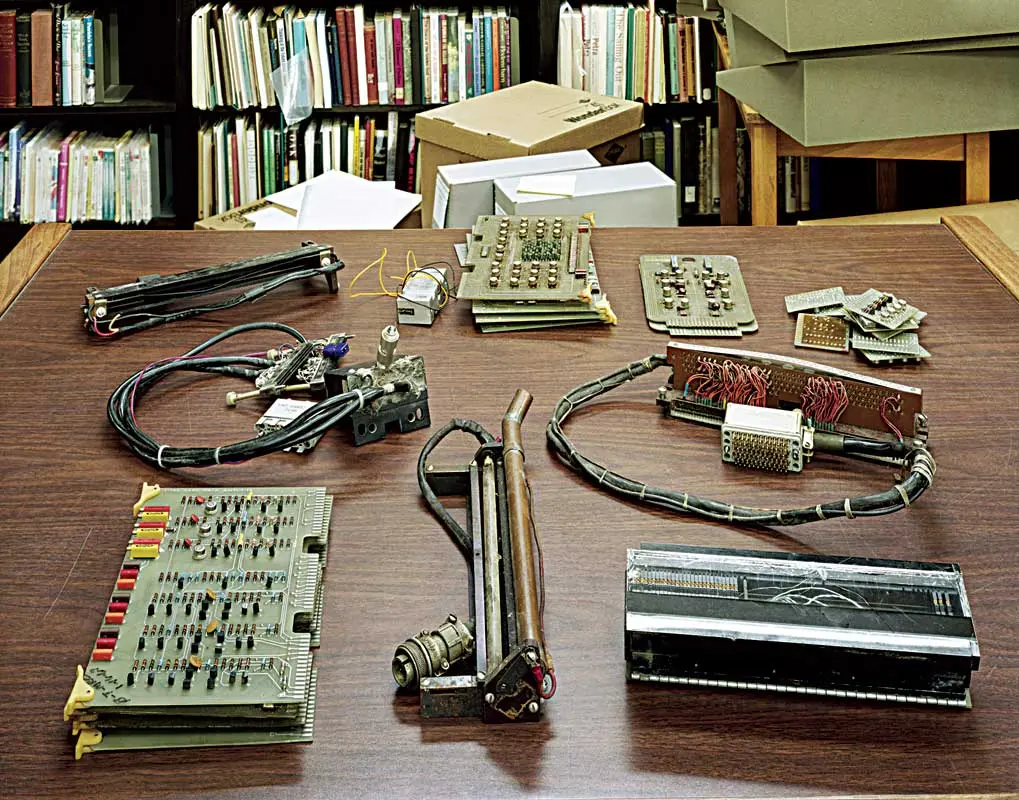
Prep Materials is not about illusionary space so much as illusionary control as Herrera-Prats investigated the relationship between testing and the implementation of OMR (Optical Mark Reading) systems that began in 1934. Selections of material on display included several 30 by 40-inch photographs of places and things in the archives. The second series of minimally collaged and scanned photographs (27 x22 inches) included photos from the archives, letters, and memos. The third set of digital photos of archival analog photos was printed on regular paper and taped to the wall.
Footnotes accompanied the images and aided the viewer in digesting the process’s history. The technology that accompanied placement testing is now used in voting machines and desktop scanners as well. Consistency is the goal but as we can see from our elections, it is only an ideal. This basic schism activated a sense of distrust in the system that resonated throughout Prep Materials as Herrera-Prats evoked concern about the balance between democracy and meritocracy. Finally, the toggle between digital and analog in both the materials and presentations subtly eroded our confidence in the tests and their methodology.
Many of the photographed relics denoted neglect and decay. An old four-legged IBM 805 scanner rested like a proud steed put out to pasture in an otherwise nondescript office. In two other photographs, tubes, bundles of wires, and circuit cards were placed on tables in a deadpan still life.
It was clear that Herrera-Prats had truly absorbed the atmosphere of her subject. Her distinctive oeuvre incorporated aspects of many current and recent movements such as conceptual, installation, and process art.
The show was not one-way. The artist interacted with some of the materials she found, specifically “bubble sheets”. Using the “Scranton” scan sheets in a personal way, Herrera-Prats drew on them, inverting their original functionary quality. Daniel R. Quiles, in a remarkably erudite and insightful essay about the show, noted that “The sheet has been used against its original purpose, turning from coded to visual material, to a template for drawing.” Here, a predisposition informed the drawing, encasing it in a context that it defied and subsequently reinterpreted.
Herrera-Prats penciled in the pink or blue brackets on the forms in patterns and words, confusing and amusing our preconceptions. She presented these serial drawings in a slide show. The bubble sheets were repositioned horizontally, confounding their intended vertical orientation.
As the sheets changed, the separate marks accrued individuality. They became animated and resembled little arena heads more than bits of information. Blurry smudges added a tenuous tone and posited the presence and personality of the artist.
In our recognizing that their new purpose contravened their pre-supposed significance, each mark was further individuated. The focus shifted from efficiency to apparent randomness in a new faux order. In some drawings, each ABCDE slot was filled in for several rows in the middle. Some dramatic erasing further emphasized the marker of the form and not the maker.
In between minimalistic grids or arbitrary inscriptions, Herrera-Prats included spelled out words like SPACE, FLUNK, NO, and FILL. One form proclaimed S… A… T… (Standardized Achievement Test) as if naming the beast could be the correct response. The artist asserts that our desire to control events leads us to anticipate how the test will be prejudiced, and in so doing she undermines its authority.
The tedious tallying process that the artist explored is undergoing constant transformation and reflects a desire for perfection. Herrera-Prats reminds us that art also reflects transformation and a desire for perfection while admitting the imprecise and impetuous. The philosopher Alenka Zupancic writes “comedy and comic satisfaction thrive on discrepancies as a source of pleasure rather than pain.” The discomfit that Herrera-Prats reveals is offset by our astonishment at her rigor, inventiveness, and personal touch regarding a seemingly impersonal subject.
Eventually, the research and documentation propelled the artist outside of the archives and her studio, into a public and contemporary space to finish the saga. A telling final photo acts as a coda for Prep Materials. A bookshelf full of SAT test prep books grabs the foreground in a library. A few feet back, we see inviting friends in the Fiction section… Homer, The Hobbit, Cold Mountain and The Speed of Thought by Bill Gates.
Wait a minute… is this the Fiction section? Carla Herrera-Prats could argue that some mistakes aren’t accidents… and vice versa. Her overall engagement of the formal ultimately yields novel and important metaphoric content.
JEFFREY CYPHERS WRIGHT