
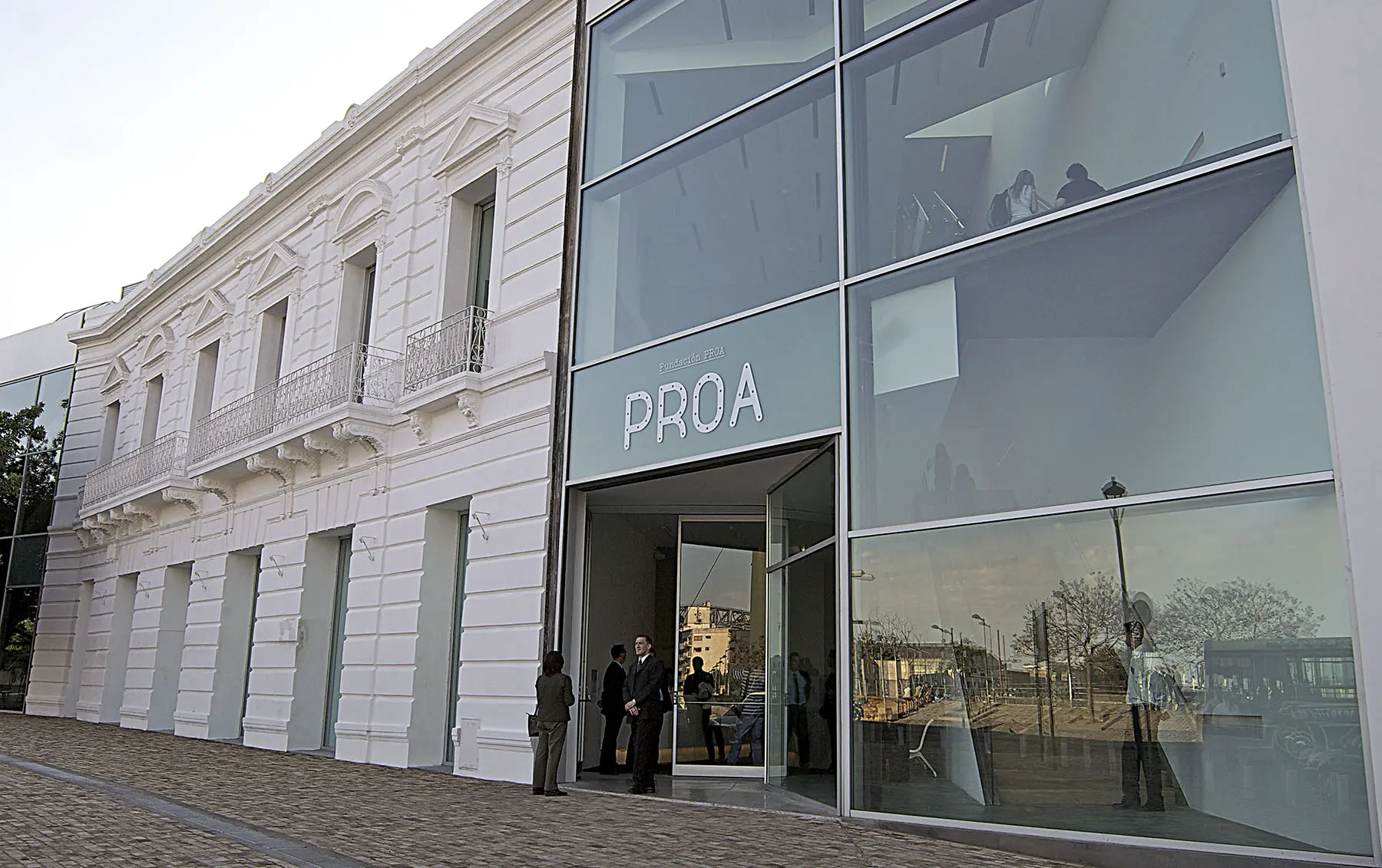
Like the new building of the Proa Foundation,
the exceptional inaugural show “Marcel Duchamp: a work that is not a work ‘of
art’” was a true statement of principles. Entirely produced by Proa, “this show
marks a direction for the future of our artistic proposals,” said Adriana
Rosenberg, the foundation’s president.
Concerning the building, which provides more linear meters of exhibition space as well as a bookstore, auditorium, restaurant, and patio, Rosenberg said that, in its transparency, it “converses with the unique space that is La Boca. Proa proposes a dialogue between the old and the contemporary, architecture and urbanism, interior, and exterior.”
La Boca and the Bridge
With the reopening of this private contemporary art center (backed by the Tenaris Ternium industrial group, Techint Organization), Proa’s presence will once again be felt in La Boca, a neighborhood at the mouth of the Riachuelo River that emerged in the late nineteenth century and became an active port, thanks to the influx of European immigrants and to commercial activity. The area acquired its uniquely urban identity in the mid-twentieth century with expressions of the avant-garde: muralism, living in art, participatory art. Despite its current state of blight, the neighborhood retains some of what the Buenos Aires artist Benito Quinquela Martín (1890–1977) imagined with his murals, colors, and architecture—a mixture of harmonious, symmetrical façades, homes with painted metal sheets, and the most famous street in the city’s urban lore: Caminito.
In 1996, the Proa Foundation arrived in the area with the same avant-garde ideas but also with the instruments of the present. In hindsight, the erection of a contemporary art center in La Boca was as unexpected as it was visionary. Proa’s international-quality museum facilities made possible the presentation of large-scale exhibitions—of the works of Rufino Tamayo, Mario Sironi, Dan Flavin, Sebastião Salgado, Sol LeWitt, Lucio Fontana, Anselm Kiefer, Andrés Serrano, Cándido Portinari, Jenny Holzer, Mario Merz, Alighiero e Boetti, Rosemarie Trockel, and Jesús Rafael Soto—that countered the resistance of art-circuit habitués and brought the art public to what had been an uncomfortable neighborhood.
The New Proa
Proa’s expansion was designed by the Milan-based Caruso-Torricella studio, which more then ten years ago transformed the foundation’s first building into a point of reference for contemporary art. In order to allow the foundation to grow, the architects added two adjacent buildings and incorporated two large glass façades to the original nineteenth-century mansion with its preserved and restored front. “Current technology makes it possible to reduce the façade structure, project large images on special glass, ‘connect’ in real-time with any parallel situation, interact with the public. This choice is perfectly in tune with the specific function of a contemporary art center; it is a public building with a total vocation for contemporaneity and experimentation, incorporated into its historical context, from where it can relate to the community,” noted Beppe Caruso. With these ideas in mind, the sidewalk—used years ago by John Hejduk for one of his urban objects—was widened and covered with old wood bricks, thus becoming an apt space for artistic activities. The choice of materials for the renovation was not left to chance; here and there are details in the same wavy metal used in the area’s traditional homes.
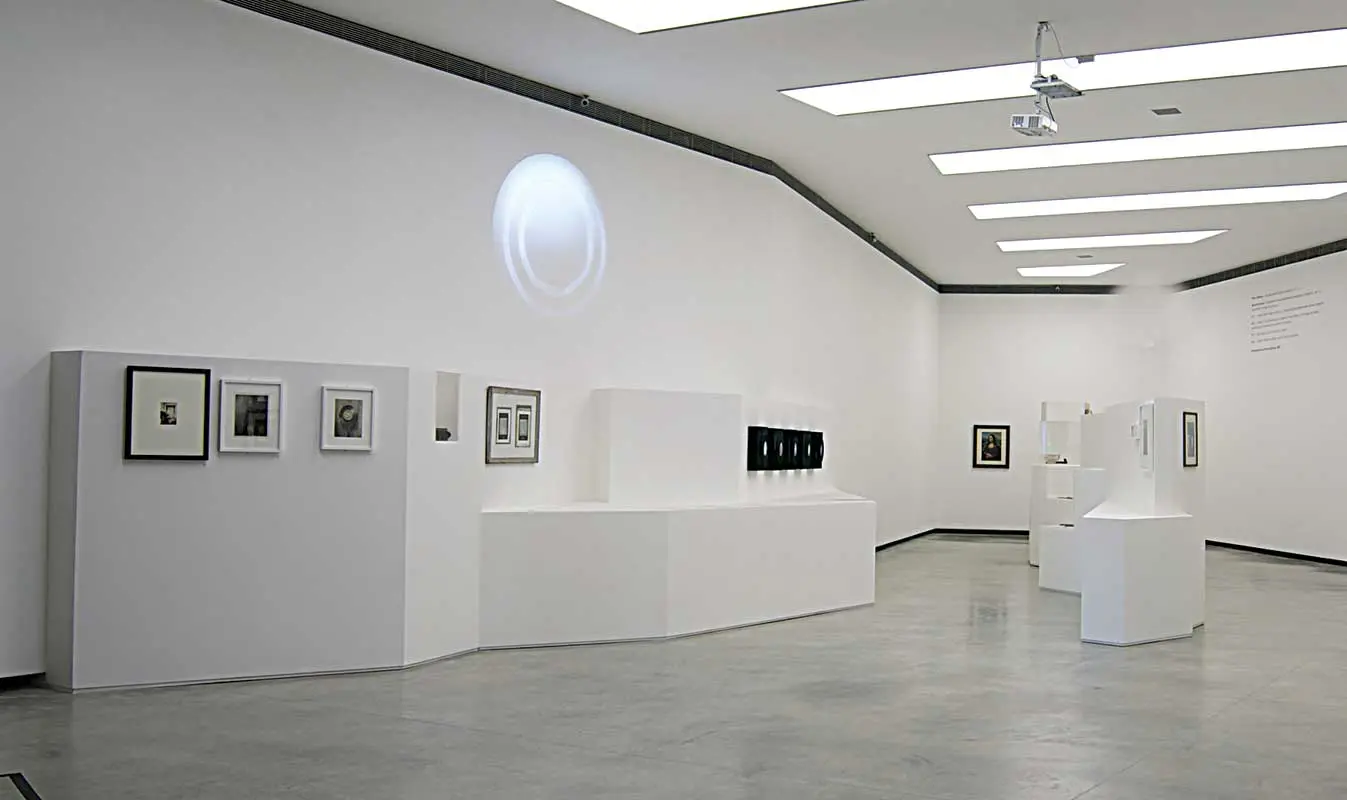
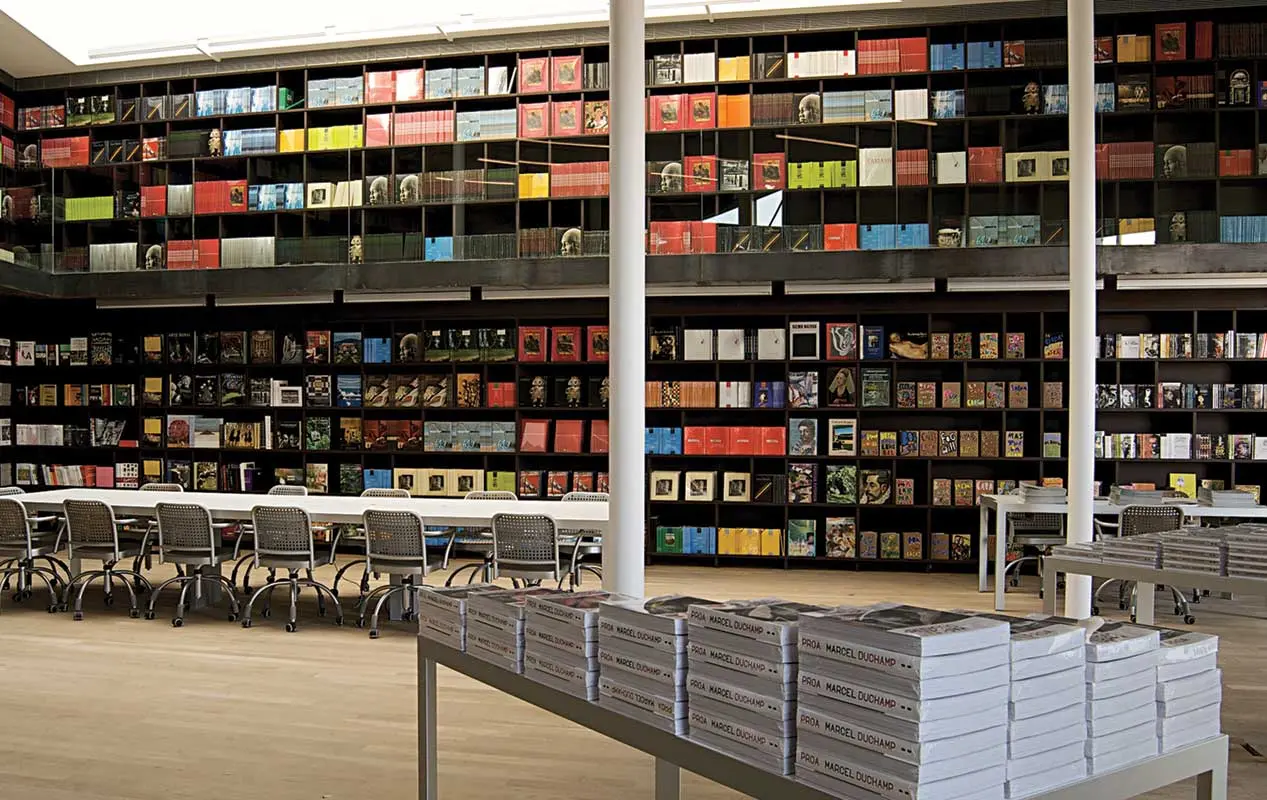
The building now has four exhibition galleries, an auditorium, and a specialized two-level bookstore, all integrated to promote current debates on contemporary art topics. The auditorium is key to that purpose and was appreciated in the International Marcel Duchamp Colloquium and its program of films and conferences. The auditorium activities will also contribute to future exhibitions, such as the scheduled shows of contemporary German photography and Italian Futurist works.
The third-floor restaurant boasts Italian-designed furniture and a 150-diner capacity; it opens into a patio, a perfect overlook on the city and the river.
Proa also debuted a new visual identity. Its new typography appears in dialogue with the black iron, a geometric colossus of the Avellaneda Bridge, an urban landmark located just across from the new building.
Return to Buenos Aires
Intelligence, a sense of humor and eroticism defined the exhibition Marcel Duchamp: a work that is not a work ‘of art.’ The title was based on a famous question posed by the artist (who lived from 1887 to 1968): “Is it possible to create a work that is not a work ‘of art’?” The show explored Duchamp’s most emblematic works, from the moment when he abandoned painting and became “Duchamp” to the time of his death. Thus, the curator Elena Filipovic (an American art historian) did not present Duchamp’s paintings but began her selection in 1913, the year of the first readymade. The 123 pieces, ranging between objects, works on paper, photographs, projections, and documents were not presented in a chronological sequence. The selection was meant to demonstrate the circular development of Duchamp’s oeuvre, with its incessant back-and-forth around certain ideas and contradictions—which are not inconsistencies but conceptual explosions, reflections on the definition and the boundaries of the work “of art,” and other topics.
As in its beginnings, Proa continues its work through its Education Department (intended for specialists, visitors, and students), with now doubled efforts, and the publication of catalogs. For the Duchamp exhibition, there are two: a 360-page catalog with texts and 179 color reproductions, and a smaller book in which, among other topics, Gonzalo Aguilar explores Duchamp’s enigmatic Buenos Aires sojourn between 1918 and 1919.
* Photos courtesy Fundación Proa.
VICTORIA VERLICHAK
Critic, journalist and writer; author of AIzenberg, Marta Traba. Una terquedad furibunda, Martha Peluffo, among other books.