
Although there were three painters in this exhibition, the work of only
one of them was key: Guillermo Kuitca. I don’t mean that his paintings were
better than those of the other two, Beate Günther of Germany and Richard Allen
Morris of the US. What I mean is that Kuitca’s works were the key to Painted! because they were most directly connected to the end of the eclipse of painting
in the international art scene. This blotting-out of painting resulted from the
overwhelming impact of monumental photography, performance art, installation,
video works, and even internet art and other computer-based forms, which
overtook the scene to such a degree that painting seemed destined to remain
forever in the inane chapter of the classical genres. The truth is that it
didn’t disappear entirely but endured yet one more cycle of novelty-worship.
Having been eclipsed or relegated to the shadows, painting now leaves those
shadows behind with such force that it once again captures the limelight.
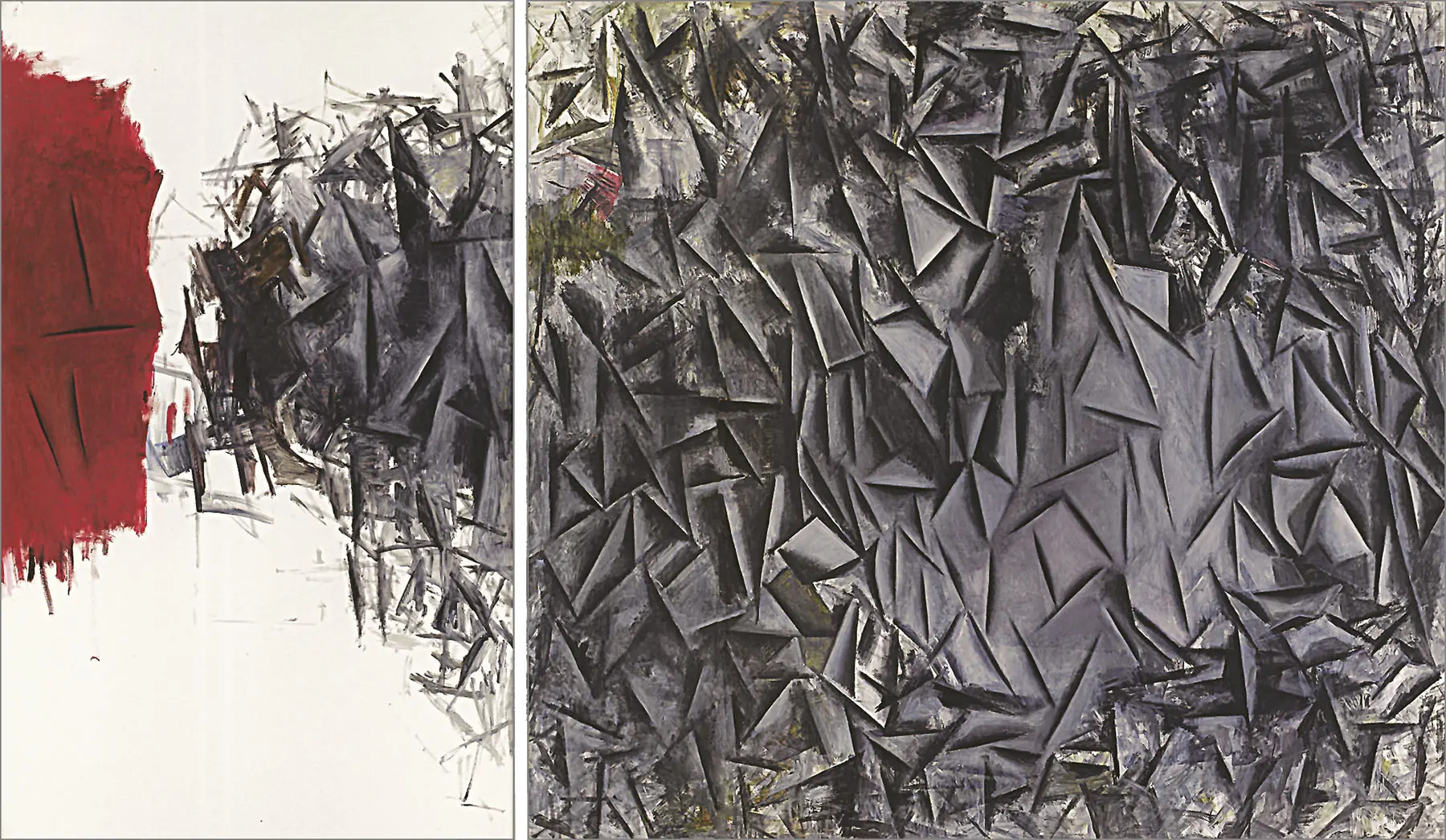
To this circumstance, the four paintings by Kuitca respond: they form a startling revision of the history of modern painting, especially Cubism. It was through this revision that Kuitca resolved the crisis of his own relationship to the genre. In a dialogue with Hans-Michael Herzog in January 2008, the Argentinean painter spoke of the intensity of that crisis and of how he attempted to weather it by working exclusively on collages.1 In 2006, however, Kuitca realized he had to return to painting, resulting in four extraordinary works, exhibited first in the Argentine pavilion at 2007 Venice Biennale and then at Daros Latin America in Zurich, under the group title of Desenlace. (The paintings were one thing in Venice and another thing in Zurich. At the Biennale, they were subjugated by a highly baroque arrangement while at Daros they unfolded nakedly, inside featureless white cubes.)
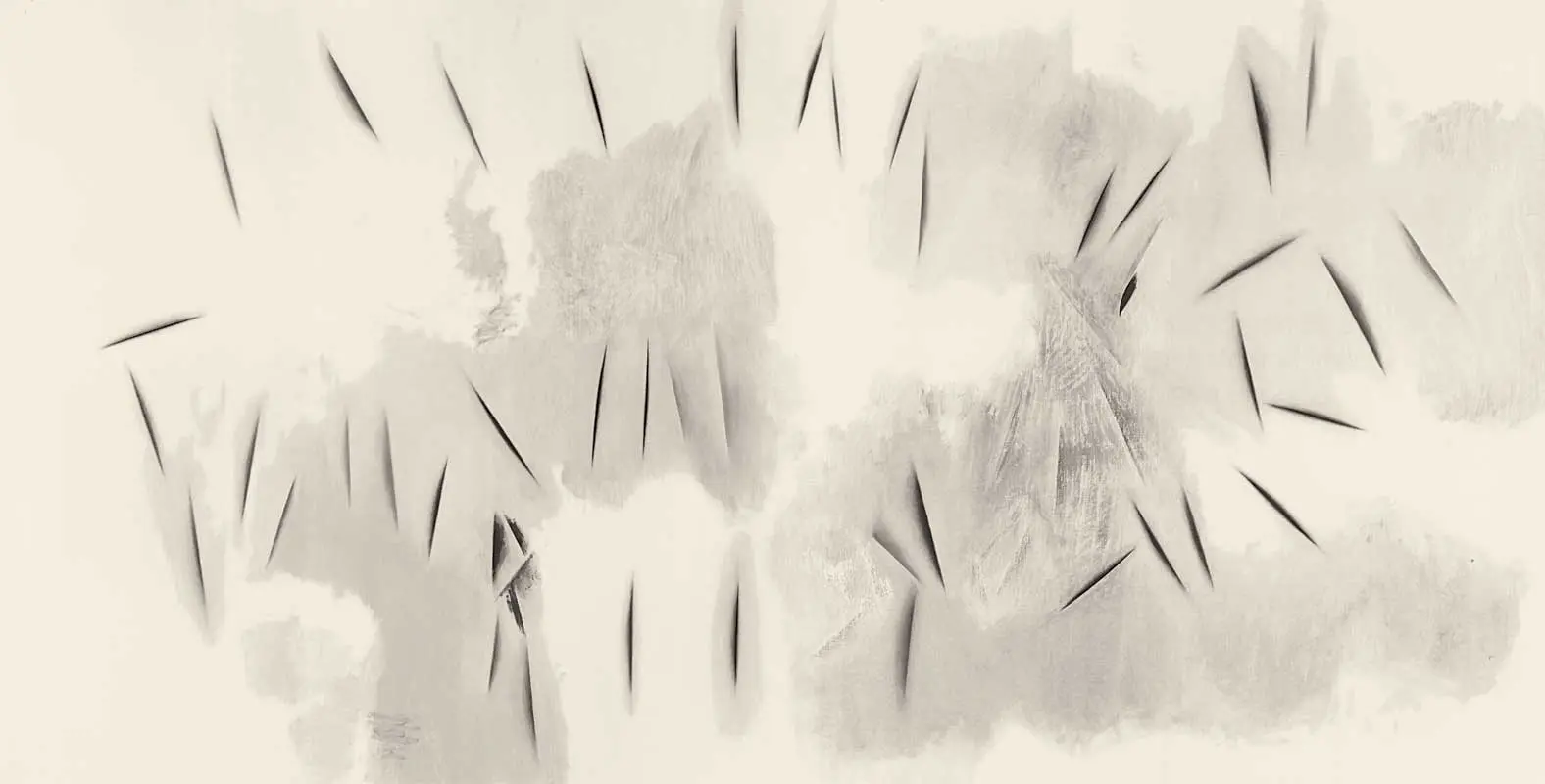
But let us return to the “revision” of the history of modern painting attempted by Kuitca and remember that this is not the first such revision to develop. On the contrary: the specific historicism of the postmodern period was given to revisions, which often ended in pastiche. The difference is that Kuitca’s art has reinterpreted the Cubism of Juan Gris and Picasso in such a dazzling way that it recalls what Wilfredo Lam accomplished in his time with La jungla while distinguishing itself by its suppression of the theme or motif and its exclusive focus on what we must once again call “pictorial values.” Also, Kuitca’s work is weighed down by a certain gravitas in opposition to postmodern levity, a gravitas that, according to the artist, is captured in the essay written by Inés Katzenstein—the curator of Kuitca’s selection at the Biennale—about the paintings in the Desenlace series. Katzenstein develops the idea that the paintings are like a group of foreigners abandoned with their luggage, whose origin is difficult to ascertain."2 And that is exactly what happened to me in this work,” Kuitca says. “It has been like opening a suitcase and asking, ‘What is Juan Gris, what is Joaquín Torres-García, what are these people doing here?’”3 Hans-Michael Herzog confesses his own feelings of estrangement from the Desenlace paintings: “In Venice, I saw these works twice, and both times I was terrified; I felt a twisting in my stomach. They confused me thoroughly. ‘This is incredible, unprecedented,’ I thought. ‘How is it possible not only to touch on this, but to do it on such scale, and to paint such an exquisite Cubism at the same time, and that in the year 2007?’”.4 The tribute to Cubism that dominates the series’ compositions is not the only homage they contain: Desenlace III is also a tribute to abstract expressionism, and Desenlace IV is a tribute to the spatialism of Lucio Fontana. The latter tribute is paradoxical: the veil of painting sliced by Fontana is completely restored by Kuitca.
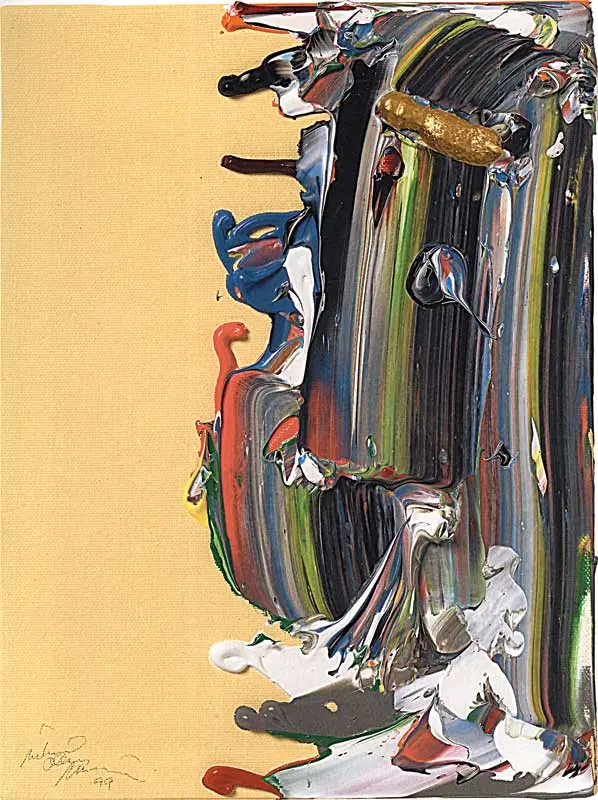
In contrast with Kuitca’s re-reading of history, the American painter Richard Allen Morris is himself a piece of living history. To rescue him, like Painted! has done, is to rescue an ignored and forgotten history, that of the painting tradition that evolved since the 1960s in San Diego, which is to say outside of San Francisco and Los Angeles, cities that for a long time have held the attention of the American art world. Morris is seventy-five years old and has been a painter for over fifty years; his story and his work only began to be re-enter the art-world stage in 2004, when the Haus Lange in Germany presented Morris’s first-ever retrospective, followed by another in 2005 at the Contemporary Art Museum in San Diego. What Morris had at Daros was, in truth, a mini-retrospective encompassing early paintings dating from the 1960s works from the first decade of this century, and works from in between. The selection was also an inventory of some of the figures and trends that have marked American art since the second half of the twentieth century. Evidently, Morris was not isolated, hermit-like, in San Diego but kept himself informed of what was happening in the American art scene. A good part of his oeuvre results from a dialogue with—or a response to—stimuli provided by Franz Kline, Willem de Kooning, Cy Twombly, Robert Rauschenberg, and even Andy Warhol. Yet, as interesting as Morris’s oeuvre is for his original interpretations of the lessons offered by the modern American masters, perhaps his strongest works are small-format paintings like In My Life (1987), In Your Face (1987/88), and especially Dr. Saint (1999), itself a forceful declaration in favor of the materiality of painting and the indispensable energy of the gestures that actualize it.
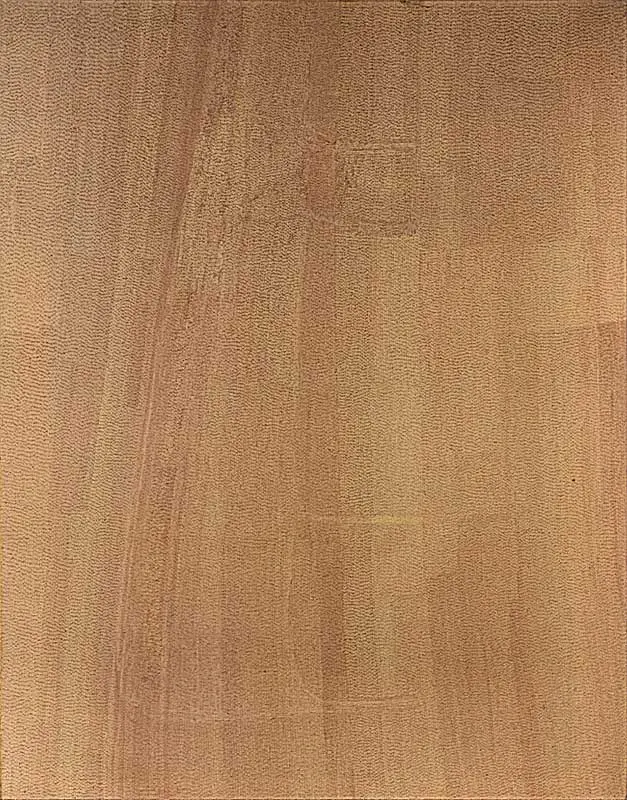
The work of the German artist Beate Günther completed the exhibition. Her inclusion in this show was also a vindication. Hers was a case of an artist who is insufficiently recognized by the art world. However, the selection of her works was uneven: a mixture of intense, rousing, and luminous works with others that were formless, somber, and predictable, ones lacking the decisiveness of the energy that marked the others so profoundly. One highlight was O.T. (1988), a large-format painting composed like a mosaic of thickly painted surfaces that explored all the possible hues of the color green. Other works, such as O.T. and Flut (both from 1995) as well as Gsot I (2006) and Gsot II (2007), were outstanding.
NOTES
1. “Hans-Michael Herzog in Conversation with Guillermo Kuitca. Buenos Aires, January 29, 2008,” in Guillermo Kuitca (Zurich: Daros; Hatje Cantz, 2008), 27.
2. Inés Katzenstein, “Guillermo como si…,” in Si yo fuera el invierno mismo. Representación argentina. 52 Exposizione Internazionale d´Arte. La Biennale di Venezia, exhibition catalogue, Buenos Aires, 2007.
3. Guillermo Kuitca, 27.
4. Guillermo Kuitca, 29.
CARLOS JIMÉNEZ
Writer, art critic, and independent curator.