This is not a review of Pedro Meyer’s
photographs. He’s a good—even great—photographer and a master of
self-promotion. Who else could pull off celebrating forty years of work by
staging openings at (so it is claimed) sixty venues around the world at about
the same time? No, this review is about something more important than
photographs and mastery and ego: it’s about you, the people.
The most remarked aspect of Meyer’s photographs has been his use since the early 1990s of digital effects to subtly alter and amalgamate his photos and yet remain true to photographic reality—whatever that is as if we have entered some sort of post-photographic age in which truth is in question. The poor impoverished history of photography!
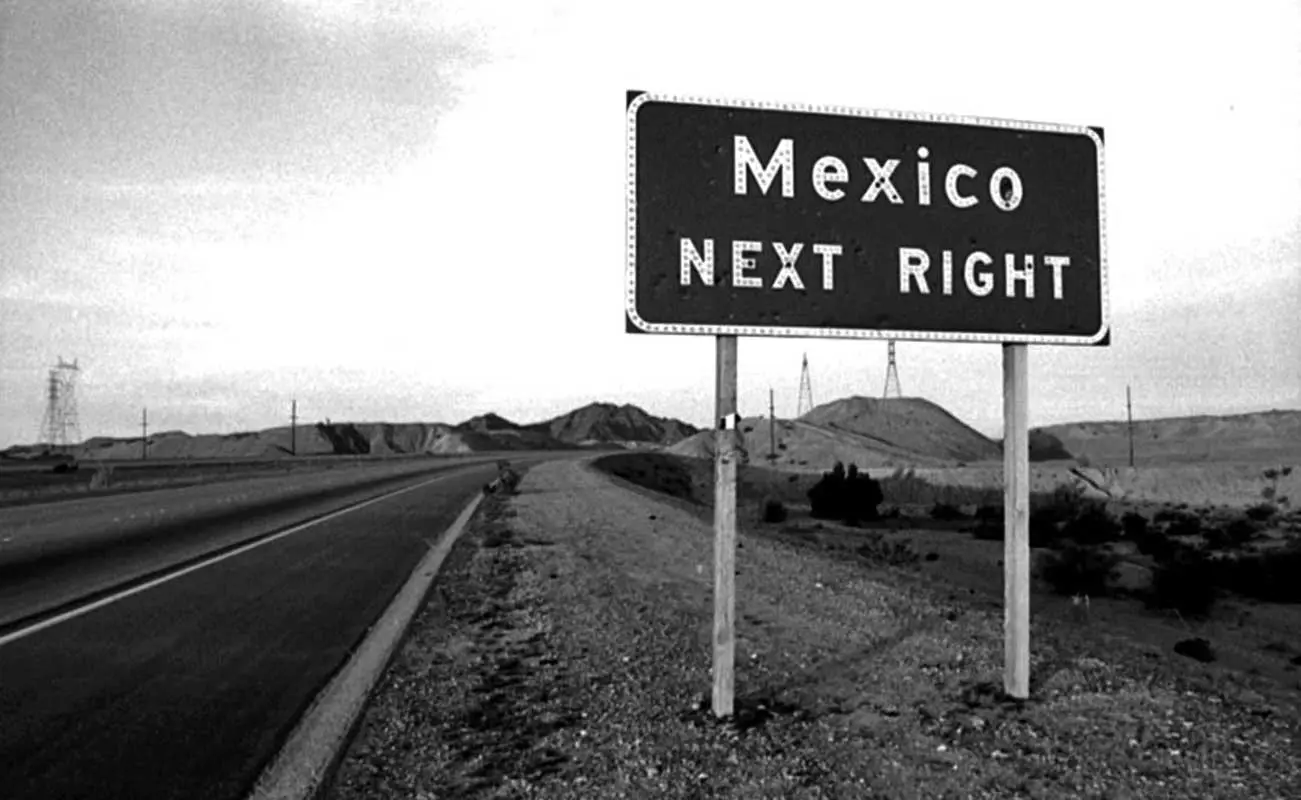
Meyer has contributed to the importance of this issue by producing books of his work with titles that refer to fact and fiction. He uses the same title for his most recent book and his worldwide retrospective, Heresies, as if he were living (rather than dated) proof of a single digital voice in the wilderness. Poor Mr. Meyer.
The issues in this exhibition—presented at the Queens Museum—are more important than the tired and somewhat exclusionary rhetorical framework of fact and fiction in photographs. And so is the artist, with a little help from his like-minded friends at the museum.
The question of truth in photographs has been around since the nineteenth century, when people could not believe the magic qualities of the daguerreotype and privately wept over moral narratives stitched onto reality by composite negatives. Only the digital process is new, not the results nor the exclamations, on a journey that has taken us through the photo-collage politics of Dada and the attempts by the Surrealists to position the new reality of the unconscious “marvelous” and “madness” within the everyday world. Even the field of pre-digital photojournalism argued that photographers have no choice: they must act as symbolists by piecing together the fragments provided by the abstract process of seeing through a machine and lens to recreate an affective version of what can pass for the “real.”
There is no doubt that Meyer has the skill; at his best, he can make us jump in surprise or subtly deploy an emotional nuance. What I found more remarkable was the way the Queens Museum staged Meyer’s aesthetic. When Meyer made available his forty-year output—from his 1960s photojournalism of people and social protests in the streets, to spectacularly crisp landscapes, to images of pictorial quietude, to jump-back magical realist moments, to swirling digitally-colored abstractions—most museums marveled at and proclaimed the vast scope of his effort and their curators selected what they wanted.
The Queens Museum did it differently, in a process aligned with their long-held outreach programs into a community that is the most ethnically diverse of the five boroughs that form the city of New York. Almost half of the over-two-million official residents of Queens are immigrants, and roughly twenty-five percent of this group is Latino. The museum selected its share of Meyer’s photographs and divided them by subjects and themes; it then invited eight groups to curate four installations from October through December of 2008. Each group developed its own decision process. The results depended not only on the tastes of a group but also its ability to accept the tastes of each member within the group.
Many Latin Americans expressed a strong connection to and gained a sense of group solidarity through Meyer’s documentation of social movements from the 1960s and the 1970s, seeing themselves as heirs to these movements in their contemporary struggle with immigration in the United States and specifically within Queens. One group of older adult immigrants who were enrolled in photography classes in Spanish at the museum chose to focus on the idea of freedom in the United States and selected images that tended to be more violent. A group of community and business leaders from Corona, Queens, felt that their later and quieter selections held a kinship to what they saw as Meyer’s goals for people: to live with basic human rights and dignity and to participate in the management of public spaces and resources while maintaining respect for their own cultures and histories.
The shift in agency was most important here, with the institution and the leadership of the Queens Museum functioning as a platform rather than a content provider. The shift was from the master—the single, creative voice of an artist—to the people, who once empowered were able to not only see but also use Meyer’s lifelong production is far more important ways than as mere pictures in a show. I don’t think a photographer or any artist could ask for a better exhibition of greatness.
RICHARD LESLIE