
The New York sales were eagerly anticipated last season as the
Contemporary and Modern auctions, which preceded the Latin American sales, had
shown dramatic changes compared to the previous Spring season when the
financial crisis started to reflect a new marketplace with new values.
Sotheby’s Modern and Impressionist sale, which was the better one of the season
thanks in large part to the extraordinary price obtained by a Malevitch 1916 Suprematist Composition, selling at $60 million, even though it was quite
below expectations. Only 64 percent of the 70 lots found buyers, the lowest
rate for an Impressionist evening sale at Sotheby’s since May 2001. The $223.8
million tally was a third below the $338 million low estimates. Auctioneer
Tobias Meyer cited a “changed financial environment” for what he referred to as
a “new market” for art. The contemporary art sales which followed were equally
disappointing. Sotheby’s sold 68 percent of the lots at its evening contemporary
art sale on November 11, fetching $125.1 million. At that New York auction, six
guaranteed lots with presale estimates totaling $29.2 million to $39.3 million
did not sell. Phillips took in $9.6 million with fees, against its presale low
projection of $23 million. Two in five lots didn’t sell. Annual sales of
contemporary art at Sotheby’s and Christie’s International’s flagship auctions
in New York and London contracted 17 percent in 2008 after more than doubling
over the previous two years. Sotheby’s and Christie’s Contemporary auctions in
New York in May and November 2008 totaled $1.2 billion, 40 percent down from
last year.
The world’s two largest auction houses took a combined total of just below $2 billion with fees at their regular series of mixed-owner sales in New York and London this year. In 2007, the same group of auctions achieved a record $2.4 billion. In 2006 they raised $1.1 billion.
Taking the new international credit crisis into consideration, the Latin American auctions fared quite well. With 70 percent of the lots offered to find buyers, it scored a much higher percentage of success than the other collecting fields.
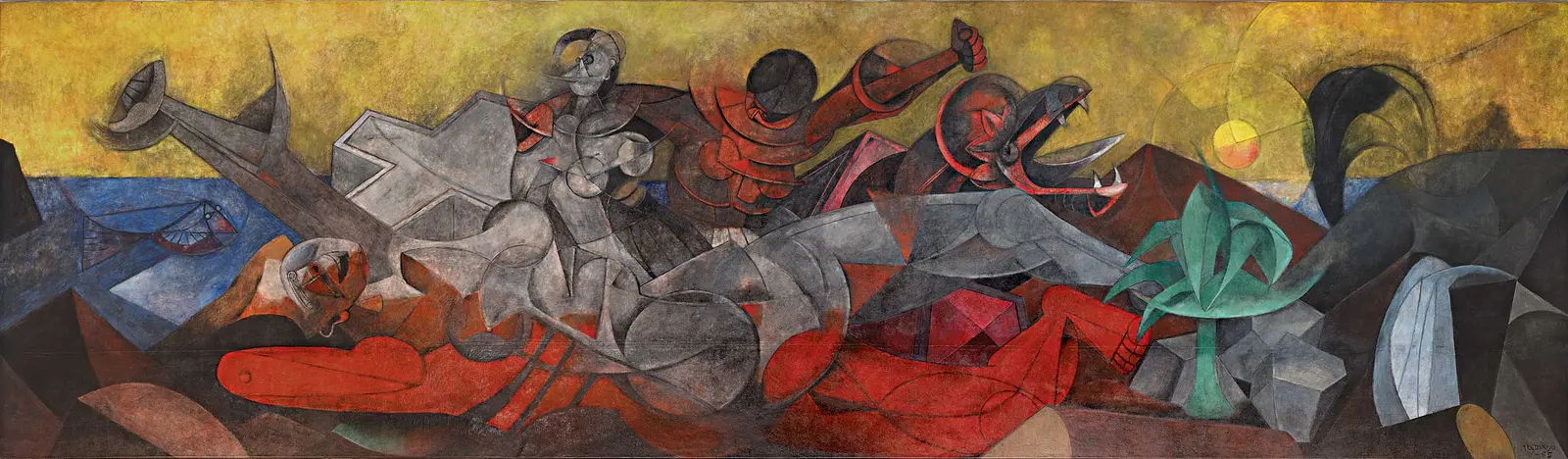
The Sotheby’s auction went first and did an excellent job at selling the works. Although it was a laborious, slow process, the results were worth the effort. The first big success came with the Zúñiga onyx Desnudo Acostado, which carried an estimate of $200,000/300,000 and sold at $240,000, which adds up to an impressive $290,500 with the commission. Following this lot was a large Reverón that also sold very well at $388,500. Lot number 12, the Tamayo fresco America, was the highest estimated lot of the season with a printed estimate of $7,000,000/9,000,000. The bidding started at $4.5 million, and a determined phone bidder captured the piece at a $6,000,000 hammer price, the highest price not only of the sale but of the entire season. This painting had originally sold at Christie’s in 1993 for $2,587,000; though it had been on loan since the Christie’s sale to the Dallas Fine Arts Museum was not purchased by the museum. The buyer was listed as Anonymous but speculation in the audience was that he was a Russian oligarch.
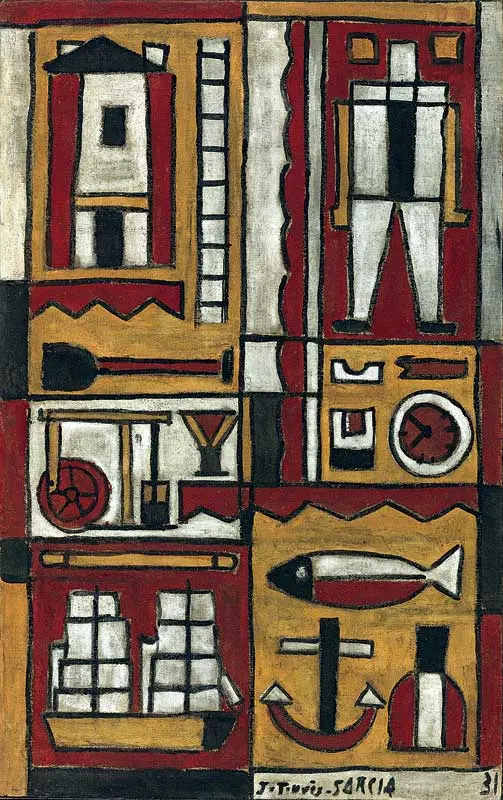
Another highlight of the evening was a colorful Torres-Garcia Costruzione Geométrica from 1929. It had an estimate of $90,000/120,000 and sold after a bidding war between at least four bidders for $398,500. After a selection of works were offered for sale to benefit the Gurvich Museum in Montevideo, another star lot, Torres-Garcia’s Constructif avec Rythme dentelé from 1931 sold for $842,500 Works from Argentina and Brazil offered some of the most exciting bidding moments of the sale. Jorge de la Vega’s Doble Emplazamiento from 1965 was estimated at $250,000/350,000 and sold very well at $326,500. Sergio Camargo’s Relief No 191 had been estimated at $100,000/150,000 but tough competition between buyers brought the hammer down at $194,500. Cildo Meireles’ Coraçao Faquir, an exciting rendition of a huge heart filled with protuberant nails, carried an estimated value of $100,000/150,000 and three determined bidders brought the price to $194,500, achieving a new world record for the artist.
The following evening at Christie’s proved the opposite. Only 48 of the 80 lots offered were sold, creating one of the lowest sale rates in years. There were, however, some new artist records, and the day sale proved so strong that the end results for both houses were as close as always. The general overall feeling, however, has changed; collectors and experienced buyers repeatedly said that only the top quality works have no problem in this market, while everything else must have the right price tag to reach the finish line.
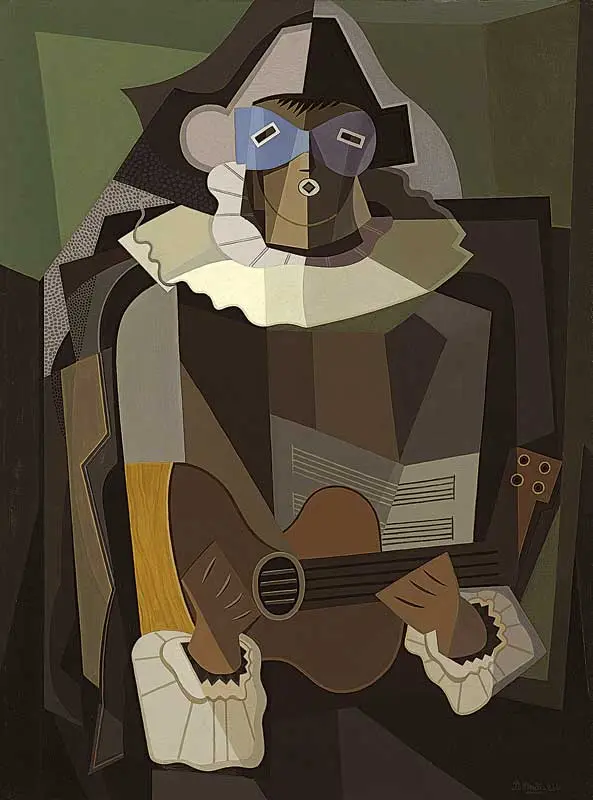
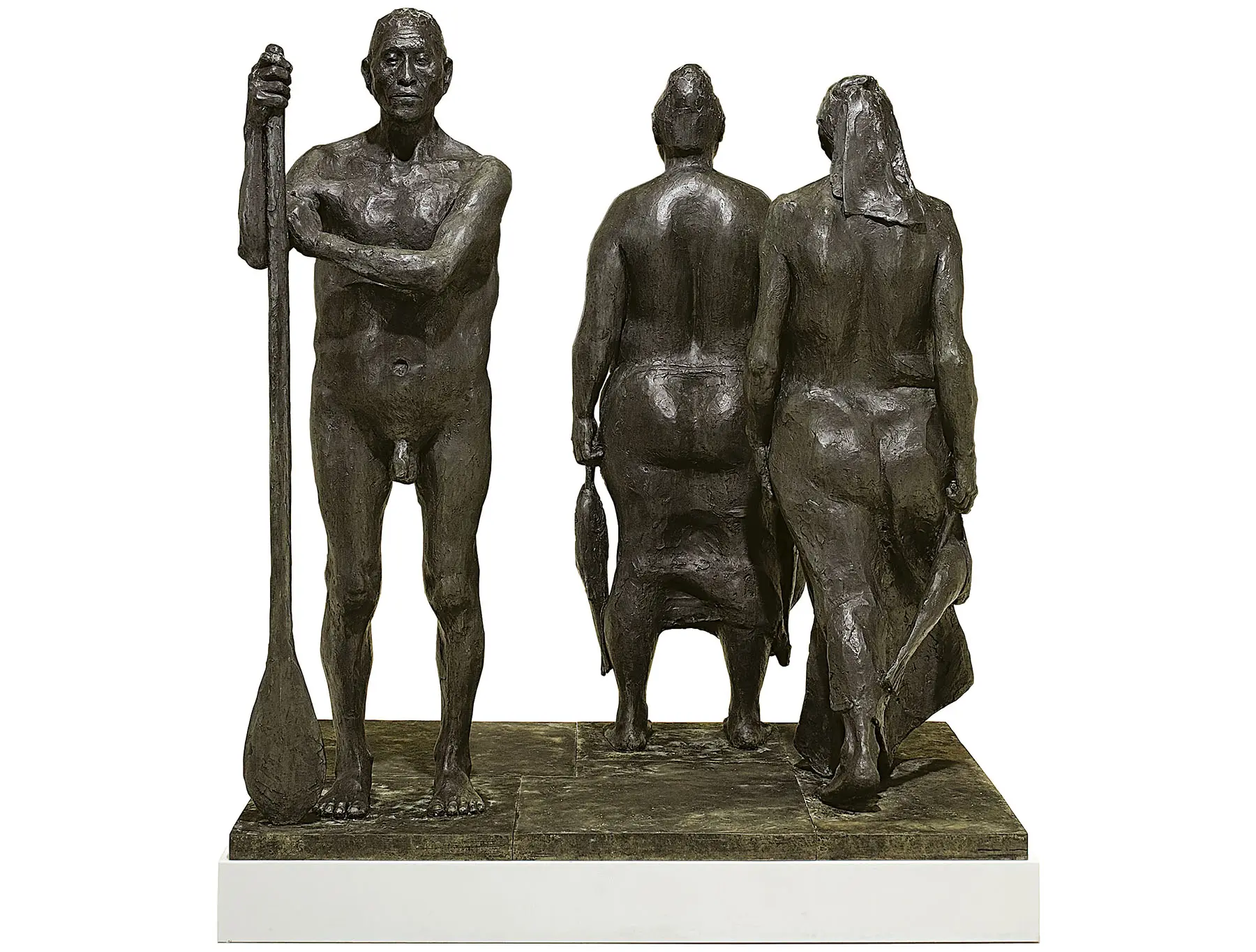
Among the highlights sold at Christie’s was the monumental Grupo frente al mar by Francisco Zúñiga, selling at $1,202,500, close to its estimate of $1,200,000/1,800,000. This was a particularly good sale because such monumental pieces had been purchased mostly by non-Latin collectors, and it showed that top-quality works were holding the price levels achieved in recent seasons. Pettoruti’s El Cantor did not share the fate of the last cover lot of the May season, Tamayo’s Trovador, that established a new record for the artist, but it did fetch a good price at $782,500 (est. $700,000/900,000) while the other Pettoruti in the sale, L’Oiseau Noir, sold at $146,500.
Argentinian art proved to be in high demand at the auction despite rumors of the financial distress in the Buenos Aires stock market, proving yet again that the more insecure the markets, the more likely capital is bound to flee to hard assets, like gold or art. At Christie’s, Jorge de la Vega’s Billiken sold at $422,500 (est. $350,0000/450,000), Antonio Segui’s Excited Youth fetched $52,500 and Cesar Paternosto’s Staccato went for $74,500, bringing a new world record for the artist. All three Luis Tomasello paintings found buyers, and the two works offered by Roberto Aizenberg sold well. The first, Pintura from 1981, was an ominous tower structure placed at the opening of the exhibition gallery for the contemporary part of the sale. The move certainly paid off as the painting easily surpassed the estimated $65,000/85,000 to realize $134,500. The piece titled Pintura, from 1995, was estimated at $50,000/70,000 and sold at the low end of the estimate. Leon Ferrari, the winner at the last Venice Biennale, sold his Untitled acrylic box at $43,750 (est. $30,000/40,000).
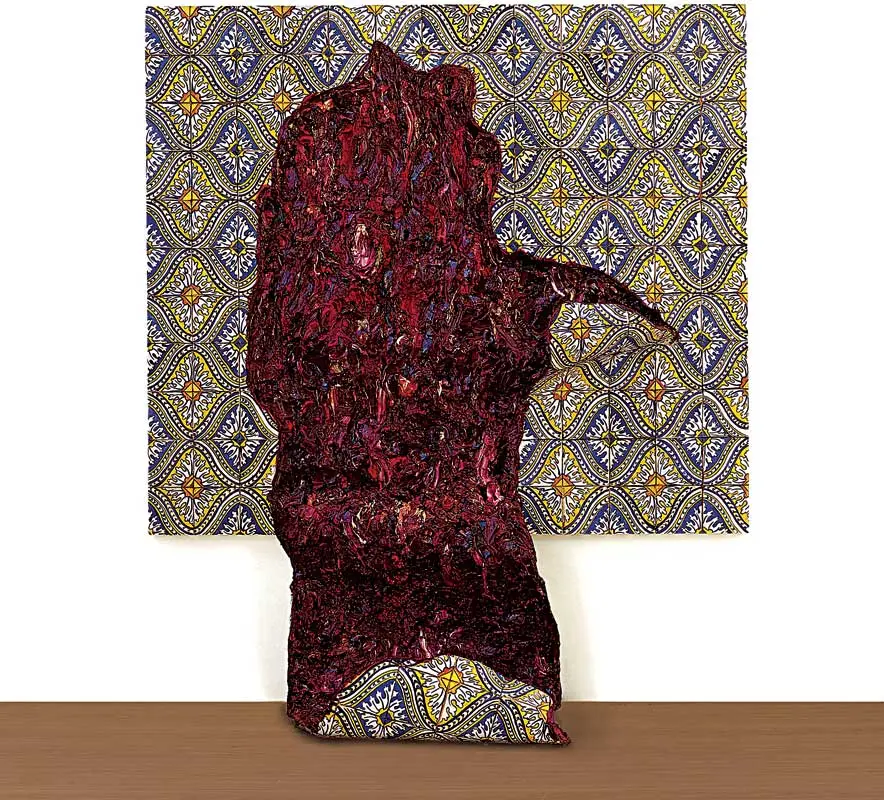
Colonial art pieces achieved high prices and even made new world records. Foremost in the highlights was the beautiful View of the Port and Bay of Valparaiso, Chile by Thomas Somerscales, which soared above the estimated $50,000/70,000 and sold after tough competition between four bidders for $254,500, marking a new record for the artist. Rugendas’ El Rapto, a favorite theme of the araucano wars, depicting the abduction of a white-skinned and desperate damsel being kidnapped by a nearly naked savage chieftain atop a galloping bronco, there are several versions of the painting and this one also surpassed the estimated value of $35,000/45,000 and realized $62,500. An unusual yet beautiful Colonial Cuban Mahogany chest also surpassed the conservative estimate of $60,000/80,000 and realized $152,500 while a monumental depiction of the Virgin of Guadalupe, with impressive guilt and carved framed which carried an estimate of $80,000/120,000 scored another triumph selling at $134,500.
Venezuelan art continues to receive favorable attention from collectors and enjoyed spirited bidding at this auction. Alejandro Otero’s Untitled, from 1961, clearly a tribute to Cy Twombly, was the first important work offered at the Sotheby’s sale where it fetched $116,500 from a $90,000/120,000 estimate. The next lot, Cruz Diez’s Fisicromía from 1961, was estimated at $100,000/150,000 and came in at an exciting $254,500. Soto’s Tres Negras Largas then sold for $182,500 (est. 150,000/200,000). The second Soto of the sale, Vibraciones dobles, was estimated at $175,000/275,000 and realized a healthy $242,500.

The Brazilian material in the sales also was very successful. Sotheby’s presented a Camargo Triptique No.155, 156, and 157 which carried an estimate of $300,000/400,000 and sold for $290,500; the other Camargo in the sale, Relief No 191 sold above the estimated $100,000/150,000 for a total $194,500; later in the evening Alfredo Volpi’s Bandeirinhas sold at $68,500 (est. 60,000/80,000). At Christie’s, Adriana Varejao’s Lingua com Padrao Sinuoso went way over the estimated $100,000/150,000 to sell at $302,500, making a new world record for the artist.
The overall strength of the Latin American market, which has remained a collector’s market, rather than a depository for international investment funds, was clearly demonstrated in this particularly challenging auction season. The price levels in this area have risen at a considerably smaller pace when compared to other areas such as Contemporary or Modern art, yet it has had the advantage of persevering in maintaining value while the other areas have seen enormous price fluctuations and much larger percentages of unsold lots, all of which has given this collecting field a renewed attractiveness and well-deserved security in meeting its estimated values.
All prices quoted in the article include the auction house commission.
Christie’s two-day sale of Latin American Art totaled $14,150,963 with 70% sold by lot.
The two-day sale of Latin American Art at Sotheby’s brought $20,263,126.
Sold by Lot: 54.7%
Lots Offered: 274
Sold by Value: 68.3%
ALBERTO BARRAL
Art Dealer, New York.