
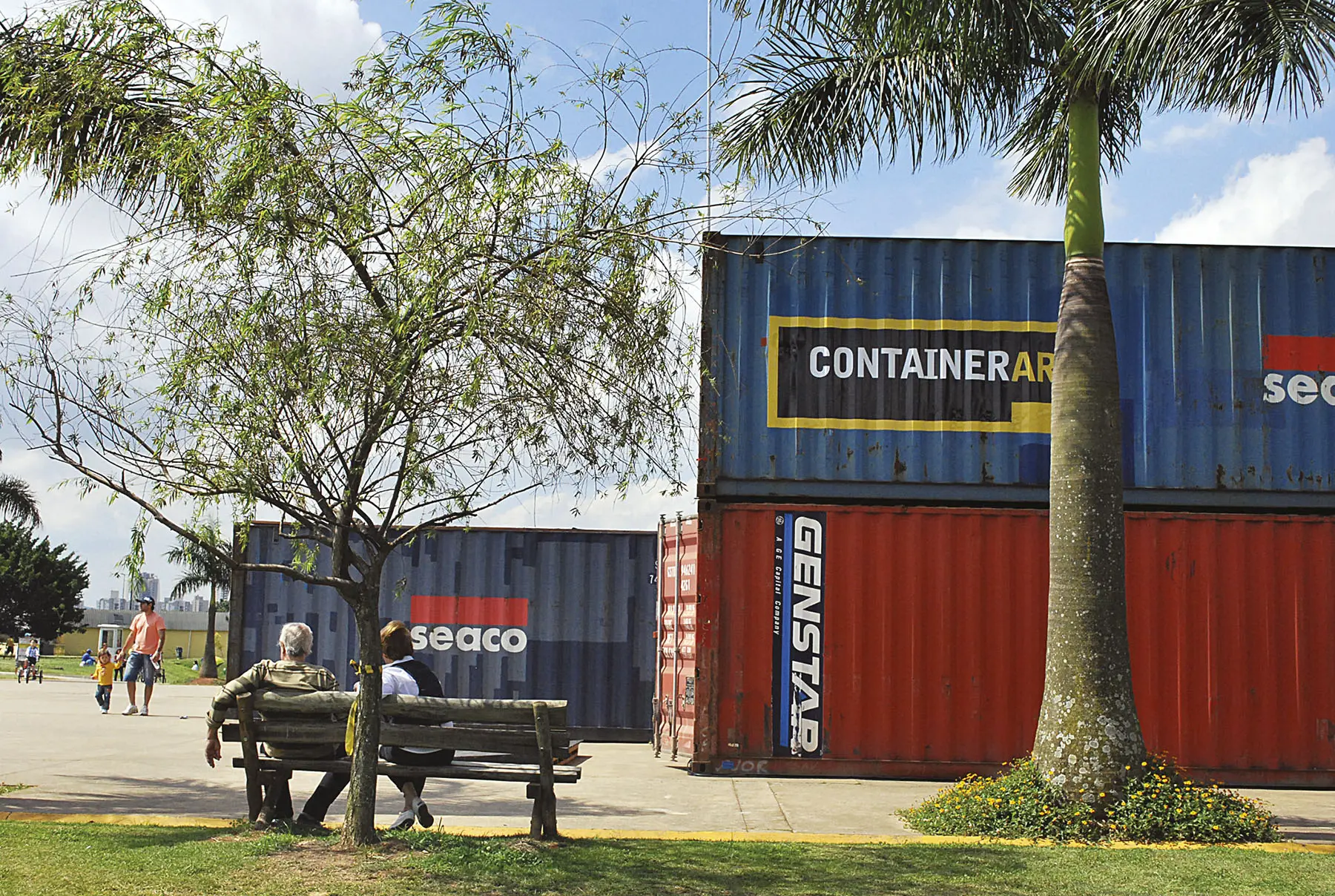
“Video-art
(exhibitions) causes a kind of anxiety in its viewers, as a result of its
speed, supposed sense of familiarity and empathy, and the realization of a
frustrated immediacy; the impossibility of absorbing it all and at once,
settles in,” says Lucas Bambozzi, video-maker, and organizer of Container Art
São Paulo. The video exhibition took place November 8-18, 2008 in São Paulo, in
an open-air area at Villa Lobos Park. Twelve containers housed the almost 40
linear hours of videos streamed over ten days. Rather than propose a
theme-based selection, Lucas Bambozzi and co-organizer and artist, Cao
Guimarães, went down a road less traveled and proposed a series of questions
instead, inspired by an affirmatively unanswered root question: “What is the
ideal space in which to show video (art)?” “Certainly it is not inside
containers,” says Bambozzi, “their ceilings are too low, they are hot and sound
reverberates inside them.” If imposing containers is the best solution in which
to show video had been the organizer's premise, then, presumably, the
ideological foundations of the exhibition would have flopped. However, when the
intellectual driving force behind it is exposed as questioning and coaxing
thoughts on different possibilities and alternatives, the context reaches more
than skin deep. In the exhibition text, Bambozzi and Guimarães present
containers as alternative solutions for different situations as well as
intrinsically being vehicles for communication, transit, and promoters of access
to what’s inside their otherwise hollow and functional shells; their meaning in
these contexts are vested in what they contain and how they are used.
“In Europe, containers are already explored as alternatives for transitory spaces,” says Bambozzi. Perse, Container Art is a project that precedes the exhibition in São Paulo. It exists as an ideal for stimulating alternative spaces for showing contemporary art, with manifestations in Italy, but it had never before focused on video art. For São Paulo, Container Art came as a means to show video, mainly to a non-specialist public, as proposed by gallerist Daniel Roesler who came to learn of the Container Art project in Europe and brought it south of the Equator. “I decided to make the project more ambitious over here, and at least for the first time, focused on video; we ended up organizing a temporary container museum.” More of an exhibition than a museum, if you consider the timeless and rooted primordial concepts of a museum, Container Art offered temporary opportunities for visitors to the park to access videos shown inside these cases - alluring mainly due to their dislodged location in an environment that by and large, removed them from their deemed habitual contexts (which would be in-transit somewhere or as storage at its destination or departure point.)
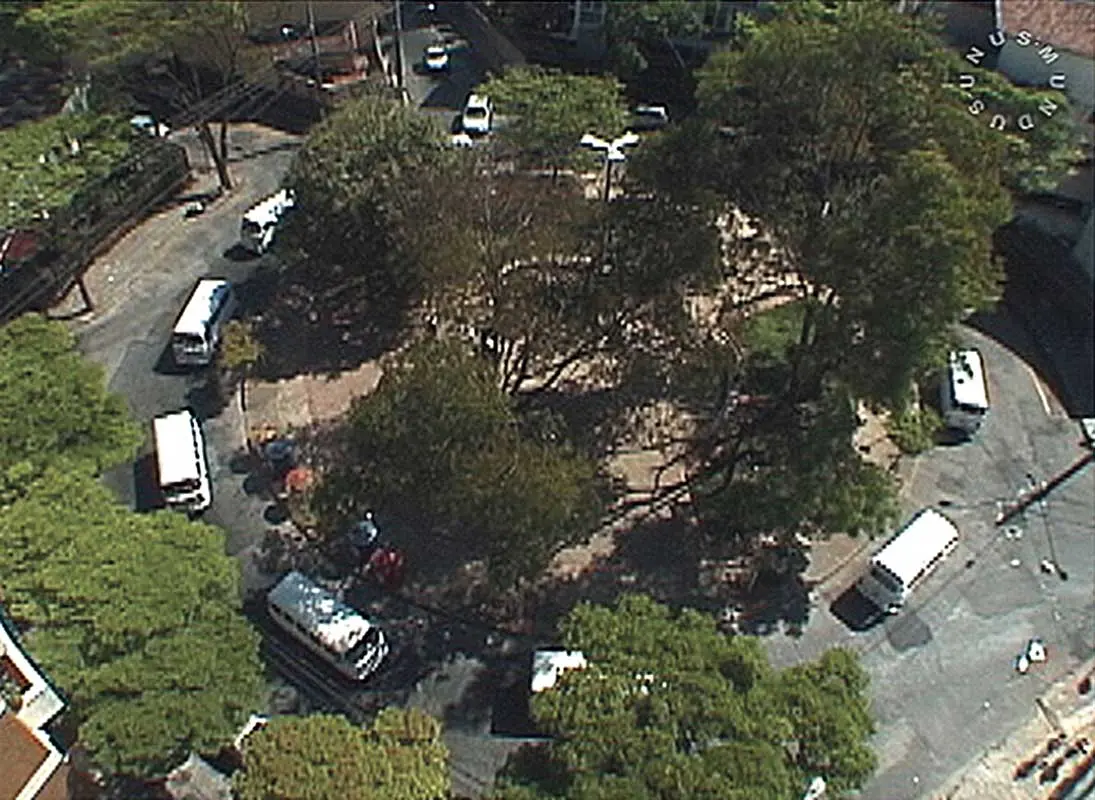
The core of the exhibition is paradoxical diversity; from a unified repetitive unitary layout, to its diversified content. The twelve aligned containers used to house projections and in a few cases LCD screens stood alongside each other forming a corridor of screening rooms identified by numbers and according to their content’s deemed interest in a generalized topic heading and their differing approaches to it, in their semantic interpretations and individual quests. The selection of videos came from Bambozzi and Guimarães’ brainstorm of names and videos they’d seen or heard of over the years, that were fit into the suggestive categories used to create niches within the exhibition. Videos did not necessarily respond to their niches topics linearly but showed the plurality of alternatives that are stimulated by lateral thinking, rethinking, and expanding semantic and visual interpretation of topics (attributed to the works for the sake of the exhibition). This enabled that in unit 01, named Apropriação (Appropriation) Consuelo Lins’ sequence of metro riders reading newspapers, registered on her cell phone in Leituras (Readings) and a self-denouncing video of robberies by Ticiano Monteiro, Soluções versáteis para um mundo moderno (Versatile solutions for a modern world) coexisted. Consuelo’s protagonists had their image appropriated by her without permission; by filming himself robbing a store, Ticiano self-incriminate himself as registered in his video while appropriating himself (stealing) of objects in a shop illegitimately and legitimately recording his own presence and actions on video. These, amongst others in the unit (6 videos in total), as a group, show the plurality and diverse approaches to one theme used to group them in their difference - where Appropriation is interpreted in alternative ways. Unit 07, Instalação Interior (Internal Installation) was one the most stimulating and thought-provoking units.

Lucia Koch’s poetic and visually impeccable short video, O Gabinete (The Cabinet,) showed the journey of light through colored stained glass as it reflected on the walls and floor of a closed indoor (industrial) space. Displaying the sort of visual construction of image and fluid sequence that is so effective on video, where time and movement seem natural and innate to the content as to the medium. Polarising it, Marco Paulo Rolla’s Canibal and Amilcar Paker’s #4, more demanding videos, were tiring to watch interspersed by other videos. The struggle to watch further emphasized the struggles portrayed in the videos of their performances. In one case, the video is an integral part in the construction of the work (Koch) in the other, mediums of registration, but in all cases tuned by the guiding group name of the container in this context. Container 10, Ação interior, noite, dia (Interior Action, Night, Day) housed a couple of popular names in the art circuit that traverse generations and styles. Lia Chaia and Lenora de Barros, amongst others, but were no more captivating as a group because of a greater familiarity with their work. Chaia’s video Minhocão, portrays the artist mechanically regurgitating photographs of buildings in São Paulo located by the flyover known as Minhocão (big worm); Lenora consistently and poetically rearranged the more significant elements of clocks (their hands) to stimulate the full cognitive image of it in Tempinhos (Little Times.) Chelpa Ferro demonstrated the intimacy with which they explore the medium as part of their work and take it several notches further than registration. Beyond transferring information through a communicative device, video in Chelpa’s hands is an intrinsic element of the whole – located in Container 06 called Dispositivos (Gadgets,) shown on LCD. 100m rasos (100m sprint) makes “music” out of a selection of diverse video takes spanning from the pulsing sounds and images of a swimmer slicing a pool as she swims, a carwash, a cement mixer, sewing machine, amongst other actions and contraptions that form the complete composition, in both sounds and in a mosaic of hypnotic images. In the same container, Dora Longa Bahia also explored musical elements, but this time not created by the video composition or as video, but serving as a soundtrack or context for the rapid and repetitive urban images that rushed by.
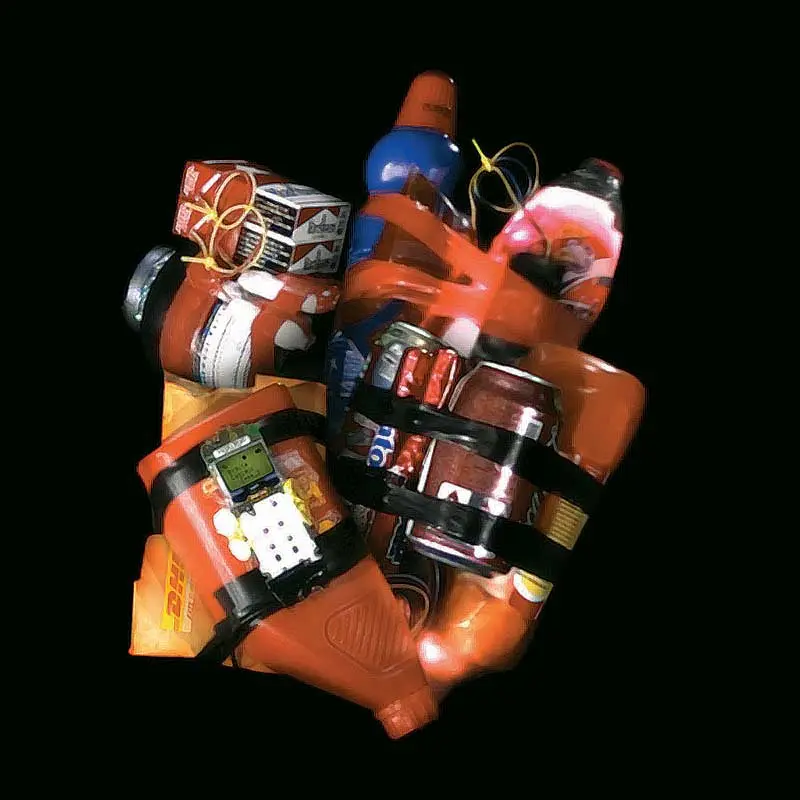
“The container (group) names were not intended as restrictive boundary-setters,” says Bambozzi, “but as promoters of the plurality of ways of interpretation and communication” (while producing artwork as well as while trying to make some sense of it, with whatever baggage was available to the viewer). All videos in one same container was projected sequentially, unless on LCD screens. The identification labels for each piece were located just outside the projection space, on the open container door, a choice disruptive to the experience. To viewers who knew a little about some of the artists’ works, guessing whose video was on was a constant exercise, but feasible at times, but what about the laymen audience that cruised through the park? The pre-established notion of a space reserved for video inside the container was constantly disrupted by the opening-and-closing of curtains, in failed and frustrated attempts to identify what was being watched. Communication at this point was severed. Bambozzi may have been right about containers not being the best context in which to show video and external labels were definitely also not the best way to identify the videos. But what would that be? “The objective in showing the video was to draw up a large panorama of Brazilian video art, from various different generations, curated by artists (and video-makers themselves) and having in mind a non-specialized public, but without diminishing the quality of the works shown or making concessions thinking that the public might not understand,” says Daniel Roesler. According to Bambozzi, the show “was aimed primarily at a public in transit and not at art followers who have been pre-exposed to video art and have developed some sort of a relationship with it and preconceived notions surrounding their relationship with it as a medium and its content.” The main audience was the average park visitor, who happened upon the containers and out of interest cruised inside, uncommitted to a feeling of having to leave with any type of conclusion or realization, “a transitory audience not necessarily expecting to get anything specific out of what they saw,” says Bambozzi. One of the most important factors of this exhibition to the organizers seem to have been their proposal of an alternative way of making art (in this case video art) accessible to a wider public and penetrating a fresh and untainted group of people approaching the experience out of curiosity and as a temporary experience and not as an anticipated means to an end or in keeping with a prior agenda. In this light, the organizational format gains priority over the content. But is not the foundation of a visual exhibition to successfully communicate visually, as opposed to intellectually and with hindsight? Questions remain unanswered. Does the instigating semantic and intellectual premise serves as a guide for a less than inspiring arrangement of videos (for the initiated viewer)? Whatever the answer, Container Art’s achievements, which merit respect lies in stimulating questions such as those posed here, thoughts inspired by their questioning of the means and medium, as well as generously promoting art for a wider audience, demystifying it to a certain degree, but not stripping it of its complexities. After all, art not only inhabits the eye, but also the mind, of the beholder.
CAMILA BELCHIOR