
This recent
exhibition’s emphatic title was as ambiguous as to its content. When General
Millán Astray shouted Long Live Death! at the University of Salamanca’s Main
Hall in front of the philosopher Miguel de Unamuno (then the University’s
president), his words announced the extermination plans that the rebellious
military officers who rose against the Spanish Republic in 1936 had devised as
the only way to break down popular resistance to their fascist project. It took
them almost three years to achieve this goal, but so much innocent blood was
spilled during those cruel years that the writer George Bernanos, a Catholic
and Monarchist, wrote in horror, “Here people kill like others harvest crops.”
And it is well known that Admiral Canaris, who was the military attaché of the
Nazi German embassy in Madrid, worried about the ease with which his Spanish
“comrades” shot people. His concern was understandable: the Nazis had yet to
fully implement their own mass extermination plans.
This exhibition was certainly a sinister way to celebrate death, and it was not connected to the way that death is celebrated in Mexican funerary rituals. As can still be seen in the parts of Mexico where the practice survives, the Day of the Dead is a true festival, and the departed are brought offerings of many kinds, among them the famous sugar skulls that so impressed Sergei Eisenstein and still impress foreign tourists today. These kinds of rituals belong to social formations in which life and death are not separated by an insurmountable gap and in which the dead are treated as if they were still an active part (in their own way) of the society of the living. This is why they are invoked, prayed to, and given offerings. To modern individuals, this might seem a barbaric or perhaps picturesque custom that one is willing to photograph and document but not participate in.
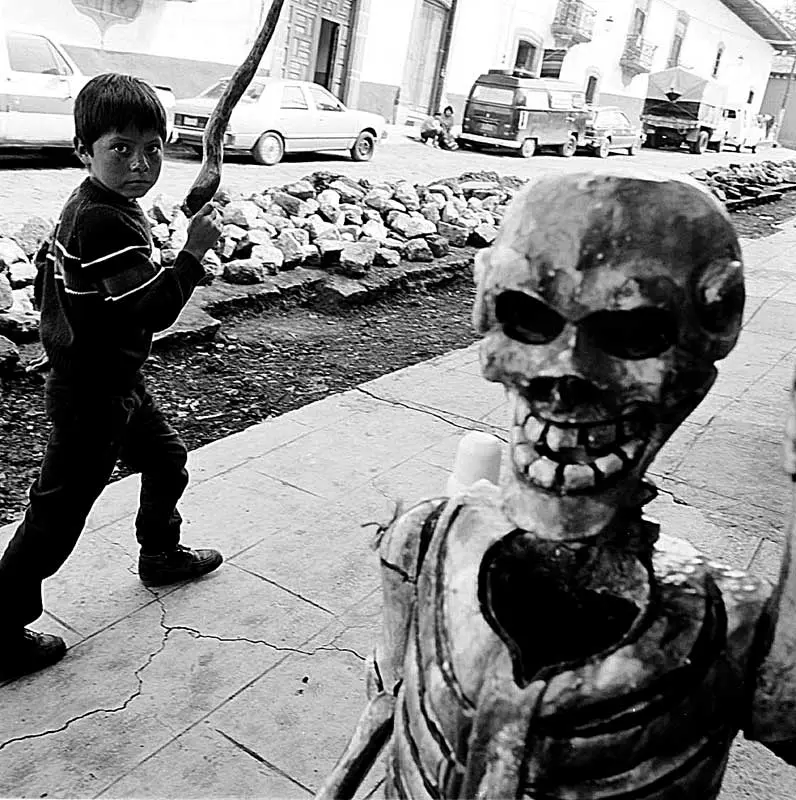
In the work of Thomas Miessgang and Gerald Matti, the two Austrian curators of this exhibition, there was certainly an attitude of repulsion and attraction toward what is considered exotic. (The show was organized by the Vienna Kunsthalle and later presented at the Centro Atlántico de Arte Moderno in Las Palmas, Gran Canaria, with modifications by Álvaro Rodríguez Fominaya.) One would need to think about the phenomenon of death in extremely ambiguous terms in order to bring together such dissimilar expressions of its artistic and social consideration. This is the trouble with exoticism, which sequesters the object of its fascination: it doesn’t see the actual subject; it finds only what it wants to find.
The curators of Viva la muerte so ignored the specifics that make death historically concrete that they were able to gather together works as incompatible as the British artist Melanie Smith’s aerial videos of Mexico City and Teresa Margolles’s Sonido de la morgue or En el aire. What do these works have in common, other than the fact that both Smith and Margolles live in Mexico City? The connection between death and Spiral City, Smith’s video, only exists if we admit that Mexico City seen from the air looks as dead as Dresden when photographed by Richard Peter after the devastating firebombing by the Allies in 1945. And the connection to death in Margolles’s works is not self-evident, either, even if both refer directly to the city morgue. Death is one thing, and corpses are another, a distinction that even we—so distant from the death cult of ancient Mexico—recognize and that Margolles stages crudely by treating corpses as raw materials. In fact, Sonido de la muerte is composed of recordings of saws cutting corpses at the morgue, and the bubbles that appear in En el aire are made with the water used to wash those corpses.
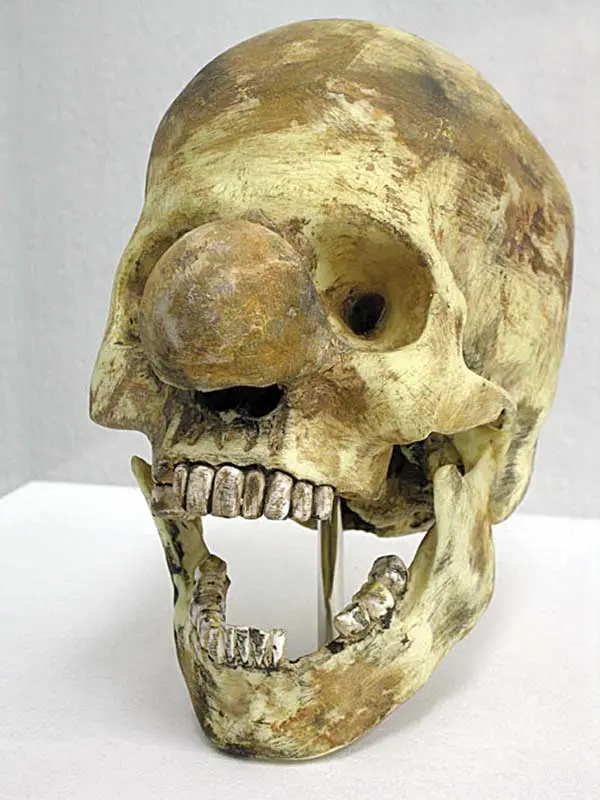
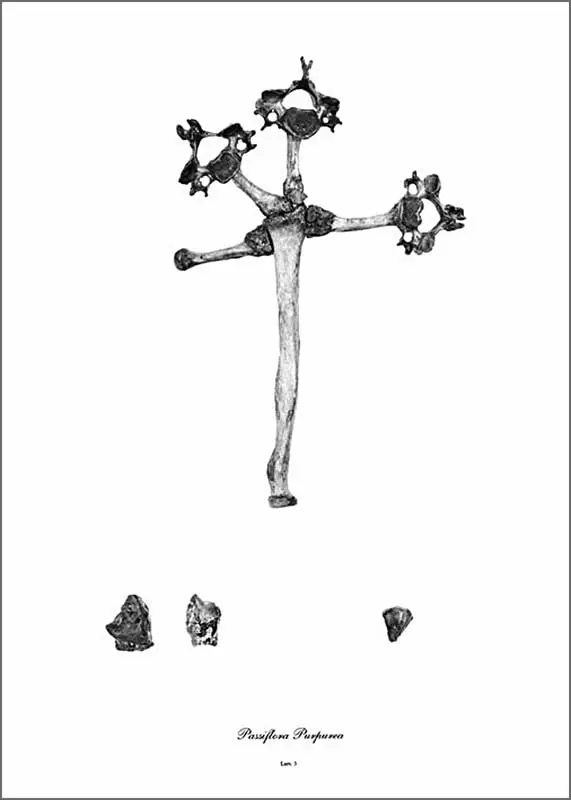
And while it is true that the use of corpses in Margolles’s art usually unsettles viewers once they realize the funereal origin of her materials, her use of corpses is very different from Juan Manuel Echavarría’s. This Colombian artist exhibited a group of works whose title, Corte de florero, refers directly to the desecration of peasant corpses that were common practice in Colombia in the 1950s, when machetes were used to create the “head cut,” the “necktie cut,” the “flannel cut,” and other atrocities. Echavarría’s Corte de florero evoked the sinister episodes in the 1990s when Colombia’s paramilitaries replaced the machete with the electric saw but retained the cruelty of their predecessors. Each of Echavarría’s works has the shape of a flower or a flower arrangement; they are composed of bones that could be human but nevertheless are not simple bodily remains, as they are overdetermined by the effective and long-lived allegorical associations in Europe and the Americas that have personified death in the image of a skeleton carrying a sickle, an hourglass, or both. With this allegorical connection, Echavarría’s work emphatically distances itself from the forensic objectivity of Margolles’s work, which, as a whole, poses a forceful challenge to Mexico’s traditional cult of the dead as well as contemporary allegories of death.
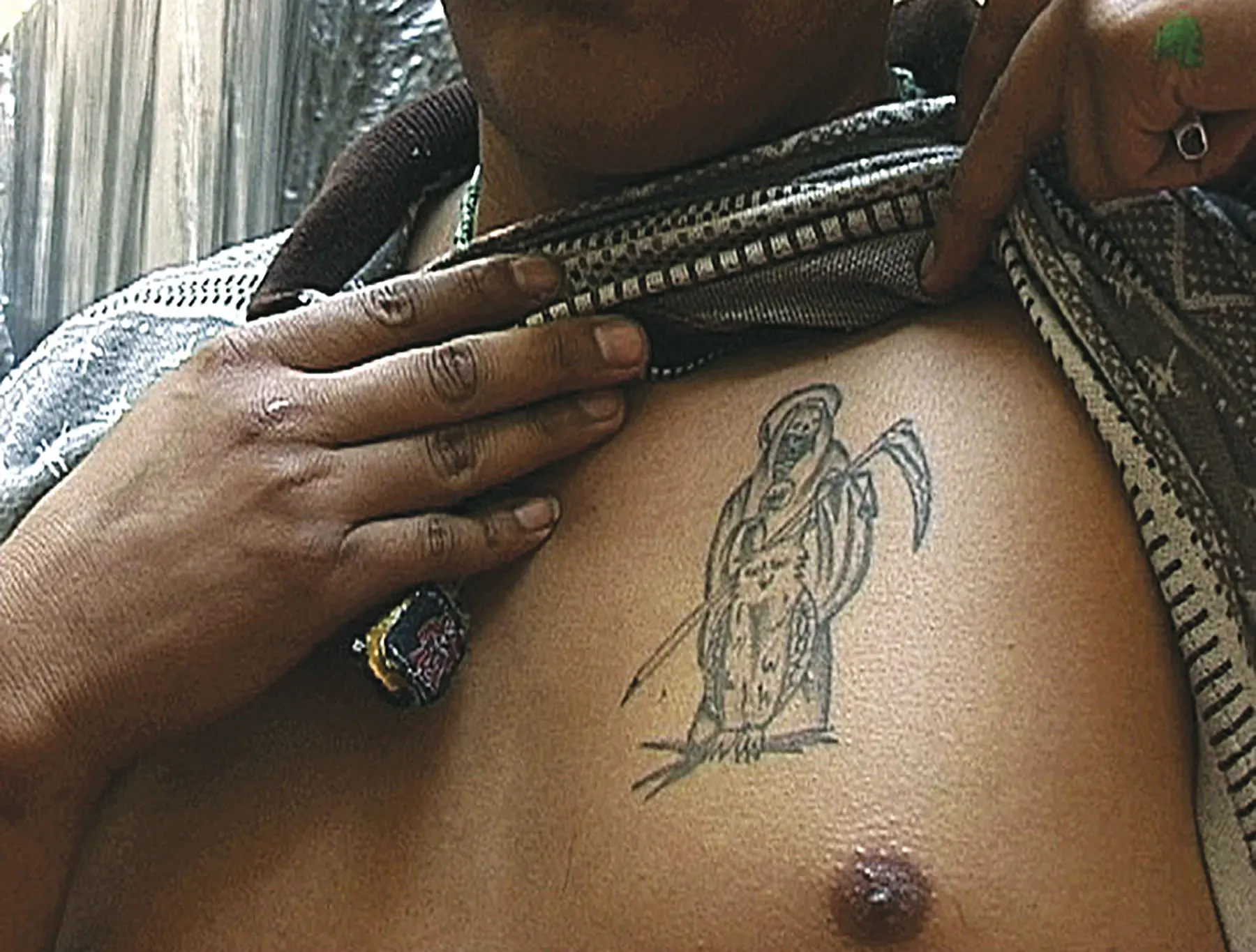
The most notable emblem of this category is perhaps the cult of Saint Death, documented in this exhibition through Stephan Lugbauer’s photographic series titled Ramón y la Santa Muerte. Two preexisting images fuse in the image of this saint: that of the Virgin Mary as enshrined in Catholicism and that of Death as a sickle-wielding skeleton, as mentioned earlier. Along with media reports about the content and extent of this cult, the information included in this show allowed the viewer to note that its rapid expansion in Mexico overlaps with the geography of poverty and with the hardening of social tensions over the last decade, the most recent expression of which is the war currently waged by Mexico’s government against organized crime, at a cost of more than 3,000 deaths, so far. This is an exorbitant figure for what is strictly a law-enforcement campaign, but it is not so much in the context of Latin America. According to information presented by the Argentinean journalist Jorge Mariarrodriga in Madrid’s El País, forty-two percent of all violent deaths in the world in 2006 took place in Latin America. This is a chilling piece of information when one takes into account that, at the very least, the conflicts in Afghanistan, Iraq, Palestine, and Darfur were fully and bloodily active during that period and that Latin America represents a little over seven percent of the world’s population. Obviously, a complex of singular economic, social, and political factors are at the root of such statistics; these factors, however, must appear as alien and incomprehensible to the victims of violence as they are for foreign visitors and observers. Given this, one could advance the hypothesis that the unexpected appeal of the cult of Saint Death is an attempt on the part of its practitioners to manage, by means of an allegorical personification, a situation that is as threatening as it is incomprehensible and impersonal.
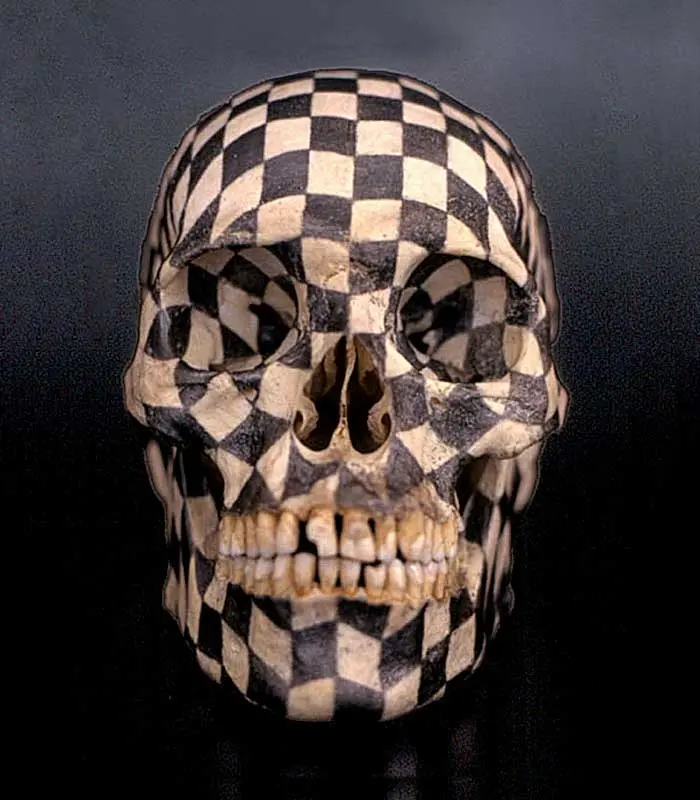
At any rate, the truth is that Saint Death, like Echavarría’s funeral flower arrangements and the various skulls showed by Carlos Amorales, Vik Muniz, and Gabriel Orozco in the exhibition, belong to completely separate order from that of statistics and the excessive levels of criminality in Latin America. For this reason, one must question the inclusion of works by the photographer Bastienne Schmidt: a series of gripping black-and-white photographs that combine images of corpses and mass graves in South America with the Day of the Dead and with bloody representations of the Stations of the Cross (also from Mexico). This mixture, amplified throughout the exhibition by the mixing of photographs of accidents and crime scenes by Enrique Metinides (Mexico’s Weegee) with the Spanish photographer Cristina García Rodero’s images of religious processions consistently enforced the misunderstanding implicit in the exhibition’s title, Long Live Death! It is understandable that those who are directly exposed to situations of extreme violence, which seems or are truly ungovernable, appeal to myths in their attempt to control or exorcize their circumstances, or at least to imagine that the myths can ameliorate their vulnerable state. Less understandable, however, is how two European art specialists could design and stage a curatorial discourse that suggested the explanation for Latin America’s raging violence is in the culture, with roots both pre-Columbian and Hispanic—that celebrating death fosters crime or, at the very least, inures one to it.
This surreptitious discourse tended to nullify the work of Regina José Galindo, Iván Edeza, José Alejandro Restrepo, and Jorge Macchi, all included in the show. These artists strive to bring to the fore the strategies of domination and political and social exclusion that are so responsible for the current explosion of violence in Latin America.
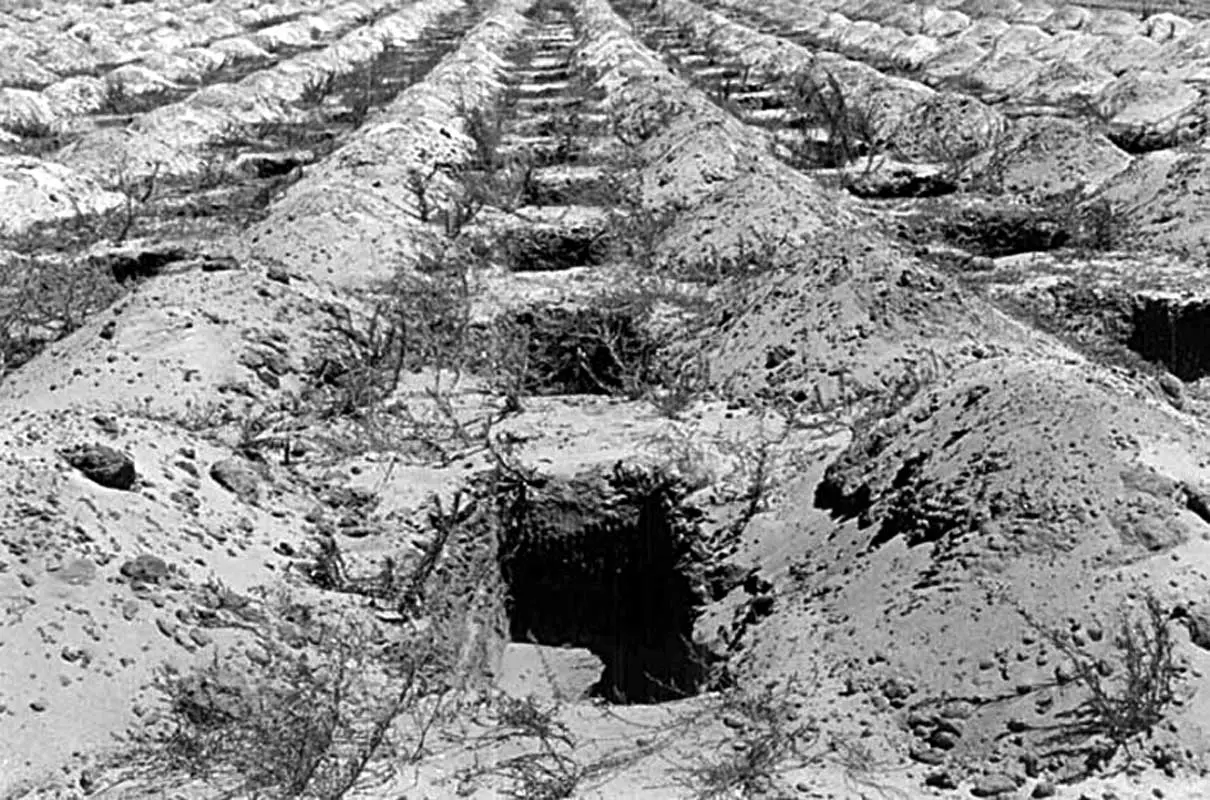
Santiago Sierra’s 3.000 huecos de 180x50x50cm cada uno brought together a series of photographs that documented an event programmed by the artist at the Dehesa de Montemedio in Cadiz in 2002. This event was not associated with any cult or with any festive celebration of death. Three thousand holes were excavated by a group of illegal African immigrants in Spain. They complied with the artist’s request, which seemed utterly incomprehensible, and they followed a plan that in its impeccable geometric regularity openly evoked the “instrumental rationality” of the Nazi’s extermination plans. The same plans, ever since, have had many imitators in our unfortunate continent.
CARLOS JIMÉNEZ