
Immersed in a sort of (standardized and pragmatic) post-ideological present, the way that many artists continue exploring the social imaginary, interested in the power of art as the creator of venues for experimentation capable of re-creating new worlds is significant. The work by Pedro Reyes (Mexico, 1972) belongs to a group of experiences that react to personal situations and to the context surrounding these, as the artist mends social and political preoccupations with a highly charged poetic and metaphorical determination. His experiments, designs, projects, or campaigns range from the organization and establishment of proposals and solutions in the face of specific social issues to the instrumentation of experimental collective exercises and the search for imaginative means to transform the landscape, to having an everyday experience that is different.
This individual exhibit at the Bass Museum of Art constitutes a summary of Reyes’ creative arsenal, which elicits the incursion of the spectator into the diverse frameworks of his artistic practice. Drawings, objects, videos, and other documents are displayed throughout the exhibiting halls, café, bookshop, and several other areas, where they are articulated under 47 Undertakings (tasks, enterprises) like a “glossary of terms” or “instruction manual” that effectively interrupts the process usually used to “appreciate art.” Thus, the spectator was exposed to a series of exercises and documentations of his diverse actions and works, created from 2000 to the present, which reveals the progression of conceptual strategies by Reyes.
In 1996, Pedro Reyes decided to occupy La Torre de los Vientos (The Wind Tower, an abandoned monumental urban-sculpture project in Mexico City) and to convert it into a laboratory for artistic interventions. Since that time, he has continued to explore the ways space can be created by simultaneously combining utopist ideas with functionality, technological with handcrafted elements, personal fantasies with collective aspirations.
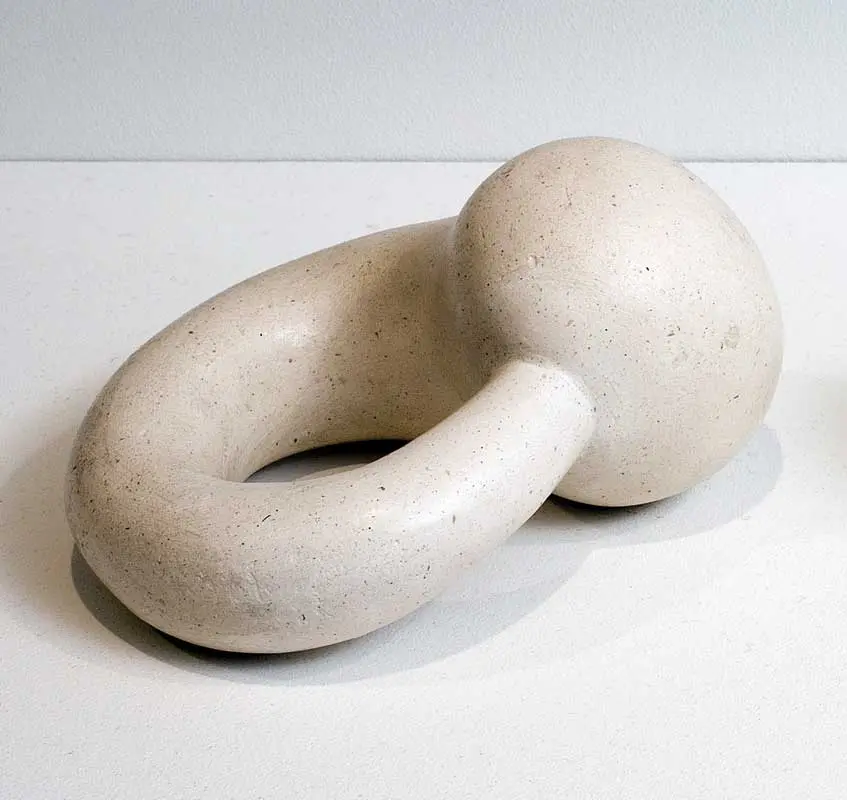
To Reyes, certain buildings, such as La Torre de los Vientos, are like a “time machine that travels to other epochs and offers the possibility of visiting unknown dimensions.” Strange mock-ups of cities (organic-futuristic), plans, several artifacts, and filmic registries, refer somehow to the past or to an imagined future. Referents such as the Klein Bottle and the Möbius Strip, the drawings of various types of plankton by Ernest Haeckel, cellular tissue, Jesús Soto’s Penetrables, and the physichromie series by Carlos Cruz-Díez, are reinterpreted in Reyes’ structural designs and in the creation of series such as Las Capulas, inhabitable structures that represent “the antithesis of a standard construction.” Spherical, soft, elastic, permeable, translucent, and suspended in air, La Capula must be: “a sort of space where is possible to float,” a creative release from ordinary limitations that Reyes connects to another of his works: a Pirámide Flotante (Floating Pyramid, 2004) in mid-ocean, which allowed people to interact with the work as they entered it and sat on its edges.
The need for a leading space for the individual has motivated many of Reyes’ sculptures, as these unleashed an activity and enable a specific psychodynamic. Several objects and videos showed works made to be used, to privilege the public’s experience: A Leverage (2006), which has at one of its extremes nine seats and only one facing toward the center; a Sombrero Colectivo (Collective Hat, 2004), which consists of several Zapatista-style hats that form a sort of cellular weave that is supported by several people, or a series of sculptures that mimic electric guitars of different typologies (Instant Rockstar, 2004). These are employed by volunteers as a cathartic ritual in the Tianguis Cultural del Chopo, a place where Puns, Gothics, Head Bangers, and other groups associated with rock music gather.
An anthropologically and aesthetically inclined work: an art that sees itself for the function it can perform in society,1 which in the artist’s own words: “more than changing the world, it must be capable of creating new worlds.” In the video Baby Marx (2008), old left-wing icons: Marx, Engels, Lenin, Mao, and Ché Guevara, are brought back to life as humorous marionettes with a microwave. Ready for action, they appear as stars from a reality show: “to fight the last battle against the global empire of capitalism.” With humor, Reyes unleashes a sharp irony on how forgotten not only such historical figures and the examples they set remain but also the set of ideals they represent and the possibility of believing once again in some type of ideological struggle, in societies that are incapable of attempting social change. On the face of this, Reyes proposes a reconsideration of the meaning of the visions and battles by the political left as the driving force of a sort of “political awakening” from which to build a new future.2
Whether it is through the organization of discussion forums centered on the Iraqi conflict (Ideas for Iraq, 2008); the creation of the Ciclomóvil (a man-powered vehicle, 2007–2009), an ecological alternative that could decrease pollution and alleviate traffic; the rehabilitation of La Insignia Torre in Tlatelolco (Mexico City), an abandoned modernist building transformed in 2008 into a vertical park; or the transformation of weapons into shovels and then into trees with the collaboration of the citizenry in Palas por Pistolas (Weapons Into Shovels, 2007), Reyes is able to conciliate fantasy with concrete realities, imagination, and social activism in a continuous preoccupation concerning the ways in which space can be transformed to improve our existence.
NOTES
1. Abel H. Pozuelo: “Ética y estética de Pedro Reyes” at http://www.elcultural.es/version_papel/ARTE/21522/etica_y_estetica_de_Pedro_Reyes
2. Cfr. Roberts Downing: “The political icons of the 20th century perform once again in the Mexican artist’s semi-comical reflection on history and ideology”
at http://www.tokyoartbeat.com/tablog/entries.en/2008/11/yokohama-triennale-2008-pedro-reyes.html
WENDY NAVARRO