
Denise Carvalho’s latest curatorial effort Preemptive Resistances: Critical Pointers in Latin American Art took an unequivocal stance in defining the art of the region as inextricably tied to its politics. The exhibition, on view at the Westport Art Center in Connecticut from January to March, included the work of eight artists from six Latin American countries and the United States. Tying them together was the theme of “preemptive resistance,” an idea diametrically opposed to the Bush Doctrine of anticipatory attacks against potential enemies. Instead, “preemptive resistance” acknowledged an inherently defensive attitude among artists from Latin America, or as the catalog described it, “an activist posture of resistance.”
Carvalho demonstrated audacity in broaching the question of what constitutes Latin American art, as this remains a contentious issue that seems to garner discussion only on the occasion of blockbuster exhibitions. The Westport Arts Center’s presentation was hardly that – the main gallery consists of a long rectangular room with a square alcove on one side – yet the exhibition was tightly focused and proposed a theoretical model that surpassed the boundaries of this particular show. Although I am not sure that I fully agree with Carvalho that Latin American art is political by nature, I do very much admire how she tangentially addressed another question: Where is Latin American art? The curator, herself a Brazilian who has lived in New York for decades, argues for a diasporic Latin American art by including a majority of artists residing in the United States (most of them in the New York area). In so doing, she acknowledged that they form part of an international community that is not limited by national borders. By virtue of the artists’ geographical location, their work often (preemptively) positions itself in relation (resistance) to the policies, economy, and culture of the United States.

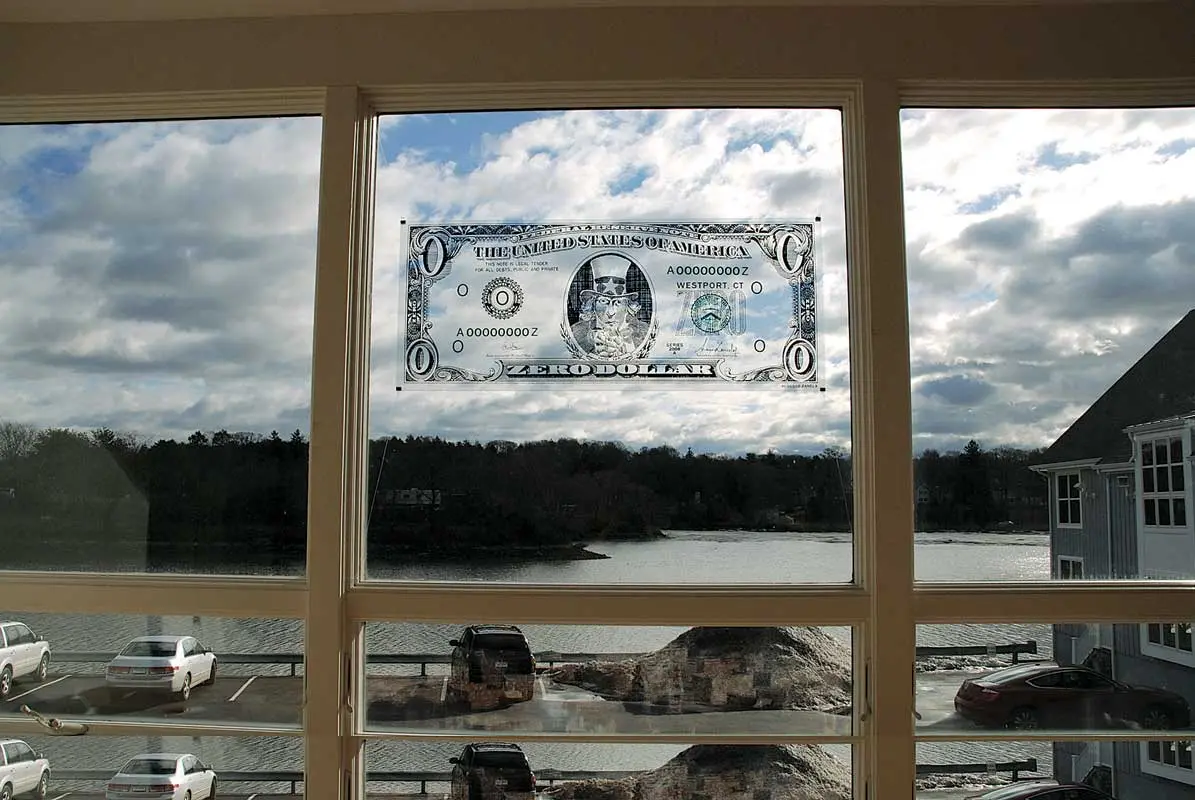
José Ruiz and Augusto Zanela both gave a specific face to the United States: that of an Anglo-Saxon male. Ruiz’s digital print Descendents of Ascension: Conservative Morph Portrait morphed together with the physiognomies of five US American conservative commentators: Glenn Beck, Lou Dobbs, Sean Hannity, Rush Limbaugh, and Bill O’Reilly. The final product looked strangely familiar – a late-middle-aged man with soft features and a half-smile who would appear almost harmless except for his prominent white pupils, deliberately highlighted to make him appear as a zombie, holding the viewer’s gaze in an ominous, hypnotic stare. The piece opposes the familiar tropes of portraiture as revealing the interior state of the sitter and of the eyes as the windows to the soul by referencing the superficiality and repetitiveness of the discourse offered by these seemingly indistinguishable personalities. The final morph portrait depicts a US American everyman, the kind that, as repeatedly emphasized by the very people referenced in the image, is under threat of becoming an endangered species as the demographic of the United States becomes increasingly diverse. Augusto Zanela’s everyman is none other than Uncle Sam, pointing out from a zero dollar bill printed on acetate and installed over the window of the gallery overlooking the river. Referencing Cildo Meireles’ Zero Dollar, Zanela’s piece, titled No Commercial Value (This Note is Legal Tender for all Debts, Public and Private) links currency and war. It also referenced the devaluation of the dollar and the worsening US economy, which has had prejudicial repercussions throughout Latin America.
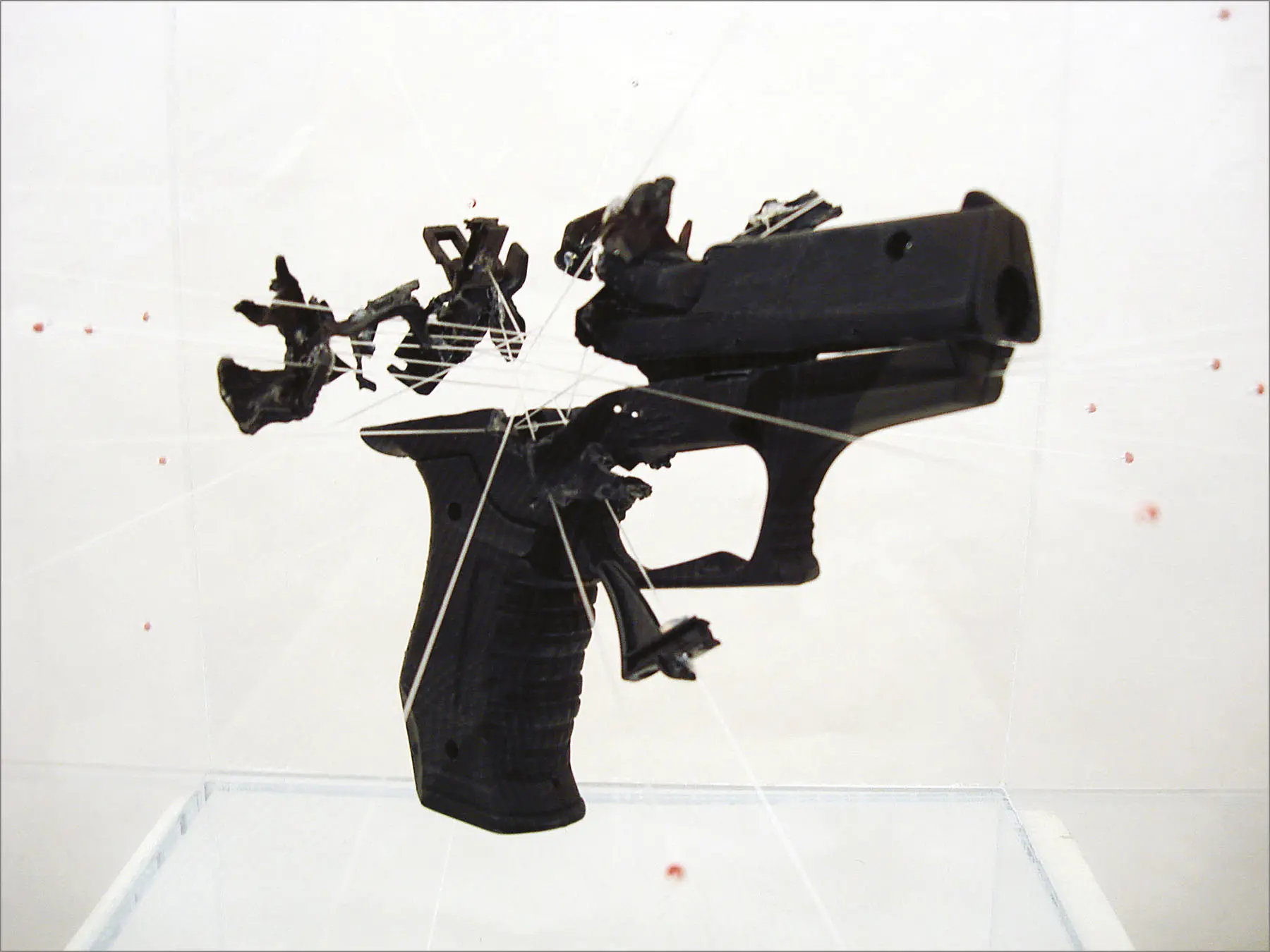
The theme of violence implied in Zanela’s piece is made explicit in the sculptures of Vidal Centeno. The artist destroys various plastic toys – a gun, a fighter jet – and suspends the fragments in mid-air, creating explosive compositions that recall the Futurist equation of dynamism and war. A subtext of Centeno’s work is the US military presence in Puerto Rico. His images recall the sensationalized violence of film and television, but by creating his sculptures out of children’s toys, he traces a cause-effect relationship that is disarming. Alex Villar also obliquely references military might in his video Crash Course. The artist is shown confronting a Hummer against the backdrop of three cities – New York, Beijing, and Copenhagen – which appear strangely alike. On one level, the video, based on the confrontation between an unarmed protester and a military tank in Tiananmen Square, celebrates the position of the underdog against the overwhelming forces of violence. On another, it reveals contemporary society’s obsession with cars; in so doing, the artist points to the uncomfortable relationship between violence, consumerism, and desire.
A pointed dialogue with the United States is also established by Francisca Benitez and Cesar Cornejo through architectural references. Benitez juxtaposes domestic architecture with commercial ventures. Her series Real Estate Mis-Opportunities appropriates a group of newspaper advertisements for home sales in Brooklyn but removes the photographs of the houses, leaving in their place black or white silhouettes. Made in 2006, the images anticipate the worsening housing crisis in the United States and critique the circumstances that led to individuals speculating on the values of their homes. Cesar Cornejo engages with the architecture and corporatization of museums, superimposing images of the Guggenheim Museum in New York to a maquette of roofless shanties placed over a mound of dirt. The image of the museum is made visible through circular mirrors placed on the ceiling directly over the piece. Cornejo’s piece, titled Museumorphosis I, comments on social and geographical inequalities and ponders the relevance of art for impoverished communities. Rejecting the model of exporting culture presupposed by the Guggenheim franchise, the artist has been working with the city of Puno, Peru on a different type of museum project, involving the creation of small galleries in people’s homes that would empower members of the community with the cultural agency.
Like Cornejo, Alessandro Balteo Yazbeck has also elaborated a body of work around the theme of architecture and the dichotomy between development and underdevelopment. Balteo’s main subject concerns the city of Caracas and its recurring dream of modernity, as implemented in the Plan Caracas urban project in the 1970s and again in the 1990s. The artist appropriates images from a pamphlet of the Plan Caracas which contrasts the city’s shantytowns with modernist functional architecture. The irony is that because of a faulty scanner used by the artist to scan the original booklet, the images have colorful grids superimposed on them, in the manner of Carlos Cruz-Diez. Through this series, the artist effectively challenges the efficacy of geometric abstraction, whether in architecture or in painting, to address social problems.

Artists in the exhibition also raised interesting questions on the relationship between the individual and the collective. Andrea Juan visited one of the most remote places on earth, Antarctica, to execute a series of work intended to raise environmental awareness. In Methane IV, a man and a woman are intertwined through long nets of pink, purple, and blue. The imagery is eerie and otherworldly, but to view it strictly on formal terms would be to lose part of its meaning. Winds blowing in the background signal atmospheric change as do broken ice chunks floating on the ocean. The link established between the man and the woman functions as a metaphor for all of humanity’s interconnectedness. In short, the piece leads us to reflect on our responsibility to our earth and to each other.
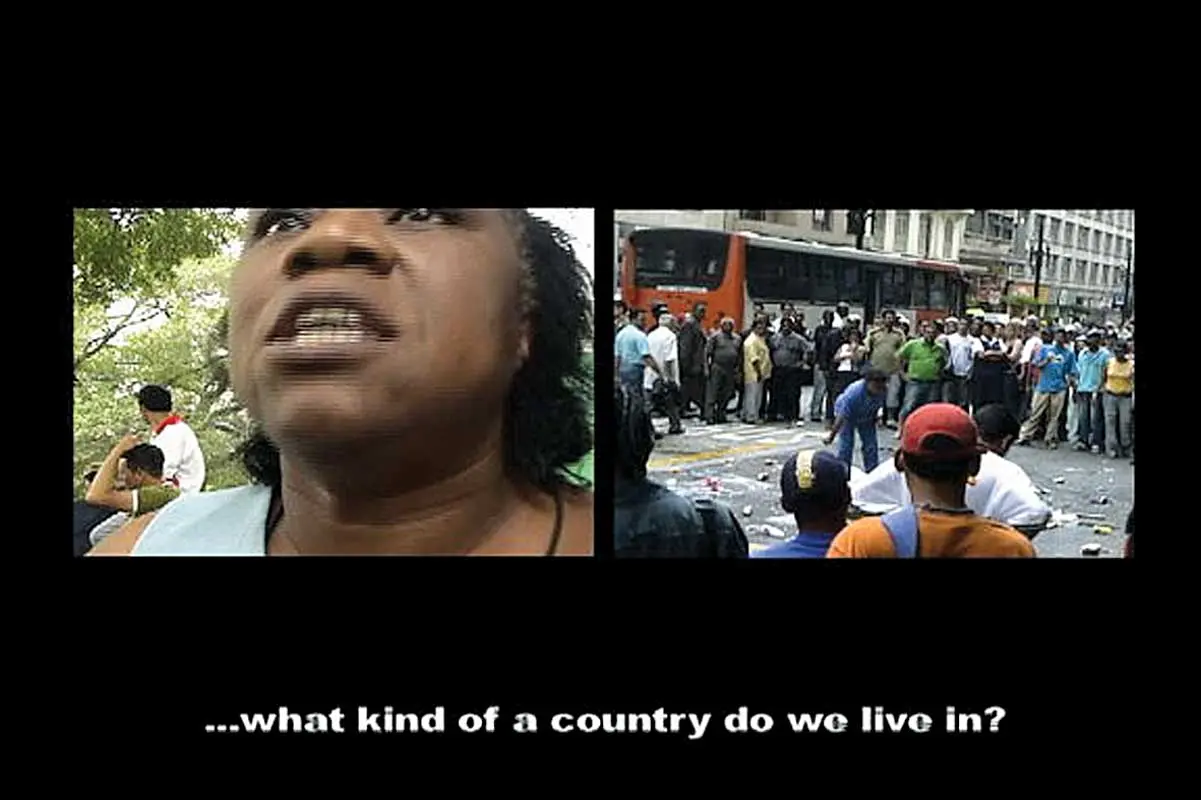
Carlos Motta’s videos also raise the matter of social responsibility. He presented three short pieces documenting protests in São Paulo, Santiago, and New York. In Brazil, the struggle involved street vendors versus the government, and the protesters argued that the right to work is a necessary component of democracy. This video, titled September 22, 2005, asks the viewers to question their own assumptions about democracy and to ponder the ways in which inequality might be built into prevailing ideologies. As an artist, Motta frequently fades into the background and allows protesters and citizens to speak for themselves. His work advocates social consciousness but leaves open the manner in which change can be achieved.
Preemptive Resistances tackled a number of sensitive issues with clarity and coherence. Reviving the age-old question of what is Latin American art, it smartly argued that the answer might be found not within distinct national traditions but through a contingent, relational approach that acknowledges the place of Latin America within a global context.
TATIANA FLORES