
Photographer Res (Raúl Stolkiner, Cordoba, 1957) is a methodical artist who habitually groups his works into thematic or concept-driven series. In that sense, the idea of showing his work of the last twenty-five years at the Cronopios gallery in Centro Cultural Recoleta could have been a simple challenge: it was a matter of following the thread of a well-structured chronology. However, alongside curator Valeria González—one of the most important specialists in contemporary Argentine photography—Res opted for presenting his work in context, tying it not only with his personal organization system but also with the events of his socio-political space. A decision of this kind implies a certain level of demagoguery, and yet res’ political references are entirely understandable and deserve attention. This is not an artist who approaches the political as a “topic, but a man who lived in exile during the most recent military dictatorship, member of a generation accustomed to thinking of itself under the light of the country’s historical events. Valeria González traces, in collaboration with the artist, a careful reading that intertwines his aesthetic quests and findings with the often incomprehensible story of Argentina’s history.
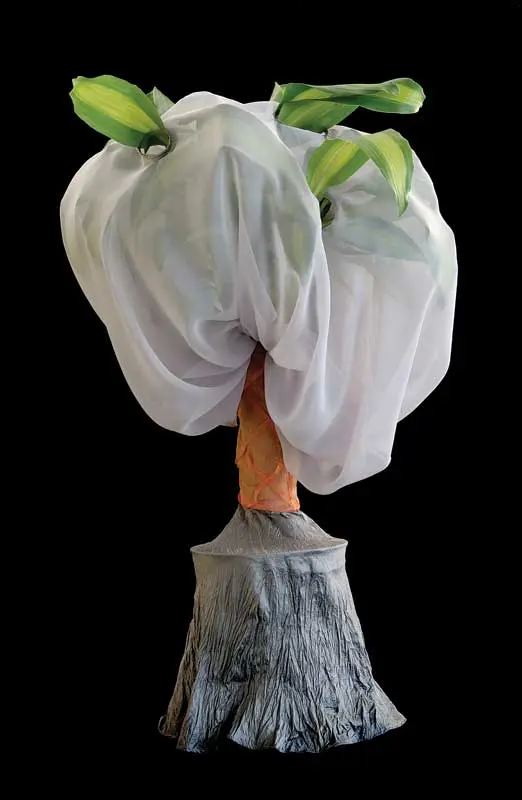
The series from which the curator takes in order to structure the show includes some projects that are clearly marked by political commentary, such as ¿Dónde están?, a set of long-exposure shots where the film is impregnated with superimposed people and places charged with allusions to the disappeared in the middle of the Democratic recovery period, or Necah 1879, one of Res’ most rigorous essays, which explores the Spanish conquest and colonization of Argentina’s Patagonia region through the combination of historical and contemporary photographs. Later, other series reveal res’ vital interest in the history of art and its clichés, for example, El plastiquito, a set of almost-Pop works from the 1990s that record objects and fruits wrapped in nylon, seemingly innocent and then, after a more careful reading, sordid, and especially in Conatus (free recreations of famous images from world painting, created in collaboration with Constanza Piaggio) and he more recent Plantas vestidas, where vegetal characters pose in emulation of classical portraits. But it is in the third category of works where the most interesting corners of res’ oeuvre are revealed: in Yo-cacto, where the photographer places himself in a process of human-vegetal mutation, and above all in Intervalos intermitentes, a hard-hitting essay about the gaps that join and separate a moment from the next, the person we are right now to the other person we will be in the future, immediate or otherwise.
In Intervalos intermitentes, Res explores time in an urgently real and embodied way. His camera captures a female boxer before and after winning about by TKO in only 46 seconds; not a full minute has passed and yet the face is a different one, the bags under the eyes reveal the density of what she has lived through, a smirk takes the place of the seriousness of uncertainty. In that mode, ready to see everything, res approaches even his own affections, his mother before and after becoming a widow, his father sometime before dying, himself using a shirt that was his father’s. Freed from more general concerns —the world, art, politics—, the best res perhaps emerges here: conditioned by a painful history and decided to transform it into images that make it impossible for us to remain indifferent.
EVA GRINSTEIN