The history of the Havana Biennial, which reaches its 25th anniversary with its 10th edition, synthesizes all the lights and shadows of Cuban art, like a barometer for the relationship between politics, culture, and society on the island.
Havana continues to be an odd international meeting place: apparently located in the periphery, it agglutinates tensions like a “big center” for the production of art yet possesses none of the means for distribution, market, and promotion. These lacks are plugged from the platform of the international forum, offering support of visibility for art produced in Cuba, even beyond works participating in the official event. The plurality and vitality of the Cuban scene, despite its difficulties (absence of a local market, bureaucratization of exhibitions, scarce or simply nonexistent technical means of production, high or unreachable costs) is able to carve out space for itself in studies or alternative spaces during the Biennial, highlighting the energy of the new generations of artists educated in its Fine Arts schools but mostly at the Instituto Superior de Arte in Havana.
It must be noted that the direction of this edition has taken a decisive step forward in the integration of this extensive and intense emerging art movement, including in the official workshops program a review of the work of artists who participated in the Cátedra de la Conducta sponsored by the ISA and directed by Tania Bruguera, which for an entire week presented at Galería Havana a different and always stimulating program. The Cátedra de la Conducta is an educational project, begun six years ago, that allows graduates from the ISA to develop an open curriculum for two years on the basis of seminars conducted by artists and specialists from all over the world. The quality and rigor of the proposals presented allow us to sketch a tentative map of the generational renewal underway in the Cuban visual arts scene: Javier Castro, Grethell Rasúa, Hamlet Lavastida, Jeannette Chávez, Luis García, Renier Quer, Wilfredo Prieto, Celia González and Yunior Aguiar or Susana Pilar Delahante, among others. Along with them we need to mention Ayuda Humanitaria, by Spain’s Nuria Güell, who also participated in the Cátedra. The workshop visit program reveals yet more names, such as Rodolfo Peraza and J. S. Vincench.
The Biennial’s central topic, Integration, and Resistance in the Global Era, is a wager for debate that opens up to a critical dimension, problematizing the international art context—and logically also Cuba’s—in many directions. Assuming that globalization can also be understood as a process of new cultural and social interconnections that demand globalization of knowledge, of information, of rights and liberties, or of wealth, it can be appropriated and used as a device for the execution of other emancipatory utopias, challenging its reduction to financial economics. The starting point could have fostered further polemics, but while in many cases the works themselves did not posit a clear dialectical engagement with the issue, in others the reading was too obvious or simplistic, underscoring the idea of globalization as a unidirectional way of thinking in Capitalism and deactivating its intentions with slogans and flags. The important question proposed by the theme of the Biennial was to think from what’s difficult.
That is why the highlights are works that are not instantly obvious, like Regina Galindo’s: her marble bust self-portrait that from an unsettling kitsch style with nechrological undertones challenges the celebratory models of memory.
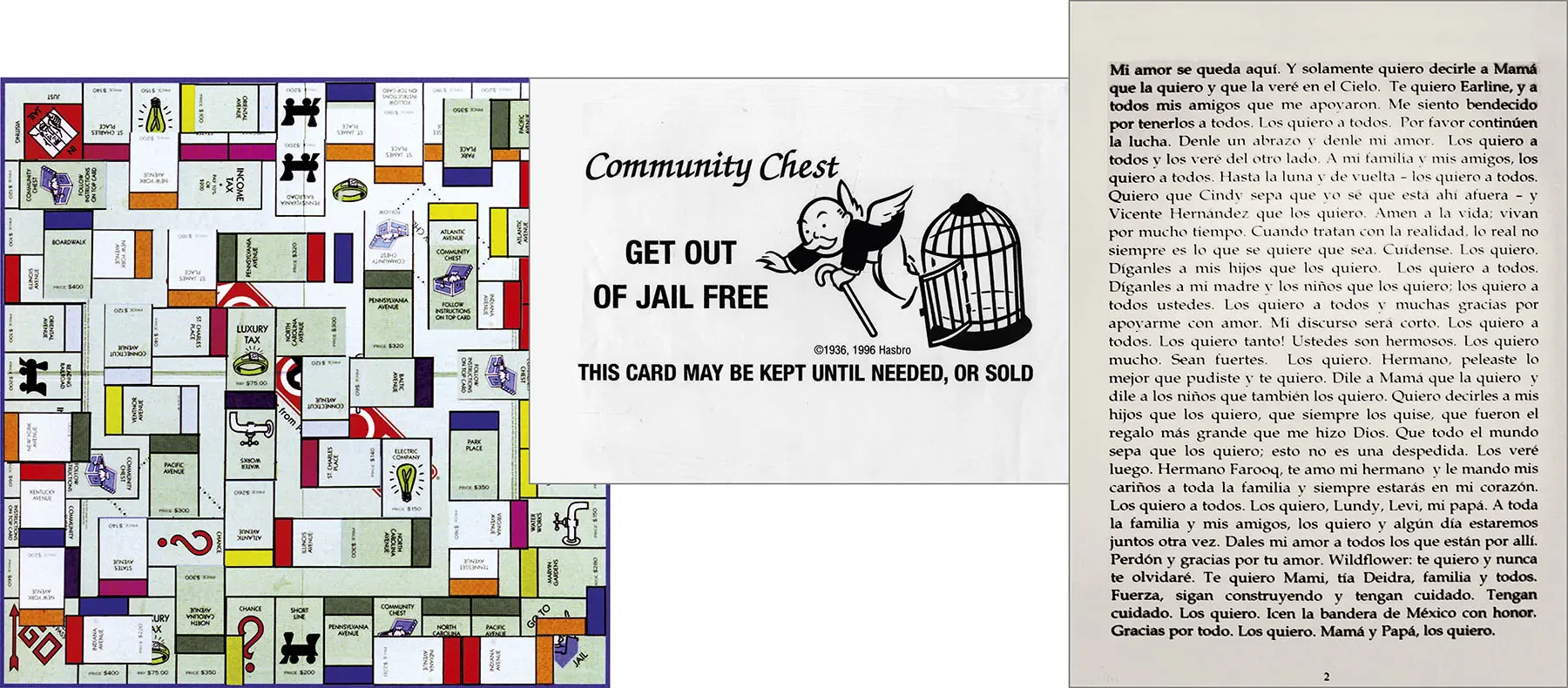
Perhaps one of the most rigorous interventions was Luis Camnitzer’s Aula, at the Wifredo Lam. It is an adaptation of a 2005 work that underscores the conditions of detention of illegal immigrants in the US as well as the global inequalities that drive them in their journey, even to certain death. While proposing the 11-point Havana Manifesto, which demands an idea of globalization understood as a redistribution of power and wealth, on the classroom chalkboards he alternates the writing of a poem said from a position of power and the response of the dispossessed: "you have the dough and I work/ you eat and I watch/ you have fun and I wait/ you have the bullets and I die/ you explain and I don’t understand your dogma." A labyrinthine reinterpretation of the game of Monopoly and the contents of several letters by immigrants complete a precise and austere installation.
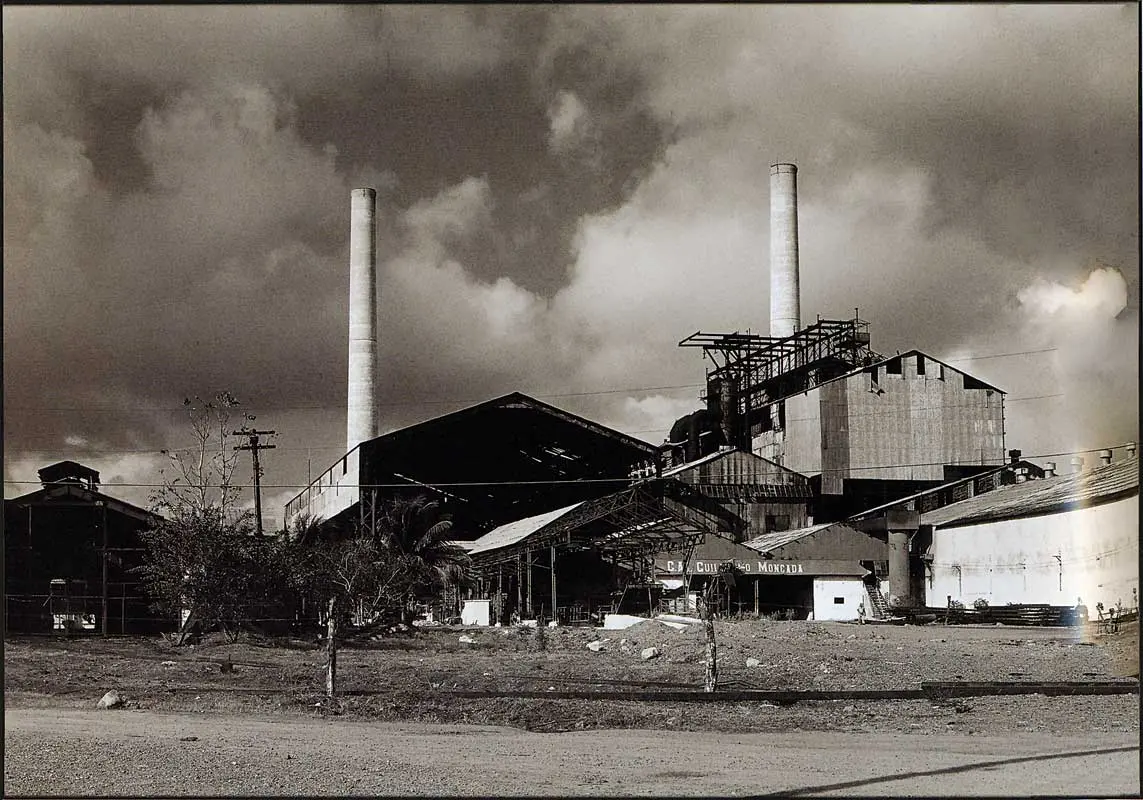
Oro Seco, by Cuba’s Ricardo Elías, unfolds as a series of portraits of workers from the sugar-manufacturing complexes that began to close in Cuba in 2002 and presents a tribute to the world of the sugar industry and its hard conditions.
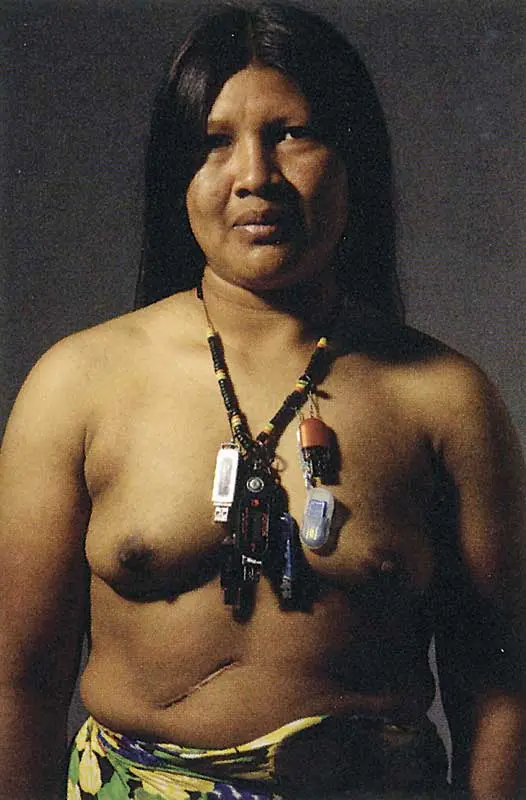
Erika Meza and Javier López (Paraguay) deal with the contradictions of the international help systems as poverty-based businesses in El peso de la memoria, a series of photographs where a Maka woman wears a necklace made of 6 pendrives containing in their 12 Gb development programs promoted by the UN in Latin America, alongside the performance Haciendo Mercado, where a Guaraní shaman explains a marketing lesson, appropriating the spirit of a well-known American expert.
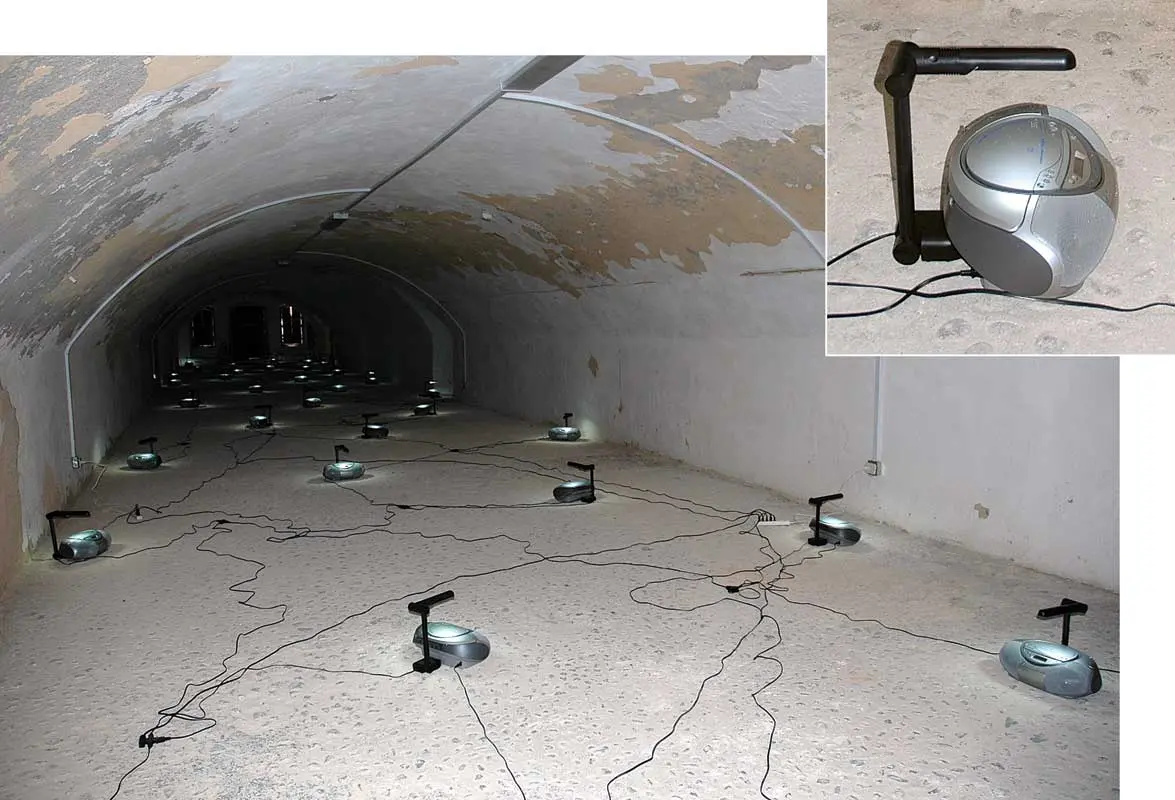
More subtle and stage-crafted in its approach to the idea of a global market was Fernando Uhía’s Masa crítica: Illuminated by a tabletop lamp, CD players broadcast in unison the soundtracks to Hollywood movies dubbed in Mexico, while the devices have been manufactured in China by an overexploited labor force, the cacophonous soundtrack transmits the fake audio of dubbing that appears as a caricature of a caricature.
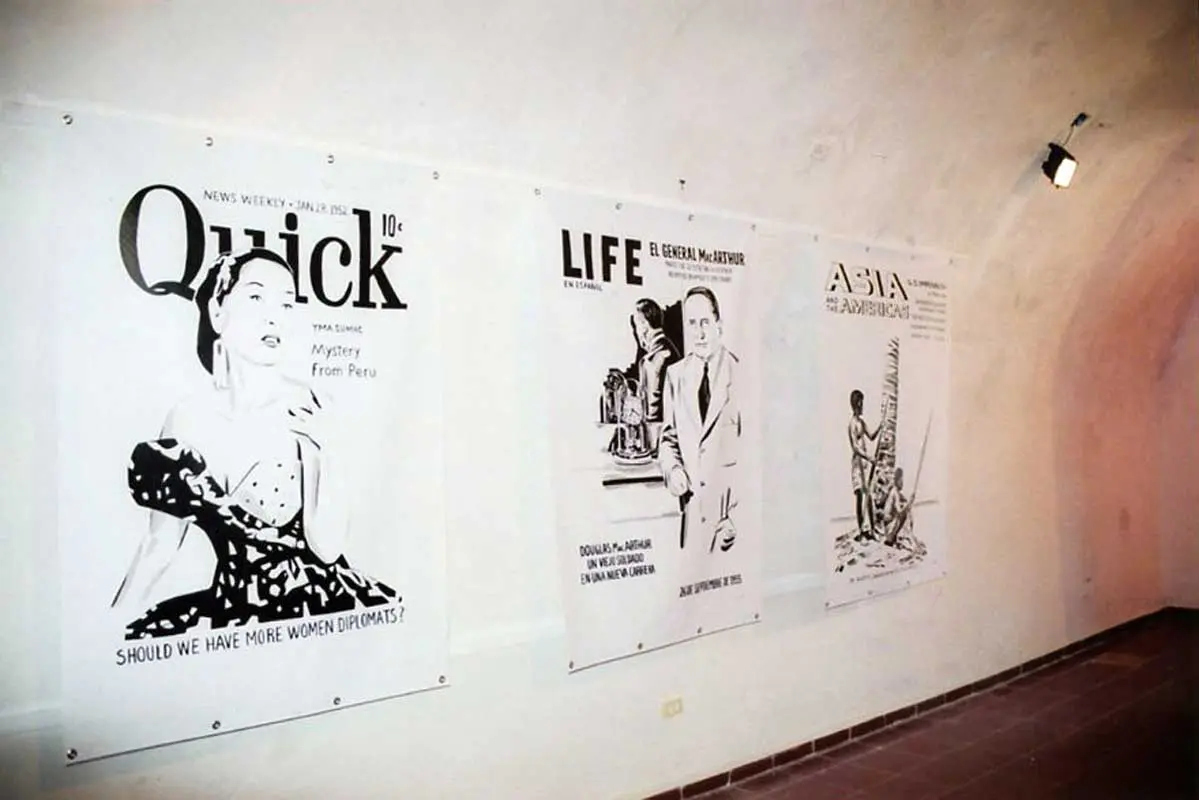
Other works deserving mention are by Colombian artist Milena Bonilla, a reinterpretation of Marx’s Capital rewritten with the left hand in books and in large canvases hanging from the ceiling: Lo siniestro escrito con destreza; the drawings of magazine covers by Fernando Bryce (Peru); or Open Mind, by Yoan Capote (Cuba,) which presents a labyrinthine park in the shape of a human brain.
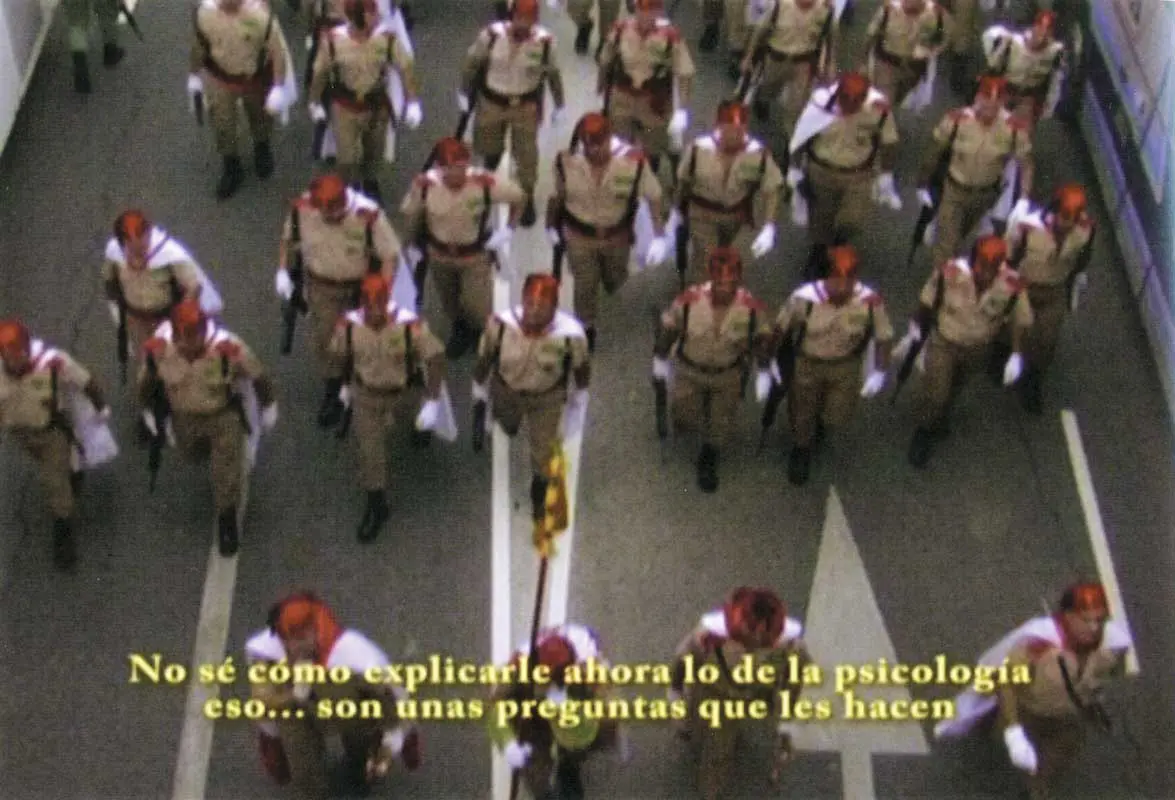
On her part, Cristina Lucas, taking into account the economic crisis as an activating factor, approaches the formulas or the labor market offered by the Spanish army to the country’s immigrants, and specifically to women, through an incisive video that mixes promotional images of the armed forces with phone conversations requesting information and requirements for a professional enlistment.
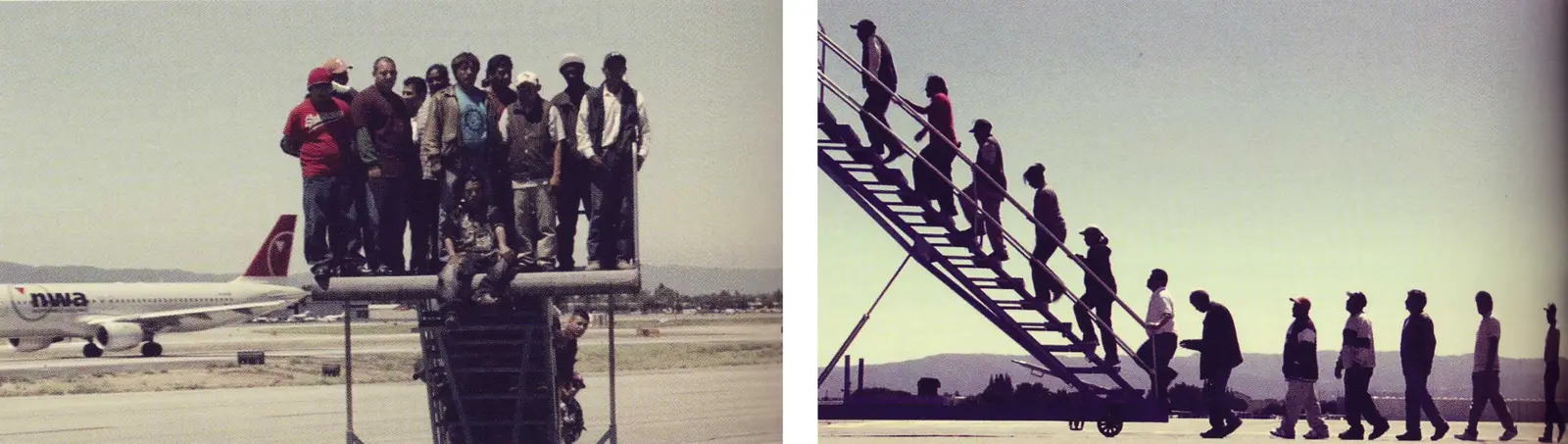
Another highlight is Centro di permanenza temporanea, by Adrian Paci, an Albanian artist working in Italy. There, a group of immigrants climbs the stairs into an airplane and remains to wait for one of the flying machines to stop in front of it, while other planes land and take off incessantly around them.
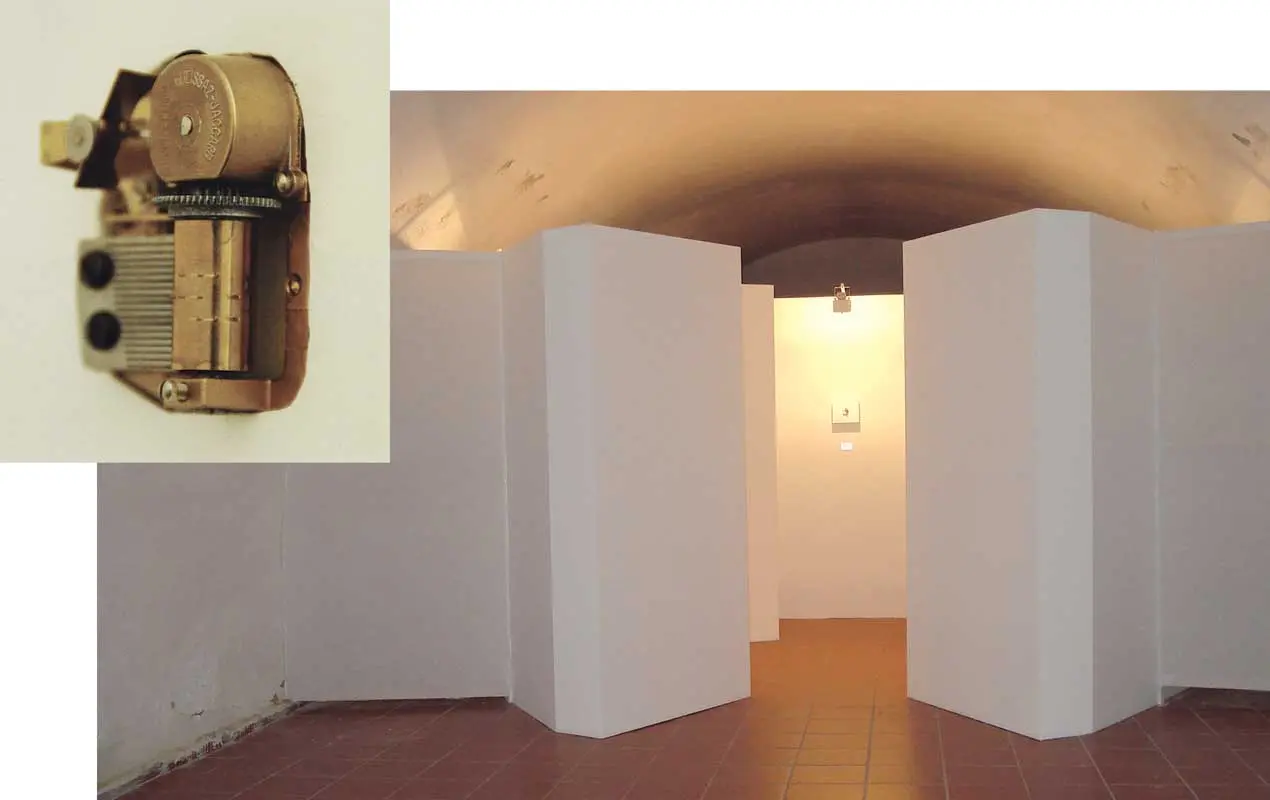
Mundo interpretado is a subtle sound installation, conceptual in character, by Glenda León. It deals with the planet’s major religions on the basis of the name they give their deity and their prophets, transcribed into Braille. The marks formed by the words in this system of writing for the blind allows the artist to establish for each name of the divinity a melody activated by small carillons placed inside a compartmentalized church-like turret. The music produced by each carillon mixes with the others, generating a strange ecumenical coral sensation where the religious element is a pretext to speak of our belonging to a single world.
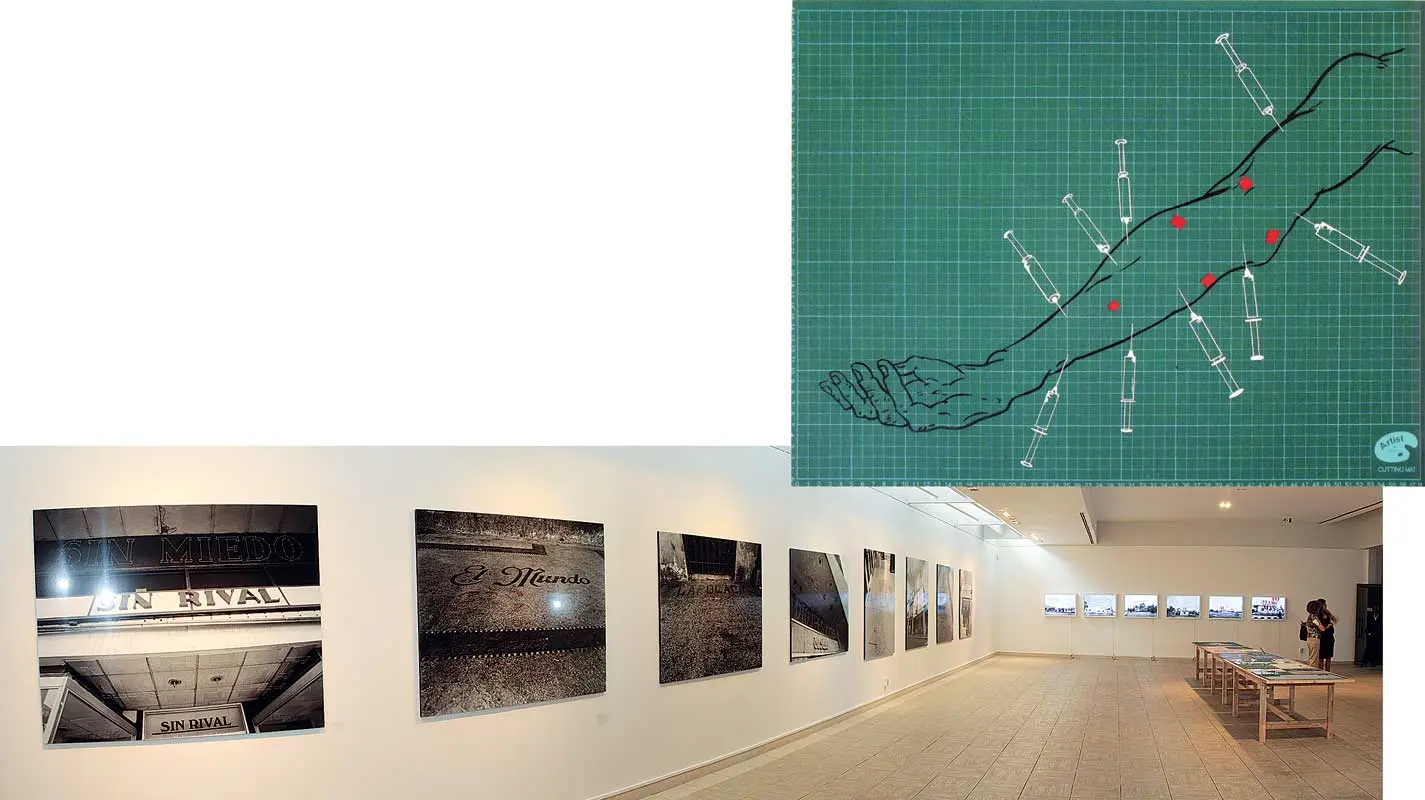
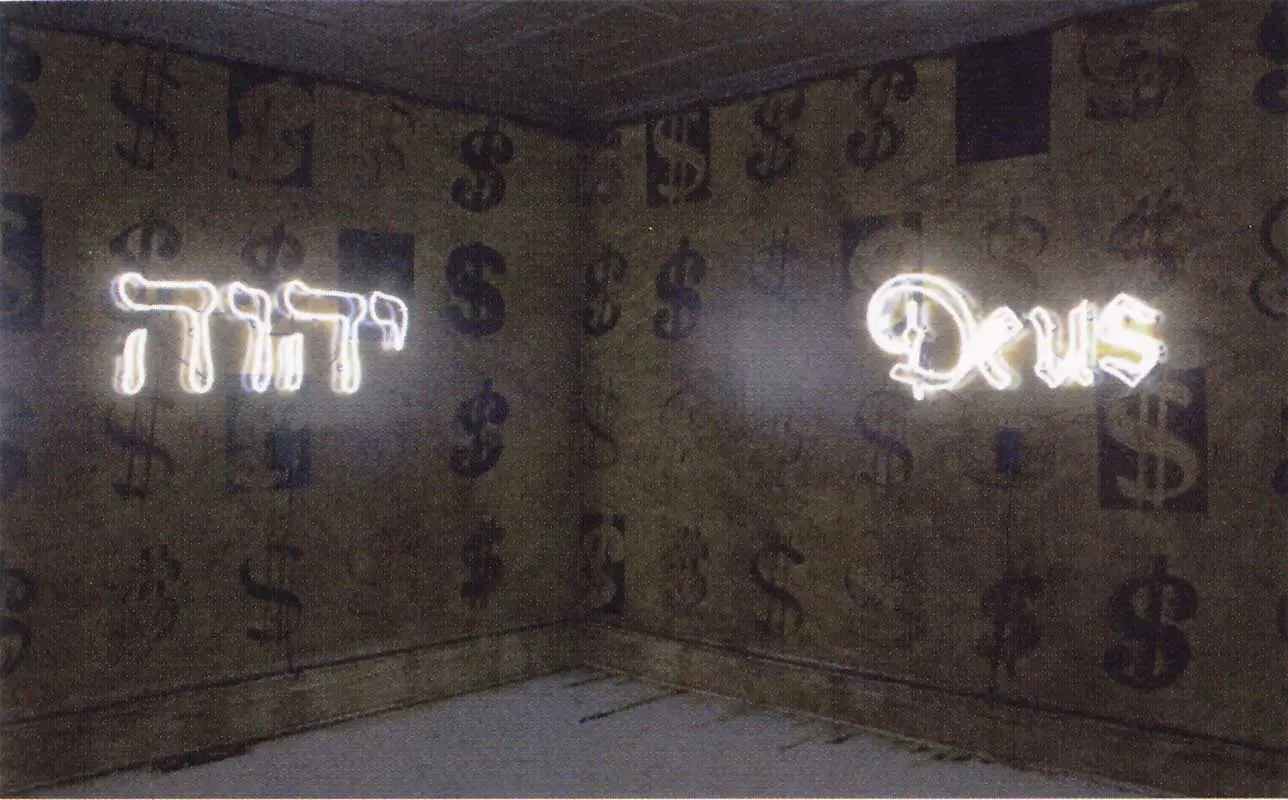
The names of God also appear in the collaborative proposal presented by José Ángel Toirac, Meira Marrero, and Loring McAlping at Galería La Casona, titled In God We Trust / America’s Most Wanted, this time in Hebrew, Arabic, and Latin, each with its own script and in neon lights. The work summarizes the legacy of the Bush-era and its global consequences. The names of God surround an immense circular oil barrel, as an emblem of twisted adoration. The installation underscores the connections between money (a giant one-dollar bill opens the installation) as an agent of war, oil as an activator of greed, God as a justification for violence, and terror as a mechanism for the subjugation of societies and the nullification of their critical drive.
In another gallery, separated from the first by a field of sand, the photographs of the most wanted terrorists and the image of a group of British soldiers in Iraq, naked and turned away from the camera as they wait in the open for water to shower, confront each other, like a contradiction of the representation of news in the media.
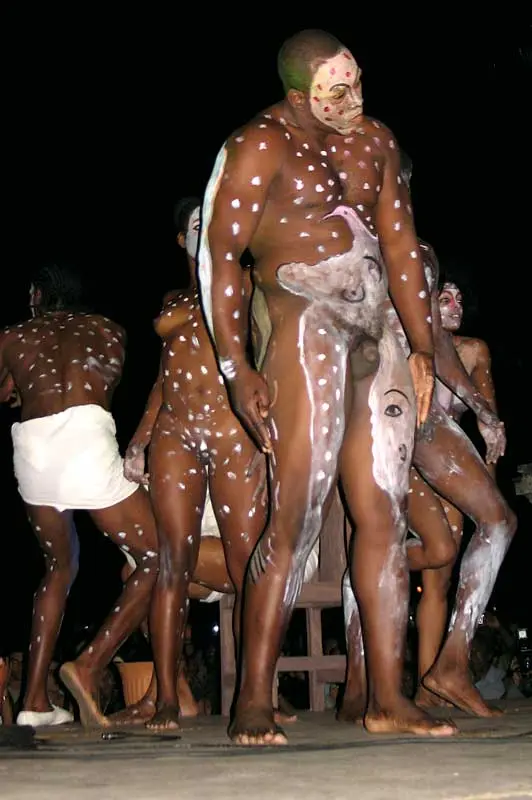
This is not a pamphleteering kind of work: the results present a complex scenario of formal and conceptual references. There are explicit references to the work of Andy Warhol, through the orange camouflage paint that brings to mind the outfits of prisoners at Guantanamo. Also, the stage design posits a world-wide situation of a journey through the desert, where nothing is what it seems. If something can be lamented in this piece it is perhaps the accumulation of references and the need for a larger space to give it a more leisurely pace of development and make its themes less crowded.
The Biennial organizers make a great effort to build an image of normality in a difficult context where nothing works according to logic. The condition of being a Third World country appears time and again as a slogan and as an alibi to navigate dynamics of evolution, not letting anything stray from an imprecise script that has nothing to do with artistic considerations. The problem is that the concept of a biennial attempts to reinterpret reality from art’s critical perspective, which at times touches on the political, at times on the social, and at times on the dynamics of its own practices. Undoubtedly this Biennial was a step forward with regards to previous editions, towards a view that is more open to the risks of debate, but it has also been confronted with attempts to manipulate the artistic proposals themselves.
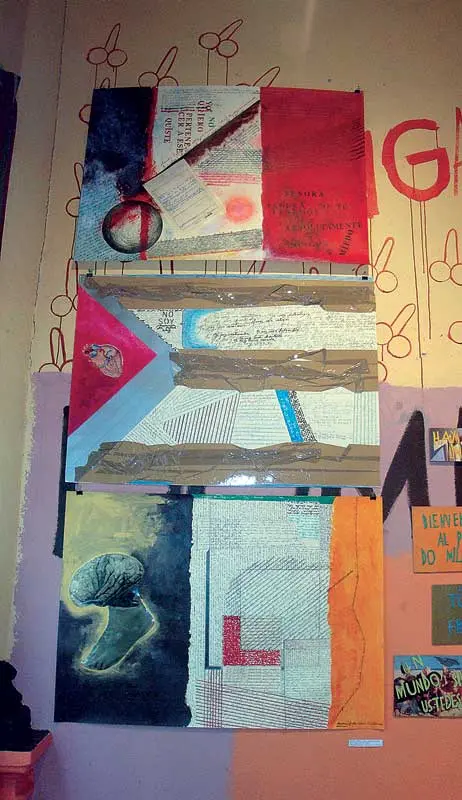
One of the Biennial’s most controversial moments was Tania Bruguera’s performance at the Centro Wifredo Lam. She had been invited by Guillermo Gómez-Peña to share his official space, in a kind of two-way dialog. Each occupied one of the house’s patios, and the idea was for the actions to start simultaneously, but the synchronization failed. At the same time, and incomprehensibly, at the same time and in a different space there was a performance by Mendive, who displayed his ability to transform public spaces from the perspective of painting, with a subtle political charge.
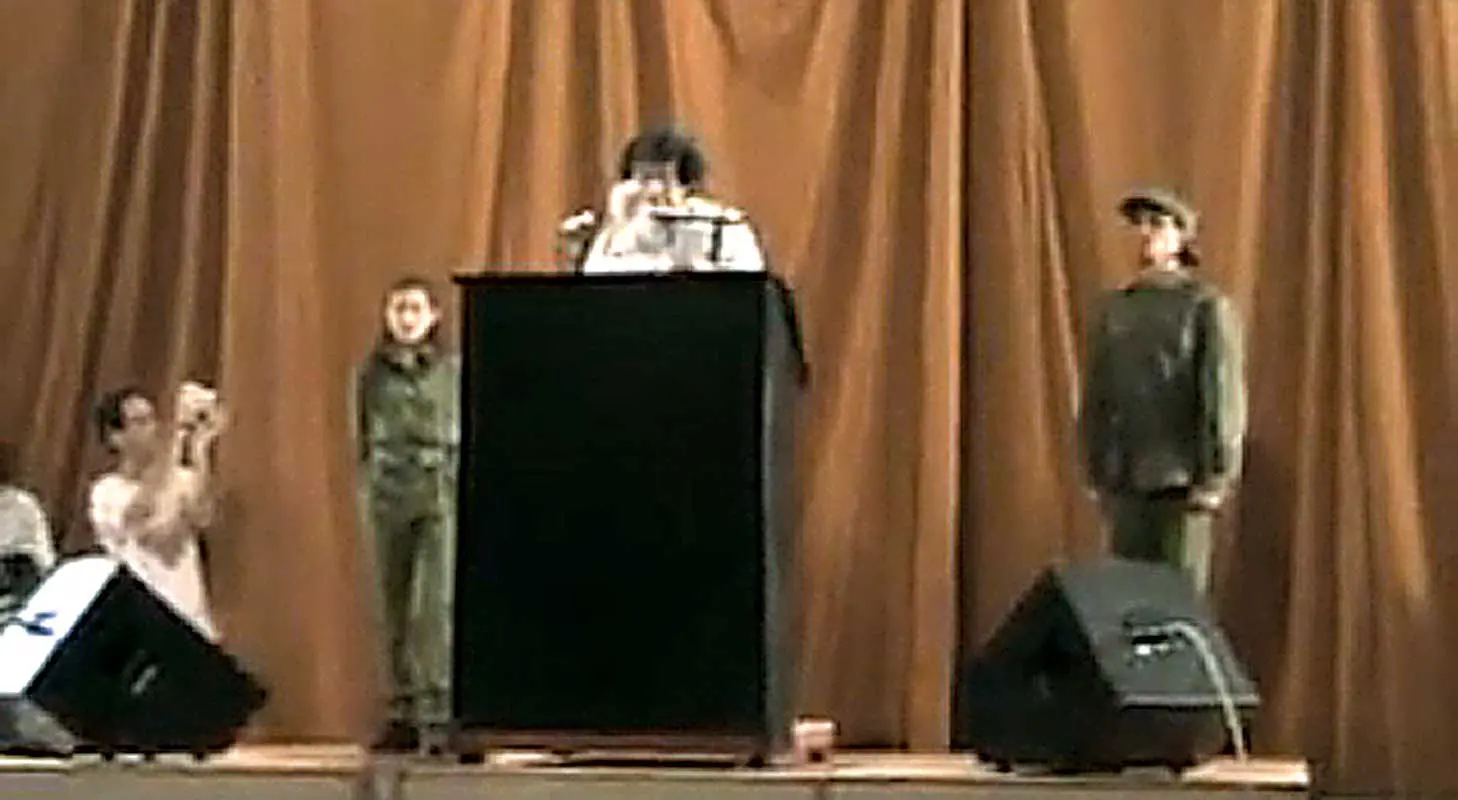
Tania Bruguera’s performance, inscribed in the series El susurro de Tatlin, reconstructs the stage for discourse in reference to Fidel Castro’s first public intervention in Havana after the triumph of the revolution when a white dove landed on his shoulder for a few instants. The images traveled around the world and became an emblem for the victorious revolution. Whoever wanted to freely express their ideas had unimpeded access to the stage and the microphone for one minute, while two characters dressed in olive-green outfits placed on the improvised orator a white dove.
Despite the deficiencies of the sound system, this was an unusual exercise in free expression, used by Cubans and many foreigners. The reactions flooded the internet the very next day, after a note by Yoani Sánchez, a blogger who has been stigmatized by the Cuban authorities because of her independent activities and her win of the 2008 Ortega y Gasset award for digital journalism, given by an independent jury and sponsored by El País newspaper, which played an important role in Spain’s transition to democracy and is the voice of the country’s political left. In her intervention, she demanded freedom of internet access for the island, which in effect doesn’t exist. Partial videos of the performance were distributed through Youtube and the blogs came alive with a debate that in some cases, generally uninformed about the event and its character, adopted a rather violent tone, devoid of arguments and loaded with insults. Both in the attack against and in the defense of Cuba’s political situation. Beyond the media echo chamber, this performance has highlighted many things: the inscription of art in its context, assuming that it functions as a problematizing device to think critically about the construction of alternative models to the existing reality (utopian and visionary goals); art’s commitment to resistance, dissent, and critique; the impact of gestures and words on reality; the importance of listening to the other and respecting their autonomous exercise of freedom; the need to respect all voices; the obligation to debate and argue in discussions that enrich us; the need to dissent with respect, redirecting our discourse towards free debate. Tania Bruguera applies in her work an idea of art as an exploration of models of behavior, the same idea that has supported her pedagogy in the Cátedra de la Conducta. Evidently, both her actions and the commentary that coursed through Havana in subsequent days, the media echo, the reactions on the blogs, the violence of their discourses, the news published, and the letter was written by the Biennial’s organizing committee are all part of the performance. An attentive look at all of these repercussions shows us how art is able to contest contradictions in all systems at the same time. This was also proven by Guillermo Gómez-Peña’s work, with its baroque and post-colonial images.
The Havana Biennial has assumed over time a contradictory role in the international art scene. On the one hand, it has been a curatorial model in the globalizing ascendancy of the biennial structure, and on the other, it represents a structure that is excessively judged by the political field, which returns the image of an overseen imagination, contrary to its objectives. Yet this 10th edition of the Biennial did away with many arbitrary restrictions from the past and opted for a constructive integration. However, as the communiqué shows, perhaps from other spaces of political power it is yet to be understood that dissidence does not equal counter-revolution, and it doesn’t seem clear that the revolution itself can contribute to an internal debate capable of giving voice to a generational renewal that carries demands that are different than those that made possible its victory 50 years ago.
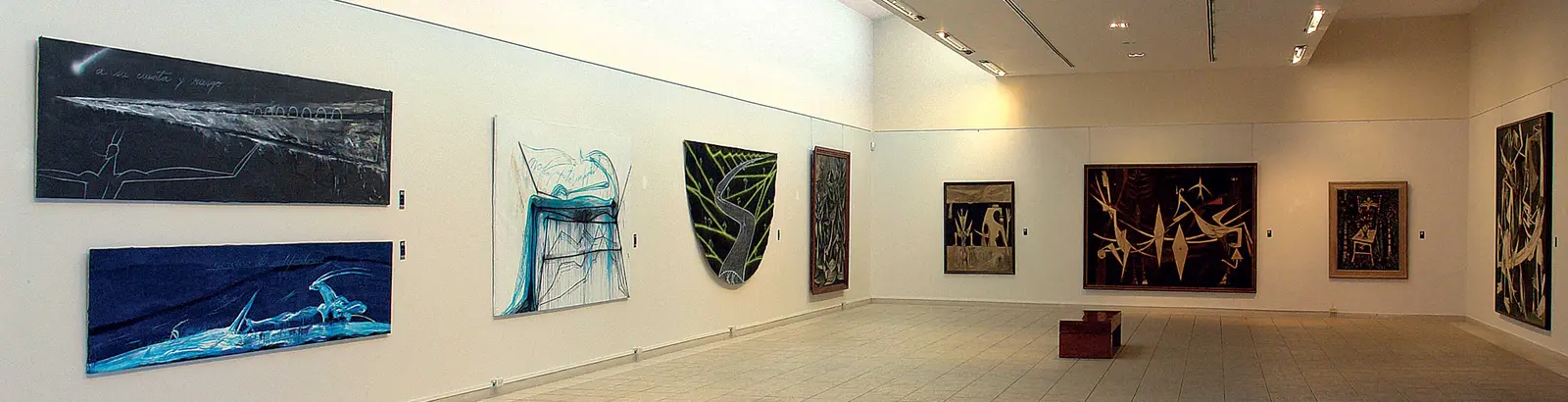
Integration is also one of the keys for this Biennial, which presented at the Museo de Bellas Artes an exhibition connecting the works of Wifredo Lam, Raúl Martínez, and José Bedia, as a way to understand Cuban art in a broad and complex sense, through its themes, obviating the old dichotomy between Cubans at home and Cubans in exile or abroad.
Another proof of the “integration” processes underway is the exhibition Género (trans)género y los (des)generados, an issue that for a long time has been seen as at the very least conflictive in the Cuban art scene, curated by Andrés Abreu, with works by, among others, Eduardo Hernández, Carlos José García, and Nadal Antelmo Vizcaíno, all from Cuba.
From a museographic point of view, the quality of the individual and collective exhibition projects presented in various spaces in the city contrasted with certain disorganization at La Cabaña, where one misses a clearer articulation, as well as information both general and specific for each work on the walls, in order to allow for a correct reading. Something similar happens with the catalog when, with the exceptions of the collective projects and the individual exhibitions by special guests, barely any texts are included to reflect on the meaning of the works, and the result is a kind of photo-phonebook of artists and their resumes. A significant novelty is the publication of a mass catalog with greater local distribution, and we must be thankful for the effort to publish a book gathering the interventions at the theory event, which had brilliant moments in an ever more central and necessary theoretical debate. This is one of the most significant aspects of the Havana Biennial, the integration of theory as a core element of the artistic event.
The Biennial also has a multiplying effect in the exhibition scene.
Lázaro Saavedra presents at Galería Servando a project about sponsorship in art, where the opening-night gala is part of the pictorial oeuvre: logos of commercial brands, possible sponsors.
At the Museo de Bellas Artes, Carlos Garaicoa visits Havana interpreted on the basis of its ruined condition and its memory, establishing guidelines for a critical reading inscribed in the scheme of resistance and integration proposed by the Biennial.
A separate chapter should be devoted to Aglutinador’s serious and rigorous work. This independent space, helmed by Sandra Ceballos, was subjected a few months ago to a campaign of discredit and harassment on the part of official Cuban institutions, denouncing the presence in one inauguration of people linked to the US intelligence services. Given the falsity of such accusations, the space received broad international support from personalities and artists unconcerned with political manipulation. The show titled Perra Subasta is a critique of the deformities in the art market and proposes an alternative vision with the participation of, among others, Ernesto Leal, Angel Delgado, Ezequiel Suárez, Luis Gómez, Giselle Victoria, Iván Capote and Sandra Ceballos herself, who complete a map of resistances.
SANTIAGO OLMO
Critic and Independent Curator.