A shattered door, a skylight, a window and ladder, these isolated symbolic openings in architecture, these “through-ways,” composed Leandro Erlich´s show at Galeria Luciana Brito in São Paulo, Fragmentos de Una Casa. As is typical of this Argentine artist´s work, the ordinary is rendered strange, albeit being impeccably constructed reproductions of recognizable features of everyday life. Removed from what we deem to be their original and “real” situation, Erlich strips them of their context and induces the viewer to renegotiate their relationship with the isolated fragments of the mundane. The window hung in mid-air and at an angle with the back wall, has a metal ladder leading up to (or is it down from) it. On one side its exposed brick, on the other, whitewash, two sides to one of the same. Removed from the context of the house, the window loses the connection to the whole we unconsciously associate with it. In this new space, on its own, Erlich invites the viewer to rethink the window which as a sign, reminiscent of its whole, automatically remits a sequence of endless images and contexts which we associate with “the norm”.
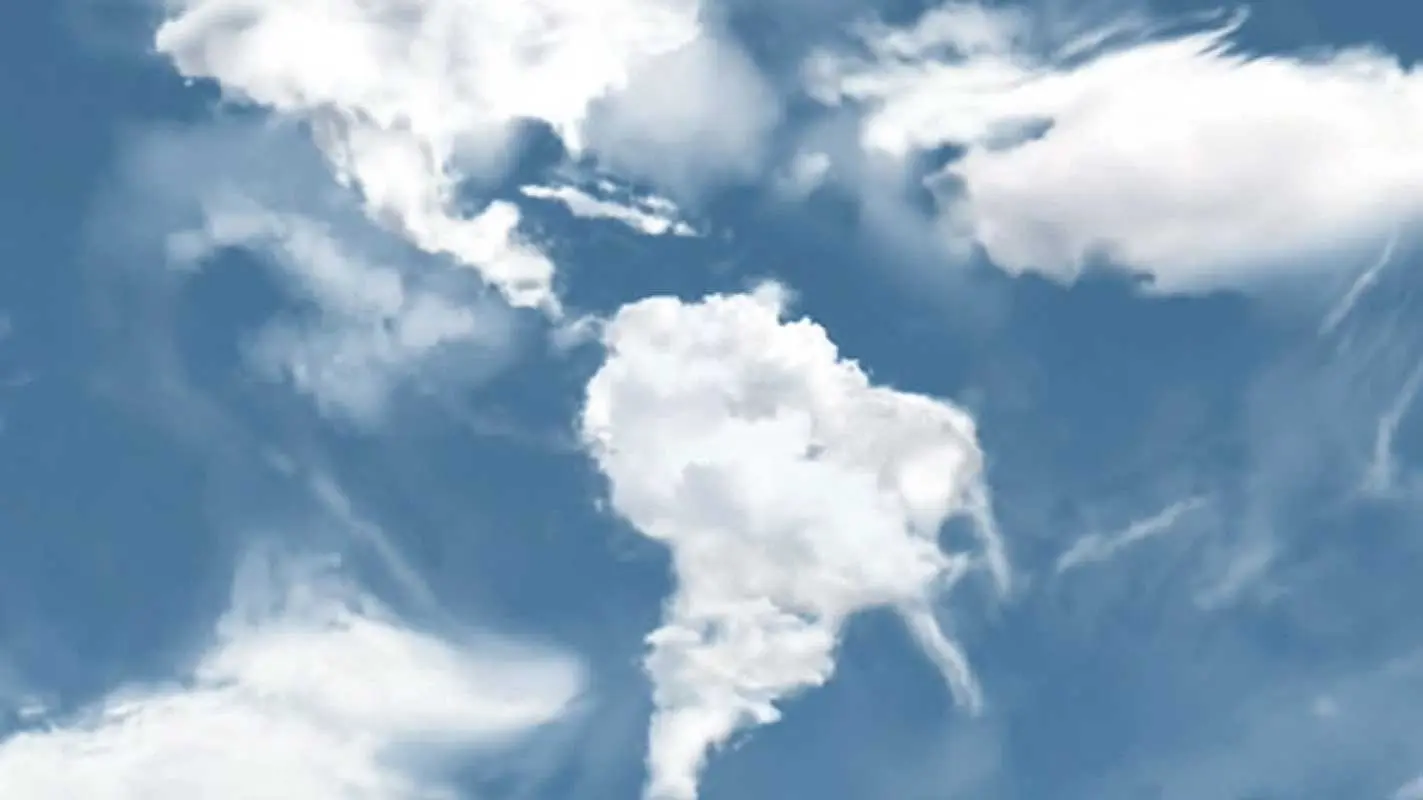
If the thought of in the context of Renaissance, it conjures Alberti´s window into reality, as an object with a function, a port of entry or exit to space, which also ties it in function to the ladder. All of these, however, is the window in some context extended beyond what we see, extended into our mind´s eye. It is more difficult than understood at first, to release these mundane slices of life from the associations we have socially tied to them. A window that allows nothing in or out, a ladder that leads nowhere – what do they say? At the very least they remind one what the surrealists conquered, that art is a new condition in itself, where associations do not necessarily follow any pre-established norms. To art critic Doug MacCash the artist “achieves a surreal elegance with his ladder that leads nowhere, reminiscent of the work of René Magritte.” Along from the window, a skylight in the ceiling almost goes by unnoticed. Clouds float by, but it´s nighttime and the sky is blue and the clouds appear to form a recognizable shape over and over again, the South American continent. No light comes through the skylight and bathes the ground below, although there is a sky and it looks real and as hypnotic as the clouds sailing by, the eeriness of being drawn in by them although they clearly are not real relates back to the feeling of lying on your back and watching the sky on a summers day. This time, Erlich not only evokes the visual aspects expected from a skylight, but also the sensation and the emotions still tap into the unconscious memory that relates back to “reality” with the same type of suspension of disbelief we experience in the theatre. Upstairs, an exquisite wooden door is frozen in mid-shatter. A silver ball lies before it. The mind empirically associates the ball being thrown at the door which consequently would have caused it to shatter but was it really to be caught and frozen at the moment of impact, rationally, the ball would still be in the air or in the door and not lying before it. Between the cracks, the metal structures that hold the fragments of the door in place are visible and it is clear that this door led nowhere, even before it was shattered. Erlich´s works don´t avoid their theatricality, their contrived situations, they embrace them. The artist uses them to raise questions concerning perception and social constructs and above all question what is accepted as “reality.” “These spaces, somehow, are the stage for the “play” we are living (...) part of the physical connection with reality. To the reality, we have built and we’ve all agreed we are living in. That’s why I believe that to question reality there is no better place than the ordinary,” says Erlich. By questioning reality, Erlich gracefully produces exquisite pieces which stand and stake their own ground in a land governed by laws different to the ones we believe govern our everyday world, and leave one questioning whether the reality we believe is unanimously recognizable by all who share it in the same way, is not in fact more Buddhist in essence and a construct of our own minds, which would result in infinite realities produced by infinite minds, converging somewhere in between where things appear to be the same, but that probably is not, exactly the same.
CAMILA BELCHIOR