Who could tell whether Cuban-American photographer Luis Mallo would take as his guide Albert Einstein’s dictum that “the most beautiful thing we can experience is the mysterious,” but it could very well be the pivot for the visual thesis Mallo proposed in Open Secrets, a laudable series of large-scale images resulting from a process of intellectualization behind the lens, exhibited for three months at the Jersey City Museum’s Project Gallery, in New Jersey. The group derives from an exercise in museological voyeurism initiated by the artist in 2006, capturing vistas of the inside of warehouses in several US museums.
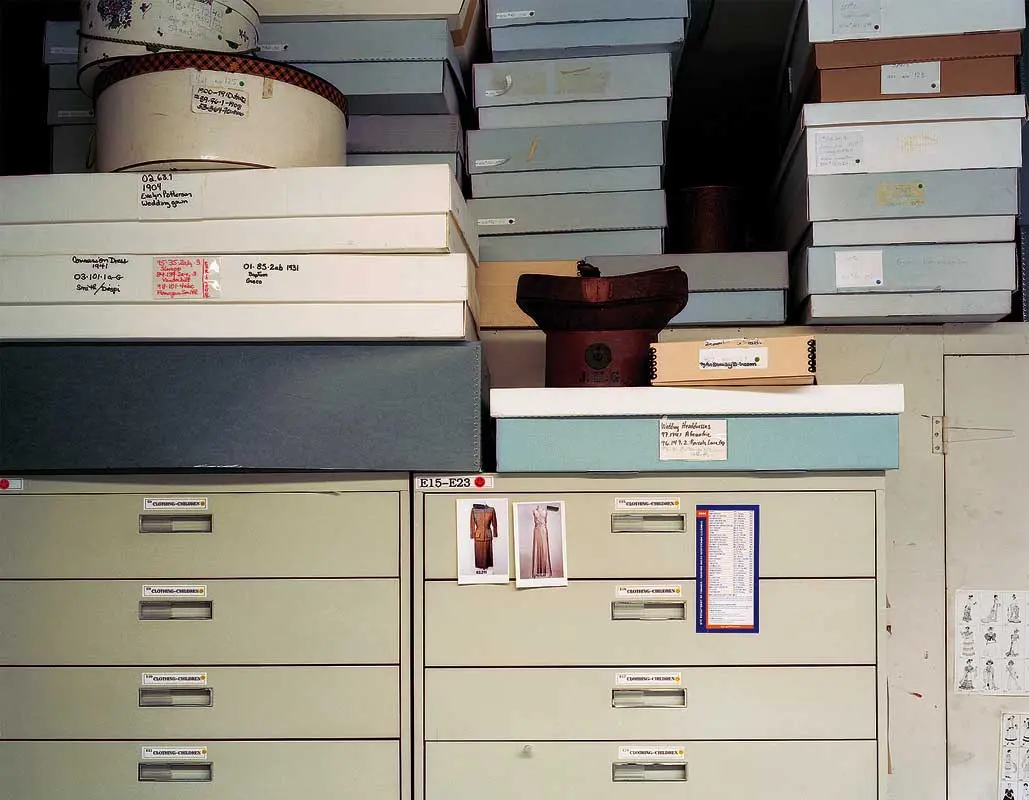
As described by Alejandro Anreus, a curator who has been paying attention to the photographer’s work since the late 1990s and who was in charge of the museographic aspects of the show, the series’ images are able to “capture with an almost neo-classical formalism the enigmatic atmosphere of areas devoted to housing and preserving works of art and valuable objects, spaces closed to the public’s visual access and reserved for a museum’s staff at work.” Thus the initial purpose behind Mallo’s visual investigation would seem to have been to shorten the distances of an enigma that, beyond its function as a protector of tradition and memory, recreates a mystique of the inaccessible. An intrinsically human curiosity that bubbles up from reminiscences of precocious childhood adventures, when raiding hidden places in search of imaginary treasures is an abiding temptation.
Also present in a thus playful-exploratory move by Mallo is an intention to tease with the forbidden, activating our perception and triggering our intuition at the same time. Because the succession of shots certainly records what has been hidden from us until the artist’s aesthetic marauding, camera in hand, not only breaks with the protocol of these austere and confidential spaces but documents them with a friendlier approach. Although it must be pointed out that, past first reading, we intuit the poetic predetermination of reinforcing the aura of subjectivity that envelops that which is stored or hidden away jealously.
In my opinion, Mallo does not intend to undo the scaffolding in its entirety. His lens traverses the cover of prohibition, but it doesn’t unspool, it doesn’t undo, it doesn’t unveil. There is something like a provocation in his bringing to the forefront of our gaze the presence of laconic indicators — labels, codes, legends — connected to the treasured goods it has photographed. By slipping us a partial datum, the photographer starts to generate a second level of investigation, trapping us in his game. A resource that, in lyricism and pretext, appears similar to the intervened photographs created by Colombian photographer Catalina Mejía in her Bibliotecas series (1989) where the artist also uses concise references as an incitement. This is to say, the clue works as the trigger for the viewer’s conjecture, a kind of ciphered rapport with the expectations, knowledge, and memory of the observer. A way to subordinate the documentary allusion to the purpose of having the receptor capacity complete the commentary, or the fiction.
The show is conceived as an installation and not as a mere iconographic ordering. Artists and curators have evidently preferred the recreation of an atmosphere to the classical focalization of each work as a unit, which does not void the possibility of enjoying them on the basis of their spatial arrangement, where the axis of the compositions are astutely contrasted as the sequence flows. Something that also occurs with the dialogs or confrontations established between photographs mounted on opposite walls. Suggestively, towards one corner of the gallery, we find a mid-size sculptural element, wrapped in packing materials, allegoric of the protected value deposited in a collection, a kind of mediating curatorial gesture between artistic intent and real circumstance in a museum’s reserved spaces.
The rest is added by an impeccable treatment of the image and its amplification. Both the study of framings and surroundings, and the selection of perspectives, angles, and light, are concerns that translate into clarity, excellence in color, lighting, textures, and the impression of temperament in the stasis captured by the lens. Mallo’s chromatic saturation and his contrasts seem to be part of a natural skill that makes it possible to take advantage of the sobriety of the chosen spaces. The tactic of instigating new readings, which the artist uses subliminally, unfolds efficiently on the fusion of concept and craft with the spirit of exploration.
Luis Mallo (Cuba, 19622) recipient of the Cintas fellowship in 1991 and later of the Photography Award given by the Art Matters Foundation (1994,) is the author of notable series such as Passengers (1994-95), Reliquiarum (1996-97), Laminas (1999), and the famous In Camera (2001-2005), an important work that precedes Open Secrets and which received many critical accolades. With his most recent proposal, Mallo’s concepts about the contemporary image contribute to show that the border between documentary register and aesthetic criteria in the practice of photography as an art has blurred away, to the point that it is now difficult to recognize the line where testimony ends and gives way to poetics. Open Secrets is, precisely, proof of such dissolution of genres.
JESÚS ROSADO