Stuttgart Kunstverein
Stuttgart, Germany
Under the directorship of Iris Dressler and Hans D. Christ, Subversive Practices, organized by the Stuttgart Kunstverein, brought together experimental and conceptual art practices produced between the 1960s and 1980s in South American countries that were under military dictatorships and European nations under authoritarian governments. The show was divided into autonomous spaces for a total of nine exhibits. It was the result of a painstaking and sustained research effort on the part of its curators, Ramón Castillo and Paulina Varas (Chile), Fernando Davis (Argentina), Cristina Freire (Brazil), Sabine Hansgen (Russia), Miguel Lopez and Emilio Tarazona (Peru), Ileana Pintilie Teleaga (Romania), Valentin Roma and Daniel García Andújar (Spain), Annamaria Szoke and Miklos Peternak (Hungary), and Anne Thurmann-Jajes (Germany), who, adopted different curatorial positions. Freed from the center/periphery dichotomy that has characterized many readings of Latin American conceptual art, the show presented the conceptual practice as a "political (subversive) countermeaning," through a variety of meanings expressed in the particularities of and the points of coincidence between the micropolitical experiences included in each space.
In the Argentina exhibit, Political Bodies, Territories in Conflict, Fernando Davis devoted his investigation to the art practices that emerged in the La Plata region, were before and during the 1976-1983 Junta dictatorship a significant number of artists carried out interventions in urban and domestic spaces. The use of the body and the fact of acting in the public space generated meanings of symbolic dissidence. Carlo Ginzburg did it through actions that subverted normativity and social order, by carrying forward his everyday activities until a family member arrived and interrupted his subjective creative act (Vivienda otoñal, 1971); Edgardo Antonio Vivo did it starting with his Señalamientos, a series of subtle modifications of the urban landscape, lowering a traffic light to a height where it lost its functionality. Another kind of practice seemed to seek a more direct connection with the growing state of terror. Luis Pazos (*1940, La Plata) presented documentation of his performance Monumento al prisionero político (1972), where, in the space of three hours, three people laid down on the ground in a public square under nameless gravestones; or Horacio Zabala, who in the early 1970s persuasively used the phrase "Art is a Jail" and made architectural plans for Artist's Prisons, in order to generate a direct dialog with the hermetic meaning of art and the allegory of the political prisoner at the time. At the same time, the show revealed the existing institutionalism that anchored these practices, pointing out the locales, festivals, publications, and events where they took place, like the legendary Centro de Arte y Comunicación (CAYC) or Hexágono '71 magazine.
Curator Cristina Freire adopted an interesting and risky position in her attempt to speak of the Brazilian conceptual experience. The show Alternative Networks was devoted to a selection of photographs and videos housed inside the collection warehouse of the Museu de Arte Contemporânea de São Paulo, registering works from the 1960s and 1970s by artists who had roots in Eastern Europe, like Dalibor Chatrny (*1925, Czechoslovakia), Attila Csernik (*1941, Yugoslavia), Jirí Kocman (*1947, Czechoslovakia), and Krzysztof Wodiczko (*1943 Poland). The connection between these international artists and the São Paulo institution was due to Walter Zanini, the museum's director at the time, who positioned the MAC in the international postal art network. Zanini's MAC was a center for experimentation where artists showed and especially produced works using communication-technology supports, which in Brazil had a significant symbolic value since during the period the Military regime-held monopolistic control over such media. It was in that context that artists like Lucía Parente (1930 - 1991), known as Brazil's first video artist, sewed to the sole of her foot the phrase "Made in Brazil" (Marca Registrada, 1975), the video record of which was presented in the show.
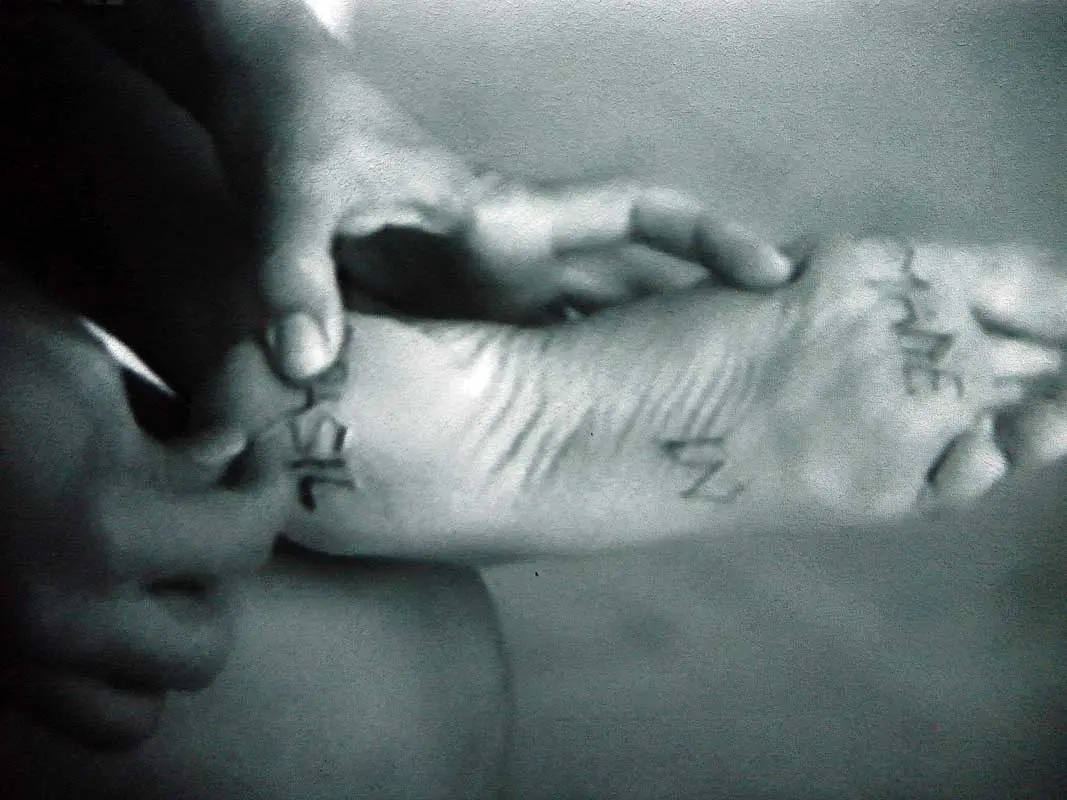
Yet, the most peculiar work was a video by Paulo Herkenhoff, who appears sitting at a table, cropping news items from a paper; the items are all related to some kind of censorship, and the artist chews and swallows them (Estomago Embrulhado, Jejum, 1975). In another video, Herkenhoff is filmed eating the "dessert," chewing and swallowing a 1973 newspaper that included a clandestine intervention by artist Antonio Manoel (Estomago Embrulhado, Sobremesa, 1975). The tautology in this work alters the period's censorship practices by acting between the mimesis of the artist body with the social body, the work of art that swallows another work of art, and a communication medium (video, television) that registers the nullification of another (the newspaper).
In the case of Progressive Images, Chilean curators Ramón Castillo and Paulina Varas exhibited a significant chronology of actions by CADA (Colectivo de Acciones de Arte, 1979-1985), a group founded by the writer Diamela Eltit, the poet Raúl Zurita, the sociologist Fernando Balcells, and the artists Lotty Rosenfeld and Juan Castillo. One standout was the graffiti interventions of Santiago streets with the inscription No +, made in the early 1980s in rejection of the dictatorship. Right next to CADA was Lepe's performance El perchero, 1975, where through three photographs the artist's cross-dressed body appears first revealing one breast, then another, until the clothes fall off and a castrated and subordinate body is revealed; the artist's violated body allegorizes the suffering of the country's social body. However, the most impactful work in the Chilean show was, perhaps, the documents of actions carried out in London's public spaces by exiled artists such as the group Artists for Democracy (AFD) and Cecilia Vicuña, who made interventions and activist rallies on British monuments in order to rouse international outrage at the coup d'Etat that ended the democratically elected government led by Salvador Allende.
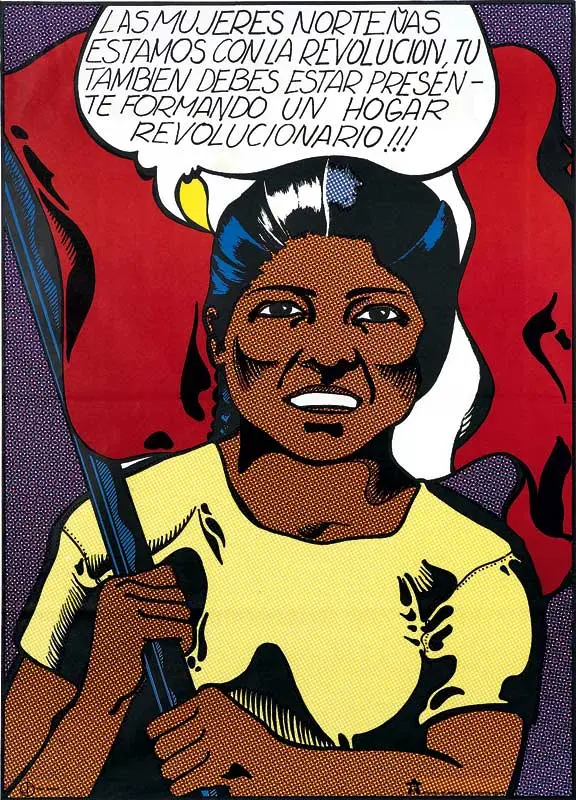
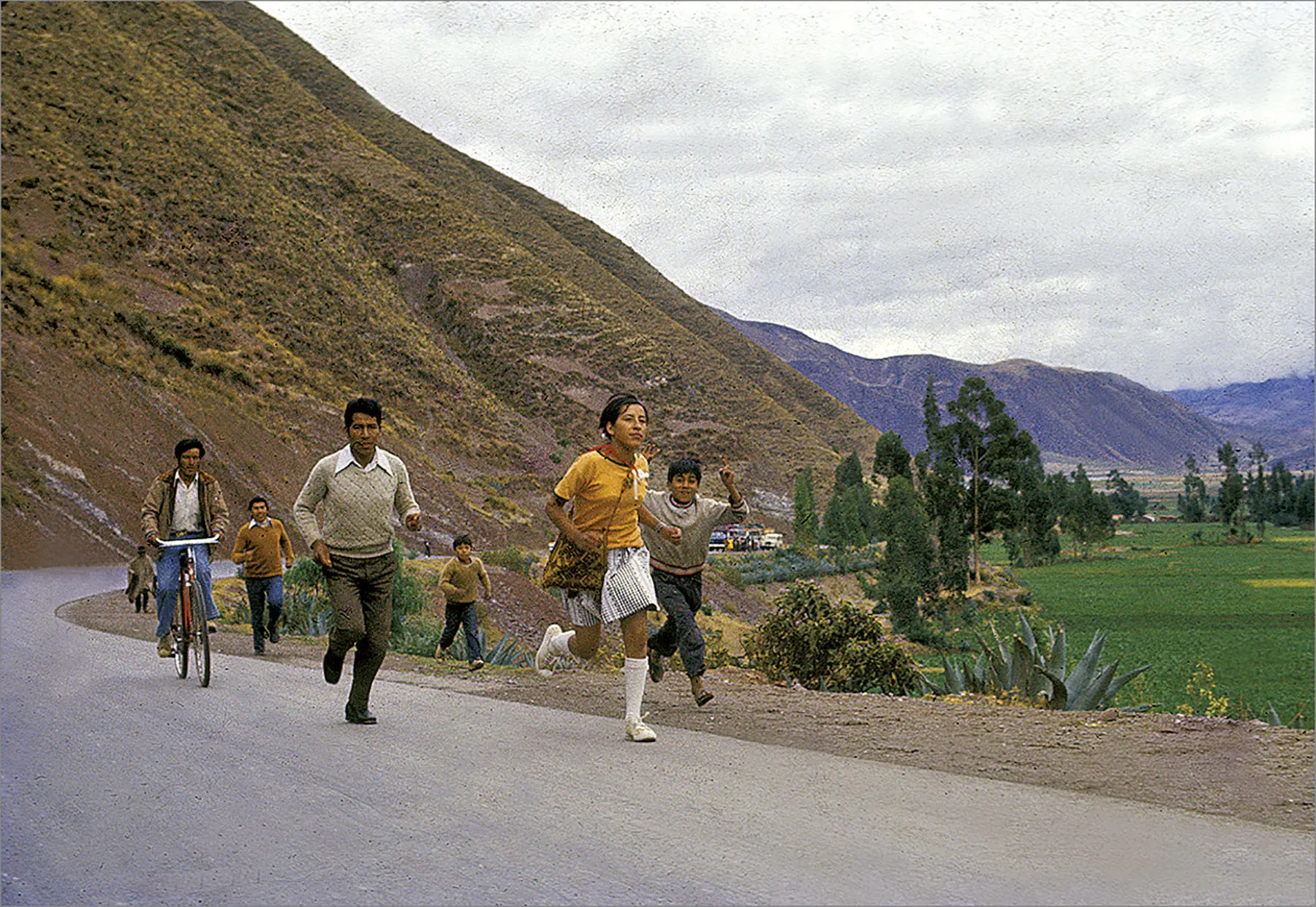
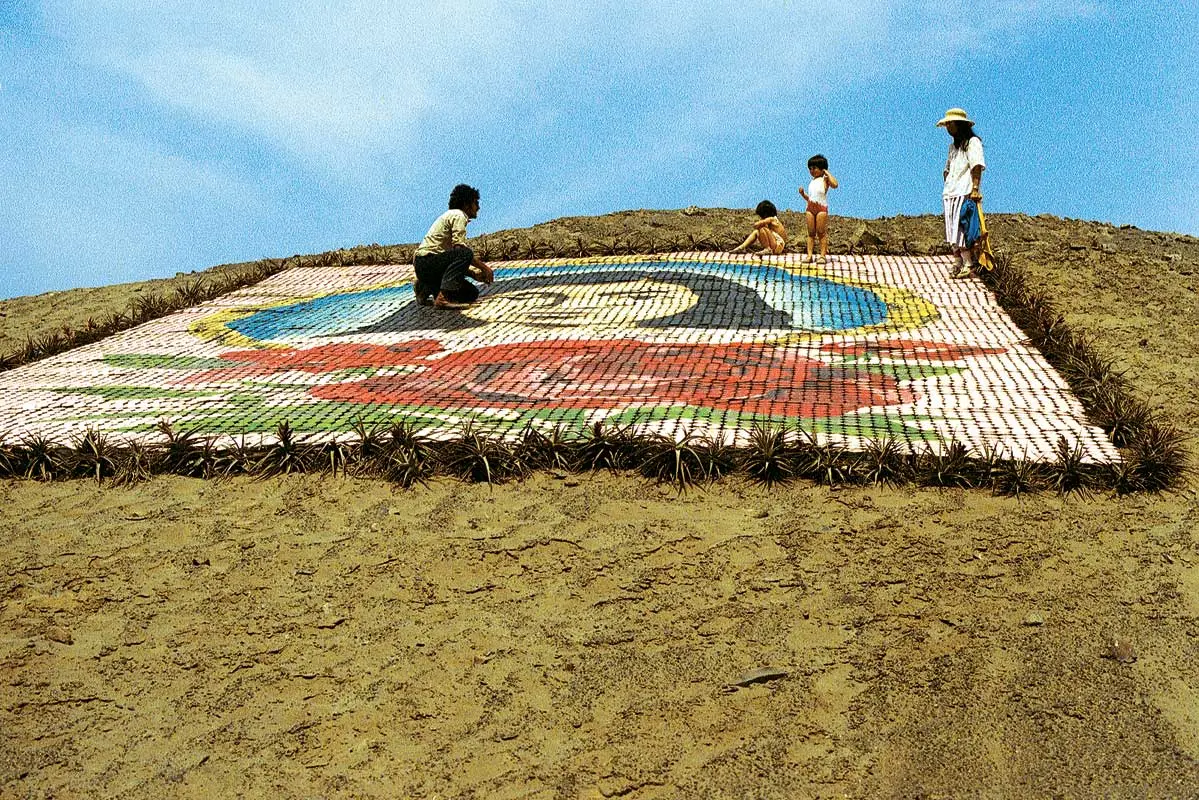
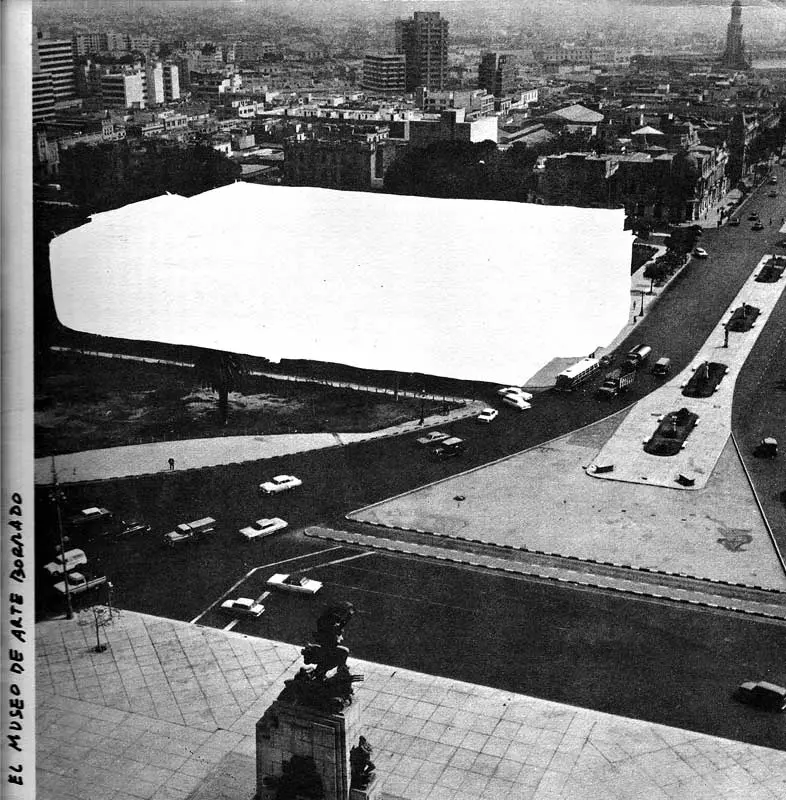
Finally, the show Crosscurrent Passages: Dissident Tactics, curated by Miguel López and Emilio Tarazona, presented two kinds of conceptual practices that emerged in the contexts of the social traumas and movements that characterized the 1968-1975 Military regime and the 1992 power seizure by Alberto Fujimori. On the one hand, the works of Emilio Hernández Saavedra and Teresa Burga were included, artists who in the early 1970s created a kind of conceptual art that moved towards an institutional critique of the art system and to overexpose and challenge conventional categories of art. Saavedra created works like Galería, 1972, which consisted of the exhibition of four large-format photographs showing four representations of the semantic field connected to the word "gallery," exhibiting the dictionary meaning, portraits of the staff at the gallery where the work was presented, the plan for that same gallery, or the subtraction of the Museo de Arte de Lima. On the other hand, the other kind of conceptual art to which the curators referred were those practices connected both to popular traditions and to official-leaning and oppositional social movements in Peru. Under this category, we found the Carreras de Chasquis organized by Luis Arias Vera in 1974 and 1976 as part of the interdisciplinary cultural and sports policies promoted by the military regime. In the Quechua language, the word chasqui refers to the messengers that in Inca times functioned as a communication medium by running long distances and relaying messages from village to village. The appropriation of indigenous communication practices as a national sport revealed itself as a hybrid cultural expression, presented by the curators as conceptual, since it is the de-materialization of an artistic-sports activity that belongs to an aesthetic of what they call the Andean modernity, which manifested itself in the rural public sphere or in the urban periphery, as opposed to the conceptual expressions that emerged within the artistic apparatus of the Metropolis, connected in this case to "Western" modernity. Close to these works that established a dialog with popular culture were the interventions by Taller E.P.S. Huayco, 1980-1982, founded by Francisco Mariotti, Maria Luy, Rosario Noriega, Herbert Rodríguez, Juan Javier Salazar, Armando Williams, and Mariela Zevallos. Among their works, presented through videos and photographs, the most forceful was Sarita Colonia, 1980, consisting of the use of milk cans (consumed by the working classes) as pictorial support to represent, in large format on the desert that surrounds Peru's capital city of Lima, the portrait of the patron saint of the migrant workers that cross that very desert on their way to the city. The image of this unofficial saint, who can still be seen from Avenida Panamericana, became a sacred pilgrimage site, and the artistic expression thus modified collective cultural behaviors.
While the general exhibition was conceived as a platform for the dialog between subversive forms from the South and from Eastern Europe, the decision to divide the show by country sabotaged those expectations, and the task was left to the viewer, who, from one space to the next, had to establish connections between artistic-subversive attitudes in each context.
INTI GUERRERO