
If we look at history through the goggles of a century-based periodization that we inherited from the Enlightenment and locate on a hypothetical timeline the passages between one century and the next, the gate to the Twentieth Century would be undoubtedly a Bauhaus design. It would probably be white in color, with an oil painting by Moholy-Nagy on its front. Or perhaps white and smooth, with a door handle projected by Marianne Brandt or Christian Dell. Some would surely imagine it double and sliding, its leaves made from Joseph Albers’ stained-glass works. Architects would perhaps imagine it made in transparent glass or pre-fabbed in metal, depending on whether they tend to think of Gropius, van der Rohe, or Meyer when they conjure up images of Bauhaus. While these are just speculations, it is not all that impossible to believe that the initial visualization triggered by the equation design + Twentieth-Century is always an immediate mental association with the Bauhaus imaginary. Such is its referential weight in Modernity’s visual culture.
Devoted through its three distinct periods (1919-1925 in Weimar; 1925-1929 in Dessau; 1930-1933 in Berlin) to an unadorned language, simple in form, dominated by primary colors and especially whites, the aversion for the concept of style at the core of Bauhaus ended up, almost a century later, forging a historical paradox: today, what is mostly known of the Bauhaus at the non-specialist level is a given appearance or style. “The name Bauhaus is handled carelessly, it has become a label attached to any object that sort of looks modern,” says Annemari Jaeggi, Director of the Bauhaus Archive in Berlin, amidst the celebration of three large-scale shows in Dessau, Weimar, and Berlin scheduled to cross the Atlantic at the end of the year to reach MoMA in New York City.
Knowledgeable of the Latin American scene since his arrival on these shores in the late 1960s—graduated from HfG Ulm, the breakout institution that followed Bauhaus in the post-war years—German theorist Gui Bonsiepe starts at the beginning and notes that the word “Bauhaus” lends itself to misunderstanding, suggesting as it does the existence of a monolithic institution: “If we look at the first Bauhaus of the expressionist phase and compare it to the functionalist, rationalist Bauhaus helmed by Hannes Meyer, the yawning differences cannot be ignored. The influence of Bauhaus in Latin America came through three distinct channels: first through former Bauhaus teachers that reached countries like Mexico, Chile, and Colombia via the US. The second channel is those Latin American students at institutions, again mostly in the US, that had Bauhaus teachers in their faculty, like Clara Porset, who studied with Joseph Albers at Black Mountain College. And, finally, through publications,” he explains.
In that sense, Carlos Méndez Mosquera, since 1954 the factotum at Ediciones Infinito, the continent’s first Spanish-language thematic publisher, says that the entryway for Bauhaus into Latin America was opened by Tomás Maldonado, and adds that the first news that over time would make possible aesthetic, formal, productive, and ideological shifts arrived printed on paper: “The translation of the Letter to Kalidova"1 appeared in Ciclo No.1 (1948). The original belonged to Maldonado’s personal library. That’s how awareness of the Bauhaus movement began. Later, in 1956, the FAU (Facultad de Arquitectura y Urbanismo de Buenos Aires) created a class on Vision, under evident Bauhausian influence. In 1983, Infinito published La Nueva Visión, by Laszló Moholy-Nagy; in 1969, the Museo Nacional de Bellas Artes de Buenos Aires presented the first Bauhaus-themed exhibition,” which had the Argentine capital as its sole Latin American destination.
There are those who understand Bauhaus’s influence in Latin America to have been weak, almost nonexistent. “Bauhaus wasn’t exactly a compact unit, but the product of deep tensions based on ideas that were at times opposed: between medievalists and constructivists, romantics and rationalists, communists and social-democrats, to cite the most visible ones, in a sea of turbulent waters that also included theosophism, Buddhism, and Zen alongside Pythagoras, classicism, Aristotle. And where for a while Kantian ethics coexisted with a Nietzschean one,” points out Rosario Bernatente, a professor in the History of Industrial Design at the Universidad Nacional de La Plata (UNLP). She adds that Latin American design was touched neither by the romantic nor the Orientalist tendencies: “Those had already been displaced from Bauhaus and were later finished by the teaching at Ulm. So, given the monochord version of critical rationalism promoted at Ulm, it was impossible for us to receive anything from that particular cauldron filled with exotic and contradictory elements. But we didn’t get, either, the habit of experimentation. Even in our most creative expressions, we always built on ideas that had been already debated and had achieved consolidation.”
In turn, Gui Bonsiepe notes that Bauhaus’s direct influence in Latin America happened through the curricula in projectual and artistic courses of study: “I think there are very few schools or programs able to make the jump into modernity without going through that Bauhausian influence.” As a teacher, Ricardo Blanco, for more than a decade the director of the Industrial Design program at Universidad de Buenos Aires, says that “what was important with Bauhaus was to force a method for the teaching and learning of creativity, which up to that point was taught by trial and error, for example at Beaux-Arts schools. The principal legacy is the pedagogy,” he states.
Bonsiepe highlights as a determinant element of Bauhaus’ pedagogical legacy the “famous, almost mythical core course: an invention that had tremendous repercussions in art, architecture, and design schools all over the world. 2 Bauhaus’ pragmatic influence was to have accepted industry and industrial production as a legitimate field for projectual intervention.”2
From Chile, Catalan designer Alex Blanch, who arrived in that country says that to direct the Industrial Design school at Pontificia Universidad Católica (PUC), “Josef Albers’ visits in the 1960s, invited by the PUC, had a great impact in the local scene: he worked with the directors of all the design, art, and architecture schools and had a great influence on Nicolás Piwonka, who was to become director of the School of Design. The programs were largely based on Bauhaus premises, especially the rationality (or so they claimed, although I believe there was plenty of voluntarism and politics, at least as far as the Bauhaus reference goes) on which teaching was focused. The impact was such (I dealt with this personally in developing the Design program) that it has only been in recent years that new paths were open.”
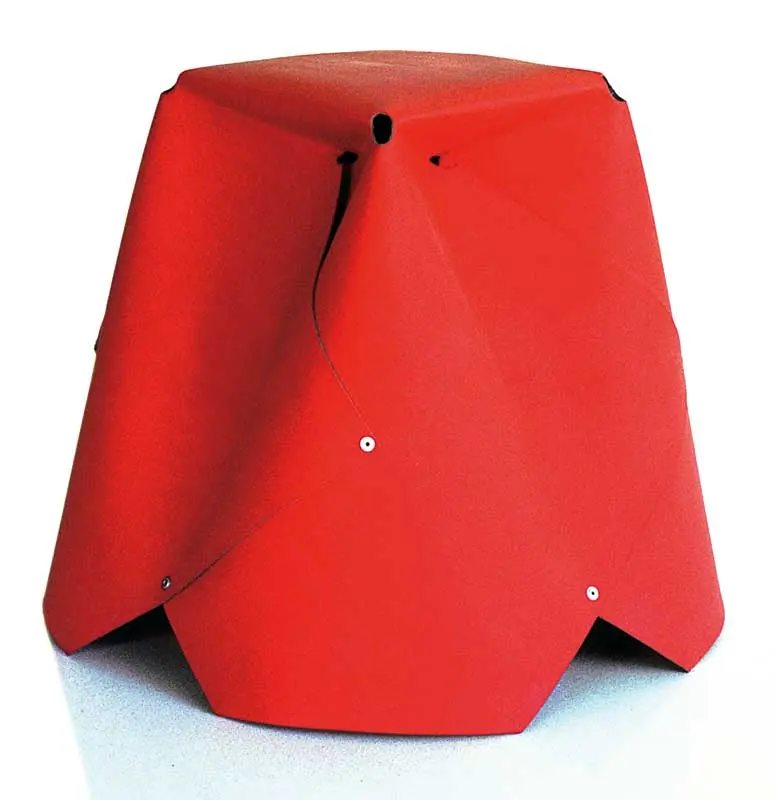
In terms of Latin American production influenced by Bauhaus, a keystone is the furniture designs by Cuban artist Clara Porset (1995-1981), in Mexico and Cuba. A student of Albers’ in the US, in 1936 she had fled her native country and resettled in Mexico for political reasons. Porset believed in design as a means to fulfill everyone’s right to more just life. And, faithful to her proposal of fusing knowledge of international trends to Mexican traditions and popular art, she created modern furniture to cover the needs of both the upper classes and of workers. At the turn of the 1960s, she returned to Cuba to work for the revolution. “She had sustained contact with Che Guevara, and even planned with him the furniture for the Escuela Nacional de Danza and the Escuela de Sierra Maestra, which Fidel Castro wanted to educate the revolution’s new cadres. Porset’s chairs, bunks, dining rooms, tables, and stools were low in cost, made with local materials and labor,” explains Elena Mallet, co-author with Oscar Salinas of Inventando un México Moderno. El diseño de Clara Porset.
Regarding the Bauhaus influence seen in Chile, Alex Blanch believes that it is very noticeable in the country’s most significant design: “the left-wing poster art of the 1960s and 1970s, also influenced by US pop art. But, above all, it can be seen in the attitude with which design has been historically attempted in Chile: to copy with some skill the look of foreign models,” he notes critically.
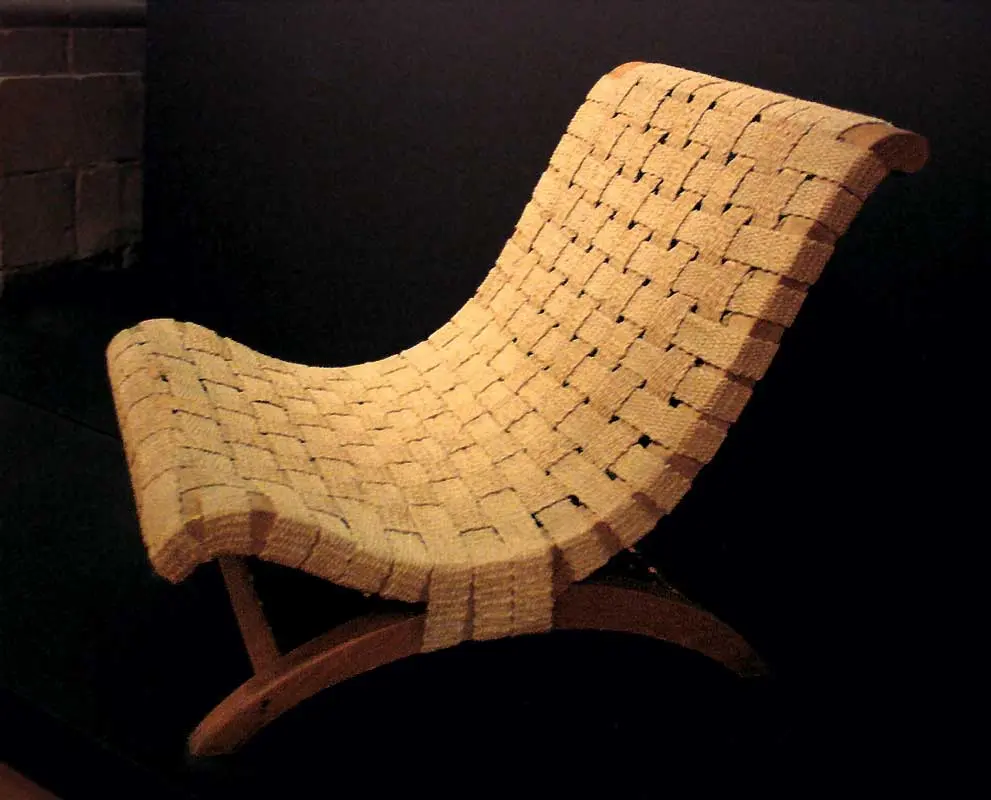
Méndez Mosquera, the publisher, finds the most direct influence of Bauhaus products in Latin America in the tubular steel furniture designed by Marcel Breuer and commercialized in Argentina and Chile by Knoll International through the mythical brand of Interieur Forma. Regarding other Bauhaus messengers, Ricardo Blanco refers to those art-decó white balloons “that inundated Buenos Aires’ office settings, which had been generated as a system at Bauhaus and were imported here in the 1930s by Hirsch & Zofrei.” He also identifies the mixed influence of the Cantilever chair, by Mart Stam, “which is now known as Cesca, and was appropriated in Buenos Aires by several manufacturers who didn’t care about its origin. In Argentina it was called ‘doctor’s office chair’ because that is where they were mostly found, the reason being that a Buenos Aires lab gave them away as a New Year’s present, of course without identifying them as Bauhaus,” he says as an anecdote.
“Bauhaus’ historical impact,” Bonsiepe observes, “was above all on design and architecture. In the graphic arts, with its break with traditional advertising illustration, later deepened by the so-called Swiss Graphic Design School.” In architecture, he mentions a little-known case: Estancia El Destino, today an ecological preserve, 60 km from La Plata, projected by Rocha & Martínez Castro Studio. “It is a clear example of architectural design from the rationalist Bauhaus school, and this in 1929. And probably an exceptional case compared with the historicist architecture found in Estancias like it.”
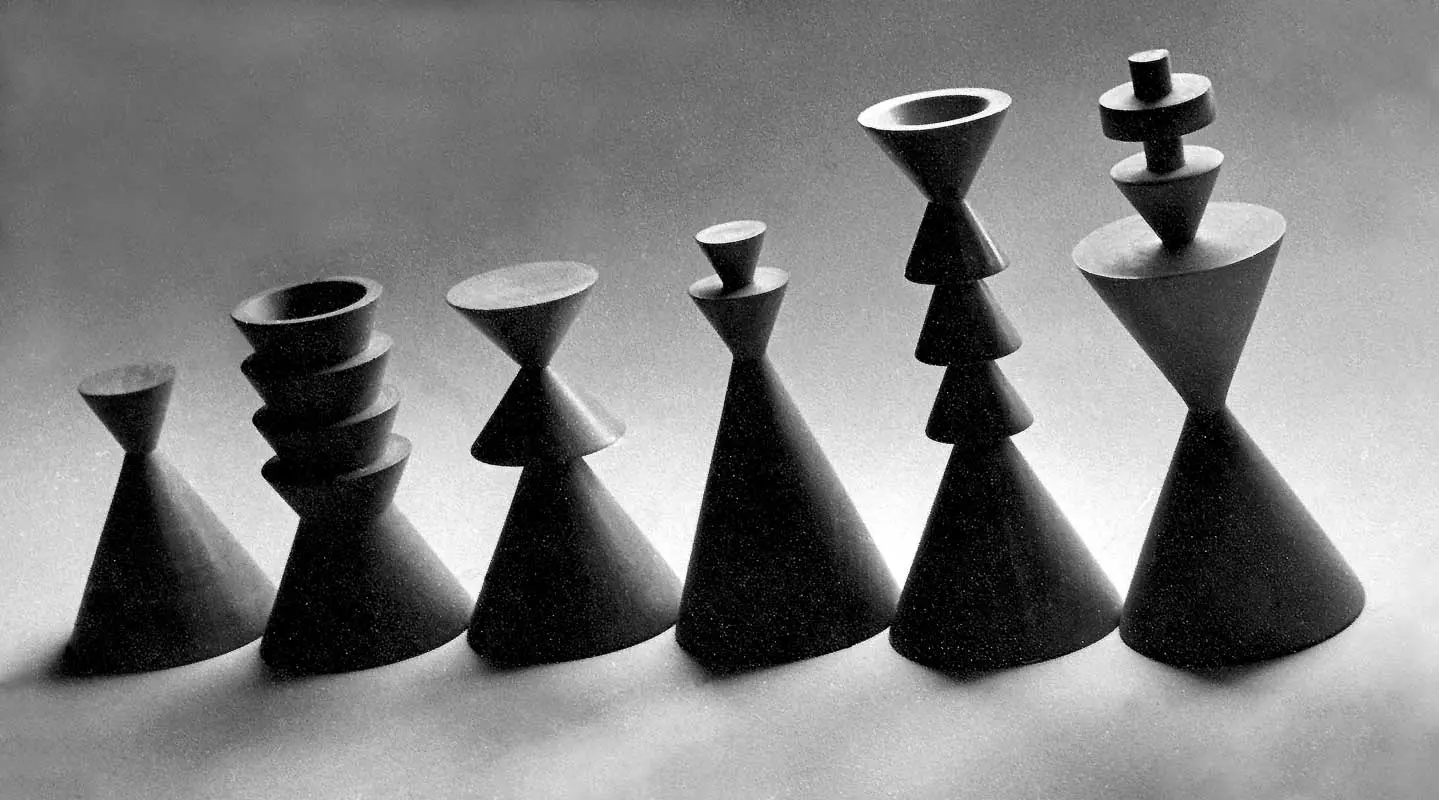
For his part, Bernatene questions the existence of such an influence on Latin American design: “Bauhaus products were the expression of that boiling cauldron of ideas in a space where experimentation was very familiar, where students projected by jumping into an empty pool, without precedents, trying to invent a new, non-bourgeois language. I don’t find products in that spirit,” he says.
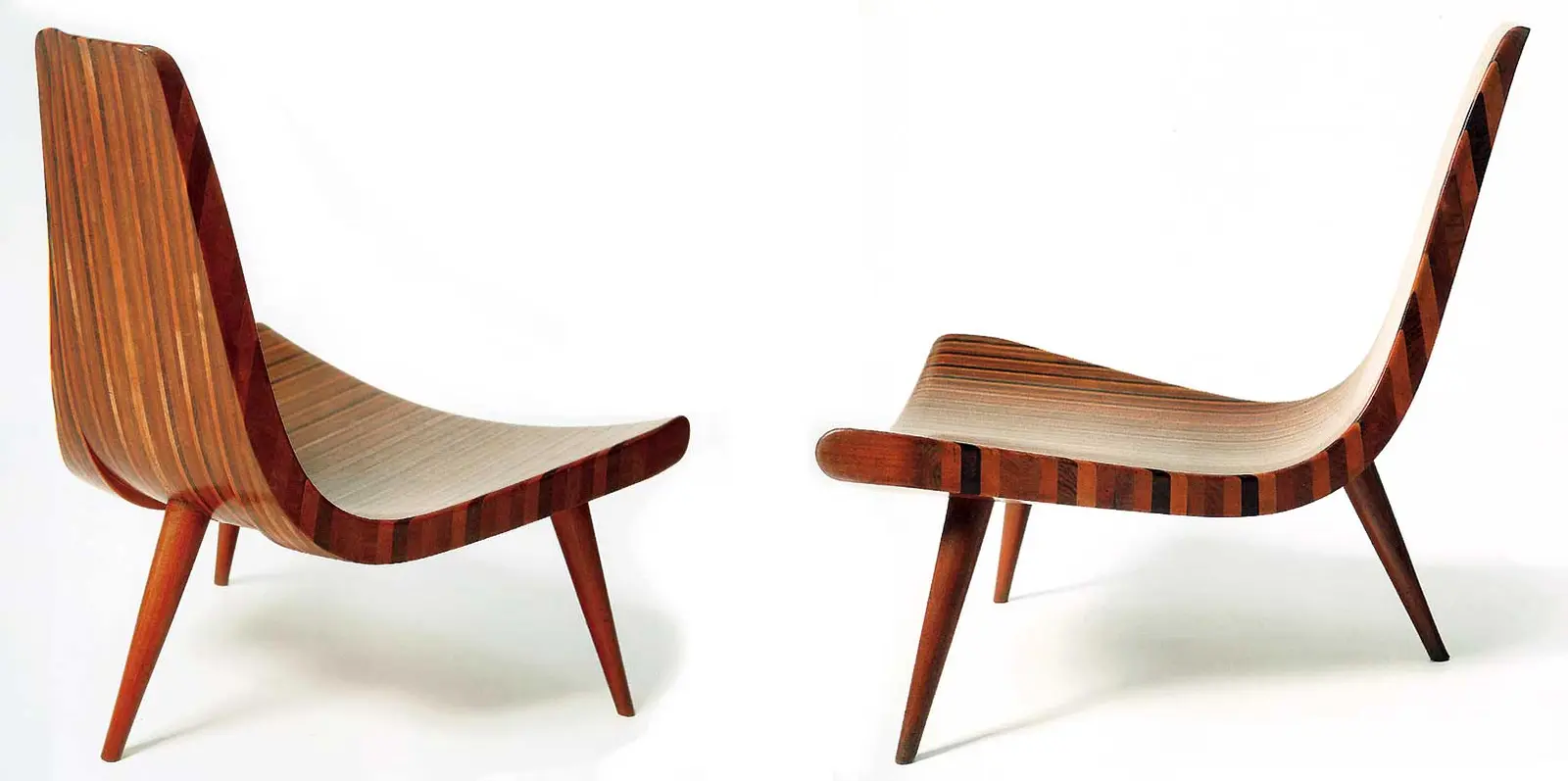
The case of Brazil — which Max Bill also visited and where he “preached” — is emblematic not only because there the Modern Movement, an heir to Bauhaus, took flight on its own, according to the coordinates of the local culture, geography, and materials (especially wood) starting since the 1940s a tradition of veritable jewels in furniture design. But also because, at the risk of over summarizing the scene, even today the production of that Bauhaus-influenced generation is highly valued in the design collector’s market, promoted in the Americas by the yearly Design Miami Basel. For example, Joaquim Tenreiro’s Tres Pés chair (1947) was sold in New York for US$54,000 in 2004. Two years later, its price was US$250,000.
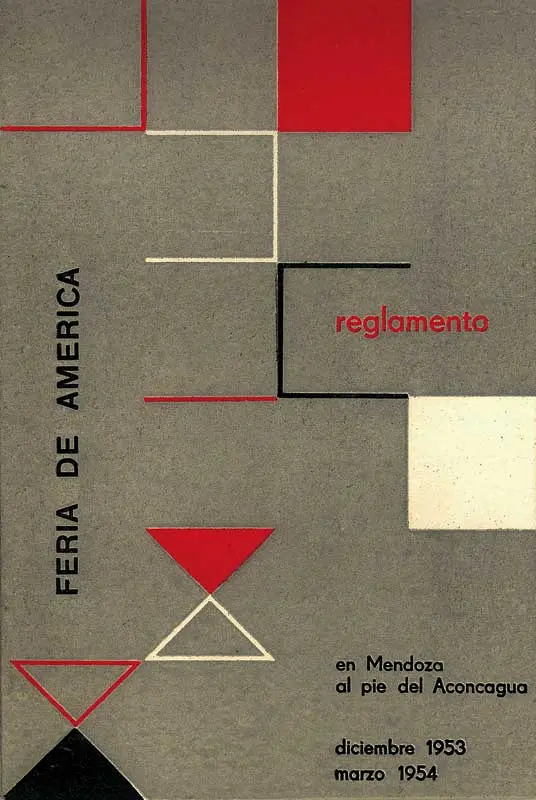
Finally, the sources interviewed for this note highlighted the most important legacy of Bauhaus, 90 years later. “The most current element is the posture of accepting industrial production both of material goods and semiotic goods as a topic that deserves intelligent projectual interventions,” Bonsiepe says. And adds: “As Tomás Maldonado said in his lecture on April 1st, 2009, in Weimar, at the 90-year celebration: “We must realize, without nostalgia or sadness, that the Bauhaus institutional model is no longer relevant today. It has lost currency, it was overtaken because the issues we must confront today in the teaching of design and in professional practice have reached a degree of complexity for which Bauhaus was not prepared.” Méndez Mosquera raises what he thinks is Bauhaus’ main banner: “Democracy and free-thinking.” And Bernatene does the same: “I believe Bauhaus continues to be a mythical point of reference because its pedagogical experience cannot be made into a model. And it is fantastic for it to be that way.”
NOTES
1. It refers to the letter sent by Laszlo Moholy-Nagy to Czech architect Frantisek Kalivoda on the new design and typography, later cited in the first (and only) issue of Telehor, a journal edited by Kalidova in 1936 in Brno (Czechoslovakia) and devoted in its entirety to Moholy-Nagy’s New Vision.
2. This mandatory core or preparatory course was directed in 1919-1920 by Johannes Itten, and later given by Moholy-Nagy and Albers. The object was to foster experimentation and personal search. The purpose can be found in the statement, “To build as you invent and to discover as you observe.”
CAROLINA MUZI
Journalist and independent design curator.