
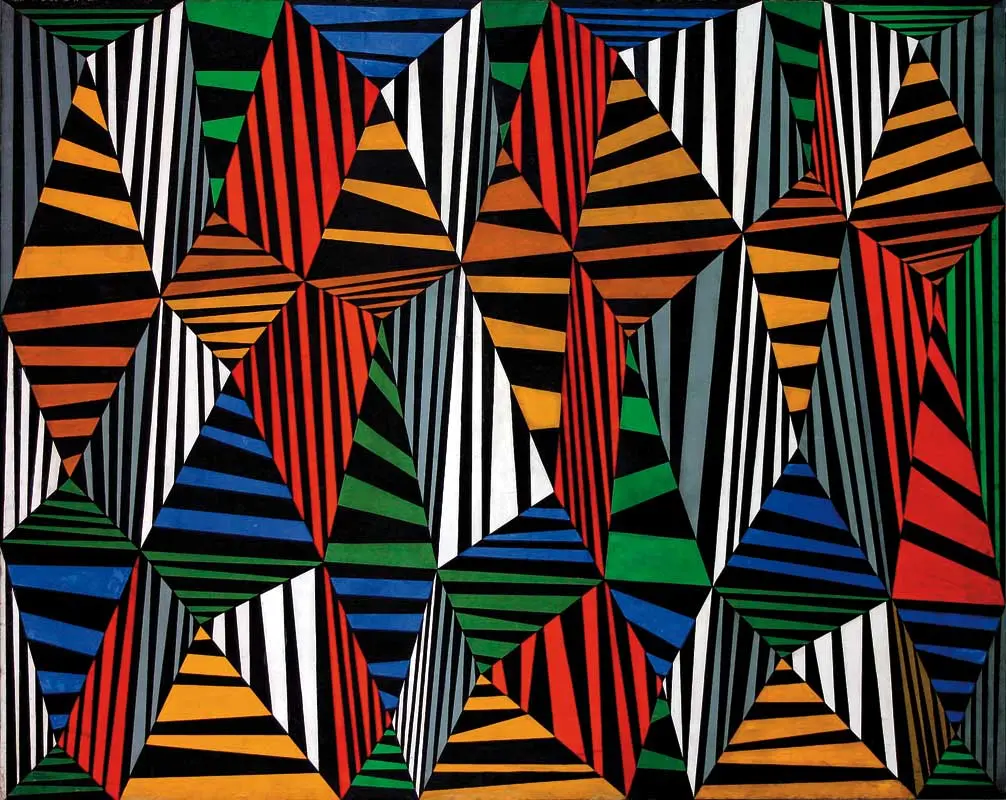
In the early 1950s, Carlos Cruz-Diez (Caracas, 1923), at the time a young artist well trained in advertising and illustration but affiliated as a painter with an antiquated and rather unambitious kind of realism, began to explore constructivist abstraction, a movement that was gaining adherents among the most restless emerging visual artists in Venezuela. Between 1953 and 1958, more or less, Cruz-Diez investigations —not necessarily free of confusion and some disoriented gestures— produced what is perhaps their greatest achievements, in two groups: his projects for manipulable murals, from 1954, and the paintings that, under the generic title of construcciones, he made in 1957 and 1958.
These two series are separated by a significant event in Cruz-Diez’s artistic biography: in 1955 he made his first journey to Europe, extended through 1957 with a stay in Barcelona and frequent visits to Paris. Cruz-Diez complied in this way with the legitimating rite of passage of his entrance in modernity —given the topical character that the European sojourn still had for Latin American artists, since the time of the avant-garde— and found in the pilgrimage the necessary elective affinities for the development of his artistic exploration in the kinetic movement that unfolded in Paris at the time, with Denis René’s gallery as its epicenter and Jesús Soto (1923-2005), a friend of Cruz-Diez’s since the time they were students at the Escuela de Bellas Artes in Caracas, among its front-line members.
Cruz-Diez’s early constructivist work, despite its own merits, doesn’t really foreshadow the visual refinement and complexity that very soon afterward —starting with his first “Physichromie”, made in 1959— would become evident in the artist’s projects. Yet, at least two features that were to become constants in his future production are already present, albeit in an embryonic, at times naïve way: first, the invocation to the viewer to complete the work, as a perceptual event, in the process of aesthetic consumption; second —connected to the first one in the mural projects of 1954— the concession to this viewer of the possibility of acting upon the colors previously offered in the pictorial plane, and of generating among them relationships according to his or her limited will.
Of the invention of color and the fisicromías
As we said before, it was with the Physichromies that Cruz-Diez began to articulate, in eloquent visual terms, the central issue around which his later explorations would revolve. A seminal idea, apparently simple but that in the history of Western painting couldn’t be formulated or thoroughly examined until the arrival of the Modernist movement, is at the base of all of them and of the corresponding conceptual apparatus the artist articulated starting with his first works with additive color and, especially, the fisicromías: color is not only a material reality present in painting, but also a construction of perception affected by the eventual relationships that, in the circumstances of reception of any given work, can be established between the colors applied on the pictorial surface, the variability in the action of light, and the movement of the viewer’s gaze. This emerging color, forged in a dynamic that is verified in space, is inevitably physical inasmuch as it is color-light, this is to say, a phenomenon of visuality, but because of its ephemeral nature and its lack of support it incarnates in a mutant, unstable kind of color.
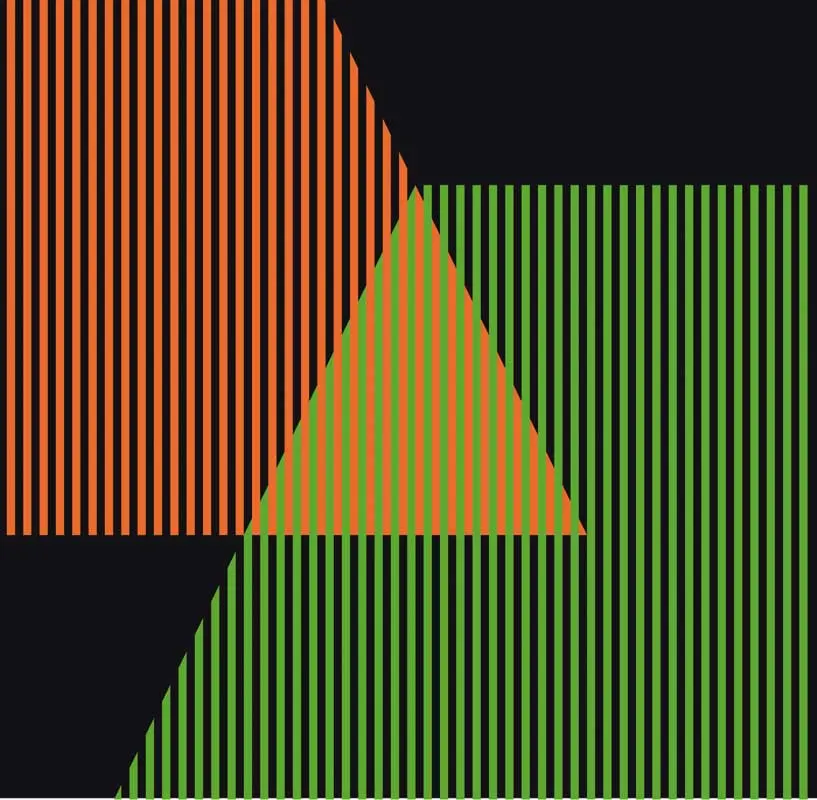
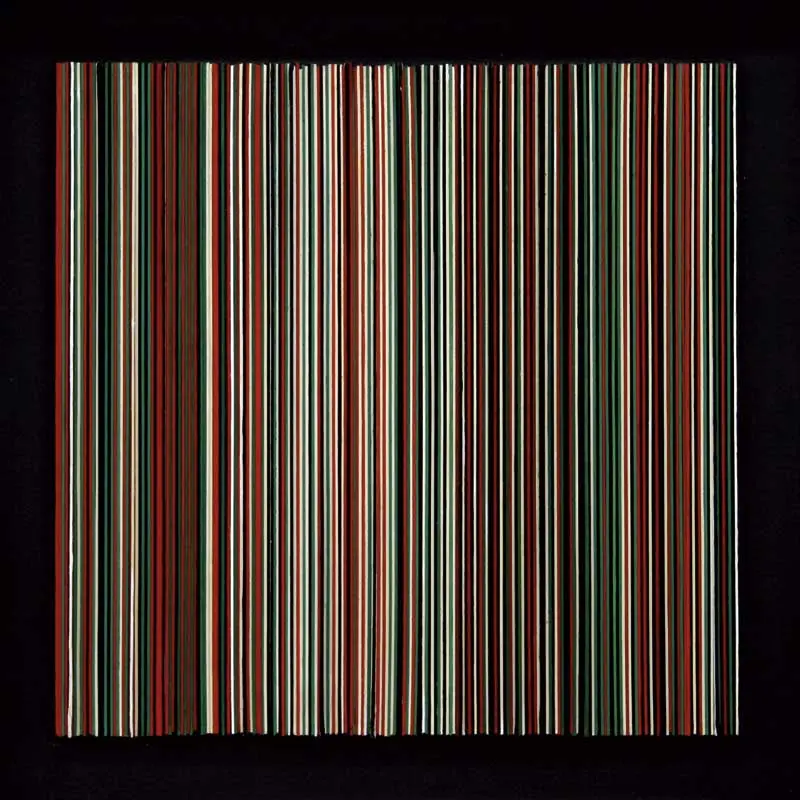
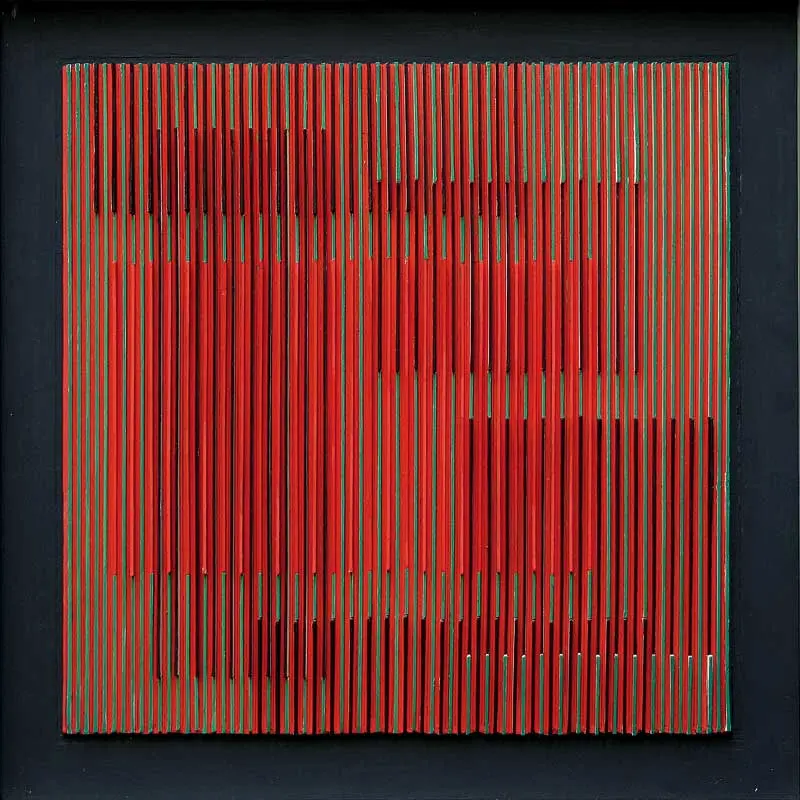
While in the additive-color works the optical mixing of two or more colors from a reduced number of narrow bands that intercept each other on the pictorial plane results in the emergence of a new chromatic range, in the Physichromies the constructive principle and its results are more complex. In them, the narrow bands of different colors are repeated following rhythmic sequences on the surface of the painting, forming interactive, rigorously geometric patterns whose final purpose is to generate chromatic variations in the process of perception. This is why the artist has called them “snares of light.” So far, we have mentioned everything that identifies the Physichromies as art events, but we need to add something else: that same constructive principle allows for an “infinite” combination of colors, geometric shapes, and volumes on the plane, and in consequence a vast amount of effects of induction, equalization, and inhibition of colors, of changes from one color pattern to another, and of generation of unexpected ranges. Cruz-Diez has taken maximum advantage of these possibilities, creating in this series a high number of differentiated works that at the same time form the most characteristic and extensive group of his fecund career.
It is important to add here that transforming the invention of color into a “working project” in art, as Cruz-Diez did —and the idea he drove into different paths from early on, taking it to its extreme consequences— was made possible only after a long journey of color in the history of painting, in the course of which, finally, Cruz-Diez himself became a protagonist. First it was necessary to overcome the argument by Poussin (1594-1665) that “colors in painting are like praises to persuade the eyes,” which expressed the idea of color dominant in the history of representational painting since the Renaissance through the Nineteenth Century and Delacroix (1798-1863); then, to follow the route of impressionism and the thesis that the optical mixture created by Seurat (1859-1891), who places small blotches or points of pure color on the canvas, concerned with the local hue, light, and the simultaneous contrast of colors he studied in the art of the past and in the theories on the topic advanced by Nineteenth-Century scientists such as Michel Eugène Chevreul (1786-1889); later, once the modern thesis that the work of painting was to explore its constitutive elements in their state of maximum purity, perhaps crossing the line of the Homage to the Square begun by Joseph Albers (1888-1976) in 1949, where this outstanding artist and researcher of chromatic fields in painting deployed his theory of color, ultimately presented in Interaction of Color, in 1963; and, lastly, to arrive at the place occupied by color in the panoply of optical effects of the kinetic movement, whose official birth took place at the show Le Mouvement, held at Denise René Gallery on April 6th through April 30th, 1955, and which Cruz-Diez, freshly arrived in Paris, visited with Soto.
New Investigations: The Chromo-saturation Chambers
Cruz-Diez established himself in Paris in 1960, with frequent temporary stays in Venezuela. His career went then through a period of extraordinary creative ferment, with his imaginative capacity applied to the formulation of a variety of positions that drove forward his research on the perception of color. In the course of the 1960s, Cruz-Diez began his series Chromatic Induction and Chromointerferences, while executing his first “installations,” like the Chromosaturations and Transchromies. All routes that remained open in time for later returns, alongside the series Additive Color and
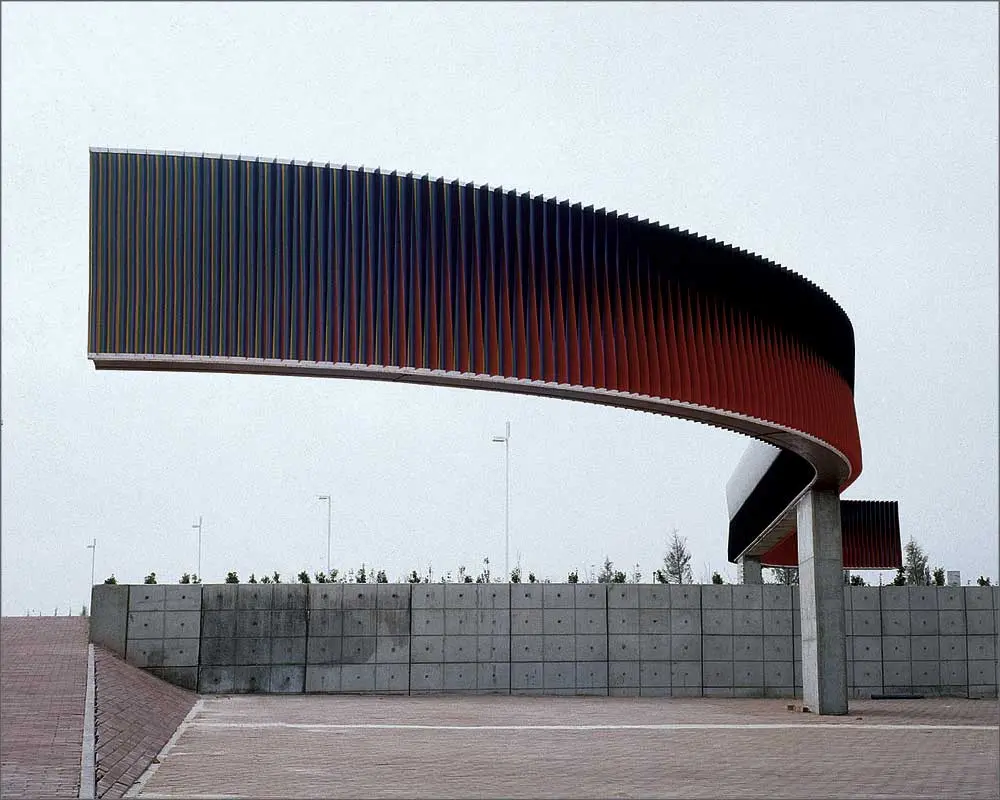
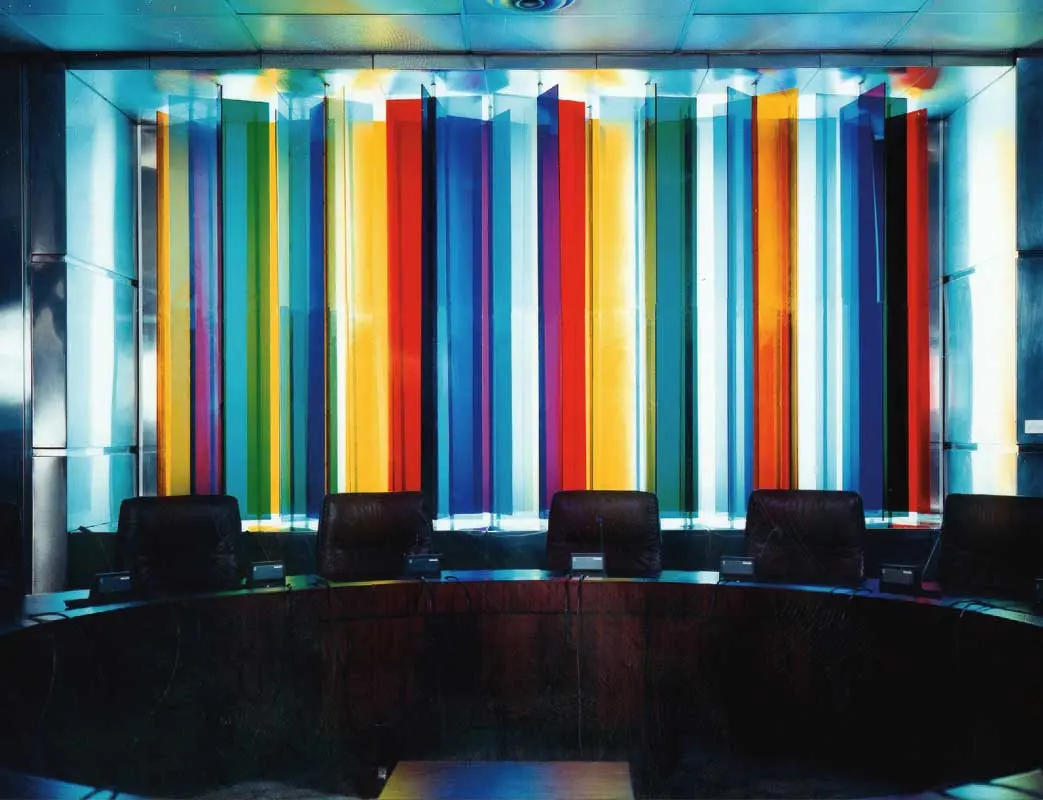
Physichromies, started earlier, are a set of parallel directions in the artist’s work reaching into these days; to them, we must add Color to the Space, a series started much later, in 1993. Simultaneously, starting in 1967, Cruz-Diez became an active creator of ambient works, both in interior and exterior spaces, often large in scale, as well as of many temporary artistic projects on the activation of public spaces.
It is difficult to understand then why, without denying his support for the work but with a gesture of open condescension, Argentine critic Damián Bayón called Cruz-Diez’s interventions “rather simple, rather elemental,” 1 when commenting on the selection included in the last Plural. 12 Latin American Artists Today, a painting and sculpture show presented in October of 1975 at the University of Texas, Austin as a complement to the symposium Speak Out! Bate-Papo!: Contemporary Art and Literature in Latin America. Perhaps the critic’s lack of insight into the complexity of Cruz-Diez’s proposal was due to the fact that he ignored the historical dimension of the issue it set in motion, the way it acted within a system of thought which it contributed to feeding in a novel and abundant way; or, to say it in different words, Bayón’s lack of interest in exploring the “interstices” between the contemporaneity convoked by the work and the site in the history of art it was related to. Whatever the case, Cruz-Diez’s body of work at the time was the victim of an excessive emphasis on the part of critics on its evident retina-focused vocation, which often obscured to a lesser or greater degree —even if involuntarily— some of its potentially most important artistic and cultural meanings.
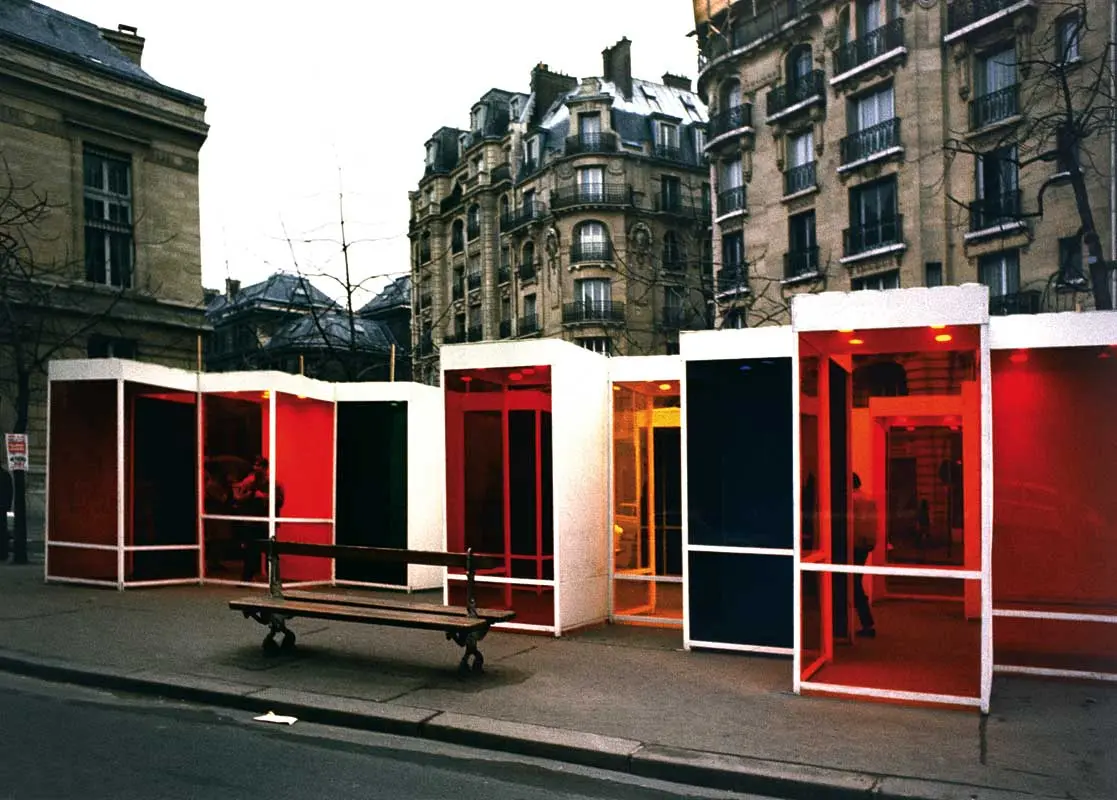
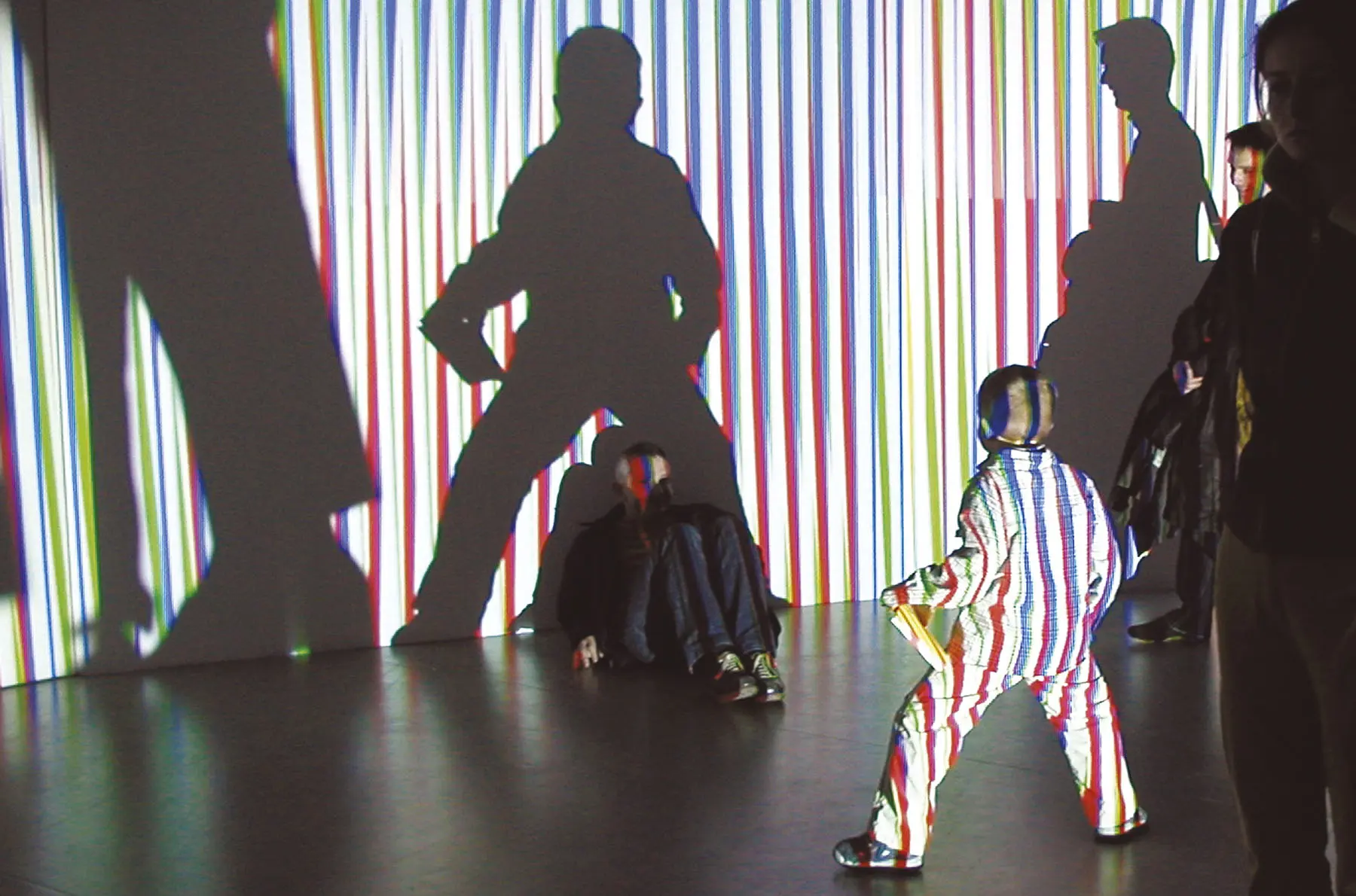
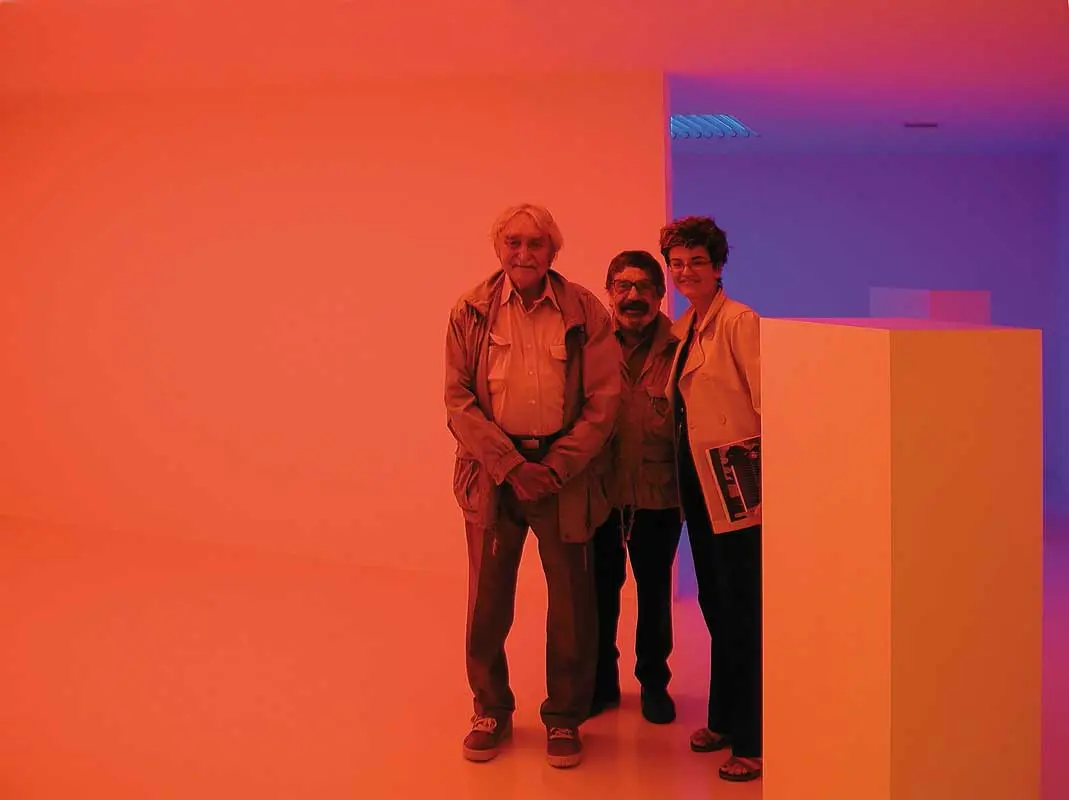
Perhaps it is possible to trace today some of those meanings in a critical appreciation of the portion of the artist’s legacy comprised of the chromo-saturation chambers, because, beyond their place of origin within Cruz-Diez’s oeuvre, they are resituated now as one of his highest achievements. A series of rooms, each under the effects of artificial lights in a different color, where the audience perceives color as it forms and vanishes in space, his earliest chromo-saturations were presented in Europe in 1968, and a year later they were seen in Venezuela, at Conkright Gallery in Caracas. On this occasion, they were defined in a text included in the show as the propitiators of “brute perception” of color intended to provoke a reaction in the viewer that was “not subject to aesthetic criteria”, which is to say, en eminently physiological one: an argument that didn’t help much towards an understanding of their discursive capacity.
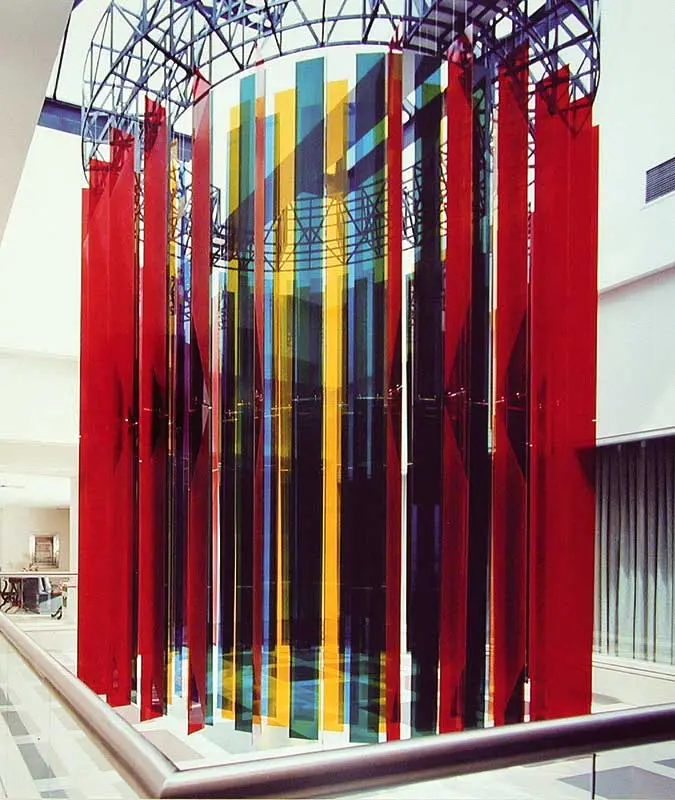
Beyond the fact that any sensorial perception is inevitably physiological, what is interesting in the chromo-saturation chambers as an artifact is how they move an unsettling, emotional perceptual experience towards the theoretical space where one of the highest ambitions of the modern artistic project was built, already insinuated here: a pure vision of color. Perhaps the fascination the chambers seem to exert on the sensibility of a contemporary viewer rests on the ambiguous results of the experience they provoke because while it is true that color in them, freed from support and matter, trembling and dense, spatialized and invasive, created and dissolved, can be seen as the vehicle for contemplation of universals, as in the aspirations of canonical Modernism, it is also true that all purity comes undone on the shores of human lived experience, a certitude of the present.
A present that makes evident that, as happens only in exceptional cases, Carlos Cruz-Diez’s body of work has been able to generate in its own internal movement the conditions of its specific artistic currency, overcoming the temporal boundaries of the validity assigned to the movement it adheres to and, also —seeing the matter from a more general standpoint— the historical context to which the particulars of its emergence and initial development are connected. A present when that corpus, forged in the mid-twentieth Century within the context of the Neo-Avant Garde and built up in successive decades, reveals itself as the result of a shining artistic trajectory, splendid in achievements.
NOTE
1. Damián Bayón. “Exposición Plural. Una autocrítica”. In: Damián Bayón. Pensar con los ojos. Ensayos de arte latinoamericano. Mexico, D.F.: Fondo de Cultura Económica, 1982. p. 320.
* All images illustrating this article are courtesy of the Cruz-Diez Foundation.
JOSÉ ANTONIO NAVARRETE