Daros Latinoamerica Collection
Zurich, Switzerland
Video as a contemporary art practice uses techniques that allow it to capture, assimilate, transmit, reconstruct, and create a sequence of visual and sound images representing scenes in motion. Time as an essential element of the work of art brings viewers closer to the world created therein and plunges them into a new reality that cannot be denied.
Every one of the works on display at For You/Para Usted offers in a direct or an indirect way a subjective experience founded on the "I See"; taking "I See" as the root meaning of the word video, from the Latin verb videre. In that way, we can start with subjective judgments and reassert the validity of its content as truthful content, and confer meaning to the image that starts in the artist's subjectivity and transforms a tangible stimulus into an event of visual and sound forms that materialize in the video-art work are presented to viewers who re-create them on the basis of their own subjective judgment, built on the "I See."
Thirty-five videos, thirty-five ways of composing the matter of the video, works that despite their conceptual and formal differences are closely interconnected and related in that they offer viewers a panoramic of Latin American video-art from the last 12 years, which has been characterized by a strong commitment to making evident the phenomena that currently mark life in these countries: social, political, and cultural crises that constitute the matter of contemporary art production in Latin America.
The selection includes twenty-two artists, twenty-two gazes from different points in the region, ranging in age between 33 and 73. Artists who seek to imprint on each of their works an undeniable connection with their surroundings and generate close relationships between their art and the culture of their people, inviting viewers to witness such diversity and the cultural confluence forged in the riches of Mexico, Cuba, Guatemala, Costa Rica, Panama, Venezuela, Colombia, Brazil, Uruguay, Chile, and Argentina, gathered in this exhibition expressly Para Usted/For You.
The show's mise-en-scene is systematic and harmonic, so that any given work, while preserving its identity, refers to others; an inner narrative is produced in the show which, in turn, activates processes of evocation and imagination in the viewer. In my view, the space generated by the arrangement of works fosters an emotional experience that invites reflection and an approach through the gaze of others to Latin American themes.
The Heart of the Matter
To make the connection between matter and art, I take as my reference twelve videos included in For You/Para Usted, which facilitate my characterization of the concept of matter. As a viewer, these works suggested to me in the most direct way the dynamics through which art practices construct the image on the basis of the observation and interpretation of objects and ideas around them, transforming those observations on the part of the artist into the matter for the construction of art.
Video, like other creative expressions, possesses its own matter. Despite its electronic transformation toward the virtual, it continues to be perceived, felt, and even touched through the senses. Video gives us something, a stimulus, and it is the viewer who assimilates, construes, and inserts it into his or her own materiality.
Starting with a list of observable elements, elements that constitute a culture, an event, it is evident that in Latin America spaces have been built on the basis of multi-cultural coexistence, which often has been traumatic. In Coexistencia, Dona Conlon (Panama) presents a circle of ants carrying the matter needed for their survival: plant leaves they themselves have cut. A detail reveals an anomaly: some ants carry artificial leaves painted with country flags and peace symbols, materials that dialog in a relationship of contrasts with those that are part of the ants' natural life.
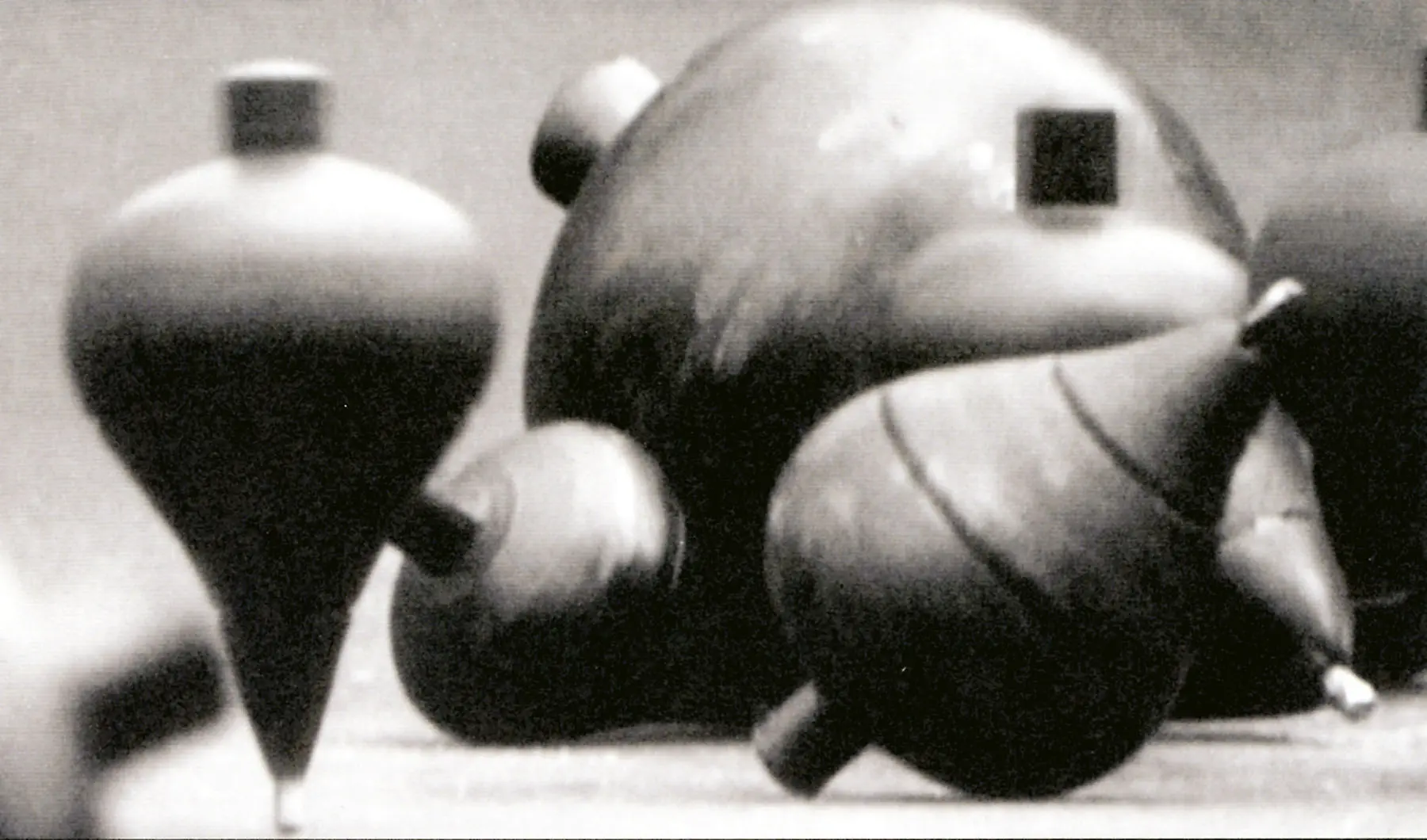
In A morir, by Miguel Ángel Ríos (Argentina), physical matter is comprised of recognizable objects, black spin tops interacting in a limited space. Each top makes a space for itself by clashing against others in a narrative game of gyrations, pushes, or submission to other physical interactions, making headway within the community of tops that seek to continue their movement, to conserve the kinetic energy that tends to push them apart, but also the potential energy that tends to bring them closer. The matter of video connects, in a metaphorical way, the situation of these tops with the issue of survival, since all one achieves is to prolong the inevitable end: death.
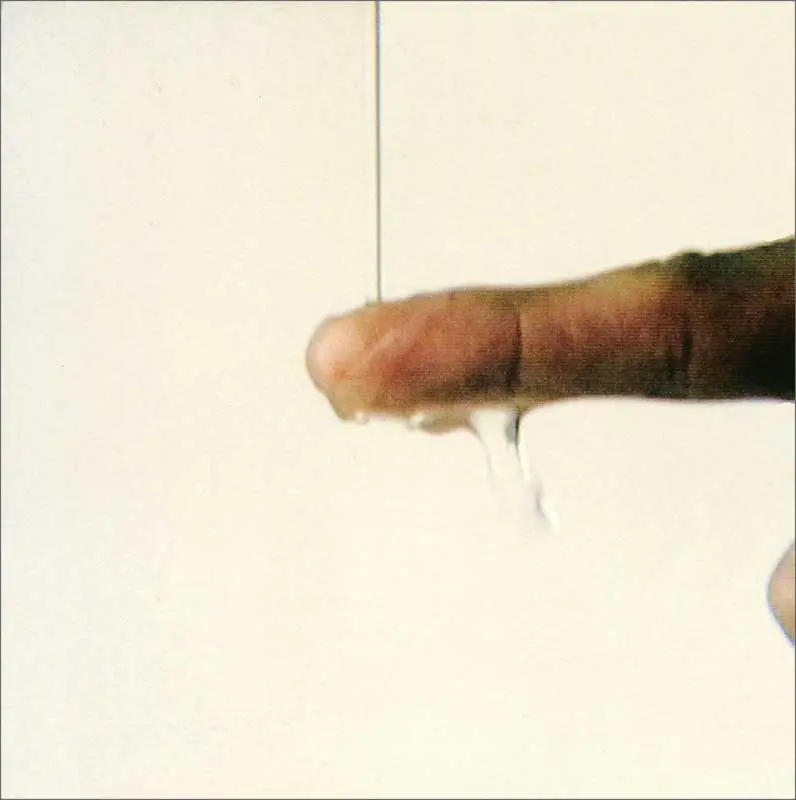
The video series Gravity, Twig, Line, Hole, by Mauricio Alejo (Mexico), explores how it is possible to understand the energy of matter from the standpoint of physics. Each one of these videos stimulates perception, ones own natural state, and the reality of images that are almost abstract, which acquire meaning on the basis of the relationship they establish with the viewer.
In Gravity, a balloon defies gravity. In Twig, the supposed shadow of a branch tricks the perception of the observer. In Line, a static horizontal line blurs and changes its state. And in Hole, a circle becomes a sinkhole. Each one of these images produces its own material discourse, and at the same transmits a sensation of resistance, given by the moment in which matter shifts from its original rest state to an active state, passes through the action of an external agent, and enters a state of motion.
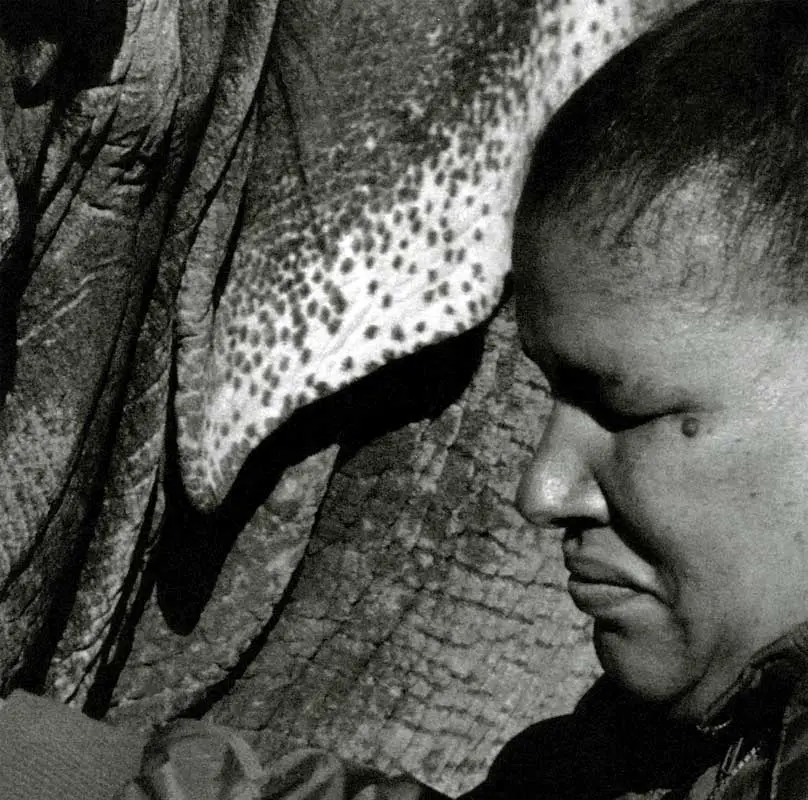
Letter on the Blind, For the Use of Those Who See, by Javier Téllez (Venezuela): through black and white high-contrast images, this work shows five people who activate a dialog while sitting in a large public square; one by one they carefully approach something that they must describe; reaching their objective, they touch, smell, caress it softly, with self-confidence or fear of the unknown, perceive its materiality, which is strange to them, blind people who describe what they have perceived, reflect on their experience, and interpret from their condition the materiality of the elephant in the cave. The materiality of the video goes beyond that of the elephant in the dialog between the actors and in the message they send to sighted people.
Trepanaciones, Sonidos de la morgue, by Teresa Margolles (Mexico). This is a unique work because it lacks any visual image, it is a sound work, and it is precisely sound that activates the construction of visual images by the viewer, facilitating the presence of matter at the moment when, using headphones, his or her own body experiences the act of trepanation.
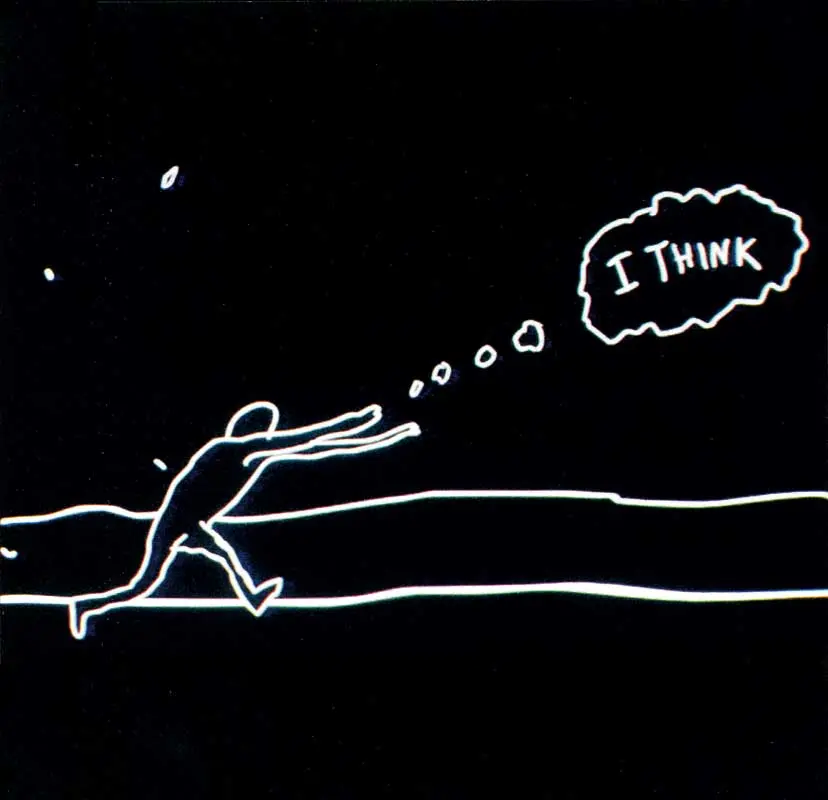
Yo pienso/I Think, by Lázaro Saavedra (Cuba). The process of transforming static images into works of movement through the instrument of animation opens up another way of creating matter in the video. In digital works, the sensation of an image's form/volume materiality is not perceived on the basis of a real object captured by the video camera. The artist builds the materiality of the objects through the intangible digital creation that becomes matter.
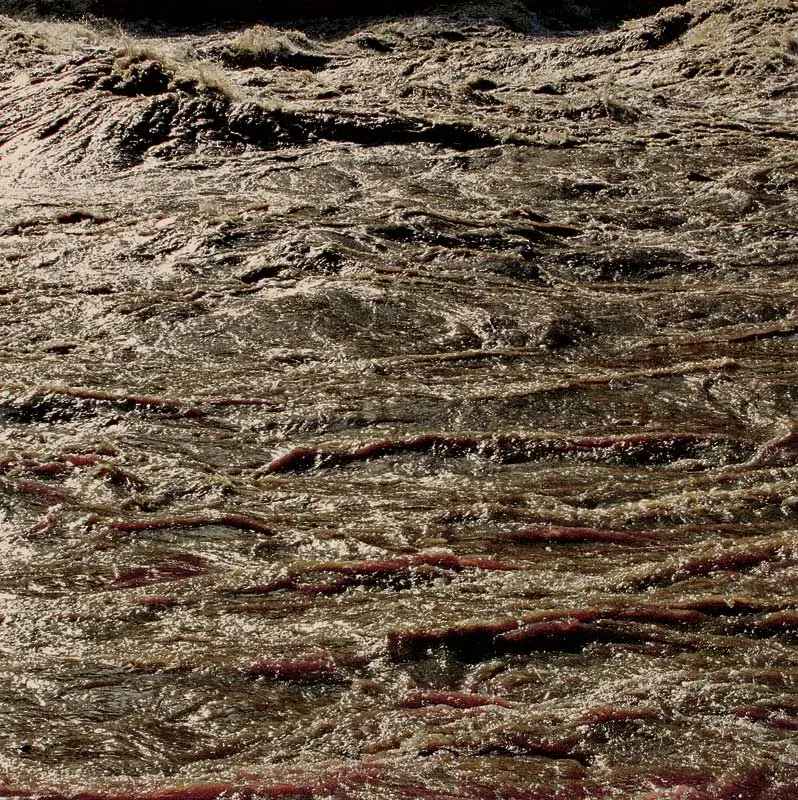
Treno (canto de Muerte), by Clemencia Echeverri (Colombia). Two opposed images, a sound landscape that transports us to a different place, to a river of furious and turbid waters, like those in the tropics. The dialog is generated in the confrontation of the images, with the viewer as a witness between them. In a continuous and repetitive act, the river inundates with its material force, carrying with it and covering everything. At the center of the installation, the viewer experiences a sensation of danger, of being submerged in the river, a sensation that grows as shouts are heard of people who try to communicate from one riverbank to the other.
This video installation submerges the viewer in a sensation of materiality that reflects characteristic events in Colombia's history of violence, the artist's context: the turbulent waters of rivers that carry the bodies of thousands of peasants disappeared by the various forces in conflict.
In Boca de tabla, by Teresa Serrano (Mexico), we are shown the human condition in connection with the material world, and specifically with architecture, which is the matter of this video. A metaphor for repression and enclosure: to traverse ad infinitum the innards of a house that becomes an interminable, torturous labyrinth. Teresa Serrano interrogates the human condition and specifically that of Latin American women in their everyday lives, in their existence, in their physical and symbolic enclosure.
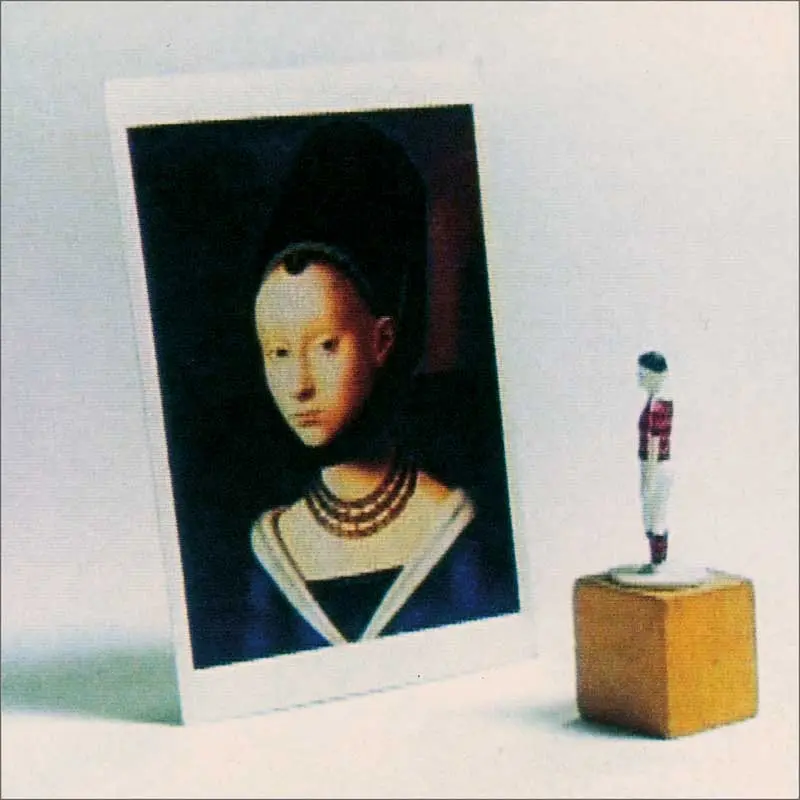
For you, by Liliana Porter (Argentina). It generates materiality through the relationships between human-created objects, episodes with a romantic nature, and marked political backgrounds, that labor to tell a discourse of their own, an explicit event that is transmitted directly to the viewer. Acts and games of concrete relationships between different objects that seek to reduce to the minimum the need to be construed by those who see them. The image is the very matter that wants to give viewers all the necessary elements, elements that are perfectly arranged and determined, and invite diverse reflections and sensations in a show arranged exclusively For You.
By Way of Invitation
The matter of video is understood not only on the basis of the object itself and its physical properties but is founded on the concept of raw material with which the work of art is created, the generative themes that torment and prod the artist to articulate a discourse about them. In For You/Para Usted, the matter of video is the differences, the traces of identity that characterize the wealth and diversity of the continent's peoples, as well as certain elements of unity among them: their language, their logic, and their continued violence, which connect and generate a common history.
In each and every one of the 35 works on display, the matter of video is present, and in order to understand that materiality, it is important for the work of art to be seen from the point of view of the relationship established between viewer and image, what the latter suggests its constructs and relationships. Similarly, the matter is also comprised of the fragments of life the artist gives us in the construction of his or her work and the message that is being communicated, their intent, their point of view, and the need to highlight characteristic aspects of their subjectivity and cultural context, given new meaning in keys that have a universal character.
The high quality of the works included in the show cannot be debated, and neither can the way in which they are presented to the public in a space like the one provided by Daros Latin America in Zurich –a space where we must especially mention the richness of the criteria guiding the collection, its capacity to seek out artists and their works, incarnating the identity of their nations and of humanity itself.
For You/Para Usted does not attempt to encompass every single set of themes and variants of video-art in Latin America. It is a qualified show offering a wide panoramic of the current state of the matter, seen from a variety of points of view and created with local languages directed towards a global public. A great stage that incites viewers to reflection, to break physical and ideological barriers, and to see, observe, understand, and question what is believed to be a reality.
FERNANDO GRISALEZ BLANCO