The problem of memory has been essential for artists since the very origins of their activity. In recent decades, though, its reach and implications have become more complex, since memory involves not only events of the past but also the collective actions and the individual responses aroused by those events from the standpoint of an empirical present. The idea of remembering in order to prevent an atrocious past from repeating itself has animated a large number of academic studies, as well as a significant subset of art projects that appeal, using a variety of strategies, to their readers’ or viewers’ sense of solidarity. As an exemplary case we can mention the works produced in recent decades by German artist Johen Gerz (along with other artists with similar interests), which have become known as “counter-monuments” because of the particular way memory is deployed in them. In 1993, in the informational panel that remained after the voluntary sinking of his Monumento contra el fascismo, Gerz wrote: “We invite the citizens of Hamburg and its visitors to add their names to ours. By doing that, we commit ourselves to remain vigilant. As more and more names fill this 12-meter-tall leaden column, it will sink into the ground. One day it will disappear entirely and the site of the Monumento contra el fascismo will be empty. Because, in the end, only we can rise up against injustice.”
The political direction of art that seeks to respond to and repair, in symbolic terms, the effects of abusive power, is expressed in the counter-representation of the scenarios and discourses responsible for the atrocities of the past. It is not a matter of explicating the “truth” of the past, but to expose the gap that separates it from the present it has come to constitute. The present, then, is expanded so that it can in its own memory become explicit. Artistic projects documenting memory are cultural witness of events that cannot be narrativized, at least not in the way they took place. They serve only as mechanisms for people to act, remember, and take a position.
The exhibition La memoria del otro curated by Anna María Guasch and presented at the Museo de Arte de la Universidad Nacional, in Bogotá, gathers the work of six European artists who work with the cultural construction of “the Other” in the West: Ursula Biemann, Hanna Collins, Francesco Jodice, Rogelio López Cuenca, Antoni Muntadas, and Krzystof Wodiczko. For the curator, otherness responds to everyday-life conflicts but is at the same time a consequence of global hegemonic networks. This is why she connects artists interested in territories as the foundation of a social discourse, whom she sees as investigators of images more than creators of them. In accordance with that role in the gathering and analysis of visual culture, Guasch reclaims actions of documentation as a creative process capable of making visible a subjective perspective for handling and disseminating information that the artists “collect, reorder, and present through fractured narratives, images, and information of a world conceived as a ‘transdisciplinary’ database.”
Video is the dominant medium in this curatorial project, which seems to function in many cases according to a documentary logic emerging not only from the procedures of documentation mentioned above but also from a special relationship between the works’ narrative and experience of reality, which appears to be a material trace. In a public conference held in 1992, as part of the Ante América exhibition, Doris Salcedo mentioned that in the field of art we can find a series of practices—among them her own work in sculpture—that follow a documentary logic where the different gestures, metaphors, and fictions that structure the artwork are closely connected—as if they were physical indications—with a material, historical, and political dimension of reality. When I allude to a certain documentary logic present in the works included in La memoria del otro, I am thinking more of this category of “documentary art”—such as Salcedo’s (with its demarcatory backgrounds)—than in the audio-visual genre that is usually labeled that way. This characteristic was suggested to me in large measure by the museographic dimension of the curatorial project, designed by María Belén Saez de Ibarra, which placed each artist in a vast and generous space, skillfully allowing us to perceive the spatial and temporal dimension of the various narratives presents in the videos in direct correlation with the “real” space and time of the viewer. Significantly, the project’s museographic script is included in the book that accompanies the show, making evident not only its theoretical value but also its documentary role with respect to the project’s general formulation, with all the conceptual implications carried by this situation.
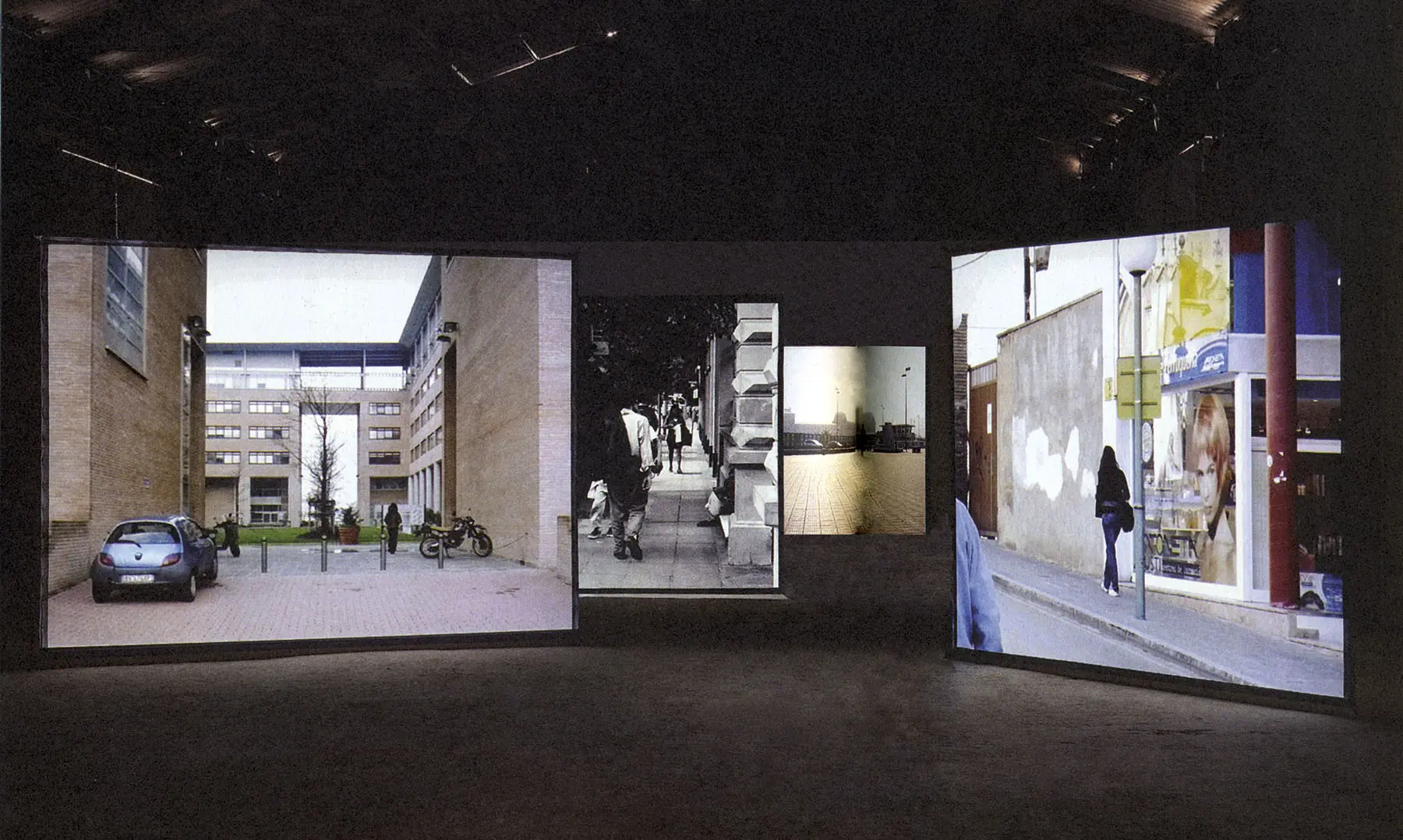
Italian artist Francesco Jodice’s large-scale video installation Huellas secretas consists of a series of projections on translucent screens that articulate themselves around the viewers’ own trajectory and deals with the different paths followed by common people in their respective cities. Jodice follows them, somewhat Sophie Calle, in order to approach those cities, unknown to him.
Ursula Biemann, from Switzerland, presents what she describes as a video essay, titled X-Mission, that deals with the transformation of refugee camps, proposed as transitory solutions, into permanent situations. The format used allows Biemann to articulate together theoretical, documentary, and aesthetic propositions.
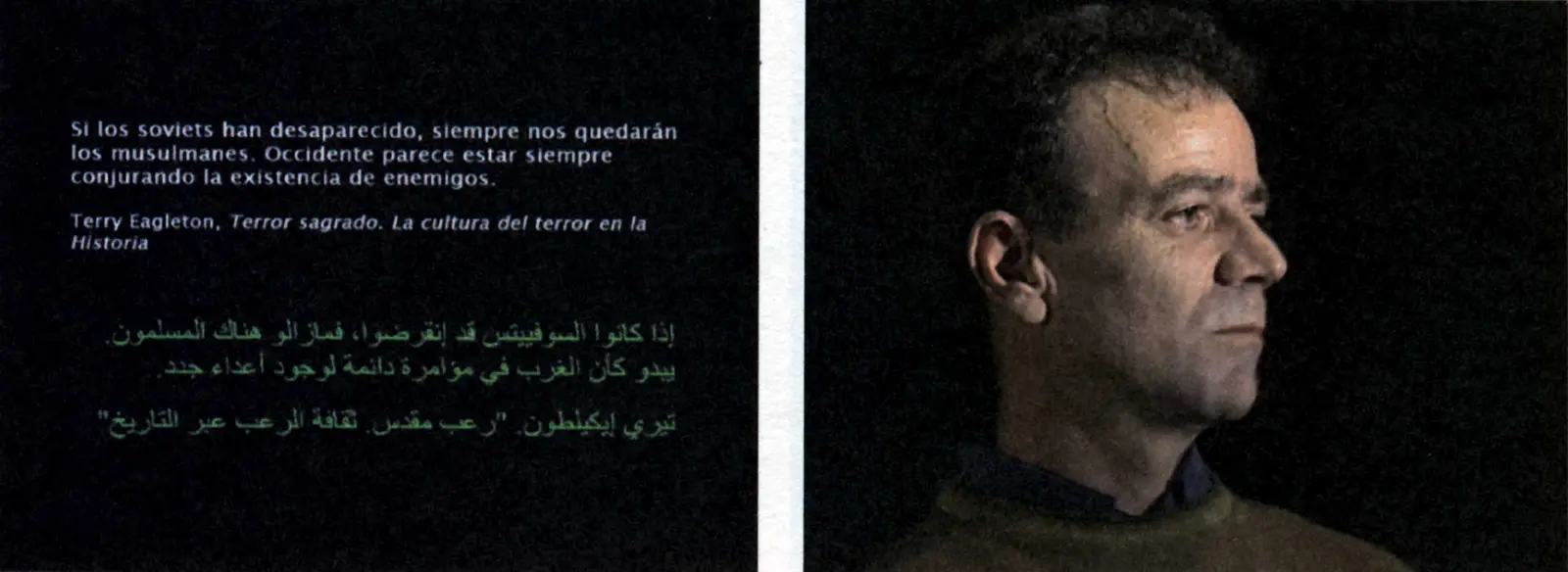
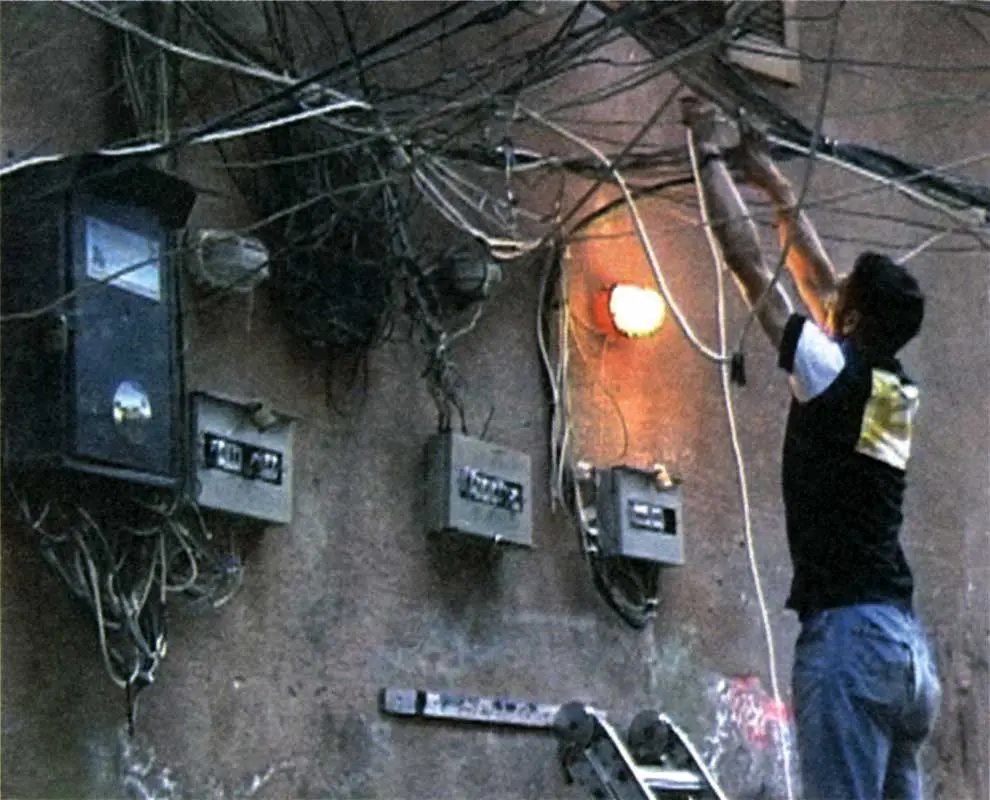
On translation: miedo, jeuf by Catalan artist Antoni Muntadas, conjugates the artist’s own interest in describing himself as a translator of images of what takes place in the contemporary world, with global processes of cultural and political translation, centering its attention on the tension at the Spain-Morocco border.
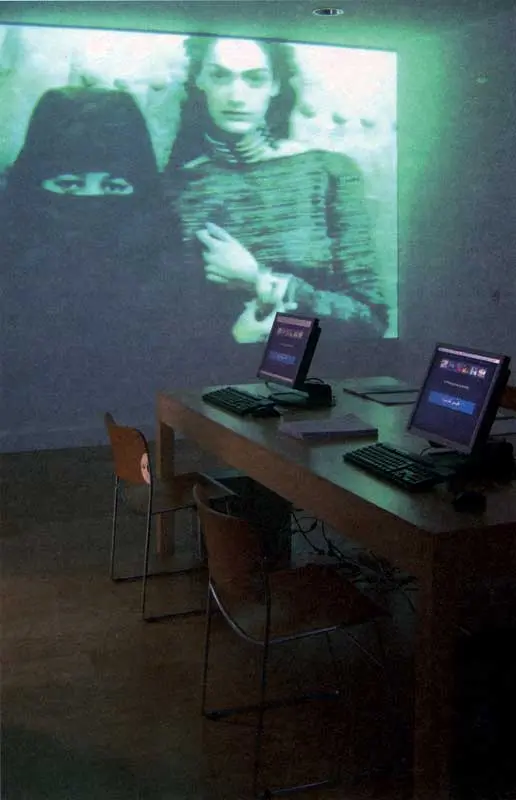
Rogelio López Cuenca, also from Spain, analyzes in El paraíso de los extraños the cultural and political construction of the East as an exotic place. His is an installation that combines video and the archive (both physical and virtual) in order to simultaneously engage the imaginary projection of the exotic other and social and ethnic prejudices.
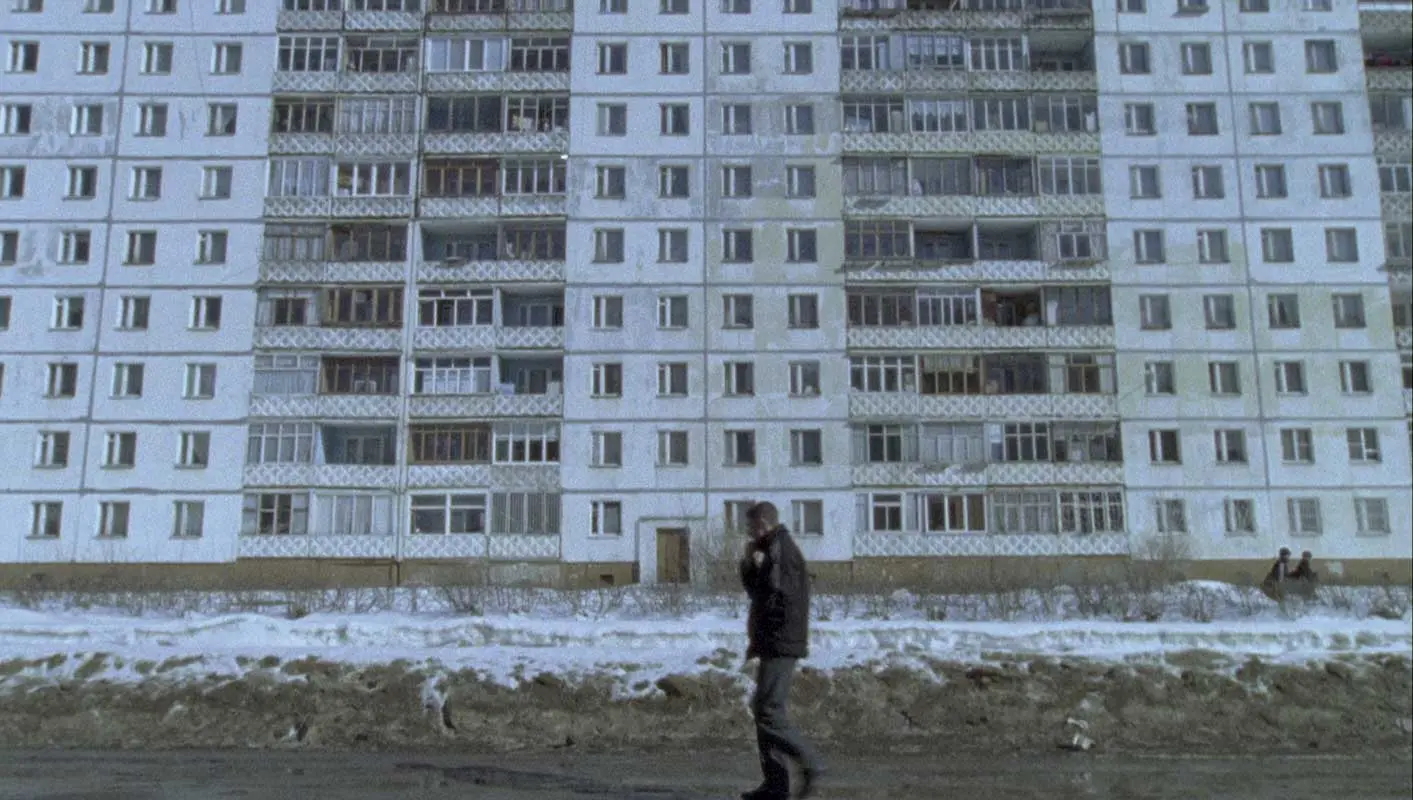
Hannah Collins presents an unsettling and poetic film that deals at the same time (on a dual-screen) with the contradictory experiences of living in the Russian periphery, which was born from an invitation from Edouard Chiline, a resident of the small town of Beshencevo, who after seeing one of Collins’ works in the Netherlands asked her to come to meet his family and his town. Collins’ film follows a script created in collaboration with Chiline.
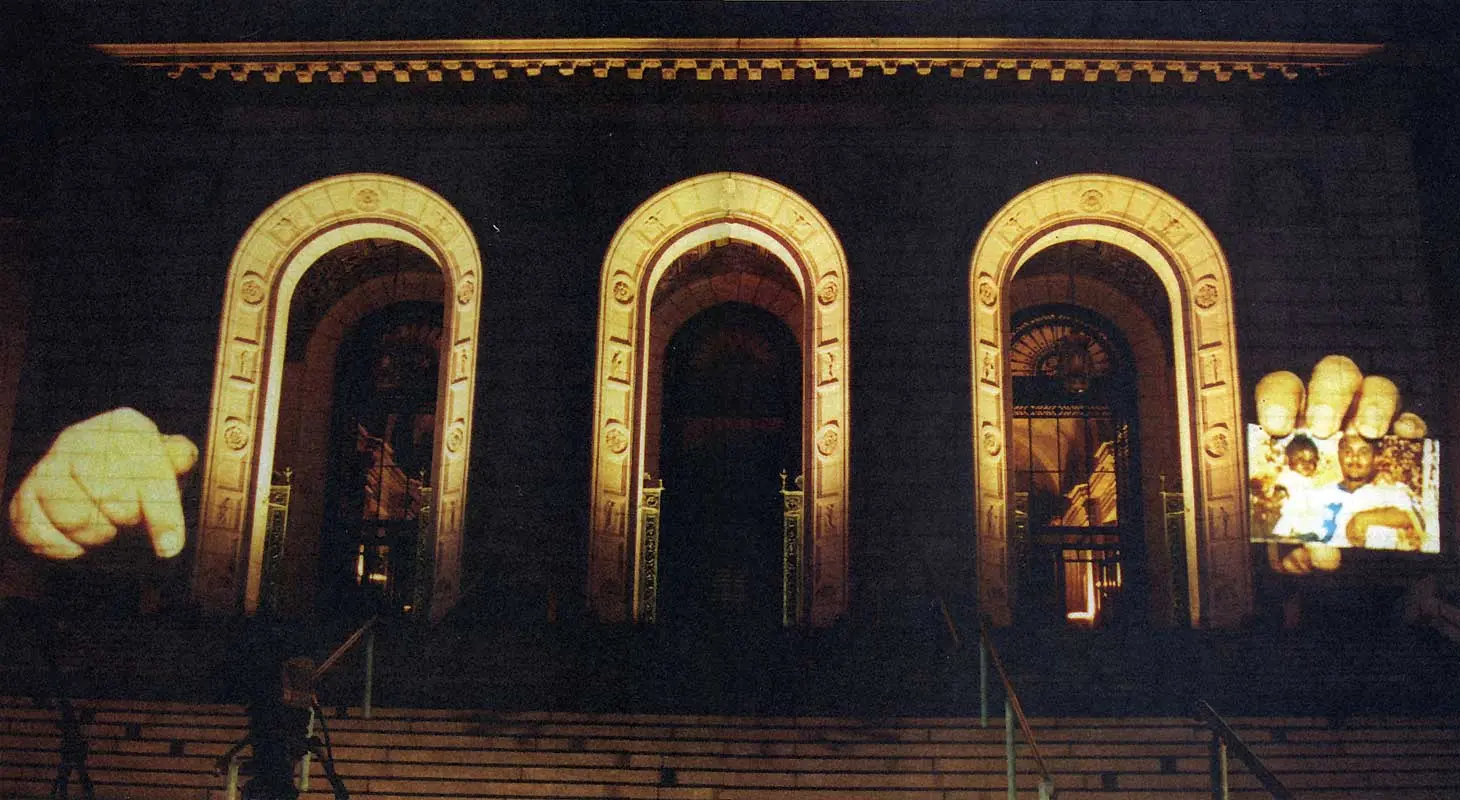
Krzystof Wodiczko brings to the show a series of videographic records of six of his more relevant urban interventions.
The book that accompanies the show (mentioned above), with the same title, includes essays by the curator and eight authors: Andreas Huyssen, Ada Sbriccoli, Álex Bauzá, Rafael Pinilla, Oriol Silvestre, Daniel López del Rincón, Modesta di Paola, and Andrea Díaz. They analyze both the conceptual foundations of the project and the working principles followed by each artist. They also present rigorous, exhaustive, and sharp analyses of the works included in the exhibition, which are properly documented in the book. One highlight among these essays, thanks to its interest in exploring the project’s underlying issues, is Andreas Huyssen’s book Aplicaciones transnacionales del discurso sobre el Holocausto y el colonialismo, it approaches the cultural and political use of memory from the perspective of contemporary artistic practices, through the analysis of the interconnections between various fields of memory in the work of several artists. Unlike many academic studies on the topic, this kind of artistic practice pays little attention to usual hierarchies in dealing with traumatic events as constitutive of each other.
Speaking about the Other always implies a practice of projection, and this is why discourses about the other are always a discourse about us; as Fredric Jameson said, culture is an objective mirage of which a human group becomes aware only when confronted with a different group mimicking its most characteristic features. Culture itself is an appropriation of that mimesis “effected by the other” and its continuous exchange with other groups reproduces its traumatic effects, the memory of which many artists are revising in their works.
JAIME CERÓN