Despite so many efforts and howls, of so much searching for unbridled freedom, a constant sense of confusion, and incitement, the performance art movement has not been able to change things. The only thing left of performance art is its own corpse. It has said it all, it has tried it all. Perhaps the only powerful effect it is still capable of is that moment in which it declares itself as art.
In that context of contradictions –and in spite of it– there are many artists who insist on performance, who explore and take risks. One of them is Guatemalan artist Regina Galindo, who has developed a surprisingly solid trajectory in a country whose sole cathartic tradition takes place in the arenas of politics or religion. From her earliest beginnings, Regina Galindo's growing aptitude for the creation of performative forms was stirred by a non-conformist and restless spirit. Over the past twelve years, I have accompanied her on more than one occasion, and, despite the seriousness with which she undertakes her work, I am always surprised by the vehemence with which people speak of her action; something that recovers performance art's original sense of provocation. This is not by chance. Since the first artist emerged in Guatemala City, her work has not ceased to fire the imagination of both common spectators and the sharpest intellectuals, mainly because it is very difficult to corral with clichés or simplistic appropriations. Situated as one of the most emblematic artists in the 1990s art scene, Galindo first appeared with a conceptually simple performance piece. In a Guatemala that was barely starting to turn to an understanding of its own access to contemporary art, El dolor como un pañuelo consisted of a slide projection on her own body. These were images of events in the news, events, and information about violence against women in the country. It was simple work, with plenty of literalism and at the same time a premonitory halo regarding the wave of violence that, starting in 2000, was to increase the number of murders of women across Guatemala. As the poet and critic Julio Payeras explained: for female artists in those years, the female body was displayed in its nakedness and apparent vulnerability, the cartography of existence itself, and its conditions in a society where it is the object of abuse, nullification, and commercial exploitation. It was also an action that began to suggest that the artist was taking a political position through the use of her own body as a private space able to make forceful statements against machismo, the hostility that defined society, moral and religious convention, and the general statu quo.
If the powerful cultural tradition of the female nude has been accepted as myth and natural extension in the Fine Arts, we are talking here of a different kind of nakedness: organic, inapprehensible, difficult to confront when it comes to be represented by itself and beyond established imagination or power, within the four walls of the artist's studio. In the exhibition of her own nudity, Regina Galindo established that determination that has followed her for many years, in which she seeks to define her body not as something individual but as something collective. Her actions implied being or reflecting through her own self the experiences of others. Today, Regina Galindo still asserts: "I am interested in investigating reality, reinterpreting it in my way, which, I am sure, is not particularly hopeful." Each piece, each action, is or could be an everyday scene. In these actions, values are inverted. Body and power relationships are always manifest, one way or another.
After Galindo's first public appearance came the actions that marked Guatemalans' urban imaginations. Her Voy a gritarlo al viento is included among the most representative works of art from the generations that emerged in the late 1990s, amidst the signing of the Peace Accords in 1996 and, with them, the ceasefire agreements that ended a 35-year armed conflict high cost for society, both for the generations that lived through the events and those who lived their aftereffects. The work consisted of the suspension of the artist from an arch located between two buildings. From a height of ten meters, she read poems that afterward were thrown to the air. The image was published in the front page of the local dailies. Since then, all her actions have defined a space to destabilize systems of power, in all their variants of expression.
Trauma and re-staging
In order to understand the importance of Voy a gritarlo al viento, we must underscore the fact that art in those years was produced on fractured basis, and the few spaces that established a more fluid interlocution came from a handful of art galleries, from independent projects, and from the support of Non-Governmental Organizations established in Guatemala as observers of the peace processes and with high expectations of contributing to cultural development, as an ad-hoc scene for international cooperation and with an interest in art's potential as an alternative means of expression to the ideas and positions elaborated in the official spheres, the country's institutions, and private initiative. Even so, to speak of non-objectual art in Guatemala was to approach an expressive form that was not interested in conventional spaces. In the case of Regina Galindo and an entire generation of artists who were beginning to gain visibility on the basis of the Historic Center festivals and later the mythical Octubre azul festival, they took as a medullar point the traumas of the "social body," condemned to invisibility and silence. As the American researcher Diana Taylor has suggested, performance art can operate as a transmitter for traumatic memory and also as its re-staging, and Regina Galindo and her cohort assumed this and revealed a deep concern with what they hadn't lived through personally but nevertheless shaped and had effects on their own urban environment, the city they inhabited, everyday life and every aspect of a society that is often, in the conditions described above, simplistically labeled as "post-war."
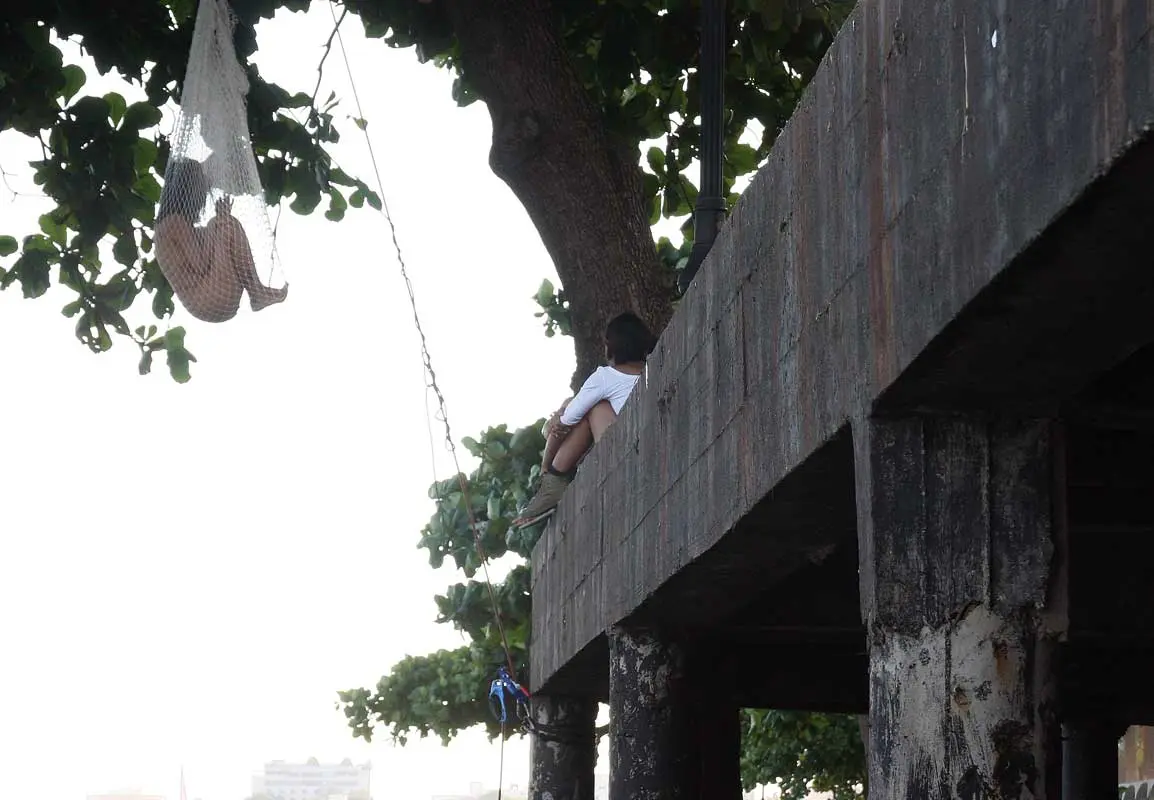
Since then, and thinking of Voy a gritarlo al viento as a sign of what in gestation in those years, contemporary art in Guatemala has evolved in terms of its modes of perception, and it has widened its vocabulary, at times still holding on to prejudices but, at the very least, citing and not denying the existence of the medium. It is necessary today to recognize that Guatemala's wide social and political gas has resulted in a fragmentary nation, one given to censorship and apathy. The extremely hard conditions for survival and the scars left by a history of impunity, discrimination, and violence have been determinant to set the creative revival in opposition to a statu quo that simplifies topics like historical memory or legitimizes racism, chauvinism, or violence (J. Payeras,) so that in times when these conflicts harden the artist's immediate response has been an incisive and critical work that opens pathways for future generations to continue with the reflections she proposes.
In the midst of this scenario, and given the weight of Catholic religious culture in Guatemala, Regina Galindo has established a line of work that often attempts to establish linkages with the representation of martyrdom and the body as the receptacle of sacrifice. Despite how easy it is to find similarities, the artist has traced a border between the two spheres. She says, "To be honest, I don't know or understand much about religion. Be it Catholicism or Christianity, it is rather far from my conscious life. I was baptized in the Catholic religion and even had a First Communion, but in my parent's house we were never forced to believe in anything, nor to venerate images, saints, or miracles. Among the most valuable things, my father taught me was not to believe in the Church as an institution. I think that my images refer more directly to real, everyday suffering, to the martyrdom (if you want to call it that) of human beings in their daily existence in this world of oppression, hierarchies, and power."
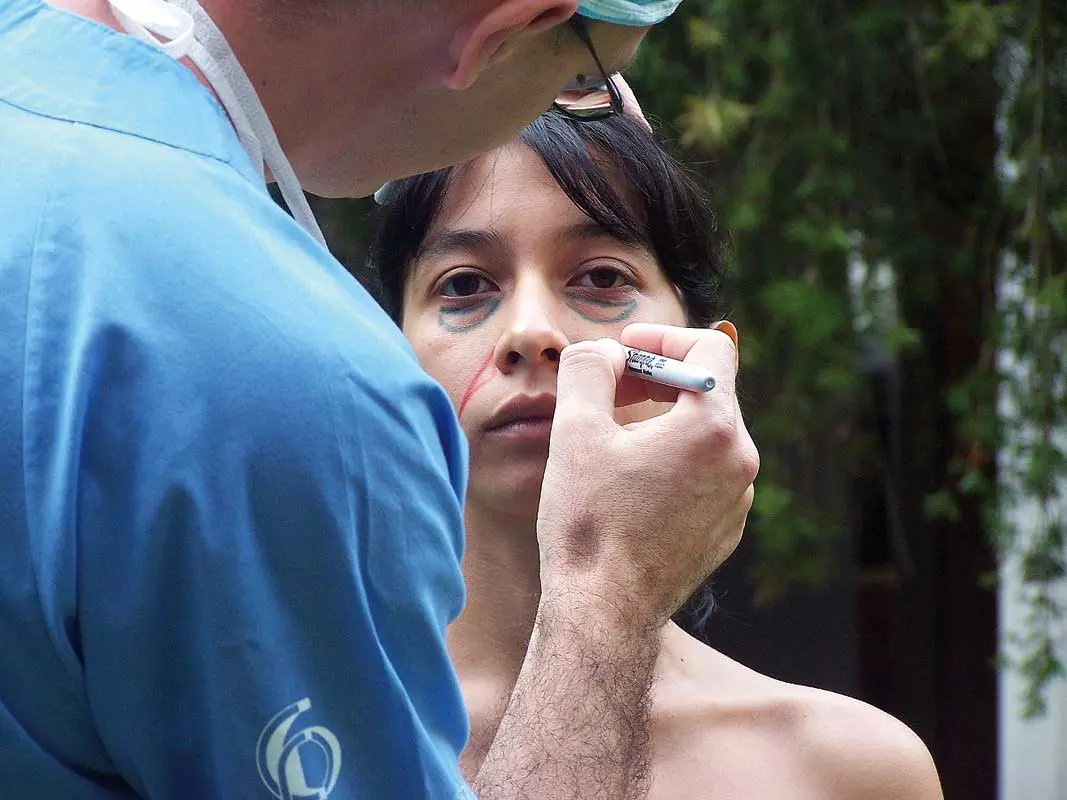
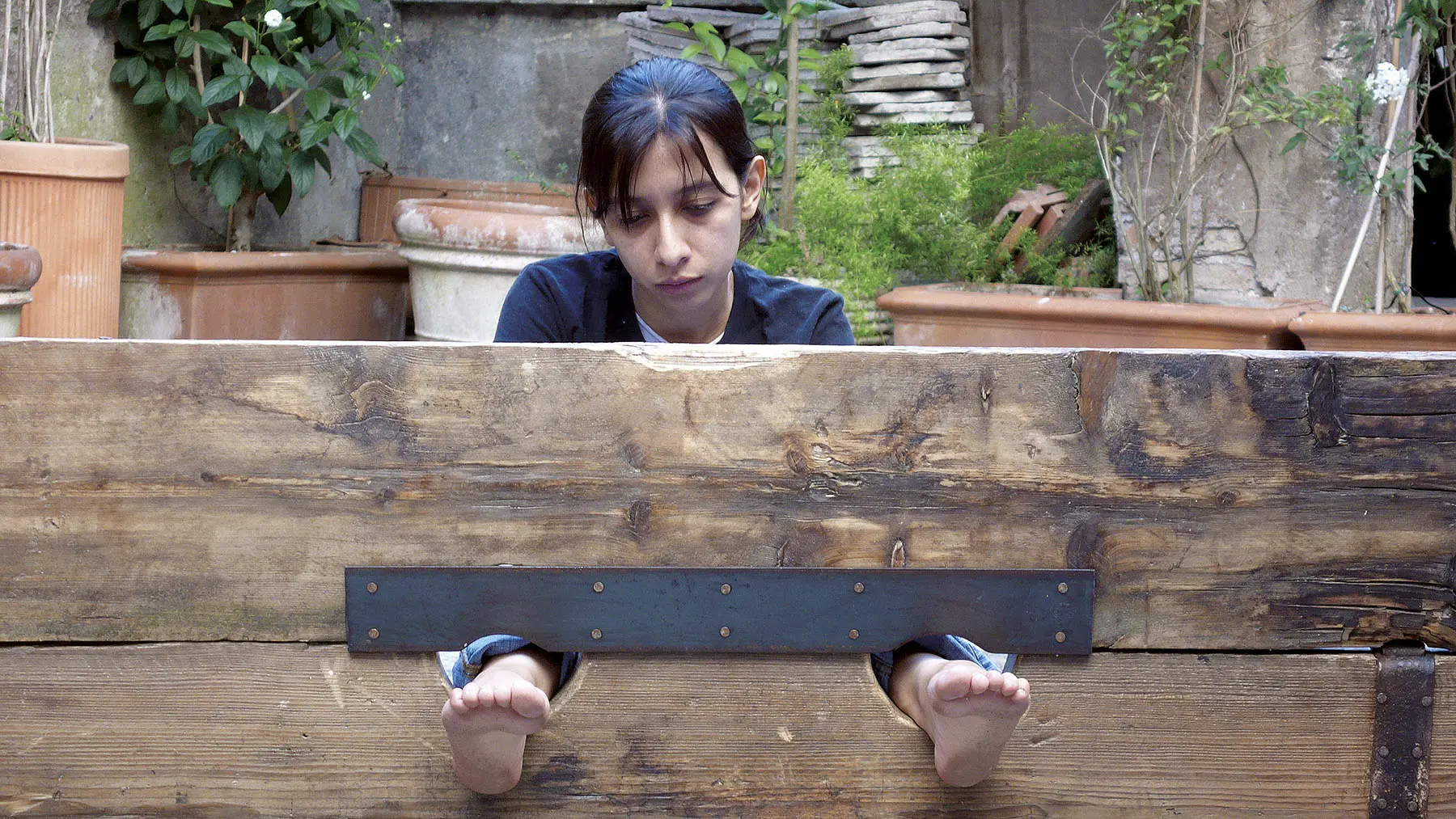
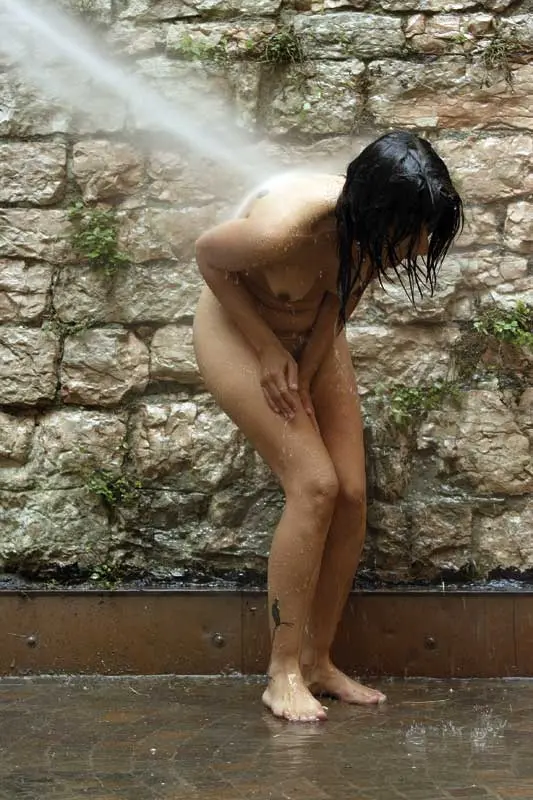
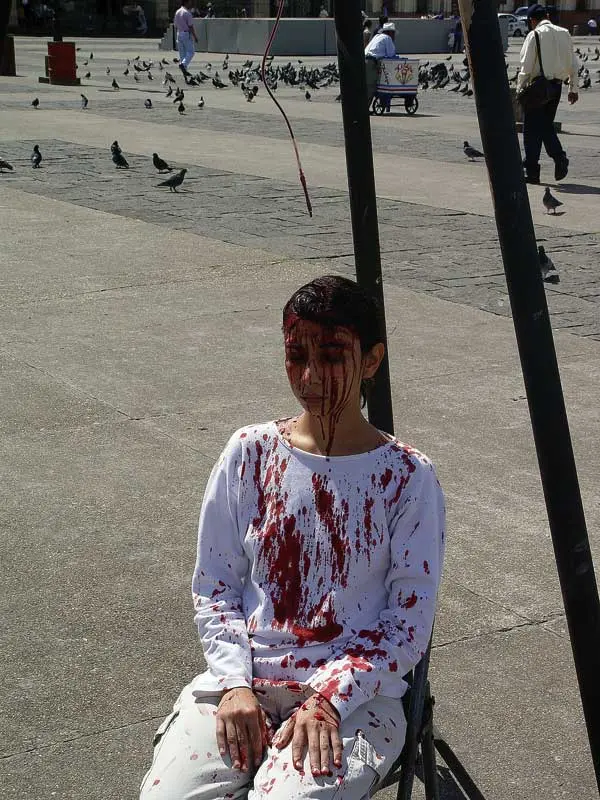
In some cases, the artist acknowledges having used direct and conscious references to images and iconographies from Catholic culture, but as a result of an investigation in search of the image and the work, she seeks to build. In her performance El peso de la Sangre, for instance, Galindo took as her central referent the mythology erected around the sacrifice of colonial-era cloistered nuns, who readied themselves for martyrdom with drops of water that fell on their heads incessantly for prolonged periods. In Galindo's case, we find that those drops of blood falling on her head open up a metaphor about helplessness. The title alluded to the weight of the absurdity of the contemporary situation, and guilt as a path towards explanation. In general, Galindo's work reduces us from active viewers to the condition of passive, mute, and impotent witnesses. The frozen images documenting her performances grab our attention only to certify that we have been "there," at the front lines of a battle that produces no winners. Another work that defines this is Cepo, where she hung for 12 consecutive hours in a small yard behind the back wall of Rome's oldest prison. Her Limpieza social also refers to a contemporary situation. The artist is given a pressurized bath through a hose, a way to evoke the method used to neutralize public protests, to bathe recent arrivals in prison, or to evoke the fear derived from the fear of cultural differences, the fear of the other. In this action, the artist uses water and the obsessive cleaning of the body, which, of course, becomes a social sign.

Weak Violence
The certainty of death and violence installed itself as an irrefutable truth among Guatemalans many years ago. Works like Regina Galindo's are a recounting of that certainty, interiorized in the subconscious. Many times she has been confronted with requests –or demands– for an explanation of her position regarding activism. Her works use the images of an iterative, primary, unbound violence that has overtaken the mass media and has often, because of that, instantaneous in its connection with public protests. What is difficult to understand is that in such a troubled country, activism from the arts consists of making statements from non-traditional spaces of political activity that are alternative and as such destabilizing. In a context that tends to value art in its more conventional function, altering the parameters of perception is a way to activate a network of cultural relationships. I finally understood Regina Galindo's position when she told me, in the dry tone that is her characteristic, "An activist is someone who has faith. I have no faith. I make art." Her interest lies in something that doesn't necessarily emerge from an apparatus of dogmatic mediation in order to establish itself, something nourished by doubt as much as by speculation, by its continued problematization, in order to retain its validity.

In an interesting conversation, Regina Galindo and Luis González Palma once explored the idea of limits. According to González Palma, limits emerge in Galindo's work as a controlled attempt to touch the space of death, the border of a conscious giving-up. "As long as for some, it is a near-death experience, and for me simply an exercise in domination or control of the body," Galindo explained. In this way, the images might push forward, each stronger than the previous one, more violent, more surprising. This is how her works are increasingly richer in detail, approaching a Baroque mosaic filled with symbols and narratives that do not exactly begin with invented or exaggerated tales. What is interesting is how, by situating themselves in the public space, out of the news pages, they motivate new looks of surprise or outrage. While the news item has become a vehicle for indifference, Galindo's work gives continuity to a reality, violence that weakens in the print of a newspaper or the sound of a newscast.
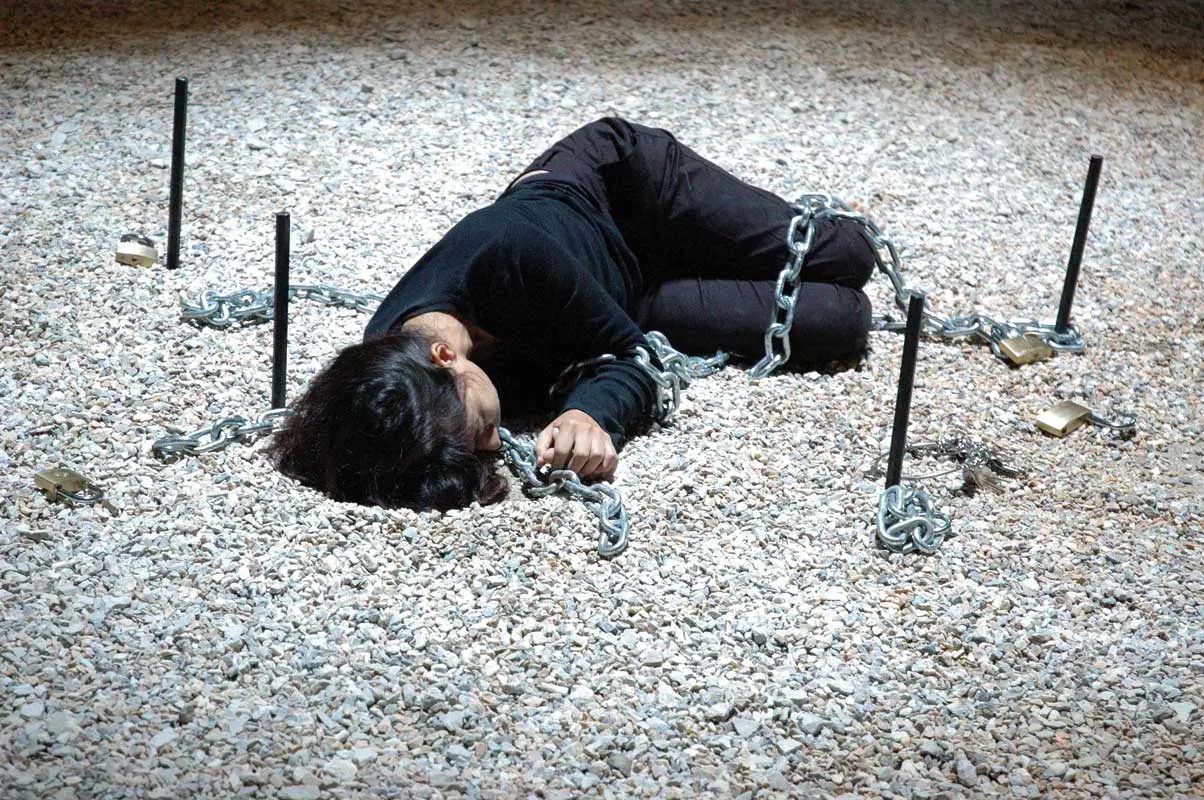
Throughout the years, the closed eyelids, the fetal position, the naked body apt to be transformed into a "battleground," the enclosure, the wound, the generation of actions produced over long periods of self-control of precise and rapid gestures, have been deployed time and again in Galindo's work. In the same way, the pressure exerted by Others configured as invisible beings announced by sounds or characters that subject her t actions that generate great tension. In her performance Golpes, presented at the 51st Venice Biennale, Galindo enclosed herself inside a cubicle with no access to the public. Inside, she hit herself once for each woman murdered in Guatemala over a six-month period. The amplified sound, the impossibility of crossing the barrier in order to "save or protect" the victim, became a very effective channel to suggest how the different forms of violence end up becoming mechanisms for re-enchantment. Also, from one of its oldest and still most valid images, one that explains how violence is situated from the narrative of exemplification, of what can come to pass if we don't follow the right path, the work also ratifies that our institutions have been incapable of protecting us –women– and rather seem to be established as accomplices of the structures that perpetuate violence as a message sent to our gender as a whole.
Works of art like Regina Galindo's, with their great complexity, their forceful images, and their constant exaltation of forms of violence, can at times generate a distancing and even a sense of resignation and an emptying-out of the responsibility to take a position. But it always happens that the intelligence applied to the creation of her works become a challenge to interpretation, from a purely formal and metaphoric reading to the transmutation of experience into something lived and personal. In 2002, during the Ibero-American Biennial in Lima, I accompanied Regina Galindo as a kind of seeing-eye guide. Her performance was a four-day exercise. As if seeking light at the end of the tunnel, the artist started in Guatemala City with her eyes covered by patches that were to be taken off at the end of the journey, upon returning to the point of origin. The action was a symbolic act that negated the images of the city, ironically the images evoked by a Biennial devoted to the visual arts. As a curator and responsible for her feeding and care, on one occasion I swallowed a small piece of food that fell on the wrong pathway. Faced with the dilemma of whether asking for her help and interrupting her performance, I chose to breathe deeply and look for a glass of water. I never told her about this. It is only now that I think of that moment as a brief approach and possible mimesis with that level of commitment and control established by the artist in her works, where one is defined at the extremes and in the attempt to restage a difficult reality imposed as a load and trauma on our society. In my view, Regina Galindo's work has been able to teach me something very important: if there is one exit from the tunnel we find ourselves in, it is to risk an unveiling of the trauma as an opportunity to understand and, in consequence, disarticulate its essence.
*Images courtesy of Prometeo Gallery di Ida Pisani, Milano/Lucca.
ROSINA CAZALI
Curator and art critic. Lives and works in Guatemala.