
The exhibition constructed to celebrate the opening of the two-year-long renovation for El Museo del Barrio seems to be a perfect alignment of the curatorial theme to the museum mission statement: to examine and elaborate the international urban center of New York City (NYC) as a nexus for the dialogue between Latin American and Caribbean artists and US modernism. There may be – indeed, have been – objections against this dialogic approach as too much of the old center-periphery model in favor of concentrating on indigenous examination of Latin cultures in their own geographic frame. (Such an orientation was used for example in the exhibition and catalog for the often-cited 2004 Inverted Utopias, Avant-Garde Art in Latin America). But not only is El Museo del Barrio located in the larger context of El Barrio section of NYC, el barrio itself is a part of a larger geographically dispersed Latin population estimated to be about one-third the peoples of NYC, as well as part of a city that has wrestled for centuries with the relationships between local enclaves simultaneously situated within the larger and multiple unities and disunities of urban and international dialogue.
The dangers of a center-periphery model, i.e., that the periphery (in this case “Latin”) remains locked into a perpetual second rate status of derivation, is argued against not only by our current awareness of such structural dangers through global culture studies and archeology, but by the specifics of this exhibition, and its curator Deborah Cullen. The use of models is becoming, thankfully, more nuanced. In fact I argue – following Cullen’s lea – it is the specific rather than the general that is the savior here, while we continue to subject the broader ways we structure information to greater critical questioning. Not all the information provided in the exhibition is, as claimed, new, but there is a sufficient amount of newness to have you remarking aloud to yourself as you walk through it. Simultaneously, it is the assemblage that seems most effective; the historical weight the total package carries and that allows you to shake your head and mutter, yeah, of course…and by the way, don’t you need to follow up on…isn’t there more to say about…? Yeah, there is, and of course, that’s the point: specificity interactively engenders specificity.
The guiding structure of the exhibition is based on five major themes distributed throughout the five rooms that now constitute the new spaces for temporary exhibitions. Within each general theme, there are strategic and focused pairings of Latin and Euro-American artists to demonstrate the specific intricacy of the dialogues. Other individuals and institutions are then placed in orbit within these spheres. The pairings of art and objects provide the visual opportunity to look more closely and come to your own conclusions, but also to muse, and sometimes to laugh and even disagree through your personal sense of discovery. But come prepared to engage it because the exhibition design demands it. What Cullen informally calls her series of “studies” are intended to help reorient the field.1
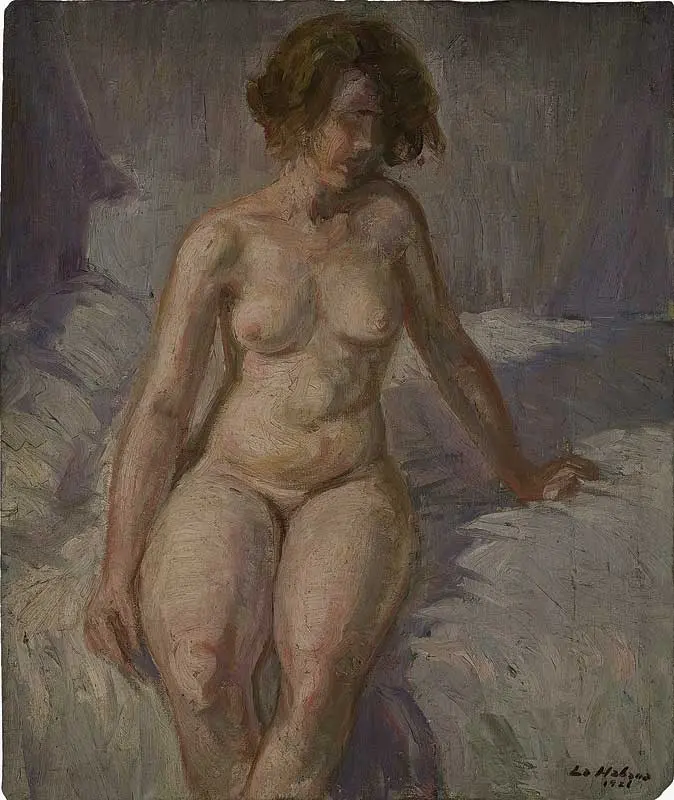
The first and historically earliest section is given to the realist and expressionist Latin American artists in NYC who played roles in shaping the current and future American art history through relationships established in art schools, much the same as it is today. When the gestural realism of the US Ash Can painter George Luks was applied to the then shocking nude mulattoes and black females by his student at the ASL, Celeste Woss y Gil – the two are paired in this section – on her return to Santo Domingo, it gave her the avant-gardist momentum to found her own art school that years later led to the EscuelaNacional de Bellas Artes: from individual and international experience to national format! But the nationalism of “national” identity is never as straightforward as this center-peripheral model implies, is it?
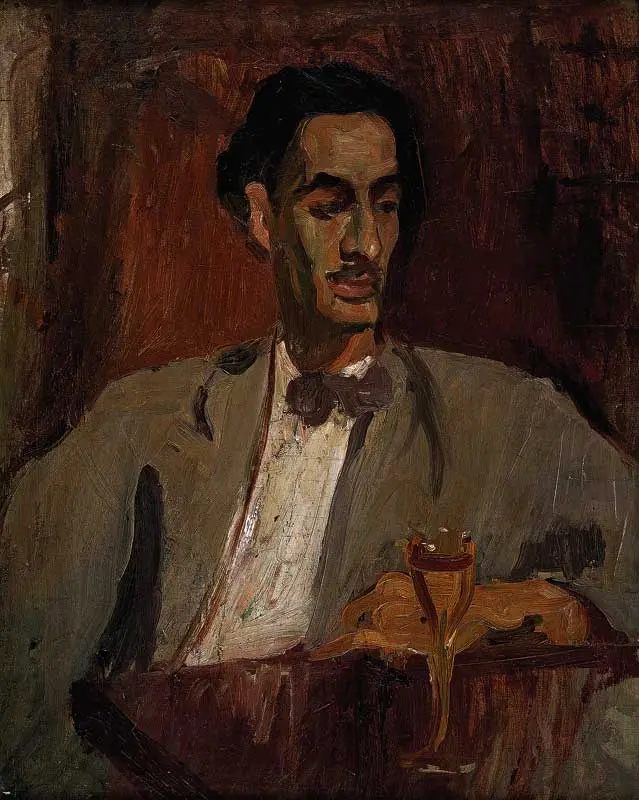
A nice reminder of this, as well as an example of the conscientiousness of the curation, is F. Luis Mora, the Uruguayan who became one of the most influential teachers at the NY Art Student’s League (ASL), one of the four major NY institutions for Latin American interchange that is spotlighted in this exhibition. Looking at his earth-toned expressionist handling of socially committed subject matter reminds us that the turn-of-the-century New York Ashcan School was not merely the simple-minded, conservative reactionaries you are led to believe when your definition of modernism is based on abstract art. Rather, it means that as they developed not merely a romantic style but a robust expressionist style at odds with the surface finish of academic painting to parallel the feel of a newly emerging and the robust USA, of factories and muscle and social injustice and class structure, there was a “Latin” appended, if not prefixed, to the concept of American; that the word “American” is not a singular noun. Such realizations also point to an argument the exhibition hints at but does not develop outright, the very nature of what “avant-garde” means, but it does ask outright of you the fundamental question of how you think history works.
The central paired focus in this section is the well-known coupling of the US artist Alice Neel and the Cuban painter Carlos Enríquez. They returned to Havana (1926-27) soon after their marriage and broke up upon return to the USA. Elvis Fuentes, the Curator for El Museo del Barrio’s permanent collection, follows the scholarship of others to argue in his essay that Neel’s love for New York’s, el barrio where she lived and whose people she painted over the next 30 years, as well as her sensuality and progressive and critical social commitment, derives in large part from her early exposure to the Cuban vanguardia. The visual comparisons certainly argue for the intersection and divergence of their styles in these crucial Cuban years.
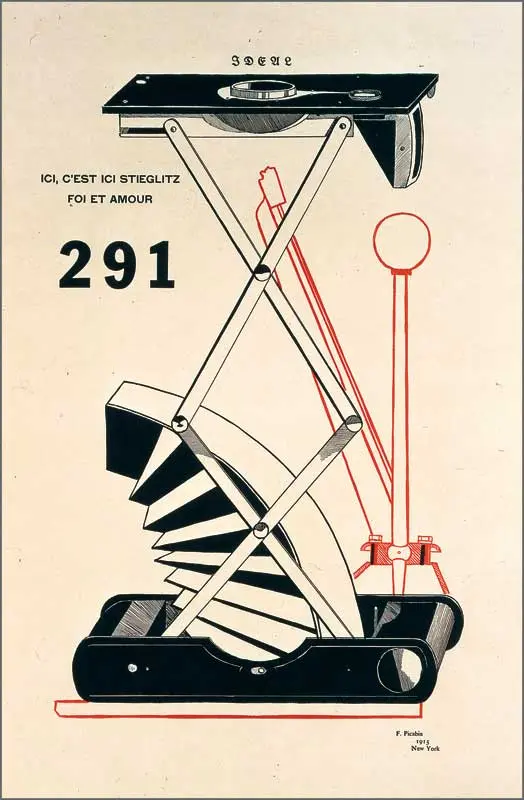
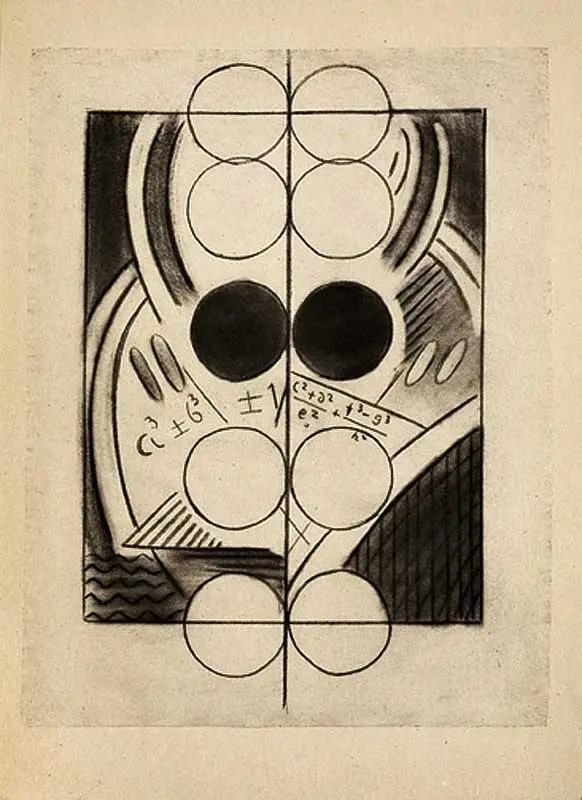
The second section focuses on those Latin American artists that worked within the well-known Cubist and Dada circles of New York with a concentration on the many contributions of the Mexican artist, writer, caricaturist, and curator Marius de Zayas, and especially his relationships with the American photographer at the center of US modernism, Alfred Stieglitz, and the Cuban-born French artist Francis Picabia. Most interesting are the visual representations of the long-acknowledged dialogue between de Zayas’s early geometric abstract and humorous portraits on Picabia’s later but far better known mechanomorphic portraits and de Zayas’s role as a curator. He helped Stieglitz exhibit Picasso for the first time at Gallery 291, was the moving force behind the US avant-garde journal of art, literature, and culture, 291, and was the first to show Diego Rivera’s cubist work in his own NY gallery. The details are lengthy and fascinating but the issue to be explored – and Cullen has observed there are dozens of doctoral dissertations waiting for discovery in this exhibition – is that within de Zayas’s writings, salons, and gallery spaces “the avant-garde of the Americas encountered that of Europe.”
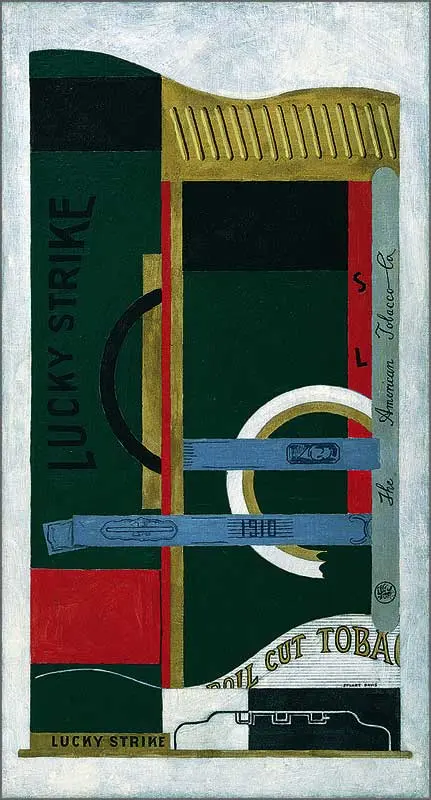
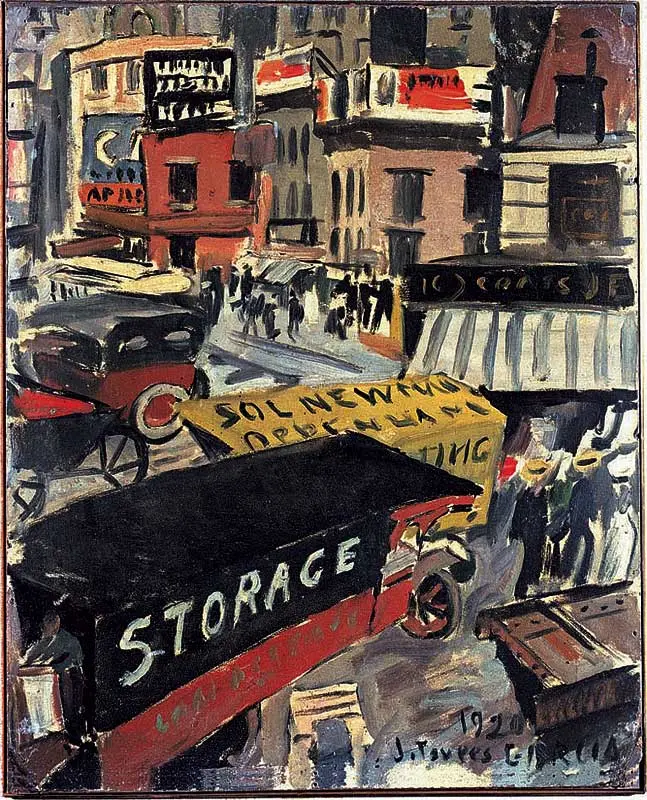
The third pivot is around a specific individual, the Uruguayan Joaquin Torres-García who arrived for a two-year stint (June 1920-April 1922) as a well-established modernist from any perspective. From a US perspective he is best known through the claims that on the basis of seeing Torres-García’s gridded pictographic symbol canvases from his Universal Constructivist series Adolph Gottlieb, the US Abstract Expressionist, developed his grid composition for his own post-1941 pictographs. Gottlieb denied it, as he denied virtually any influences, but this is one of the cases where the visual evidence is only general – even Gottlieb wanted to know why no one argued on behalf of Mondrian’s influence on him – and the catalog simply reasserts the relationship, calling Gottlieb wrong, rather than introducing any new evidence. But you get to decide by looking at the paired canvases. And although several of Torres-García’s situations seem more anecdotal than historically important, some of the more arresting visuals are presented. Torres-García’s toys are here, as is a photograph of his 1921 costume for the Artist’s Ball, while the comparison between the painting of his friend, US modernist Stuart Davis’s cubist inspired Lucky Strike (1921) and his own New York Street Scene (1920) remind us of the diverse urban views achieved while looking through the shared lens of modernism. The public press of the time preferred Torres-García, which also tells us something about the way the avant-garde is constructed and prepares the public arena to move.
With its focus on the Mexican modernists, the fourth section appears as the best known. Their muralism was of great fascination and influence to US modernism and is well documented through the works and lives of José Clemente Orozco and his New School murals, his friend the Paris-born Jean Charlot (whose mother was Mexican of mestizo descent), the well-known philosophy of “controlled accidents” taught by Siqueiros in his Experimental Workshop on West 14th street, that had the NY Abstract Expressionists following him to the West Coast of the US, and of course, Diego Rivera, who took David Rockefeller’s money for the infamous and canceled Rockefeller Center mural and used it for the 21 movable fresco murals at the New Worker’s School, titled Portrait of America, one of whose rarely if ever, seen panels are on exhibition. But the exhibit also opens up other aspects far less considered and even unknown, such as their shared interest in caricature and drawings and the ways their interest in printmaking linked them to Harlem and the African American community. An absolute must-be-seen trajectory is from the Mexican Miguel Covarrubias drawings made in Harlem for his later published Negro Drawings (1927) to the poster by Paul Colin for Joséphine Baker’s appearance in the Paris based Revue Nègre (1925) to the New York caricaturist and Covarrubias’ studio mate, Al Hirschfeld.
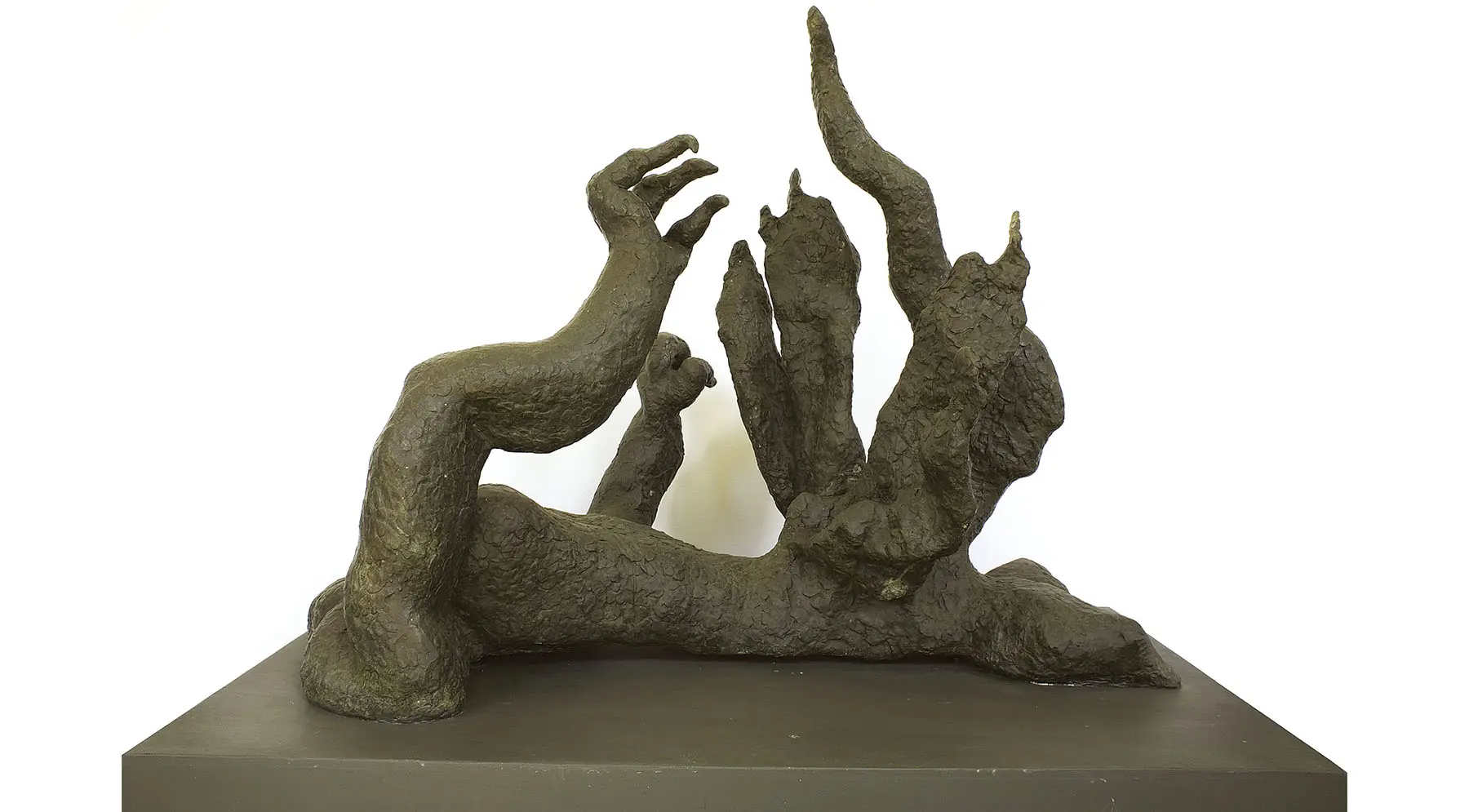
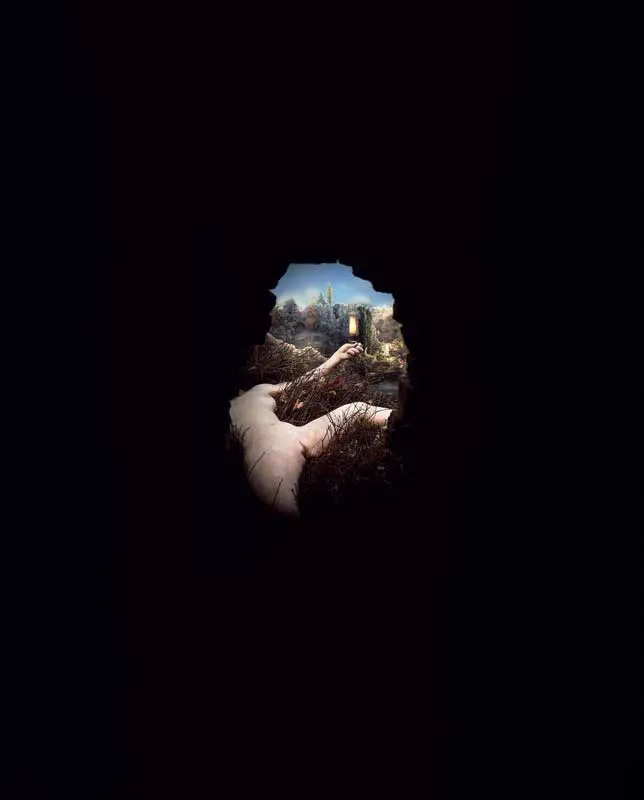
The international movement of Surrealism in NYC, with fluid memberships and boundaries, constructs the last sphere of dialogue, but with a very practical locus at the New School of Social Research, with its progressive social agenda, shared dialogues, and purposeful hiring of many Latin and European expatriates and visitors, such as the Ecuadorian Camilio Egas who directed their art workshops for 30 years. Most of this cast is well known, from the Cuban Wifredo Lam, to the Chilean Matta Echaurren of Atelier 17 at the New School, to the uncomfortable relationship between the city and Frida Kahlo for whom NYC was a launching pad and segue to André Breton’s Paris of the late 1930s. And what more glittering way to close than to link the rarely seen work of the Brazilian Maria Martins Pereria e Souza, who was muse and lover too and model for Marcel Duchamp’s last and hidden installation, his Étant Donnés (1946-1966). As you stand between their two works at the end of the exhibit you cannot help but think the real hidden body, blocked from view by a Spanish oak door and only partly revealed through peepholes, is the whole body of modernism now partly reformed as a hybrid. Small wonder then that we are not yet allowed to see it all, at least not until we get that door open.
NOTES
1. My thanks and gratitude to the exhibit curator and Director of Curatorial Programs Deborah Cullen for allowing me an early and guided walk through at an extremely busy time, and to Elvis Fuentes, the Curator of the permanent collection, which for the first time has its own exhibition area, for doing the same.
RICH LESLIE