Curitiba is the seventh-largest city in Brazil, and the fourth richest. It is also known for having one of the best urban plans in the country. When it still had just 100,000 inhabitants, the city embarked on a process of organized growth that included the preservation of valleys and forests, which were turned into parks; the containment of speculation in urban development through onerous fines; and the creation of public cultural spaces in preserved buildings. Currently, with 1.9 million habitants, it seems as if this process carried by a few architect-mayors has left Curitiba so well organized that it contradicts other Northern Brazilian cities, and it provides a higher quality of life compared to most of the Brazilian cities of similar size. The proliferation of cultural spaces, museums, and libraries is a salient characteristic of this city, known in the country for being the birthplace of avant-garde writers like Paulo Leminski and Valêncio Xavier, but also a focal point of ultra-rightwing and neo-Nazi movements.
The Biennial in Vento Sul, in existence since the early 90’s—but with a gap of almost ten years between the third and fourth editions—is testimony to Curitiba’s great appreciation for culture, with a tradition of several visual art events of the more or less national impact that have influenced the history of the city. The exhibit takes advantage of the city’s great number of cultural spaces, given that they don’t necessarily have strictly defined programs and act in the urban calendar as multifunctional spaces that host a variety of events. This year’s edition of the Biennial, the largest to date, had a modest budget of 2 million reais to gather a huge number of more than a hundred artists in five museum spaces and nine public spaces. The curators, Ticio Escobar from Paraguay and Leonor Amarante from Brazil, worked under the title Big Water: Altered Maps, translating from the Tupi language the word Iguaçu, the name of the main river in the state, that literally means “big water.” The topics of energy sustainability and how water as fluid shapes and redefines geographical borders, was the connecting devices used by the curators, who often explored the theme to the point of obviousness.
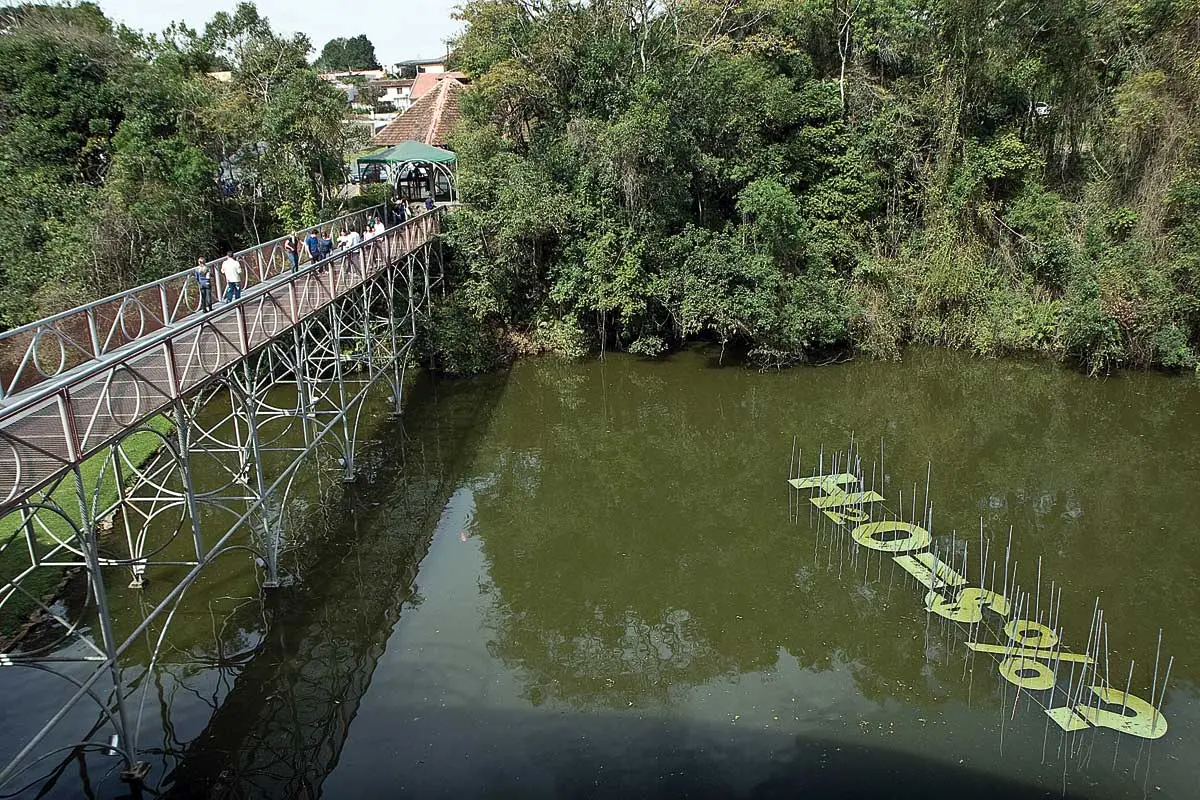
In the most outstanding moments of the exhibit, there is an interest in political affairs, but this tendency translates many times into a not always well-resolved articulation with the public space. As a result, the works seem propagandistic or even naïve. An example of this is the use of the public space of the work L'équation de l'eau (2009) installed in Parque das Pedreiras, where the tourist site Ópera de Arame is located. In this work, the artist Jean-Yves Vigneaud worked directly with the water flow close to one of the sources of the Iguaçu River, a beautiful natural scenario, very meaningful to the project. However, the work wastes the poetic content of the scene. The result is a mathematic formula created by the artist and installed at the water level as if it was a note for a later work: 'H2O=$%'?”. The formula itself hints at a pseudo-econometric and childish understanding of the increasing lack of global hydric resources; the rendition is literal and doesn’t go beyond a phrase written on water, without any more poetic or political weight than what the spectator, invited to passively interpret it, can come up with.
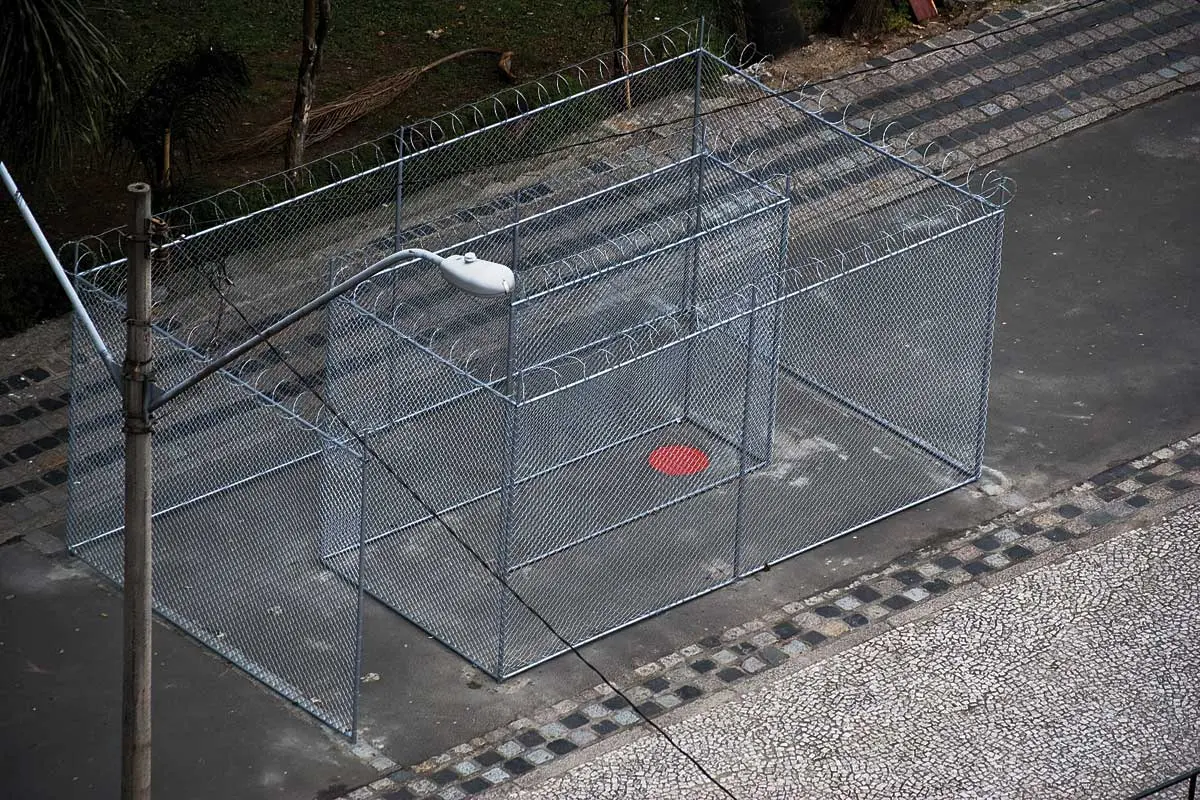
On the other hand, working in the urban space close to one of the parks in the city, the Interlux group created a disruptive montage based on the everyday experience of the pedestrian—with no connection to the Biennial’s stated topic. The group, based in Curitiba, installed a sort of labyrinth made out of security grilles and barbed wire, where the spectator was invited to enter. As the end gets closer, the dimensions of the hallway become narrower, which provokes a claustrophobic feeling but clashes with the transparency of the grille that visually communicates that inside with those outside the labyrinth. Part of the work was located in the Memorial de Curitiba, where Interlux placed a replica of the labyrinth installed on the street. Yet, the work of these young artists seems to function better when it is installed in the spaces of everyday life, like the popular bicicletadas (bike rides) that they encourage in Curitiba or the concerts by alternative bands that they present near traffic lights during rush hour. In this sense, it was interesting to see on display a large part of the documentation for the Artshow happening that had taken place in 1978 in Curitiba and that is exhibited at the Museu de Arte Contemporánea do Paraná. This exhibition emphasizes a past of collective and collaborative practices in the region.
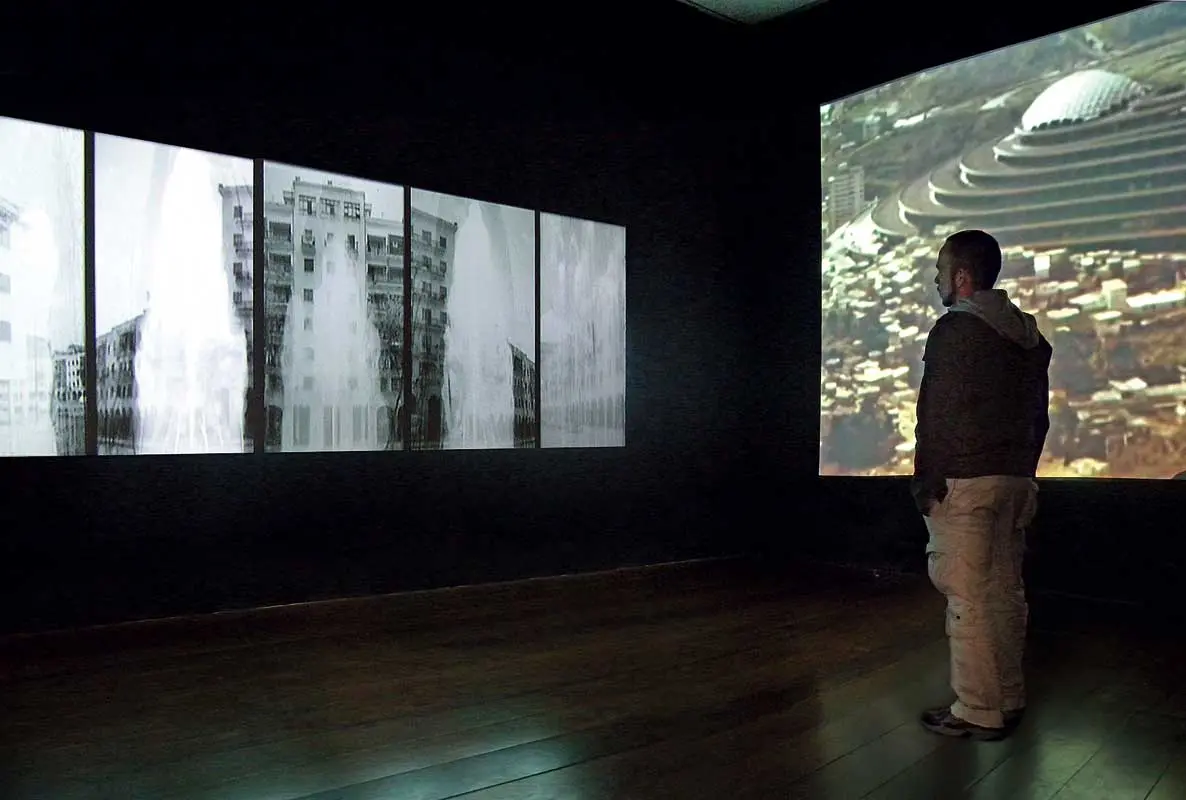
As we can see, the curatorial effort becomes more interesting the farther away it moves from the explicit thematic core of the exhibit—in the sense of promoting a link between the past and the present within the artistic context of the Biennial. Nonetheless, there are works that go back to the topic in a subtle and refined way. The exhibition presented by Venezuela’s Alexander Apóstol is an example of a work that refers to the topic of the exhibit in an unexpected and intelligent way. Caracas Suite (2003) includes a choreography performed with different takes of water sources in the public space in Caracas. As the music evolves, the camera registers the water movements, creating a sort of ballet that leads us to the emptying of the pumps in the public space and to the subtle way to judge this. The water spouts are a sign of abundance and modernity. The modernist buildings appeared re-signified as signs of a utopian past that is no longer possible, transformed almost into ruins or souvenirs.
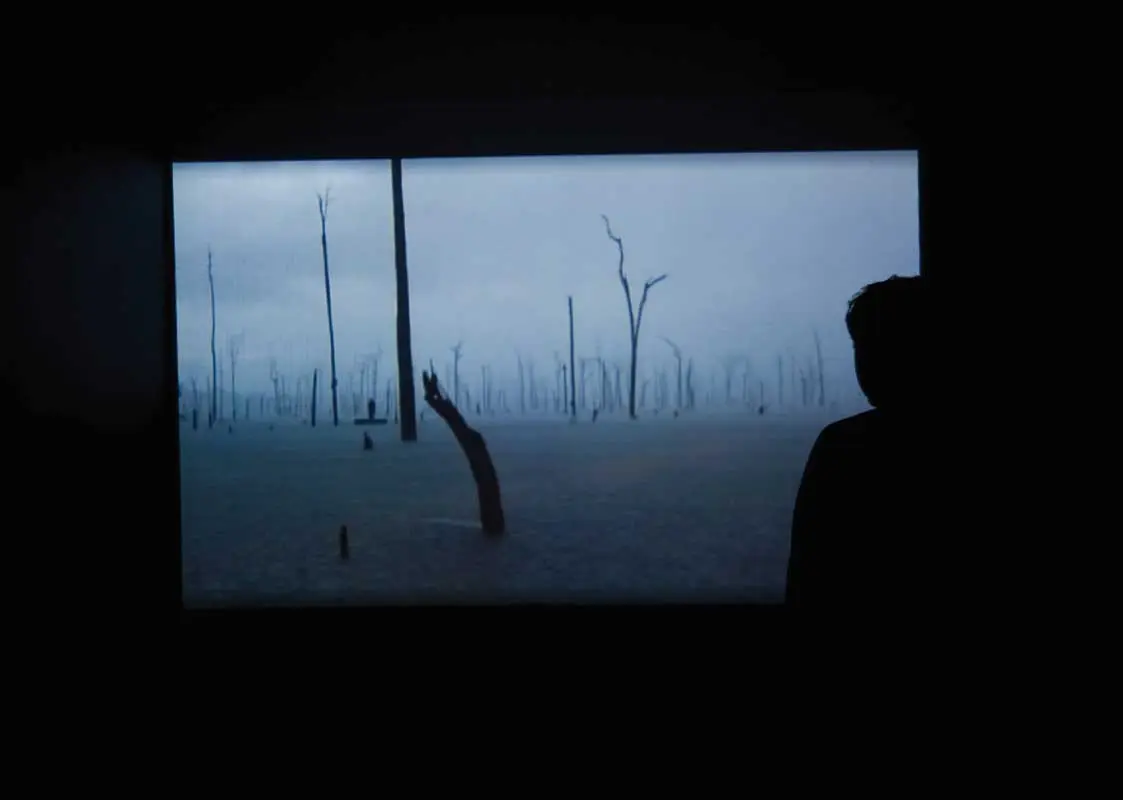
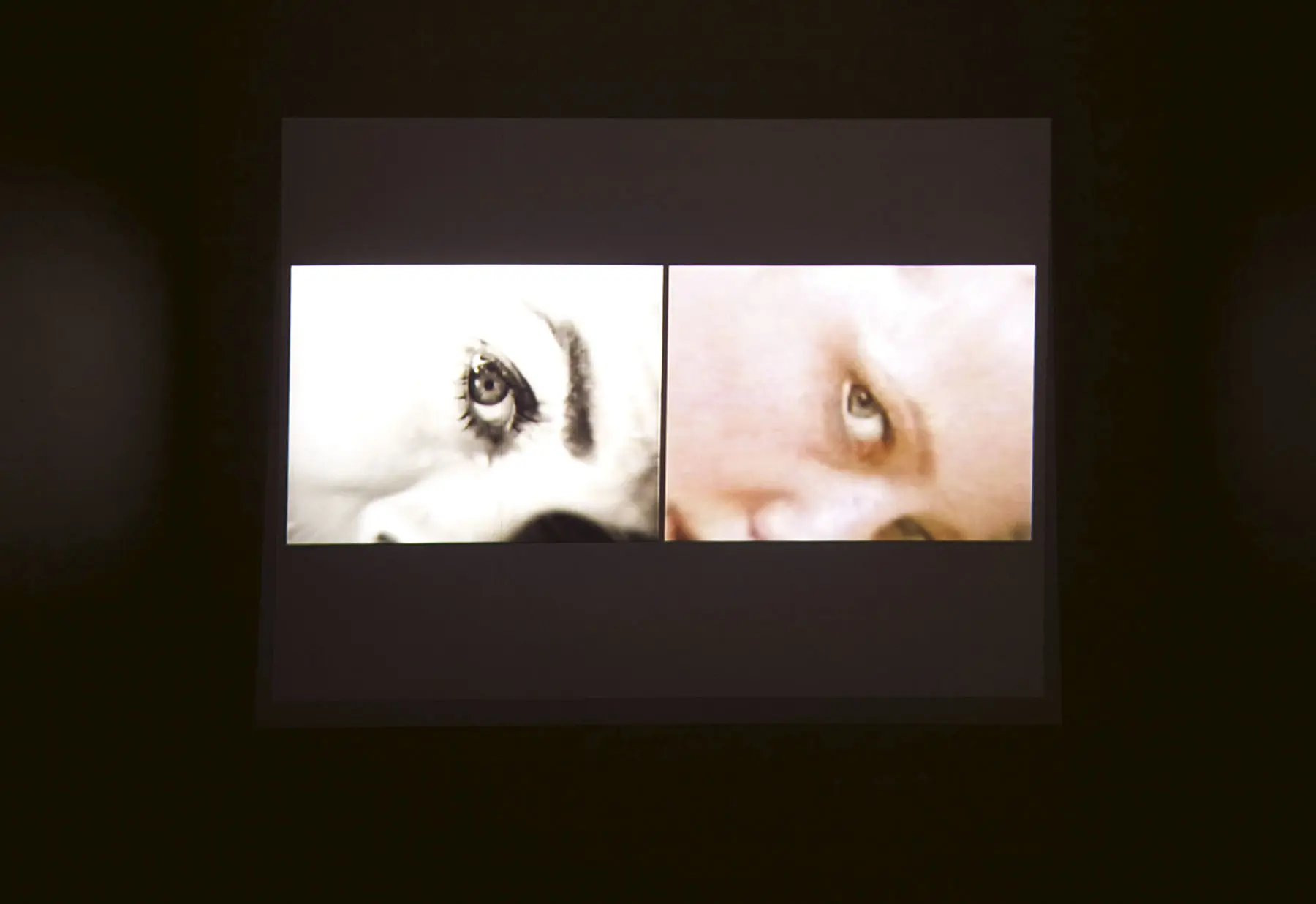
As a general overview of the exhibition, we can say that the video images of water projected on walls turns out to be exhausting, and the conditions of how these works are installed end up shortchanging them: from a video by Peruvian Diego Lama showing the famous shower murder sequence in the film Psycho (Alfred Hitchcock, 1960) next to its re-edition by Gus Van Sant (2000), to the more atmospheric and equally interesting Dead Forest (2009) by Argentina’s Charly Nijensohn, which combines a documentary and fictional techniques to show an intense rainfall in the Amazon jungle. The limitations of the curators’ proposal seem clear since they gathered many works on the topic as if they were mere illustrations of the issue.
This edition of the Vento Sul Biennial opened its doors at a moment of commotion in the Brazilian biennial scene. After constant administrative crises followed by a 2008 edition that was as risky as it was vilified in the media, the São Paulo Biennial is trying to reassert its role as the country’s main international institution, announcing new curators and a sizeable fundraising plan. On the other hand, the Mercosul Biennial opened its seventh edition in Porto Alegre only days after Curitiba, also with an audacious proposal and a budget that is comparable to the previous editions yet much larger than its sister Curitiba’s. That is, it had more might in the same region of Brazil. In this competitive scenario to secure identities and sponsors, there doesn’t seem to be a real space for the Vento Sul Biennial, unless this Biennial chooses a course of organizing a more concentrated exhibition and assumes for itself a smaller scale, aimed to the production of works and with a smaller number of artists, achieving a balance between Brazilians, Latin Americans and foreigners to the continent. Such a gesture would be most welcome.
RODRIGO MOURA