The Daros Latinamerica Collection presents in Zurich a revision of the work of Brazilian artist Antonio Días, offering a view of his contributions in the 1960s and 1970s period, for which it used not only some works from the representative body of projects by Dias already in the Collection, but also works from other collections and from the artist’s own, resulting in a rigorous curatorial investigation by the collection’s director, Hans Herzog, presenting us with the opportunity to focus on the meaning of these works of art on exhibit.
Antonio Días began his artistic project early, and from the start with works that succeeded in the clarity of their purpose and their language. This exhibition covers the years of Días’ youth, which surprises us with the economy and precision on display in the works, which seem to come from an artist who has undergone a long period of intellectual and creative maturation. Very early on in his professional career, Días joined the international art scene while remaining connected to Brazil, where his works are regularly exhibited since the 1970s. He has worked in Europe since his youth and became one of the most interesting and active artists among those who experienced the “exile” provoked by their countries’ dictatorships.
Anywhere is My Land is the title of the show, taken from one of the projects included by the curators. It is also a description of Antonio Dias’ attitude, a restless traveler, and an artist permeated by the interlocution with ideas and peoples from all over. Free from a self-perception geo-referenced exclusively to Latin America or to Brazil. Rather, from a young age, he has been comfortably open to the outlined strategies—and demands—of an intercultural world (like the one we experience today).
The work of Antonio Días and the exhibition at hand resist any categorization into the –isms of the Twentieth Century avant-garde, although the influence of the language of Pop Art, especially early on, and later of minimalism and conceptualism, is recognizable. Perhaps it is more profitable to think about Días’ oeuvre now in terms of its own meaning.
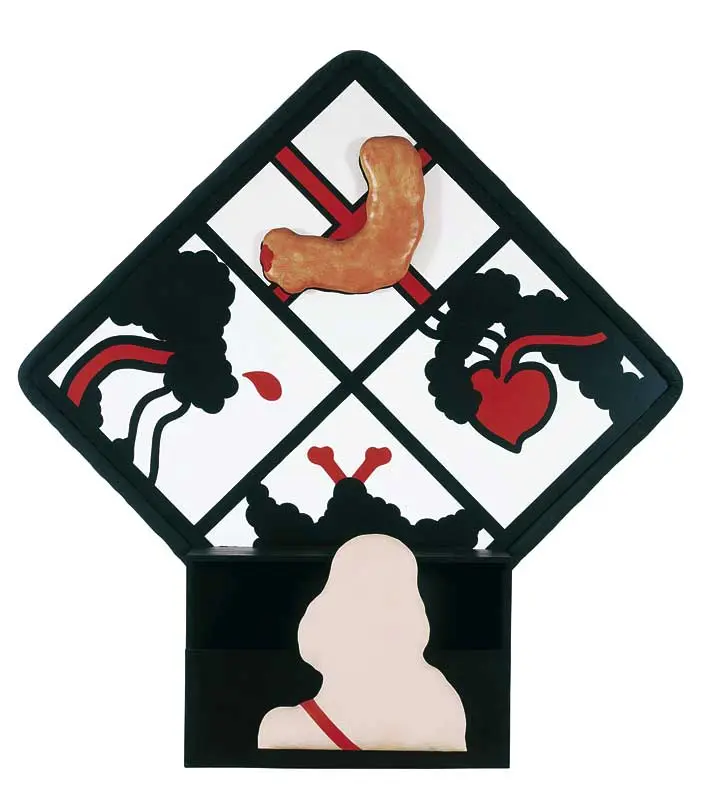
The spatial arrangement established by the curator for Anywhere is My Land helps connect us with the works’ own pulse (only a small sample of the works will be mentioned in this brief text). We start the show with a series of paintings from the 1960s, among them The Hero’s Remains and Nausea Game. They show—among drawings of people and parts of their anatomy—human organs: the heart, the intestines, parts of the body’s inner workings, genitals, communicating radiography of a living body that moves through desire (explicitly emphasized in sexual terms) and conflict. Insinuated there are the scenes of repression in the early stages of the Brazilian dictatorship—or of any other form of repression—but more than that, they communicate the drive of desire and conflict inherent to the inner and social life of that body. This appearance goes beyond drawing and two-dimensional painting to generate structures and flesh-like, soft objects.
How can a man identify with that arterial, visceral network and with the strange, hidden force that entirely overwhelms immediate experience?
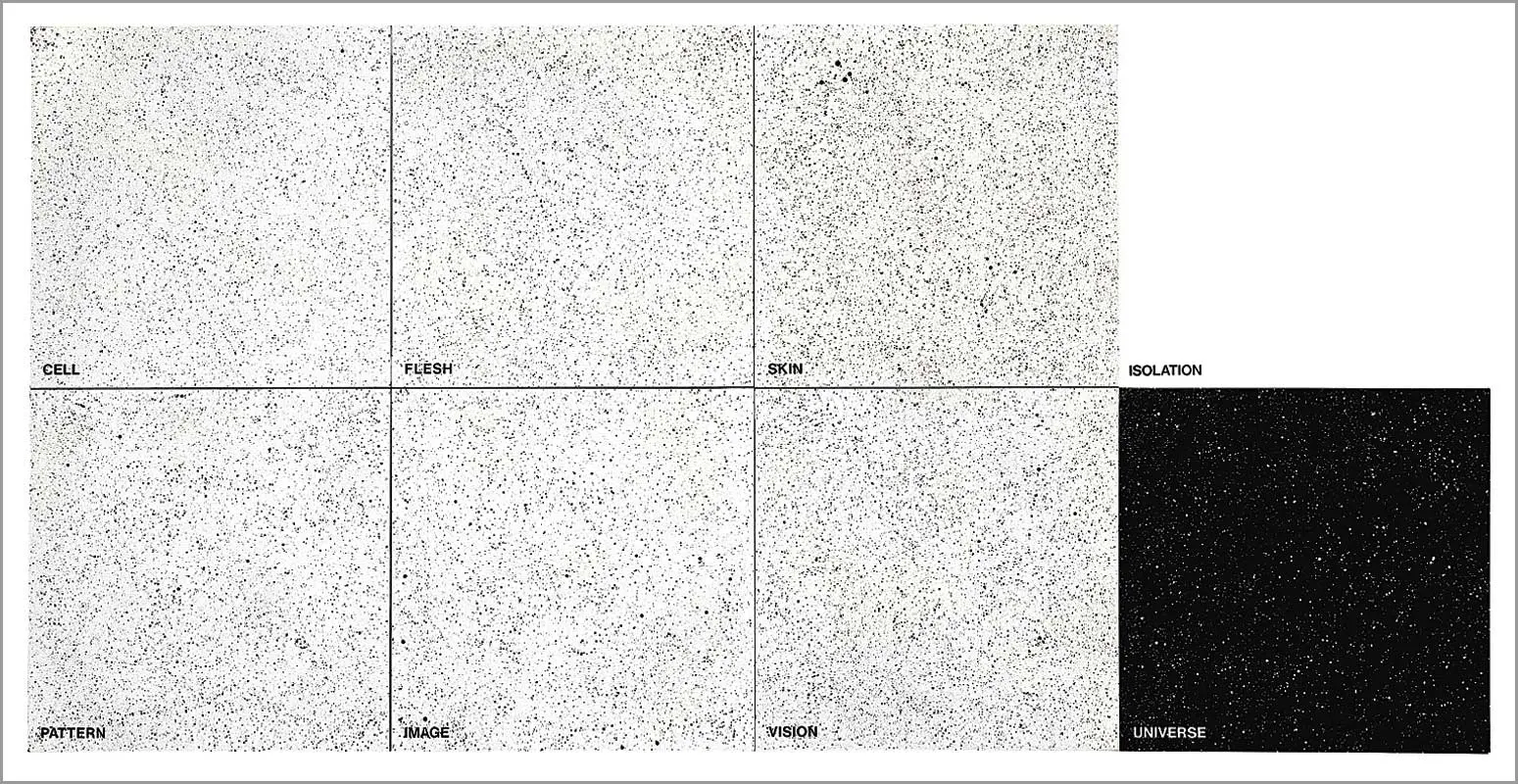
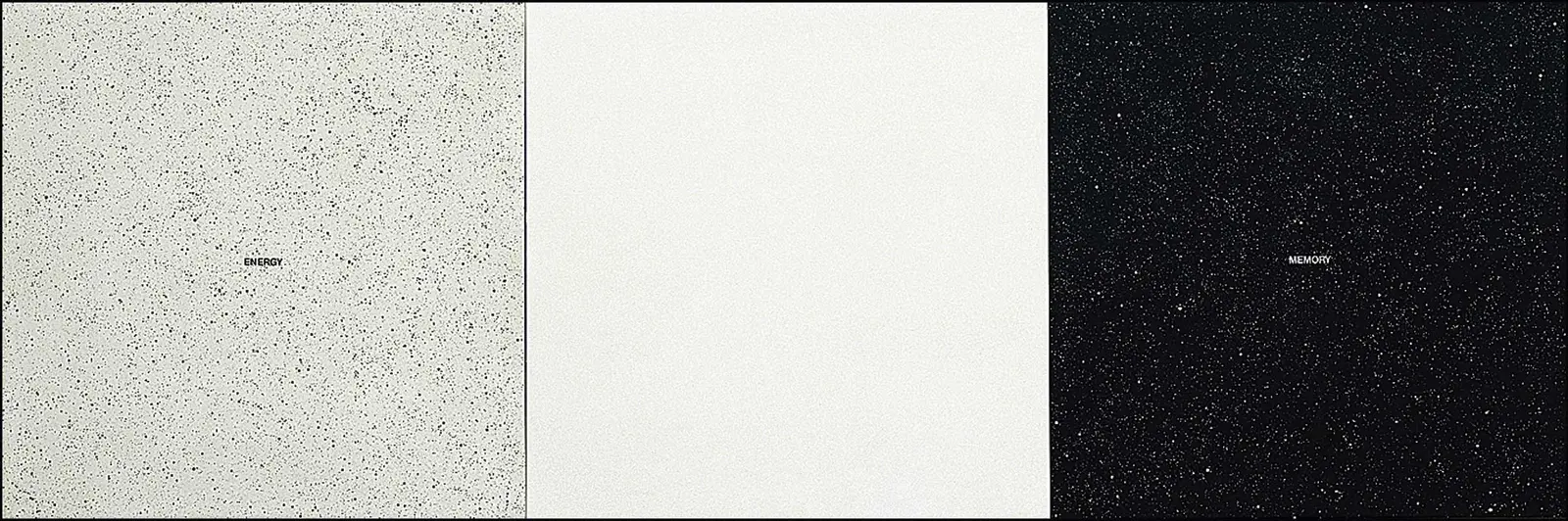
In the same room, we find some hollow black cubes, with slots to insert our desires (Cabezas,1968). And right afterward there appears, in the next room, a series of later paintings that essentially work with words written against minimal, tidy, backgrounds dominated at times by the color black and at times by white. A kind of clean, abstract plane—space—that centrally uses the word instead of images. In AlphaOmega Biography, 1968, on a grid of lines like categories waiting to be filled in, we find the words "cell," "flesh," "skin," "isolation," "pattern," "image," "vision," "universe." In Project for the body, 1970, three large-format panels (the entire series is at the same scale) display the words "energy" and "memory" at the edges, and in the center white space. In Project for an Artistic Attitude, 1970, the word reality, written to be read through a mirror. And thusly other works that play with words, such as The hardest way, 1970, with the words "God"/ "Dog" facing each other in the space of order of the painting.
Días’ work contains a possibility for multiple readings, but perhaps one of its most essential meanings focuses on the expression of interest in subjectivity in connection with the site and shape of the real. The language-based representation of a reticular and taxonomic order for the world will be one of the keys to the enigma of Días’ work.
Reading these works as a group, we see the cipher of Man as a biological, living entity traversed by the condition of being a network of viscera, vulnerable and irredeemably finite, who, from the inside of that life that occupies it entirely, possesses the rare ability to establish representations, thanks to which it lives. And thanks to which it also identifies with the strange occult force that inhabits it.
The galleries are filled with silence. Antonio Días says there, in that secretive and sweet tone that some times Brazilians like to use: “Already then I lost my fear of emptiness.” He is referring to his paintings and installations with reticules, the geometry, the words. The idea of emptiness will be another key for our understanding of this oeuvre, and perhaps the most important since it is the less obvious one. Such is his paradox, and paradox is Días’ preferred strategy.
Let’s refer to a key book for the intellectual climate of the years in which these works were produced by Días, which can help illustrate, from literature, the symbolic meaning of the artist’s work. In his preface to his The Order of Things, first published in 1968, Michel Foucault talks about a story by Borges: “This book was born from a text by Borges.” It is El idioma analítico de John Wilkins, from 1960. There, Borges cites a certain Chinese encyclopedia where it is written that animals are classified into a) belonging to the Emperor; b) embalmed; c) tamed; d) suckling pigs; e) mermaids; f) fabled; g) collarless dogs; h) included in this category; i) crazily agitated; j) innumerable; k) painted with a fine camelhair brush; l) etcetera; m) that just now broke the jar; n) that seen from afar resemble flies.
Foucault comments: “In the amazement of such a taxonomy, what we suddenly grasp, what is shown us through the apologia as the exotic enchantment of another thought at the limit of our own: the impossibility of thinking thus.”
The emptiness declared by Días is that silent horizon of what occurs in the desert-like expanse of non-thought. A transcendental reflection centered, like The Order of Things: An Archaeology of the Human Sciences has it, on “the existence —mute, but ready to speak—… of that unknown element on the basis of which Man feels driven towards a knowledge of himself.”
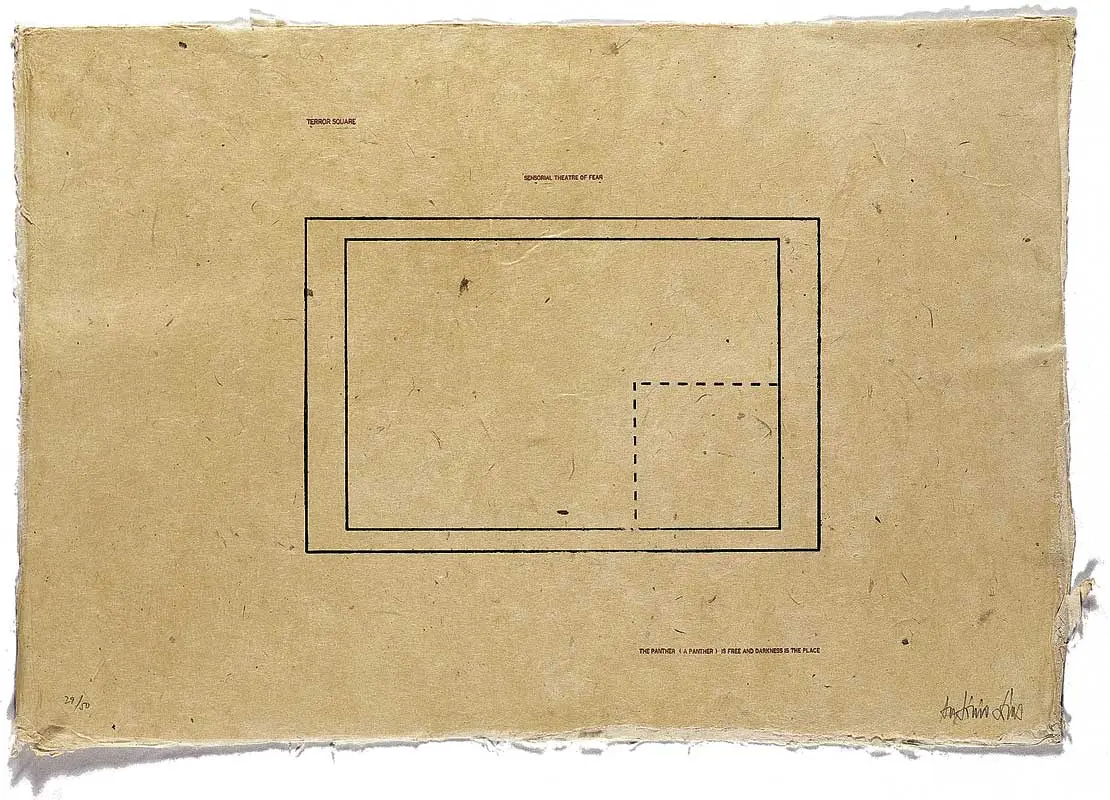
The group of works on paper with precise planes and systematic schemata in Días’ series Trama, 1968, also work with simulated orders of the structure of reality and a subject. For example, one among them displays the printed phrase "The incomplete biography;" several rectangles encompass inside it the path traced with discontinued lines the drawing of a complete square starting with a cross marking the beginning, and underneath the printed phrase "starting point". Another one, the printed phrases "Terror Square, sensorial theatre of fear" on the upper portion, and two rectangles drawn in perfect black lines, and in the right lower portion inside the rectangle a square marked by two discontinuous lines, printed under which is the phrase "The panther is free and darkness in the place."
The debates in those years centered on the theories of structuralism, where the language was considered as the organizing principle of reality. A language that doesn’t express reality and persons, but creates them through words. Representation falls, and with it, Man. In the system of language, the intelligible and the real are identified, as language doesn’t refer but to itself. Thus, a place external to the order of language is a space that we can’t name, speak of, think.
These tramas, like the majority of the works on exhibit, are a sarcastic comment on the order that shapes our reality. They provoke an uncomfortable smile as they point out for us a paradox: the dark side of all thought. Space where words and signs are turned off. This is a silent space, emptiness, a space stalked by death. A space for our awareness of finitude, calling us to apprehend that which remains unthought-of.
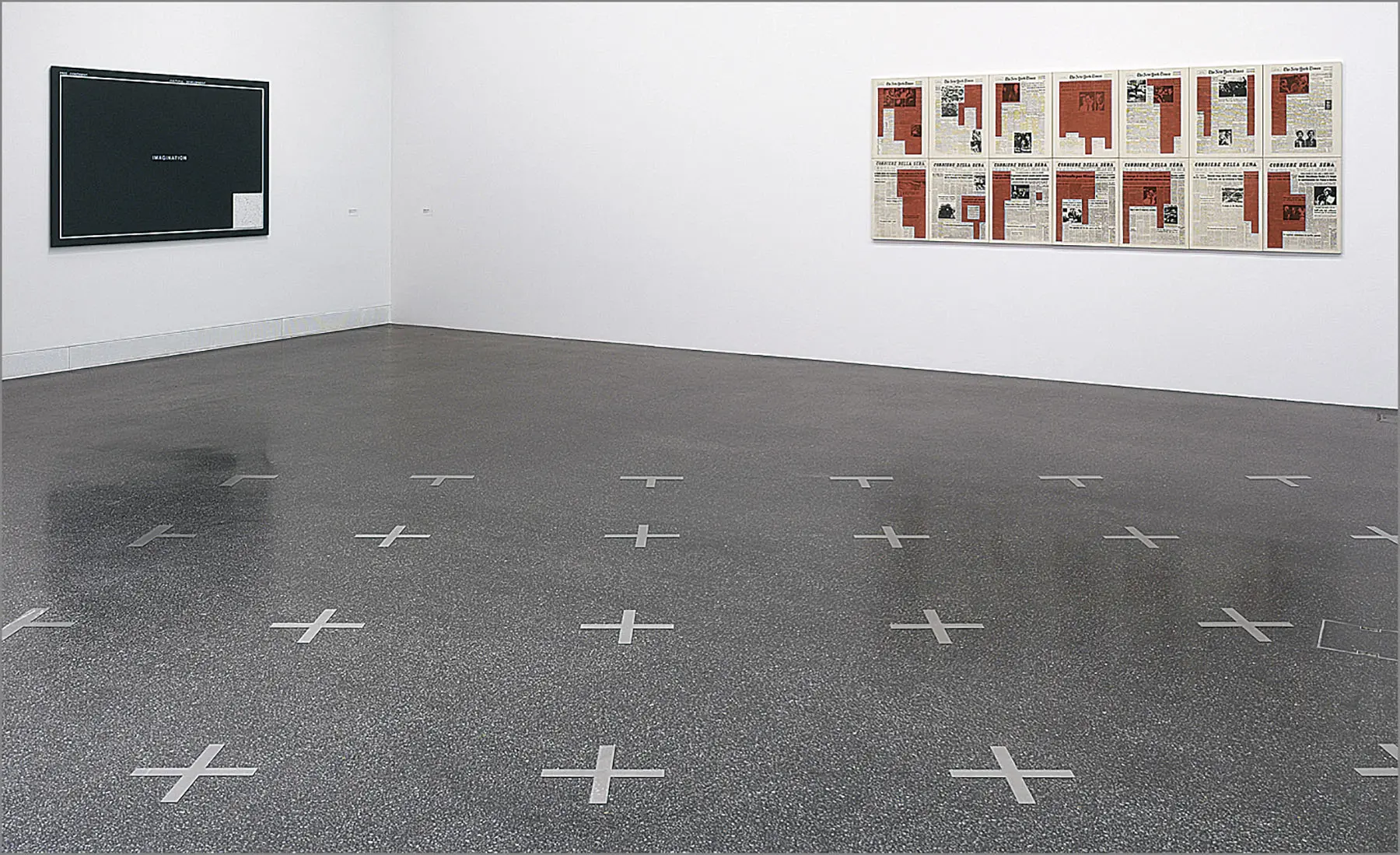
Do it yourself: Freedom territory, 1968, also alludes to a system of order, signaled by the aluminum grids placed on the floor that, of course, are in principle unmovable. The allusion to subjectivity (“Do it yourself!”) perhaps pointed to the angst of a time that declares the fall of all representations of Man and of reality. Where Man has disappeared. Man is now de-centered and exists as a viewed viewer unable to locate his own remote point of origin. Man is now marked by the spatiality of the body, and openness towards desire, and the time of language.
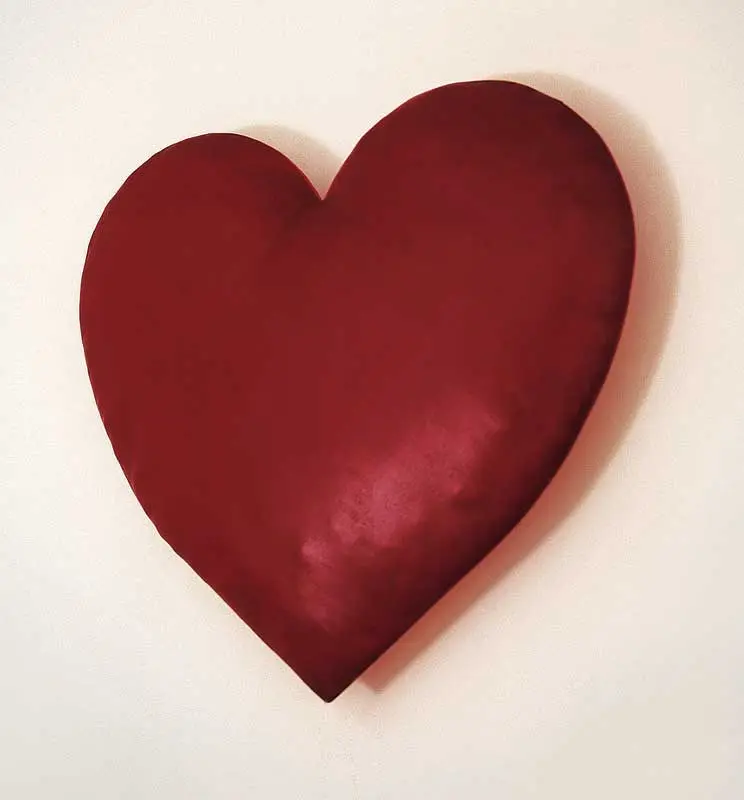
Right in front is Corazón para amasar, 1966. A soft, large object in the puerile shape in which the heart is usually represented, illuminated from behind by a neon light like a Pop masterpiece but twisted in its condition as a bodily organ by its strange puffiness. I am reminded here of Borges’ story Las ruinas circulares, published in 1944. It is about a Demiurge whose imperious desire was to create a perfect man, which he did through dreams, but after his supernatural but not impossible effort discovered himself as someone else’s dream. Many times did this Demiurge dream in the prosecution of his desire until the appropriate method was achieved; this time he began by dreaming the vital organs for the desired ineffable man. The first one was the heart: “…he dreamt of a beating heart. He dreamt it active, warm, secret, the size of a closed fist, maroon-colored in the penumbra of a still faceless and sexless human body… With minute love he dreamt…”
What is this man filled with life, for his thought to exist only as it is articulated in the emptiness of the unthought-of?
*All images illustrating this article are courtesy of Daros Latinamerica Collection, Zürich.
MARÍA BELÉN SÁENZ DE IBARRA
Cultural critic and research scholar in visual studies. She is currently the head of the National Direction of Cultural Divulgation at Universidad Nacional de Colombia.