
Our body is our temple. Container of the soul, our body is the mirror of who we are inside.
From the early days of classical Greece, a clear empathy was established between body and soul, amalgamated into an indivisible entity where the flesh becomes the propitious site for the spirit. Understood as a personal cosmos that grounds our relationship to others, the body rises as the symbol of all our actions, desires, and dreams.
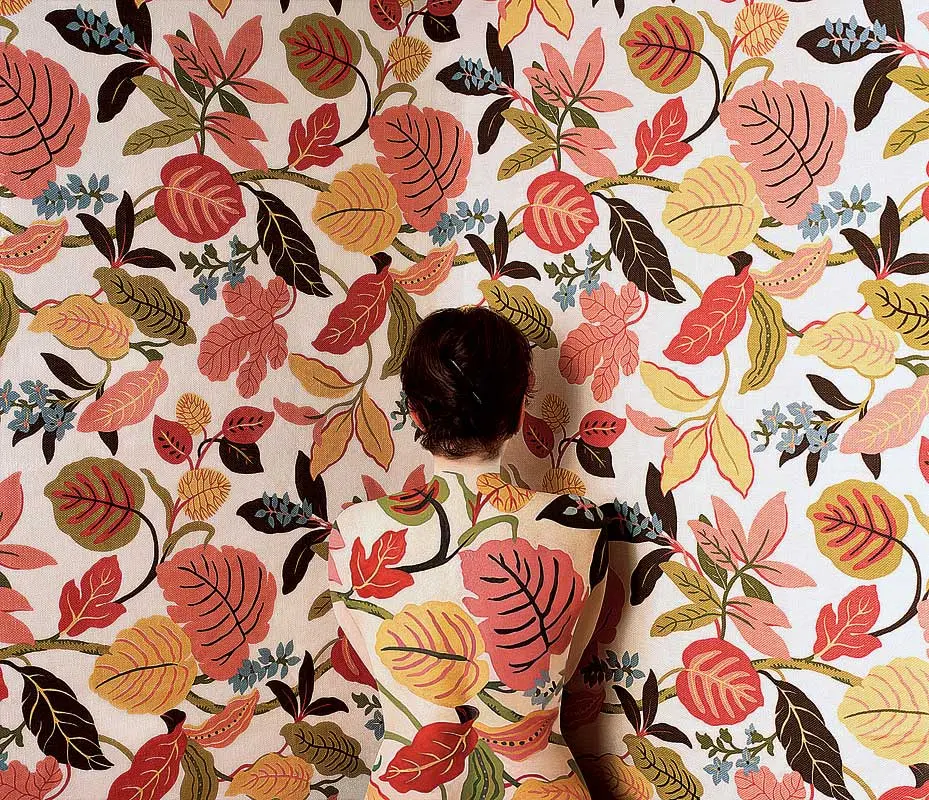
The art of Cecilia Paredes is guided by this principle. The body—that magnificent tabernacle—unfolds and is transformed into a beautiful allegory. It would seem as if Paredes gives her own body a radical turn, shifting inside for outside and bringing—in that crucial transit— the soul into the open.
The title of the exhibition presented by Paredes at Diana Lowenstein Fine Art, based in Miami’s Wynwood District, is Fugitive Dreams. The show comprises a wide selection of the series Paredes has been working on over the past few years, Skin Deep, as well as two sculpture projects and installation.
Skin Deep is a logical extension of the work with the body that has marked Cecilia Paredes’ entire production. Now, however, the artist is no longer metamorphosing into the animal kingdom, but rather into the plant realm, to the point of disappearing in that sort of offering that is always her painting. The body now becomes integrated into the landscape. A landscape evocative of nature but is also man-made, and one where ornamental elements are essential.
Paredes starts with natural-fiber textiles—usually linen—with floral prints in delicate designs, to which she later fuses herself in a chameleon-like attitude. A key element animating Cecilia Paredes’ poetic figure is the subtle playfulness that drives her work.
We first see the interplay between citation and appropriation, where the sole possible element of originality is nature itself—only present in the painting on the basis of a copy. Perhaps precisely because of that, the artist offers her own self in a gesture of ultimate reverence, allowing herself to be devoured by the growing vegetation that always ends up covering everything in her paintings. This offering may be the key to understand why Paredes stopped using a paintbrush, rather transforming herself into the receptor subject by accepting paint as a tattoo on her skin.
Paredes’ work is not easily classifiable, combining as it does painting, performance art, photography, and design as omnipresent expressions that weave the delicate grid of her proposal, always with a great dose of sensibility.
In her desire to fuse with nature, Paredes anchors her states of mind on the seasons. This is the origin of works like Naturaleza urbana, 2009. At other times, her predilection for the arabesque traces coquettish curlicues like those in Rhythmic Garland or Art Nouveau, both from 2009. And, as if the journey were too short, the artist sometimes holds us by the hand and takes us to faraway lands, for example in her series Los cuatro rincones del mundo, of the same year.
A solid unifying element characterizes her entire proposal, however. We witness a world of interdependencies, where everything is connected in joyful harmony. Each element in Cecilia Paredes’ work reminds us of the fact that we are but one element in the general cosmos that is nature, of which the body is pristine expression. Thus the dissolution of her own image into nature is a sign of identity that returns her to the infinite flux that is life. Her use of serialized elements that repeat themselves to suggest the idea of the cycle as the recursive symbol of existence reasserts this idea, and within these serialized elements, so does her preference for simple everyday objects (hangers, leaves, lucky bones, cufflinks).
In that sense, Shawl, 2009, merits special attention. Paredes has been careful to keep her intervention on the chrysalis—from the Greek oros, meaning gold—that form so sui generis a shawl to a minimum, painstakingly joining them together with silk thread. The shawl, unsurpassable, seems embroidered in extremely delicate gold threads, but in truth what we are witnessing is a minute process of recycling natural detritus. The poetic implications are manifold, but one remains central.
The pupa or chrysalis becomes an essential symbol by concentrating the idea of metamorphosis, so dear to Cecilia Paredes’ work while highlighting the levels of sensibility that animate her artistic proposal. The work also establishes an impressive level of empathy with the rest of the Skin Deep series, where the protagonist, immobile and gathered on herself, seems to be in the midst of a life-changing transformation.
As a more general metaphor, Shawl also suggests the artist’s jump into a new series, the anticipation of new routes for creation. Which is another constant in the career of an ever-changing, always fresh artist.
JANET BATET