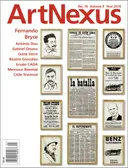
Since 1985 Boxer has been doing a series of in situ exhibitions. The concept behind these exhibitions is for him to be the curator of his own shows and present it in his home, outside the gallery system. The title of the exhibition, Bacon as Icon, is not a surprise since Bacon’s influence on Boxer is a longstanding affair. It began when Boxer did his doctoral thesis about Bacon’s oeuvre in 1975. The meeting between them marked Boxer for life, not only on his work as an art historian but also as an artist. This exhibition is Boxer’s tribute and recognition to Bacon’s influence on his art and could be resumed in one piece: Homage: Bacon/Einstein (1974-c.1990), a collage made by Boxer from a piece of Bacon’s painting.
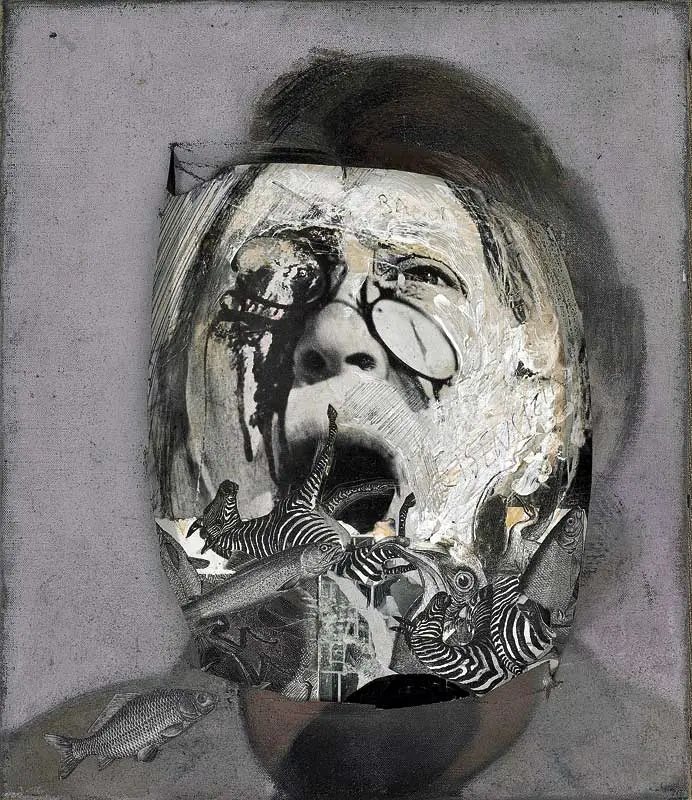
Although the exhibition is not intended to be a retrospective it can be seen as one since it contains pieces from different stages starting from the early seventies up to 2009. It shows his work method, notably his tendency to make many studies of the same theme through the years. Boxer’s work is without question autobiographical; each piece is made after some major event that touched him personally. Some of these events had affected him in a generational sense, like the Hiroshima bombing, since he was born in 1946. Others are more personal like the AIDS epidemic that has claimed the lives of many friends. There are other themes on which he has been working consistently throughout his career, and among those, we can mention historical events such as Colonization and Slavery. The relevance of these processes for him is associated with its social impact and with the fact that it is very much alive today in the Jamaican society, where most of the population is descendent of slaves and where the social structure shows clear remnants of it.
Boxer was one of the first artists who made installations in Jamaica and one of the few who has been consistently doing it. There are some examples in this exhibition of what he calls relics, fragments of installations that he presented in exhibitions such as the São Paulo Biennale in 1996. He was also the first artist who started to make artist’s books in Jamaica, using whichever resources were available to him including photocopies. There are a couple of these handmade books in this exhibition which brings in the experimental side of his work. This experimentation is not limited to the bookmaking process but also to the materials he uses.
If we had to describe Boxer’s work in general we could say that the main theme of his oeuvre is registering human pain. His use of subthemes such as armed conflicts is just a pretext to bring up the pain. He sees the horror behind it at a human level, pushing out anonymity and putting a name to it. He is concentrating on the suffering that comes out of it: the loss of lives and the permanent scars that derive from it. At a more personal level, he talks about his own losses such as the death of very dear friends, how life is never the same after that. The anguish is reflected in almost every piece, the physical textures of the works are like the many layers on his skin. His work is almost a mirror reflection of his life, a registry of events that made him who he is today: from the external events that shape his life in a generational sense to the many other personal elements that defined him.
IRINA BRITO