
A definitive symptom of contemporary society is the endless flow of human movement. The reasons are varied; the stories – always personal –unrepeatable. Destiny, nonetheless, seems to bend to the compass’ sway: always looking North. And paradoxically, the emigrant, in his elusive quest for a better future, never stops looking back, to the South.
Such are the crossroads behind Migraciones: Mirando al Sur, a group exhibition curated by Rosina Cazali, made possible by the support of the network of Centros Culturales Españoles (CCE) in Central America and Miami. Migraciones comprises the work of twelve Central American artists whose proposals resort to contemporary means of expression in order to show and talk, from a skewed perspective, about the crossroads and byways of the migrating phenomenon in the region.
The conceptual strength and quality of the works included in the exhibit are outstanding. It should be noted that in the past few years, the quality and variety of artistic discourses in the area have thrived, and this exhibition, where several key areas of interest are present, is a true example of it.
Adopting a self-referential perspective, the first group proposes a dialogue about the migrating phenomenon on the basis of art. In this group, we find the works of Adán Vallencillo and Ángel Poyón Calí. The series Remesa Republic, by Vallencillo, is inspired by the lucrative remittance-based economy. The artist establishes clear parallelism between the financial and artistic worlds: the use of yellow and black as financial symbols –the corporate colors of Western Union, the largest remittance transfer company in the world– and the canvases as allusions to the art world. The use of museographic tools –as the level– is an attempt to support this precarious artificial balance.
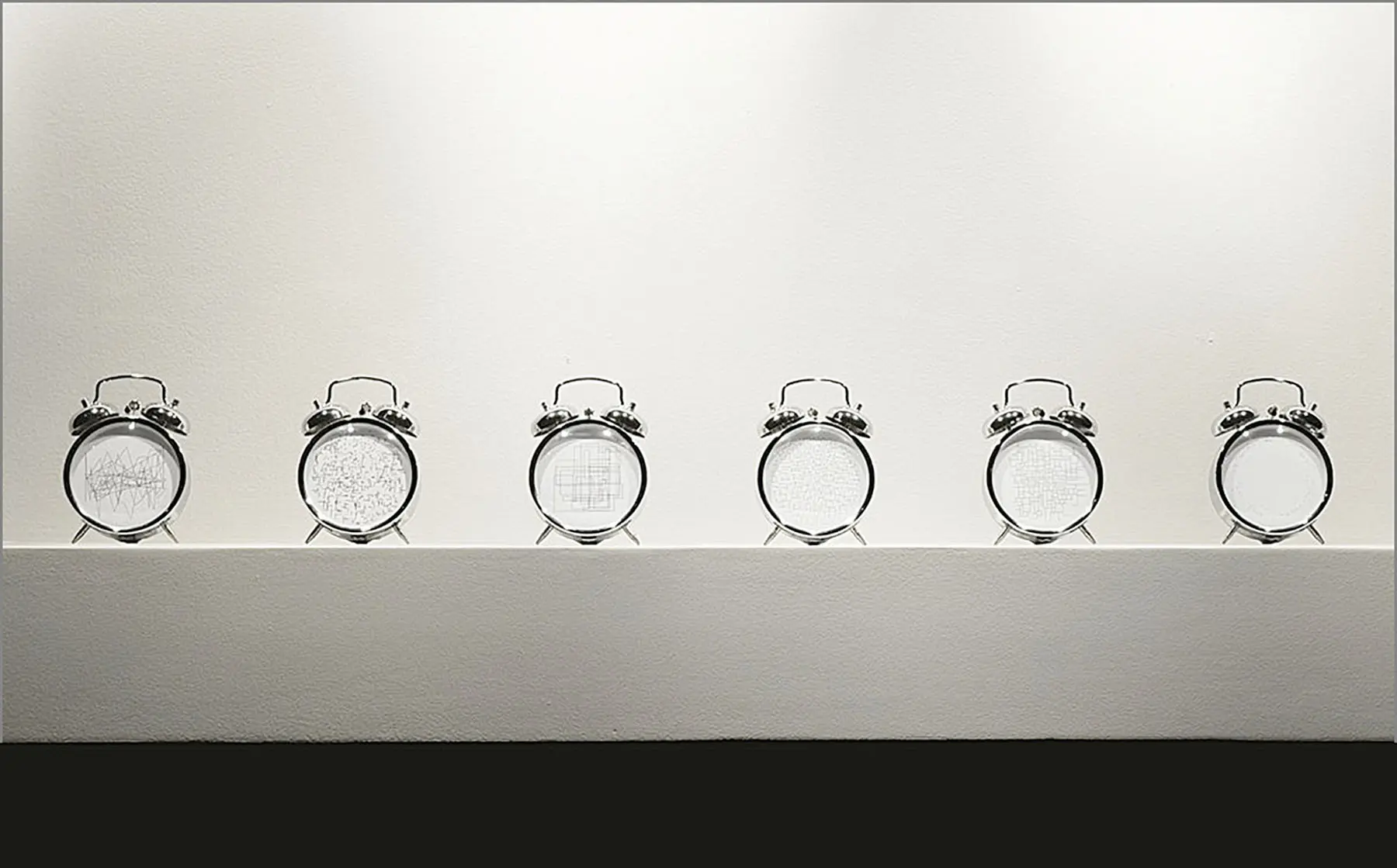
Estudios del fracaso medidos en tiempo y espacio, by Poyón Calí, is a magnificent ode to the hazardous fate of the emigrant. The installation comprises six alarm clocks whose faces –without hands– show the meandering and erratic itinerary of the emigrant. The result, complicated cartography inspired by Mondrian’s drawing, speaks also of the transposition of international artistic movements to the local scene, and their inescapable failure.
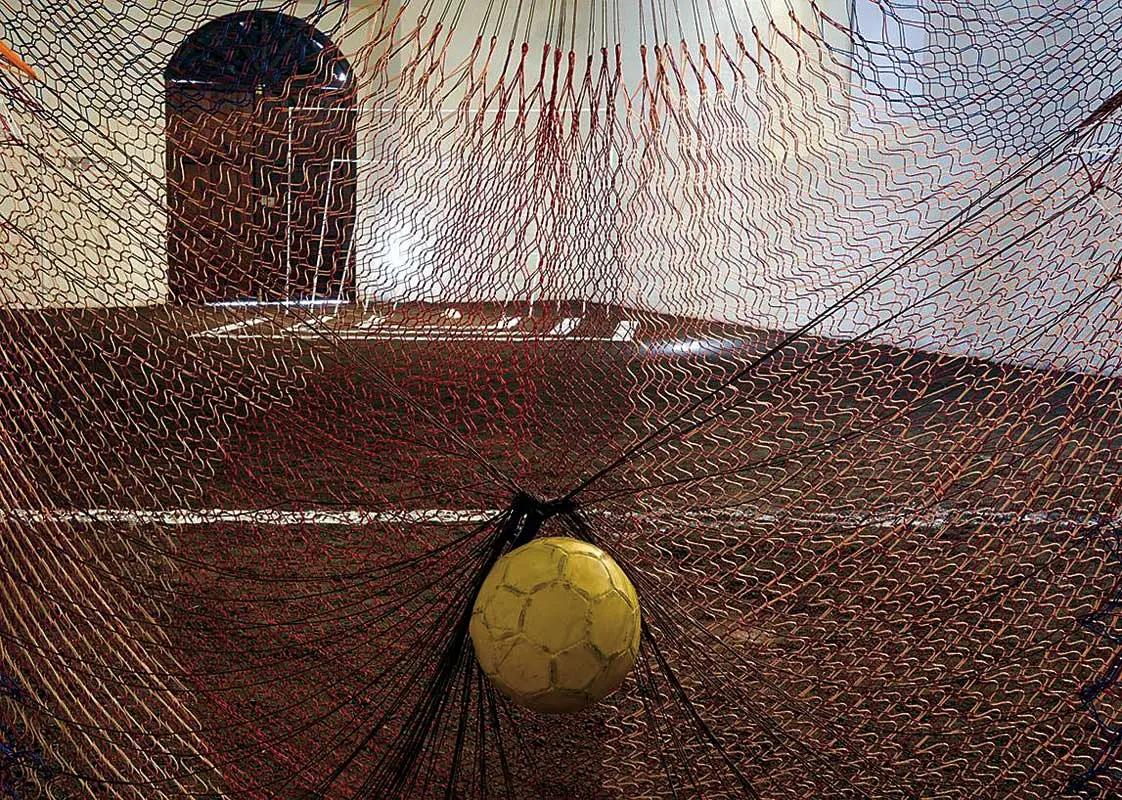
The proposals of Miguel Angel Madrigal, Betsabeé Romero, and Ronald Morán also emerge from an allusion to the wandering aspect of the emigrant’s life. Their universes are like unfathomable labyrinths or Babel towers that at once dazzle and confound us.
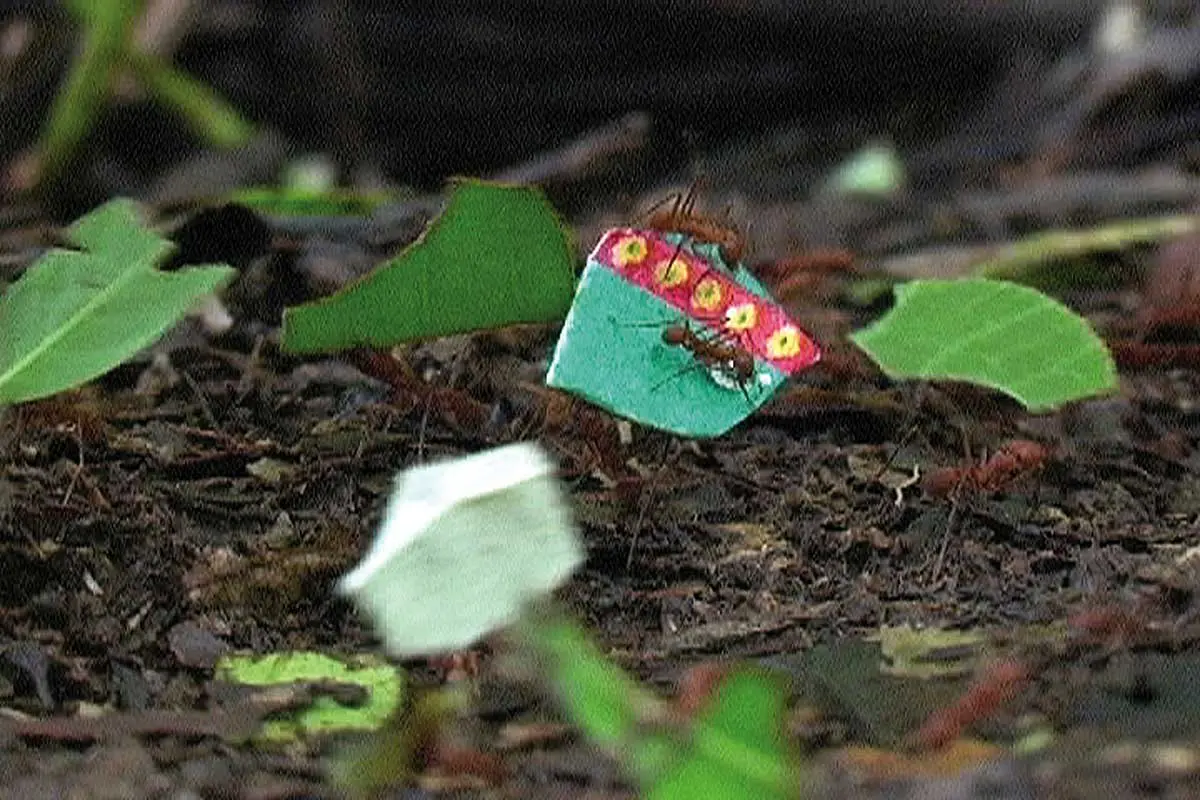
The proposals by Donna Conlon and La Torana group are inspired by chance and cartography as well as by symbols and clichés that come from the North. The video Coexistencia, by Conlon, relies on the idea of destruction as a survival mechanism. The artist introduces the natural element –the leaf-eating ant that is so dear to Panama– as a random agent and includes pieces of paper with the United Nations’ flags and peace symbols. The new geographical distribution, ever-changing, draws the most incredible maps.
As for La Torana group, they propose a new cosmogony where unlikely constellations come to guide the immigrant’s destiny, and where religion, violence, and sex function as the last resort against the renunciation that is the path of those who migrate.
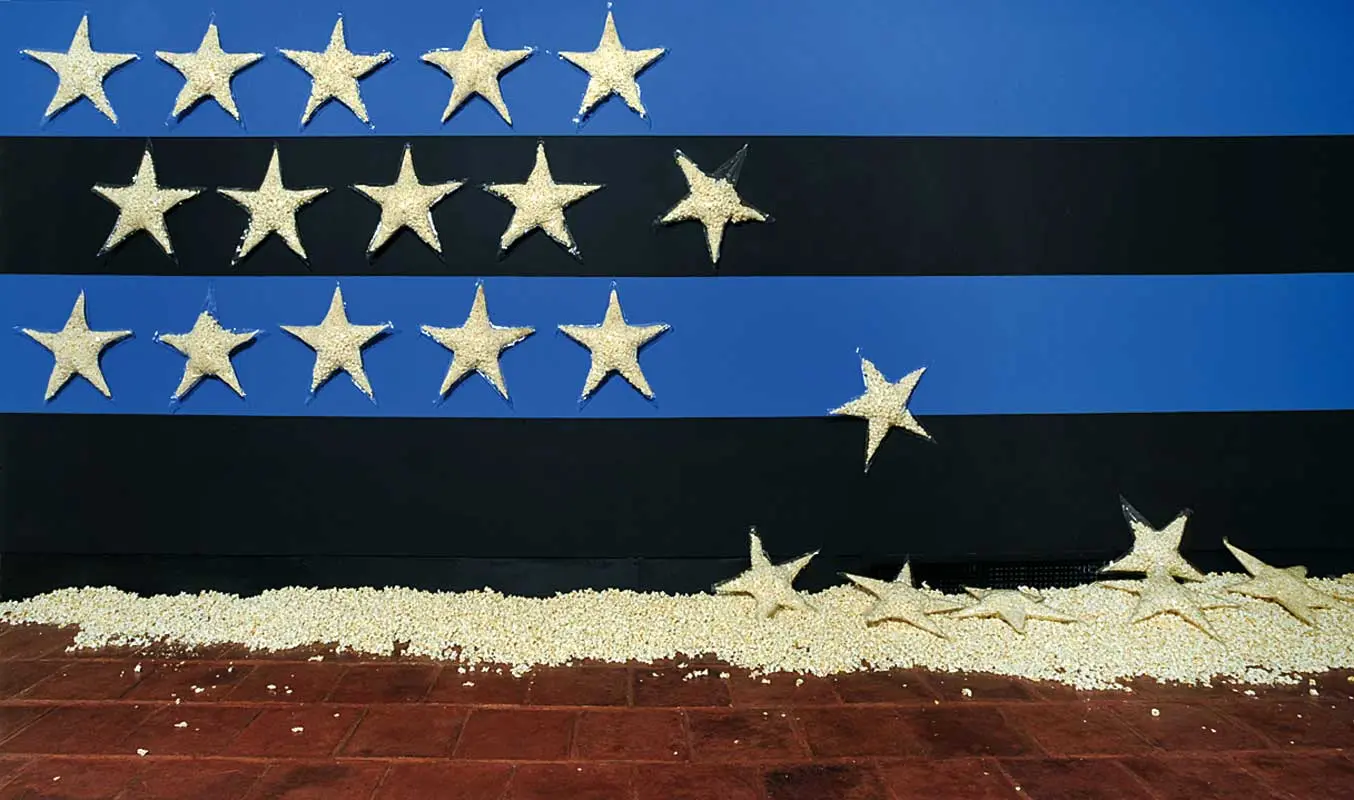
Noteworthy are the works of Dalia Chévez and Lucia Madriz, which use the contraposition of symbols from the advertising world and primary elements –staple foods vital to the region. Pop Corn, by Madriz, brings up the sensitive issue of the exploitation of corn –an essential food and cultural Mesoamerican symbol– by transnational companies that deprive local farmers of their fundamental rights. Its English-language title emphasizes the notion of transmutation implied in the vertical relationship –in every sense– between North and South.
The outlooks of Danny Zavaleta and Regina Galindo have a more documental bent. Testimony, as the vivid trail of the migrating experience, becomes a critical tool in Retrato hablado, by Zavaleta, whose installation displays a detailed classification of photographs, letters, and documents that trace the itinerary and fate of Carlos Portillo, a Salvadorian emigrant, and a retornado –the name given in the area to those who return to their native country.
Regina Galindo startles us with the reality of a jail cell where many immigrant families await a decision on their legal status in the United States. The artist rented one of these cells and lived there with her husband and baby for twenty-four hours, recording in a video a regular day in the eventful life of these families.
Lastly, Ernesto Salmerón surprises us with a poetic, almost bucolic, and indispensable gaze. Ellos no son pobres captures naked children happily playing in the river. The paradise-like environment wakes us up from the lethargy and brings us back, looking South.
JANET BATET