As Adriano Pedrosa notes in his presentation of the 31st Panorama da arte Brasileira, the principle of nationality can be one of the most simplistic curatorial criteria in the gathering of a group of artists, and at times it expresses a limiting and dangerous nationalistic symptom. To question this principle and to introduce a more radical variant than the one proposed by Gerardo Mosquera in 2001 was one of Pedrosa’s successes. In deciding that the show was to be about Brazilian culture, rather than Brazilian artists, Pedrosa widened the spectrum of debate and analysis that an event of this kind can, or should, spark. He also ran the risk of making more permeable the borders of an exhibition that was created to represent the local arts and has been characterized by them. Opening the space to discourses generated by Brazilian culture as a whole made it possible not only to expand the idea of territory but also—and perhaps more pertinently—to generate a space to confront the cultural constructs at the base of the idea of national representation and the fragility of its symbols. This biennial, whose origins date back to 1969, when it was founded by Diná Lopes Coelho, has traditionally been a space to recognize and make visible, in a varying format conceived by each edition’s guest curator, the work of relevant national artists; in this way, it responds to what was a pressing need at the time of its inception and remained so for several decades: to strengthen Brazil’s artistic “panorama” in a less-favorable context.
The anticipated polemic that grew around the curatorial decision to reformulate the foundational parameters also made it possible to confront points of view and necessary debates to question established models, reinforcing and giving even more meaning to the exhibition’s title: Mamõyguara opá mamõ pupé. A translation into Tupi (an extinct language spoken by the Tupi peoples living in the area today occupied by São Paulo and São Vicente and along the Tieté river, encountered by the Portuguese on their arrival in the Sixteenth Century) of the title of a work by the artist's collective Claire Fontaine: Foreign everywhere. Translated into a local tongue no longer in everyday use, it evinced not only the cultural conflict generated by colonization and its obvious consequences in the displacement of one language by another but also, as some critical comments on the project unfortunately revealed, the fact that the art scene can be closed-off and exclusionary, dominated by territorialism and fear of the Other rather than by a debate of ideas.
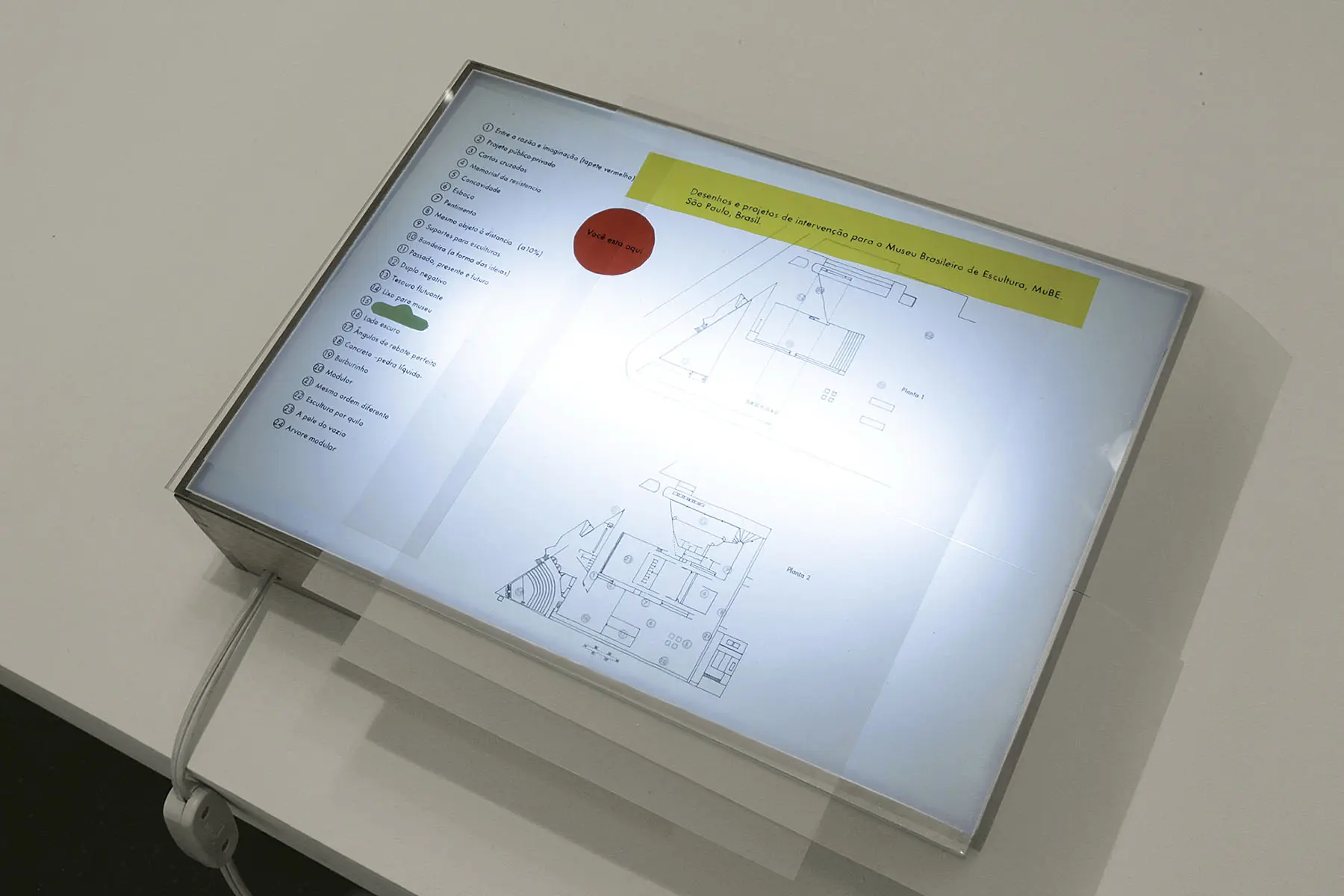
A key part of the Panorama 09 project was its incorporation of an artist-in-residence program, which offered a true platform for debate and exchange among local and invited artists. Some of the works presented emerged from this experience, as was the case of Dibujos para MuBE (2009), Mateo López’s hypothetical project for a sculpture exhibition at the Museu Brasileiro de Escultura (designed by Paulo Mendes da Rocha in 1988), subtly interrogating the institution’s programming. For his part, Alessandro Balteo initiated a project of research and negotiation on the basis of the history of a work donated in the 1970s by artist Eugenio Espinoza to the São Paulo MAM, and rejected by it. Other artists-in-residence were Runo Lagomarsino, Caire Fontaine, and José Dávila.
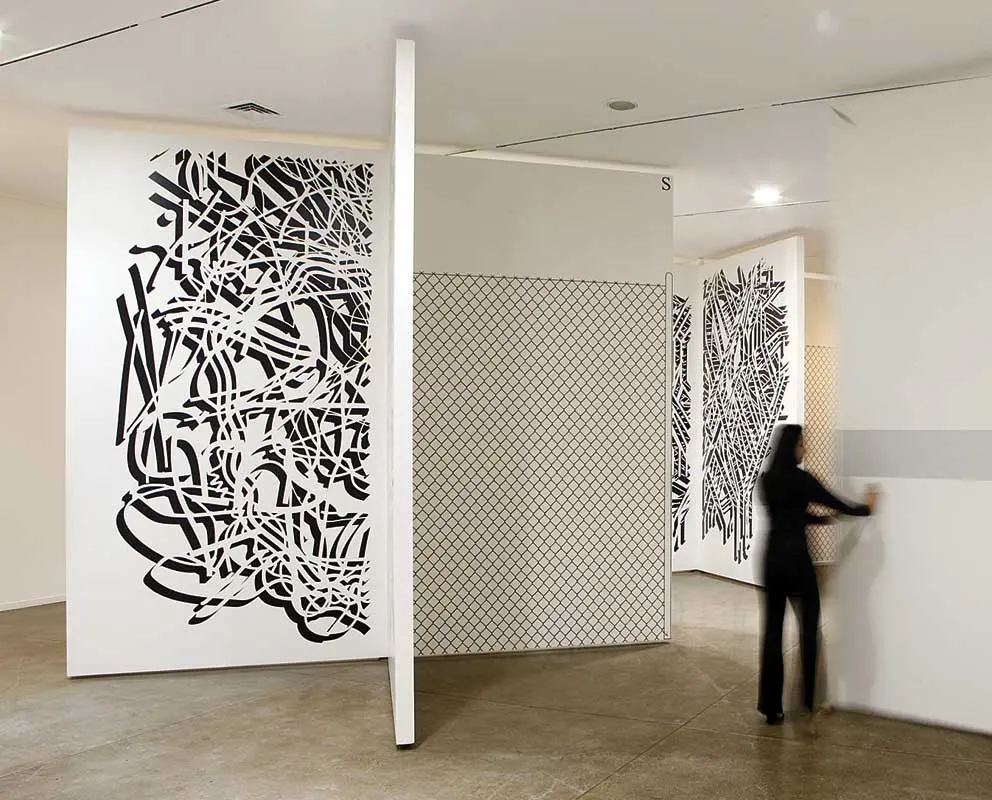
Nicolás Guagnini proposed an interesting reflection on the role of the curator, the artists, and the working relationship that is established between the two. This work allowed the establishment of a series of associations and possible readings within a specific context. Guagnini’s Curatorial machine, 2009, (based on Helio Oiticica’s 1961 Estudo para núcleo) was a wooden structure that turned and combined the work of the four guest artists, Carla Zaccagnini, Nicolás Robbio, Pablo Siquier, and Valdrilei Dias Nunes, making it possible for the public to generate thus their own version of the work.
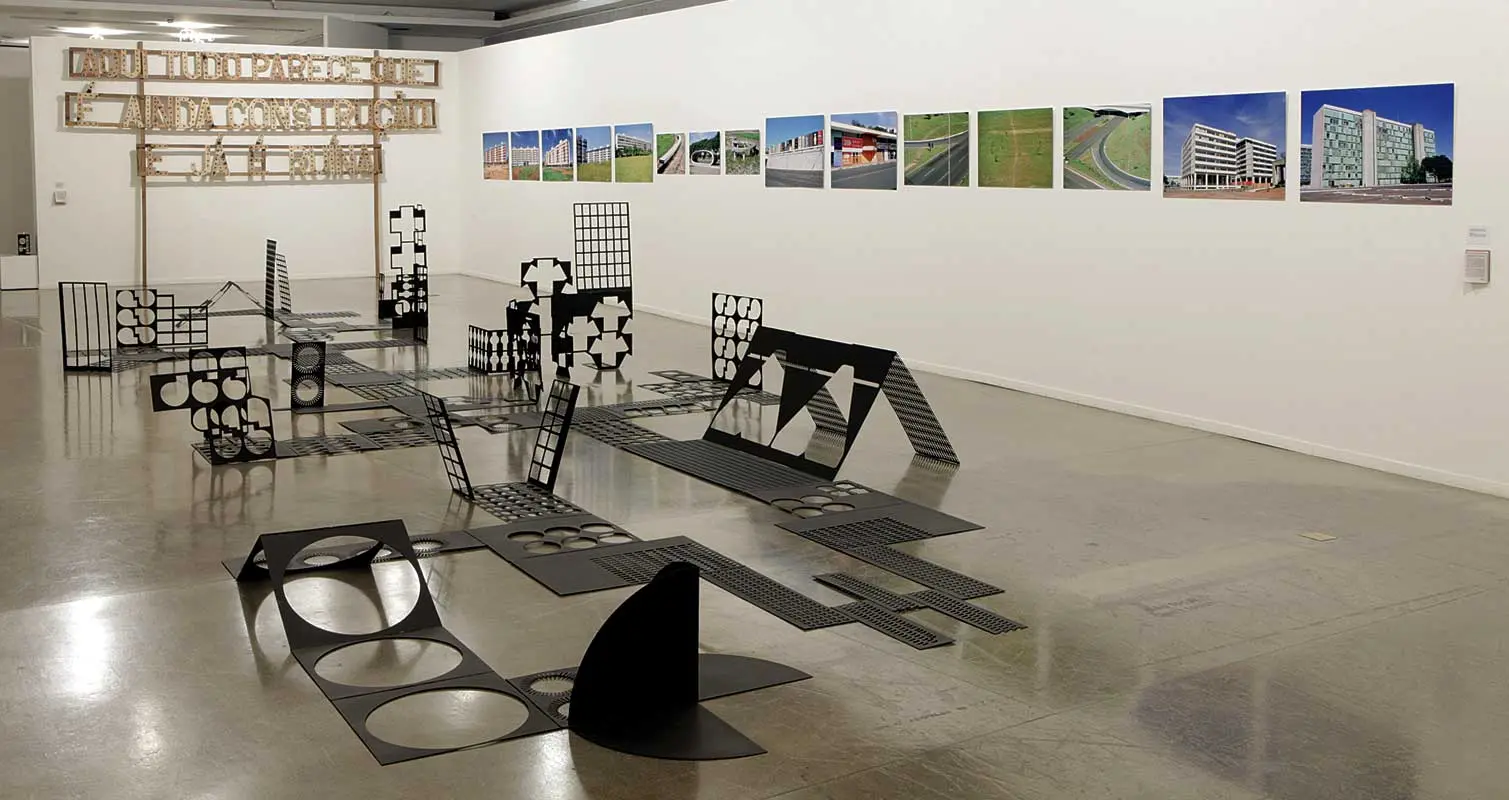
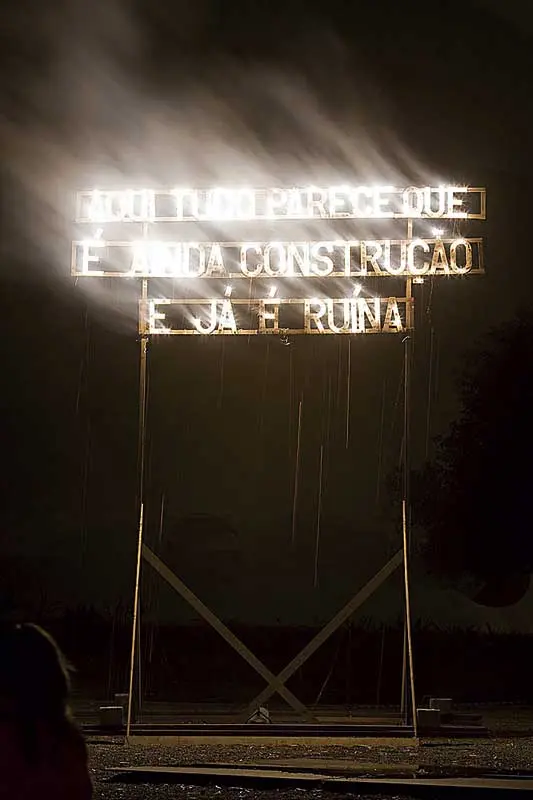
Cerith Wyn Evans reconstructed a 2004 work, Aqui tudo parece que ainda é construção e já é ruína (based on Fora da ordem, by Caetano Veloso), which revisited a phrase in turn reappropriated by Veloso from a text by Claude Lévi-Strauss. Lévi-Strauss’s comment was a direct reference to Brazil, and Wyn Evans wrote it using fireworks on opening day. Another project directly related to the context, and specifically to the economy, is Superflex, part of an investigation of Guarana Power that was censored at the São Paulo Biennial. Allora y Calzadilla, Luisa Lambri, and Juan Araújo also referred to architecture and to Neo-concrete art.
Most of all, Pedrosa’s proposal was able to spark a necessary debate about the foundation of the Panorama, a debate that helps us rethink our own relationship with the world (art or not), How do we perceive our culture, and how is it perceived when we exhibit it to the gaze of others? On what does the survival of what we are depend on? In that sense, it is important to remember Derrida’s notion that hospitality represents the model of the social connection and as such is a basic form of an ethical attitude. The Other does not endanger us; perhaps he only reveals who we are.
MARÍA INÉS RODRÍGUEZ