
Twenty one years have passed since the first Bogotá Biennial, held in 1988. Many things have changed in that time in the Colombian art field, not only with regard to the currently accepted paradigm but also in the structure generated as a consequence for the art scene itself. These last two decades have seen the emergence of new entities and institutions and of various independent spaces. Also, in the last two years new competitions, events, and exhibition programs have been created, diversifying tremendously the available options for artists to put their work in circulation. Many of these competitions (most of them structured as open-entry) have been conceived on the basis of profiles that more clearly acknowledge the heterogeneity of the art field, which has made them a better fit to the needs of its different social actors.
Taking this particular situation into account, it is obvious that the role played by the early editions of Bogotá Biennial in the Colombian art landscape has changed entirely, and that now it is perceived as one more show within a wider roster of events in the city. Although in the early 1990s it seemed like Colombian art’s preeminent “social” event, today it has been displaced from that function (for the better) by the Bogotá Art Fair.
In its inception, the Bogotá Biennial was conceived as a window towards “new artistic expressions,” as well as a mechanism to locate and promote artists without a long presence on the scene. This is why the Biennial’s first five iterations were also a stage for encountering new names in the national landscape. One of the first caveats that emerged around the Biennial was in fact that its early policy of never exhibiting the same artist twice tended to produce the fiction of a premature aging in the Colombian scene, and didn’t appropriately reflect the way in which an artist’s work can reinvent itself at any given moment.
The five years that elapsed between the Biennial’s 8th and 9th editions contributed to cool down the event’s reception in the city, also caused by a series of concerns regarding the exhibition policies followed by the institution where it had been organized. The current version undoubtedly faces the challenge of that shift in perception in the art field.
The 10th Biennial committee was formed by Jorge Jaramillo, Gustavo Zalamea, Juan Alberto Gaviria, and María Elvira Ardila, with advice from Brazilian artist Francisco Klinger. They proposed the title of Confluencias for the event, to signal the way in which the show functions as a “meeting point of different elements or pathways.” Along those lines, the idea of the journey seemed to the Committee the main driver of such confluences, and that is why they posited it as the structure of the artistic practices included in the Biennial.
The current Bogotá Biennial differentiated itself from previous versions by inviting four foreign artists: Vera Chaves and Sergio Romagnolo from Brazil; Alicia Herrero from Argentina; and Düsseldorf-based Sandra Vásquez, from Chile. The curators presented each one of them with a proposal to travel to one Colombian city: Cali for Sergio Romagnolo; Medellín for Sandra Vazquez; Bogotá for Vera Chaves; and Cartagena for Alicia Herrero. In each one of these cities, the visiting artists were put in contact with a specific art project to function as their base, which resulted in works rooted in a collaboration with the social actors involved in the project.
For the Biennial’s curatorial committee, the journey validates both the experience of a territory and the encounter of the social groups that populate it, with their distinct social, cultural, and political aspects. This position is strongly in sync with the trends now dominating artistic practice in Colombia.
Gradually, Colombian artists have taken on as one of their most important tasks an approach to social practices that are not easily seen in a general reading of local reality. In Colombia, a country whose last century has been marked by several episodes of violence, the relationship between artistic practices and the events that define the shape of the real in political terms, has remained marginal to a certain degree. This does not mean that artists and, in general, people connected to the intellectual fields have not strongly expressed their rejection of violence, or that they have not taken concrete positions in the face of it. What it means is that their degree of incidence in socio-cultural terms has been mostly symbolic.
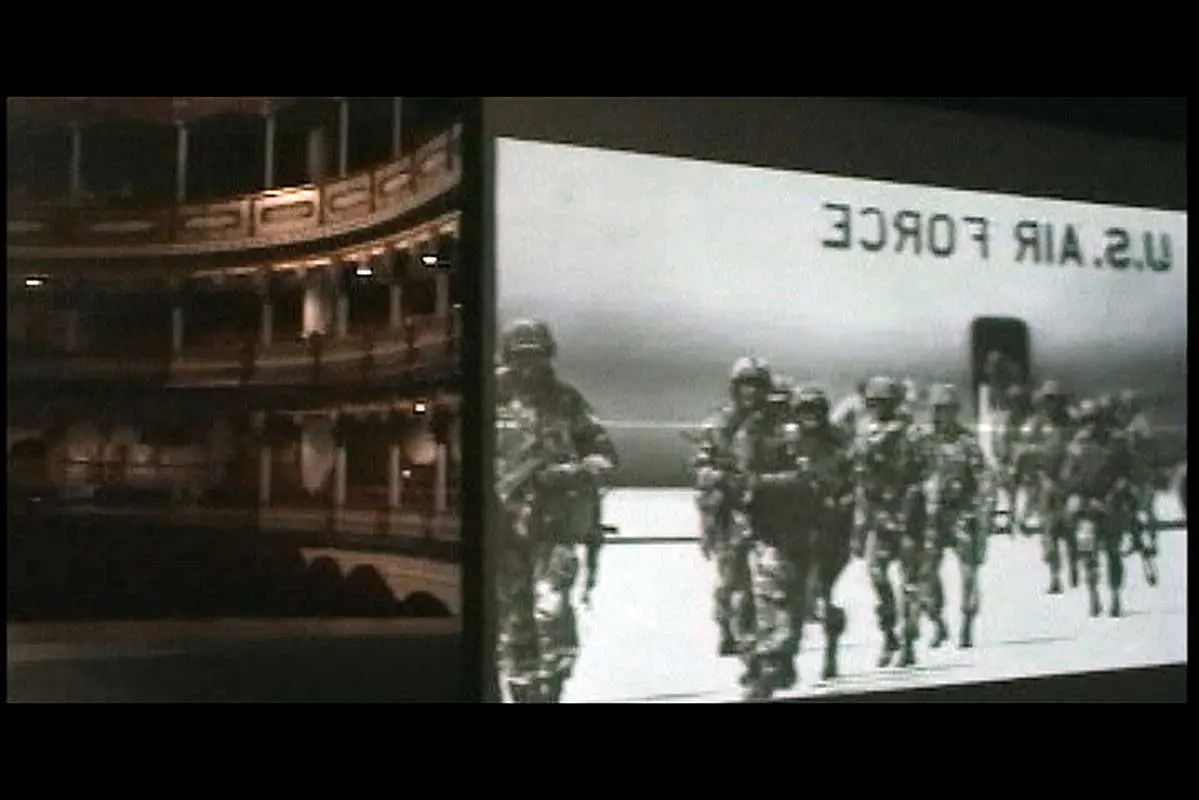
Many factors can come together to produce this situation, among them the precarious development of Colombian’s artistic field, the conventional focus of art education, and the ethical and methodological challenges faced by any artistic project delving into traumatic historical experiences. Added to that is the fact that the ideological effect of the mass media, controlled by economic concerns with great power of influence over the country’s political reality, has distorted the features of the conflict to the point of rendering it banal. To refer directly to events of such nature places artists in the difficult position of having to deconstruct discourses that are deeply entrenched in wide sectors of the population thanks to their long contact with the media.
This is why many artists have focused their attention on the collateral effects of the country’s complex political situation, which in major cities can only be apprehended through second- or third-hand narratives. The uncertainty surrounding human existence in a context so prone to pointing out its fragility and fleetingness generates the adoption of postures of disbelief and even cynicism as an ethical pattern among younger artists. Distrust, irony, mockery, or corrosive critique are strategies deployed defensively against the conventionalism that surrounds the assimilation of events demarcating the present. It would seem that the details of the everyday, immediate, non-significant, and even empty life save subjects from having to confront the unsettling time bomb that life in outlying and rural communities has become.
In large urban centers, the conflicts that are experienced directly are of a different nature, but they seem to flow from the same cauldron. As a result of this “dual reality,” artists have adopted as their enemy all that tends to block an effective linkage between artistic practice and cultural experience. By questioning artistic practice and its ability to inscribe human experience within a socio-cultural space, artists tend to situate themselves outside the visual domain that serves as the historical support of their own field. The work of many younger artists comes to challenge us with their insistent interest in avoiding the appearance of “art” in their practice.
Alongside the four foreign artists who traveled to Colombian cities before the Biennial opened, the Committee invited 16 projects by Colombian artists and collectives who have regularly approached various imaginary or symbolic aspects of the experience of the journey or the phenomenon of displacement.
They were Santiago Leal, Nelson Vergara, Eulalia de Valdenebro, Mauricio Bejarano, Angélica Teuta, Gabriel Antolinez, Andrés García, María Paulina Pérez, Marta Posso, Paola Rincón, Santiago Velez, Oscar Leone, Colectivo Maldeojo, Colectivo La Colcha, Colectivo Ex situ-Insitu, Colectivo Taller 7, and José Antonio Suárez Londoño.
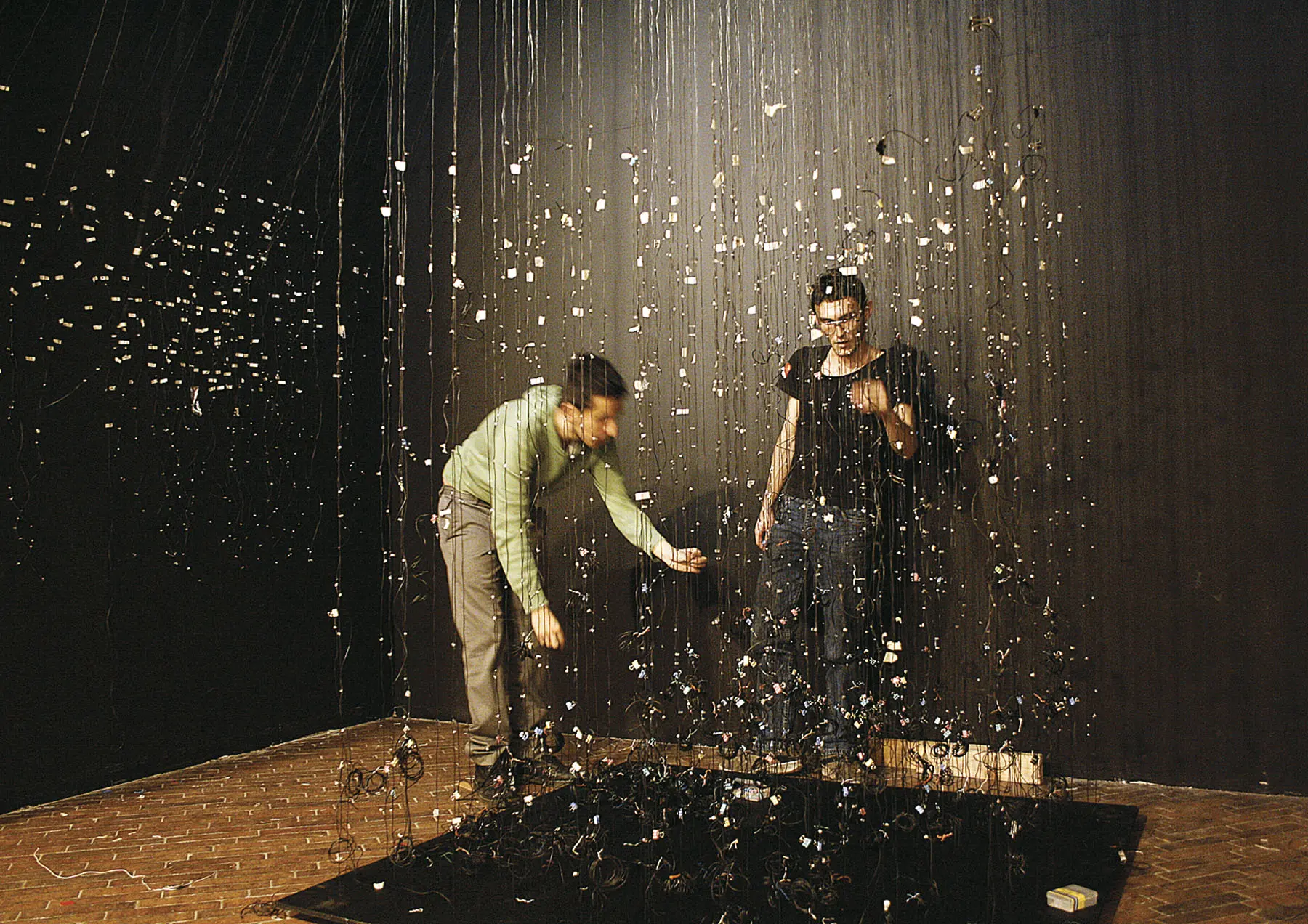
For a segment of these artists, the experience of the journey is understood in a more metaphorical vein; it seems to connect with the very material situation their work triggers within the museum. Such is the case of Gabriel Antolinez, who presents an installation of artificial-grass circumferences crossed with the architecture of the MAMBO, on the surfaces of which he interweaves wool threads to form a series of fleeting graphisms and connections between the various walls and the floor. Mauricio Bejarano’s work functions in a similar way: it is a sound installation that reveals the proximity of the temporal experience of our passage through the architecture and the intrinsic dimensions of the work’s soundscape. And something of the sort also happened in Angélica Teuta’s offering, which literally moved through a section of the space, displaying at all times the ramshackle character of the mechanism of the “moved” the image through the site.
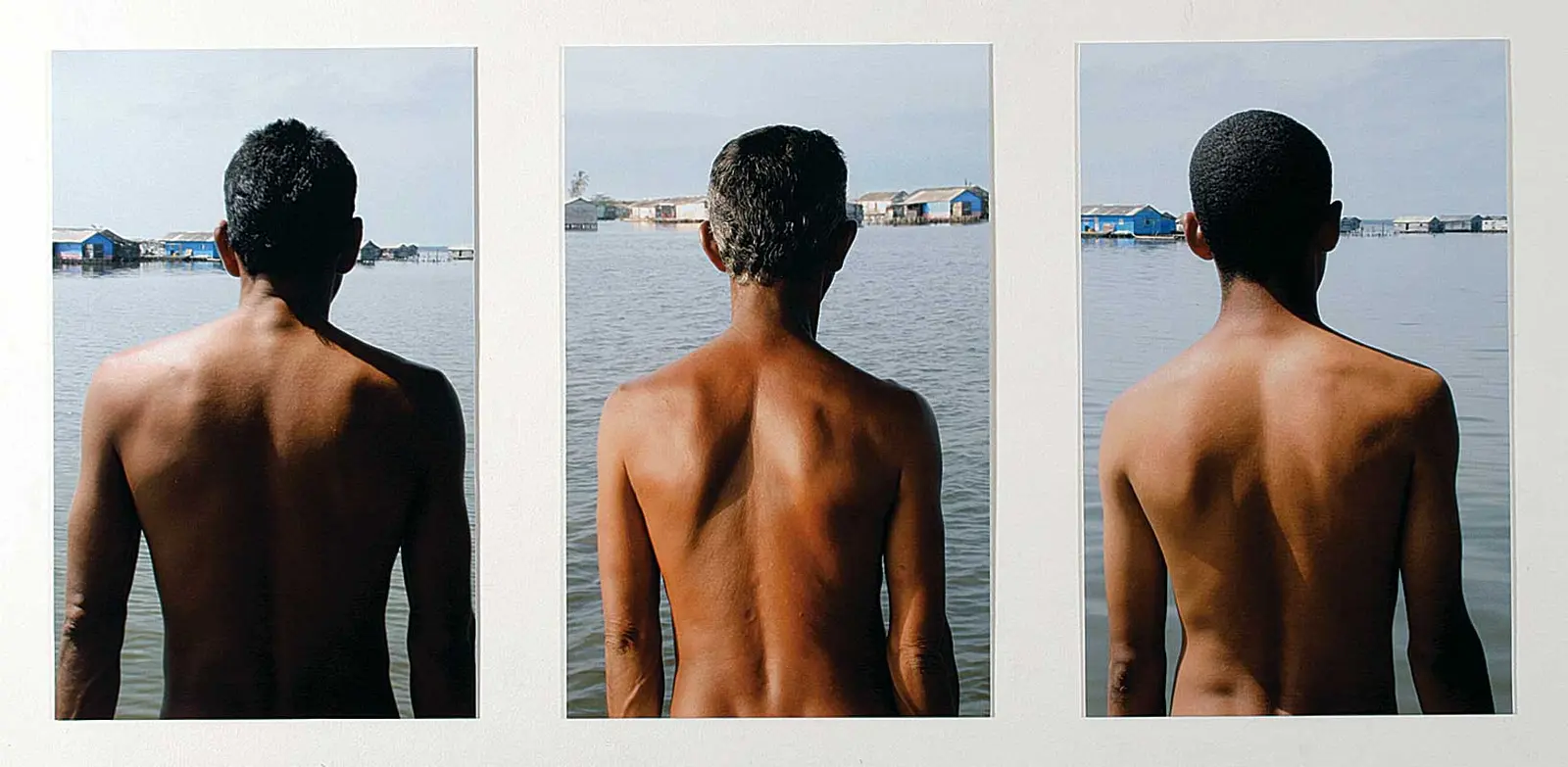
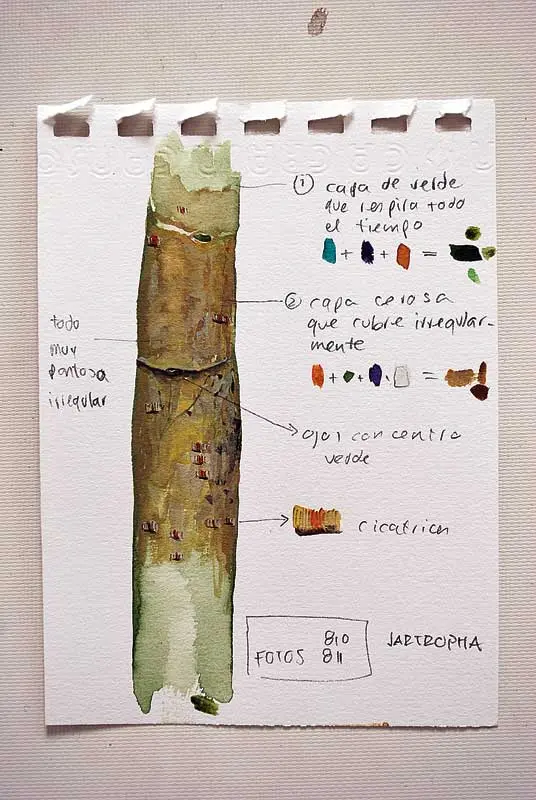
Along with the direct experience of traveling implied in the participation of invited international artists, there were two locals, Nelson Vergara and Andrés García, whose works in video were based on journeys along the Magdalena river, the most important waterway in Colombian territory, and explored portions of its various imaginaries and their historical, political, and cultural implications. Eulalia de Valdenebro also based her work on a series of journeys through Colombia; from an approach to botany, she attempts to render visible the historical background of the Colombian landscape.
As one moved through the Biennial, it was common to encounter works that, like those described, emerged to a degree from an act of collection of documentary registry connected to experiences that would seem previous to the arrival of the viewer. In that sense, we can mention the work of art collectives like Mal de Ojo, La Colcha, Taller 7, or Ex-situ/in-situ, whose practices often take place within predetermined situations and contexts, where they seem to acquire specific meanings that cannot be easily transferred to a conventional museum space.
As a whole, the selection presented at the 10th Bogotá Biennial was exceedingly discreet and didn’t really present any points of inflection to reveal what this event is signaling that is not being signaled by others. This begs the question of what role the Biennial plays within today’s art scene.
For the Bogotá Biennial to recover the relevant place that was once its own, it must acknowledge the challenges posed by contemporary artistic practices and propose more pertinent, more ambitious, and bolder strategies to bring to the fore that which other events are not.
JAIME CERÓN