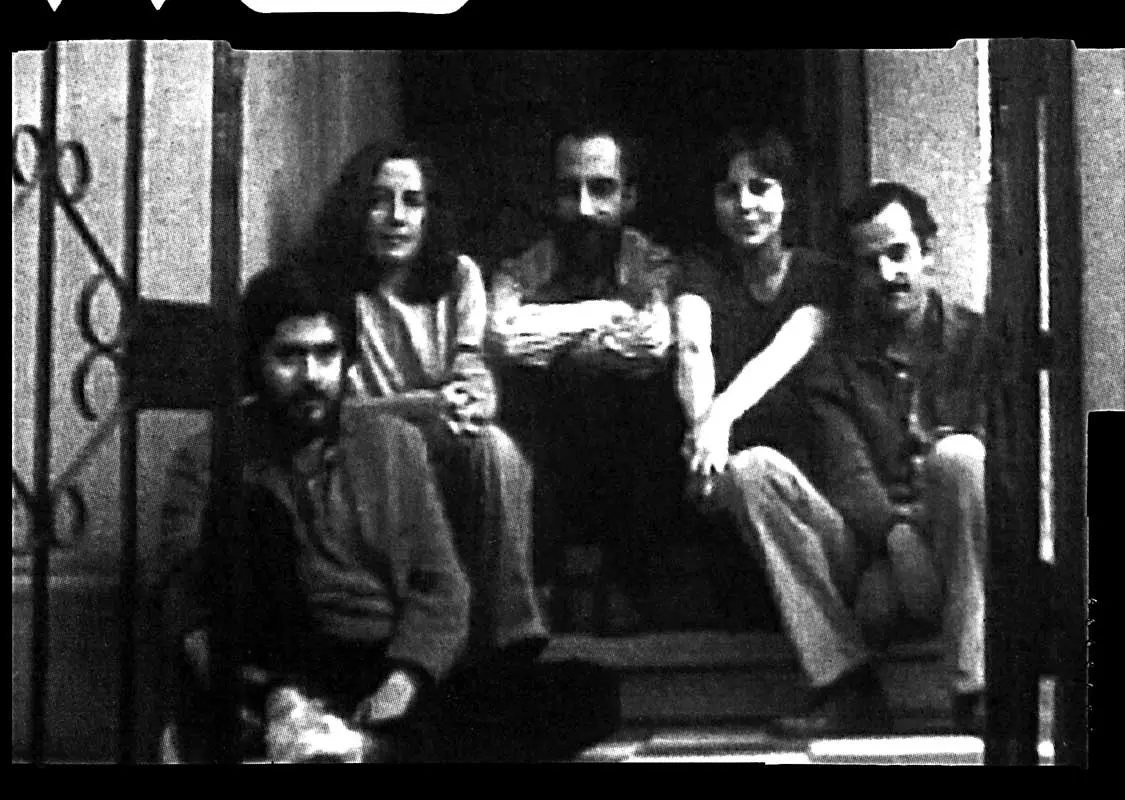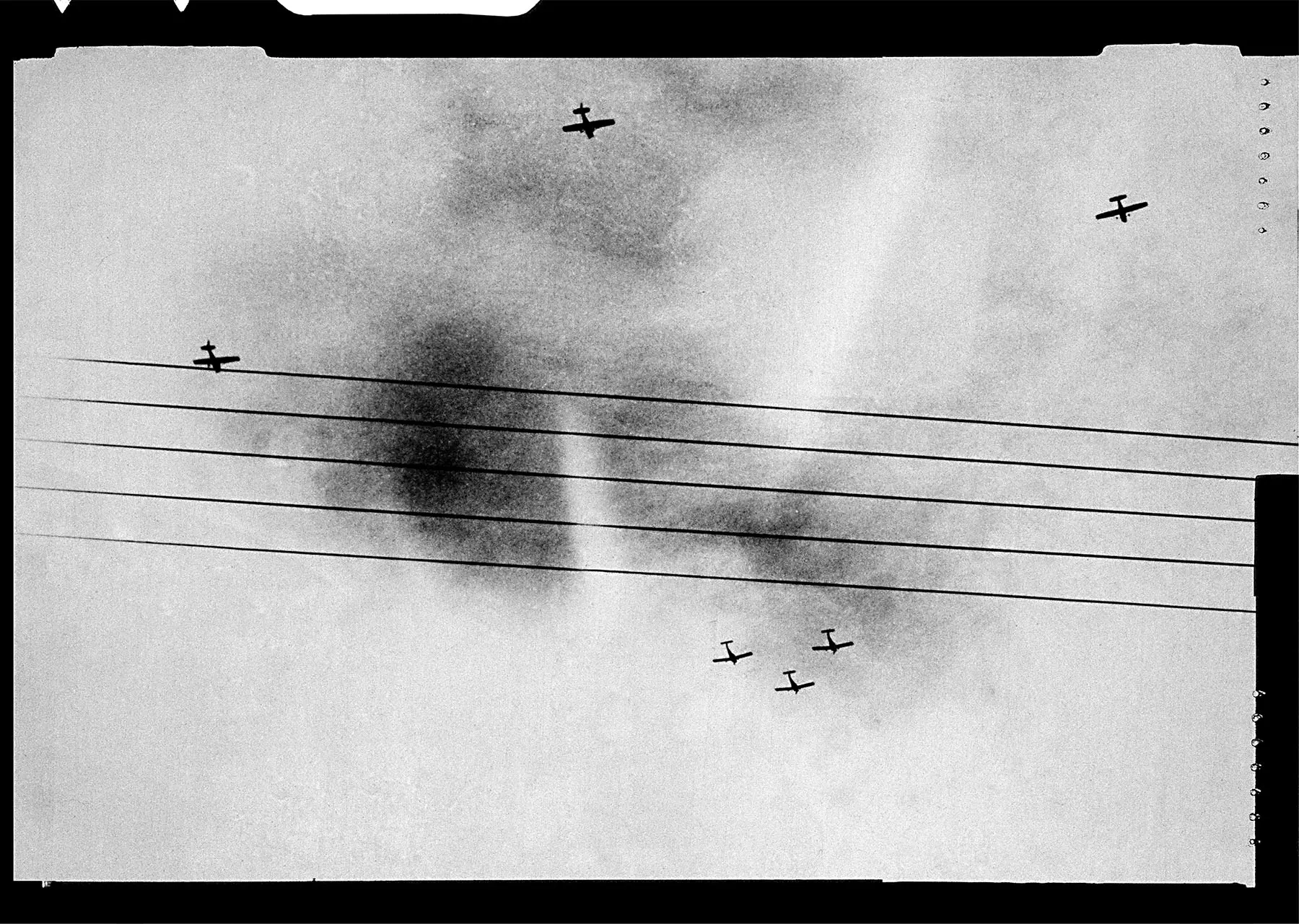
At noon on July 12, 1981, a calm Sunday, six small airplanes in military formation dropped 400,000 fliers over Santiago, Chile. On each plane was a member of the Collective de Acciones de Arte, or CADA. Five individuals formed the group, including two writers who later achieved great renown, Diamela Eltit (born 1949) and Raúl Zurita (born 1950), as well as the sociologist Fernando Balcells (born 1950) and two visual artists, Lotty Rosenfeld (born 1943) and Juan Castillo (born 1952). The sixth participant was a visiting artist who had been invited to film the proceedings.1 At ground level, both casual passers-by and artists alerted to the act and enthused by the proposal read texts on the fliers:
For each man a job in happiness, which by the way is the only collective aspiration / their only wound / a job in happiness, that’s it.
We are artists, but every man who works for the expansion—even if only mental—of his living space, is an artist.
We say then that the work of expanding the usual levels of life is the only valid art event / the only exhibition / the only living work of art.
Oh, South America.
Thus working together we build the beginning of the work: a recognition in our minds, blurring in this way all professional boundaries: life as a creative act.
In the context of a city “occupied” by its military, where tanks circulated at all times or a car could stop to quickly grab a pedestrian, finding those airplanes dropping leaflets rather than bombs was completely incongruous. The text was not an advertisement for consumers but an invocation that appealed to reflection on life and art, and the identity of the individual and the group. In what was almost a poetic Dada act, CADA surprised the public. Chile, no doubt, wasn’t the Germany where Beuys coined the phrase Jeden Mensch ist ein Künstler (“Every man is an artist”) but a nation that had been under one of Latin America’s most hardened dictatorships for eight years and where every act was suspected of subversion or of undermining the State’s internal security. Appealing to the union of art and life in this repressive reality was an openly rebellious act, from a poetic and formal metaphor: airplanes can drop fire not only of pain but also disguised in words in order to open up new spaces of meaning.
This was not CADA’s first intervention in the city, nor was it the first testimony/manifesto of its ideas and utopias to transform that reality. But it was one of the most visually forceful, and it was certainly risky. Art broke into everyday life, raised its voice, and subverted language structures to activate the collective memory. The lamentation “Oh, South America”—also the name of the action—appealed to a sense of remembrance, to an expansion of the boundaries of Andean men and women, and to the clarification of other boundaries for their actions. It was not an urban guerilla act, despite its boldness; taking advantage of the vacuum in the symbolisms and structures of power with regard to art, the group sporadically took over unexpected, unimaginable sites. Of course, museums and gallery spaces had ceased to encompass meaning, and thus the meaning, the action, and function of art could be located outside those institutions and in the city itself.
In 1979, four future members of CADA participated in an exhibition in homage to Goya at the Goethe Institut in Santiago, one of the few spaces that allowed local artists to present more experimental events. Lotty Rosenfeld and Juan Castillo showed some objects, while Diamela Eltit and Raúl Zurita distributed three manifestoes, authored by the latter. They struck a conversation and found common sympathies. From the earliest meetings in their homes, the idea emerged of forming a multi-disciplinary group; they invited the sociologist Fernando Balcells to join them and immediately came up with a name for the group and an idea for their first action.
From the very concept of CADA, an acronym intended to be neutral, the group made a fundamental distinction in its principles: they defined the group as a collective that erased the individuality of its members, which allowed them to include other collaborators and open spaces for interaction. During those years, working in groups was a viable form of collaboration; in fact, the members of CADA had belonged to different groups before or participated in political organizations.3 Castillo and Rosenfeld had worked together and continued to do so while CADA existed. Being part of a collective didn’t preclude them from carrying on with their individual work; on the contrary, their creative processes and their experiences in other fields gained impetus after they formed the group.
CADA did “art actions,” rather than happenings or performances. The distinction is essential: they wanted to act directly upon the context of the city as the stage for their work, rather than presenting cathartic or performative events focused on their own persons. Given the type of exposure they sought for their work, the objective, undefined public allowed them to broaden the spectrum of readings in a country where everything was silenced and any gesture would be interpreted against the background of the dictatorship.
To Not Starve to Death in Art
CADA’s first action, Para No Morir de Hambre en el Arte (“To Not Starve To Death in Art”), launched the group’s presence with a manifesto that articulated its programmatic intent. Indebted to the most radical gesture of the historical avant-garde, CADA at the same time used the contemporary materials and distribution methods of 1970s American and European conceptualism.3 Typed texts of a historical record and a strict description of the project explained the action’s concept, chronology, the general program, and a list of the spaces to be affected: a population center, Hoy magazine, La Tercera newspaper, the Centro Imagen art gallery, and the U.N. headquarters in Chile.
The published manifesto was a programmatic document about CADA’s ideas about culture and the function of art, with terminology taken from Marxist theory. In it, the group implicitly defends their collective work with the need for social and participatory art, but above all, they display an ideological vocation regarding the function of art in the creation of national culture. For CADA, art must reject its elitist status and create “collective experience of appropriation of life."4 This is to say, art as experience is anchored in life itself, and life itself is its material support, its product, and its purpose.
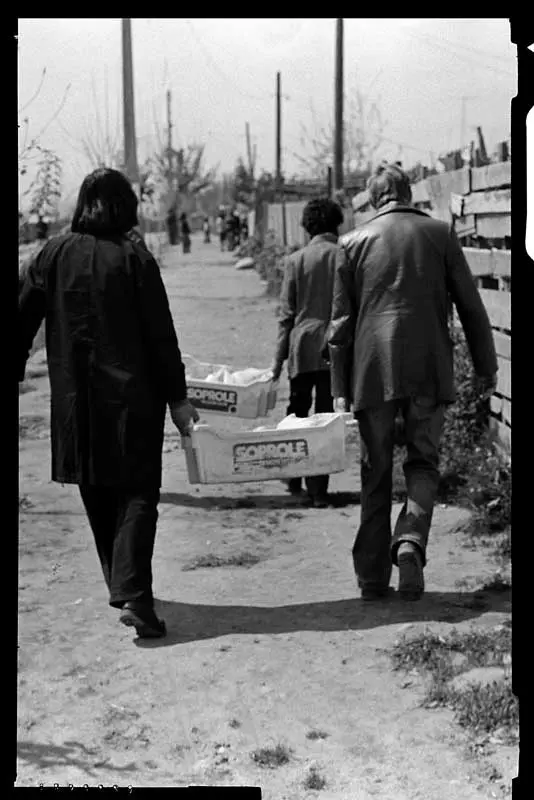
Para no Morir de Hambre en el Arte consisted of the distribution of 100 liters of milk to 100 families in a population center. Each plastic milk bag was printed with the phrase “1/2 litro de leche.” Also printed was: “Each milk bag to be distributed will have printed on one side a textual document, which begins to operate as the element of equivalence between the individual who receives the milk for consumption and the art product that takes the milk as support and information vehicle."5 That same day, the one-page text No es una aldea was read in front of the U.N. office in Santiago in the organization’s five official languages: English, Spanish, Chinese, French, and Russian. Recorded on tape, it referred poetically to Chile’s daily reality and defined it in a heartbreaking way, describing the hunger, precariousness, and urgency of the moment and extending them to other places in the world.
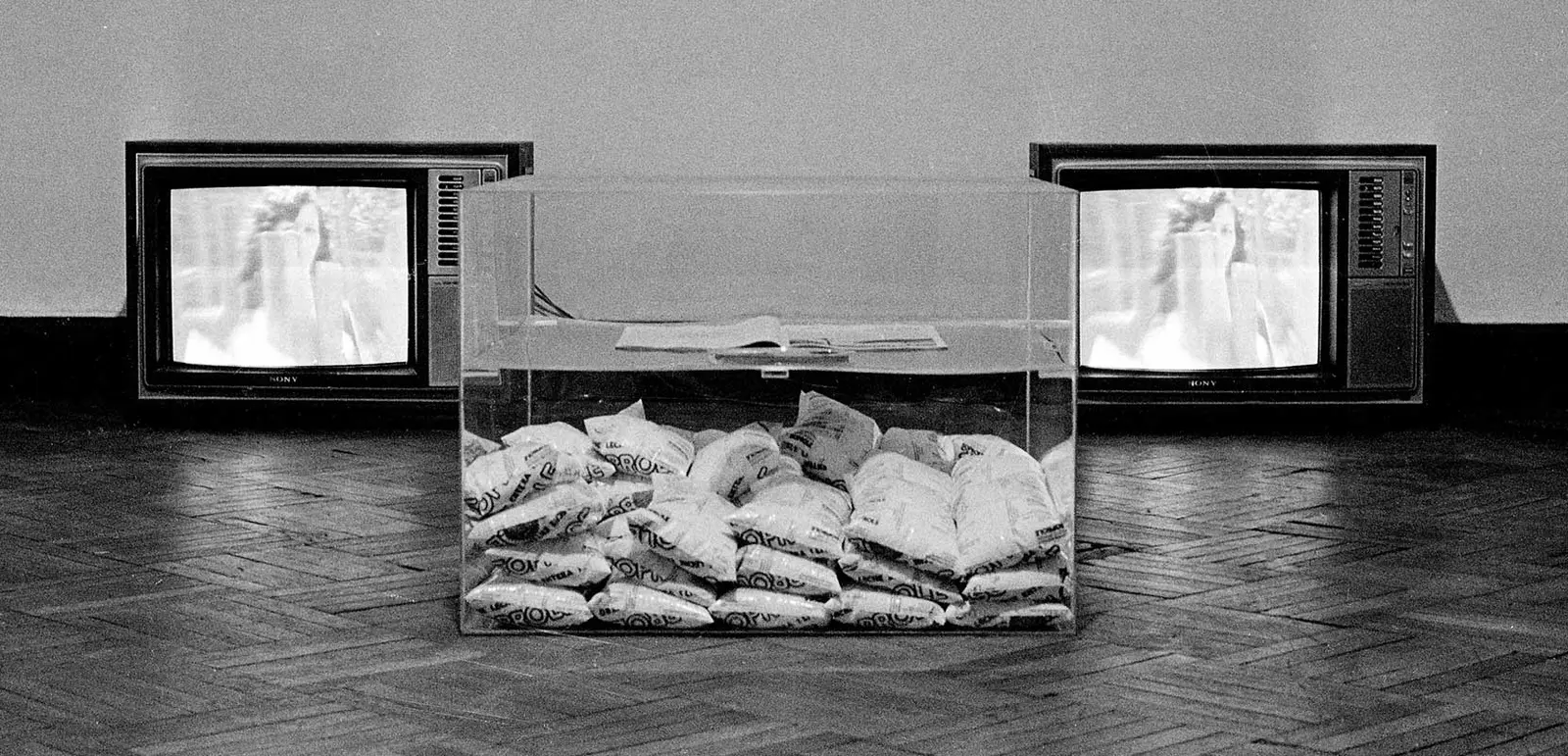
Once the milk had been distributed, the members of CADA went to the Centro Imagen Gallery and placed sixty milk bags inside a sealed acrylic box, next to the recording of the text read at the U.N., and a copy of Hoy magazine with a short, full-page poetic text printed like an advertisement. Other artists and the public were invited to reuse the recovered plastic bags as supports for works of art. The ones that remained inside the sealed box, which prevented their consumption, continued with the work’s process of decomposition. All the actions were documented in video and shown for a month in the gallery.
CADA had called upon artists in Colombia and Canada to do an action simultaneous to Para No Morir de Hambre en el Arte. The artist and poet Cecilia Vicuña distributed posters in Bogotá, and at noon on the same day of the milk distribution, she spilled glue (a substitute for the milk) and wrote a poem on the asphalt in front of Quinta Bolívar. Vicuña alluded to a situation in Colombia where the sale of adulterated milk caused the death of more than 1,000 children per year.6 In Toronto, in front of City Hall, Eugenio Téllez drank a glass of milk and read a text about the economic differences between countries—the scarcity in some and the abundance in others.
CADA’s actions broke open everyday social situations, politicizing life in the city without undermining the poetic act: “The work is: A glass of milk spilled under the blue sky."7 Robert Neustadt, author of CADA DIA: La creación de un arte social, demonstrates that the reference to milk and the poetic phrases that appear in the group’s first manifesto was Zurita’s contributions. Undoubtedly, the phrases and even the action itself evoke the poet’s text, and even Manuel Rojas’s famous short story El vaso de leche, which all Chilean schoolchildren must-read. It was obvious in that political context that the realization of Salvador Allende’s promise to give a half-liter of milk to every child every day became an act of vindication, while Para no Morir de Hambre en el Arte alluded to the condition of the artist.
CADA appealed to the remainder of historical memory in each of its actions, and language was the form of communication. Playing with dual meanings, the group stimulated ideas for action and communicative complicities beyond mere intellectual games in those who were receptive. While conceptual artists had used publications as supports (for instance, Homes for America by Dan Graham), CADA’s gesture was much more radical. The text published in Hoy even surpassed the written sign by using the white page not only as support but also as meaning:
Imagine this white page / reaching all corners of Chile / like daily milk to be consumed. / Imagine each corner of Chile / deprived of its daily ration of milk / as white pages to be filled in. / Colectivo de Acciones de Arte/ Chile / October 3 / 1979.8
An Inversion of the Scene
A few days later, on October 17, the city witnessed another unexpected action involving milk and consequently interpreted it as an extension of Para no Morir de Hambre en el Arte. Ten trucks from Soprole, the national producer of dairy products, stopped in front of the Museo Nacional de Bellas Artes in downtown Santiago. Inside each truck, a monitor displayed a video of a caravan through the city; according to witnesses, it resembled a line of military vehicles. At the same time, a group of collaborating artists placed a giant white canvas in front of the institution, between two flagpoles. By blocking the entrance and “censoring” the museum, CADA inverted the scene of representation in the official institution, the sacred space of art under the dictatorship. With the canvas as a curtain to the city, the street became the sign and the new context for interpreting the video, to which art was obliged to turn.
For a second time, CADA employed a managerial strategy that involved institutions and companies that did not realize the full meaning of the action and contributed to the project, being deceived by the prospect of free publicity. The first one was Hoy magazine, with the full-page advertisement; then, Soprole, which later had to change its logo after it was unable to recover the video made for CADA. Later, in the Ay Sudamérica action, the owners of civilian planes and the municipalities that received the 400,000 pamphlets dropped from the air authorized the use of their aircraft and airspace in a context of censorship and repression, one still very much in place in 1981. These entities became participants in actions conceived by CADA without knowledge of their visual effects, in a city whose visual signs had acquired increased potency.
At the time, there was a fractious debate about the function of art and the participation of artists in social processes, and CADA’s texts were read in contradictory ways. Many in the art world collaborated and supported them, but others criticized their “messianic” tone as well as the strategies and supports used. Video and monitors were seen as expensive technologies, and as such, elitist. The means of distribution—commercial trucks, publications, airplanes, large purchases of products, etc.—were also seen that way. But these elements were the result of brilliant management and the desire to deploy technology as a medium for recording and remembrance. What’s interesting is that CADA heralded the use of video because of the ability to reuse it in an artistic situation within the reality of Latin America, where the scarcity of resources and the inability to replenish stock enforced the use of goods, like clothes, until they fell apart.9 The mediums of video and photography allowed CADA to capture other actions, such as their forty-eight-hour fast in an abandoned factory, done after Para no Morir de Hambre en el Arte.
Art’s ability to transform a life or social structures as a project is, to be sure, an old utopia of the historical avant-garde. But two important things need to be taken into account here: one is the historical moment in Chile in 1979, and the other is the history of Chilean art. Art had to take action where there were no spaces for critique or for historical reflection. And Chile had never had an avant-garde with well-defined assumptions and programmatic manifestoes that pointed toward a modern project of identity in the arts. Precisely in those same years, under the difficult conditions imposed by the dictatorship, the re-foundation of another artistic experience was carried out, one that deeply questioned art history and art practices.
CADA became part of what Nelly Richard has called the “forward scene,” alongside artists like Carlos Leppe, Eugenio Dittborn, Carlos Altamirano, Catalina Parra, Francisco Brognoli, and Virginia Errázuriz, who investigated and interrogated culture but with the support of and in relationship with art institutions.10 There were forceful debates and confrontations between these two artistic tendencies, even as their practices coincided in disarticulating the discourses and narratives of the art that preceded them. Their proposals attempted to invigorate the image and, above all, question the structures on which rested the aesthetic principles and assigned values of Chilean pictorial and sculptural traditions. Even so, their methods diverged, as did the social function they assigned to art and the public to be addressed. For Richard, CADA’s political project and its “messianism” undermined and conditioned the work of art, sacrificing other “elements of visual radicalism.” Other artists in the “forward scene,” however, were effective in the subversion of the signs and aesthetic values of a work of art. In my opinion, within the avant-garde intent of the proposals and projects of the artists of this scene, analyzed by Richard through the theoretical framework of French post-structuralism, CADA went beyond merely subverting the meaning and function of art in their actions. The strategies used in the management and insertion of their works—the presentation formats and means—were much more radical and effective in their transgression. Moreover, they sought a mode of collective creation that would eliminate individual authorship, something entirely novel in their context. Seen under this light, the other positions could be considered elitist, as being trapped within the traditional circuits of art action. And, in that sense, the disagreements were obvious.
NO +
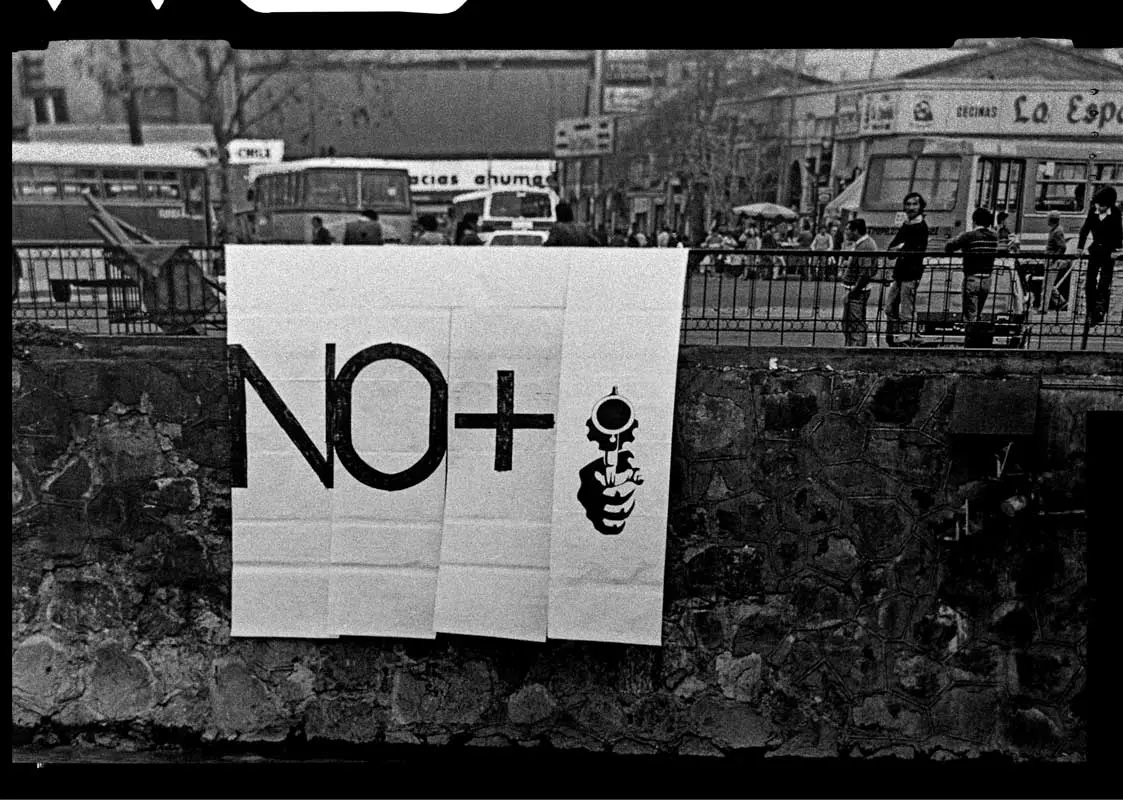
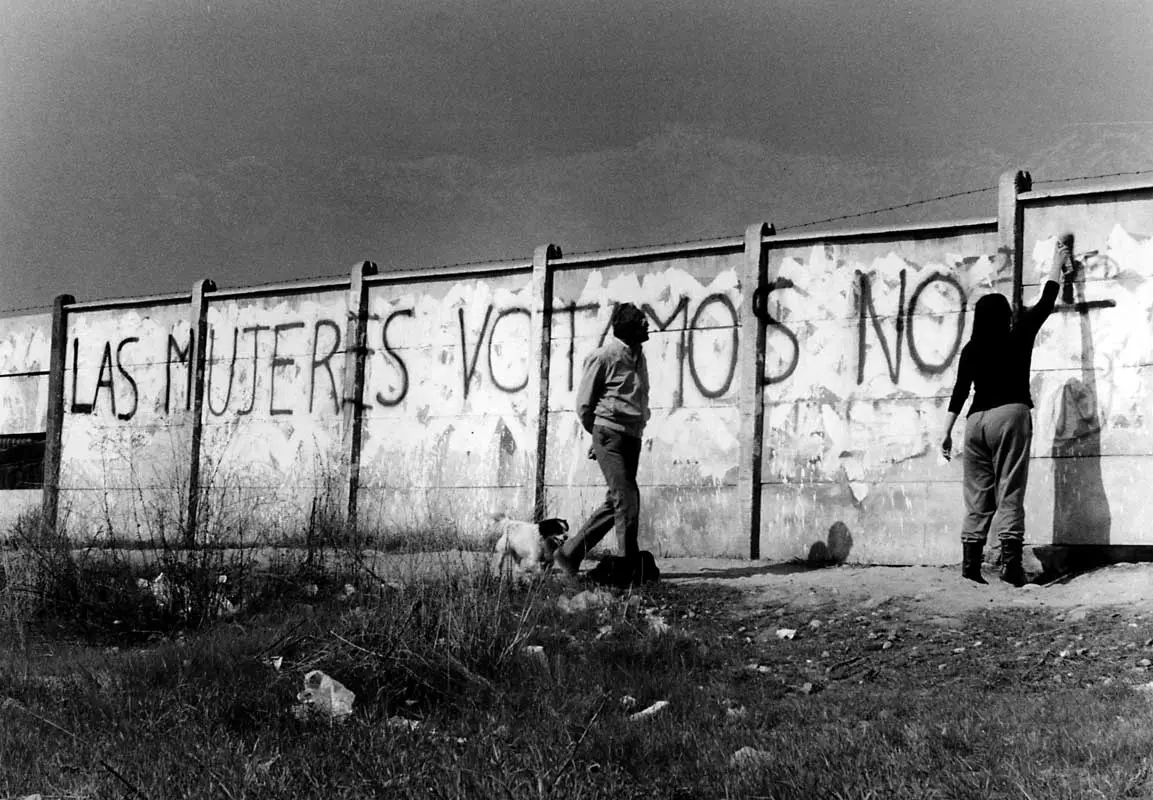
Although CADA’s actions transfigured the urban landscape by unfolding signs or inverting their meaning, NO + was their more potent and significant intervention in the city and achieved a visual gesture that lived beyond its traces on the walls and was assumed by the community, anonymously. Between late 1983 and early 1984, CADA and other artists went outside and scratched on the city walls the words “NO +” (read as “no more” in Spanish). It was an unfinished invitation, and it wasn’t long before other words appeared: "NO + torture," "NO + Pinochet," "NO + guns." The anonymous nature of the sign favored immediate appropriation, and it became a slogan throughout the city, entirely erasing its authorship. NO + was to be present in Santiago all the way through the plebiscite process in 1988–89, when the “NO + Pinochet” triumphed.11
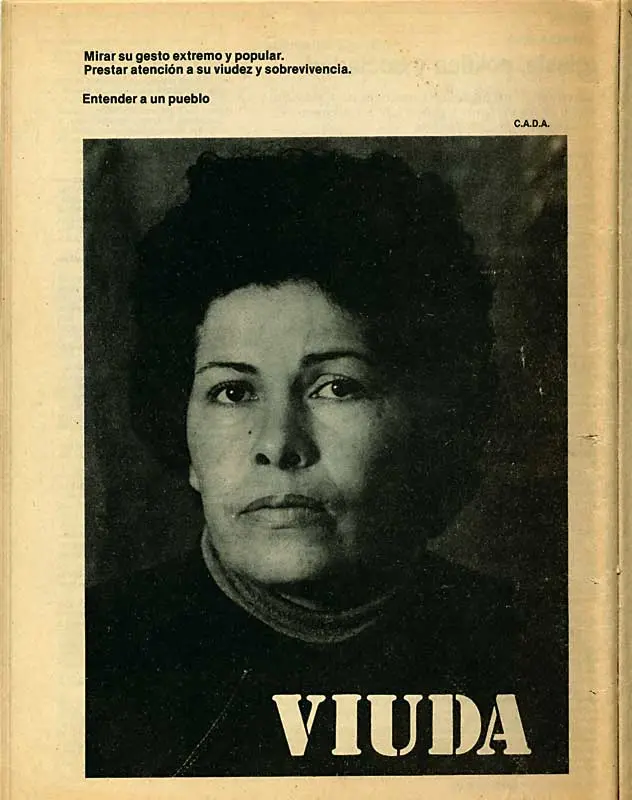
After NO +, the last CADA action occurred in 1985, without the participation of most of the members. Fernando Balcells left the group in 1983, due to differences of opinion; Castillo had moved to Europe; Zurita and Eltit were separating. Accomplished with only Lotty Rosenfeld and Diamela Eltit as full CADA members, the action Viuda took a photograph taken by Paz Errázuriz of an anonymous woman who had lost her husband in a military raid and published it in several magazines (Análisis, Hoy). The unnamed face of this woman appeared under the signature of CADA and Mujeres por la Vida.
By the mid-1980s, Diamela Eltit had published her first novel, Lumpérica (1983), which would become a point of reference for Chilean and Latin American literature. Raúl Zurita had also published several of his landmark poetry collections—Purgatorio (1979), Anteparaíso (1982), Canto a su amor desaparecido (1985)—which made him the renowned poet he is today. Lotty Rosenfeld had been developing her individual oeuvre since 1979, including the inescapable referent of Una milla de cruces sobre el pavimento, an intervention of white lines on the streets which, on crossing each other, became crosses, subverting the sense and meaning of the urban code.12 Juan Castillo also had a personal aesthetic, which he developed alongside his experience with CADA, such as the use of video, the intervention of abandoned sites in the city, graffiti and space occupation, etc. Fernando Balcells was a critic, writing about other artists in the “forward scene.” CADA had become a mandatory reference to discern the meaning of a whole period in Chile, parallel to the creation of art that sought inscription in daily experience and the critique of the art system and traditional aesthetics. The insurgency of life had led to the need for an insurgency in art. The Chilean avant-garde had been founded anew, and from then on there would be a “before CADA” and an “after CADA”, a line defining the aesthetics and practices in the 1990s and the early years of the twenty-first century.
NOTES
1. Patricio Bustamante and Juan Carlos Bustamante both filmed the action, one from an airplane and the other from the ground.
2. In 1974, Raúl Zurita and Diamela Eltit had belonged to the Grupo Experimental Antonin Artaud, a group organized by the Center for the Humanities at the Engineering School of the Universidad de Chile and led by Ronald Kay, one of the period’s key individuals, whose theoretical texts and publications began to open up a small cultural veneer in the country. Juan Castillo had an important formative experience at the Architecture and Design School of the Universidad Católica in Valparaíso, one based on the principle of bringing together everyday praxis and instruction through interventions and manifestations of “poetic acts.” He was also a student at Eduardo Vílchez’s Printmaking Workshop, which fostered dialog and debate among its members. Lotty Rosenfeld, a graduate of the Applied Arts School of the Universidad de Chile, belonged to Mujeres por la Vida, a political organization. She had created collaborative works with Castillo; the most significant action placed pictures of people who passed on the street in Santiago’s Forest Preserve Park, which they later showed in an exhibition for human rights at the San Francisco Church. From the author’s interview with Juan Castillo, December 2007.
3. Wolf Vostell’s show in Santiago, organized by Ronald Kay in 1975, was an important precedent for Juan Castillo and Lotty Rosenfeld because of the materiality of the German artist’s work and his actions with Fluxus.
4. Robert Neustadt, CADA DIA: la creación de un arte social (Chile: Cuarto Propio, 2001) 107–113.
5. Ibid., 119.
6. Ibid., 29 and 181.
7. Ibid., 115.
8. Ibid., 150.
9. In documents presented at the Video Biennial in 1980 and 1981, at the French-Chilean Cultural Institute.
10. Nelly Richard defines the “forward scene” in a text that offers some keys: “The configuration of the scene called ‘forward’ has been characterized for the extremity of its question about the meaning of art and the borderline conditions of its practice within a highly repressive society. By having dared to bet on creativity as a disruptive force against the order administered in language by authority figures and their grammar of power... It insists on nullifying the privilege of the aesthetic as a sphere that is ideally unengaged with the social (and its grid of oppressions)... Marked by the emergence of the practice of explosion in the minefield of language and representation; only [with] the construction of the fragmentary... [are] they are able to account for the state of dislocation of the notion of a subject that those fragments portray as a unity made irretrievable... They re-symbolize the real according to new keys not only of social meaning but also of the re-intensification of individual and collective desire. The election of corporeity as material for work [in] the art of performance or the intervention of the city and its network of transits in the “art actions” practiced by this scene, speak of reassigning values of critical processing to all the zones of experience that form a social every day; of producing critical interferences with those zones that encompass body and landscape as sites for censorship or micro-repression.” Nelly Richard, “Arte en Chile desde 1973: escena de avanzada y sociedad,” FLACSO, no. 46 (January 1987). www.memoriachilena.com.cl
11. An invocation from CADA to artists inside and outside the country appeared to promote the realization of the “great collective work of art against the hunger, violence, destruction, and imperialism that are exerted upon the ragged remains of our country . . . The invitation is for international artists to activate it in their own countries in any way they think appropriate.” At the time, Juan Castillo was living in Europe and Lotty Rosenfeld asked him to write an invitation. Using the modality of mail art with a specially printed envelope, he sent it to 300 artists. He went to the Netherlands with the responses, where the Stedelijk Museum in Amsterdam had been “occupied” by the artists in protest over the institution’s exclusionary policies. The CADA project was immediately adopted by the local artists and was inserted into the action of the museum occupation.
12. Lotty Rosenfeld was invited to exhibit at the latest Documenta in Kassel. Part of her action was to transform the lines in the streets, re-signifying them as crosses, which caused traffic confusion and the subsequent cancellation of her intervention.
DERMIS PÉREZ LEÓN
Independent curator and art critic.