Up until very recently, modern art in Colombia found itself in a paradoxical situation: while the established names in modernist visual arts (Obregón, Negret, Botero, Grau, Ramírez Villamizar) remained among the few points of reference in Colombian cultural history for the public at large, they cast a large shadow over other relevant careers in the process of consolidation of modern art in the country. This despite the efforts and contributions of important historians of Colombian art towards an interpretation of artistic and cultural phenomena, and the various visual art veneers that join into the complex category of modern art. Perhaps books have not been the most propitious vehicle for a wide appropriation of these historical processes on the part of contemporary Colombian society as a whole; it is through face-to-face encounters with the legacy of the country’s modern arts where a greater potential for it perhaps resides.
In the past few years, we have been able to observe a revitalization of research and interpretation efforts regarding this important chapter in the history of Colombian art. Many exhibitions and publications, and many ongoing research projects, are symptoms of this valuable process.
The show Cecilia Porras: Cartagena y yo, 1950-1970, held in Bogotá from October 9th through November 22nd, 2009, is, despite its title, a new example of a growing awareness of the situation, and especially of the Gilberto Alzate Avendaño Foundation’s institutional initiative to change it. This anthology exhibition of the work of the Cartagena painter was part of a cycle of shows devoted to the revision of the emergence of modern art in Colombia, which the Foundation has been carrying forward for around three years.
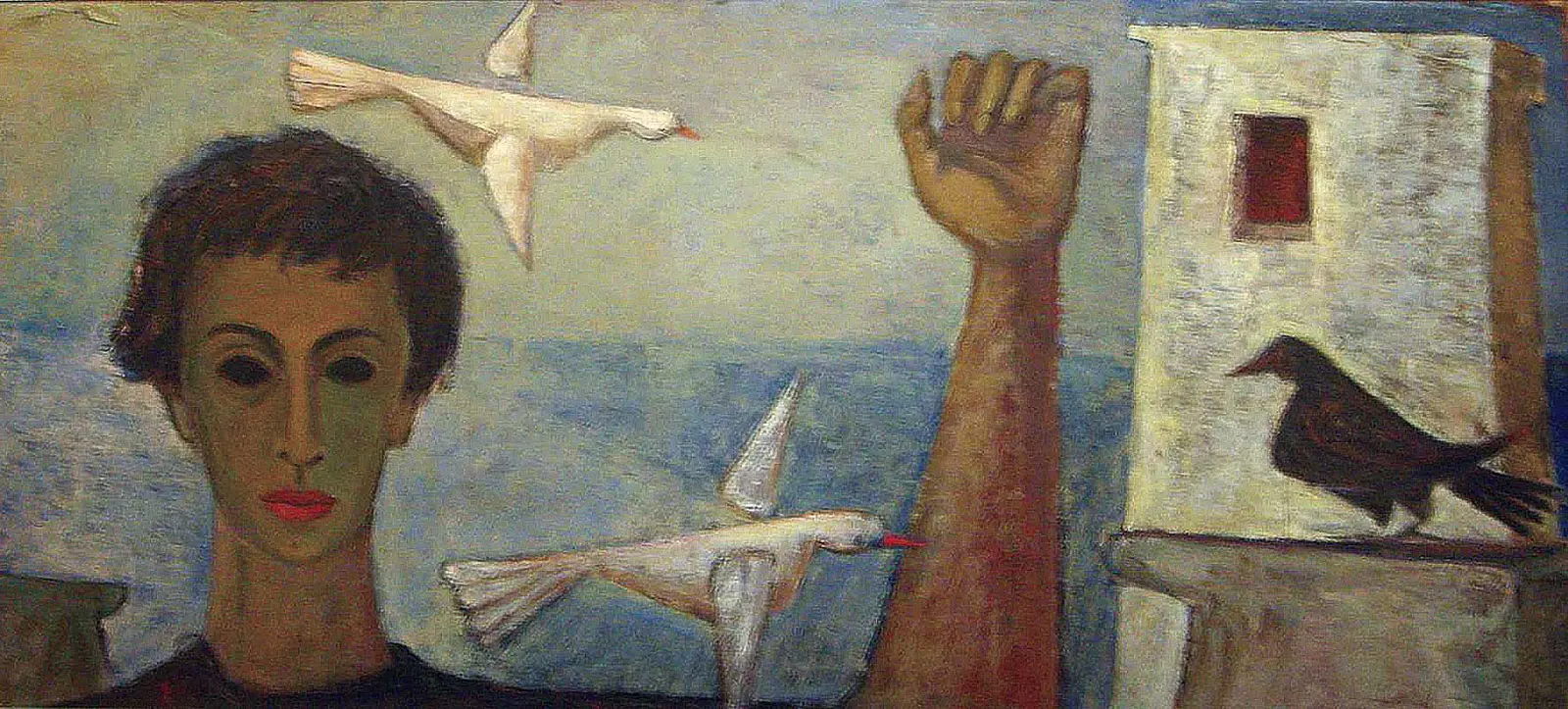
The work of Cecilia Porras is a key link in the post-war art scene in Colombia; her paintings reveal the transfiguration of traditional painting genres into supports for pictorial experimentation, a characteristic of Colombian artistic modernism. Porras is, also, an inescapable figure in the study of female presence in the cultural revolutions that marked the second half of the Twentieth Century in Colombia.
Several issues come to the fore when contemplating the important selection of paintings included in the show. Porras’ dialogs with her contemporaries, especially with Alejandro Obregón and Enrique Grau, are of great interest from the aesthetic point of view, because of the large number of visual events enriching her works during that formative process. It is also evident that those dialogs did not eclipse Porras’ quest for a poetics of her own; in fact, another interesting aspect of the show is the way in which it allowed us to follow the evolution of her work through those wonderful landscapes where, finally, the atmosphere of her paintings intensified thanks to the large chromatic variation she used. In her landscape paintings, Cecilia Porras was able to demolish the picturesque view of her native Cartagena through the judicious exploration of her own sensibility. The flow of sensations configured in her landscapes became even more appealing in her dream paintings, such as Rehilete, where Porras was able to generate a peculiar temporality, at once slow and light, as well as to present enigmatic visions of the female world, so scarce in modern art.
We were left, however, with a question about the influence that the group of intellectuals and artists in Porras’ circle of friends had on her work and, in that sense, her own contributions to the cultural transformations of the period, connected with, among others, the trajectories of the Cartagena group (Héctor Rojas Herazo, Gabriel García Márquez, Ramiro de la Espriella, Oscar de la Espriella, Gustavo Ibarra, and Clemente Zabala) and the Barranquilla group (Álvaro Cepeda Samudio, Alfonso Fuenmayor, Germán Vargas and again Gabriel García Márquez, among others).
SILVIA SUÁREZ