
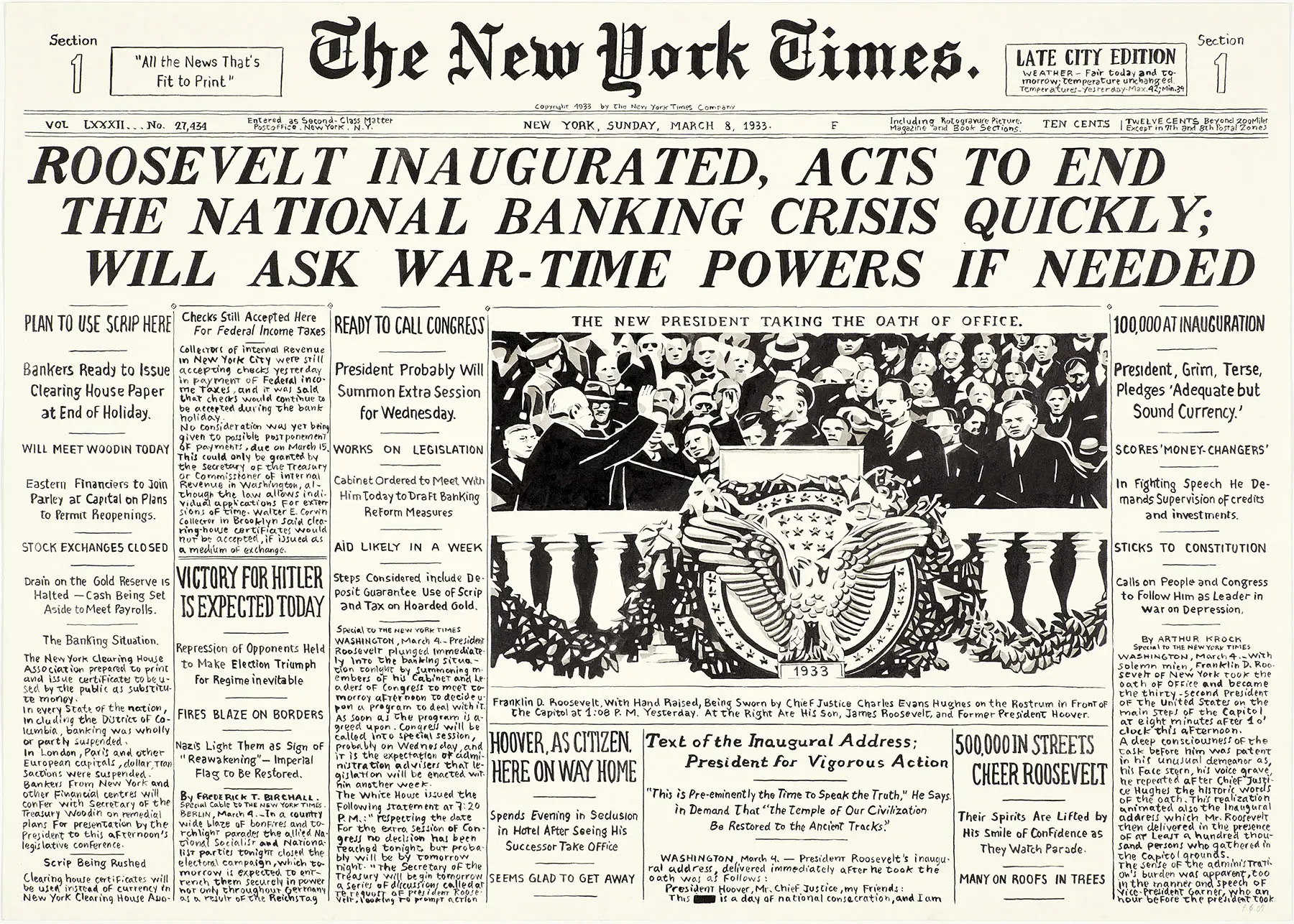
With his art, Fernando Bryce invokes the figure of the medieval copyist. Those specialists distinguished themselves from the rest of the period’s artisans for knowing the secrets of writing and being able to enjoy, to a degree, the power given by the nobility to educated clergymen and by the knights to their secretaries. Books were then the depositories of a prodigious or directly sacred knowledge, to which only a minority possessing the ability to read them and the skill, the time, and the patience to copy them had access. Most members of that rigidly hierarchical society were unlettered and could only approach God’s words through sermons by preachers, and edifying stories through the biblical images and scenes produced by painters, sculptors, and stained-glass artists for chapels, churches, and cathedrals. This hierarchy, as well as the proportion between literate and illiterate people, and between written and audiovisual culture, was gravely fractured by the invention of the movable-type press by Guttenberg, which did away with the craft of the copyist and lowered the cost of producing copies of books to the point of placing them within reach of the masses just as they —becoming the source of legitimacy for the modern State— were becoming more literate and transforming themselves into public for books, newspapers, and magazines, which characterizes modern society.
So, if we contrast Fernando Bryce the copyist with the literate, universally reading society that is the most enduring legacy of the Guttenbergian revolution, his figure can be seen as anachronistic, arbitrary, and eccentric. Because, Is there any sense in somebody devoting himself to using brush, ink, and paper to hand-copy books, magazines, newspapers, pamphlets, and billboards that are readily available for photographing, scanning, printing, or simply photocopying? Does he do this simply for the pleasure of copying something in his own hand? The pleasure offered by the kind of manipulation that actualizes the phase of anal eroticism where — according to Freud— a child finds enjoyment in playing with his own excrement? Or does he do this in pursuit of a radical emptying-out of consciousness of the kind achieved in Hindu religions through the ritual repetition of a mantra, which is probably the same kind of emptying-out pursued by French artist Opalka when he obsessively painted on the canvas, for years, using very fine brushes, the infinite series of natural numbers? Is it perhaps that for Bryce the stubborn copying of printed documents represents a personal way to access Nirvana? A libidinal motivation cannot be discarded out of hand because Bryce, like any other individual artist, is inevitably stalked by desire and fantasy. But the fate of his artistic project plays out at a very different level, the level of politics to be precise, where power and power relations also come into play. When we review his work in detail and realize how important it is in the copying of political documents, we must conclude that this predominance is certainly decisive. And that imposed upon the pleasure of the copyist is the deliberate purpose of calling attention to the politics openly or elliptically expressed in printed documents that are, furthermore, archived for being historical. Or vice versa: they are historical for being archived. In this crucial point, his case is very different from Picasso's composing collages of newspaper clippings about the war in the Balkans or the massive peace rallies against the imminence of a war that would engulf the entire world and become known as the Great War. Picasso was interested in those newspapers only as the source for the aleatory materials for compositions, his collages, that are purposefully devoid of meaning.
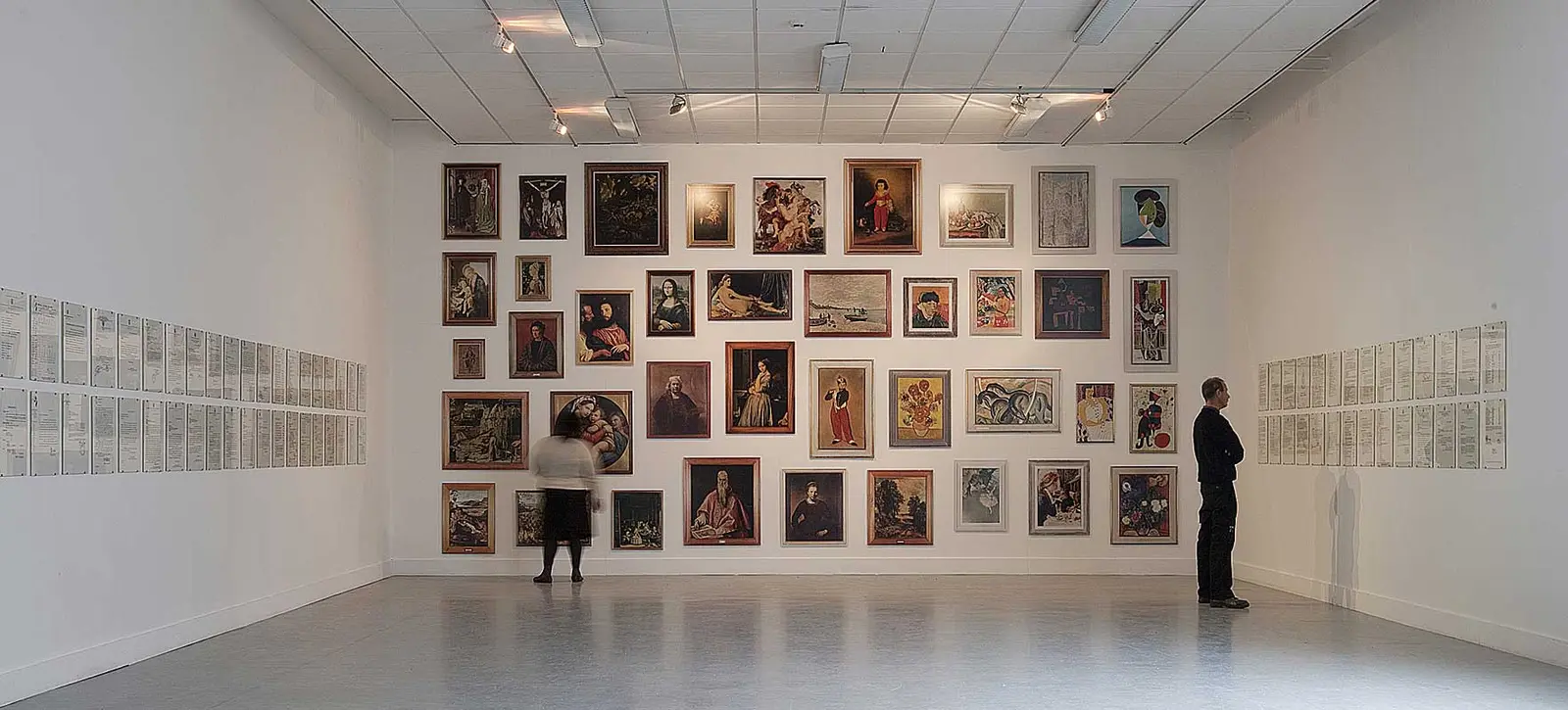
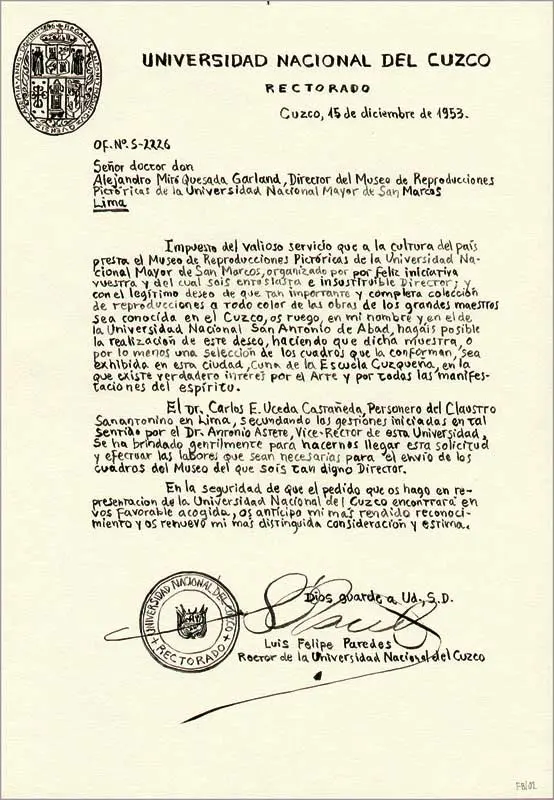
In Visión de la pintura occidental —the complex installation he presented in the Latin American pavilion organized by IILA for the Venice Biennale in 2002— Bryce referred his interest in the manual copying of documents to the territory of contemporary Latin American culture, always menaced by the fear of having its achievements disqualified as mere copies of models or paradigms generated in Western metropolitan centers. A disqualification upon which both local nationalists and foreign critics, militant in their defense of the primacy of the Metropolis, tended to coincide. The opportunity to establish this reference was offered to Bryce by the formal request that the director of the Peruvian Air Force Academy made in the 1960s to the director of the Museo de Reproducciones of the Universidad de San Marcos in Lima. The Air Force director asked for the Museum to lend his institution a sufficient number of reproductions of modern and Avant-Garde paintings, in order to mount a show for his Academy’s professors and the Peruvian Air Force’s future pilots established the first contact with modern art. An art that most likely remained an unidentifiable visual object for the immense majority of Peruvians. With the simple selection of this historical episode, Bryce brought to the fore the copy’s paradoxical claims to originality and the claims to authorship for the copyist that, in his way, Borges had already explored in Pierre Menard, autor del Quijote, four decades before Cindy Sherman’s similar action in the New York art scene of the 1980s.
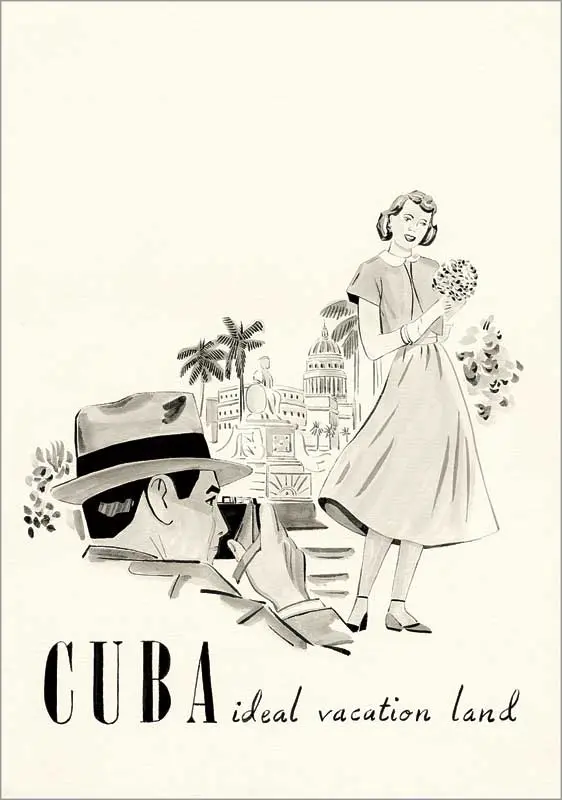
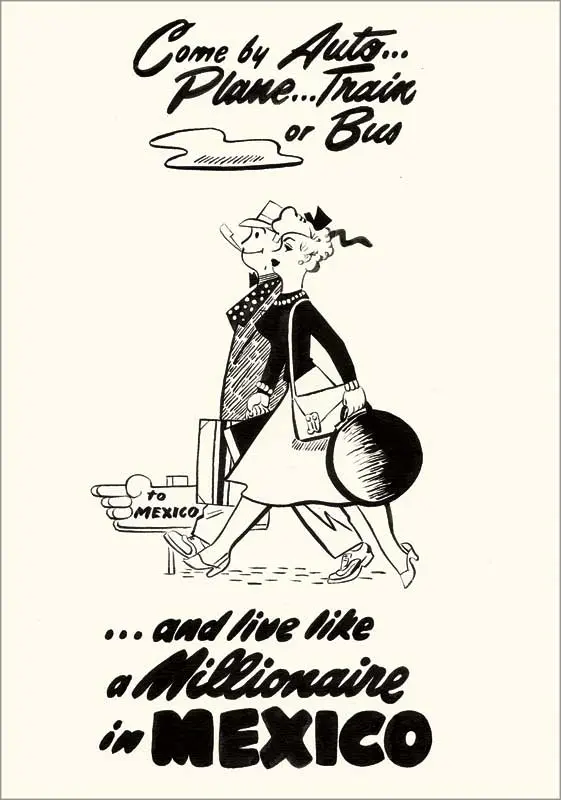
After that, Bryce’s interest moved in three main directions, which, although different, do establish revealing connections. The first direction wants to question the visual codes and stereotypes coined by hegemonic power both at the national and international scale in order to interpret and represent the reality of subaltern countries. Inscribed here are series like the drawings of Atlas Perú (2003), devoted to Peru’s contemporary history and created on the basis of highly heterogeneous documentary sources. Or the series Cuba and México (both from 2002), based on tourism pamphlets intended to introduce those countries’ supposed or real natural marvels to an audience of North American tourists.
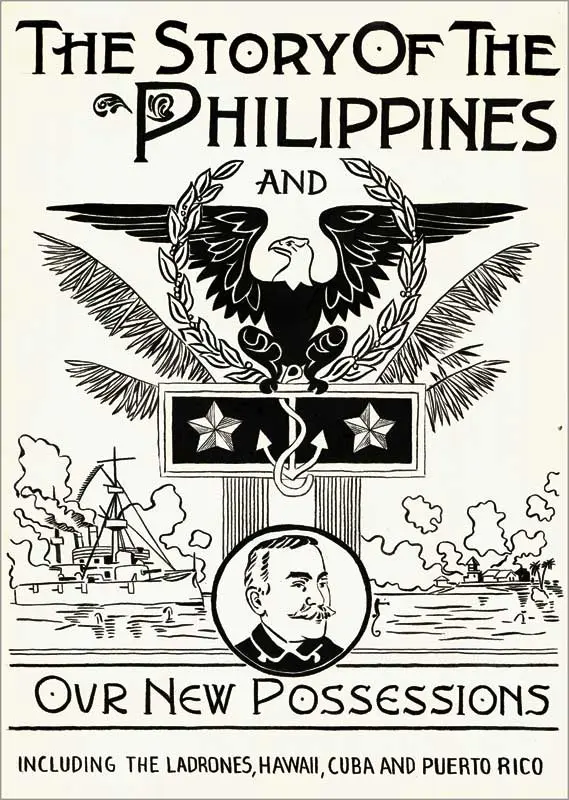
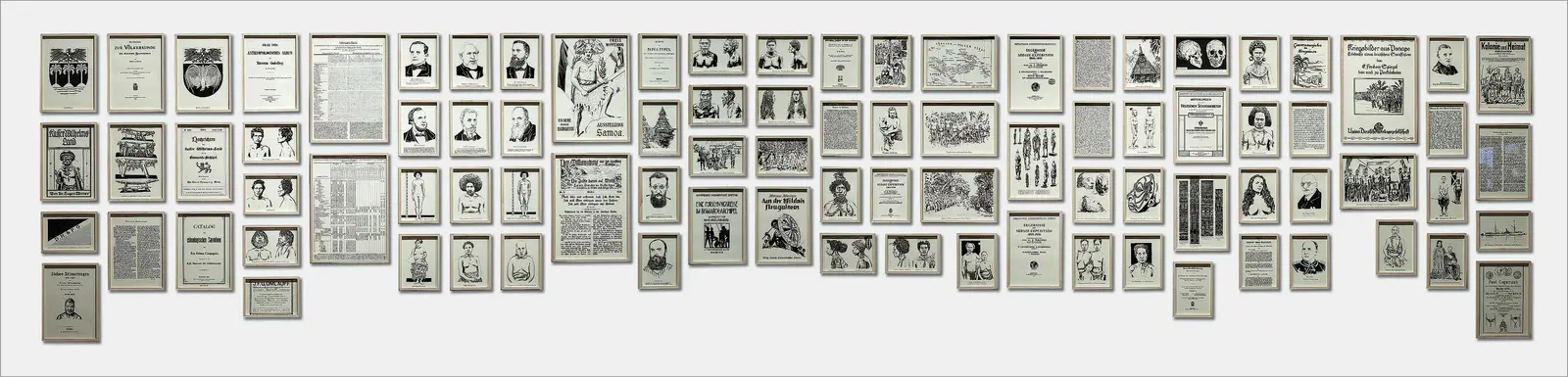
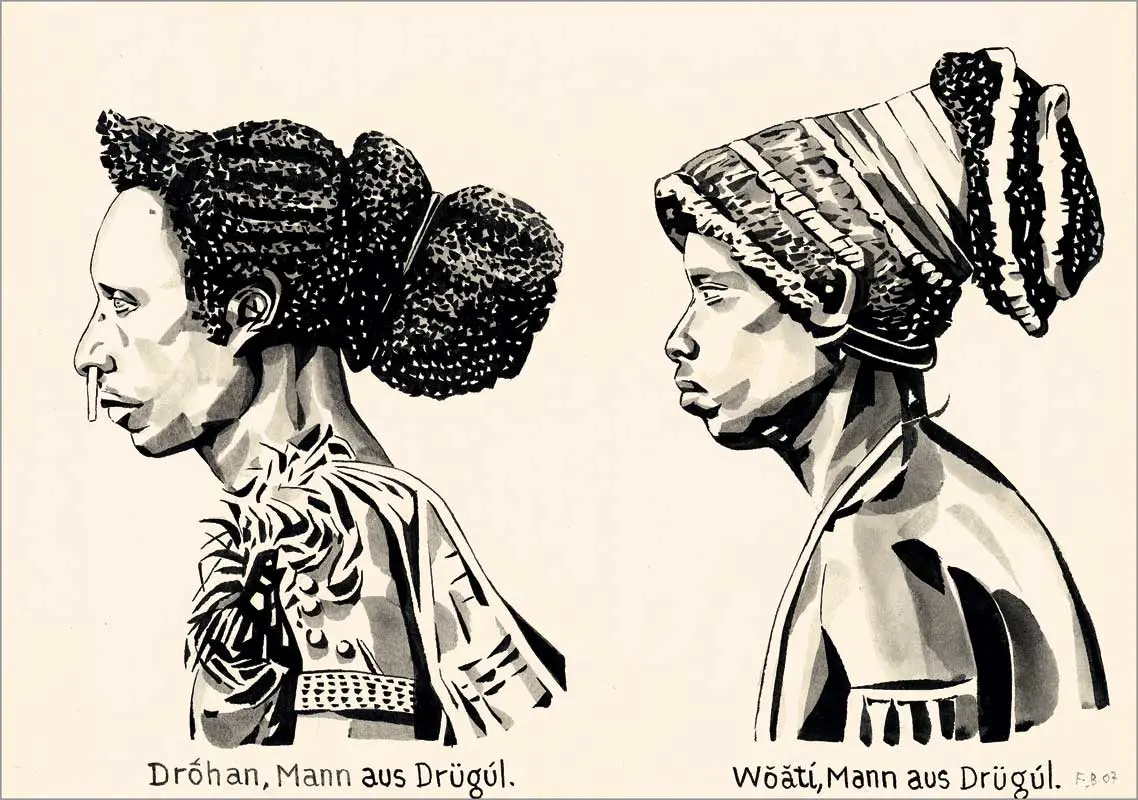
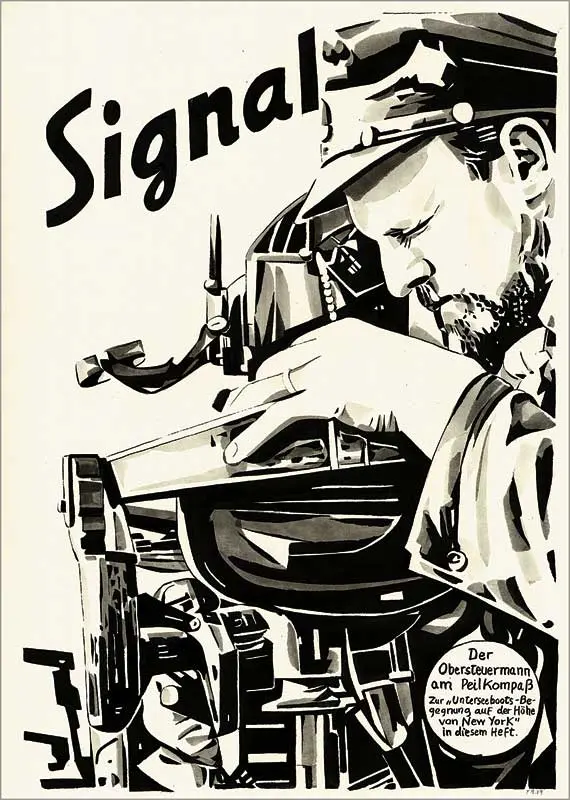
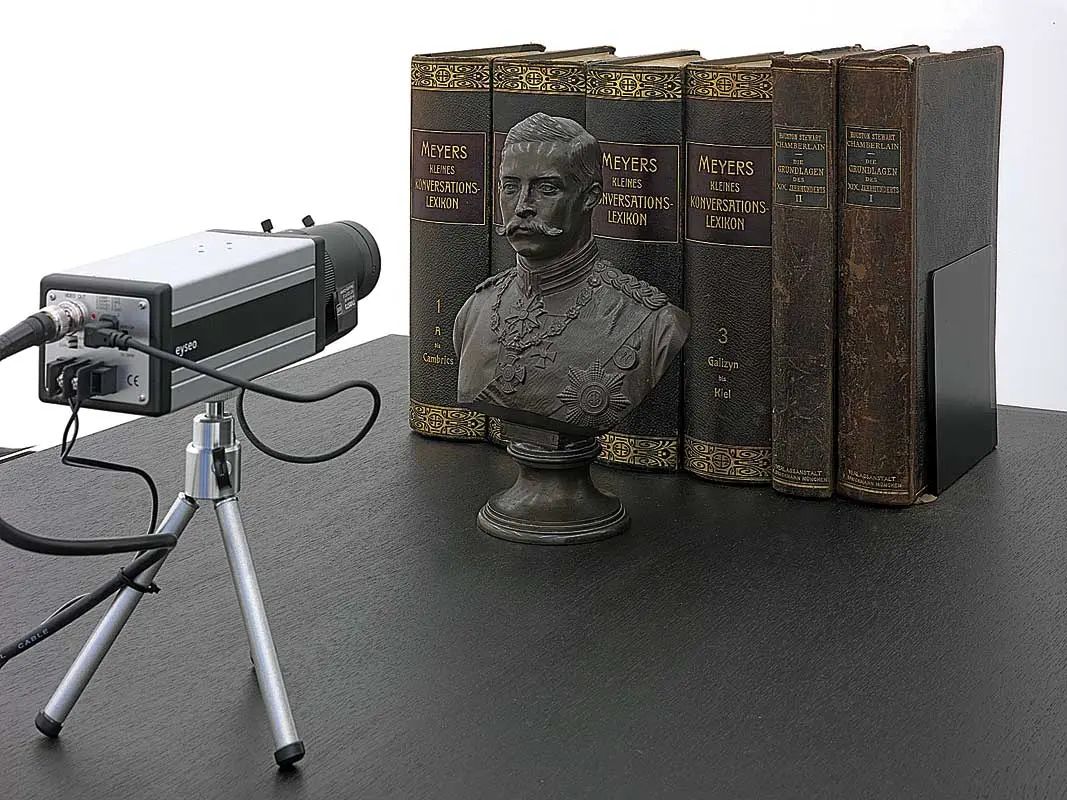
In the second significant direction in which it moves, Bryce’s parodic intention chooses as its object magazines and publications from the Western powers where governments, armed forces, universities, and research institutes, as well as important business concerns, presented their analysis, policies, and projects concerning the colonial world. Bryce has explored such publications in works like Südsee, which gathers a group of copies of the drawings used by ethnologists to illustrate their descriptions of racial features among the peoples of the islands of Oceania, known to German colonizers as the Bismarck Archipelago in honor of the Iron Kaiser. And in works like Kolonie und Heimat, comprised of hand-made copies of covers, interior pages, and illustrations in which the Motherland imagined its colonies. This, is with respect to the Germanic world, to which Bryce feels a special connection after many years of residence in Berlin.
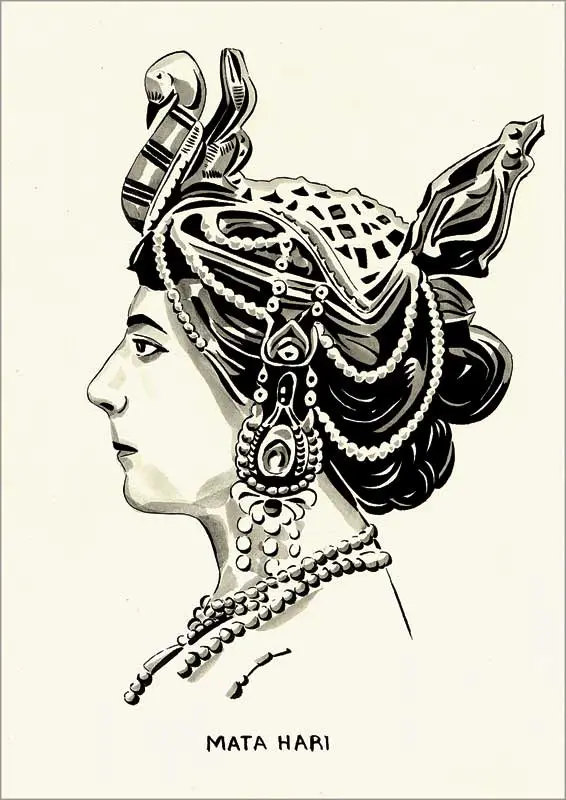
With respect to the Anglo-Saxon world, Bryce has centered his attention on magazines like Foreign Office and The East Asia, whose contents suggest the importance of a knowledge of history for any understanding of events taking place in the present. In fact, although the artist focuses on copying the abstracts and selected articles and specific pages, the final result provokes in the viewer the desire to know the doings of the Great Powers, with Britain and France in the lead, during the crucial historical period starting in the 1920s after the final defeat of the Ottoman Empire and its deliberate fragmentation into the multitude of countries that still populate the map of the Middle East. “Those waters generated this mud,” is the conclusion we inevitably reach after seeing this series of revealing images, a product of applying what Bryce calls not a copy but the “mimetic-analysis method” to documents that unexpectedly illuminate the painful legacy left by the West in that region, crossroads to the world, where three bloody wars currently rage on. And Bryce further clarifies the reach of these works in the following terms: “The question is to in some way force a contemporary gaze on events from a past to which we are connected through many genealogical lines, within a pattern of power that, in my opinion, remains substantially the same to this day."1
Concerning The East Asia, it should be said that this magazine has offered Bryce a chance to detail, in the course of the interview quoted above, his specific methodology: “I reviewed every issue of Asia, encompassing a period of almost thirty years (1918 to 1946). It is quite a trip. You are submerged in that visual and intellectual universe and combine the exercise of a gaze that selects images and text, with pauses to read entire articles (…) I must have taken some two thousand pictures from that publication."2
Also in the same direction within Bryce’s work, in terms of ideological rather than thematic affinity, is the series he devoted to Américas, a publication of the OAS, which reproduces pages from issues that first appeared in the 1960s and 1970s. And also Iraqi Art Today, based on a publication devoted to modern art in Iraq in those same years, which in connection with Bryce’s Visión de la pintura Occidental shows how in the 1950s and 1960s modern art was the protagonist of a wave of internationalization in the art world that is a direct precedent for globalization in the postmodern context. In Latin America, at the time we had the São Paulo Biennial, and the Middle East had the Alexandria Biennial; nowadays, we still have São Paulo, and they have the Istanbul Biennial —not to speak of the strategy of transforming Dubai into a point of reference for the globalized art scene, through mega-projects such as the replicas (copies?) of the Louvre and Guggenheim Museums in the Emirate.
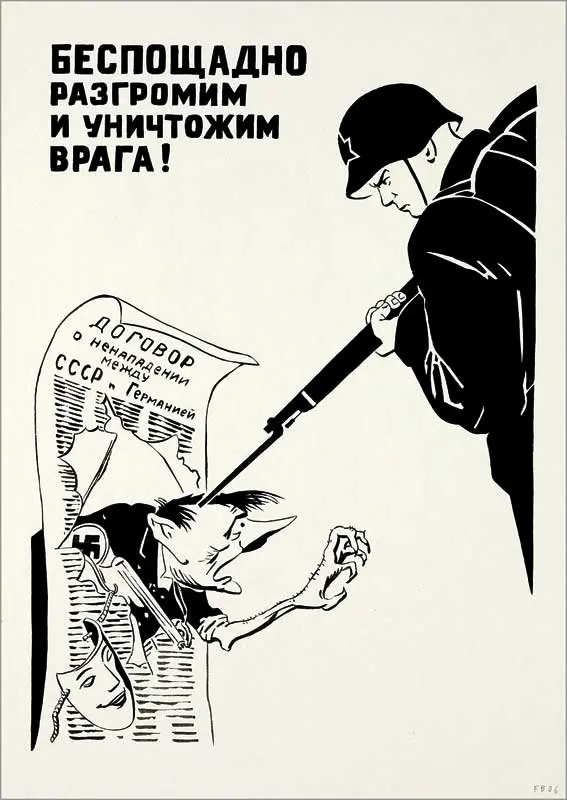
The third direction of Bryce’s work has as its general theme the revolutions and revolutionary movements of the Twentieth Century. To this group belong Guatemala 54, based on documents of the period referred to the coup against President Jacobo Arbenz, a coup promoted by the United Fruit Company —whose interests were impacted by the Arbenz government’s policies— and planned by the CIA. And also the works (from 2003) included in The Spanish Revolution and The Spanish War. On this occasion, the material culled by the Peruvian artist’s scrutinizing gaze come from newspapers and publications launched by Spanish political parties such as the Marxist POUM and the anarchist CNT-FAI who joined forces with other pro-Republic parties to confront the military insurgency led by General Franco, in turn, support from the start by Nazi Germany and Fascist Italy. Another work in the same direction is Revolution, a series of 219 drawings about the beginnings of the Cuban revolution and the revolutionary left of the period.
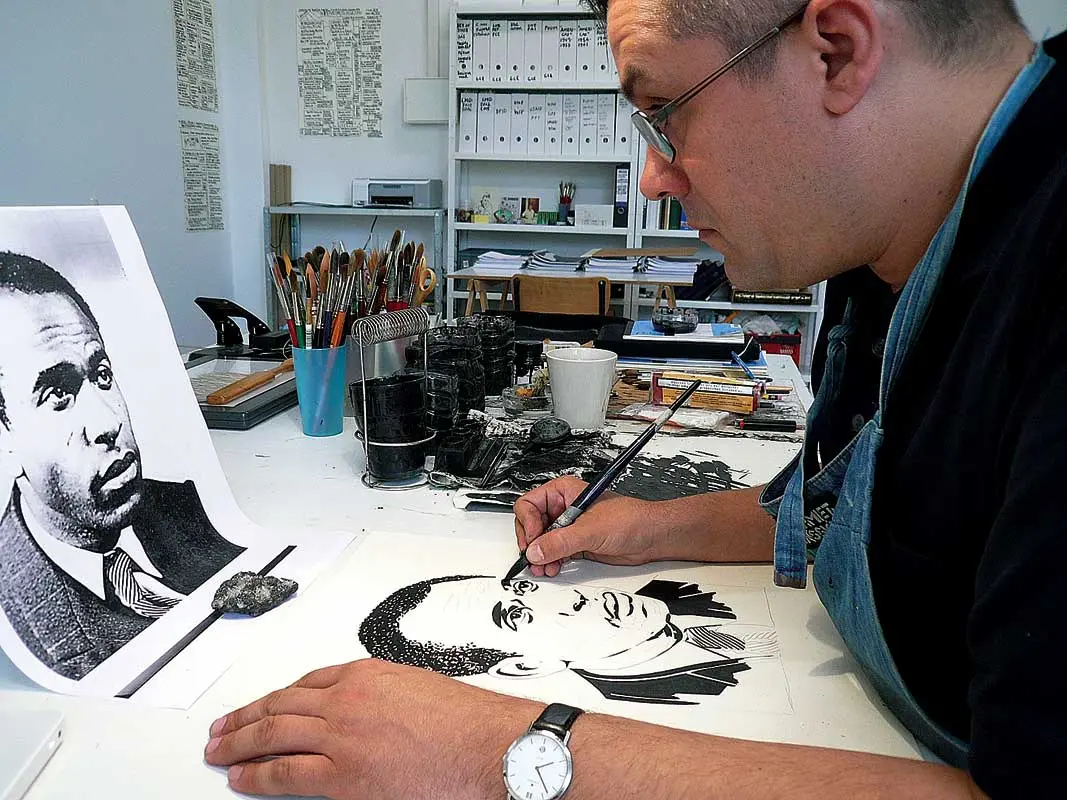
We can connect directly to this chapter of Bryce’s work his series Trotski, in which the artist, always faithful to his unique strategy of the copy, devoted to the founder of the Red Army expelled from the USSR by Stalin and finally murdered under the latter’s orders in 1940 in Mexico City. Also, Walter Benjamin is devoted to a thinker who has exerted great influence on Bryce’s work, in many aspects. Benjamin was the author of the famous essay The Work of Art in the Age of Mechanical Reproduction, which analyzes the brutal consequences of technical reproducibility on the status of art —and specifically on the concepts of originality and authorship— in the age of photography and film. Among these consequences, the most notable is the loss of the “aura” that surrounded the work of art in its traditional cultural context, and which marked also manuscript writing in the view of Gerald Martin, who in his biography of Gabriel García Márquez tells us how the writer burned all his hand-written notes for One Hundred Years of Solitude. Thirty years later he did the opposite and gave his wife, Mercedes Barcha, the first draft of Del amor y otros demonios as it came out of his printer. “He didn’t take into account,” Martin writes, that drafts have lost a portion of their magic —including their financial magic— in the computer age since the computer doesn’t allow us to trace genetic marks. In fact, the transition from handwriting to typing and then to word processing in part explain the thinning of the author’s aura in the mind of readers, and perhaps a decrease in the author’s own conviction."3 Bryce attempts in his work to revert this degradation of handwriting in the age of its full technical reproducibility, in a benefit not as much of an improbable re-sacralization of the manuscript as of a conception of history that is similar to that presented in Thesis on the Philosophy of History. There, Benjamin reclaims the concept of “historical constellation,” the relationship established between the current juncture and the past, and which, like the metaphor that characterizes modern poetry —capable of connections as unexpected as the one proposed by Lautreamont between an umbrella and a sewing machine on an operating table— produces an illumination or the dazzling revelation of an entirely new meaning. To compose such constellations is, definitely, the main purpose of Bryce’s current exploration of libraries and archives in the developed world, where the bloodied documents and records of the colonialism of the past are kept. But he has not only satisfied these motives, extraordinarily important in themselves. Like Pierre Menard, Bryce “has enriched through a new technique the slow and rudimentary art of reading.”4 A new technique that, in the case of Menard, Borges describes paradoxically as a “deliberate anachronism,” and which in the case of Bryce is embodied by the fertile use of the anachronistic art of the copyist.
NOTES
1. “Como un lentísimo fax”. Interview with Fernando Bryce. October 15th, 2006. Arte Nuevo. http://elarte-nuevo.blogspot.com
2. Bryce. Ibid.
3. Gerald Martin, quoted by Javier Rodríguez Marcos in “Adios a la buena letra,” El País, Madrid, October 22nd 2009.
4. Jorge Luis Borges. Pierre Menard, autor del Quijote. In Obras Completas, RBA. Instituto Cervantes, Madrid, 2005. p. 450.
*Images illustrating this article are courtesy of Galerie Barbara Thumm.
CARLOS JIMÉNEZ
Art historian and critic. Professor at Universidad Europea de Madrid. Lives and works in Madrid.