
I have always thought it extraordinary that one of the two meetings held by the Concrete artists after the celebrated journal Arturo took place in Grete Stern’s home.
The first meeting was at the home of Dr. Enrique Pichón Rivière on October 8th, 1945, under the name of Art Concrete Invention;1 the second was on December 2nd of that same year, at Stern’s house in Ramos Mejía.2 The house had been built by Russian architect Vladimiro Acosta, a promoter of modern architecture in Argentina.
Grete Stern had settled in Argentina during the previous decade, in 1936. In 1933, when the National Socialists won the elections and Adolf Hitler was named Chancellor, she fled Germany with Argentine photographer Horacio Coppola. Stern and Coppola married and established themselves in London.
Grete Stern and her future husband had met as students in Walter Peterhans’ class at Bauhaus, which at the time (1932) had moved from its original Dessau headquarters to Berlin. Peterhans, who besides being a photographer was a mathematician deeply versed in philosophy, was Stern’s great teacher.
Stern’s studies with Peterhans were just one aspect of a solid education in the arts; she had also studied drawing and typography at the School of Applied Arts in Stuttgart and had practiced design and advertising photography in Berlin with the Ringl + Pitt Studio, which she founded with Ellen Auerbach.
Upon reaching Argentina, Stern and Coppola presented a show at Editorial Sur, under the auspices of its director, Victoria Ocampo. On exhibit were their works from 1929-1935, in Germany and London: portraits, landscapes, advertising photographs, and collages.
The invitation leaflet for this show included a cover designed by Stern herself, and its innovative design was significant in Argentina, where advertising was scarce at the time.
Sur magazine published an article on the show by Jorge Romero Brest,3 who began by wondering whether there is a specific reality to photography. Is it a copy of nature? Is there a creation in photography? Is there an expression? What is the impact of the use of mechanical media? These very questions reveal how incipient the issue of photography as art was in Argentina.
Only after posing such questions does Romero Brest analyze the works presented by Coppola and Stern, noting that “they do not admit the intervention of chance and want to make everything in their photographs the result of a clear and distinct will.” He adds that “there is an honest desire to tame the ego, a successful attempt to leave behind individualism and private matters, a plastic way of inscribing the individual in the structure of the universal, not as the lonely confessor of his more intimate feelings and actions, but as a factor of culture in the collectivity of Man.”
Some answers to Romero Brest’s questions had already been provided by the artists themselves in the invitation leaflet, which included a statement of purpose. Among other interesting assertions, they wrote that photography had carved a space of its own in contemporary life and that it had a social function. “Implied in the images of objects and beings allowed by photography is a fundamentally new possibility of knowledge and expression, given the image’s specific ability to detail and ‘insist’ on the reality of those objects and beings.”
As Luis Príamo, uniquely knowledgeable in Stern’s oeuvre, rightly notes, the artists’ theoretical principles for the photographic act were rooted in the ideas of the former teacher at Bauhaus, Walter Peterhans. As Stern herself said: “Mainly, he taught me to create a vision of what I wanted to reproduce before actually using the camera; to discover its photographic values, meaning the proportion of whites, blacks, and grays, the clear and fuzzy parts, the perspective, the morphological values that define the object and its matter: to ‘intuit’ the beings or objects I wanted to photograph.”4
The Coppola and Stern show at Sur is acknowledged today as the first modern photography exhibition in Argentina.
In the 1930s, Argentine photography was beginning to expand in notable ways. The Foto Club Argentino was established in 1936 at La Prensa newspaper, and that same year Héctor Faita founded Fotocámara magazine. Russian photographer Alejandro Woek had also settled in the country around that time, and Antonio Carrillo was making unprecedented efforts in Rosario.5
The presence in Argentina of two modern photographers such as Coppola and Stern was a potent boost for local groups that sought an innovative cultural vision. Stern’s early connection with such groups explains why her home was the site for a 1945 show by the artists who would later found the Madí group.
It was precisely for the Madí artists that Stern, schooled in the technique of photomontage, created a view of an iconic Buenos Aires image (the obelisk at the intersection of Corrientes street and 9 de Julio Avenue) on which she had superimposed the word Madí in monumental letters, following the photo-montage with typography techniques she had used at Ringl + Pitt Studio.
Stern didn’t choose the obelisk randomly. In 1936, she and Coppola had been hired to document the planning of Plaza de la República and its obelisk. The Plaza was inaugurated on May 23rd, 1936, in celebration of the 400th Anniversary of the foundation of Buenos Aires, and the proceedings were documented by Coppola and Stern.6
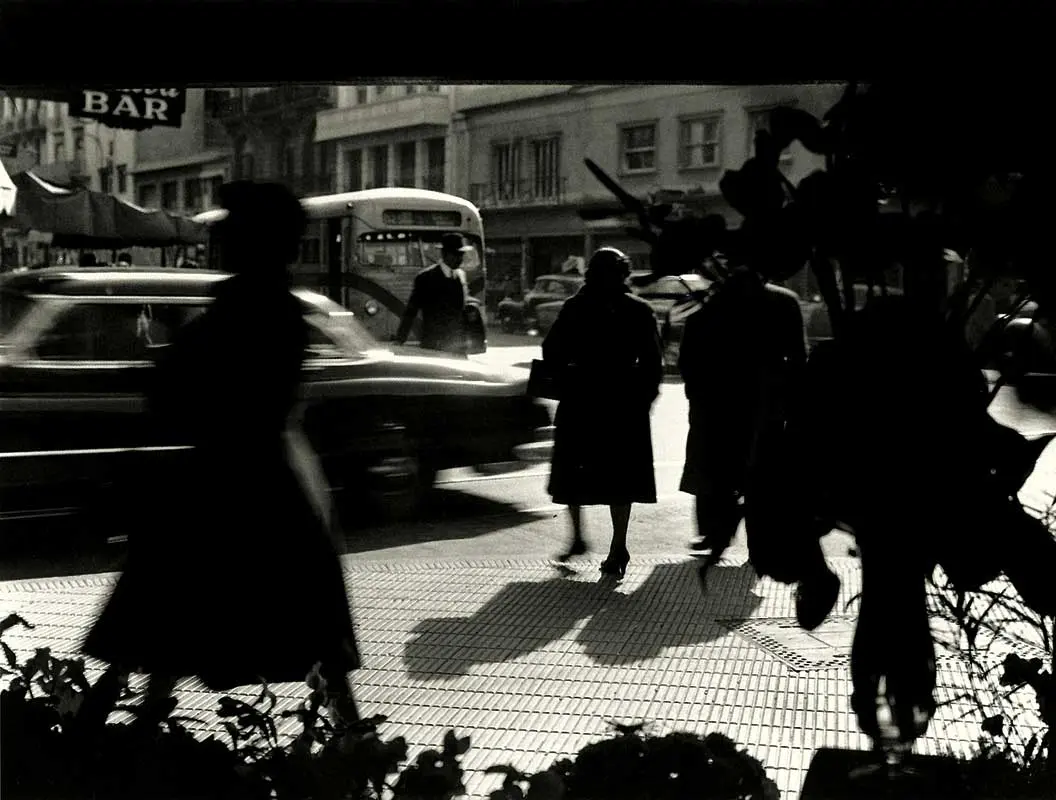
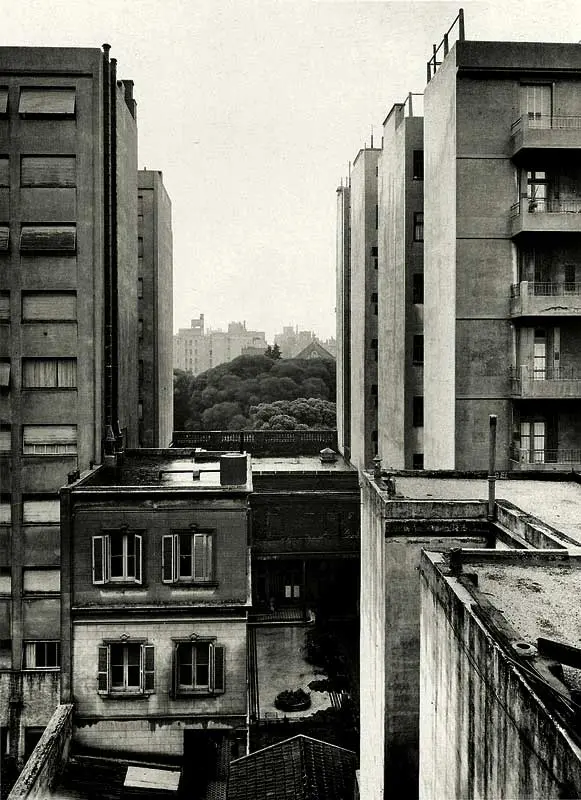
Her personal work more immediately connected with the city of Buenos Aires took place in 1948 when Stern joined the team of architects Kurchan, Ferrari-Hardy, Bonet to work on the Estudio del Plan de Buenos Aires as photographer and graphic designer.
In 1952, Francisco Aparicio proposed that Stern illustrated a book to be published by Editorial Peuser with photographs of Buenos Aires. The creation of some 1,500 photographs took Stern almost a year. As Luis Príamo writes: “Stern organized her photographic essay by sector and neighborhood: port, city center, river walk, Retiro and Constitución, La Boca, Riachuelo, (…) General Paz Avenue, and beyond that the brand-new Ezeiza airport and the San Fernando coastline. The set is scaffolded on images of buildings, perspectives, and street movement.”7
There are few interiors, just a handful of bar scenes, but Stern did photograph old patios, and later she published a book on that topic.
Stern’s austere and precise treatment of the different motifs underscores the originality of this unique document of the city of Buenos Aires.
Idilio magazine began publishing in Buenos Aires in 1948. An encounter that took place in its offices bears witness to the interconnectedness in Argentine cultural life at the time. The magazine’s Italian-born owner, César Civita,8 convoked another Italian immigrant, Gino Germani,9 Enrique Butelman, the son of Russian Jews,10 and Stern, also a refugee from European persecution, to develop a section titled Psychoanalysis Will Help You.
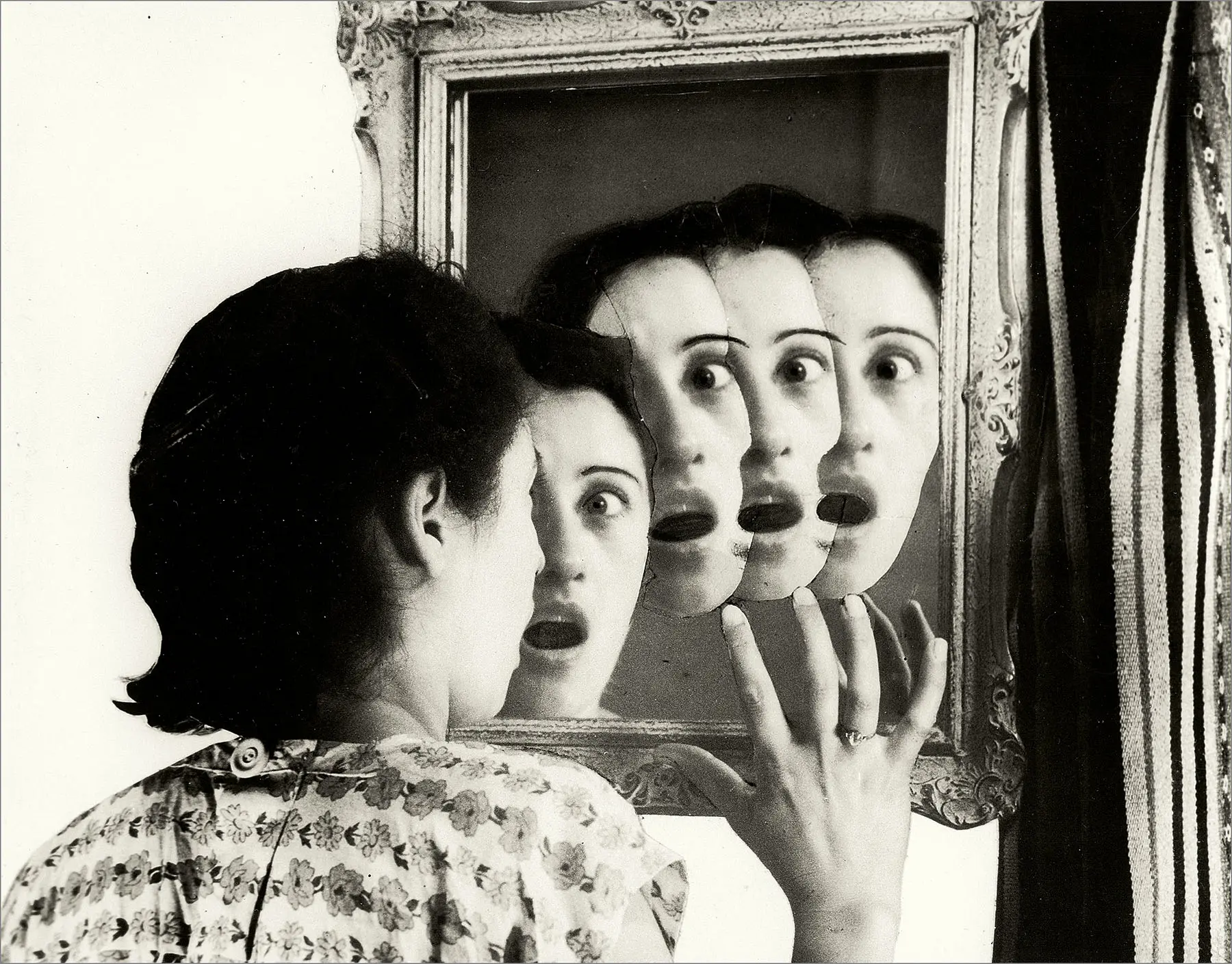
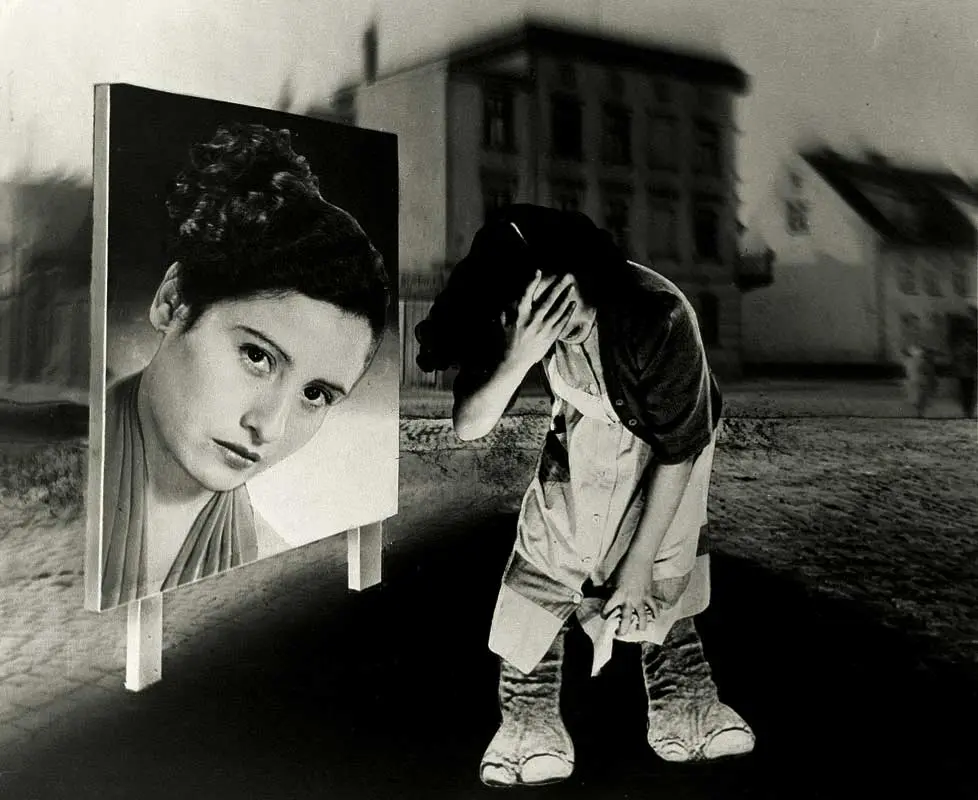
This was an exceptional encounter, as Hugo Vezetti writes in his text on the topic for a book published by CEPPA Foundation.11 The work of this team lasted between 1948 and 1951; Stern created 140 photo-montages12, a genre without significant precedent in Argentina. Stern had learned the technique in inter-war Germany, as a student in Stuttgart in the 1920s. Now, in 1948, she had found an opportunity for important imaginative development.
The work was organized in the following way: readers were to respond to a 29-item psychological questionnaire. The questions required a level of self-exploration rather than being in tune with a Buenos Aires that had seen the emergence of the Argentine Psychoanalytical Association and the Revista de Psicoanálisis since 1942. The audience was now widening through a more massive medium. Butelman and Germani provided the answers to the problem posed, and it was the latter who arranged with Grete Stern what dreams were to be interpreted. Germani situated them within a more general framework: dreams of incomprehension, or of complication, or work-related, of masks, of persecution, of flight and fall, of money, of numbers, among many others.
Highly aware of the possibilities opened by the medium she was using, Stern made an entirely free interpretation.
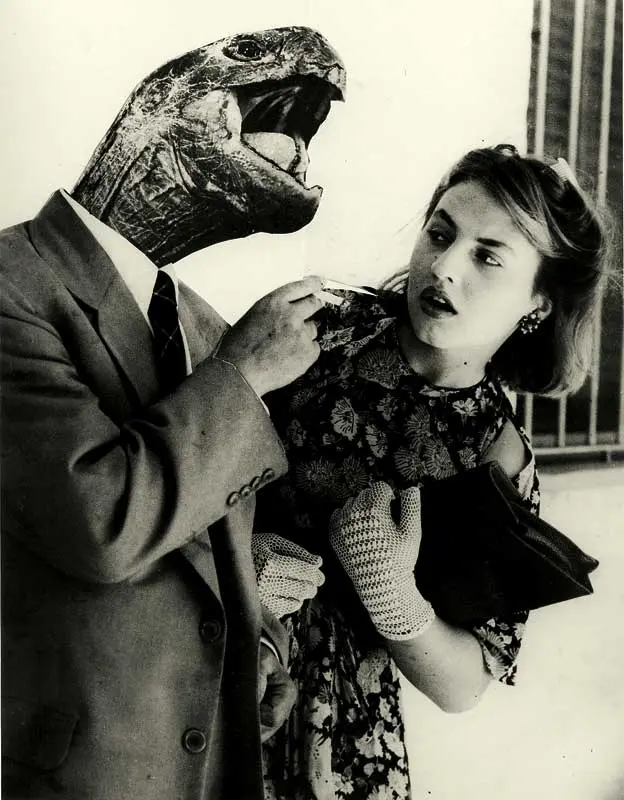
In her montages, the female protagonist appears on her feet or in various poses, in imaginary situations, and surrounded by objects of immeasurable imaginative richness.
Her interpretations had an audacity hitherto unseen in such a publication. They are clearly connected with the issue under consultation: the cage, the differences in scale, the mix of natural elements, fire, water, rocks, cosmic disasters, animals, the male figure. But they are executed with such a mastery of resources that they unfailingly bring their audience to issues of modern art.
The magazine section was greatly successful, probably because it echoed the needs of female readers who had started to work outside the home, were acquiring greater awareness of themselves and their aspirations and were leaving behind the image of the traditional, long-suffering woman.
Within the section, textual answers are framed for containment: they refer to sex through allusion and periphrasis, and they speak of marriage and of obligation while proposing elements of independence and personal affirmation. They underscore the right to love, even freeing physical love from associated guilt and attempting to offer an optimistic and confident vision.
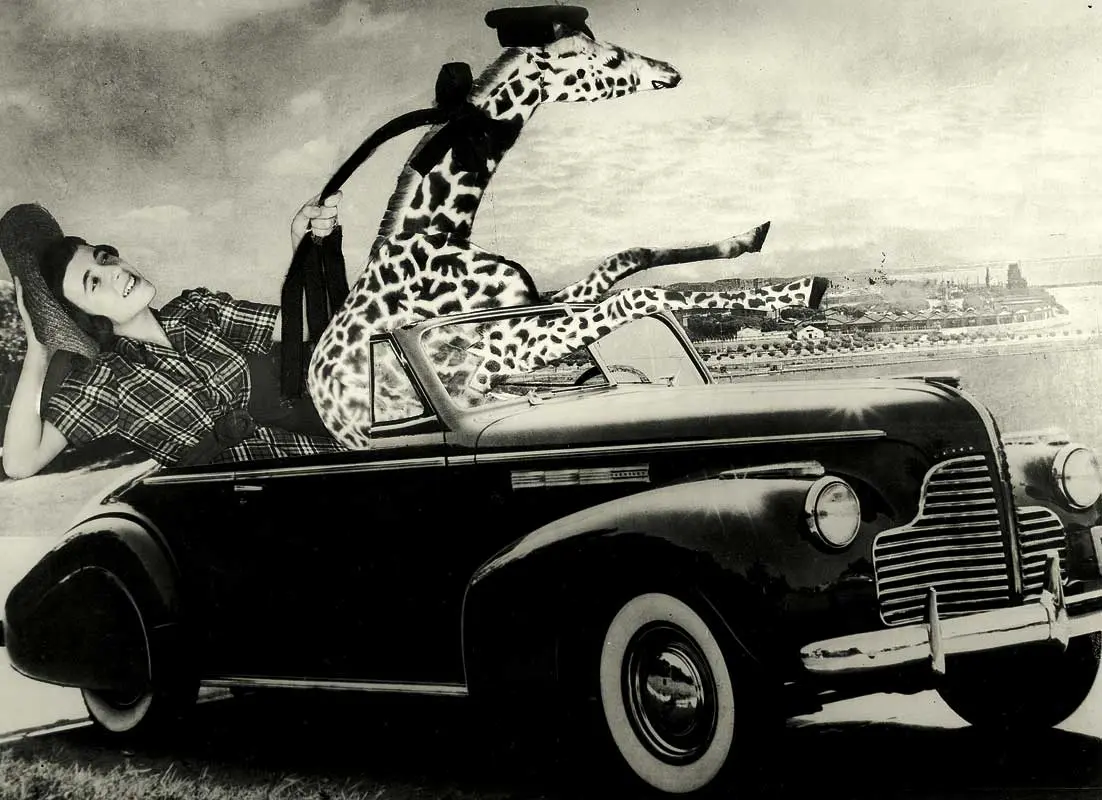
Grete Stern’s visual interpretations go well beyond that in their analysis of the problems posed. While the texts avoided conflict and confrontation, Stern, well assured in her character as a woman and as an avant-garde artist, unveiled them with great clarity.
Luis Príamo, who has very astutely compared Stern’s photomontages and the texts13, describes the situation in the following terms: “Grete’s Dreaming Woman is trapped in anguish and oppression; her pleasures are pitiful and so are her frustrations. When active and dominant, she is just as cruel as the world that suffocates her. Her ambitions are a reflection of the melodramatic utopia of her radio soaps: social success, wealth, long gloves, gold lamé.14 Encased within a glass bottle at the edge of the sea, her future is uncertain and hazardous, whether she is back from a journey, pushed ashore by the sea currents, or still waiting to take off. A stranger’s hand threw her into the sea, or will; a different hand, perhaps, will pick her up. A desperate message; a scream of loneliness begging to be heard. Yet, she looks up to the sky and smiles… She also smiles when the net thrown by her lover from the high window falls on her. And she is transported and ecstatic when her beautiful hair shape-shifts into a brush and, manipulated by a man’s hand, paints a wall. An object for service, a decorative object, an object of use; at any rate, a situation that pleases, rather than hurting, her. her dismembered, mutilated, unfolded body appears often in the series, and while the image of two hands emerging from the water to grab her flesh is somewhat comical in its surreal undertones, the general sense of consensual and enjoyed manipulation makes it dramatic.”
It has also been noted that this series of photo-montages for Idilio was the first photographic work to radically critique the oppression and manipulation of women in Argentina at the time, through the provocative and sarcastic gaze of an artist, Stern, who had lived a similar situation in Germany during her time with Ringl + Pitt.
We must point out, too, the potent irony in finding such support for the New Woman in the most widely read women’s magazine in Argentina in those years.
As an aside, between August and early October of 2009, MACLA presented in Buenos Aires an exhibition of works by two female artists active during that same period. Yente (Eugenia Crenovich, 1905-1990), the first woman to create abstract works in Argentina, and Lidy Prati (1921-2008), a member of the revolutionary Asociación de Arte Concreto Invención, founded in late 1945. Analyzing the work of these artists, researchers Adriana Lauría and María Amalia García connect the female condition of an artist in Argentine society at the time and her relative obscurity: Yente took a step back to support the career of her husband, Juan del Prete; Lidy Prati, perhaps due to emotional problems, willingly abandoned the space she had gained.
Just like Grete Stern left Argentina an extraordinary document of Buenos Aires and of the situation of women in the 1940s and 1950s in the country, she did something similar regarding the presence of indigenous peoples in the northern region and the natural landscape.
Her first contact with products of Latin American cultures was the work she did with her then-husband Horacio Coppola to document photographically the collection of Chimú-Chancay vases at the Museo de Antropología de la Universidad de La Plata.15
The basis for her extraordinary individual work on the topic was an invitation from Universidad del Nordeste, in Resistencia, Chaco, to give a photography seminar.
It was there that she encountered the Toba natives residing in the area surrounding the city of Resistencia and took the first photographs. She was so impressed that she developed a detailed project and presented it to the Fondo Nacional de las Artes, asking for support for the documentation of dwellings and construction techniques in Toba and Mocoví communities, as well as their dress habits, life norms, physiognomy, and crafts.
This epic 800-kilometer journey started in late May 1964 and ended in early September at Tartagal, province of Salta, near the Bolivian border. Along the way, Stern widened the scope of her initial project to photograph Toba and Mocoví communities to include other ethnic groups from Chaco, Formosa, and Salta, populations that have been marginalized since the late Nineteenth Century. She visited thirteen sites in Chaco province, seven in Formosa, and three in Salta.
Her vast effort deserves wider recognition. Her portraits are outstanding and so are her photographs of basket-weaving, textiles, and earthenware.
Culturas del Gran Chaco, the exhibition presented by Proa Foundation with materials from the collection of the Museo Etnográfico de la Universidad de Buenos Aires and Grete Stern’s photographs at the collection of Matteo Goretty,16 included for example: Mujer mocoví prepara barro con hueso molido para hacer una pieza de alfarería (June, 1964); Mujer toba teje con crochet un bolso de lana para su Biblia (July, 1964); Mujer wichi teje un bolso con hilo de chaguar teñido con jugo de algarroba (August, 1964); Mujer pilagá (…) exhibe una llica concluida (August, 1969).
This reappraisal of indigenous crafts is completed with portraits not intended to highlight their subjects’ poverty, but the intensity and the will to survive of their human condition. They are mostly portraits of women and children framed frontally in vigorous close-ups.
As Luis Príamo has pointed out, Grete Stern abstained from moral or political judgment regarding the native people’s condition, didn’t denounce the consequences of their marginalization, and didn’t demand state intervention. Her work was not an explicit argument but a remark addressed to the citizenry at large, pioneering in its practical goal of bettering the life and social standing of the group being documented.17
From a technical standpoint, she worked with two cameras: a 6 x 6 and a 35 mm, with the larger format taking up a larger share of the output. Most are in black and white. She used color negatives to account for the dyes used in textile work and in face painting.18
Shortly after Stern’s return to Buenos Aires, the Museo de Arte Moderno presented a big show with large prints, which also traveled to the country’s interior. Fotografía Universal magazine published a note reading: “Tobas, Mocovís, Matacos, Curupís, Choratas, and Chiriguanos parade in one hundred and eighty-nine photographs (…) Not only as a strictly photographic matter but also as a singularly valuable anthropological document.”
Ten years later, photographs selected from this series and a group of portraits were exhibited in Berlin, at the Bauhaus archive, and afterward in other German cities. In the catalog for that show, Dr. Hans Wingler notes that “one can always sense Grete Stern’s extraordinarily intense identification with her model, with the photographic object, with a face; in other words, with what is in front of her…In Stern, we perceive a human interest that goes beyond professional contact. (…) To a high degree, her work is defined by its individuality, yet at the same time it is exemplary of the school that gave her a starting point.”19
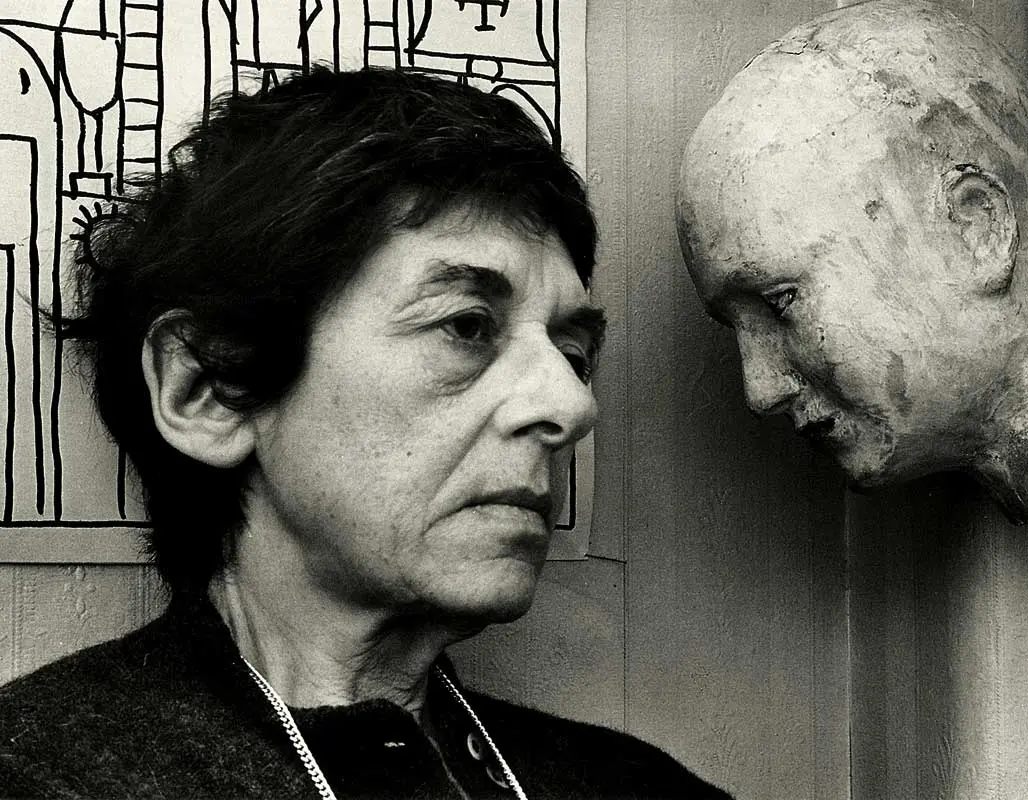
The importance of Grete Stern’s portraits must not go unacknowledged. Her first solo show, in 1943, was of portraits, and her portrait period extended through 1957. Those fourteen years produced an outstanding documentary archive of the faces of Argentine intellectuals. Already the image she captured, back in 1938, of her teacher Walter Peterhans was of a touching eloquence. The economy of resources that characterizes her work underscores the subject’s unique morphology and highlights his expressivity.
In her portraits of painters and sculptors, Stern was able to use their work environment as a background and to face different alternatives.
While the Coppola-Stern home in Ramos Mejía was always open to political-refugee artists like Luis Seoane, among others, and while her connection to the avant-garde had spurred the 1945 meeting, it was especially after Grete Stern was invited by Jorge Romero Brest to take the helm of the Photography Department at the Museo Nacional de Bellas Artes in 1956 that her relationship with Argentina’s artists widened considerably.
Stern emphasized the importance of photography in the museum’s activities, collaborating in its documentation, restoration, and publishing.
She had already had an opportunity to explore her interest in the work of art as a subject when, while teaching at the Universidad del Nordeste, she photographed in detail the sculptures in Resistencia.20
During her tenure at the Museo de Bellas Artes, Stern collaborated in publications about sculptor Noemí Gerstein (1956), Líbero Badii (1963), and Osvaldo Stimm (1966), the latter including a poem by writer Saúl Yurkiévich.
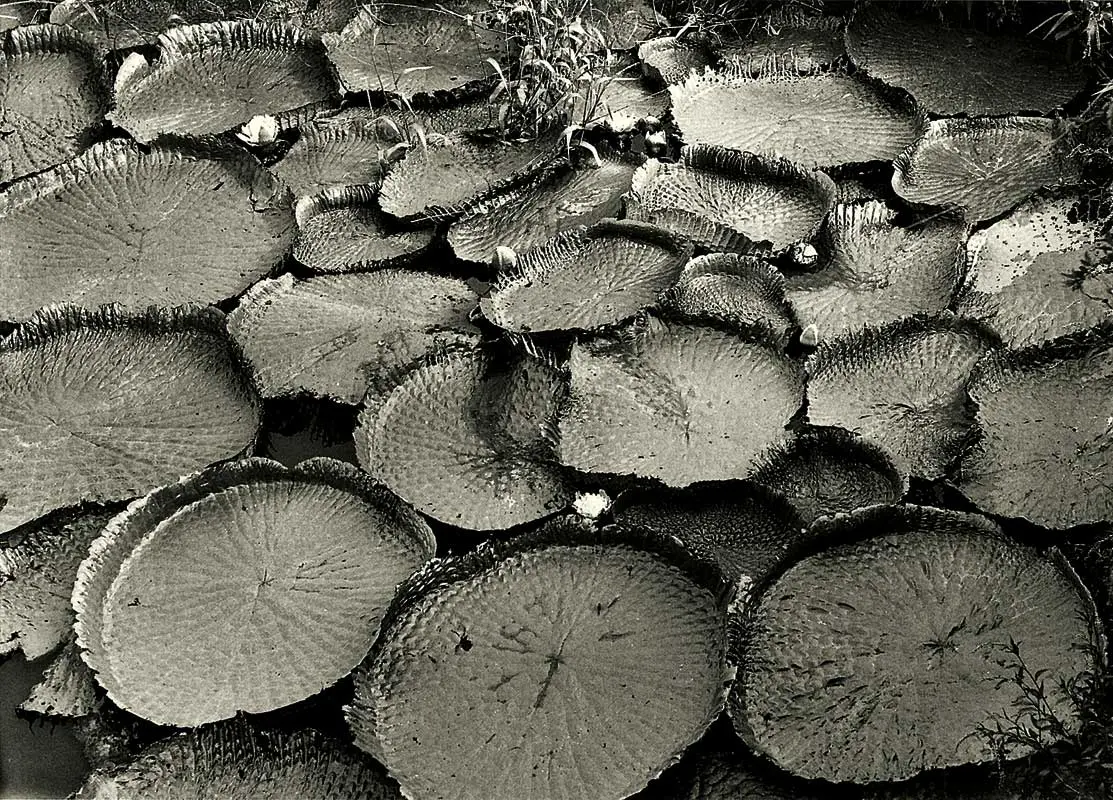
No less significant were Stern’s photographs of Argentina’s natural landscape, which dazzled her with its variety and the challenge of capturing the great plains, so different from Europe’s environment. She paid attention both to the Atlantic Coast (Playa Reta, near Bahía Blanca) and to Puerto Madryn, in Patagonia. She also went farther south, to Tierra del Fuego. The results were outstanding in all cases.
Her passion motivated her to reach an agreement with the Jujuy Tourism Secretariat, in Argentina’s Northeast region, to travel intensively in the area.
The exuberance of the Delta’s flora, around Buenos Aires, gave her another opportunity to deploy her talents: “her variations on trees, water, brushes, bushes, flowers, swamps, water plants, were numerous and subtle. Her eye insistently sought details in the muddy ground, in vegetation-covered channels, in a tree’s branches or contorting roots.”21
Grete Stern was a master in the art of photography, and Argentina, her adopted country, benefited greatly from her work, developed with tenacity, intelligence, and sensibility over several decades. Today her efforts have achieved international recognition and several archives hold her valuable documentary contributions.
NOTES
1. In the widely circulated photograph taken at the event we see Arden Quin, Kosice, doctor Pichón Rivière, Lise Steiner, doctor Marie Langer, doctor Rascowsky, and Renate Schottelius, among others.
2. The participants were Elizabeth Steiner, Rasas Pet, Arden Quin, Rod Rothfuss, and Klaus Erhardt in painting; Kosice and Rothfuss in sculpture; and Rothfuss, Arden Quin, Alejandro Havas, Rasas Pet, and Lise Steiner in drawing.
3. Year 5, October 1935, Buenos Aires.
4. Quoted in Jorge Ben Gullco, Grete Stern, Centro Editor de América Latina, Fotógrafos Argentinos del Siglo XX Series N° 20, Buenos Aires, 1982.
5. In 1934 he promoted the Primer Salón Internacional de Bromóleos, unique in the world, and later he organized the Semana de la Fotografía in Rosario.
6. Sara Facio, “La fotografía argentina (1920-1950),” in Historia general del Arte en la Argentina, volume VII, Academia Nacional de Bellas Artes, Buenos Aires, 1995.
7. Luis Príamo, “Buenos Aires + Grete Stern + Arte y patrimonio histórico,” in Grete Stern: Buenos Aires una visión fotográfica 1937-1952, exhibition at Galería Principium, Buenos Aires 2001.
8. He came to Argentina in 1938, escaping from fascist anti-Semitism. He worked for the Mondadori publishing house.
9. Had settled in Argentina in 1934. After the fall of Perón, he taught Sociology at the Universidad de Buenos Aires, where he was an outstanding professor and researcher.
10. Born in Buenos Aires, studied in Switzerland. Possessed great knowledge of philosophy and literature. Co-founded Editorial Paidós and taught at the UBA and in Rosario until 1966.
11. In Sueños, Fotomontajes de Grete Stern, published by CEEPA Foundation, Buenos Aires 2003.
12. Of these photo-montages, 46 negatives and 29 images cropped from the magazine have survived. The research behind the show at IVAM made use of the magazine archives.
13. “Notas sobre los Sueños de Grete Stern”, in Sueños, Fotomontajes de Grete Stern, CEEPA Foundation, Centro de Estudios para Políticas Públicas Aplicadas, Buenos Aires 2003, on the occasion of the show at Centro Recoleta.
14. This was the ideal that, in certain respects, Eva Perón incarnated.
15. Huacos, cultura chimú was published by Ediciones de la Llanura in 1943.
16. April, May 2005.
17. Luís Príamo, Grete Stern. Obra fotográfica en la Argentina, Fondo Nacional de las Artes, Buenos Aires, Argentina, 1995.
18. In 2001 the negatives of Stern’s two trips to Gran Chaco—some 1,500—were acquired by the CEPPA Foundation (Centro de Estudios para Políticas Públicas Aplicadas).
19. Cited in Jorge Ben Gullco, Op. Cit.
20. The city of Resistencia, Chaco, is known as the Sculpture City.
21. Luis Príamo, Op. Cit.
*Image courtesy: Galería Jorge Mara - La Ruche.
NELLY PERAZZO
Numerary Member of the National Academy of Fine Arts.