Thanks to its scenery, Ticio Escobar’s curatorship for the First Chile Triennial proved unprecedented as a proposal. From the undefined as the sign of the age and the prevalence of a globalizing market economy, the emphasis was on dealing with contemporary art issues in connection with local platforms that are usually displaced by centralization.
The slogan of "exploring the limits of art" —including revisions of the meaning of art institutionalism, what is a work of art, and what is “artistic”— attempted to be transversal to the event, held mainly between October and December, planned on the basis of the accents and shortcomings of each region: North, Center, and South, occupying the city with barely emerging scenes. “Is this art?” must have been the latent question at the various activates defined as crossroads and unmounting of forms of art, and of realms that are usually seen as alien to the field in question. The national territory itself appeared to the general curator, Ticio Escobar, as a borderline and paregoric image, being the border that delineates the southern edge of the continent, open to the Pacific Ocean, and where everything is still to be done.
The exhibitions with the highest visibility opened in the Valparaíso/Santiago axis, dealing with necessary themes and visualities that have never before been assumed by the local scene, at least not in this way: revisions of Chile’s contemporary art and of the Latin American avant-garde, with some proposals that placed the archive centerstage; curatorships about alternative —mestizo or of “multiple gaze”— museum experiences such as Micromuseo de Lima (Peru) and the Museo del Barro (Asunción, Paraguay), which included the Baroque, the indigenous, and the popular; and some work with the national pictorial memory —“Territories of State”— that included landscape art, documents, and scientific drawings, de-stabilizing in equal measure the status of the work of art and the notion of the contemporary. Meanwhile, for Iquique, Antofagasta, Concepción, Temuco, and Valdivia, mostly actions were organized, undertaking that some times had a long duration and a low profile, some even non-existent for the public at large and for the mass media: project with a patrimonial and anthropological bent, workshops for local artists, support for publications, urban interventions, and even a meeting of University-based Art Schools.
The art issues assumed by the Triennial could very well be confused with cultural policies. All the more so when the general curator was selected —in early 2008— at a time when he was also being named Minister of Culture in Paraguay. He was chosen by the National Arts and Culture Council itself. Through the Triennial Foundation, the local Ministry gave logistical and financial support to an event that the private sector had discarded in the midst of the economic crisis. The first version of the Triennial had been brandished by its organizers as a national Bicentennial program and a contribution to the country’s image.
Escobar, a prestigious art theorist, tried in every possible way to erase these marks with an emphasis on reflection, but mostly on the event beyond the margins as a possibility of recovering sensible form and aesthetic moment. Every operation had to have an exhibition format and be put into works of art. “What art is, is the built-in situation” or “contemporary art is not defined by occupying a place in a legitimized site, but by its social effects,” are some of the ideas at play. This was Escobar’s way of dialoguing, within the Latin American context, with the 28th São Paulo Biennial, which questioned its own status by including among its exhibits an empty gallery, and confronted the conflict between concept and image by privileging the former. Escobar worked on the tension between them. His way of situating the Triennial internationally was to subscribe a tendency that attempts to recover the image as the site referring to that which cannot be said nor shown, dominated by the non-absolute, “the need to maintain that dark side in order to render the idea of a world complex.”
Chile was, then, an apt location for the staging of a diagram of art territoriality from the South and from otherness, which Ticio Escobar has been working through in his own projects. Escobar involved in each zone a number of “field editors,” foreign artists or theorists —mainly from Latin America—who inserted themselves in alien territories in order to carry out on-site research and find the keys that drive the region or hold it at stasis. In the context of this modus operandi, Escobar brought together for the main exhibits a group of curators who have been disarticulating the linearity of art history in the face of a Western, ethnocentric model: Gabriel Peluffo (Uruguay), Aracy Amaral (Brazil), Gustavo Buntinx (Peru), Roberto Amigo (Argentina), Fernando Castro (Spain), Osvaldo Salerno and Adriana Almada (Paraguay), with Nelly Richard and Justo Pastor Mellado from Chile itself. The latter, a great driver behind the event, ultimately kept himself apart due to differences with the Foundation.
These figures’ collective contributions gave the event increased visibility beyond Chile’s borders. The connections with Spain and the invitation to a certain intellectualism had a decisive influence in driving the discourses toward post-colonial and multi-cultural concerns: as the editor of the International Colloquia, Richard invited authors of such notes as Manuel Borja (Spain), Néstor García Canclini (Argentina-Mexico), Andrea Giunta (Argentina), and Suely Rolnik (Brazil), among others.
Working with a reduced budget, the Chile Triennial was not given to great spectacle; rather, it centered on curatorships and actions that dialogued with each other. For the local scene, it was a luxury to have on-site works by artists and experts of note from Latin America and the world; to discover the curator’s “hand” in exhibitions that were veritable landmarks in the museums’ programs, positing new visualities for an audience estimated in more than one hundred thousand visits.
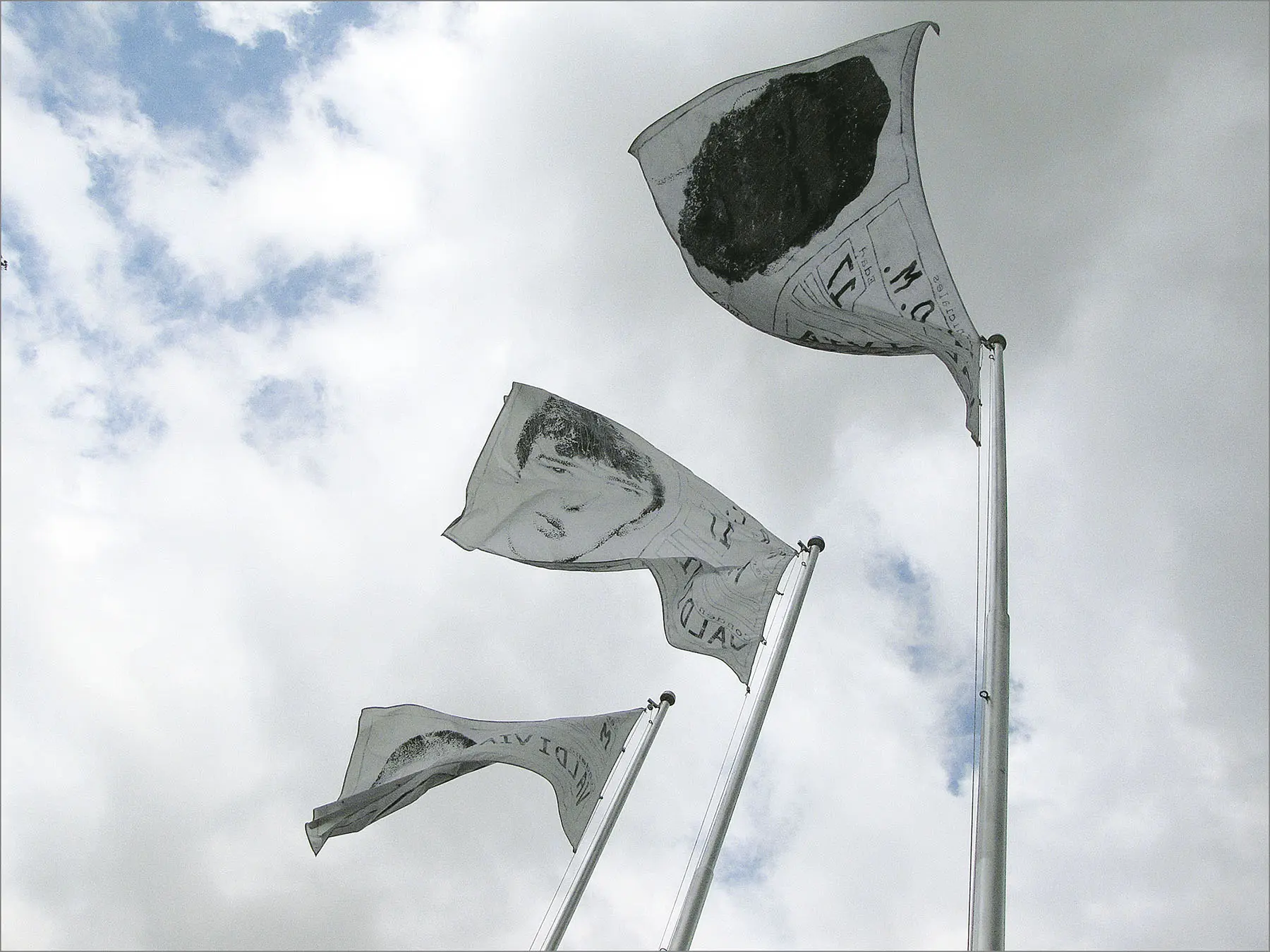
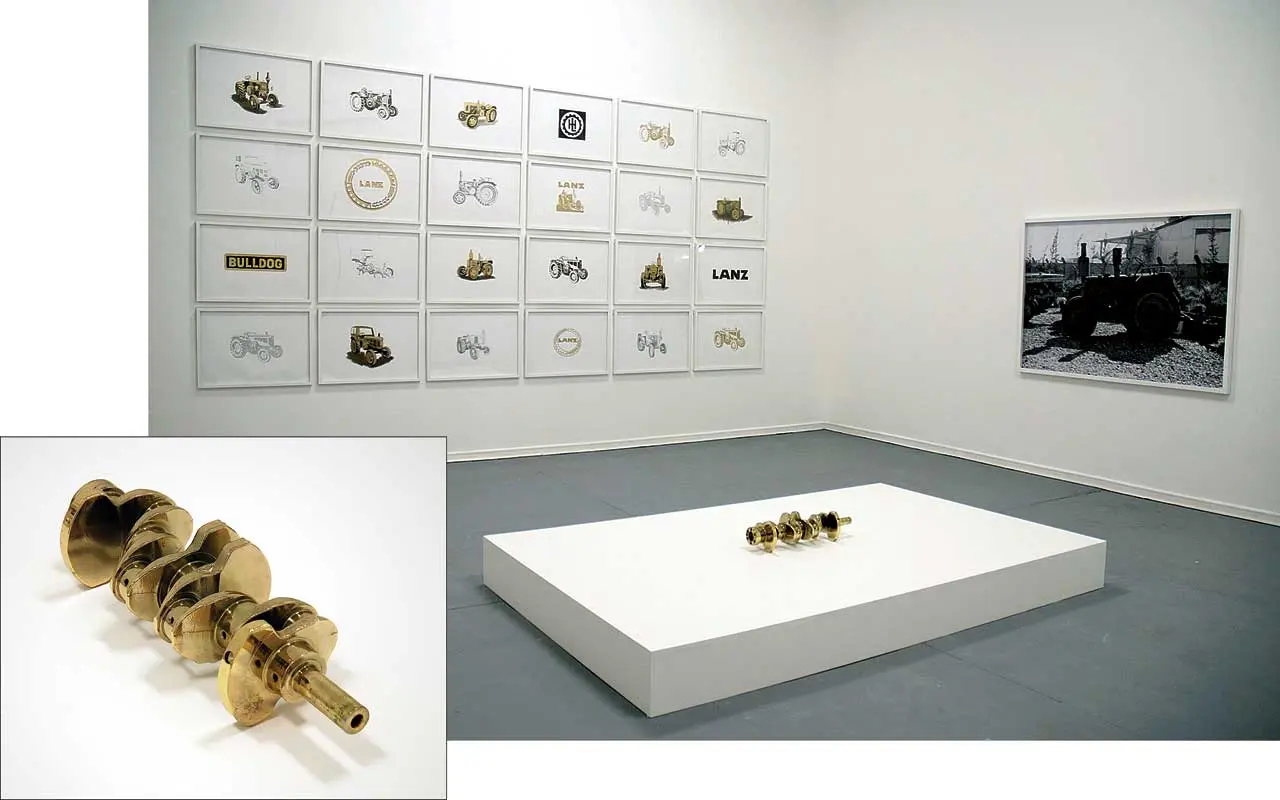
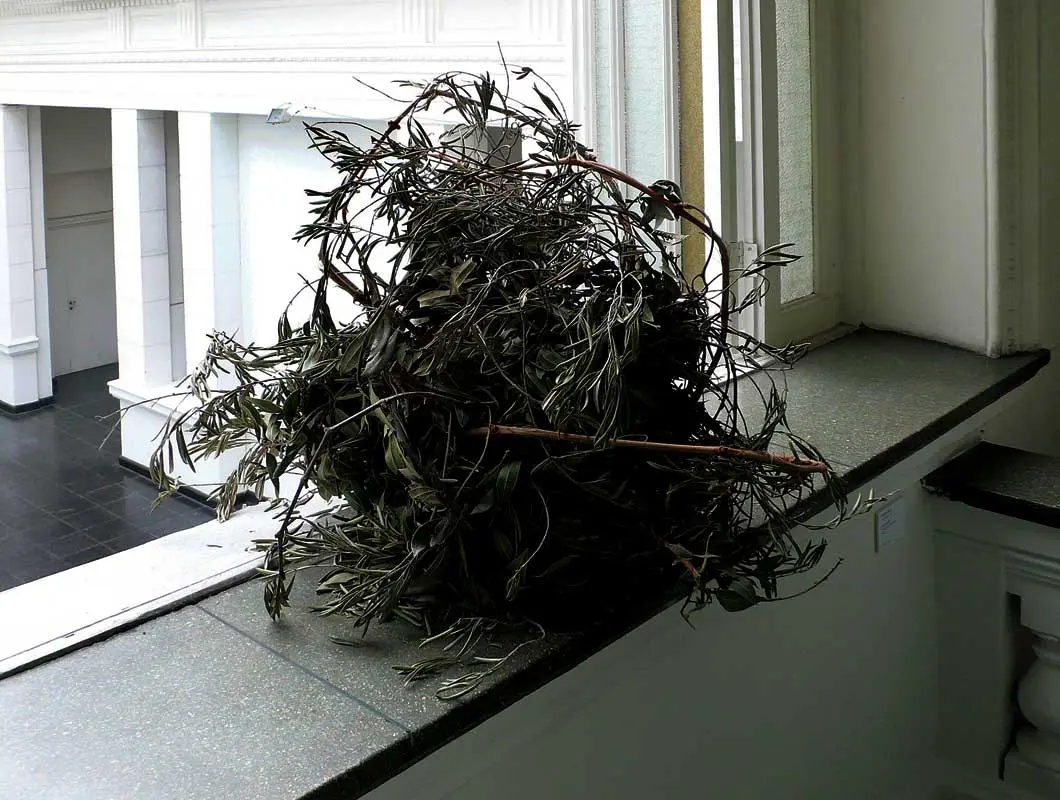
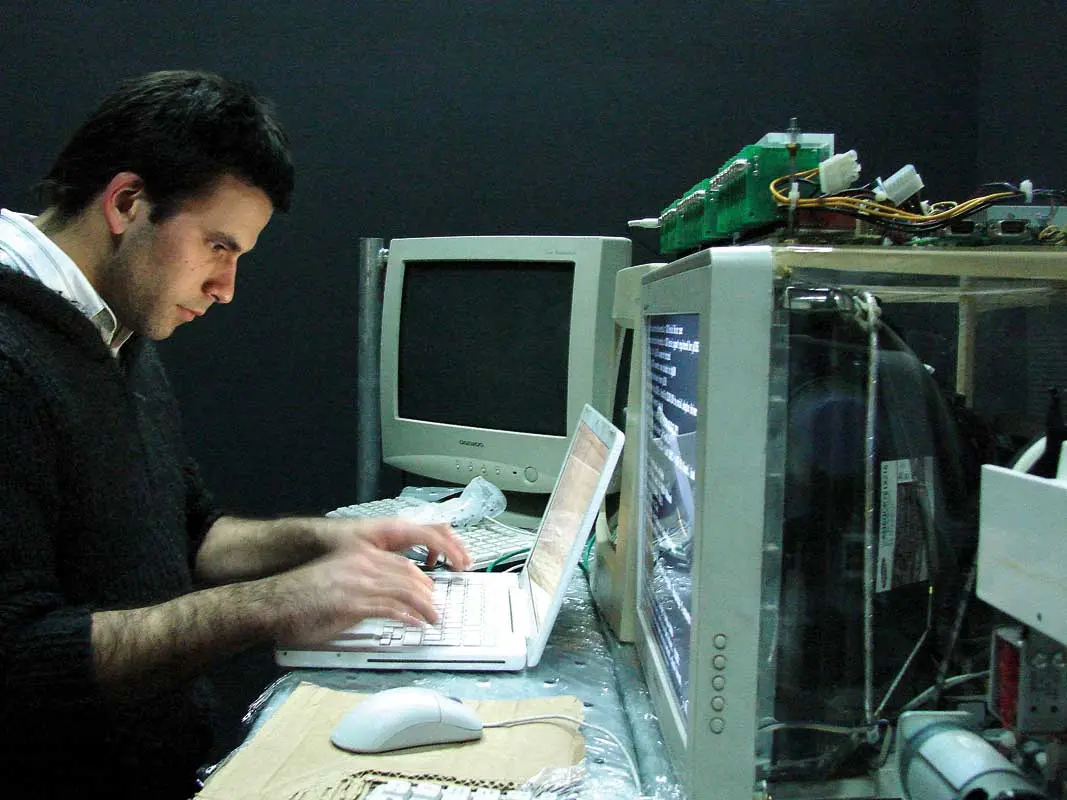
The most visible show at the Triennial was El terremoto de Chile (Castro), at the Museo de Arte Contemporáneo, Quinta Normal site, in Santiago. The Spanish curator’s idea was not to do a survey of current Chilean art, something that has only happened here through Copiar el Edén, a book edited in 2006 by Cuban theorist Gerardo Mosquera. However, Castro did define thirty “key” artists, “different generations in dialog on a literary pretext”, including among others, José Balmes, Arturo Duclos, Nury González, Iván Navarro, Mario Navarro, Mónica Bengoa, Patrick Hamilton, Margarita Dittborn, Nicolás Franco, Pablo Langlois, Andrea Goic, Pablo Ferrer, Cristián Silva, Claudia Aravena, and Nicolás Grum. Starting with an 1808 story by German writer Heinrich Von Kleist, Castro included works that were created specifically for the event, touching on themes that have become recurrent in recent decades, such as catastrophes, precariousness, fragility, and memory, resulting in a journey where the taste for objectual perplexity, irony, and the treatment of socio-political issues with academic rhetoric and great aesthetic rigor, where vindicated as local paradigms. Which works were able to go beyond those limits? Máquina de coser, by Damian Schopf (1975), for instance, one of the few interactive works and also one that thematized technology, where the viewer “chatted” through a hardware-software device with a DIY aesthetic, responding to and printing out phrases processed through the Web and from a database of literary and philosophical texts. In turn, Claudio Correa (1972) expanded the primacy of the object and the craft with Perdidos: tres crónicas de una rehabilitación conductual masculina, which included interviews with prisoners and sound installation that —from the floor just outside the toilets— was able to invade the huge museum in its entirety with a kind of litany: they were the voices of the urban marginals, whose faces were printed onto flags that hung at the museum entrance, a portion of the work done separately in art workshops inside the prisons.
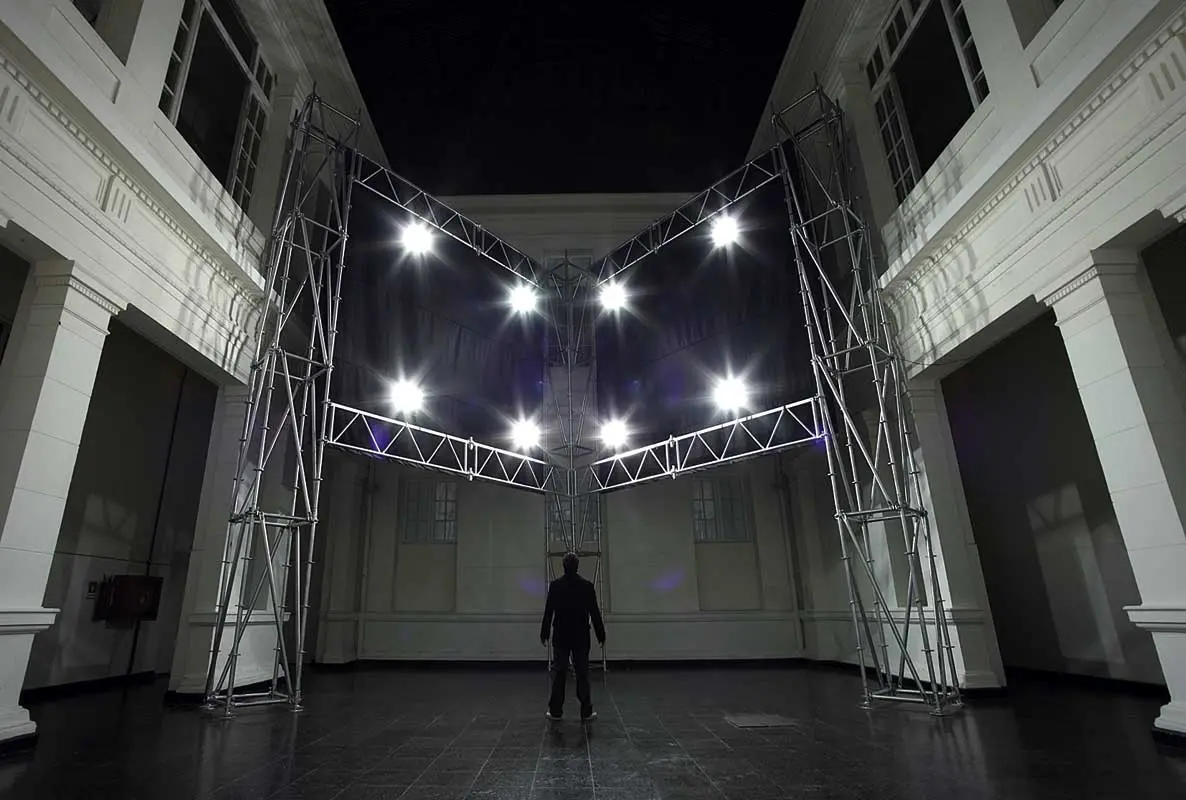
A few blocks from the museum, at the Centro Cultural Matucana 100, was Sismografía de Chile, where Fernando Prats (1967) showed —like Correa— how the reach of an investigation that extends into extra-artistic realms gives auratic potency to the concrete work: besides a monumental installation of objectual debris from demolition, a series of drawings “made” by nature were greatly beautiful traces left by geysers in the North of volcanic ash in the South, a project started in 2006 in regions of territorial significance.
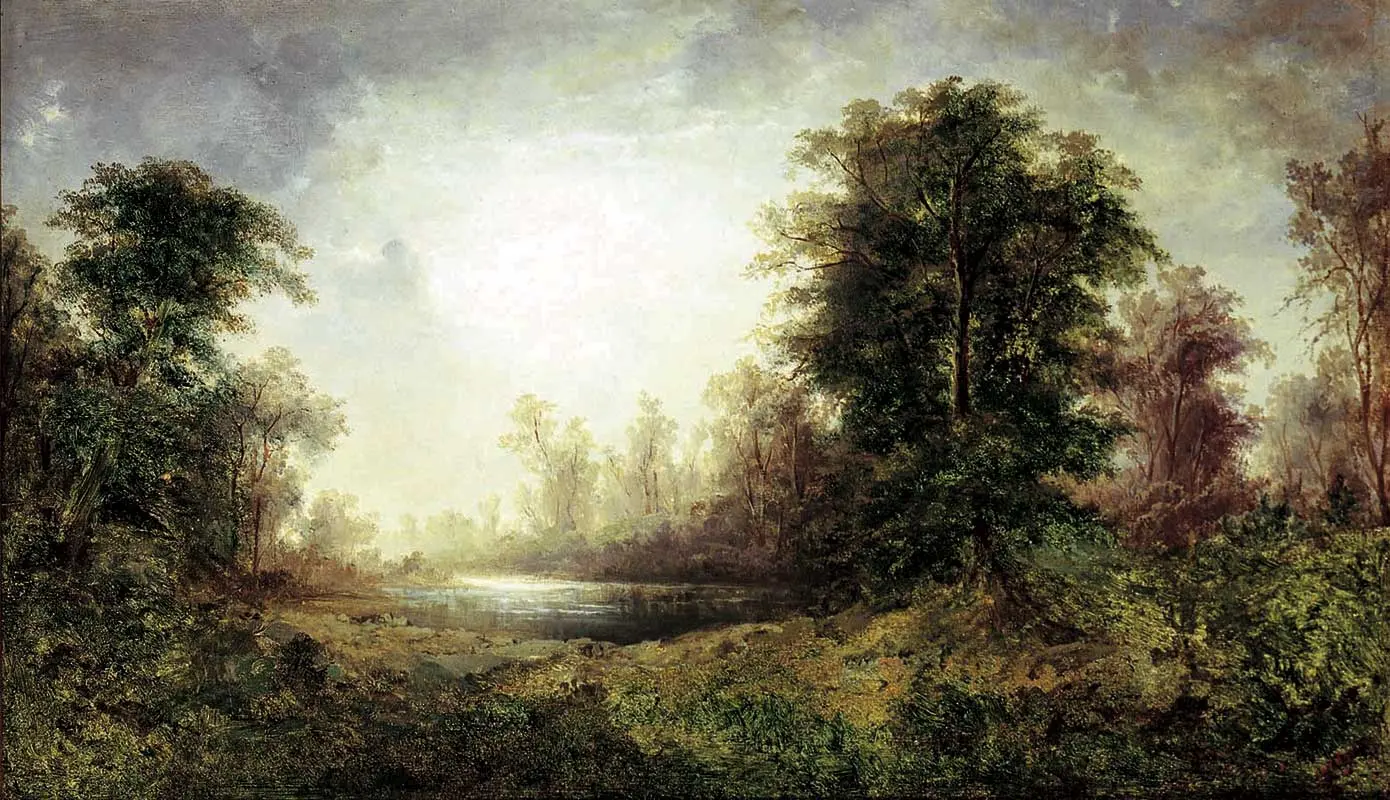
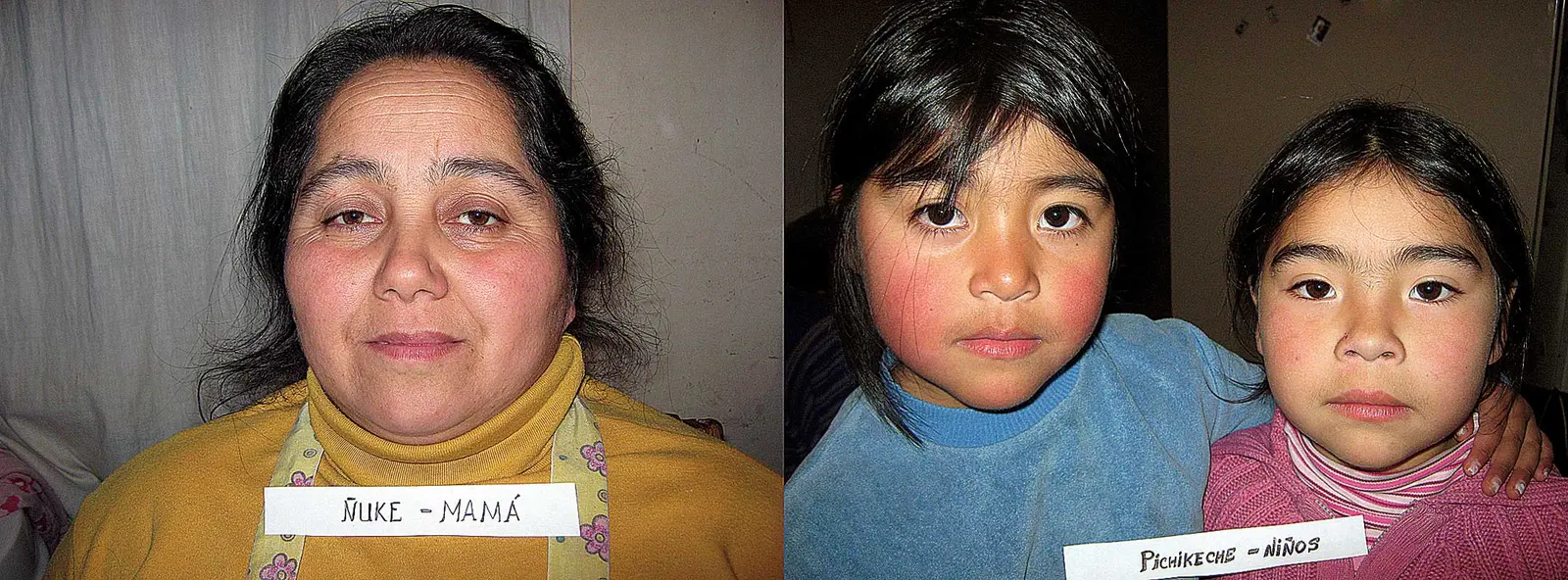
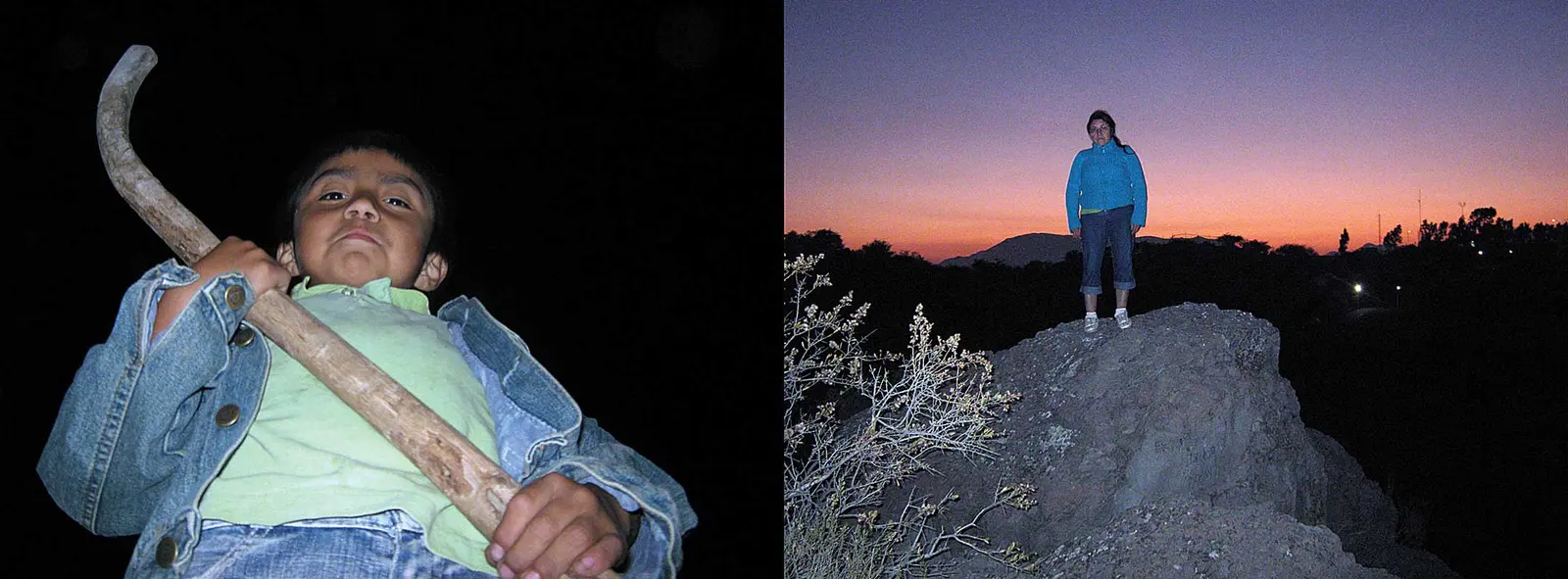
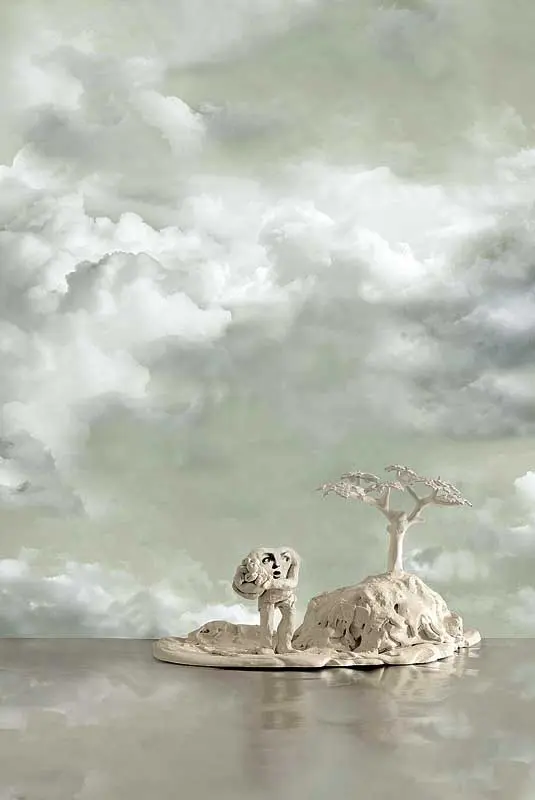
Also paradigmatic to the Triennial’s slogan were the projects Estados de sitio and Aiwin. La imagen de la sombra. The former, a journey through several spaces in Valparaíso posited by Peluffo and Chile’s Alberto Madrid, reviewed avant-garde proposals from the 1960s through the 1980s in Chile, Colombia, Argentina, Peru, and Mexico. These were works, documents, and records of emblematic actions by Grupo de Artistas de Vanguardia de Rosario, CADA (Colectivo de Acciones de Arte), Taller 4 Rojo, No-Grupo, Clemencia Lucena, EPS Huayco, and Amereida Project (from the Valparaíso School of Architecture), in dialog with contemporary works —graphic arts, photography, and video— by artists like Francis Alÿs (Mexico), Juan Burgos (Uruguay), Roberto Jacoby (Argentina), Óscar Muñoz (Colombia), and Liliana Porter (Argentina-New York), including urban interventions by Gonzalo Díaz, Juan Castillo, and the young Chilean artist Guisela Munita. Through the primacy of the archive, it highlighted a crucial contribution of the Latin American scene to the world: the moment of art as subversion. The second project, a series of exhibitions in Santiago, Temuco, and Traiguén, of photographs made by Mapuche Indians in workshops directed by Chilean artist Andrea Jösch, brought to the fore the indigenous and the ethnographic elements. The amateur images carried in them gaze on their own everyday lives, filled with a potent simplicity, without skirting in certain signs the reality of a group marked by discrimination and by the struggle to recover their ancestral land. The workshops contemplated at the same time the implementation of offices with photographic cameras, computers, and printers, in order to systematically record the activity in the communities.
Certain regional actions also had unexpected effects. In Antofagasta, for example, a working network evolved between artists from Northern Chile and Northern Argentina, who participated in a show that was also on display across the border, in Salta. In Concepción, two art and theory publications received support, Plus and Animita, which on the basis of self-management and a connection to other Latin American cities, evade the center/periphery relationship and amplify the closeness of the audience with their free distribution, their tabloid format, and fine image work.
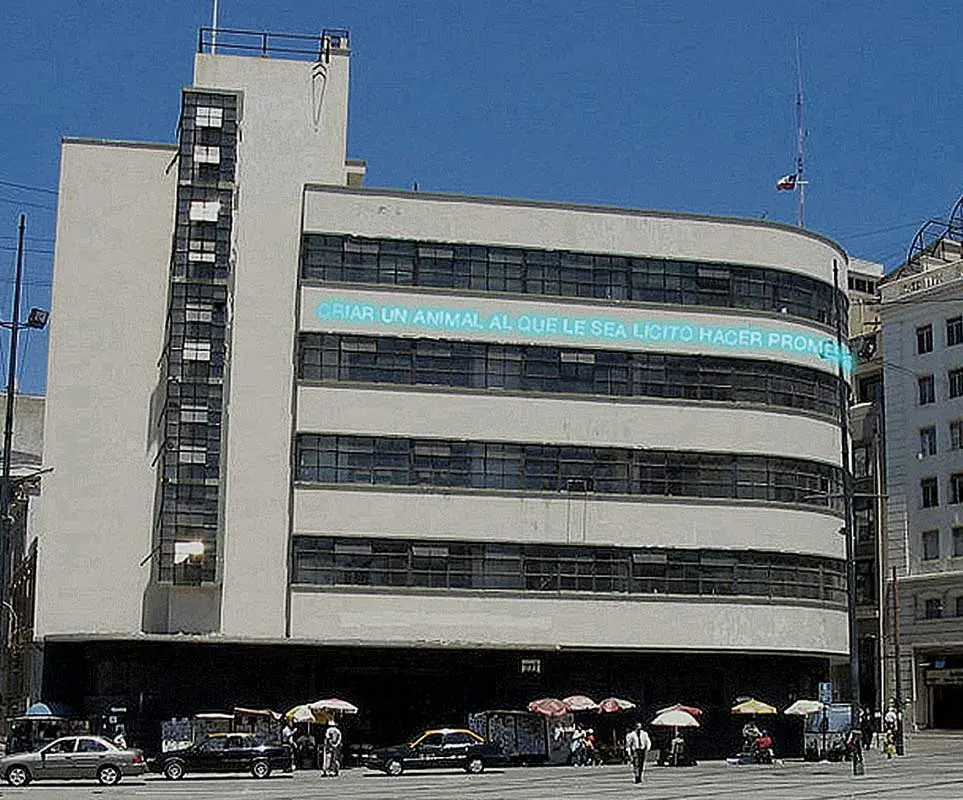
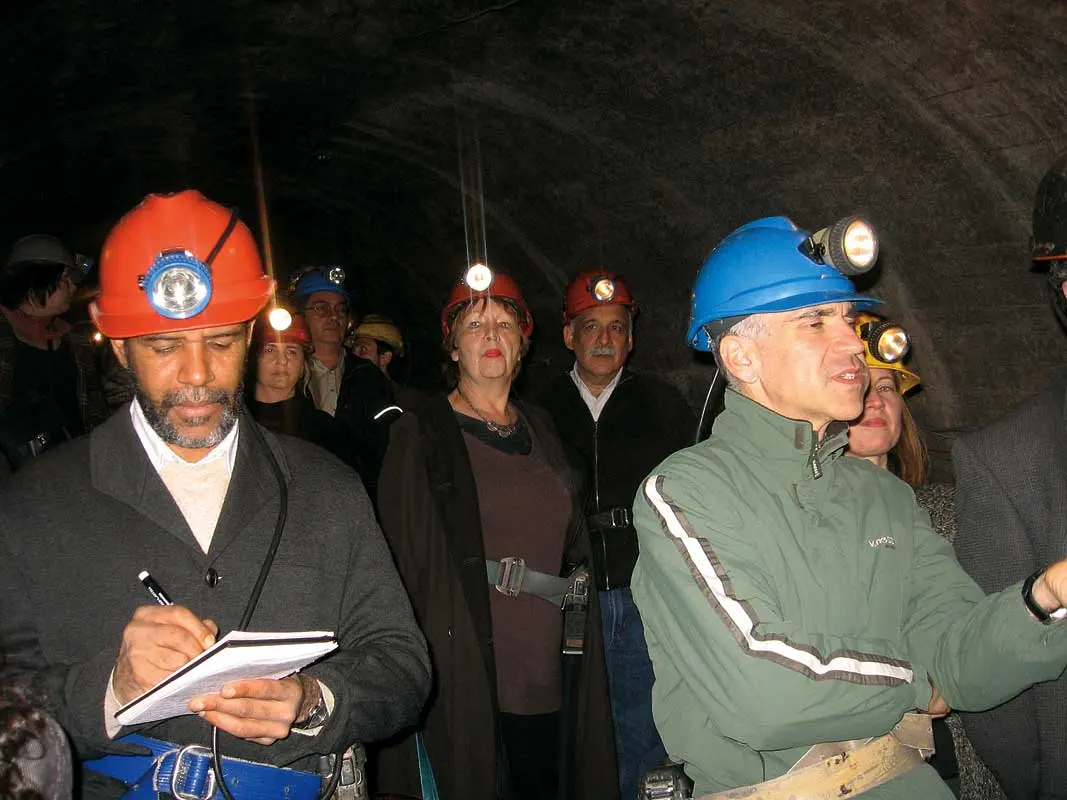
Attending Lotty Rosenfeld’s sound installation in the El Chiflón de Diablo coal mine, in Lota, near Concepción, I was overtaken by many questions after a moment of awe. The proposal was part of the Estadio Chile series, a project that started at the Bolsa de Comercio and the Víctor Jara Stadium, in Santiago. Among its viewers were the general curator for the Triennial, recognized theorists, art students and academics from Concepción, artists, and friends of Rosenfeld’s from her CADA days (Juan Castillo and Fernando Balcells), and even the then-candidate on the Socialist ticket Jorge Arrate, who is married to the writer Diamela Eltit, who was also a member of CADA.
The invitation was to turn off all the helmet lamps and walk carefully to the tunnel. The sounds that filled the darkness were fragments of Rosenfeld’s previous works, stirring, loaded with suggestiveness, with personal and collective stories, moving through topics like imprisonment, torture, economic growth, the Mapuche situation, and, above all, memory; all of this under the crushing weight of the centenary mine closed in 1977. What could this work stir in its select audience? Without a future exhibition planned for its recorded version, how to extend to others such beautiful, political, and unsettling work?
More than in its visibility or its massive impact, the Chile Triennial found its power in silence, in the less media-oriented actions, triggering effects that were to unfold over time across Chilean circuits, about decentralization and an opening of borders. Positing art beyond the spectacle and from otherness, the Paraguayan Culture Minister also acted as the foreign expert who reaches our town to carry out his field research and find the keys that mobilize and immobilize us. Of course, also away from the public: none of the organizers assumed the responsibility of implementing a parallel and integral educational and communicational project. The earthquake, the dark zone, the unassumed site that Escobar unveiled in Chile could very well be the great distance that persists between the experience of art and a citizenry systematically subjected to disinformation.
CAROLINA LARA B.
Journalist and art critic. Author of Chile Arte Extremo: nueva escena en el cambio de siglo.