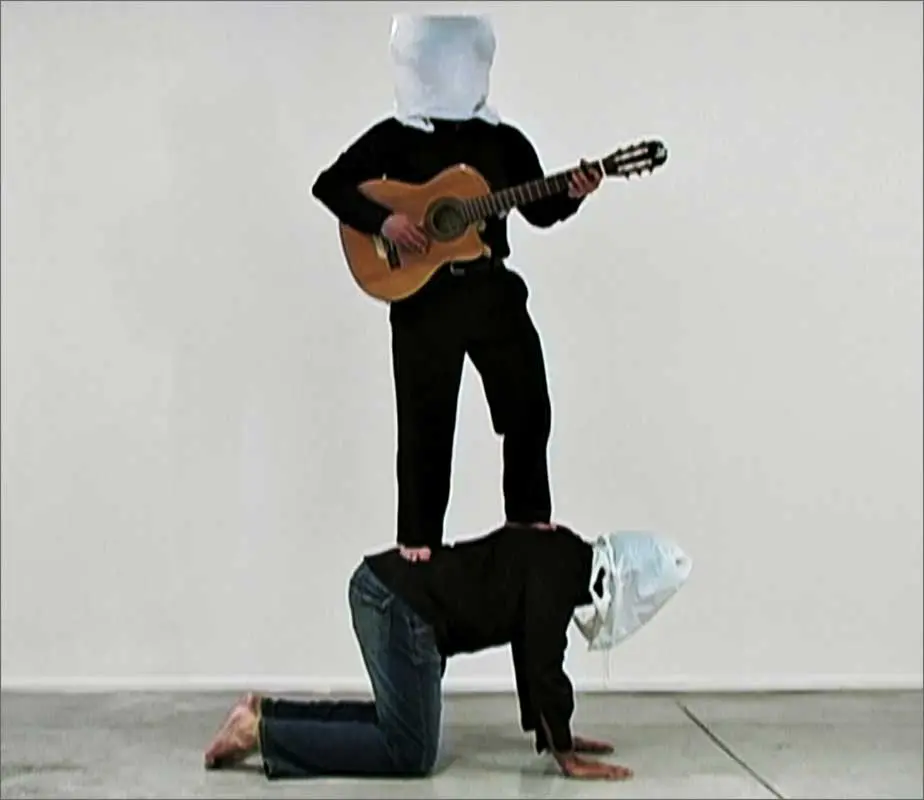
Only one of Iván Navarro’s works of art does not employ electric light as a primary medium. It is the video Missing Monument for Washington, D.C. (2008), which features two men, one crouching on all fours on the floor with a bag over his head and the other standing on top, strumming on a guitar, his head also covered with a bag. The soundtrack consists of simple guitar chords that accompany a narrator reading the lyrics of the chilling poem Estadio Chile by the singer-songwriter Víctor Jara. Written in September 1973 while he was held captive in a stadium along with thousands of others during Augusto Pinochet’s coup d’état, the poem was smuggled out by survivors. Jara himself was tortured and murdered, his body dumped in a mass grave.1
Estadio Chile recounts the agony endured by prisoners in the stadium and the absurdity of a situation in which five thousand able-bodied adults were incarcerated for political ends instead of being allowed to remain productive members of society. In a poignant passage that ponders the futility of producing art in the face of such barbarity, Jara writes:
How hard it is to sing
when I must sing of horror.
Horror which I am living
horror which I am dying.
To see myself among so much horror
and so many moments of infinity
in which silence and screams
are the end of my song.2
The dilemma described by Jara—what is the purpose of art in the wake of overwhelming horror—is one that is faced by artists the world over in contexts where human rights abuses, brutality, violence, and poverty abound. Reconciling beauty and trauma is its corollary. Navarro’s Missing Monument for Washington, D.C. is decidedly not beautiful. Through the anonymity of the figures and the indignity of the plastic bags that cover their heads, it recalls the infamous photographs of prisoners from Abu Ghraib. Lacking the grandiosity of the monuments that proliferate in the nation’s capital, it chides the United States for its involvement in bringing about the coup that toppled Salvador Allende and instated Pinochet. Despite its somber tone, however, the piece offers a sense of hope. The figure with the guitar continues his song, and the one crouched below valiantly supports him. Indeed, the piece exalts the tenacity and perseverance of the human spirit.
As in Missing Monument for Washington, D.C., the body is often at the core of Navarro’s work, although this may not be readily apparent in many of his light pieces. For all that his art is dependent on technology, he is a humanist at heart. Not only does his close study of human proportions hearken back to the anatomical observations of Renaissance masters Leonardo da Vinci and Albrecht Dürer, but many of his pieces make us well aware of our bodies in space, whether we gaze at a reflective surface and fail to see ourselves, look down at a sculpture only to feel like we are falling into a void, or walk into a darkened room to realize that in order to experience a piece we must become active agents. By making the viewer so central, Navarro succeeds in engaging a diverse public that may not always be aware of the political references that drive much of his work. Critics have pointed out his masterful ability to generate meaning that is at once global and local.3 To this I would add that the work’s power and complexity largely derive from Navarro’s perceptive and ever-changing mode of addressing the spectator.
Navarro has lived and worked in New York since 1997, and there he achieved success by addressing a global audience, employing abstract representational strategies, invoking common denominators in the history of modernism, and involving the spectator in perceptual games. His experience as a Chilean who grew up under Pinochet’s dictatorship informs much of his work, more recently, he has forged a closer bond with his native country, staging a major exhibition in Santiago in 2007 and representing Chile at the 2009 Venice Biennale. His contributions to these exhibitions demonstrate the different approaches he employs when addressing a local, as opposed to a global, audience.
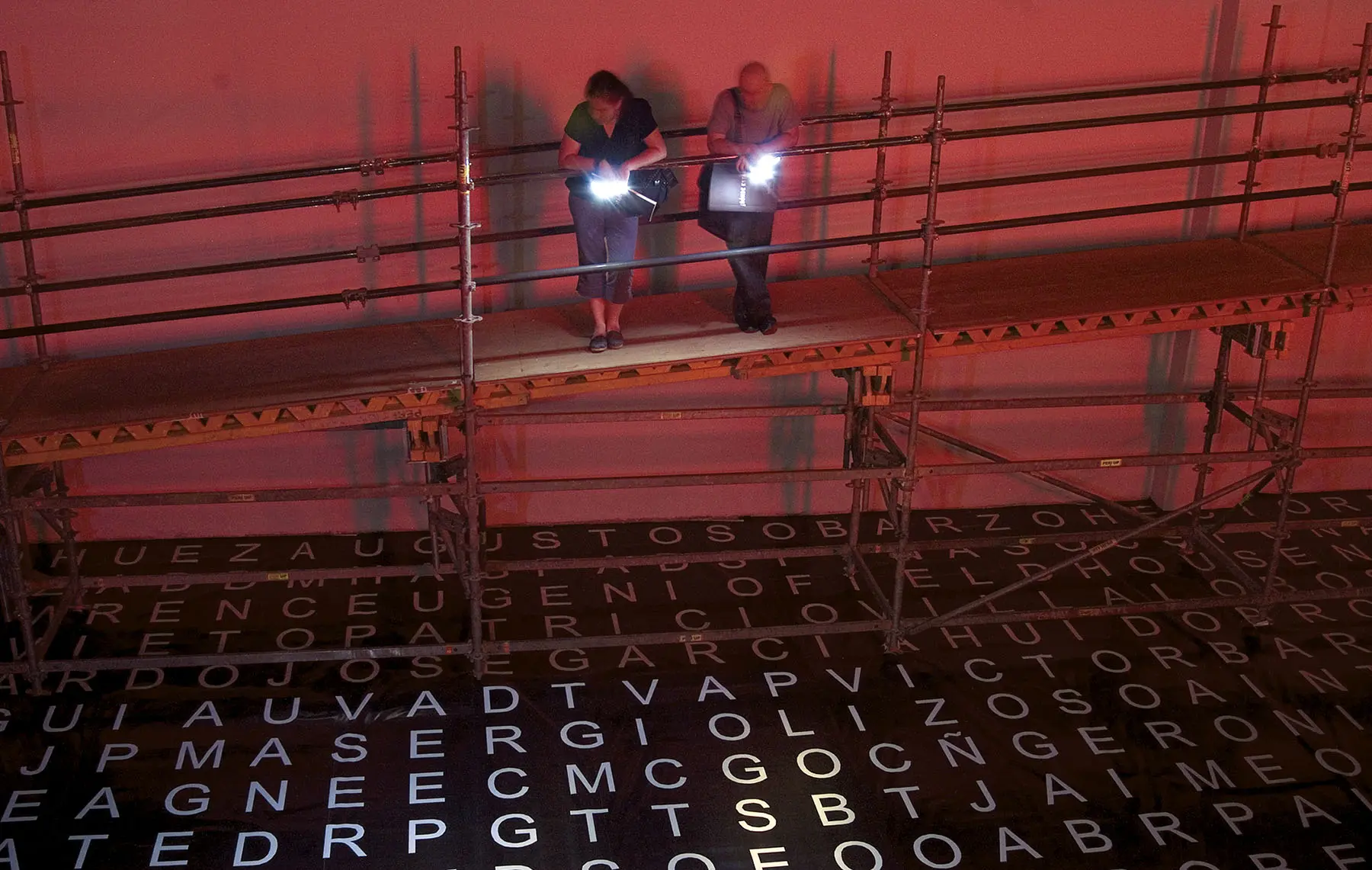
¿Dónde están? (Where Are They?) was a dramatic intervention at the Centro Cultural Matucana in Santiago. A single installation consisted of a room-sized word search puzzle comprised of white letters against a black background that spanned the entire floor. The hidden words were the names of people who had been charged with committing human rights abuses during the military dictatorship, only a few of whom had ever been sentenced. The gallery was dark, and the ground floor was off-limits to visitors. Instead, a series of ramps along the walls provided access, leading the spectators to a balcony overlooking the main gallery. The visitors were given flashlights with which to navigate the space and to search for names on the ground. In addition, on the back wall of the balcony were installed four boxes containing red neon bulbs and one-way mirrors that gave the impression of endless rows of lights, casting a (red) pall over the space.
An audacious yet deeply moving installation, ¿Dónde están? reminded the Chilean public that criminals still live among them. It at once empowered the audience to seek them out with the flashlights but also underscored the futility of their actions—they could succeed only in finding words; the real perpetrators remained at large. Furthermore, the magnitude of the puzzle made it impossible to see all of the letters, and it was easy to misplace a name, rendering the exercise deeply frustrating. It both illustrated how elusive was the task of seeking justice and highlighted how these people had been concealing themselves among the Chilean populace.
An accompanying 30-page booklet listed the names of the perpetrators and their actions, including murder, torture, and collaboration. The entry for Pedro Fernández reads as follows:
This is the only criminal who was convicted for the death of Rodrigo Andrés Rojas de Negri, 19 years old, and for the lesions and burns of Carmen Gloria Quintana. Both youths were doused with benzene and later set on fire. Afterward, their bodies were abandoned and only Carmen Gloria managed to survive, her body scarred for life as a result of the burns she received. The Army Captain was found guilty and convicted of this crime with a laughable sentence of 600 days.
Other entries are equally appalling, and their sheer number in the hundreds brings to the forefront the issue of collective responsibility. Navarro’s critique extended further than the Pinochet regime by inciting Chileans themselves to engage in a soul-searching exercise. To what degree were they also complicit in allowing such a travesty of justice?
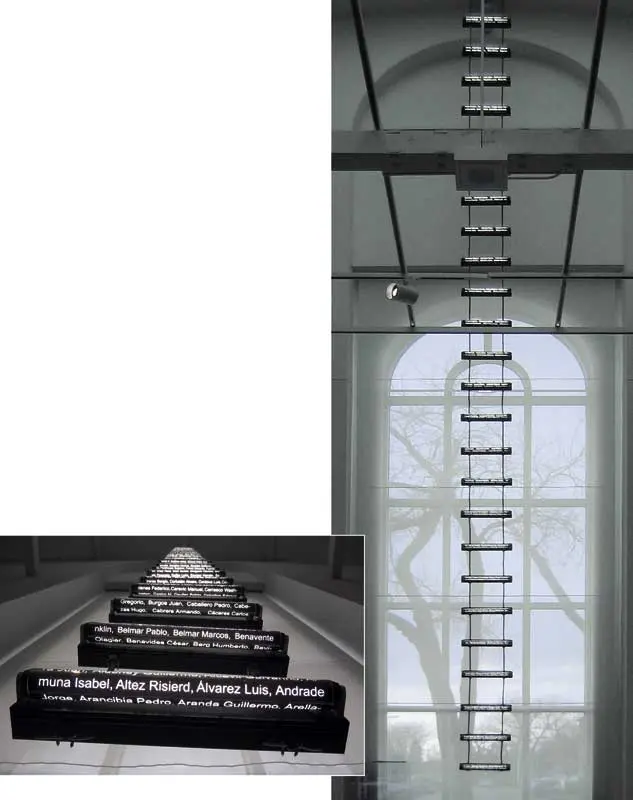
A related piece by Navarro exhibited first in the United States in the multi-venue exhibition Los Desaparecidos (The Disappeared), tackled a similar subject. Criminal Ladder (2005) consisted of a ladder whose rungs were fluorescent light bulbs listing the names of perpetrators of human rights abuses during the Pinochet regime. Extending 30 feet high, well beyond the viewer’s line of sight, it dramatically visualized the number of people involved in criminal activity. It was impossible for the spectator to read past a certain point, but, unlike ¿Dónde están?, the piece did not provide information beyond the names. Thus, a viewer could be shocked and outraged but walk away absolved of guilt. By contrast, the word puzzle installation demanded more from the Chilean public. Not only did spectators have to find the names themselves, but they were also called on to read about them and come to terms with this heinous historical legacy as an act of personal responsibility. Walking around in the darkness, spectators could not only shine the light downwards on the letters but also on each other, foregoing anonymity as a means of sharing the blame. The exhibition’s boldness prompted me to ask the artist how he had had the nerve to mount such a stringent critique, to which he answered, “It must be done.”
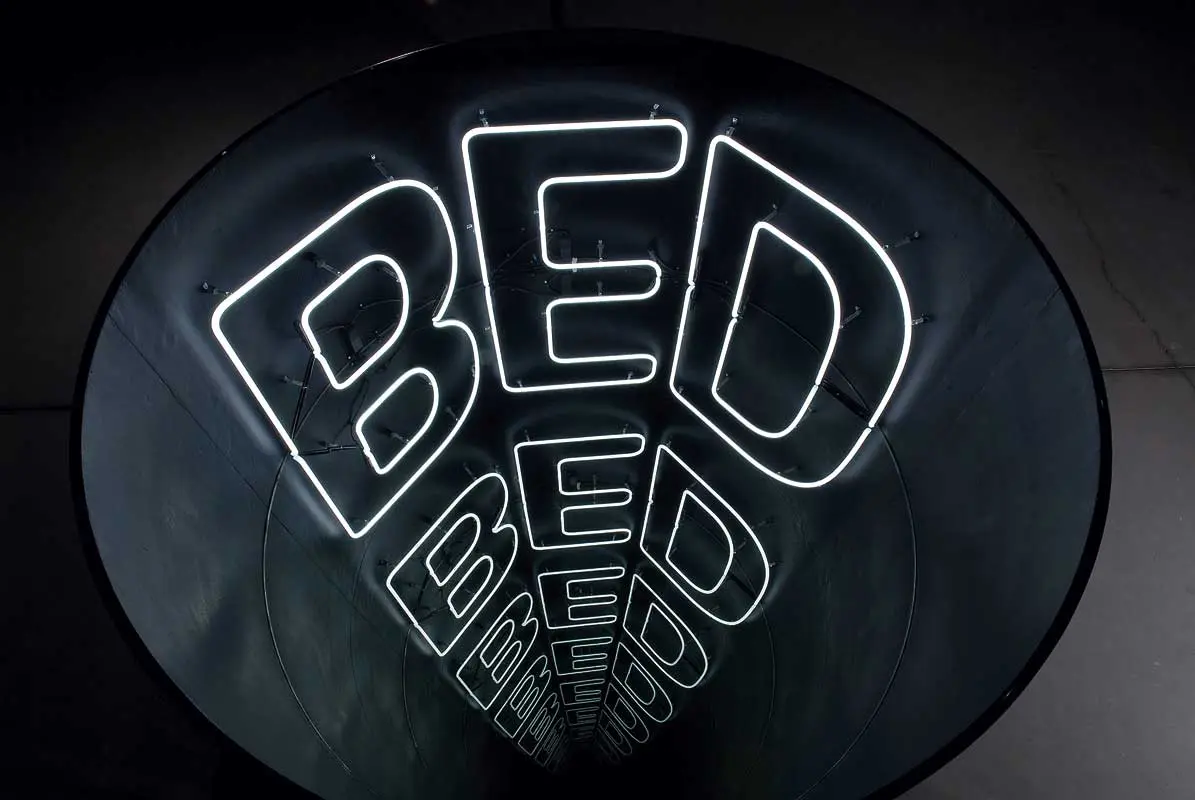
Navarro’s contribution to the 2009 Venice Biennale consisted of an altogether different spectatorial experience that demonstrated his different way of addressing a global audience. The centerpiece of this exhibition was the dramatic Death Row (2006), an installation of thirteen doors with neon lights, each of which corresponded to colors of the spectrum—not nature’s spectrum, but Ellsworth Kelly’s Spectrum V (1969), a series of monochrome panels framed by yellows and comprising a progression of colors in between. As opposed to the content-heavy ¿Dónde están?, Death Row invokes the reductivist strategies of Minimalism and the “universal” language of abstraction. Navarro’s social commitment was more explicitly on view in Resistance (2009), a sculpture of a bicycle with an attached cart that carries a chair made of neon bulbs. In Interactive, the bulbs are illuminated only with the pedaling efforts of the spectator. It accompanies a video of the same name which features a man riding a bicycle and cart around New York’s Times Square. The third piece in the Biennale was Bed (2009), a large cylinder-shaped sculpture with a horizontal orientation. The viewer looked downwards to see the word “BED” infinitely repeated in neon lights.
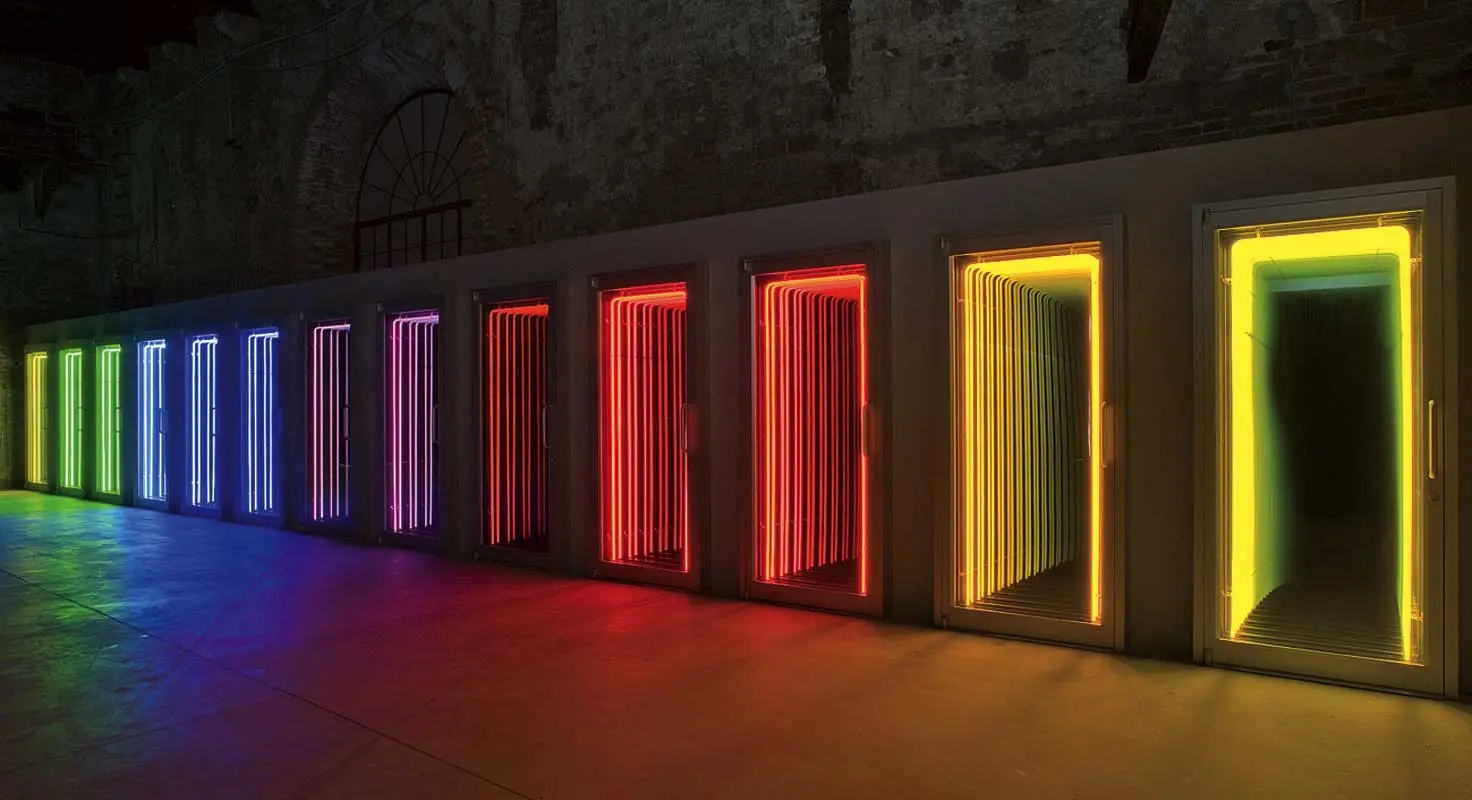
Despite having such an ominous name, Death Row is a spectacular piece that entices the viewer with its bright colors and electric lights. A series of doorways embedded in the wall offers exciting possibilities, but as we approach we realize that the portals are just an illusion. The colored lights appear to extend back towards infinity, but the doors lead nowhere. The effect is at once hypnotic and disconcerting. In the center of each doorway is a deep black void. Instead of seeing ourselves reflected, as we would in a mirror, there is only emptiness. The doors trick us, not once or twice, but thirteen times. The original offers no such deceit. In Kelly’s piece, to quote Frank Stella, “What you see is what you see.” In Navarro’s, what you see is not what it appears. Expectations are thwarted, but why?
A foray into the history of modernism offers some interpretive clues. Throughout the twentieth century, geometric abstraction promised utopia. Piet Mondrian’s grids presupposed the existence of an ideal universal order. Joaquín Torres-García’s adaptation of Mondrian’s grid took issue with the definition of “universal” but accepted the notion of utopia. South American abstractionists of the postwar period used geometry as a common denominator, placing themselves in continuity with European artists of the first half of the century. The North American minimalists also employed geometry but in a literalist manner, eschewing the idealist ambitions of their South American counterparts. Kelly’s Spectrum V (1969) is more akin to a pictorial readymade. Thirteen panels of the same size (each 84 ¼ x 34 ¼ inches) are painted in pure flat tones presented in a deadpan, albeit visually pleasing, manner. Slightly taller than life-size, it is easy to see how Navarro could associate Kelly’s panels with portals, though in so doing, the Chilean artist alters the meaning of his source. Though Kelly invokes both the sculptural and architectural through the presentation and sheer magnitude of the paintings, he does so in a manner that insists on them as solid objects. Navarro, on the other hand, negates their materiality to create the illusion of a void. Whereas Kelly keeps our gaze on the surface, Navarro calls forth a virtual space beyond. This space, however, does not offer hope for a better future, but rather a terrifying sameness.
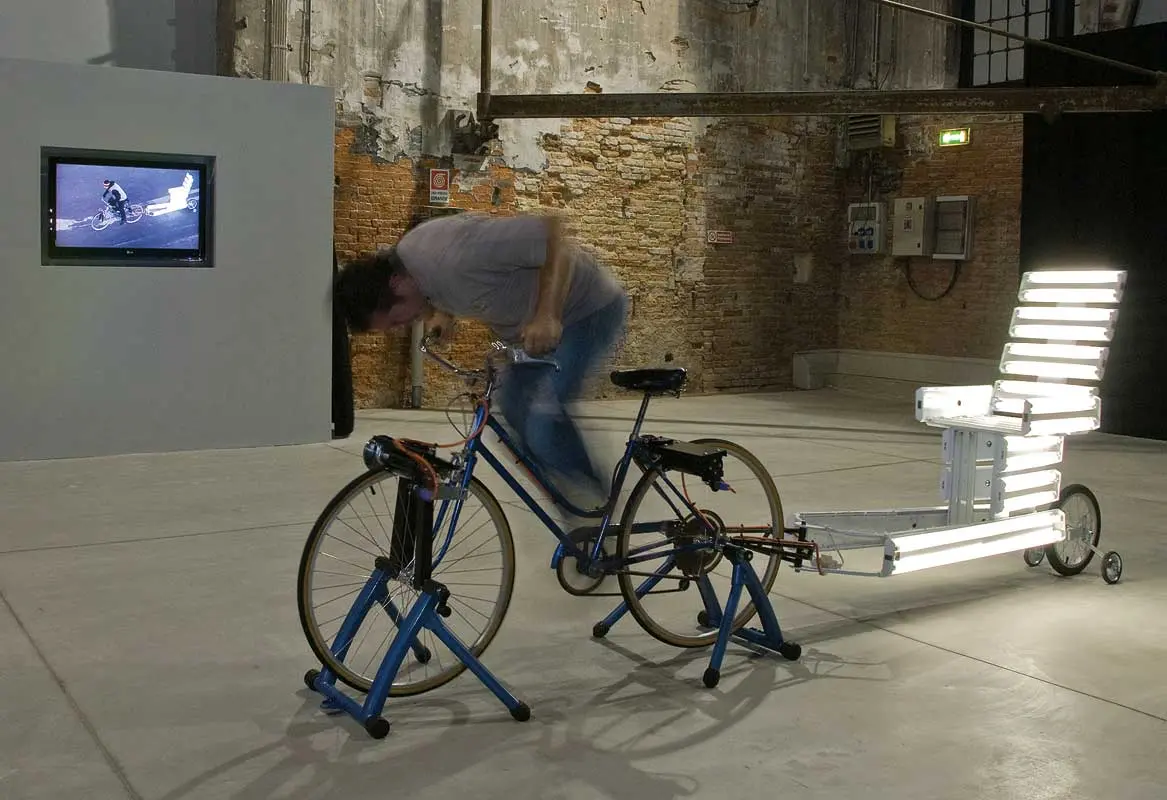
Navarro’s dialogue with Minimalism has a much longer history of which the reference to Kelly is only the latest iteration. Commentary of his work often begins with comparisons to Dan Flavin, who used neon bulbs as his primary medium. In addition, Minimalism had a very different mode of addressing the spectator than had prior sculpture. Often large scale and repetitive, objects by Donald Judd, Sol LeWitt, Carl Andre, and Tony Smith confronted the viewer with their materiality, creating what at the time was considered an aggressive presence.4 Navarro’s Die Again (Monument for Tony Smith), 2006-2009, produced in collaboration with Courtney Smith, references Tony Smith’s Die (1962), a six-foot steel cube which according to the American Minimalist was based on the proportions of the human body—too large for an object and too small for a monument. Navarro’s version is a twelve-foot cube made of steel and plywood, but, unlike Smith’s, it is penetrable. Inside is a dark maze with mirrored lightboxes and within the innermost compartment, a five-pointed star is implanted on the floor. The oppressive phenomenological experience of Smith’s cube is here replaced with an intense psychological one, calling forth feelings of alienation and disorientation. Contrasting Die Again’s ominous presence, the pretty colors and open format of Death Row lure us in like children.
The critic Anne Ellegood, in addition to discussing Navarro’s Minimalist precursors, astutely compares him to Carlos Cruz-Diez, stating that the two artists envision color as form.5 They also both play perceptual tricks on the viewer, calling forth embodied, not merely visual, responses. Their art, however, elicits different psychological effects. Cruz-Diez favors perception over content, and many of his pieces, while containing formal variations, address their spectators in similar ways. Navarro experiments with form and perception as a means to tackle content. He approaches viewers not as universal entities but as situated individuals and uses diverse mechanisms to engage their attention. Though Death Row’s phenomenological dimension guarantees that it will have an effect on any seeing person, what each spectator experiences will depend on her or his mindset and background. Of course, there will be those who respond with childlike wonderment and walk away, but others may feel apprehension or fear as they stare into the void. Maybe they will ponder their own mortality or meditate on the consequences of illusion and deception.
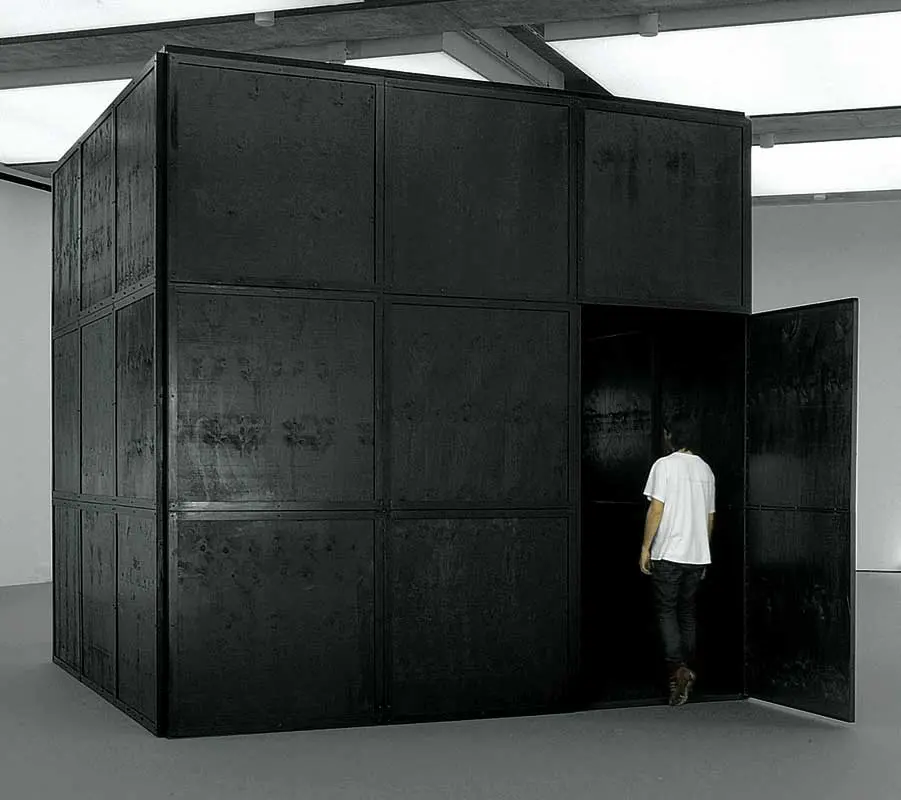
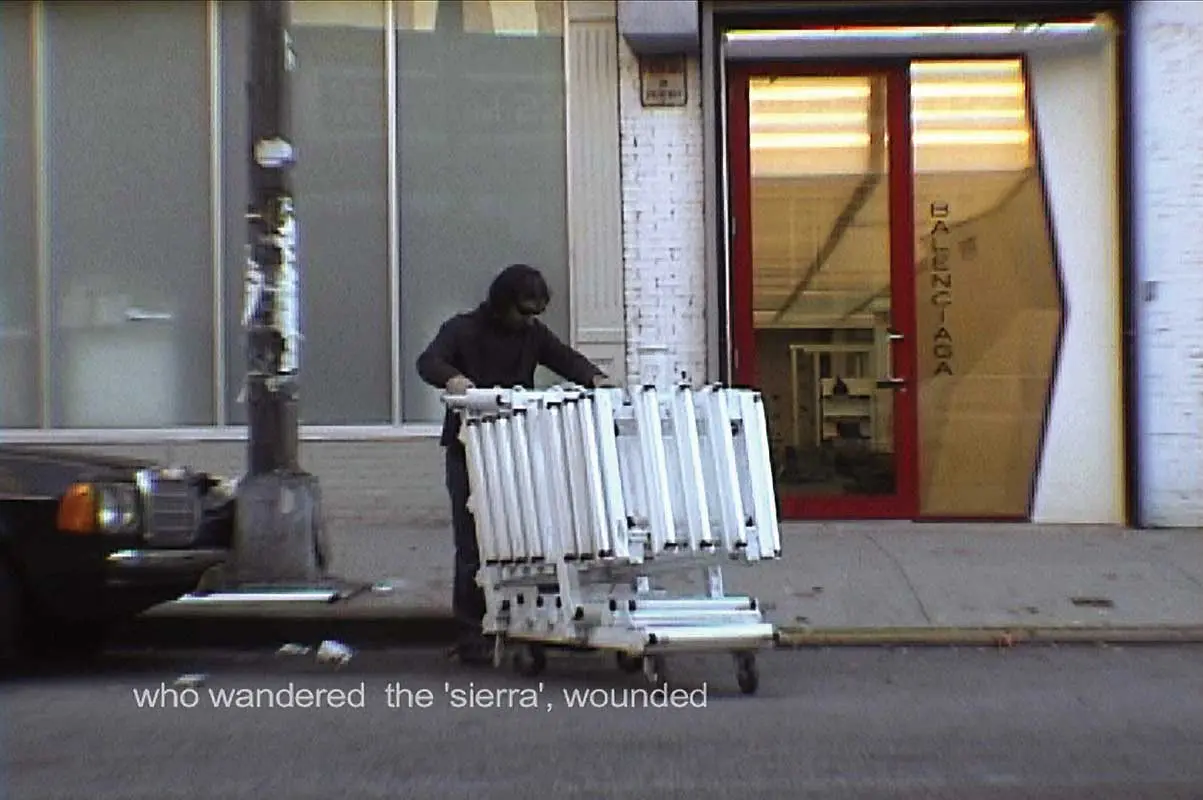
Lest a viewer not realize that Navarro’s intent is often political, or at the very least social, such a piece as Resistance would help to reveal his agenda. This is part of a trilogy of objects and videos that began in 2004 with Homeless Lamp: The Juice Sucker in which a shopping cart made of neon bulbs is powered by electricity stolen from a city light fixture. Flashlight: I Am Not from Here, I Am Not from There (2006) features a young man who siphons fuel from a car to power his neon-bulb wheelbarrow and makes his way through desolate streets. As mentioned above, the sculpture Resistance consists of a bicycle that carries behind it a light bulb chair. A generator is activated by the action of pedaling, which turns on the lights of the chair behind the bicycle. A spectator mounted on the sculpture would not be able to see the fruits of his or her efforts, but they might follow the actions of the man in the video, making his way through midtown Manhattan. While the protagonist furiously pedals to keep the lights of his chair illuminated, neon lights shine from every corner of the city, calling attention to a culture of needless consumerism and waste. The accompanying soundtrack is a version of the song We Don’t Need Flags, slyly alluding to the tension between global and local that informs much of Navarro’s work.
One of the precedents for Resistance is Marcel Duchamp’s Bicycle Wheel (1913), the famous readymade wheel mounted atop a stool that initiated a new era for art. Whereas Bicycle Wheel reconsidered the object of art by removing the use-value from functional objects (the wheel, the stool) and questioning the notion of authorship, it also involved the viewer directly by calling on him or her to turn the wheel. Navarro reconstitutes the bicycle and infuses it with a double function: transportation and power source. His piece recalls Maurizio Cattelan’s Dynamo Secession (1997), of two bicycles connected to a generator that operates a light bulb by turning the pedals. Cattelan’s bicycles have been exhibited with museum guards or manual workers doing the pedaling and thereby exposing an uncomfortable class distinction between gallery visitors and the largely invisible custodians who install the pieces and watch over space. Navarro, by combining his piece with a narrative of an action being achieved and placing the burden of pedaling on the audience, once again demands a committed spectator.
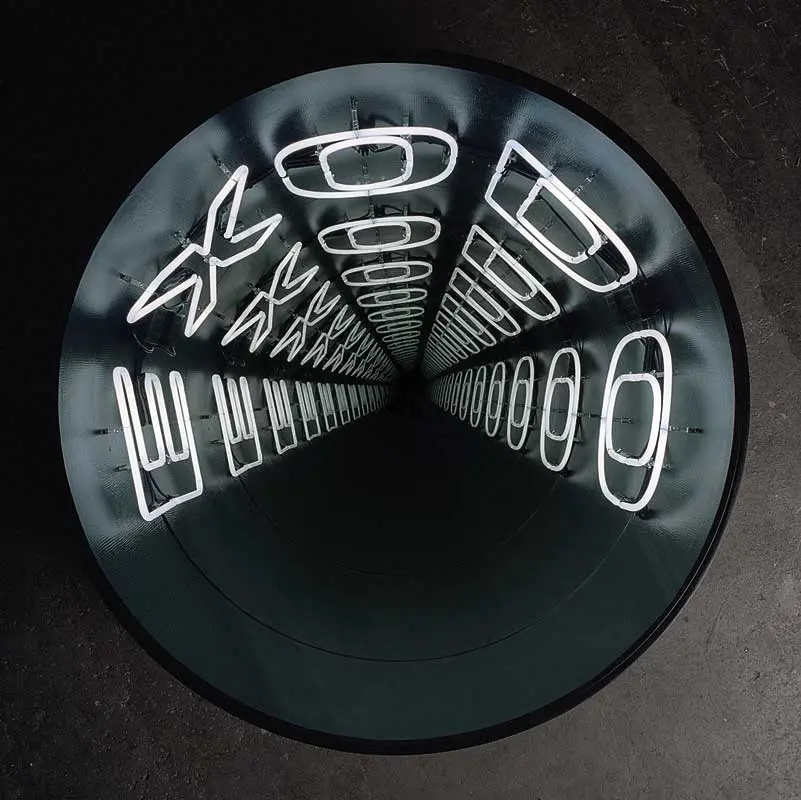
Bed, the third and very different piece exhibited in Venice, is a new category of object for Navarro consisting of words formed of neon bulbs that give the illusion of extending downwards towards infinity. Often the meaning of the words is linked to this structure, such as in Echo (2008) or Exodo (2009). Bed, however, may as well be called “This Is Not a Bed” because instead of the dependable and comfortable solid horizontal surface that the word promises us, we are confronted with a void. Illusory empty space becomes the primary medium. The letters provide the only anchor, and their message is not always reassuring—one of the objects, produced in 2009, is titled Die.6 For the most part, these sculptures render the spectator powerless: playing off of the dichotomy between the brain and the body, Navarro shows us that vertiginous sensation and its accompanying fear win out over rational thought. In other words, we cannot focus on the words conceptually as we peer into the bottomless pit. Perhaps this binary between reason and terror could serve to illustrate how philosophical musings are incompatible with situations of extreme duress—here lies the challenge for the Latin American artist. Our discussion of Jara’s dilemma has come full circle.
Navarro’s creativity shows no sign of abating in his second decade as a New York-based artist; on the contrary, his growing reputation allows him to take ever greater risks by pushing spatial boundaries and offering more explicitly political and socially critical content. This is not to say that he should lose the ambiguity and humor, which has made his work so engaging and dynamic. But it would be wonderful to have the opportunity to see something like the magisterial ¿Dónde están? outside of Chile.
NOTES
1. The body was eventually recovered by Jara’s wife, the author of a book about his life and death. See Joan Jara, Victor: An Unfinished Song. (London: Jonathan Cape, 1983).
2. English translation by Joan Jara, courtesy of Iván Navarro.
3. In particular, see Anne Ellegood, “Resisting Flags” in Iván Navarro: Threshold (Milan: Charta, 2009), 16-40.
4. In particular, see Michael Fried, “Art and Objecthood,” Art and Objecthood: Essays and Reviews (Chicago: University of Chicago Press, 1998), 148-172.
5. Ellegood, 20-21.
6. This piece references Tony Smith’s Die (1962), previously discussed.
TATIANA FLORES
Assistant Professor of Art History at Rutgers University.