
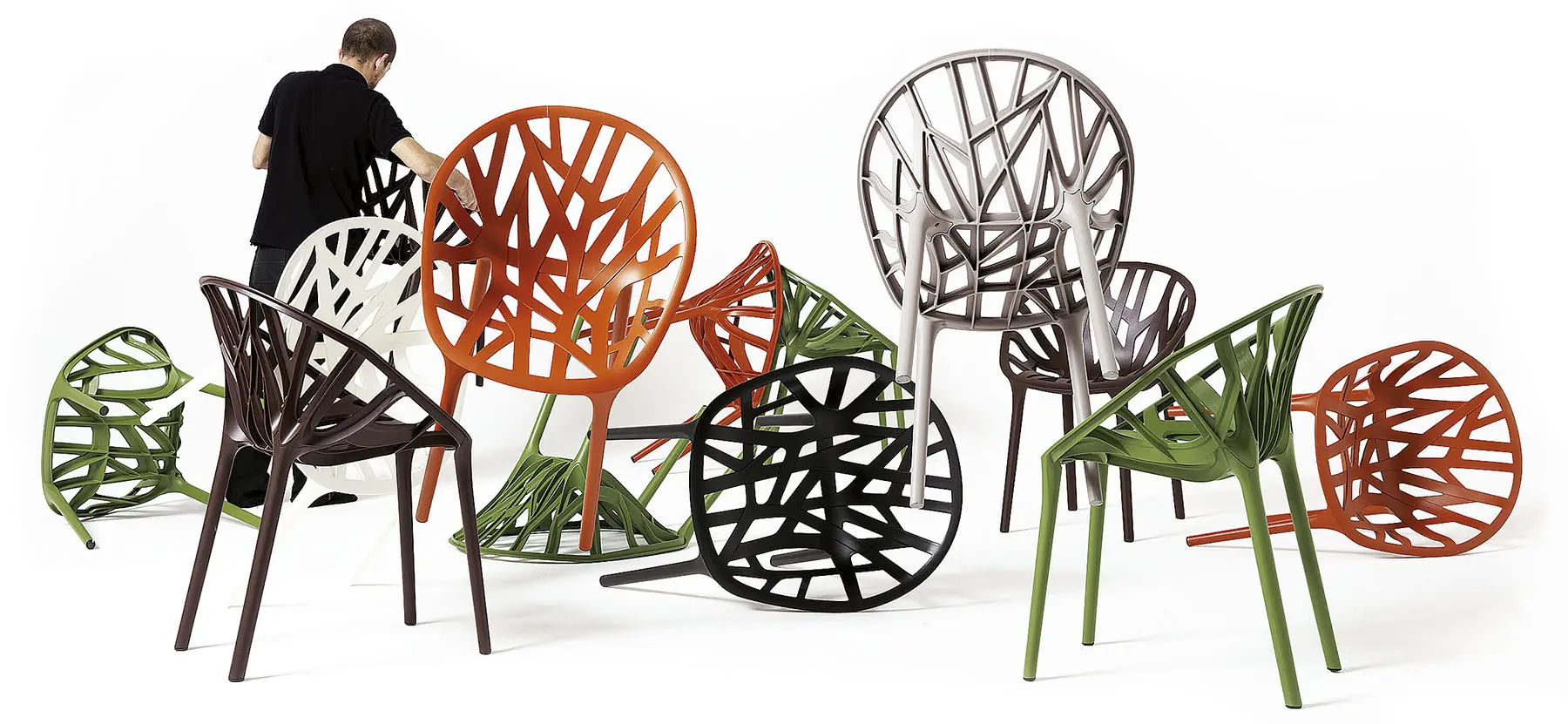
The border between art and design is once again at the place where they should have always been, given the origins they share: as a free-transit, passport-not-required zone. While contemporary art museums insist on thinking about the uncertainty of borders, the global scene raises the reminder that historically many artists have devoted themselves to design and that this discipline has been the linchpin element of movements and avant-gardes born in and claimed for itself by the art field. On the other “side,” the modern movement—which, starting in the 1920s, pushed into exile from the modernisms what they had of expression—was unable to massively conquer the public and for four decades was only central to the project-thinking community. With such a dogmatic side (all for and because of: function, series, synthesis…), designers couldn’t freely exercise their artistic needs. They guarded their work against any inklings of art (you know, the requirement of responding to a problem) and those who launched into a different artistic course often changed their attitude. As if an element of unfaithfulness were seeping through, and they had to disguise it.
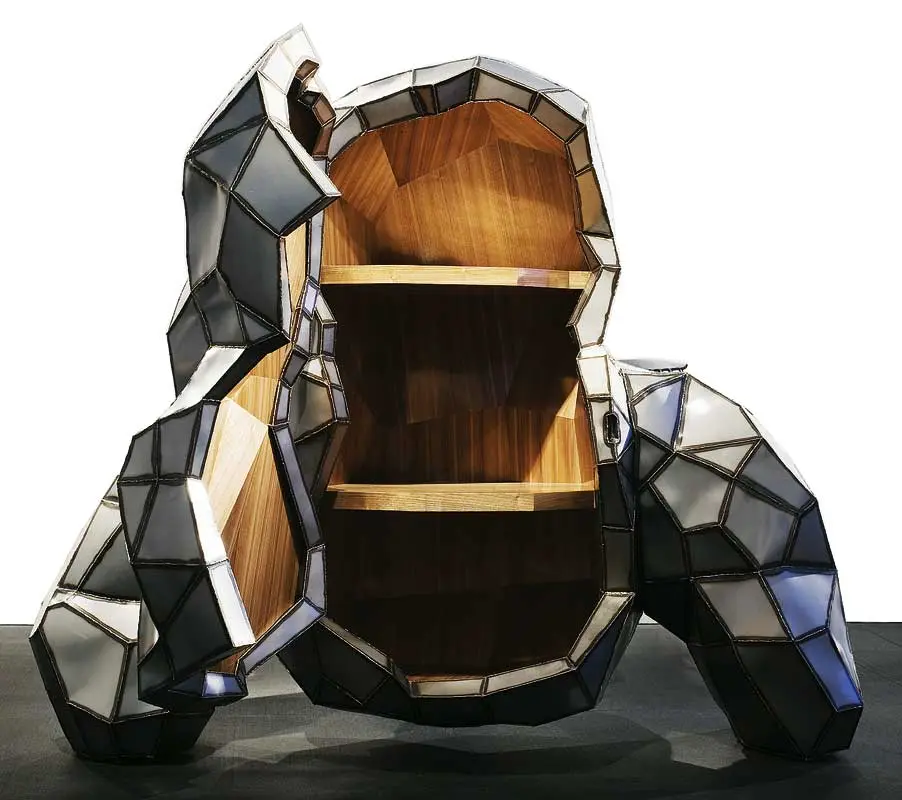
The first separation took place with the banishment of ornamentation decreed by the modern movement, historically vaccinated with Adolf Loos’ sentence (Ornament and Crime), who charged against the adornments of Art Nouveau. In this way, a steely militancy on the straight design began to take root, which turned the modern movement into an ideology rather than an aesthetic preference. Today, when ornamentation has once again acquired the corpus of a soul, both architecture left behind prisms and launched itself after plastic volumes, after organic forms (quite often ornamental), and designers allowed themselves to be artists.
Some use art to speak conceptually of design and electrocute established truths (curatorial propositions that, up until very recently, came exclusively from the contemporary art world). Others let into their functional designs the expressive freedom dictated by their artistic genes (or at least their artistic drive). For them, art often is a seductive limit that allows them to move outside ideas that only aspire to do good business with something ephemeral.
“Because of its antiquity, art is the mother of many disciplines, but I don’t believe design to be a child. Or perhaps it is an adopted child. Why?,” wonders Argentine designer Ricardo Blanco. And he hastens to answer: “Design was born out of people’s needs and transformed utilitarian objects into something more acceptable and desirable. That evolution from the acceptable through the needed through the acceptable to the desire is a pathway not necessarily followed by art.” In his view, in rendering to make an object desirable “we appeal to certain strategies used by art, such as aesthetic quality. Given that art has appealed to many other strategies—communication, the merely perceptual, political engagement, ugliness, cruelty—it is also true that design nowadays appeals to some of them as well, such as engagement, for instance to ecological causes.”
Among the art resources or contexts used today by design, Blanco mentions public and private collecting, although reminding us that “design has also generated situations of its own that had been later taken on by art, such as the multiples in the 1970s since the design has always been serialized production and while it has taken from art the notion of the unique work, it does it keeping the potential for reiteration open.”
It should be necessary by now to ask the first overarching question: why do designers retain a certain delight in being called artists, while artists dislike being called designers? It seems that the expiration date for this formula has already passed. Meanwhile, various and sundry aspects confirm the porousness of the border: more designers making art and more artists making design, more collaborative works, more new markets, more collecting of design.
Let’s use as a border pass Volumen, Sergio Avello’s VU meter situated in the Malba yard in Buenos Aires: this work is often mentioned (an aesthetic indicator of sound in real-time) as an example of environmental, electronic, site-specific art. And why not urban design? This work contains a (color) pattern halfway subjected to aleatoriness (the city’s noise level) that turns on rows of turquoise, orange, or red lightbulbs according to the intensity. Thus emerges a key concept for the divide (?) between art + design: the concept of pattern.
Patterns are, above all, border crossings,” says art historian Annette Tietenberg.1
It must be because their emotional content, like that of ornamentation, brings manufactured objects close to traditional definitions of art.
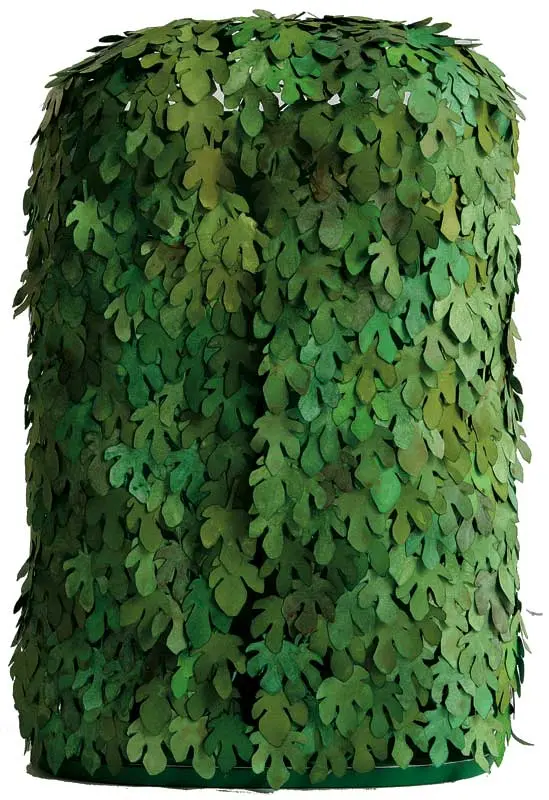
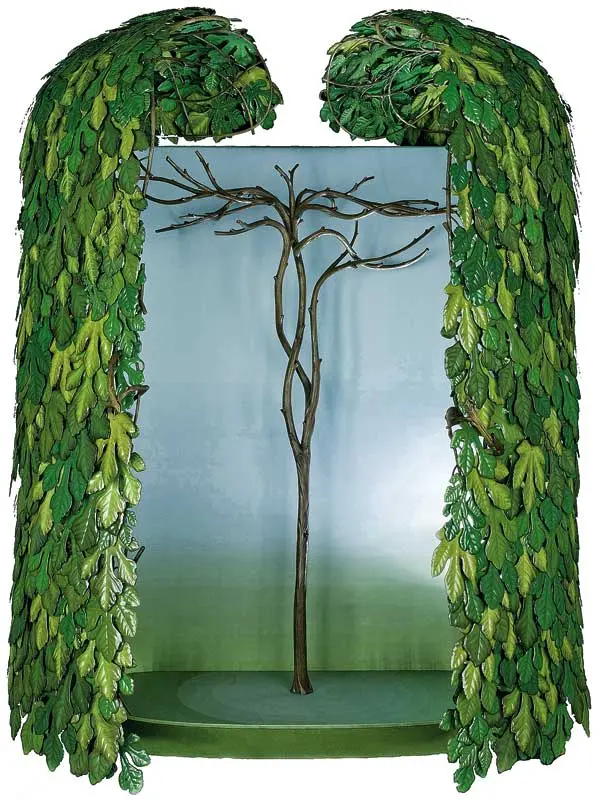
It was in the 1990s, in the Netherlands—which knows a thing or two about avant-gardes—that a generation emerged that gave institutionalized (and reversible) name to the turns of the notion of a border between thee two cousins: At the Eindhoven Academy, Design Art or Art Design found a special booster in the audacious Li Edelkort, who drove forward the generation of Tord Bontjee, Maarten Baas and others, pushing them beyond the antiquated dogmas of industrial design and towards a more updated expression. Nourished mostly by this generational collective, this year Art Design had a superb show at the V&A Museum in London, from July to September: Telling Tales, Fear and Fantasy in Contemporary Design, curated by Gareth Williams. In three dimmed rooms, Williams deploys the best Brit museographic tradition and great sensibility to narrate that delicate border, which he placed in three historical stages of his story: the fairy tale, the Baroque novel, and the advent of psychoanalysis. A brief tour is worth the effort. Inside the first room, typical forest sounds drown the space in green darkness, where every object refers to the climate of the fairy tale or of fables: a dollhouse created by Jurgen Bay based on assembled furniture and blankets; a solid-wood armoire to which Maarten Baas gave static movement, and which seems to shake like Little Red Riding Hood when she finds that her grandma is really the wolf. Or a firwood closet—first being the most tragic of all trees— which, in closing its casing of leaves, could transform the humblest hanging tatter into a fine piece of embroidery. And also a black chair, upholstered with overhanging leather straps, ready for the witch to sit down. Both are by Tord Boontje, a designer always able to take us back to childhood without stops. “Against all the evidence of an industrialized, globalized, high-tech world (or perhaps because of it), some designers are seeking refuge in the pastoral settings of fairy tales, myths, and nature. In doing this, they return us to our most primitive state. Surely their design is not escapist, naïve, or deliberately childish. Their coarsely made objects seem to derive from Northern Europe’s mythology or fairy-tale narratives. Or from the Garden of Eden. But these designers are deathly serious in their attempt to rip us from everyday alienation and reconnecting us with a state of innocence and wonder,” says an emotional section of Williams’ text.
Another key aspect of this border is collecting, now promoted by Design Miami, which enlists as a Miami Basel satellite the entrepreneurial efforts of Ambra Medda and developer Craig Robins. While the business reinforces a new area of obsession for contemporary art collectors and gives the city a new input, a varied and conceptually solid program that adds value to the international design scene and, through the offerings of demanding galleries, also to its modern historical veneer.
Julien Lombrail, head of the London gallery Carpenters Workshop, is clear about the scene: “Ten years ago, there were only three designers working on what could be called art design or design art: Newson, Arad, and Hadid. They were entirely unknown to most art collectors and to the public. Today they are stars and have inspired a whole new generation led by Van Lieshout, Studio Job, Campanas, Bouroullecs, Random International, Baas, Reinoso, Jurgen Bey, Vincent Dubourg, Robert Stadler, Martino Gamper,” he says.
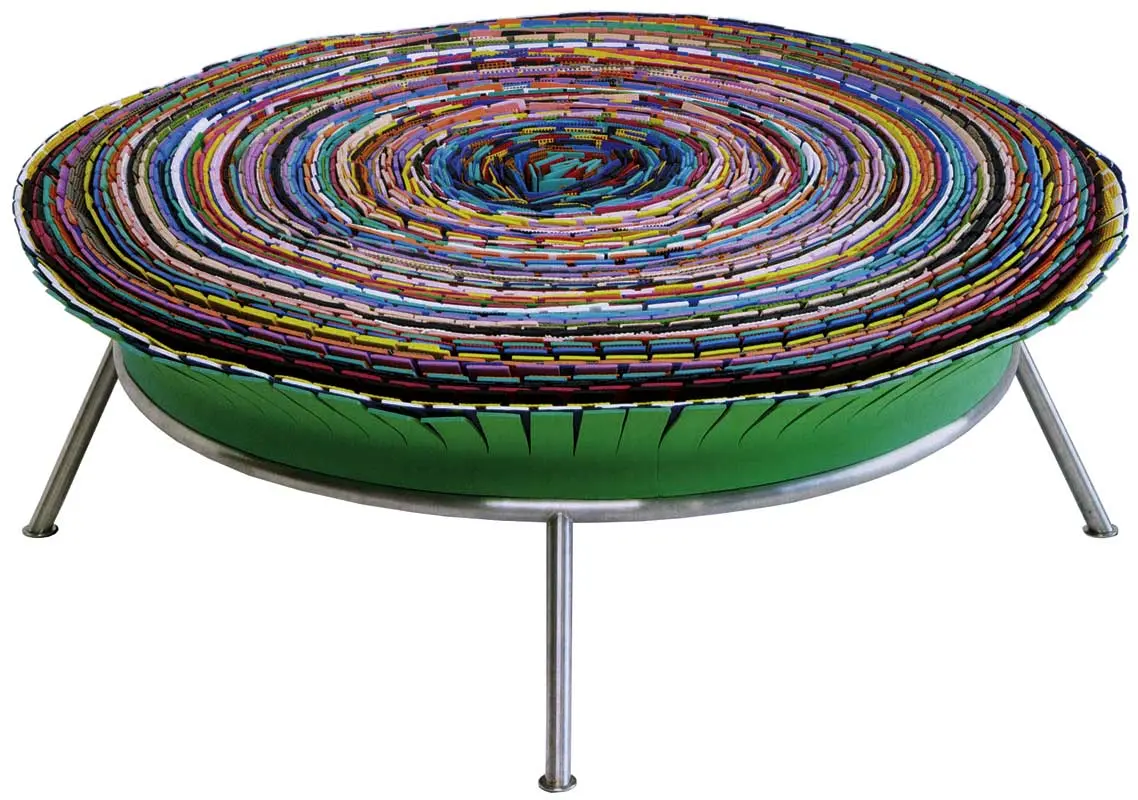
His perception of the Latin American chapter also centers on a triad: the Campana brothers, Fernando and Humberto, and Pablo Reinoso. “They are very different from each other and have their own strong identity, but both the Campanas and Reinoso are mobilizing people. They make works that do not require a whole education to be appreciated. That is the sign of a master… Design Miami favors a reality, namely that Art Design is already a part of ART: when you are an art collector, you collect paintings, photographs, videos, installations, and now art design is new territory,” he points out.
As Brazilian curator Adelia Borges notes, “the contemporary scene dilutes borders in general, and design could not have been the exception. In Brazil, a country of mixtures, there is always much border crossing. In that field, the standouts are the Campana brothers, Ovo Design (Gerson de Oliveira and Luciana Martins), Manus Studio, Jacqueline Terpins, among others.”
The push that Design Miami has given to collecting in this area and to the publicity of that porous border is evident, although many believe that, for a while, the inclusion of Design alongside Art Basel Miami Beach will remain at the level of “little fish holding on to the whale.”
Borges believes that even so, the news of the expansion in design collecting is good for all: designers, galleries, and collectors alike. “People started valuing design,” she says, “many had yet to realize its role and its importance. There are many paths for design: on the one side, there is industry and technology; on the other, there is art and culture. For those more closely linked to art, collecting is undoubtedly a new market alternative.”
The main guest last year at Design Miami was a prominent player in art design: Maarten Baas. Year after year this event keeps going deeper into the roster of the designers it invites (previously we had Zaha Hadid, Marc Newson, Tokujin Yoshioka…), and finally, it reached Baas. “His stuff is so paradigmatic: the chair you cannot sit on, with surrealist elements and connections to Dali; the series of play-doh furniture with his fingerprints bring forth the concept of the imprint, which is as old as the time of the caves. And this guy won the design prize this year: it is art. In the Renaissance sense of taking on absolutely all the media for design, he is in communion not just with art, but with all forms of art. The vocabulary of art, from the dictionary point of view, is the same as design’s,” observes Cielo Portas, an art historian who has covered the last three years of DM for the Argentine press.
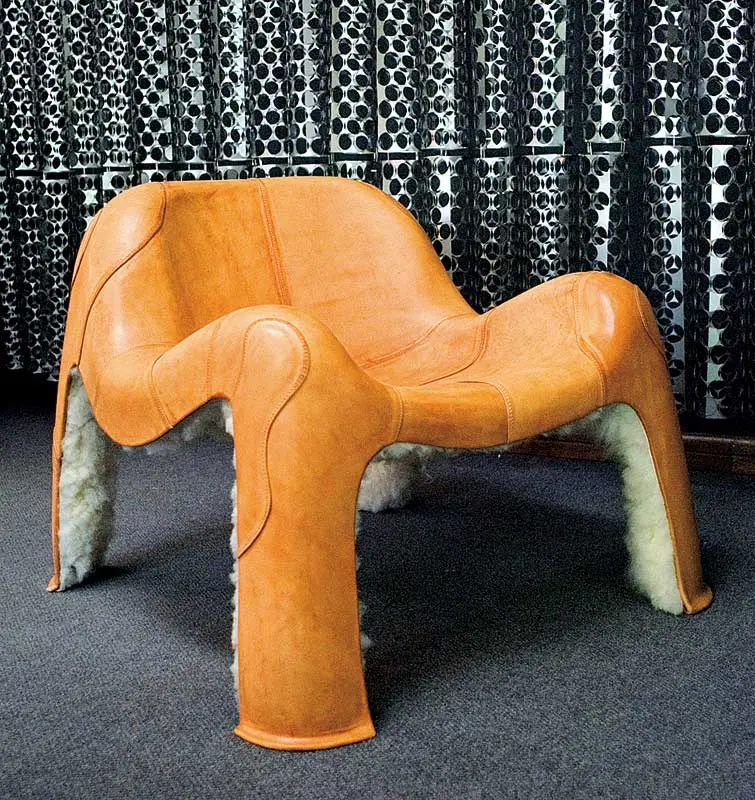
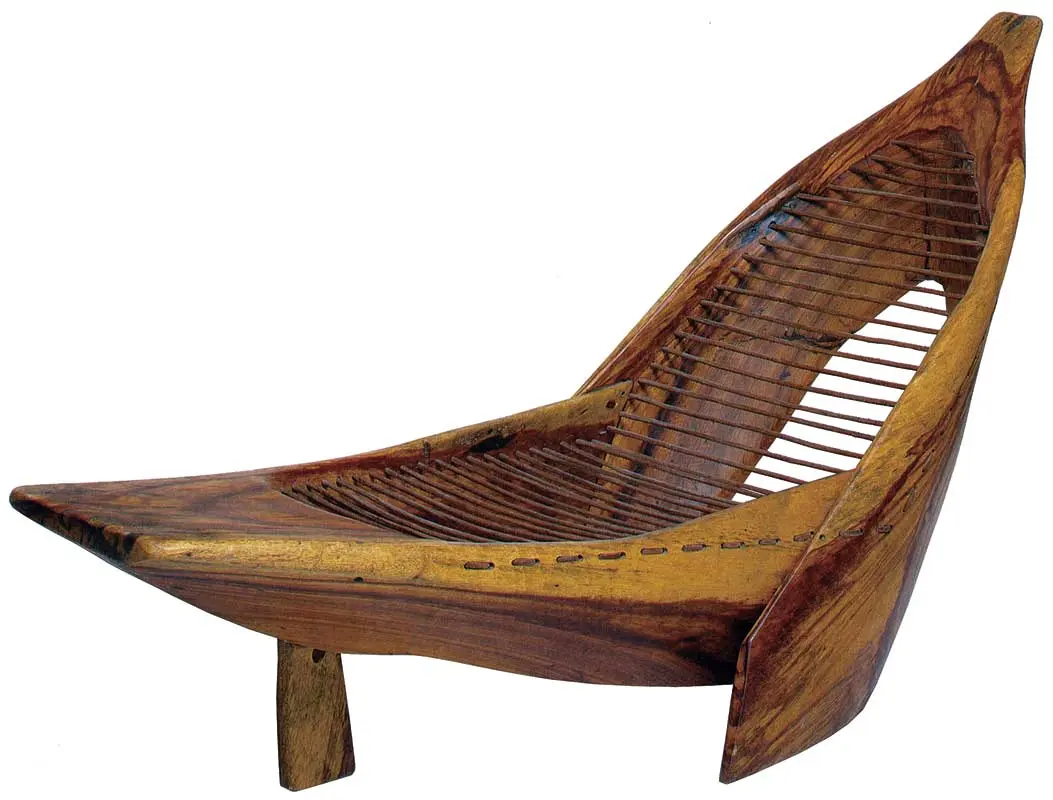
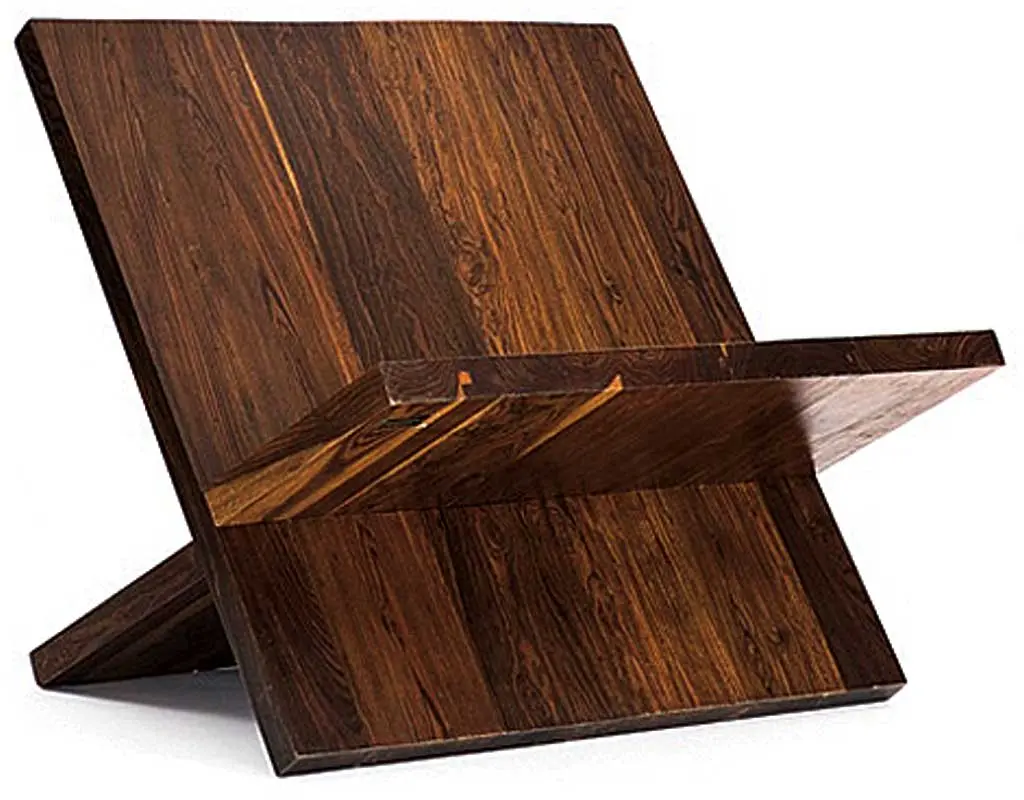
Although for this edition the theme was Ame/rica, there were few representatives from south of the Rio Grande. The best-represented countries were Mexico and, especially, Brazil. Ambra Medda mentions the variety of historical and contemporary design reaching the fair from this ascending power, mostly recruited by the Seculo XX Gallery (Joaquim Tenreiro, Sergio Rodrigues, Zanine Caldas, Julia Krantz, and Oscar Niemeyer). Meanwhile, the Campanas, who won the Designer of the Year award in 2008, came with Moss, from the U.S. Sebastian + Barquet represents the work of modern Mexican designers such as Pedro Friedeberg, Luis Barragán, Feliciano Bergar, Mathias Goeritz, and Juan O' Gorman. And the energetic Colombian-American Cristina Grajales came with her Hechizoo compatriot, Jorge Lizarazo, who seeks to incorporate the rich tradition of Colombian textiles into contemporary proposals. The work presented by Paraguay’s Pedro Barrail also reinforces the notion of creating a narrative around the dialog between Latin American handicrafts and Twenty-First Century design proposals. “The pyrogravure for his Castor chair was made by an Indian artisan from the Pai Tavytera ethnic group, the Supersexy chair is upholstered in the same way in which we cover the thermos used to drink tereré (iced mate) all day long and have the sheep wool used in the countryside for horse riding; the Loop chair, with an iron structure, is wrapped in rattan, the most widely used material in lawn furniture, so necessary in our country given the heat,” says Claudia Casarina, curator of a show of Barrail works for the Museo del Barro in Asunción.
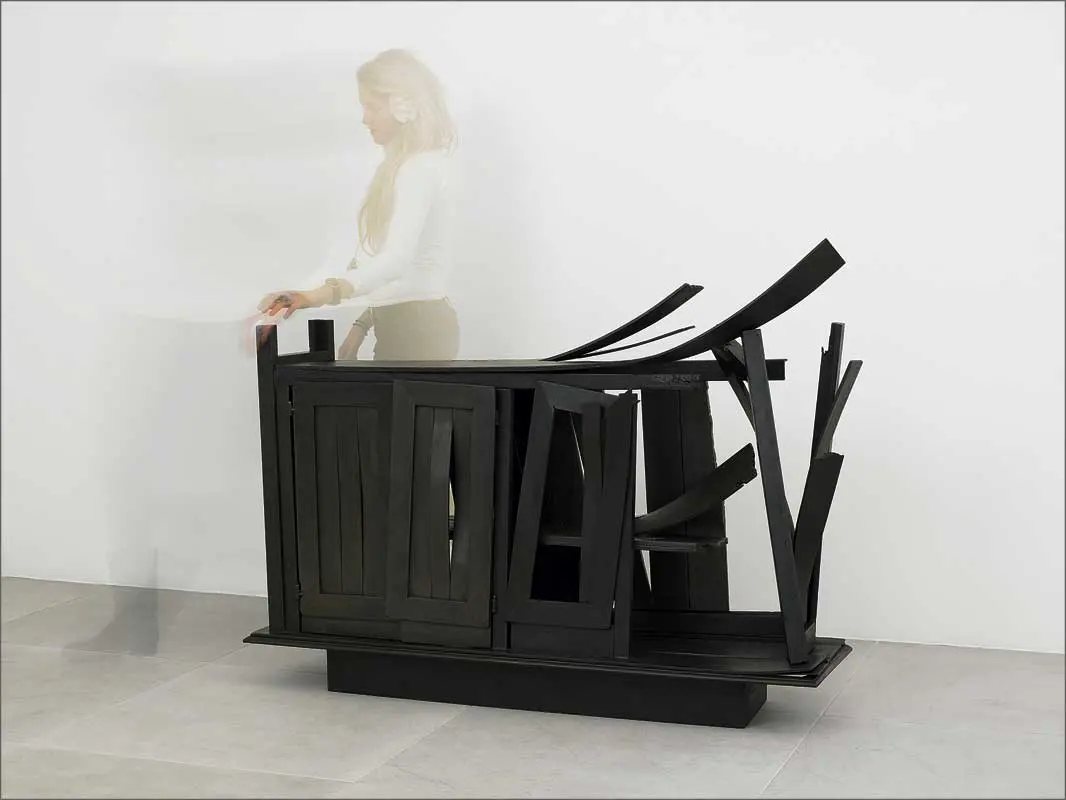
Also signed with Grajales is Chilean artist Sebastián Errázuriz, who surprises us with a poetic reappropriation of discarded furniture, fallen trees, and taxidermy. Thus, like a babushka of novelties nestled one inside the other, the good news about how well-trafficked is the border art/design is that this region remains yet to be explored. It is a vast quarry containing powerful native artisanal traditions, a strong and prolific Twentieth-Century modern movement, and new generations of professionals able to combine those legacies with talent, a rich material palette, and renewed Latin American feeling.
NOTE
1. Patterns in Design, Art, and Architecture (Birkhauser, 2007).
CAROLINA MUZI
Journalist and independent design curator.