
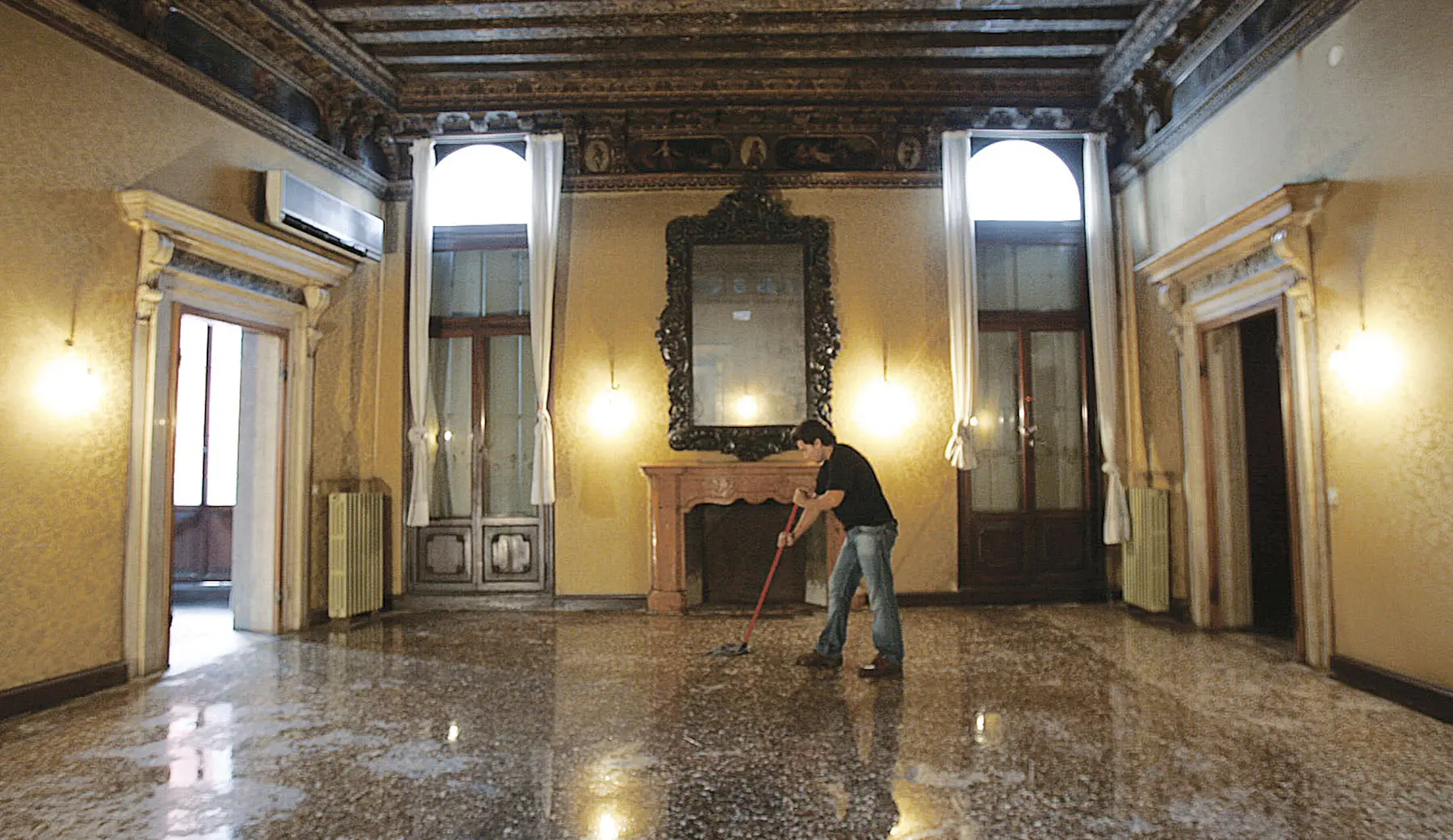
The work presented by Teresa Margolles at the 53rd Venice Biennale signals a radical turn in her formal trajectory. She has set in motion her abandonment of the forensic workshop and replaced it with a performative engagement with bodily traces and indicia. This means that we will need to distinguish between a “before Venice” and an “after Venice” in her oeuvre, albeit with the “after” having been already anticipated in the “before” since the history of Margolles’ work is not evolutionary but regressive-progressive.
The closest memory I had of a work by Margolles was her montage of a vaporization device presented at the first Triennial de Poligrafía in San Juan, Puerto Rico, in 2005. What was a work by Margolles doing at a triennial dominated by the criterion of displacement in printmaking? The audience entered a gallery filled with vapor, which clung to their clothes, hair, and skin. The body of the audience in the movement became the support for micro-pulverized residual traces of other, inert bodies. In previous vaporizations, the water used by Margolles came from the morgue and had been used for washing corpses. However, the night before her opening in San Juan, a yola boat overflowing with Dominican immigrants—mostly women—had capsized in the Strait’s waters. In the early morning, the remains of some of these women washed ashore in some of the nearby beaches. Teresa Margolles decided to use only seawater from that area of the Strait, as a tribute to those women who had lost their lives in migratory transit operation. The issue of the border was already being formulated as a space of visual operations. The problem for Teresa Margolles was not to illustrate situations but to problematize the very condition of displacement.
Borderlands and migration are not issues that can be “aestheticized,” but a field of reference for those who would set the representability of bodies in crisis. This is why displacement is at the center of Teresa Margolles’ work. A displacement of images, of image-reproduction technologies, of iconic references, of emblematic signs that allow access to privileged sites in the system of art. At the end of the sequence, there is a term for all that: formal transmigration.
Teresa Margolles is one of Mexico’s most renowned and representative artists. While we know that renown and representation drive practices of social recognition that trivialize the character of the work of art, in this case, nobody questioned the selection of Margolles to represent Mexico in Venice, even if some key Mexican art-world institutions withdrew their financial and political support after the process of mounting the operation had already begun. In other words, Margolles’ real work at the 53rd Venice Biennial had Mexico’s institutional players as its protagonist, by rhetorically building the subtraction of a presence that, in the same measure of its own enunciation, ended up affirming Margolles’ own formal decisions. In this way, this work has a reverse side that is even more significant than its manifest version.
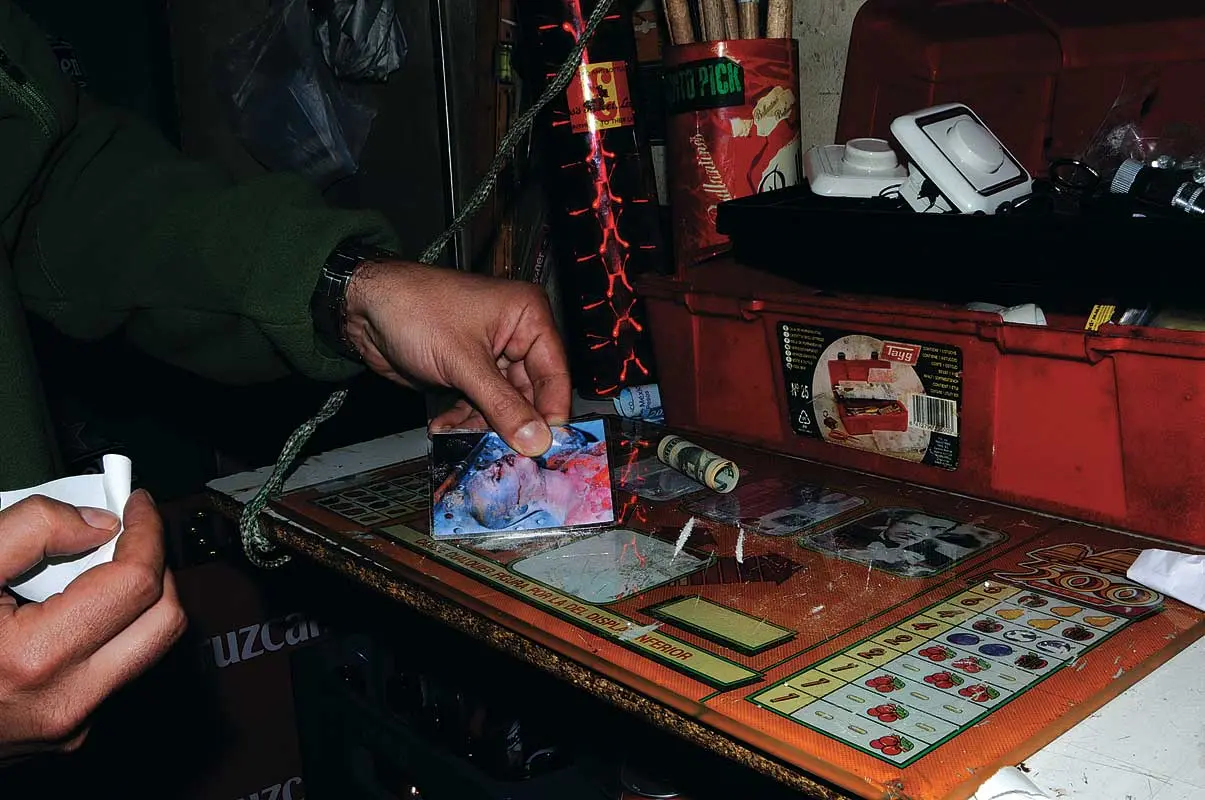
Mexican authorities and the country’s media questioned Margolles’ presence at the event. Why should an artist be allowed to use public money to critique the official discourse? The title of the work had already answered these objections: ¿De qué otra cosa podemos hablar? (What else can we talk about?).
Four years after my experience in San Juan, the day after the opening of the Mexican Pavilion on June 5th, I visited Venice’s Painting Academy, where I was able to contemplate a work by Giorgione, La nuda, that is the sole remaining vestige of a fresco painted in 1597-1508 at the Fondaco dei Tedeschi.
It is the restoration of a painting of a nude woman, whose disposition goes from ochre to a sandy-yellow coloring. The effect in the gallery is similar to that of Pompeii’s ruins. The petite mort staged by the image of the nude woman foreshadows the peremptory presence of ritual crime. This information suffices to promote archaic connections that set in motion Jean Clair’s observation, in his The paradox of the Conservative, about the unconscious of painting, when he refers to Picasso’s and Braque’s initially radical works. However, the quote acquires a supplementary meaning in relation to the first use that Edgar Morin makes of it in The Lost Paradigm, in the chapter devoted to painting and funerary practices. Texts that make reference to how in the earliest tombs showing signs of complex funerary rituals, bones are found covered in ochre pigment. In the Chilean art scene, hard political realities have made many experts in excavations in recent years. After Pinochet’s return to the country after his detention in London, the local justice pushed forward some cases that had fallen into oblivion, so that for months the news was week after week dominated by images of excavations of human remains.
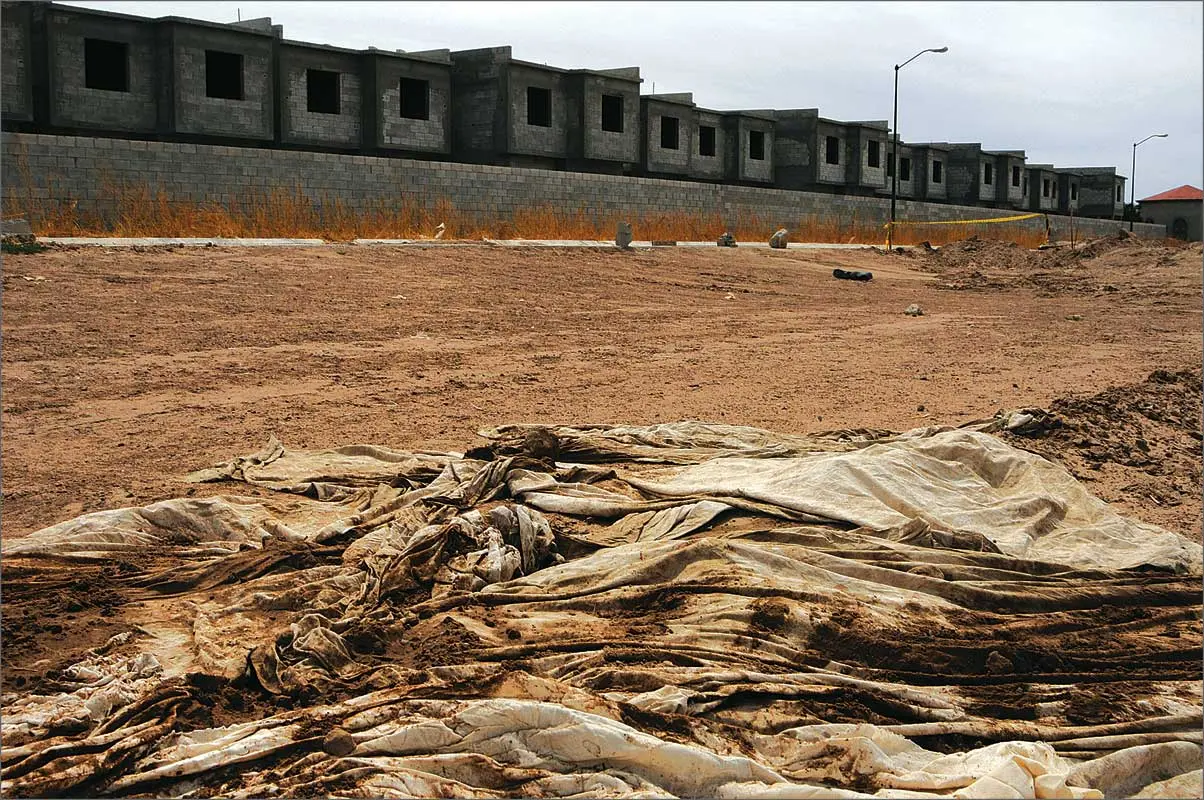
That was the year that a large-scale exhibition of Mexican art and culture opened in Santiago, whose organizers had at some point the idea of recreating an archaeological site for didactic purposes. The truth is that for Chilean schoolchildren that kind of space was connected not with old civilizations, but with a present still to be fully absorbed. What the Mexican functionaries did not wish to clarify was that a simulated excavation site in a Museum-guaranteed model was a cover-up operation over a situation that was already becoming rather common in their own territory: killings as part of the struggles between drug-trafficking gangs, characterized by the exhibitional saturation of dismembered and unentombed bodies on the side of remote roads or abandoned labs, at the ominous margins of villages in the country’s northern border.
Let’s not kid ourselves: the ostentatious exhibition of corpses acquires in this context the value of a speech act that, among other things, constructs the threat directed at the permanence of basic social networks. Because what is absolutely at play in Teresa Margolles’ work is the issue of sovereignty, at least in two senses: that of notes-sentences and the ostentation of luxury.
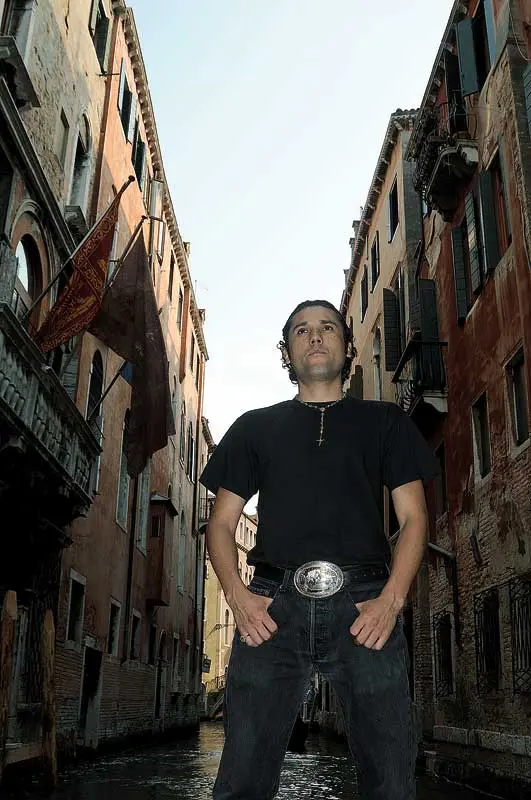
In his brilliant presentation for Ajuste de cuentas, a show at Madrid’s Salvador Díaz Gallery between November 2007 and January 2008, Carlos Jiménez argues that these works signal a point of inflection in Teresa Margolles’ career.
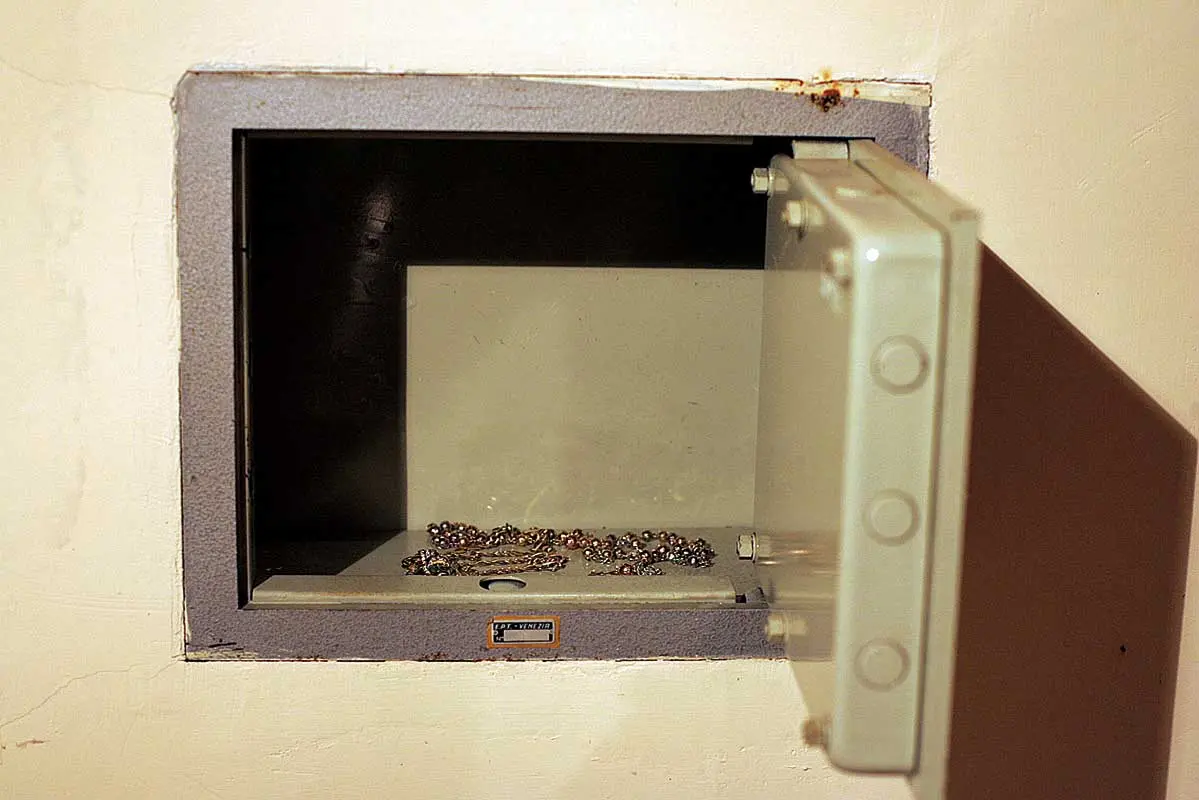
Let’s see: the sentences. For her show Decálogo, presented at Museo El Eco (2007), she wrote on the wall 10 death sentences and exhibited a couple of jewels that could only be distinguished from those displayed by the narcos because hers, instead of diamonds, had pieces of glass picked up from crime scenes. That was the basis for Ajuste de cuentas (2008), which refers not only to a play with words regarding the activities of an accountant in his logbook but that what is mounted in those jewels (what is “adjusted”) are glass beads (cuentas in Spanish.) Material with no value, obtained through the collection of shards, presented as the counterpart to the glass beads that characterize Venice’s own handcraft-tourism industry.
But while Carlos Jiménez argues for an inflexion in these works by Margolles, I on my part want to propose the notion that what she presented at the Venice Biennale introduces a projective regression that reinforces the recourse to pictorial anticipation and over-determination in her performativity.
The title of Teresa Margolles’ work in Venice is foreshadowed by her visit to Santiago de Chile a few years back. I have always thought that there is in Chilean art a certain aversion to the representation of bodies in painting. Giorgione’s painting sped up my reparative connections and the color ochre became a welcoming surface for the hypothesis invented by Edgar Morin about the guarantees for Man’s process of hominization. What guaranteed such a radical step was not Man became homo faber or homo economicus, but, above all, homo demens; and Man was homo demens on the basis of an operation in painting. Only through painting was fear of death exorcized and a sense of continuity in human life recovered.
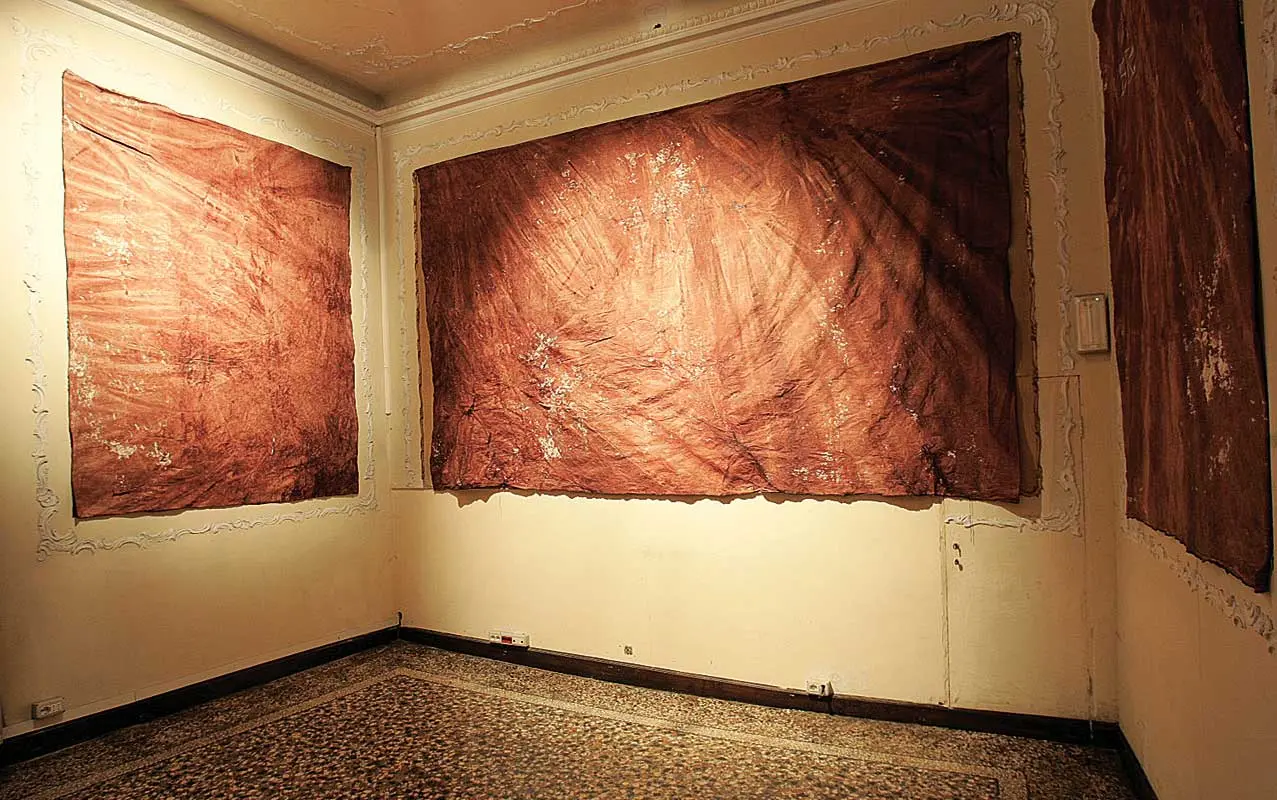
What else could we talk about, if not of the repair of civic tearings in the policies for the representation of bodies? Giorgione’s paintings, on exhibit at the Academia, emerges as the archaic referent of a procedure that Teresa Margolles stages in order to recover the painting’s own filiations. That’s what her collection of the indicial traces of the bodies of murder victims from the Northern border region, using absorbent fabrics, is all about. This act expresses the dissatisfaction that undergirds a wounded sense of civic belonging—wounded by the super-charged threat that makes it impossible to reconstruct the image of the present.
Teresa Margolles’ own work is subjected to the formal violence of the distinction between the photographic reproduction of corpses at the morgue and the recollection of the fluids of a traumatic presence, coagulated by the desire for permanence. I do not concur with the use of words such as “artistic potential” for the photographs of corpses. These photographs of bodies at the morgue acquire a different valence through a shift in spaces of discursive circulation that puts into play the status of the museographic, on the basis of the diagrammatic dependency that forensic medicine’s dispositional rhetoric puts into play. How big is the artistic avant-garde’s debt to criminology?
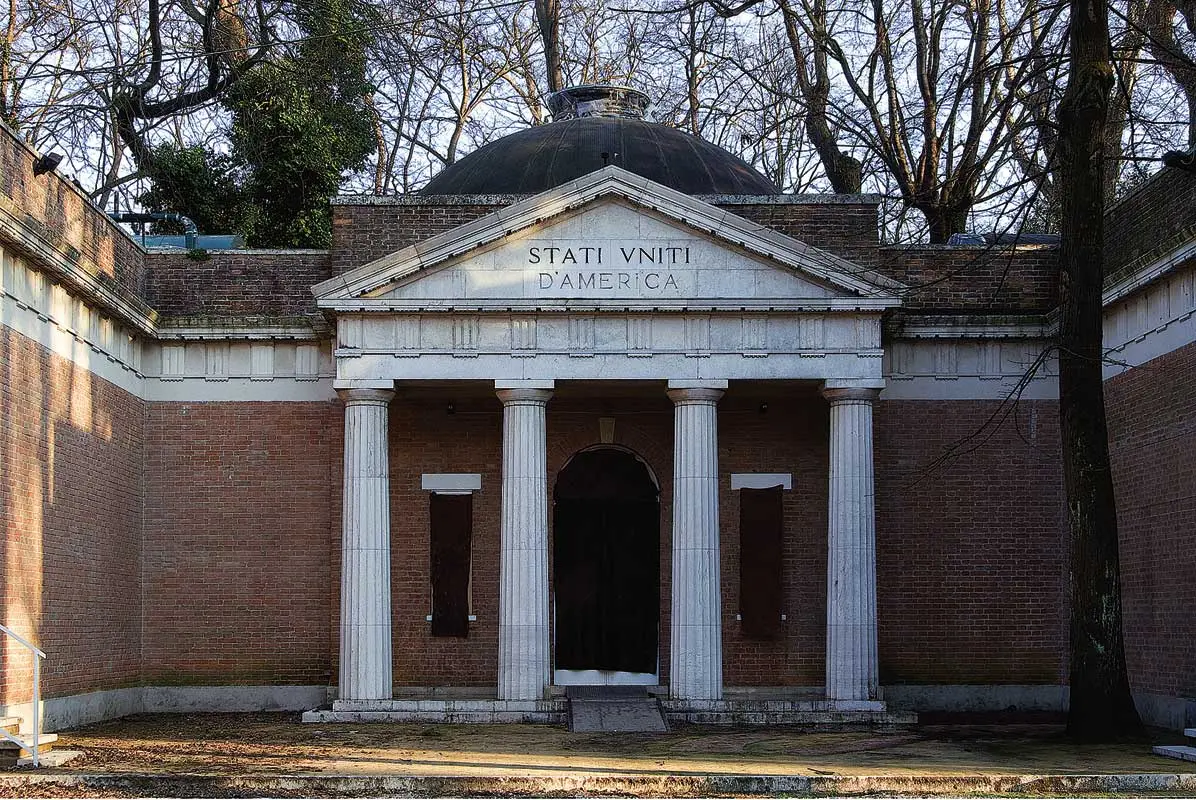
In her Venice work, Teresa Margolles transforms her gesture of transgression of the framing limits of art into an implicit analytical model. I have already announced this: her work is localized and de-localized at the edges of the artistic institution, reverting access to the impostures of the binomial “art and politics.” In that sense, the most significant work in the Venice montage has been that one that converts the blood-soaked fabrics into exterior awnings covering the windows and the access to the United States Pavilion. What Margolles did was to signal a line of work between the ochre pigment of Giorgione’s La nuda and the caput mortum of those canvases arranged as elements covering every possible image. There are no images of those murdered bodies from the northern border region, only the traces of their deferred corporeal presence. The façade of the US pavilion was occluded through a closure that redirected its visibility as a space of blockage of political representation, transforming it into a neoclassicallly risible model in the midst of those climate-controlled gardens for the vanity of States. I’ll say it again: in my view, Teresa Margolles’ Venice work is not what was seen at the Rotta-Ivancich Palace but in the symbolic closure of the US pavilion.
Never before had more accurate boundaries been so severely erected as they were here; this artistic practice is the guarantor of visibility for the separation that immigration authorities reconstruct on a daily basis in their border control. We must argue that the work at the US pavilion corresponds to a two-page photographic spread included in the catalog. I will say that to my mind this is the catalog’s most important work and authorizes this edition as the reverse of Teresa Margolles’ work, rather than just as an ancillary piece. The term reverse here means rear-guard, referential support. But also sub-version, in the understanding that it is a version that runs under the flotation line of discourses about art. In this way, it demands to be worked as such, in a different discursive context, using critical tools that operating according to different rules for narrative work, articulating “theory” and “fiction” as only their authors have been able to do with such levels of analytical efficacy; authors with a well-known trajectory in the Mexican art scene, such as Cuauhtémoc Medina, Taiyana Pimentel, Ernesto Diezmartínez Guzmán, Elmer Mendoza, Antonio Escohotado, and Mariana Botey.
*All images illustrating this article are works that belong to the series ¿De qué otra cosa podemos hablar?
JUSTO PASTOR MELLADO
Art critic and independent curator. He lives in Chile.