
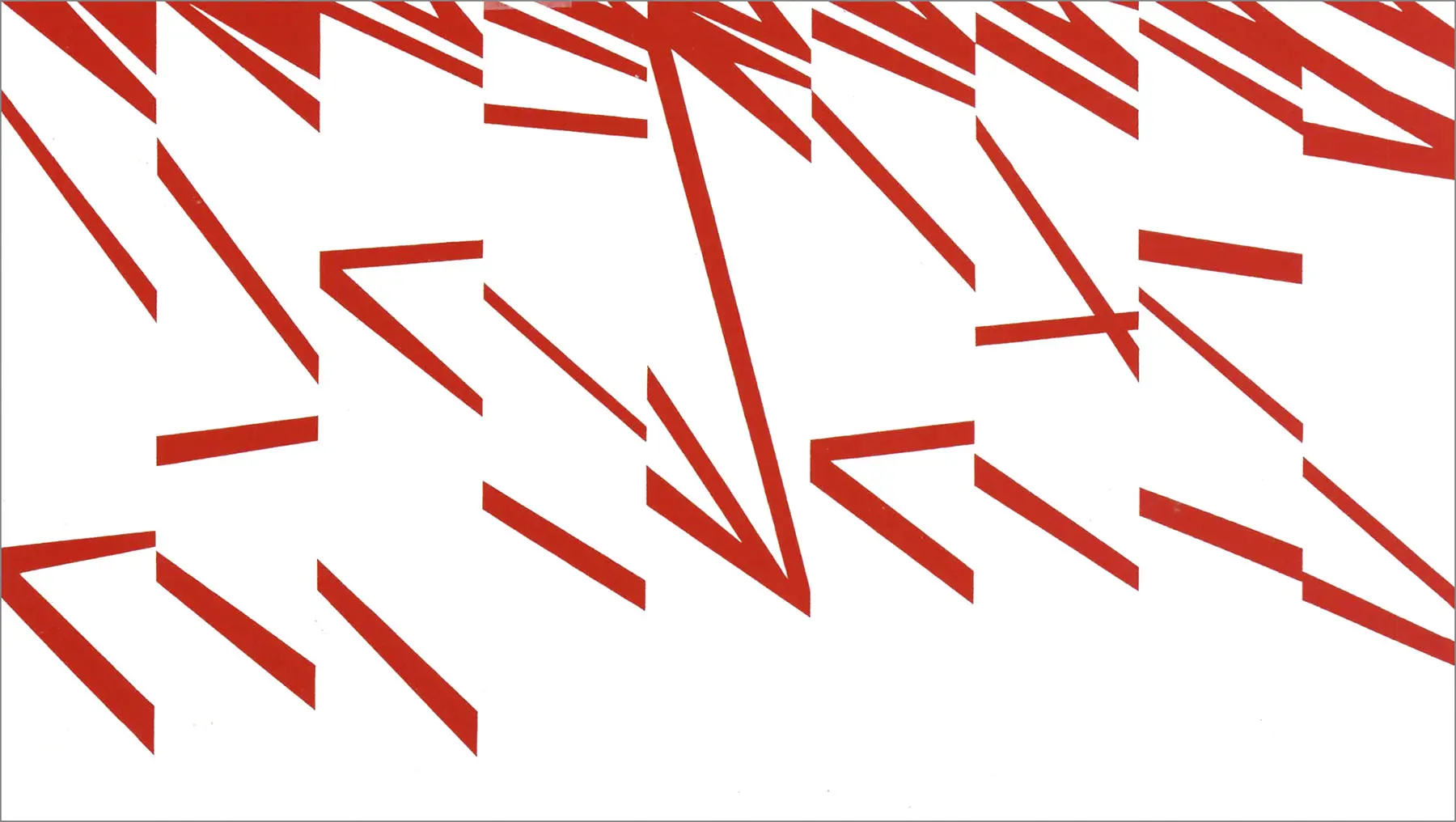
Constructive Spirit forwards the claim that, between the 1920s and the 1950s, North and South American artists were motivated by shared concerns. It is an argument that is more daring than it sounds; firstly, because it seeks to reveal artistic intention and, secondly, because it is built on foregrounding the formal qualities of art. The show’s organizer, Mary Kate O’Hare, Associate Curator of American Art at the Newark Museum, highlights visual and material commonalities of works by North and South American artists by pairing and clustering some ninety paintings, photographs, and sculpture in a series of galleries organized around the themes Urban Geometries, Universal Forms, New Realities, and Temporal Rhythms, which progress more or less chronologically. (Argentina, Brazil, Colombia, the United States, Uruguay, and Venezuela are the countries represented in the exhibition. Many works included are from the Newark Museum’s collection and on loan from the Colección Patricia Phelps de Cisneros, in addition to other institutions and private collectors in the United States and Latin America.)
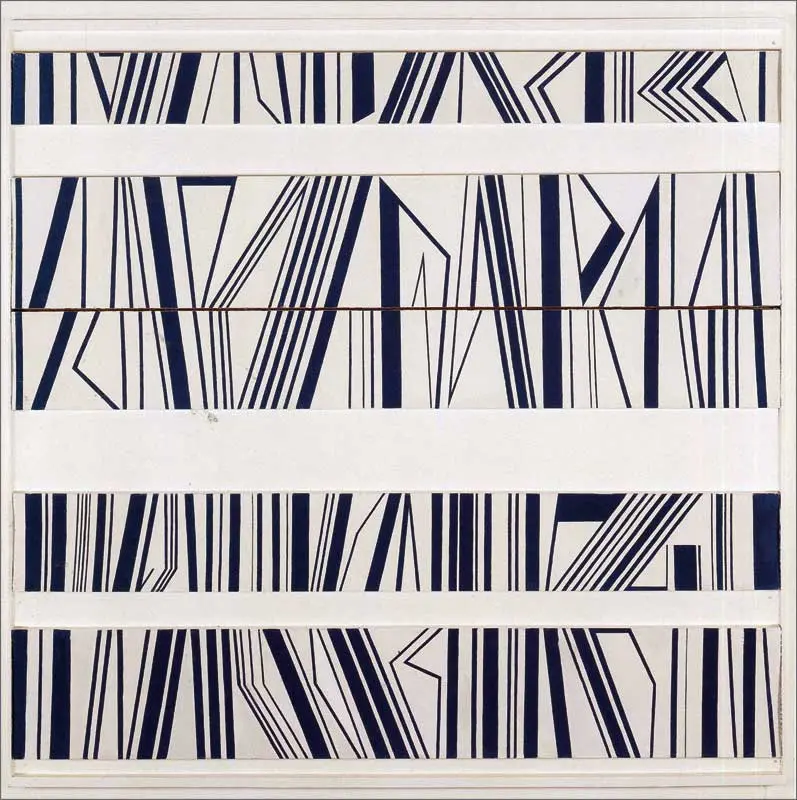
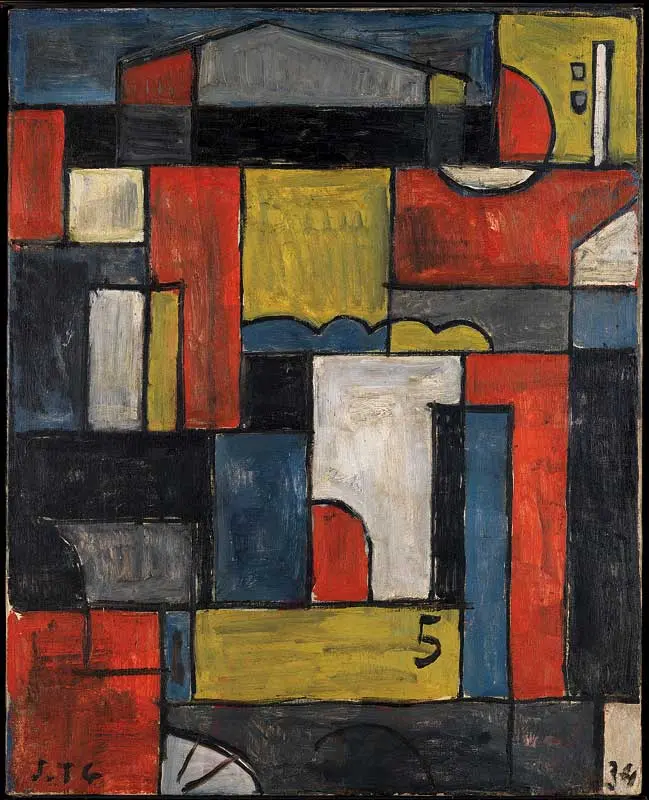
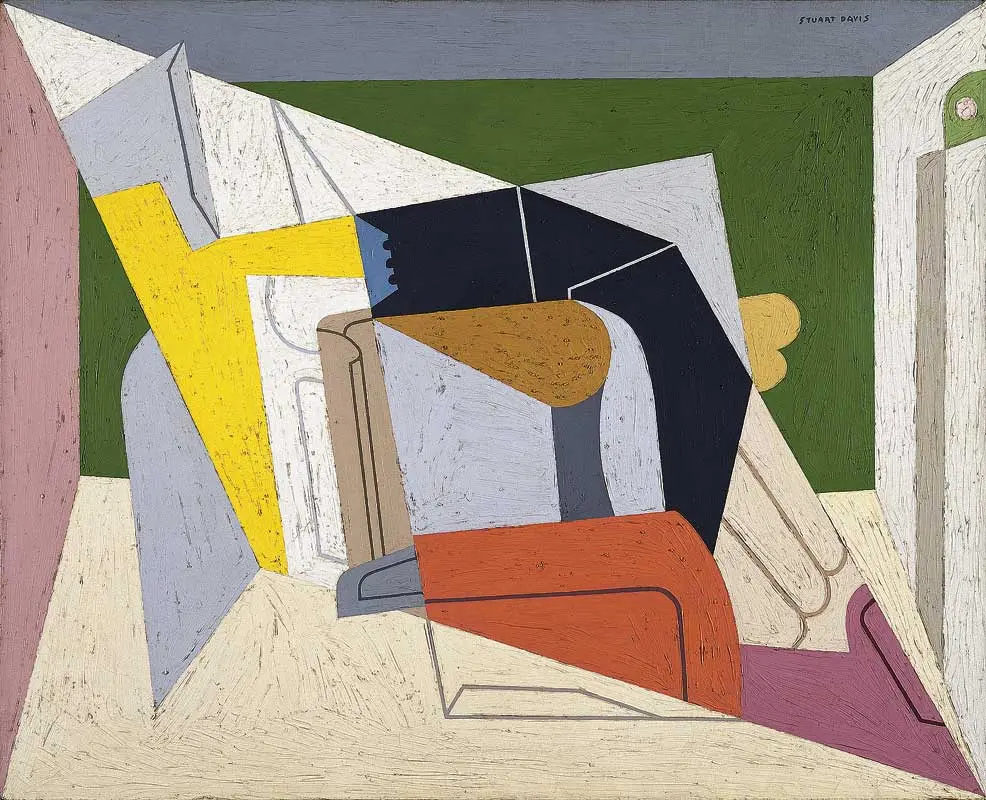
In the first gallery of Urban Geometries, O’Hare makes a strong case for the historical legitimacy of her argument with a wall of paintings and drawings by Joaquín Torres-García and Stuart Davis from the 1920s and ‘30s, including Torres-García’s Locomotora con casa constructiva (Locomotive with Constructive House, 1934) and Davis’s Egg Beater No.2 (1928), hung side-by-side. The final gallery in the show also foregrounds a significant historical moment of North-South exchange by featuring the kind of abstract painting and sculpture that appeared in the São Paulo Biennials during the 1950s, including Alexander Calder’s Triple Gong (in the 1951 biennial), and the hard-edged paintings of Lygia Clark, Fernando Otero, and Jesús Rafael Soto.
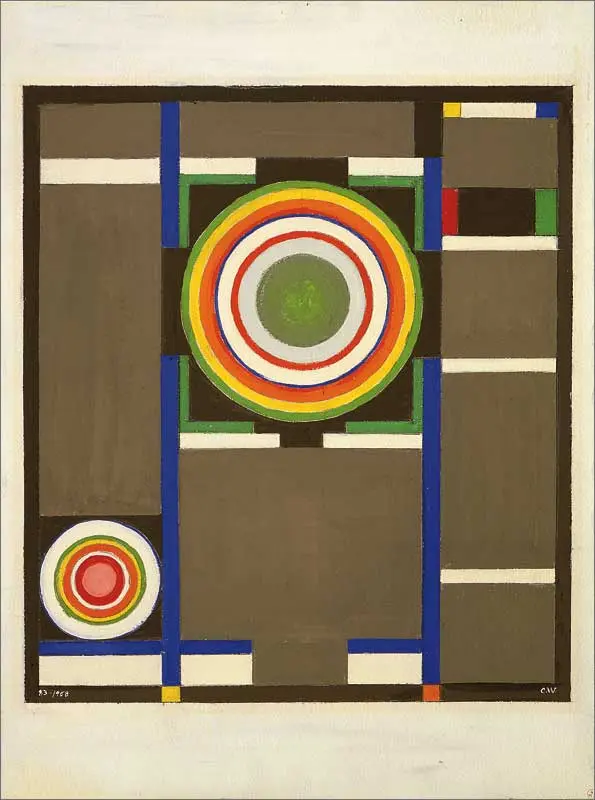
In her introduction to the catalogue—a substantial volume that brings together significant new scholarship on the period—O’Hare explains that she was inspired to organize the show by an encounter with a small gouache by Charmion von Wiegand, titled The Wheel of the Law (1958), which is related to the artist’s interest in Tibetan Buddhism. O’Hare tells us that von Wiegand collected Torres-García’s work, and she argues that Torres-García and von Wiegand both strove to imbue their art with mysticism they attempted to achieve by combining modern and ancient forms. Coming upon von Wiegand’s drawing in a corner devoted to spiritually inflected abstraction—a similarly diminutive black Ad Reinhardt from 1955 hangs diagonally across from her drawing—we begin to see this impulse in many works in the exhibition. That O’Hare makes abstract art’s most visionary aspect visible—its striving to transform the world by making it more harmonious, balanced, and pure—is one of the great strengths of this exhibition. It enlivens all the works in the show, making them look remarkably contemporary and fresh. (We also learn from the catalog essays and from a series of papers presented at a symposium that this idealism was often rooted in specific political and philosophical beliefs.)
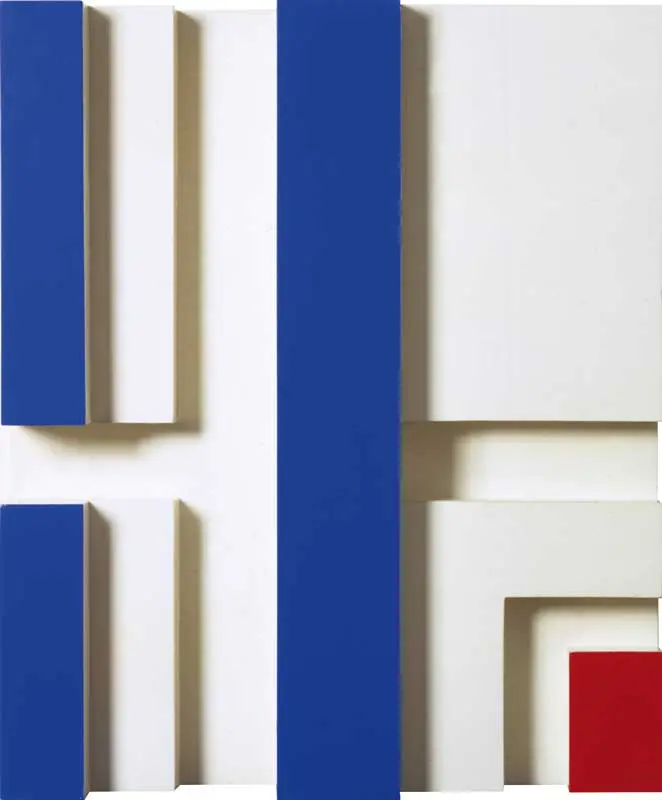
O’Hare’s thematic groupings display hints of these beliefs. However, the most compelling moments in the show occur when she demonstrates how artists from North and South America tackled similar formal problems. In the section New Realities, she does this beautifully by clustering works by artists who, during the 1930s and 40s, were experimenting with shaped canvases and three-dimensional painting. Charles Biederman’s painted relief Work No.15, New York (1938) and Willys de Castro’s Composicão modulada (Modulated Composition, 1953) look aggressively object-like and incredibly dynamic next to each other. Nearby, Relieve No.30 (Relief No.30) by the Argentinean Madí artist Raúl Lozza beckons across the gallery to Burgoyne Diller’s open, lattice-like “painting,” Construction # 16 (1938); and Juan Melé’s (also a member of the Madí group) shaped canvas, Marco recortado No.2 (1946) calls to Charles Green Shaw’s Polygon (1936), which, although technically part of the thematic grouping Urban Geometries, illustrates that the ambitions of artists making shaped canvases related to their interest in architecture.
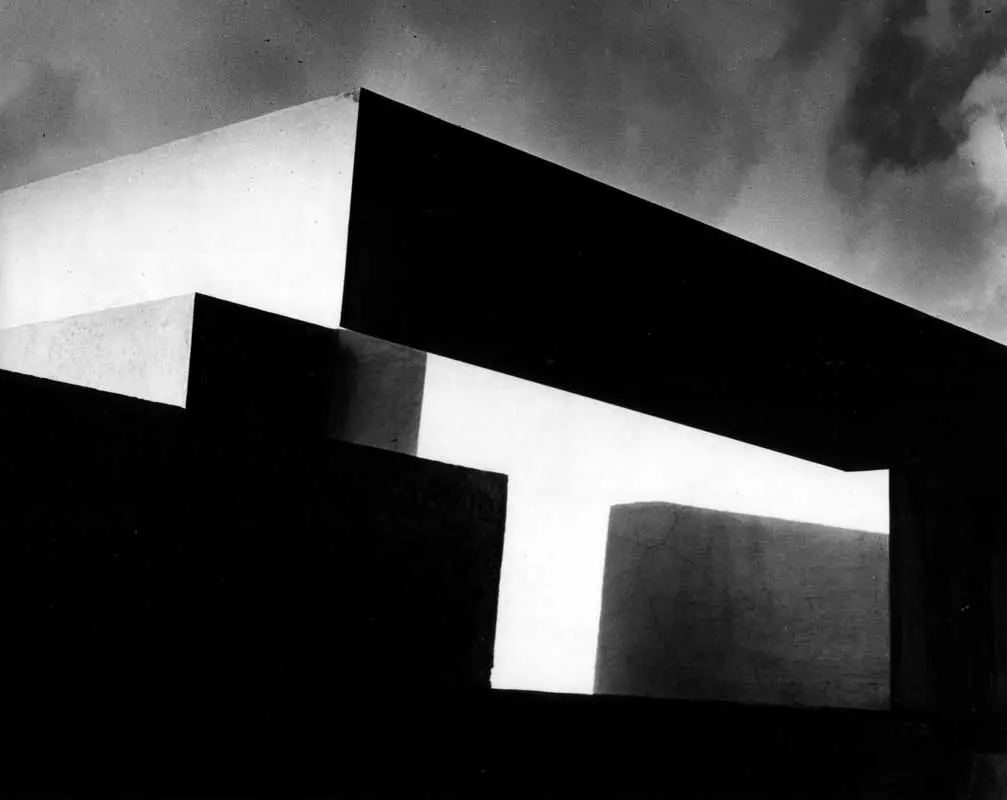
Another moment in the exhibition where O’Hare stages a series of extraordinarily productive visual comparisons is a long wall—also in New Realities—featuring photographs of urban modernity from the 1940s and ‘50s. It includes works by Aaron Siskind, Leo Matiz, and others who used the modernist photographer’s syntax of extreme viewpoints and aggressive cropping to create flat, abstract images of the city and its architecture. This display also shows photography as completely abstract in the works of Geraldo de Barros, who created a series titled Fotogramas (Photoforms, 1949) using a technique he developed in which he overlaid multiple negatives in the printing process. By using this technique to print photographs of São Paulo’s architecture he took during the 1940s and 50s, he rendered them complexly abstract.
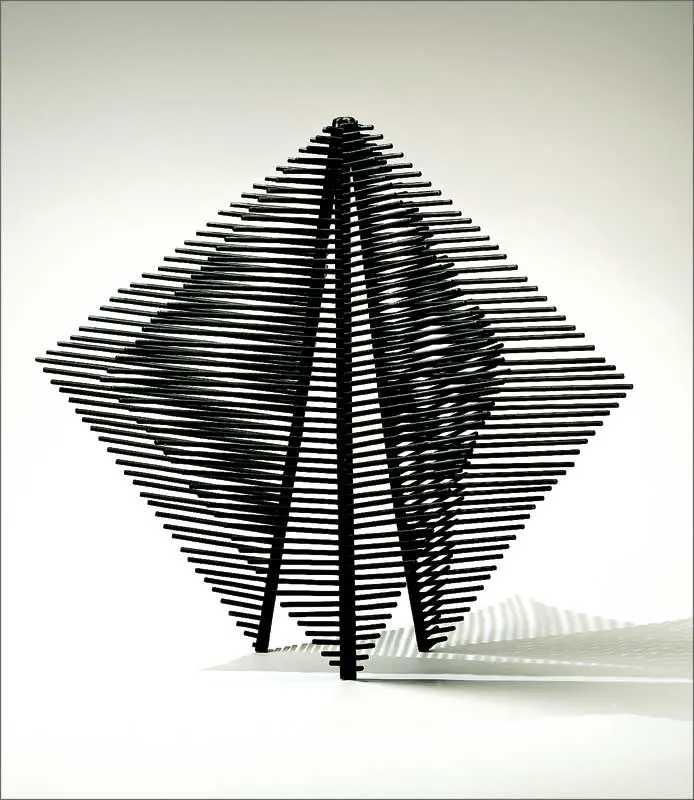
O’Hare stages the most effective comparisons among sculptures in the section New Realities, where we find industrial materials embraced by artists for visionary means. The shifting grills of Gego’s iron sculpture Gegofón (1959) appear enlarged and moving in a film of the sculpture which projects onto the wall behind the pedestal where it is displayed. Made by her Venezuelan peer, Carlos Cruz-Diez, who, like she, was associated with op and kinetic art, this film projection enlivened Gego’s sculpture, and made me wish O’Hare had included other films in the show’s galleries. The shifting shadows of this projection compliment Abraman Palatnik’s sculpture nearby. Titled Kinechromatic Device S-14 (1957-58), it resembles a vertically hung lightbox, except that its surface, which is made of white fabric stretched across the box’s frame, hums and glows as lights and metal mechanisms push and shift from behind it.
Paintings mostly look better hung according to the thematic groupings and sub-groupings O’Hare devises. This is especially the case in the final gallery of Temporal Rhythms, where pairings of Omar Carreño’s Relieve 1 (Relief 1) and Joseph Albers’s Oscillating C (1940), as well as Alejandro Otero’s Coloritmo 38 (Colorthythm 38, 1958) and Ellsworth Kelly’s La Combe I (1950) invite rewarding and sustained looking. There is, however, one instance in which paintings of North American artists suffer by looking inferior in the company of their South American peers. In a gallery devoted to Universal Forms, artists in the United States interested in Native American art fare poorly, mainly because many of the works in this gallery did not possess as clearly delineated foci of formal inquiry as the rest of the works in the show. This gallery could have been helped perhaps also by a more historical context. I appreciated a text panel in the last gallery of Temporal Rhythms, that explained the role of the São Paulo Biennials in promoting abstract art in Brazil and South America, and would have liked more moments to consider specific contextual issues related to the works on view (but not so many that the looking at O’Hare’s installation compelled me to do was interrupted).
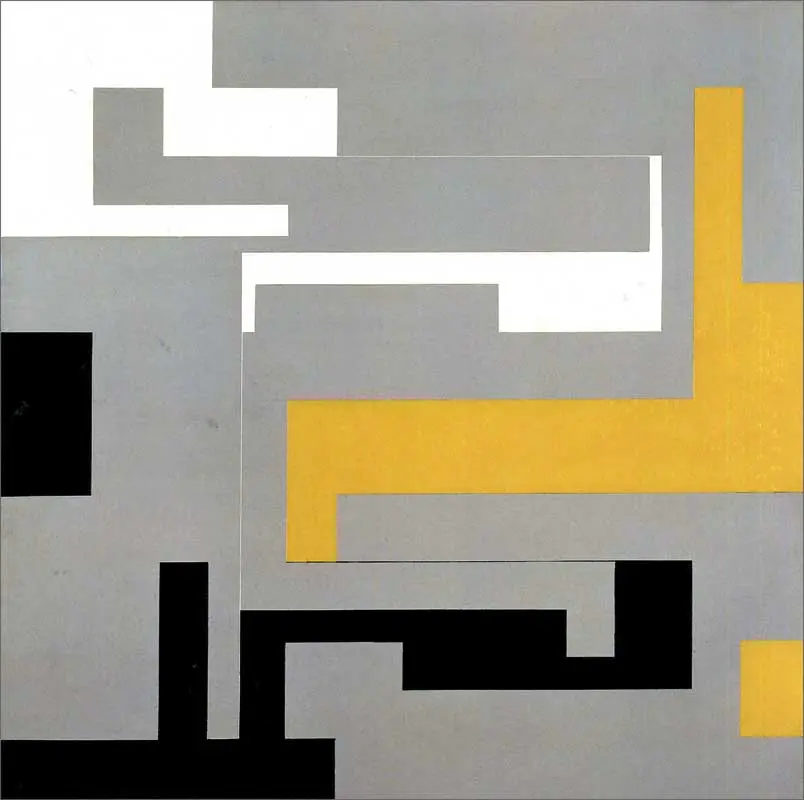
Although O’Hare is more intent on emphasizing artists’ shared concerns, the boldness of this exhibit also lies in the judgments it invites about differences between North and South American approaches to abstraction. For instance, the South American artists seem more interested in architecture writ large, while small-scale industrial or consumer objects seem more important to North Americans. Nationalism also seems more important in South America—hence Brazil’s commitment to abstraction with the 1951 São Paulo Biennial—whereas a sense of principled individual inquiry seems to drive the work of many of the North Americans. These are of course gross generalizations, but the beauty of this show is that they put them to productive use by balancing them with historically grounded conceptual concerns. The sum result is that, largely by compelling us to simply look, Constructive Spirit urges us to imagine abstract art’s most visionary and intangible ambitions.
Constructive Spirit: Abstract Art in South and North America, 1920s-1950s was curated by Mary Kate O’Hare and organized by the Newark Museum in Newark, New Jersey where it was on view February 17-May 23, 2010. It will travel to the Amon Carter Museum in Fort Worth, Texas where it will be on view June 26-September 5, 2010. The exhibition catalog was edited by Mary Kate O’Hare and published by the Newark Museum.
HARPER MONTGOMERY