A little over five years after the first Polygraphic Triennial in San Juan (2004), the event’s true second edition was held not in Puerto Rico’s capital, as would have been expected, but in the city of Philadelphia. The site change was possible thanks to the salvage efforts of Colombian curator José Roca, appointed the first director of Philagrafika 2010, an event born from the initiative of the Philadelphia Print Collaborative and slated for a triennial continuity.
Roca was part of a 5-member curatorial team, led by Mari Carmen Ramírez, that set out to renew the Bienal del Grabado de San Juan by creating an open platform capable of encompassing the most dissimilar forms of graphic art. The goal was to highlight the omnipresence of the medium in contemporary avant-garde artistic practices. Unfortunately for Puerto Rico, the second San Juan Polygraphic Triennial (2009) was a step backward in every sense, from its scope (less than one-eighth of the previous edition) and format to the variety of media and supports. For example, a torrential downpour and leaks in the gallery roofs made it evident that this was an exhibition of prints on paper. Yet the most unfortunate fact what the abandonment of the gambit towards turning a graphic arts event into one of contemporary art. This idea was adapted by Roca to the new conditions in Philadelphia and it has been the basis for the richness and success of Philagrafika.
Unlike in San Juan, where there was a single organizing institution, the Instituto de Cultura Puertorriqueña, with the different sites serving just as container spaces for projects, Philadelphia offered a much more complex cultural map, with strong institutions that, while interested in participating, expected it to be in recognition of those same traditions. Thus, Moore College, with its emphasis on design, demanded a kind of approach that at least tangentially explored that realm; for its part, the Pennsylvania Fine Arts Academy and the Philadelphia Museum of Fine Arts offered as backdrop their prestige and unique characteristics: an emphasis on the American Realist school in the case of the Academy, and the Museum’s distinctive collection of Dada and Surrealist art. Added to the task of researching and developing a proposal that was solid in itself, then, the curator’s job included the effort of accommodating the offering to such institutional demands. This role is similar to that of an adapter of film scripts or a musical arranger. Roca turned out to ideally suited to the task, perhaps helped by his proverbial humility and affability.
The curator is not the only line of continuity between the Puerto Rico and Philadelphia polygraphic triennials. Several of the Latin American artists present at Philagrafika had also been in San Juan: Regina Silveira, Betsabé Romero, Erick Beltrán, and Pepón Osorio, joined by Argentinean publishing collective Eloísa Cartonera, which publishes books using for their covers cardboard from boxes for groceries and food products. In fact, it is not entirely absurd to note that this nucleus of proposals is what irradiates the essential concepts scaffolding the exhibition. In a front-page (and almost full-page) display, The New York Times reproduced mostly images of works by this group, underscoring the presence of Latin American art.
The Exhibition
Although presented by sectors of the press as an event that encompassed 88 institutions throughout the entire city, Philagrafika 2010 really consisted of the main exhibition distributed into five sites: Moore College, Pennsylvania Academy of Fine Arts, Philadelphia Museum of Art, The Print Center, and Temple Gallery, at the Tyler School of Art. The title, The Graphic Unconscious, comes from a kind of transference from a seminal Walter Benjamin text, A Short History of Photography, which brings forth the concept of the “optical unconscious,” understood as the omnipresence of photography in everyday life; this concept, in turn, leaned on a notion that is central to Freudian psychoanalysis: that under the apparent conscious world, the subconscious reigns. This terminological displacement, as well as the exponential replication of ideas from one text to another, correspond to the event’s very idea, according to which the multiple, an essential aspect of the graphic fact, allows the omnipresence of the image or its existence in many places at once. Also, it can be said that, metaphorically, it reflects the “transplant” of the event itself from Puerto Rico’s torrid capital city to the cold environment of the US Northeast. From this complex matrix, the event denotes a conceptual sophistication that in a certain way garners the show’s plural objective: an interest in highlighting the central role of the graphic arts in the vast universe of contemporary artistic expression; its ideal suitability to the circumstances of a globalized economy, given its reproducible potential; and the signifying and metaphorical possibilities in terms of the current issues in aesthetic debate.
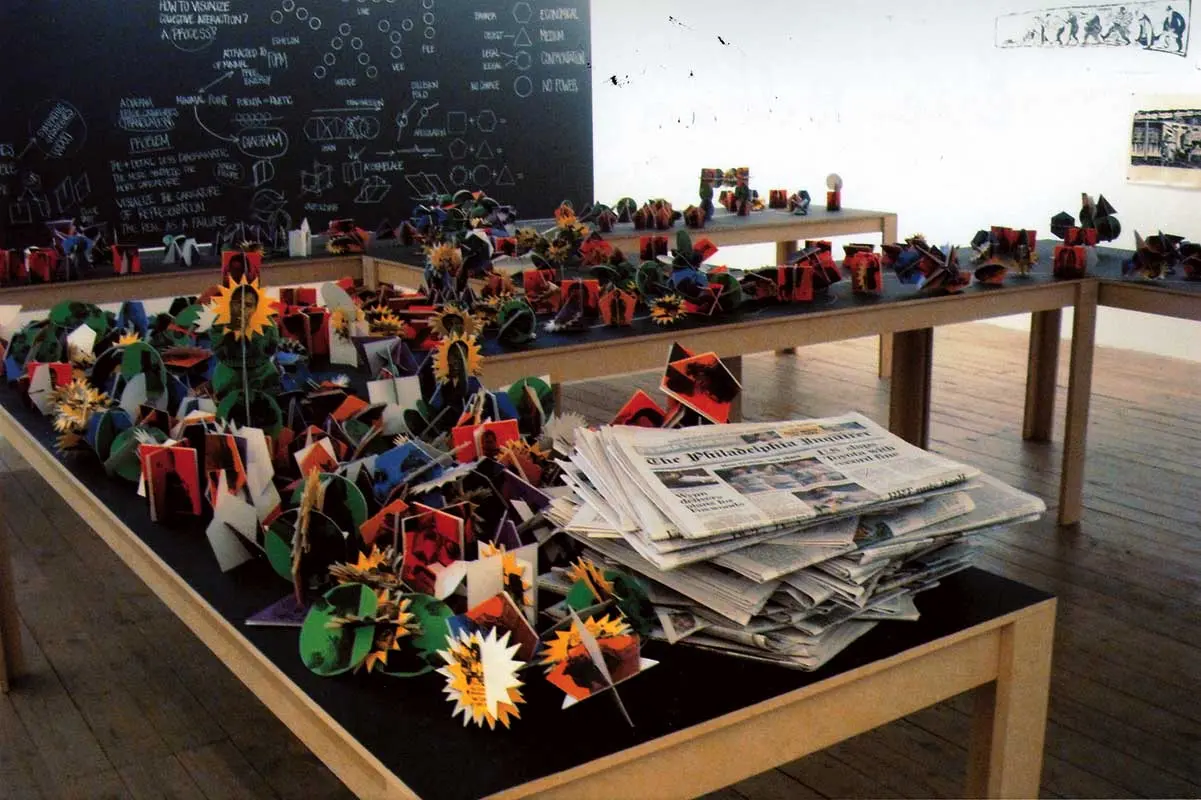
In order to explore possible answers to this equation, a series of six topics related to the medium was established: Pattern and Ornamentation; Accessibility and Dissemination; Collaboration and Community; The Authority of the Print; Craftsmanship and Aesthetics; The Print in the Public Sphere. Roca proposed a gaze that, in fact, included the acceptance of an expanded notion of the graphic arts. Thanks to precedents such as the Curitiba Biennial, La Huella Múltiple, the San Juan Triennial, and Ljubljana Biennial, Philagrafika was able to explore its topics in depth without having to explain in great detail what is graphic in a video, an installation, or a pile of confetti. On the other hand, and unlike Paulo Herkenhoff’s thesis in Curitiba, according to which the development of contemporary printmaking is being defined by artists who do not see themselves as printmakers, Roca presented an inclusive balance where tradition nurtures experimentation, inasmuch as this categorization is not solely associated with the conceptual, as has been common use in recent times, but recovers its full meaning in every artistic manifestation.
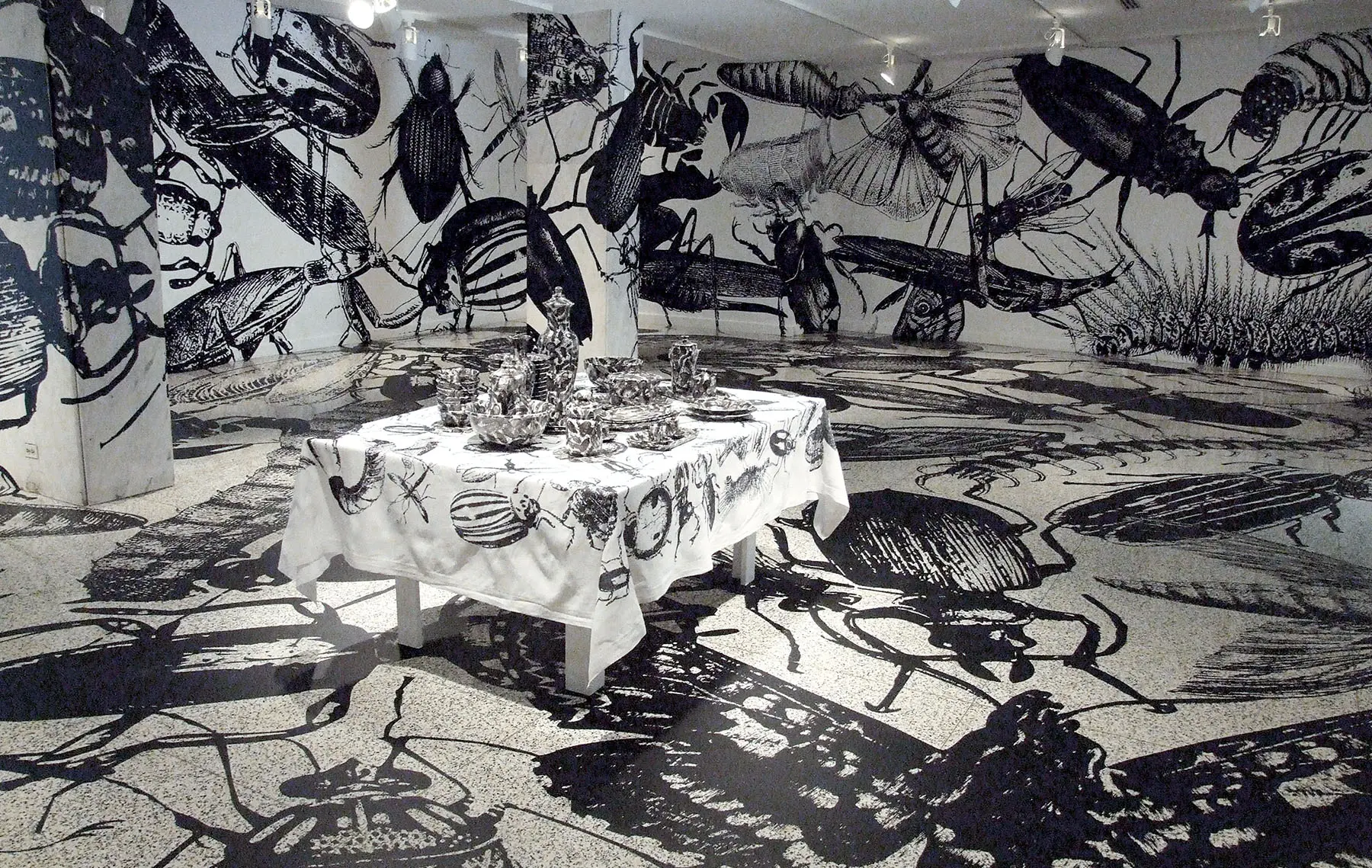
Philadelphia artist Vigil Marti and Brazil’s Regina Silveira, who has become recognizable with her images of deformed shadows interacting with architectural spaces (one of her prints was offered as a bonus when one purchased a guide to the exhibition), dialogued deliciously with iconographies related to the issues of death and the Apocalypse, respectively. The former used a wallpaper spread richly decorated with rococó motifs and images of skulls, in an ambient work with glass spheres that recreated a nightclub. The installation was placed in a display window facing the street, so that its effect changed ostensibly from night to day. Silveira, on her part, invaded a large room, including furniture and everyday objects, with images of insects, in an allusion to the plagues announced in the last book of the New Testament. In a hallway, a transit space inside the building, Betsabé Romero placed, in an overly theatrical montage, a series of printed car tires leaning on large planks that extended towards the wall with the imprint of the tires on them. It is her current, urban-based version of a traditional technique: linocutting.
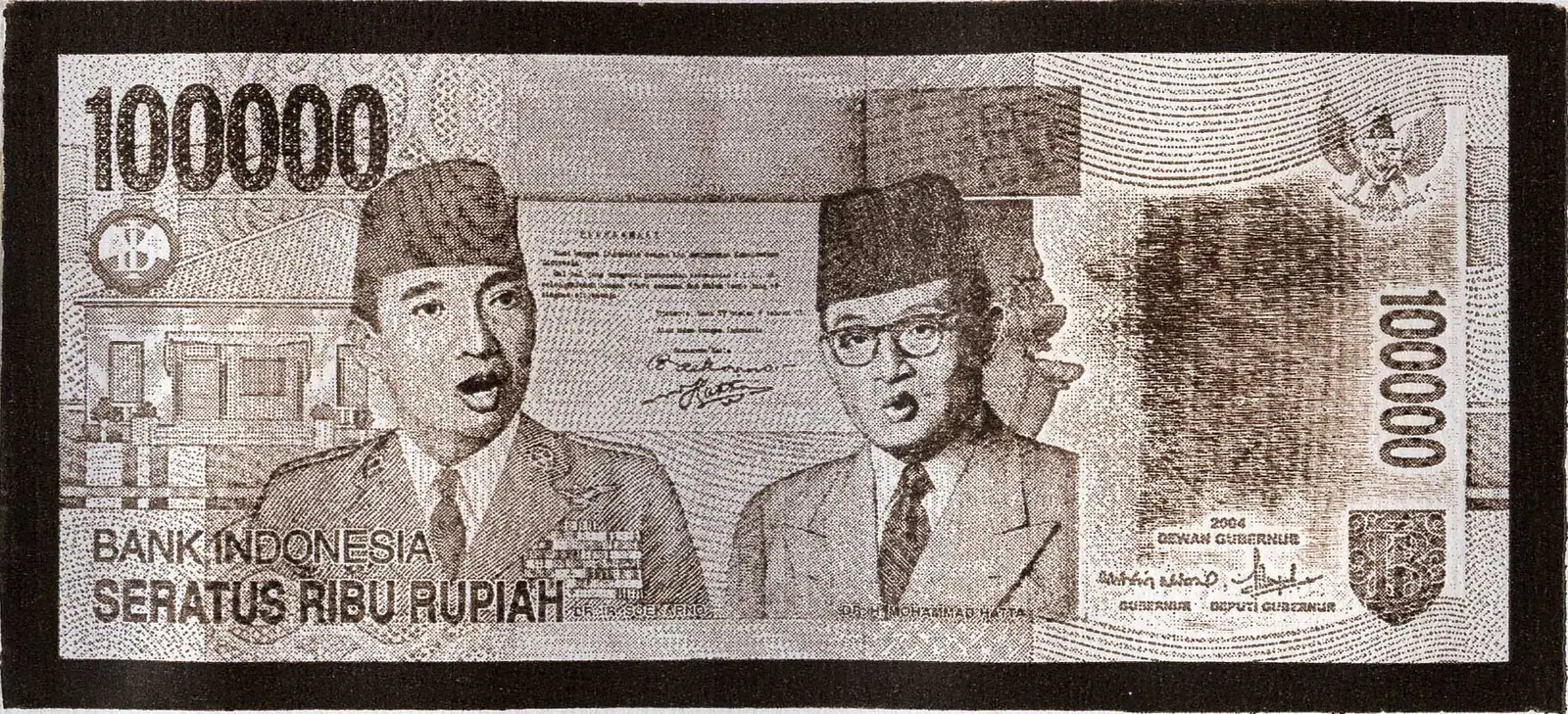
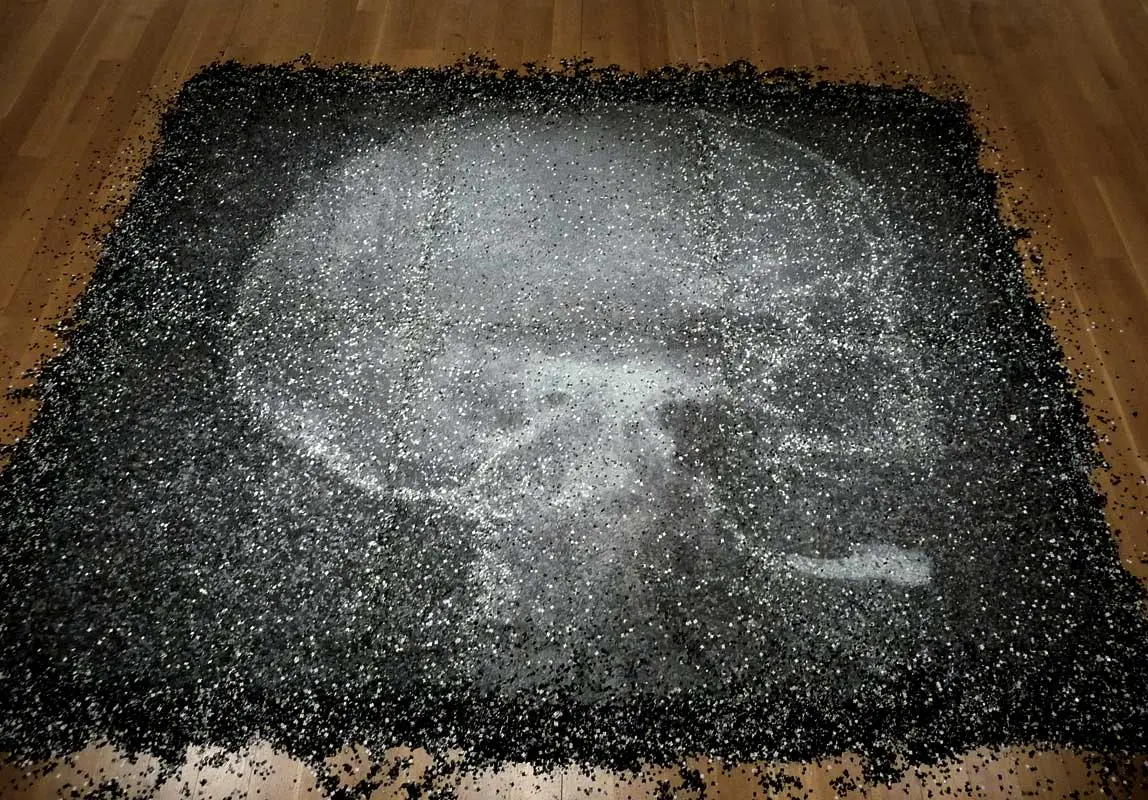
The Pennsylvania Academy of Fine Arts concentrated those proposals that more clearly integrated traditional techniques. However, even in this case the selection updated the language of the graphic arts through hybridizations with other forms of expression. The work of Tromorama, a young collective from Indonesia, started from woodcutting to create video animation. On his part, Pepón Osorio used an X-ray of his mother’s head amplified over a pile of confetti. This kind of vanitas installation marked in a way the lugubrious tone of this section of the gallery in the Academy’s new wing, coexisting with Kiki Smith’s hermetic mixed-media collages and Christiane Baumgartner’s large-format woodcuts. The latter represented images of a Nazi propaganda film shown on TV as part of a WWII documentary. Captured by the artist with a video camera, the images created a moiré pattern that the fibers of the wooden matrix only emphasized. In turn, Mark Bradford presented a work comprised of twelve panels with original posters used to announce services to Alzheimer’s sufferers, which he scratched to apply silicone. The texts, almost erased, became an allegory of the illness they purported to service, signaling in this way the useless meaning of an object that has been identified as the very image of consumerism: the commercial poster.
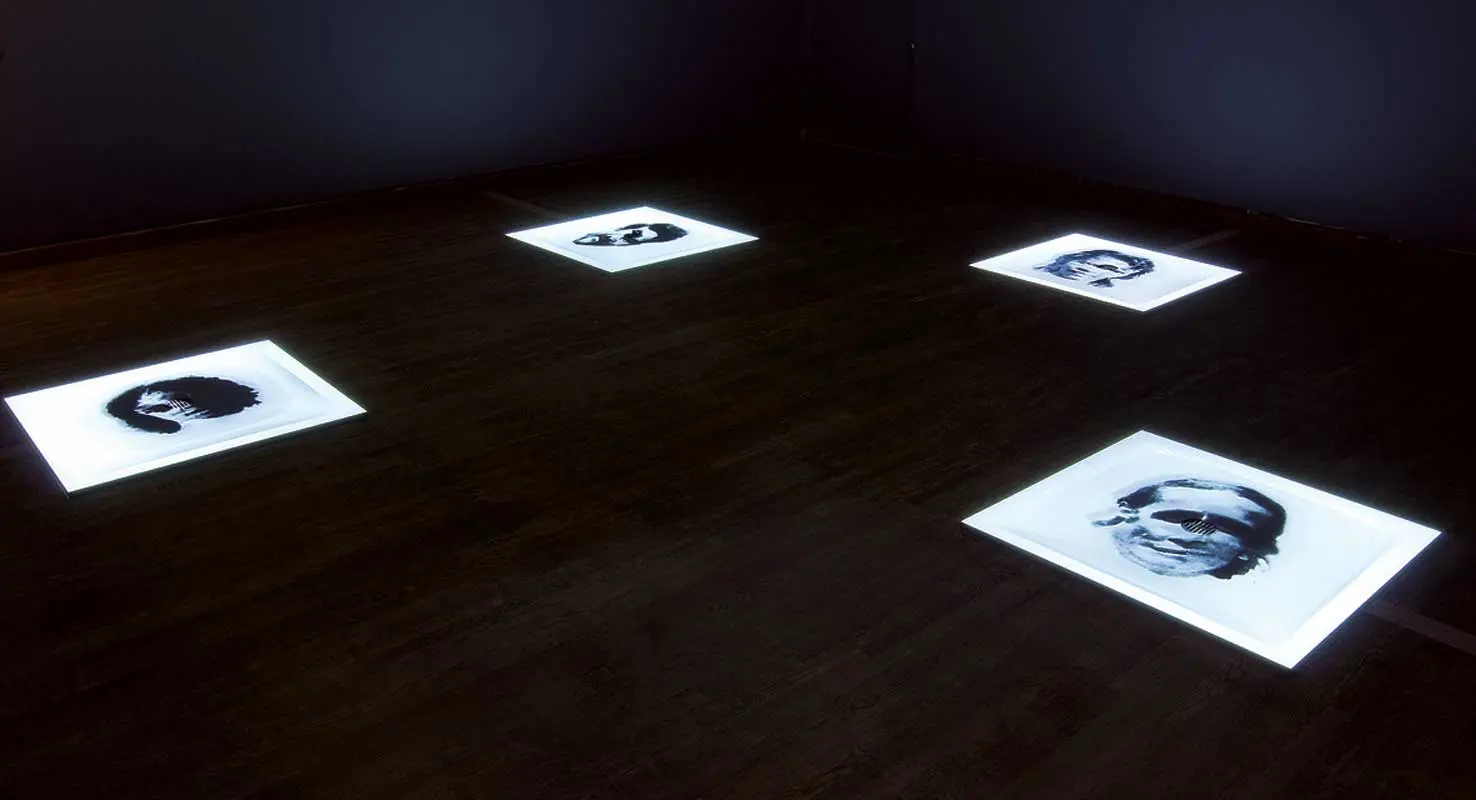
The vanishing of memory acquires yet another dimension in Óscar Muñoz’s installation at the Philadelphia Museum of Art. His well-known ephemeral prints on water of the faces of the disappeared in the Colombian conflict (whose images he takes from the press) are projected here on the floor of a dimly lit gallery. The vanishing of the image is, time after time, devastating, presented as it is as an interminable cycle of symbolic violence. The decision to install contiguously a video by Japanese artist Tabaimo, clearly rooted in surrealism, represented a curatorial gambit to connect two works of art in the deepest sense. It worked not only because of the coincidence in medium but because of the sense of repetition—like the myth of Sisyphus—which in Tabaimo’s work was part of the narrative itself. The animation presented a dollhouse in the process of being furnished until a very large wave swept everything way and the house was left empty, for the cycle to begin anew every time.
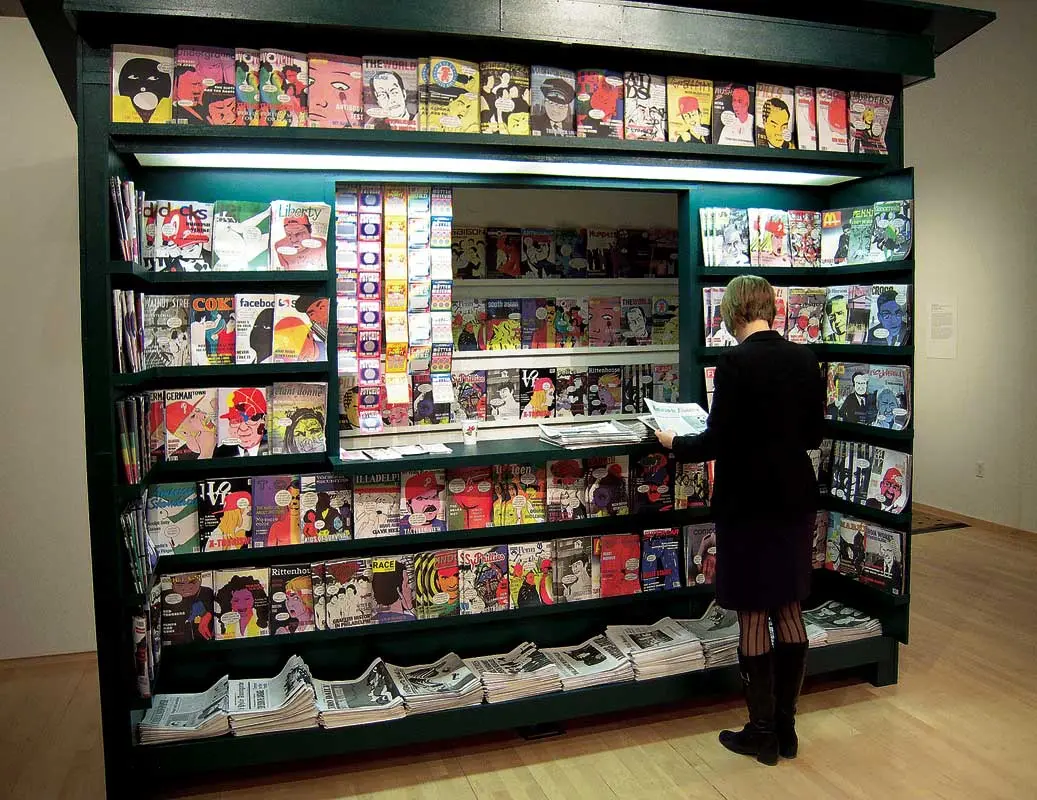
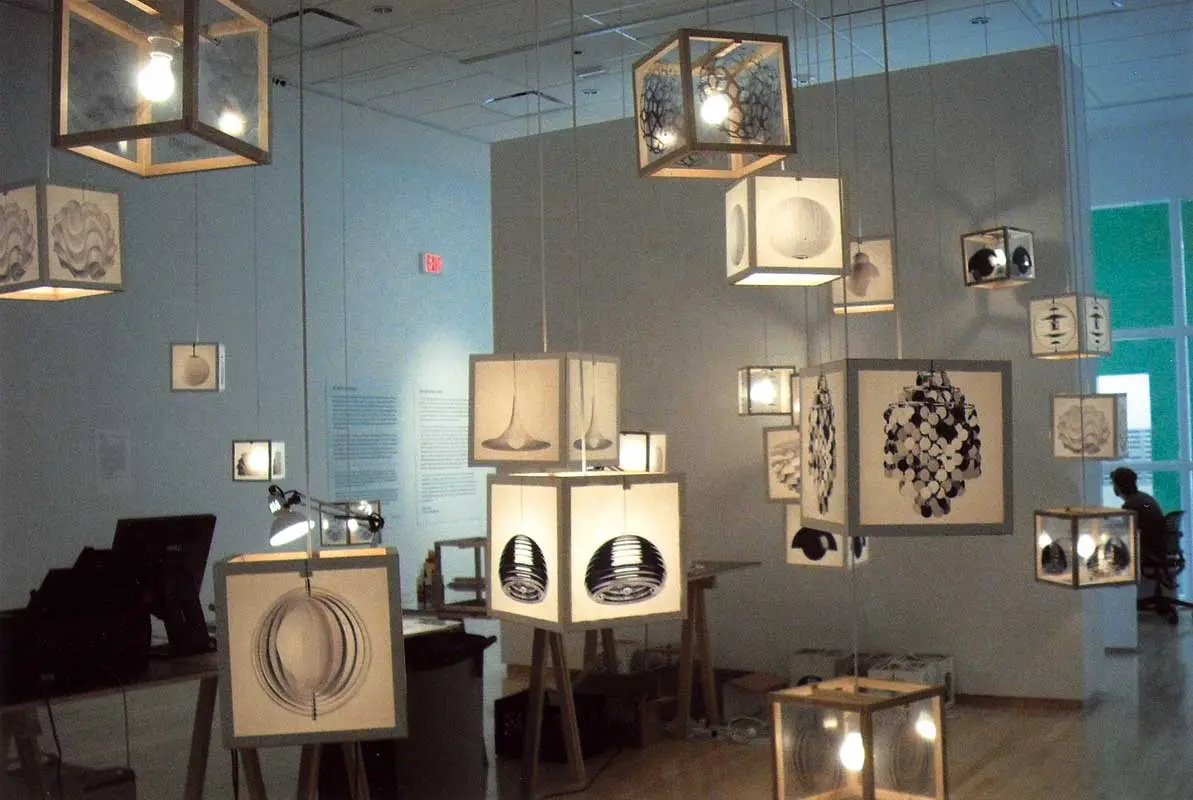
The grave tone predominant in these two sites contrasted with the looseness of another two: the gallery at Tyler School, in Temple University. The first work was a kind of lamp-making workshop, by Superflex, a Copenhagen collective. Titled Copy Light, an ironic allusion to copyright, it consisted of a table on which we found digital equipment for printing on paper sheets that were then used to build lamps. In another gallery, Francesc Ruiz presented a newspaper stand where he exhibited issues of imaginary Philadelphia magazines and newspapers. Young-Hae Chang Heavy Industries, a web-art collective based in Seoul, proposed the digital alternative currently displacing print media: publication in video-animation format, to be read either in a projection room or in a computer screen. The text in question, a sort of narrative of encounters with beauty, often addressed to the viewer, took advantage of editing effects—pause, transitions between frames, emphasis on typography—in a direct allusion to traditional visual poetry, the support for which has heretofore been almost exclusively paper. Reflections about accessibility, support, and economy acquired capital importance in this section.
Another kind of economic alternative, in this case still linked to printing, was represented by the publishing proposals by collectives such as Dispatch, Temporary Services, and Eloísa Cartonera, as well as by other artists brought together into The Print Center. The common denominator here could be the relationship of the graphic arts with the public space, as well as with the political and social spheres. Here, the installations presented by Erick Beltrán and the collective Space 1026 captured our attention. The former created a large board game with hundred of pieces carrying iconic images of political and cultural personalities. Thanks to the design of the game pieces, the images could be combined to create interesting hybrids: for instance, a Frankenstein with half of Hugo Chávez’s face and half of George W. Bush. The pieces were arranged on a shelf and viewers were invited to play with them. For its part, Space 1026 created a setting using second-hand clothes and other materials, a kind of tent house where visitors were able to rest, chat, and feel comfortable after their stimulating tour of Philagrafika.
A stimulating tour, almost an optimistic one—without falling into lightness—was perhaps the dominant note of an experience of the event (besides the fact that an event like this can put Philadelphia on the international art map). Even in works of greater clarity and political reach, one didn’t find an overly loaded denunciation nor the belligerence of other times in the history of printmaking. Says Roca: “There have already been important exhibitions about political graphic arts, such as Committed to Print at the MoMA, and we thought it’d be more interesting to show more subtle forms of political printmaking. It is present, in a subterranean way, even in highly poetic works such as Orit Hifshi’s (his reflection about territories and ruins has special resonance in the Israeli context), Thomas Kipper and his view of state control over the individual, and others.” Perhaps this is due to the fact that artists working today in the many graphic media available, be it “pure” or hybrid, do it with the certainty of being part of a broader conversation, without needing to resort to stridency or noise. Even if we find Bitterkomix’s publications or Sue Coe’s woodcuts acid and pamphleteering, they serve to reinforce that sense of security with which contemporary art’s critical discourse expresses itself today in the graphic arts.
ELVIS FUENTES
Curator at Museo del Barrio, New York.