
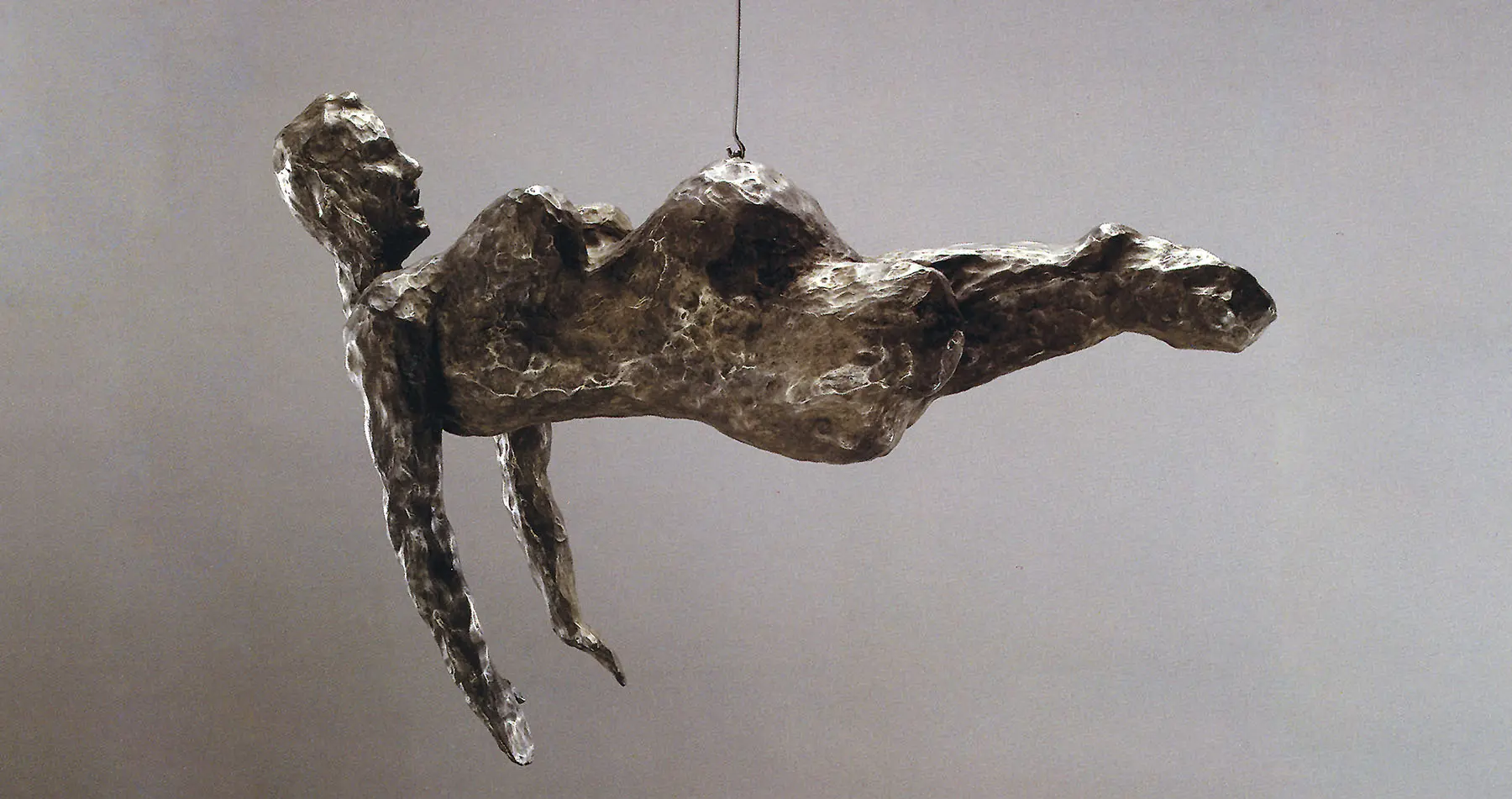
Habeäs Corpvs que tengas [un] cuerpo [para exponer] is the title of a show curated in close collaboration by historian Jaime Borja and visual artist José Alejandro Restrepo, organized by the Banco de la República de Colombia. The show is accompanied by a catalog, published by this institution, with texts by the curators and by French philosopher Jean-Luc Nancy, one of the most influential thinkers in contemporary philosophy. This publication in itself contributes a profound reflection about the event of having a body. The problematization of this topic will be the leitmotif in this exhibition, which gathers a significant number of representative works from the Baroque period in New Granada (17th and 18th Centuries): religious paintings, figures from the Christian pantheon, reliquaries, garments, archeological artifacts, all juxtaposed to contemporary objects, medical/scientific records, and art. The curators work with the New Granada Baroque representations of the fragmented body strategically, establishing a variety of connections with contemporary representations of body parts.
This is a culturalist curatorship. In theory, it is part of the “cultural turn” that conceives of culture as a battlefield. Culture as an ongoing conflict—disguised, sly—in search of the definition, always unstable yet persistent, of the social meanings and senses that determine our way of speaking about things, our way of thinking and feeling them, and in search of fixing the truth of things and of our way of “being” in the world and beyond. This determines, then, our reality, as well as a specific empirical-transcendent condition of being human. A struggle that occurs always in the tension of the relationship between knowledge and power (which is also a pulsion of desire).
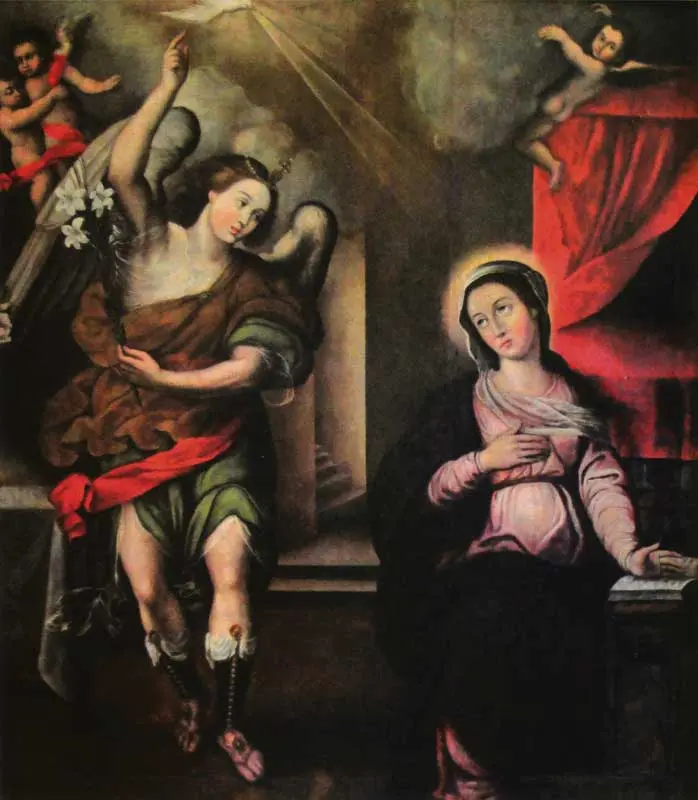
Having a body is a political and cultural issue derived from a grammar inscribed in the power of the allegorical, from those images that activate the various social dispositifs/machines such as religion, science (social, human, natural), art. In the case of this proposition/exhibition, this is a political grammar of the body from the mise en scène of the power of allegory “that doesn’t reveal the latent force ‘behind the image’ but, in the shape of writing, of slogan…forces the essence of what is represented to appear before the image (Benjamin)"2.
Having a body, then, is not a natural event. Besides, writing and reading the grammar that constitutes it are deeply complex operations. In Restrepo’s words: “Where we think the body as familiar to us, there appear new perceptions, paradoxes, and manifestations of an eternal recurrence of difference.” To think the body, to perceive it, implies estrangement, discomfort, confrontation.
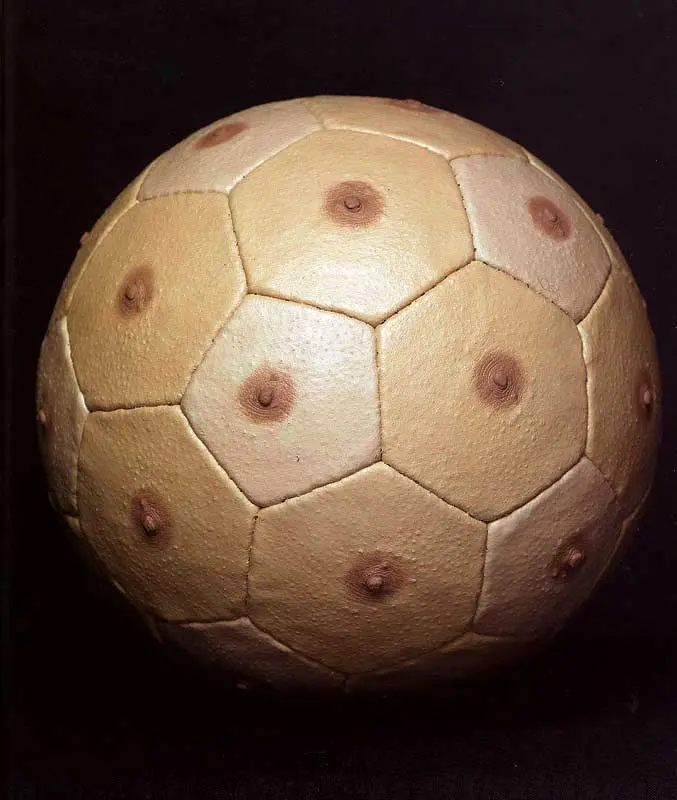
For the curatorship, the fragmented body has even greater allegorical power given that culture has invested the sign of each one of its parts with a potent grammar. The curatorship is organized into body regions (head, hands, feet, breasts, pregnant wombs, blood, skin, bones, and the body laid down by death) in a structure of chapters: Exposed Body, Hidden Body, Fragmented Body, Mortified Body.
The exhibition sets entirely aside traditional categories of history and anthropology, and even of art. It inscribes itself in transhistorical time. Without a sequential or teleological timeline, it is interested in discovering relationships between the discursive formations that produce the object/body in its specificity, revealing the irreducible play of the rules that govern them. Discursive formations have no temporal order, they travel and persist in the movement of the social practices in which their rules of formation are established. They appear and disappear; they may reappear transformed but always efficient and always similar to themselves, across the centuries. The show doesn’t seek to tease the rationality of a mentality or a culture, but to reveal that world of interpositivities3 whose points of intersection cannot be fixed once and for all. These interdiscoursive connections are proposed here, as we have said, between the Baroque and the contemporary.
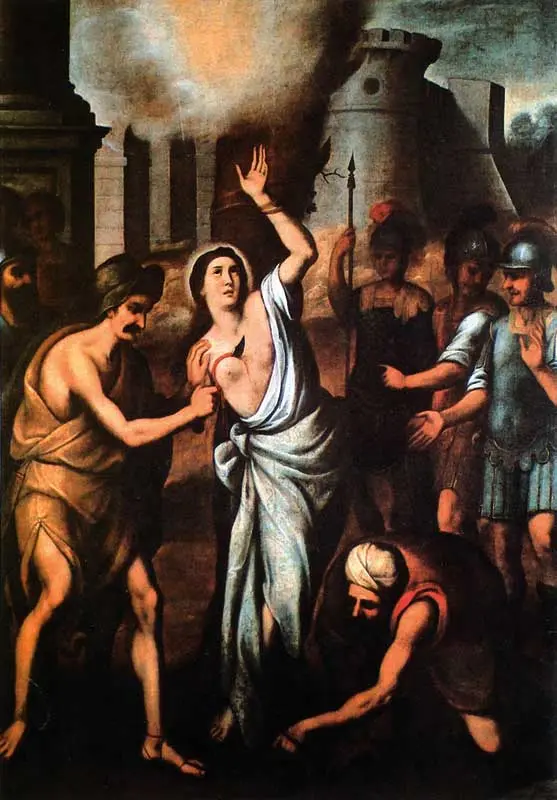
Que tengas [un] cuerpo [para exponer] (May You Have [a] Body [To Exhibit]) is, the curators say, a concept in the shape of a game and a tension throughout the show. Here is tension between the acts of seeing and being seen: “The struggle between ‘the madness of seeing’ as Michel de Certeau said regarding the Baroque, and its corresponding incitement to the ‘madness of showing’."4 Another tension convoked in the show takes the shape of a permanent contradiction between bodies that: ‘un-fold and re-fold, un-cover and re-cover, that fascinate us with their capacity for horror and/or beauty."5 The body in the secret and the privacy of cult, and the body that opens itself up to the gaze and even to the enjoyment of showing itself, The body that shows itself when it wants to hide, and the body that hides when it wants to show itself.
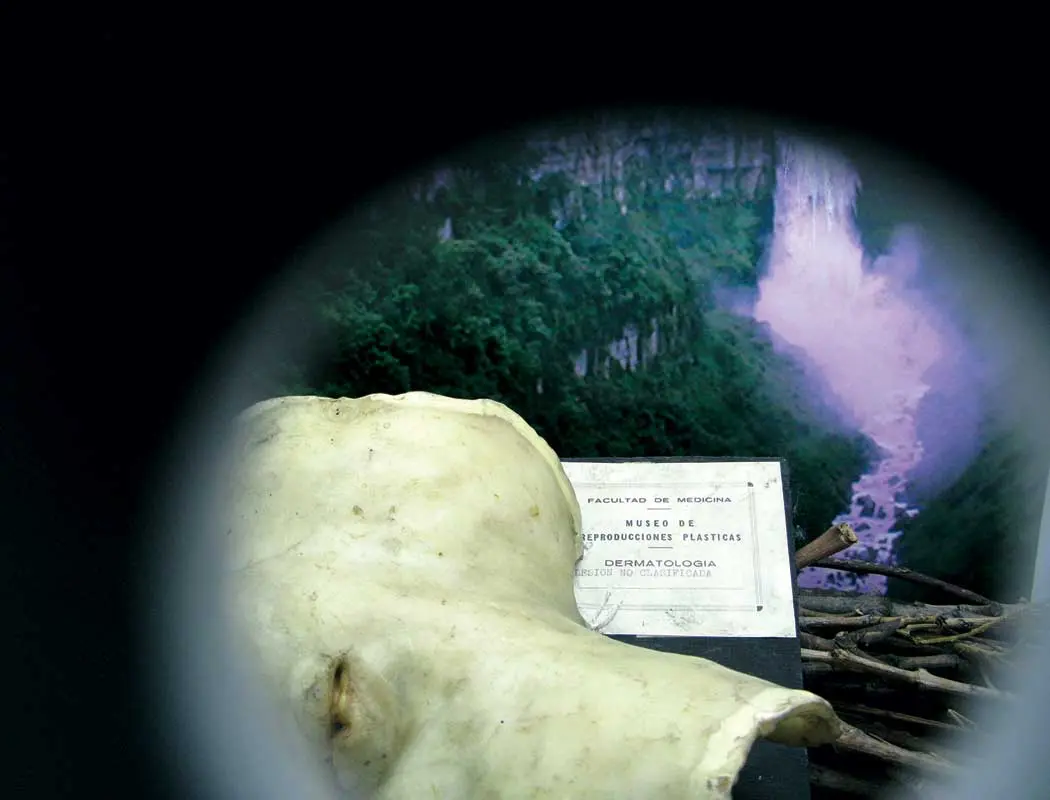
A mysterious work is on exhibit in the vestibule of the second floor where the exhibition is held. It lacks a technical card, a medium-format white box with two orifices at eye level that invite us to peek inside. On the box we read: Étant donnés. This work was created by José Alejandro Restrepo—I have asked him about it—but not signed. Perhaps Restrepo is filled with the desire of displaying (himself) and hiding (himself) one of the keys for our approach to a node in the thinking behind the curatorship. Inside the box, we see an installation—a mise en scène—of a woman’s torso, her legs spread apart, her genitals on display—a wax molding from the Museo de la Historia de la Medicina at the Universidad Nacional de Colombia—alongside a pile of branches and in the background, the Tequendama Falls waterfalls in an old photograph, found and intervened. This is a direct allusion to Marcel Duchamp’s posthumous work, on which he worked secretly for many years. In the notebook of instructions for its display, Duchamp called it a “disassemblable approximation.” Said Duchamp: the viewer makes the painting. And certainly the gaze through the door makes Étant donnés. Does Étant donnés exist when no one peeks through the keyhole? Underlying this work there is a reference to Lacan’s theory of the act of seeing and being seen. This work appears as an object-gaze. For Lacan, the subject doesn’t gaze at the world but is gazed at by the world. In a conversation we had regarding this Duchamp work, Jaime Cerón expressed the Lacanian reference in the following way: “One is gazed at by things, in the sense that they incarnate the fantasies in which one imagines oneself being gazed at from different places and for different reasons.” The self is displayed before others and before itself through things. It is perhaps because of this that we can feel shame at perceiving ourselves as being seen in the role of the voyeur.
As in Restrepo’s/Duchamp’s Étant donnés, what is given, what is open in this exhibition is the body. The body is on display. It takes place in that way. And it is also in that way that it occupies a place and participates in a scene. “Because a presence is nothing if it is not in a way a putting-forward—praesentia—an exhibition."6 We read this exhibition from our own bodies; from our own bodies, which are revealed through the exhibition we see; from our own bodies, which speak in the presence of these object-gaze bodies.
The contradiction includes any thought on the body, as proposed by the texts that support this show: It invites a transit across the threshold between inside and out, “the infinite fold separates, or passes through matter and soul, the façade and the closed room, the exterior and the interior, "7 between mystical ecstasy and the abject, between horror and/or beauty, between wound and cure, between seeing and touching, between the gaze and all the senses (even the not yet independent, as Nancy suggests, of movement, tension, time, and magnetism), between the experience of my body and the experience of the other body that is outside of me: “tripping blindly, the hand seeks the outside, tentatively. The same is true of the caress, which doesn’t know what it is after, as Levinas has it: ‘this not knowing, this fundamental disorder, is essential to the caress. It is like playing with something that flees away, a game entirely devoid of project or plan, not with that which can become ours, or become ourselves, but with something different, something that is always other, always inaccessible, always to come.’"8
NOTES
1. Quoted in the exhibition
2. Quoted by J. A. Restrepo in the curatorial text.
3. A term coined by M. Foucault when describing his archeological method, derived from F. Nietzsche’s genealogy. Foucault also speaks of interdiscoursive connections.
4. Quoted in the exhibition
5. Ibid.
6. Jean-Luc Nancy. Quoted by J. A. Restrepo in the curatorial text
7. Gilles Deleuze. Quoted by J. A. Restrepo
8. Curatorial text, J. A. Restrepo
MARÍA BELÉN SÁEZ DE IBARRA
Critic and curator. Director of the Dirección Nacional de Divulgación of the Universidad Nacional de Colombia.