Darkness as a stimulating medium of sensations is a resource that the Venezuelan artist – of Korean origin – Suwon Lee has been using for some time. In 2008, she presented a solo show titled Bling Bling (Periférico Carácas/Arte Contemporáneo), in which the exhibition space, divided into two sections, was in complete darkness. On that occasion, the exhibition was organized so the spectator would walk through an autobiographical journey of archetypical images of the artist that are part of Korean culture. One entered the exhibition space with a certain degree of uneasiness about the unknown. The light bulbs over the photographic images and three-dimensional objects, the video projections, the fluorescent lights leaning against the wall; all of these elements would elicit, as a whole, an interesting sensorial proposition. Altogether, they represent the “material” concretion of themes that are important to Lee, such as her birthday, her roots and traditions, the consolidation of her identity, questioning the sumptuary as a vehicle for “upward mobility,” among others. Everything had its place, like a ray of light amidst darkness.
The light and darkness effect in Bling Bling was high-contrast.
Something else – subtler but no less intense – takes place in Overnight. Rather than being merely an encounter with “points” of light (the works) set in strong contrast against darkness, the exhibition proposal in Overnight is, to the contrary, a gradual process of “tonal value” changes in the environment itself: from night to morning. The exhibition room’s absolute darkness is essential, not solely because of the surprising element it presents – a walkthrough unknown places in the middle of total darkness – but also for the appropriate conditions it creates to generate an aesthetical and sensorial experience through photographic images that have the night as their central theme. And in every image, an accent of light enables this theme to be revealed to us.
The photographs exhibited were taken in the Peruvian Amazon, specifically at the Pacaya-Samiria National Reserve, a tropical forest of lush vegetation, and at the Sequoia National Park in California, where these gigantic Sequoia trees abound, some more than 328 feet tall. “The idea that prevailed when I took the picture – explains Lee – was the idea of death and how it is confronted with fear or with profound peace.” The darkness in these places captivated her. They embody the “fears of the imagination.” The exhibition is proposed as a simile of that experience with darkness, thus, the need to recreate this intimate realm in a place that could enable the most profound interaction between the viewer and the image, in which silence could lead to active and acute contemplation.
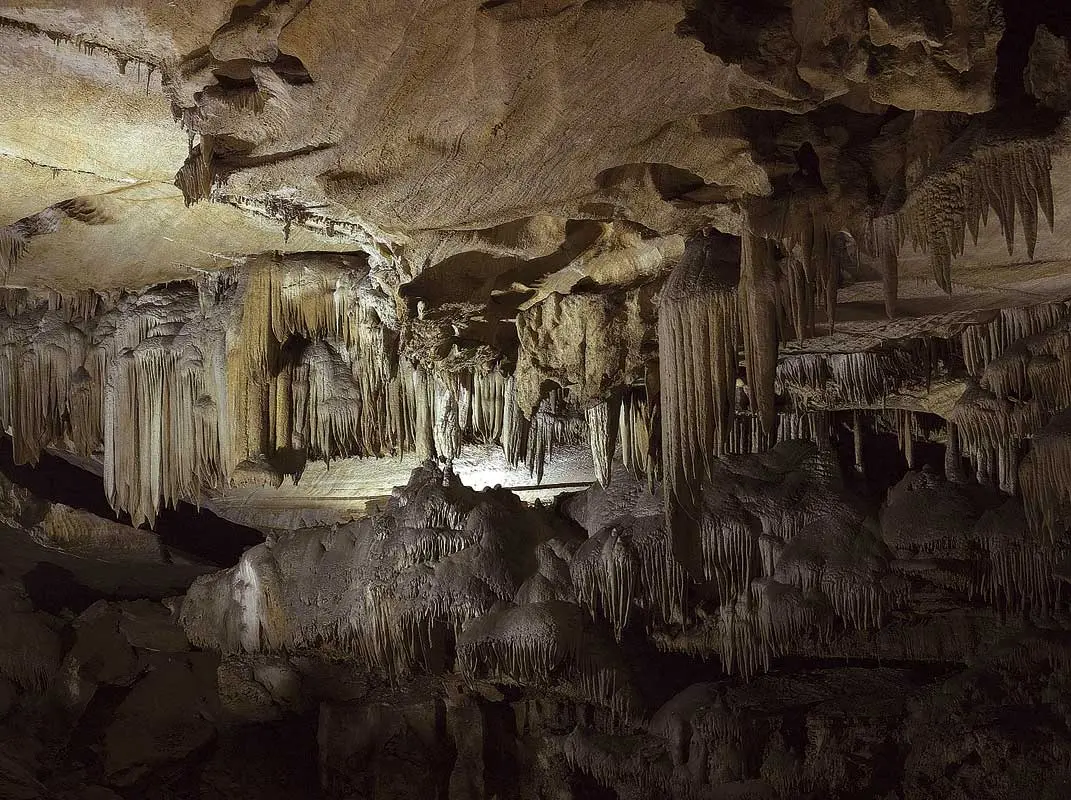
With this “fine-tuned” gaze, it becomes possible to discern the shades of black that emerge from the deep black. In Penumbra (Darkness), a nocturnal landscape reveals nearly imperceptible branches and tree trunks of an even more intense black. The silhouettes mark the differentiation between the nuances. In Árboles (Trees), the light is so dim that it barely reveals the outlines of the trees. Looking at this image in darkness proposes a visual and sensorial exercise brought about by the opportunity to reconstruct such image through mystery. In this sense, Overnight is a provoking exhibition. It entices us to unveil the areas of light of these photographs in gradual fashion. According to Suwon Lee: “Light is Everything. Light represents the beginning of life, and not only does it show us who we are, but also presents us with our shadows. Light is my working tool as well, in that it is because of light I am able to capture images and to create environments.” Her words reveal two points that are present in this exhibition: the creation of a sensorial environment, and the fact that no light can exist without darkness. In some of the images, light acquires an almost mystical connotation: it reveals a body – a tree – as if it were a revelation (The Woods). On other occasions, a beam of light is set in strong contrast against a dark area, as in La Espera (The Wait) and Casa (Home). It has the same impact as a light bulb or candle in the middle of the night. Although they are taken in real settings, these photographs appear to emerge from an imaginary world, a place of dreams, like the one that appears in Crystal Cave. Light reveals aspects of reality without permitting the latter to impose itself with all its weight and materiality. Photography represents a way of capturing images through light. Suwon Lee employs light not only as a vehicle for expression but also as a tool to show the image gradually, with subtlety and insinuation.
SUSANA BENKO