
When presenting a historical exhibition, a gallery must offer something beyond the pleasure of putting on display works by a renowned artist and the chapter of history in which they are inscribed. In the case of Tina, Under the Mexican sky, Throckmorton gallery linked a significant number of works with the keys to certain moments in Modotti’s photographic career in Mexico and with the spectrum of very well-known and identifiable works alongside others that have rarely been seen. It was also an opportunity to see vintage prints from the year in which the shots were taken. On this occasion, a traditional rhythmic museography worked very well and without monotony. The show, comprising forty-four photographs, is dominated by works between 8 and 9 3/8 inches, with a few in 10 and 13 inches, and six photographs in 5 inches or less. Articulated into the rhythm of subjects, dimensions, and chronology, the show allowed itself to be explored without monotony and always presented the viewer with consistent messages.
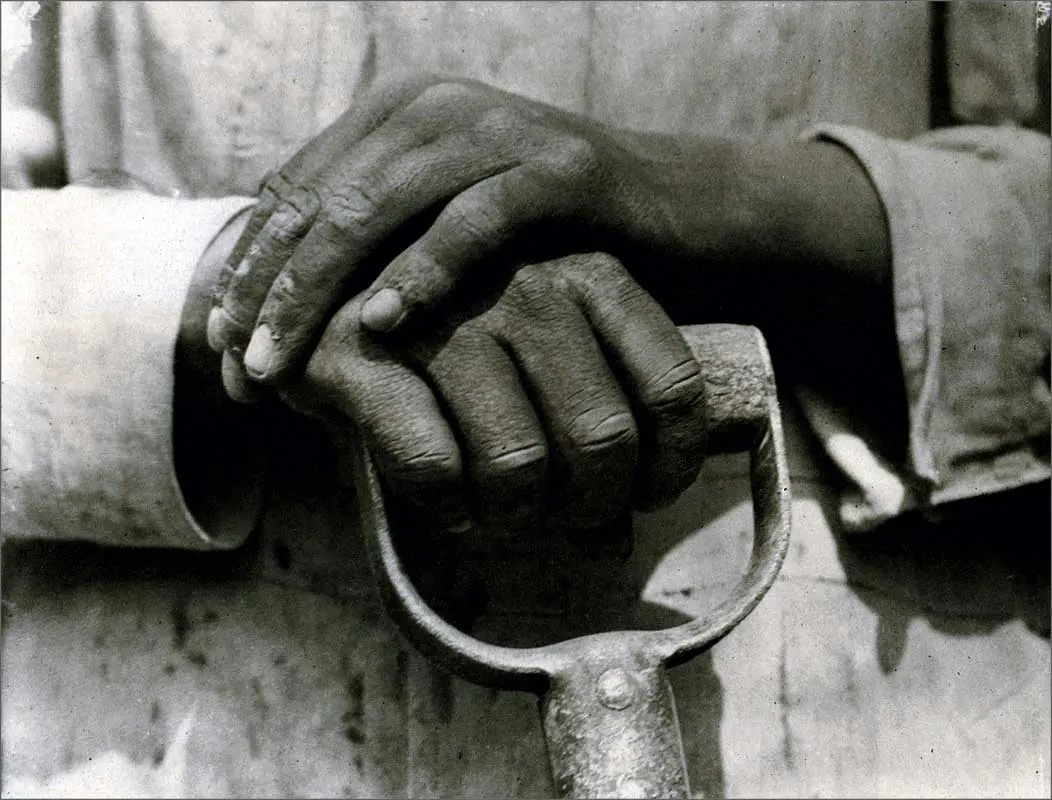
Besides her being a landmark figure from the first half of the Twentieth Century, why is Tina Modotti’s work important? What did her photography contribute to the medium’s general context, in Mexico and the world? Modotti lived through one of the most critical moments in Mexican history; she was a friend and active collaborator of Diego Rivera and Frida Kahlo, as well as of Edward Weston, her teacher in photography. The show is enriched by Weston’s portrait of Tina, from 1924. They both had arrived in Mexico the previous year; Weston was to leave three years later, while Modotti remained until 1930, when she was forced to leave the country due to her participation in local politics. One of the important aspects of Modotti’s work is the fact that she was one of the first female photographers committed to life and to the responses demanded by society at the time. Post-revolutionary Mexico was a land of highly differentiated positions, and Modotti inserted herself in them. For her, life took precedence over art, while Weston held to a different view. He was after the artistic side of photography; Mexico offered him new subjects and he moved towards a kind of synthesis, seeking essences in simple objects. Modotti situated herself between the documentary and the aesthetic — if one refers to the creation of a local aesthetics, emerging from the autochthonous as well as from the quotidian. Thus her themes and series, such as the Hands at work in Mexico, present in the show with two examples. After the early years she started receiving a large number of commissions, among them one from Frances Toor to photograph more than 25 masks. This series was published in Mexican Folkways, including Máscara con petate from 1926.
An important portfolio of works is the Chapingo murals and the murals in Diego Rivera’s first yard at the Ministerio de Educación, among others. These photographs by Modotti are one solid section of the show. The portraits show the difference in focus between a set and a figure, be it in close up or full body and with its surroundings, such as in Concha Michel tocando la guitarra. This work has an epoch-defining dedication: in the picture taken and printed by Modotti, Michel inscribes a dedication to Carlos Orozco Romero and his wife, María. This shows how the period’s figures are interconnected, thus confirming the exhibition’s title, Tina, Under the Mexican sky.
Included in the show are key landmarks in Modotti’s career, such as two of her most celebrated and reproduced images: Bandolera, maíz y hoz and Bandolera, maíz y guitarra. All the photographs are printed in silver gelatin. From 1929, an untitled work showing a formal character, so formal that it is almost comical, turns out to be a puppet. During the period of her house arrest, Modotti concentrated on photographing these puppets. Manos del titiritero, shot by Modotti around 1926, was to be printed by don Manuel Álvarez Bravo between 1976 and 1979. In 1930, when Modotti was forced to leave the country with two days' notice, it was don Manuel Álvarez Bravo who gathered her camera and several originals. Rosas prepares the climate for other works with a romantic bent, such as Cala, from 1924-26, and Experimento en formas de vasos relacionados from 1924. The latter underscores Modotti’s intermittent interest in the purely formal aspect of her art. The Mujeres tehuanas from 1929 are among Modotti’s last works in Mexico. They reveal the symbolic character of her shots, as well as her care in achieving them.
Tina Modotti develops her content symbolically and is characterized for her approach to the following subjects: matriarchy, economy, responsibility in composition.
GRACIELA KARTOFEL