Sixteen years after first visiting Rwanda to document the genocidal attacks by Hutu militias against members of the Tutsi tribe, Alfredo Jaar has returned to the theme, to produce the final work in the Rwanda Project, his long series of installations on the 1994 massacre. We Wish to Inform You That We Did Not Know, shown at the University of Connecticut’s Contemporary Art Galleries, recalls us to an essential problematic continually at the heart of the: that such unbounded horror cannot be pictured without risking trivialization or sensationalism, yet it must somehow be evoked, and any evocation must engage with that impossibility of representation. We Wish to Inform You, which amalgamates its title from the book by Philip Gourevitch and from President Bill Clinton’s 1998 apology for US apathy over the genocide, continues Jaar’s austerely elegant inquiry into the power of aesthetic experience to disturb moral complacency.
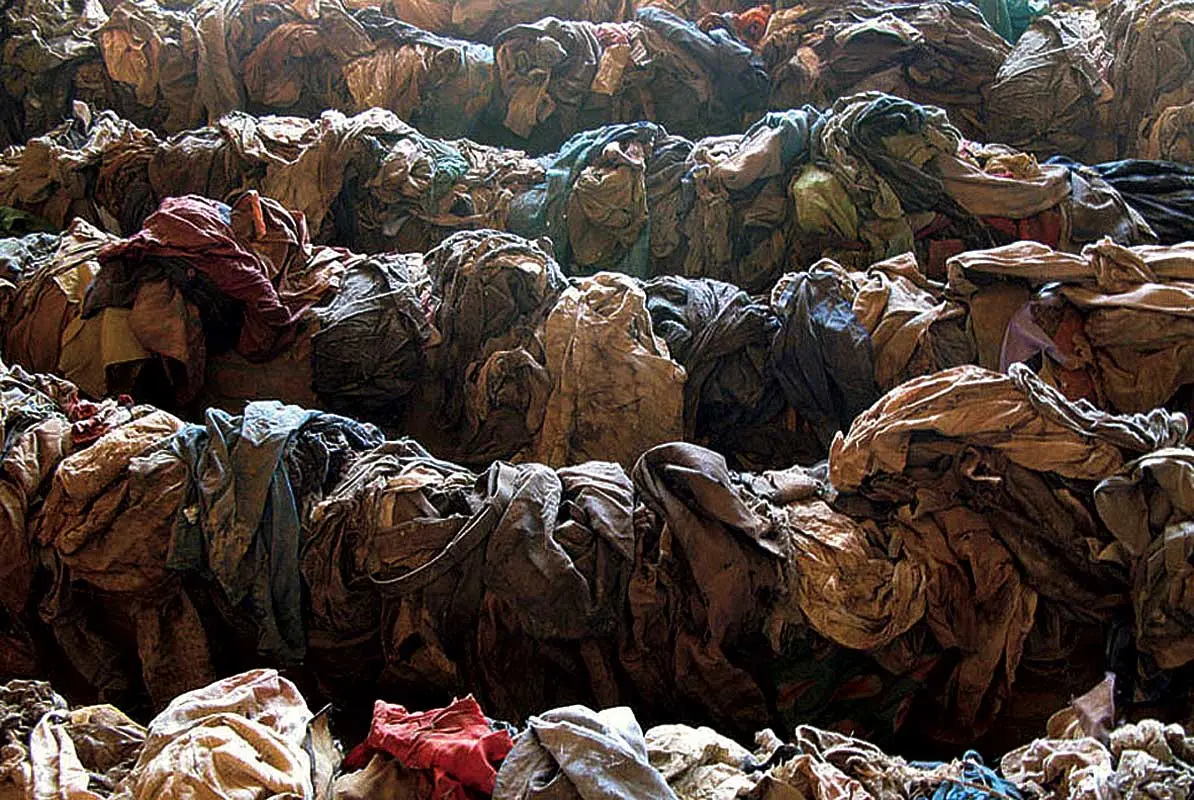
The viewer traverses a long, narrow, darkened space, past two video loops of Rwandan victims comforting each other in the aftermath of the killing. That they have their backs to us, self-absorbed and oblivious, stages our encounter with the installation as a poignant reversal of the indifference shown by the rest of the world towards the massacre. At the far end of the gallery, a stifling, crypt-like space screens a 25-minute three-channel video. The sound of a radio broadcast inciting Hutu violence against the Tutsi begins the video, paired with a thin band of white text across the black screens translating the call to murder into English. The menacing sensation of being in hiding, hunted, or even buried alive, is partially ruptured by BBC footage of Clinton’s notoriously inadequate “apology” delivered on the Kigali airport tarmac. Jaar underscores Clinton’s media-savvy performance of remorse by repeating a key fragment of it three times: “It may seem strange to you here…but all over the world there were people like me sitting in offices, day after day after day, who did not fully appreciate the depth and the speed with which you were being engulfed by this unimaginable terror.” Jaar juxtaposes Clinton’s carefully scripted speech against filmed testimonies of Tutsi survivors recounting their horrific experiences. Further on, hauntingly beautiful images float across the screens: an empty church in Ntarama where 400 people were slaughtered; piles of clothing richly hued, rows of portrait photographs clipped to fragile wires; stacks of unidentified skulls, many showing their death wounds.
Several aesthetic logics cut through the installation to structure our encounter not as a direct visual confrontation with the genocide, but rather as a vivid experiential imagining of it. Fracture and repetition undermine the seamless illusion of the facticity of Clinton’s speech. The visual logic of beauty, focused on the aftermath of the killing, also functions as an axis that counters the president’s media performance, to open space for emotion. Any rational explanation for the genocide, Jaar argues, must not substitute for emotional involvement but be based in it. The visceral sensation of isolation and entombment generated by the installation’s architecture in turn undercuts beauty such that it lapses neither into the maudlin nor into modernist self-referentiality. The video thus weds a certain visual realism less to the act of documenting than to the interpretive act of witnessing.
We Wish to Inform You, like the Rwanda Project as a whole, thus takes up the conundrum of art’s relationship to politics at its most extreme, bringing it into close proximity with another discourse -- that of human rights. The proximity is productive, but also holds dangers. The primary concern of human rights activism is not to question the conditions of mass media’s image-spectacle (much less to confront the larger question of representation itself), so much as it is to use documentary images to ‘mobilize shame’ in order to push governments and organizations to adhere to international human rights law. By contrast, Jaar is much warier of the media spectacularization of human rights atrocities and much more concerned with the terms under which artworks are produced. Information, according to Jaar, can be a dangerous thing. The media glut of images of organized violence, which enforces ‘information’ at the expense of imagination and critical reflection, produces a world in which we simultaneously see everything and nothing. To subvert this image system, the Rwanda Project has consistently interrogated the conditions of representation as a principle means of interrogating our ethical response to genocide. We Wish to Inform You is no exception; it operates dialectically out of a profound sense of both the power and the difficulty of using visual imagery to effect political change. Jaar is keenly aware of both the ambivalence of the image as a document and the need to address that ambivalence. He attends specifically to the imagistic imbrication of visual form and content, both as a point of resistance to the relentless onslaught of the mediatization of atrocities and as a productive mediation between the aesthetic autonomy of artworks and collective action in the political sphere.
ROBIN GREELEY