
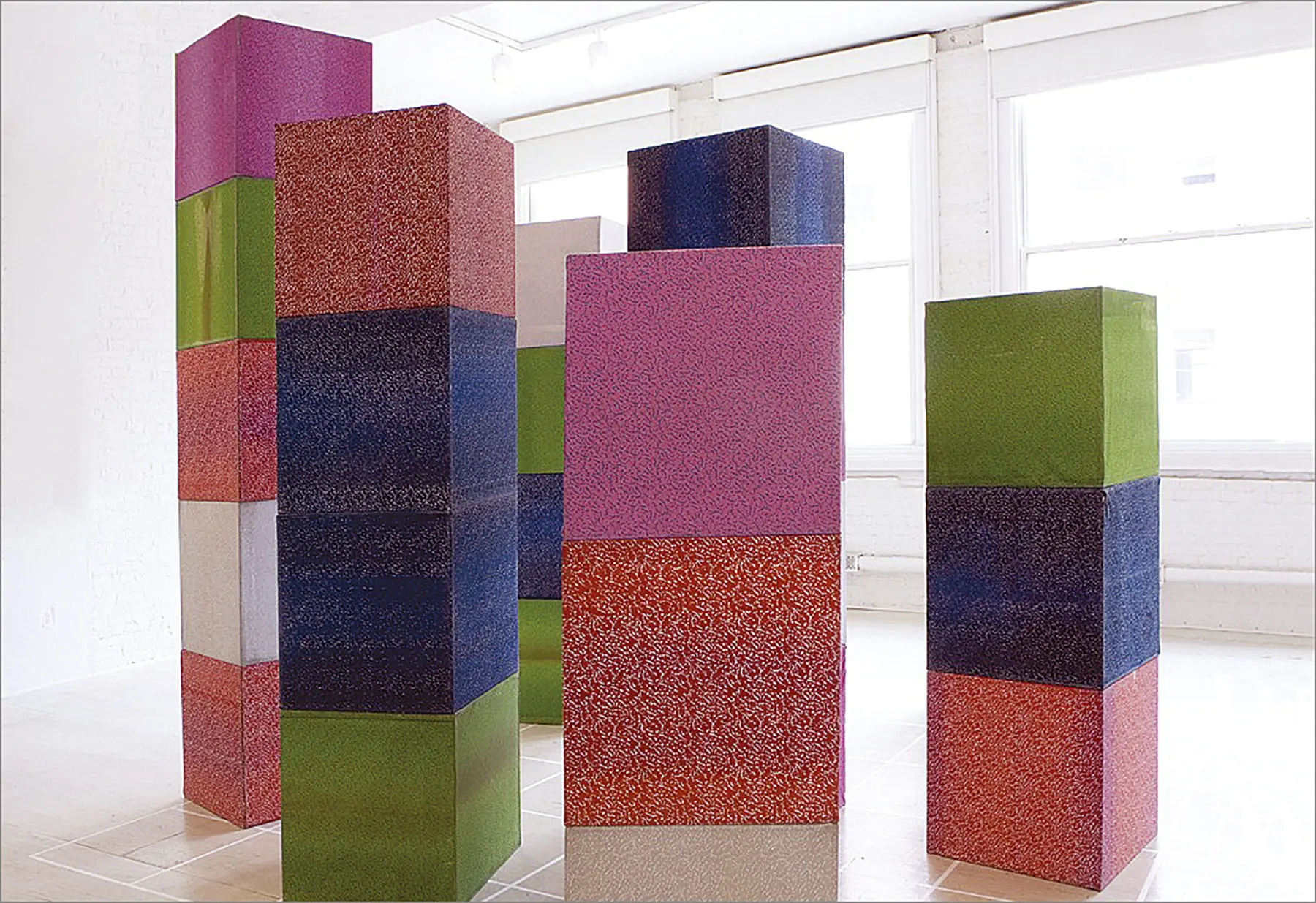
This exhibition, encompassing almost seventy artists, is organized into a large number of sub-chapters. Klaus Biesenbach, director of MoMA PS1, Neville Wakefield, an advisor to the institution, and Connie Butler, MoMA’s curator for Drawing, was in charge of the inclusive curatorship. In the context of the continuous search for new products in the world of visual arts exhibitions, formats and naming conventions have been under review for the past two decades, and this in a way can be perceived in Greater New York—as in Younger than Jesus, the New Museum Triennial reviewed previously. Greater New York, which began in 2000 and is in the calendar every five years, coincides in 2010 with the fact that its site had a new official name: it is now MoMA PS1. The marriage between Manhattan and the surrounding boroughs has become more and more consolidated. This many-galleried building recreates the characteristic spirit of the Big Apple: a shift in function, leaving in the open traces of prior activities (this is also how SoHo and Chelsea emerged). This populous exhibition exudes a celebration of what young art seems to be. The preeminence of formats such as performance art and video, with an emphasis on the political, the ephemeral, the individual, the collective, and the participatory, is not new. One aspect where format and content interact comes from the essential connection between the visual arts and everyday life, expressing the texture of today’s society. How is this revealed? By inviting artists and the public into the TV-based model of the reality show. We see this in the large program with times for visiting open artists’ studios and artists-in-residence, meetings, collaborative performances, poetry readings, and more.
Inversely proportional to the intense pace of contemporary life, the birth of the new millennium has been happening throughout the last decade—it didn’t come to pass at midnight on the 12th month of 1999. On the contrary, what started to form at that point was a multifaceted body-change, a science-fiction entity that self-generated and roared on 9/11 and reemerged with demands from an aggrieved and ignored Nature, with the implosion of the financial system (apparent to all since the beginning of the new millennium, except for those who legislate…), and with the most variegated criminalities that carry on left and right. Reality is one: it is multitudinous, it is plural. Nothing is One. Everything is infinite. In the drive to show “the many,” fairs, biennials, quinquennials, museums, and other centers for the diffusion and commercialization of the art continue to proliferate. Nothing against artists being able to live off their creative work and infrastructures contributing a modus operandi for large numbers of people. Like all of those vast spaces, it is too much for an unaccustomed viewer, although it does contribute an experience of the “processes.” The instances of work in progress and exhibition in progress, which remind every thinking person that even reiteration flows…in order to reappear. Here are those youngsters who are best positioned, like Brody Condon, William Cordoba, Dani Leventhal. Such transmodernity leans, for good and bad, on post-minimal, pos-tribal, post-genre, post-social, post-process, and decent-global art.
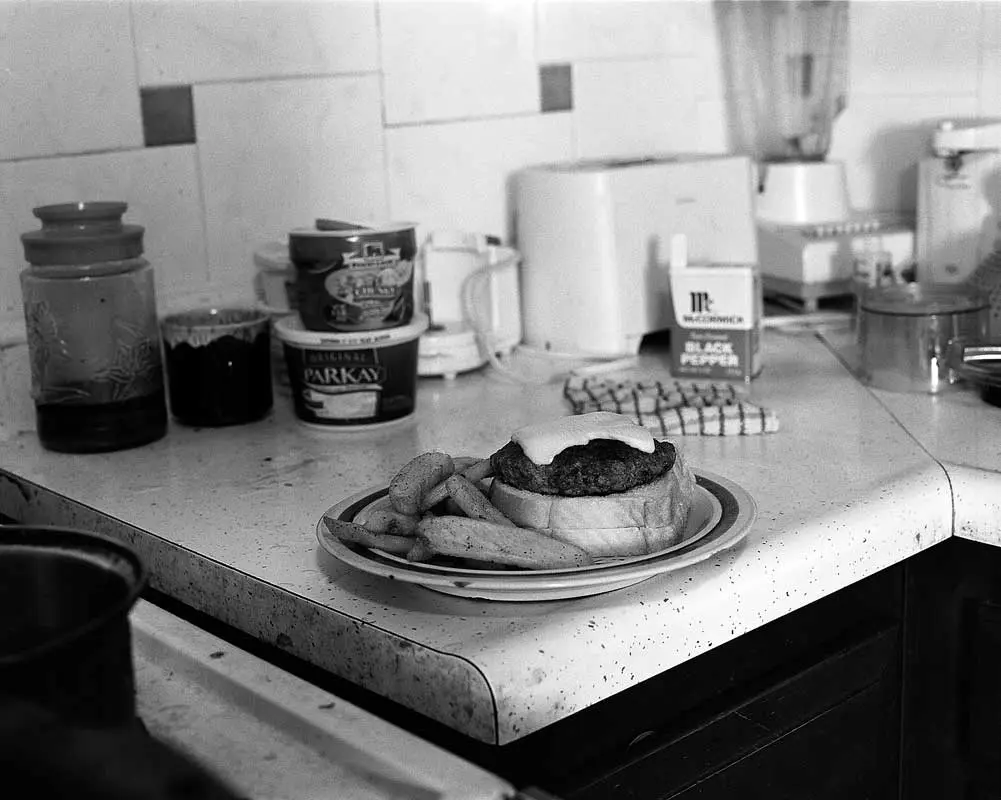
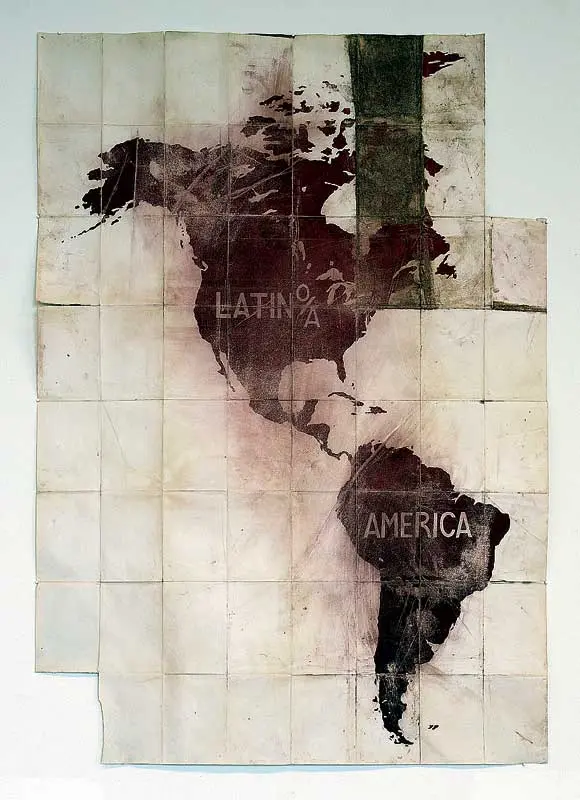
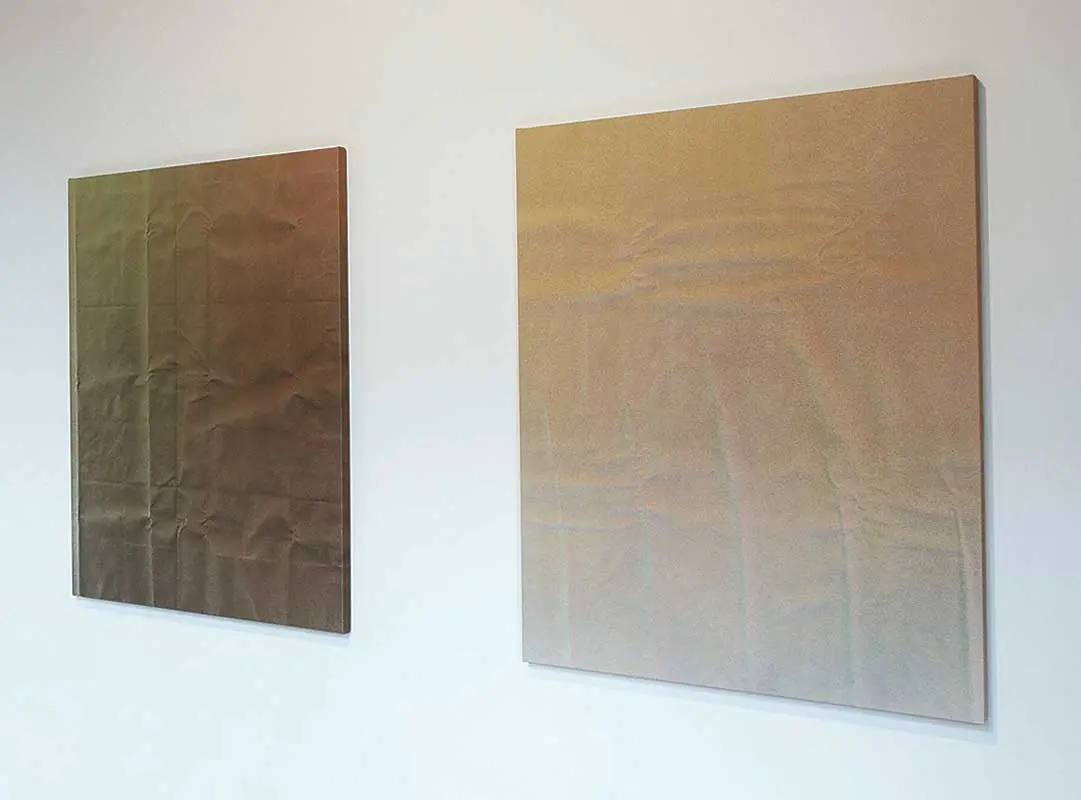
This can be labeled an exhibition-in-shift because the curatorial function is, as planned, also inclusive: it connects five curators beyond the ones already mentioned, who create 5-week circuits within the general plan. Electronically, it focuses on the natives, also paying attention to the migrants, but not taking into account the obsolete. In terms of the content, reflection shows that the turn of quantity prevailed over quality, as also happens in the society of accumulation, in parallel to the “number of electronic friends” that are counted even if one only knows their name. In general, terms, what we perceive is a gathering of “social traces” that are left after tsunamis, hurricanes, and Wall Street debacles. Inclusivity is relative and guarantees nothing. Targeting consensus rather than quality the percentage of women is high, close to half the total; there are fewer Latin American artists than can be counted on the fingers of one hand (all of them living in the US), and gay/lesbian imagery weaves throughout the exhibition. Some exceptions can be salvaged from such a broad survey, such as Pedro Lasch, LaToya Ruby Frazier, Ishmael Randall Weeks, and Tauba Auerbach. In summary, this is a large-scale performance with cables, screens, and exchanges with the community. MoMA PS1 is the giant building where artists are the preparatory comings and goings of their early quests.
GRACIELA KARTOFEL
Art historian, independent art critic and curator specializing in modern and contemporary Latin American art.