Santiago Olmo is the curator of Utrópicos1—the latest edition of the Pontevedra Biennial—and, as such, intellectually responsible for the event to have devoted itself to efficiently map out artistic activity in the countries of Central America and the Caribbean. That region of the world lacks not only the necessary cognitive maps but also a network of museums, centers, galleries, and specialized publications supporting contemporary art truly at the level of the variety and power of the art that is created there—a network, moreover, able to help ameliorate the grave cultural deficit of societies that can’t articulate a coherent discourse about themselves that includes, as its key elements, the interpretation and display of the structural causes of their intractable, intense social and political conflicts. True, artists haven’t waited for such an institutional network to grow and consolidate but, taking the initiative, have given themselves passionately to the tasks of interpreting reality with the means and resources at their disposal and generating powerful and convincing images of it. Not all of them have done this, yes, but those who have committed themselves to those tasks are amply represented in this edition of the biennial, with numerous works that are in fact contributing to the formation of a collective consciousness that today comes to us broken, disarticulated, and dispersed, and which only has serious possibilities of being built or reformed when it has illuminating images—dialectical images, in the sense elaborated by Walter Benjamin—to use as means to articulate a consistent discourse.
Judging by the works gathered in two of the three shows presented at the Museo de Pontevedra, the Biennial’s main site, the commitment of these artists has progressed in two significant directions. The first points toward a reactivation of memory, such as that suggested in Latin America by the Network of Southern Conceptualism, articulated around matters such as slavery, the economy of sugar plantations and the “banana republic” status of the majority of the countries in question. The second direction focuses on contemporary problems, such as the impact of US-based mass-media culture, Free Trade treaties, urban fragmentation and violence, emigration and the return of emigrants. Obviously, there isn’t an impassable barrier between those two lines because, although slavery might have been abolished, racism—one of its key underpinnings—continues to contaminate relationships between people, as does the external perception of that region of the world. And the same occurs with revolutions and revolutionary movements, the defeat of which has nevertheless left a visible trail of consequences, among them violence in the cities. In sum, that past and present cannot be separated in Central America and the Caribbean is as clear-cut a fashion as the always-renewed propagandists of the end of history would like.
Slavery, to begin with, is evoked from both gender-based and post-colonial perspectives by Joscelyn Gardner, a Barbados artist living and working in Canada who presents her series Creole Portraits II, which include the extraordinary images of female heads, African in origin, named Accubah, Coobah (or Molia, Egypt Susanah, Margarita, Nago Jenny, or Old Moll). “Each one of the delicate lithographs in these collections,” the catalog explains, “carries the name of a woman who lived in the Egypt plantation in Jamaica, in the 18th Century. According to primary sources such as the diaries of their masters and foremen, they were sexually exploited by those in charge.” The artist denounces the torture they were subjected to, like their threading into their hair of iron chains, restrains, and shackles.
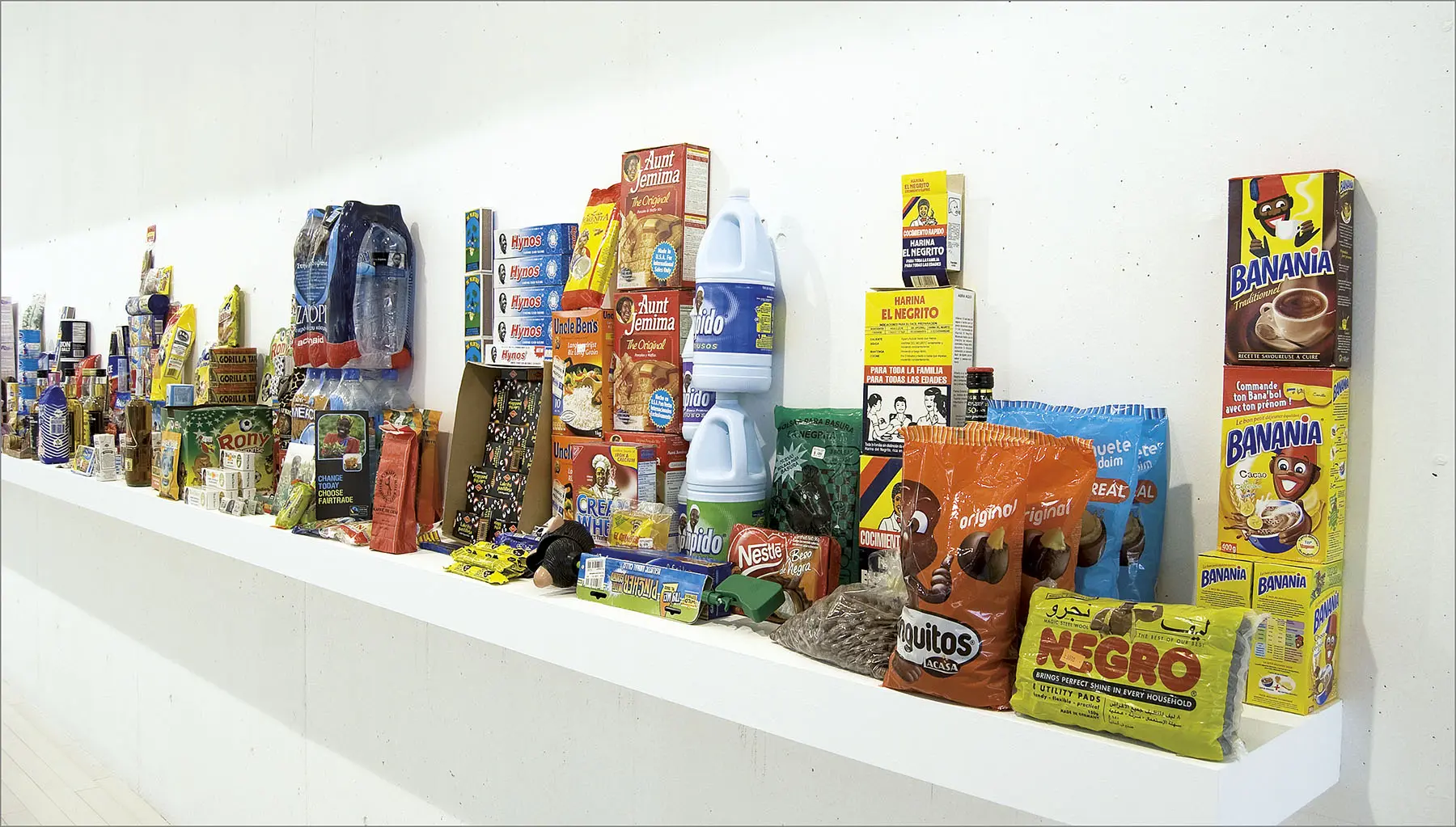
Martinique artist Jean-François Boclé, in turn, deals with the racism that still pervades society and I condensed in the stereotyping of blacks as servants or perpetual subalterns to whites. At the Biennial, Boclé exhibited—in the shape of a shelf or supermarket island—a sample of the work in progress he has been creating since 2005, compiling logos, packages, and advertising images for foods and cleaning or personal hygiene products in which people of African descent are invariably represented as affable servants and people of European descent as benevolent, healthy, well-fed, happy masters.
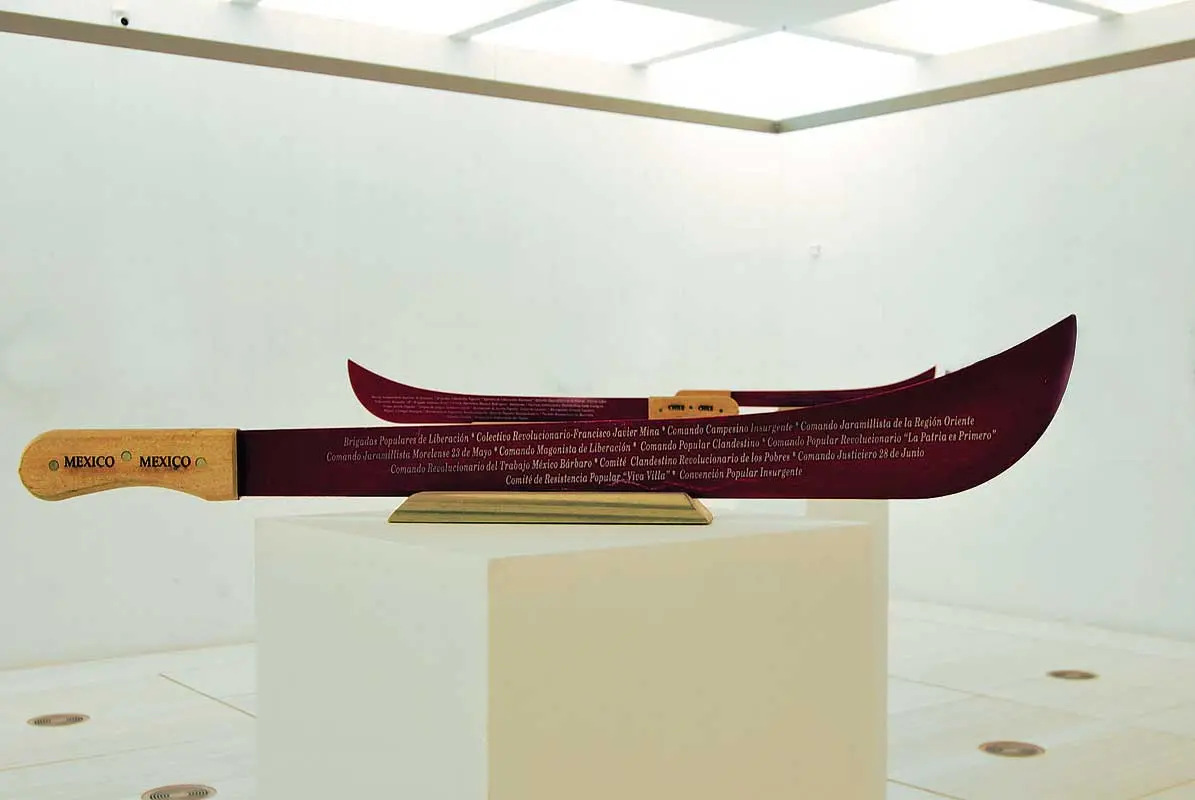
As is known, slavery was introduced in large-scale to the Caribbean in order to provide the region’s great sugarcane plantations with the cheapest possible labor force (and the one most resistant to the inclement environment). It is to these plantations that artists like Martinique’s David Damoison, Cuba’s Ricardo G. Elías, and Colombia’s Carolina Caycedo, have devoted significant works. Damoison and Elías use photography, the former to document the typical functioning of an ingenio, in a series titled Cane and sugar, and the latter to show the melancholy process of dismantling an important part of Cuba’s plantations (dictated by the government in 2002), in the collection titled Oro seco. Caycedo, however, takes some distance from these evocations and brings to the fore the revolutionary tradition in the Antilles through an installation titled En caso de emergencia – In case of emergency, comprised of 10 machetes of the kind used in the cutting of sugarcane, placed on wooden planks on which the names of some of the many revolutionary movements that have historically shaken Central America and the Caribbean.
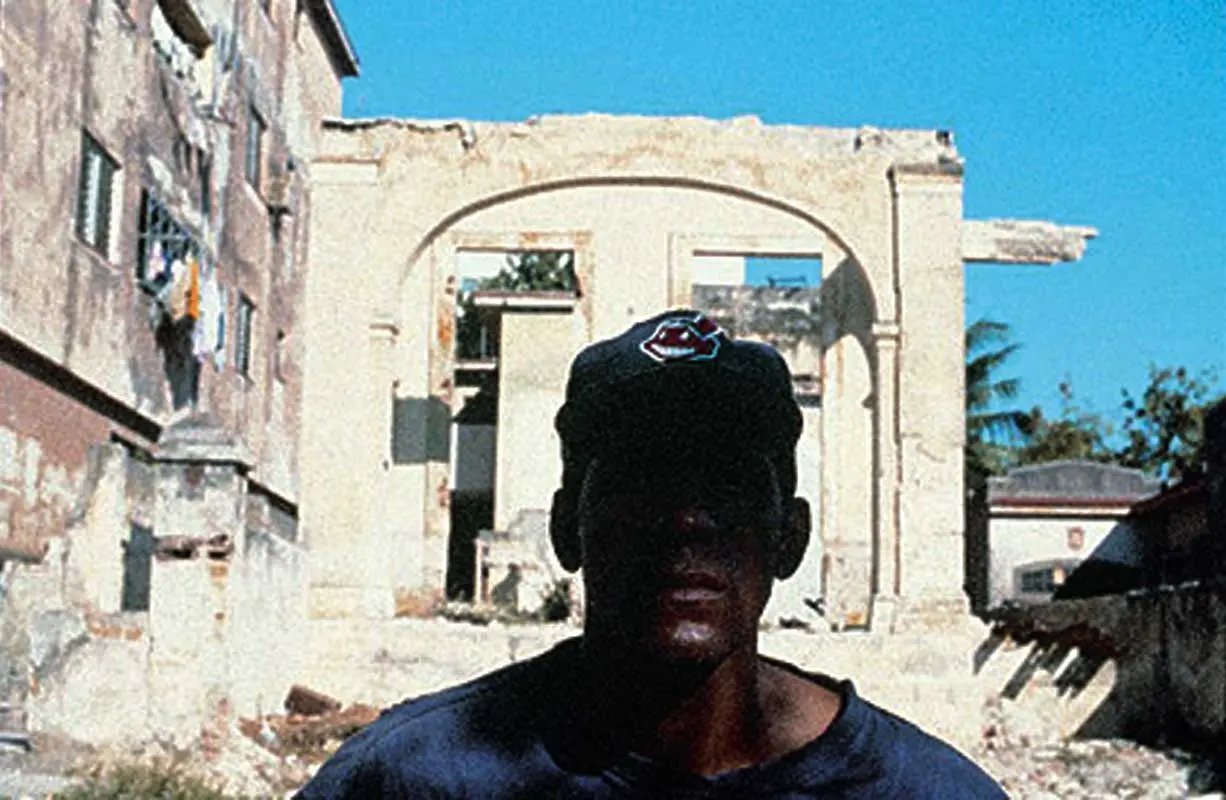
Just like there is no revolution without a counterrevolution and revolutionary disenchantment, the region’s countries don’t lack disenchantment with and criticisms of the revolutionary utopias that emerged in them. The work of Nicaraguan artist Ernesto Salmerón has focused on this issue. Salmerón presented graphic and visual documentation of his project Auras de Guerra, conceived and created, he has said, with the purpose of showing that “Nicaragua is living through a utopia prostituted for individual political ends, Nicaragua is a very well produced political reality show and my task is to dismantle it using the same mass-media strategies used by the ideologues of the revolution.” Cuban artists Meira Marrero, José A. Toirac, and Carlos Garaicoa do go that far in their criticisms of their country’s own revolution, but, even so, they have created works that evidently adopt a degree of distance from it. Marrero and Toirac exhibited Shoot. Homenaje a Chris Burden, a video-installation articulated by a filmed period documentary that shows the rare dignity with which an officer in the army of dictator Batista confronts the revolutionary firing squad and himself gives the order to shoot. Like Burden did, in the video to which this couple pays tribute. There was also a certainly elliptical work by Garaicoa where the silent images of some men framed in a blighted landscape of central Havana, captured by video camera, were intended to evoke the traumatic experience of an entire generation of Cubans during their country’s participation in the Angola war.
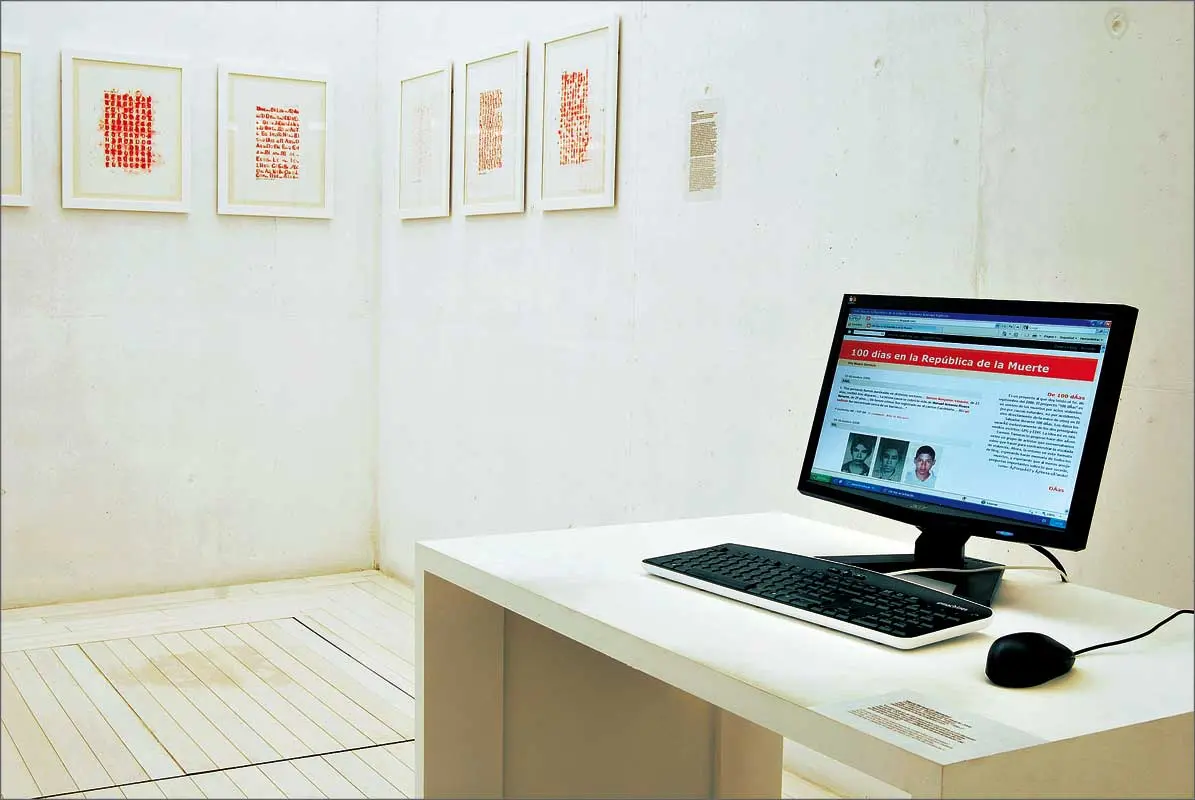
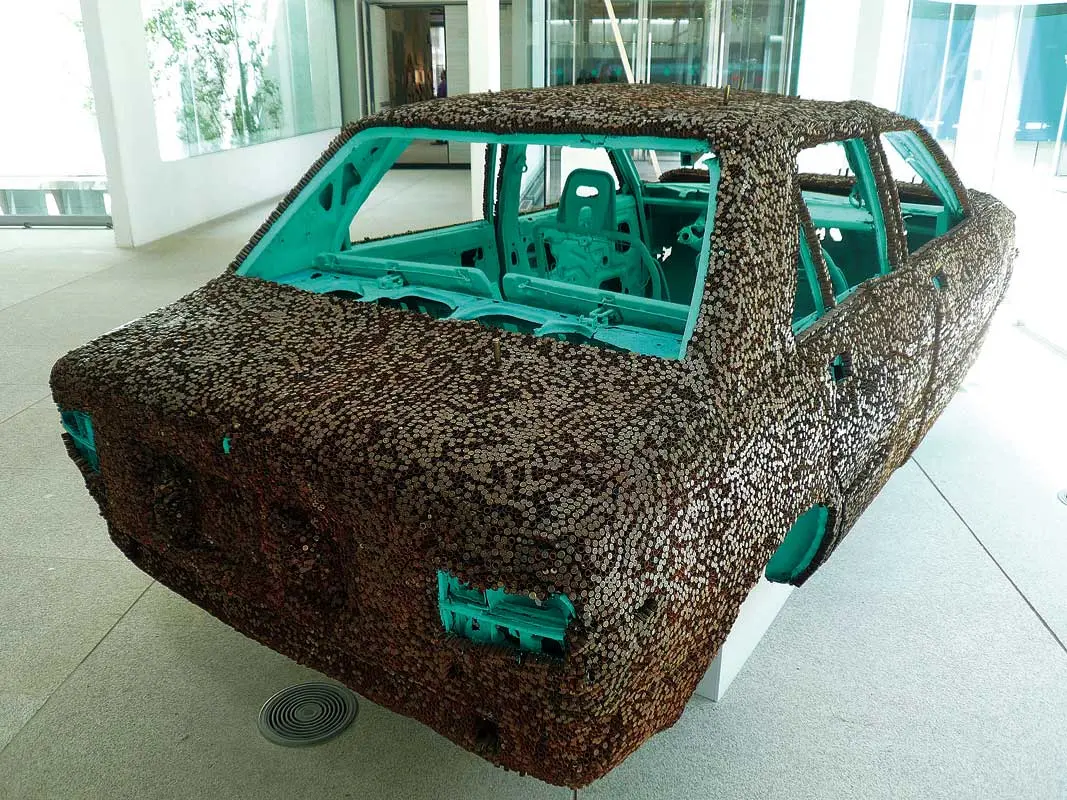
Violence in Central America and the Caribbean is no longer revolutionary but, as I said, urban, wild, gang-related. This is what Salvadoran artist Mayra Barraza brings to the fore with two works: 100 días en la República de la Muerte and Lapidario, both directly created on the basis of news appeared in Salvadoran media about daily murders occurred in the country. Or Dominican artist Límber Vilorio, who presented Acorazado, where he covered in its entirety the frame of a 1984 Toyota Corolla with 200,000 bullet casings, glued using silicone. This make and model of automobile is widely used in public transportation in Santo Domingo, as well as in many other Caribbean and Central American cities, and it is a powerful metaphor to express to what degree the working classes are exposed, every day, to a veritable “rain of bullets.”
The biography of many of the agents or protagonists of this violence is comparable to that of Carlos Portillo, a Salvadoran citizen who was a soldier in the army and the militias and, after the end of his enlistment, emigrated to the United States, only to finally return. Only that Portillo, unlike so many others like him, didn’t join a gang or engage in any kind of criminal activity. He preferred to tell his story in a series of letters and documents that artist Danny Zavaleta gathered and exhibited as Retrato hablado, printed on black-and-white newsprint. “Staged in this way,” the artist explains, “they offer a reading of the principles, values, and feelings of someone who has seen himself involved in criminal activities. Carlos Portillo gave me this album. Retrato hablado is my unbiased interpretation of his particular life, which is also the life of many Central American citizens.”
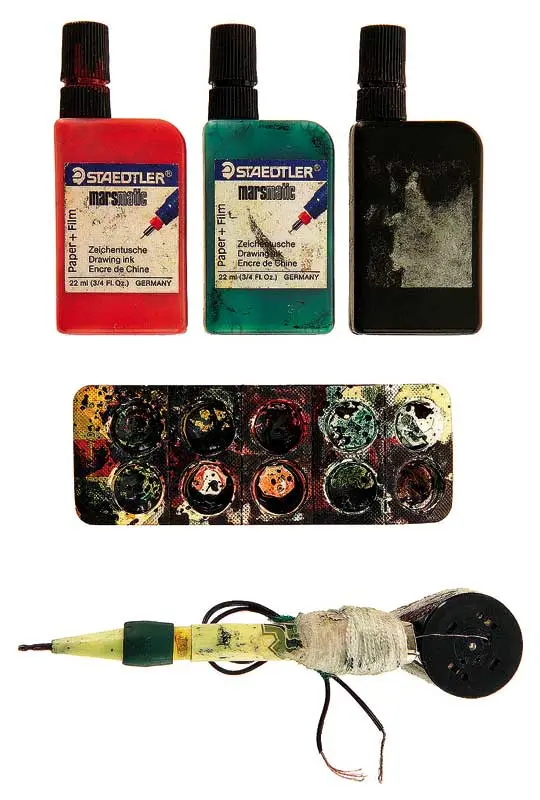
The counterpart to so much street violence is prisons and jails, where a situation just as conflictive as the one beyond their walls, if not more so, has emerged—a situation that is approached with intelligence and remarkable subtlety by poet Jhafis Quintero and artists José Díaz and María Montero, all from Costa Rica. They are the authors of In Dubia Tempora (Momentos críticos), a book-object containing 40 images of various utilitarian objects made and used by prisoners in their country’s jails. On exhibit at the Biennial are 14 of these extraordinary photographs.
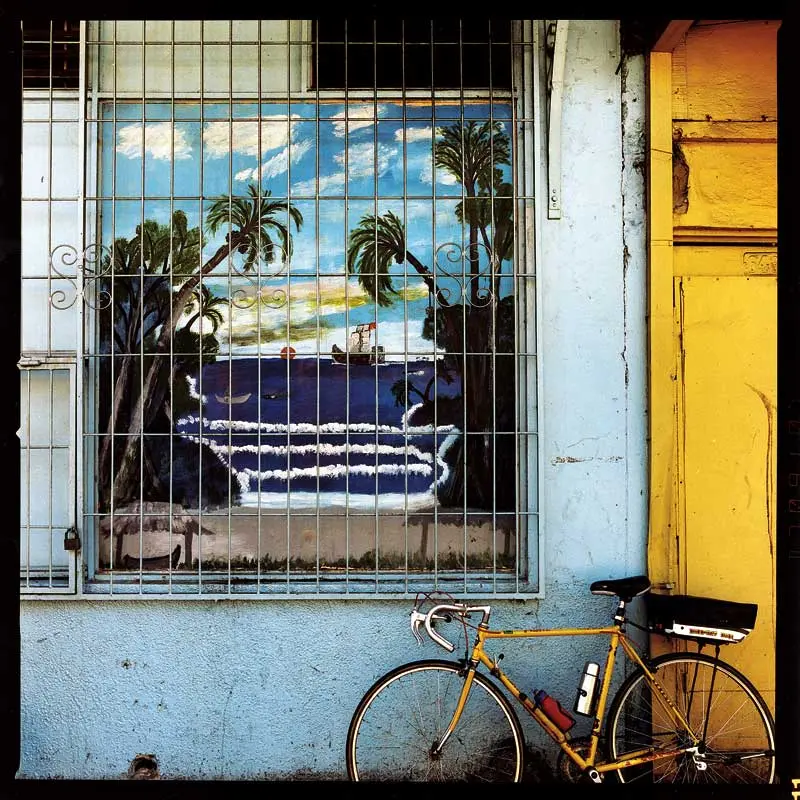
Today’s Central America and Caribbean region cannot be understood without attention to the overwhelming pressure exerted by US mass-media culture on its collective imagination. Television, movies, and advertising join forces there to promote American lifestyles and American visual codes and stereotypes, producing in that way a dazzling iconosphere with many derivations and consequences. Costa Rican artist Cynthia Soto has traced one of those consequences in Pictografías, an ongoing project focused on the photographic documentation of the products of “vernacular muralism and logographics” which, as she explains, “subsist in parallel to a globalizing, standardized aesthetics,” although in fact they consist of versions by anonymous artists of the visual tropes so efficiently used by the tourism industry to promote its business in the region: idyllic beaches and sublime sunsets on an emerald green sea. Painter Joaquín Rodríguez del Paso, also from Costa Rica, has opted in his series It’s a wonderful world to appropriate the “calligraphy” and “visual texture” of American advertising to illustrate, he says, “the bad habits, excesses, and new customs of the American public, obviously in the way they are perceived by a Central American observer.”
The latter perception has, obviously, some responsibility in the decision made daily by thousands of Central Americans to emigrate to the United States in search of work and better conditions. Finding them is another matter, as is the fact that they frequently find, rather, death from thirst or hunger in the Arizona desert. Or they might end their desperate adventure in the jails filed with undocumented aliens awaiting deportation. Guatemalan artist Regina Galindo reproduced this experience by renting, from the Corrections Corporation of America—a giant enterprise that manages private prisons—a cell in T. Don Hutto Family Residential Center, a jail located in Taylor, near Austin, where she locked herself in, along with her husband and baby, for a period of 24 hours. The result is a video titled America’s Family Prison that records the experience and gives visibility to practices that are becoming normalized day by day in the American penitentiary system, the largest in the world.
The phenomenon of emigration has other important derivatives, equally underscored in Utrópicos. Honduran artist Adán Vallecillo and Salvadoran Walterio Iraheta have dealt with a couple of them. In his pictorial installation Remesa Republic III, Vallecillo plays with the corporate image of Western Union—especially its black-and-yellow identifying colors—both because this multinational company has a virtual monopoly in the money transfers that Central Americans in the US use to feed their families back home, in the process supporting their country’s economies, and because he sees it as the symbol of globalization that guarantees the undisputed preeminence of “financial values.”
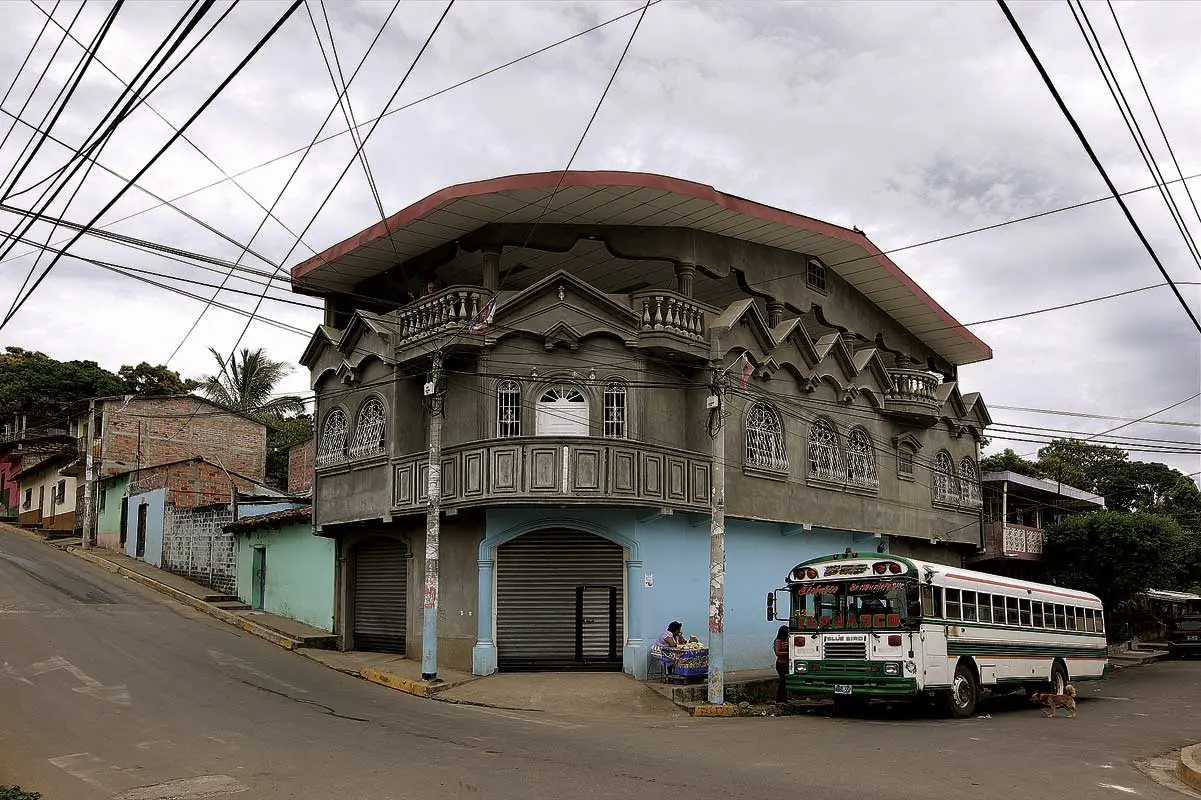
The topic of Faraway brother style, Iraheta’s photographic series, are the houses built all across Central America with the money sent back by emigrants, which display an architectural style the artist describes as an unencumbered mixture of “an interpretation of the classical, the baroque, the kitsch” that to me would be unthinkable without the proteic and colorful images divulged by American television.
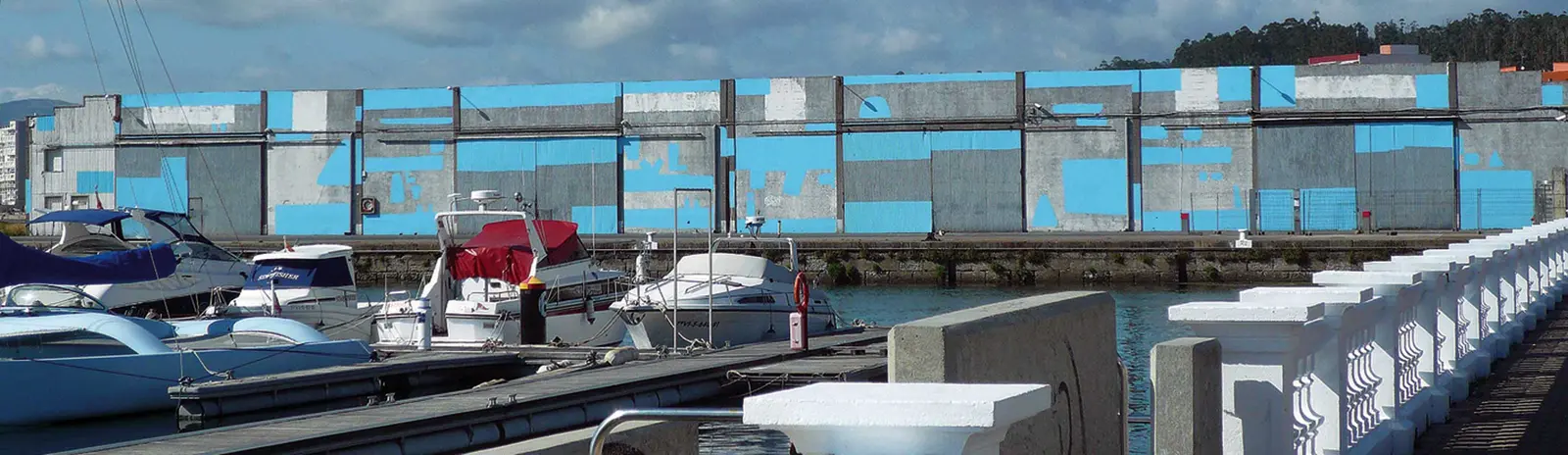
We must also note, in closing, that Santiago Olmo made room in his cartography of Caribbean and Central American art for an evocation of the unique connection that Galicia has maintained with the region by means of exile and economic immigration. Utrópicos explores these connections in a variety of ways, among them the show Ida y vuelta. Presented at the Museo de Pontevedra, which included works by avant-garde Galician artists like Castelao or Granell and works by similarly avant-garde locals like Wifredo Lam. Also included were works of contemporary Galicians such as Francisco Leiro, next to Uruguay’s Carlos Capelán, and Cuba’s José Bedia. These approaches and contrasts are also noticeable in the program of interventions in Villagarcía de Arousa—the most important port zone in the province of Pontevedra—where Costa Rican artist Federico Herrero shares space with contemporary Galician artists like Olmo Blanco, Kiko Pérez, and Nano.
NOTE
1. Utrópicos. Centroamérica y el Caribe. 31st Pontevedra Biennial. Spain (6/4/2010 – 9/12/2010). Includes the following shows and projects: Ida y vuelta, Tras-misiones, Documentation Center, El aguacero, la siesta, el cañaveral, el tabaco, Archiv-acción, Fricciones, Migraciones: Mirando al Sur, Audioguides by Colectivo Escoitado, interventions in the port zone of Vilagarcía de Arousa, and an individual exhibition of works by Tania Bruguera: La promesa de la película, plus a series of contemporary Central American and Caribbean films. It has also involved the Museo de Pontevedra, the MARCO of Vigo, and the CGAC of Santiago de Compostela.