Prescription-like paradigms for visualizing the culture of others always fail us when it comes to designing new rhetorical devices of “comprehension,” “approximation,” or “intromission” in that cultural plasma is always preceded by the concept or premise of otherness. There are other criteria, already stabilized by the dominant cultural discourse, that can rarely be pushed back and defeated by the anxiety of new gazes that desire an unbiased approach, or — at the very least — one that has been detoxified of those drives towards the reproduction of stereotypes or clichés that are so productive for certain fronts of critical activity and the curatorship of art exhibitions.
The strength of these schemes and their weight in the intellectual order forces many projects that look beyond a country’s borders to become veritable ghettos for alienation and a kind of stew in which everything goes, even the most equivocal postures and the most visceral, hormonal statements. Other epistemic exercises, somewhat more serious, and also without intention, reproduce structures of confinement that do nothing but reinforce the stereotype that, in principle, should have been reviewed from a critical perspective. This happens not only in the terrain of the art exhibit and its conceptual presuppositions, but — and even graver — around the discourse built around them by the mass media. The range of impropriety is often so wide (and lax) that it ends up becoming a falsified truth that all repeat without great reflection or critical distance. Reviewing a couple of recently published texts concerning a series of exhibitions that take Latin American production as the pretext for speculation should suffice to understand the continuous absurdities and the carnival of improprieties in which Spanish critics waddle in their drive to reduce (or perhaps it would be better to say “understand”) the culture of the other. One of the most relevant symptoms that become pathologies is the recurrence of commonplace tropes such as the exacerbation of the social role of art in this context or artist’s social commitment in Latin America as if that were an exclusive feature of this practice or its seal of identity rather than an obligation for contemporary art as a whole inasmuch as it is a cultural system for the production of meaning. Approaches of this kind, even f they derive from a benevolent desire to give the Latin American text greater prestige and cultural resonance, fall back into reductive perspectives and assert models of comprehension that are based on difference as a premise and, to that extent, on features that continue racing the rhizome of exoticism as a condition.
In the midst of this imbalance, propitiatory of unbridled passions and contrasting, often fetishistic curatorial positions, one of the greatest successes I find in Modelos para armar the show at the MUSAC in León, is its conception of a narrative/conceptual platform that allows for the exhibition of a large selection of works from the MUSAC collection without letting it fall into a mediocre succession of the different or the unequal as the measure of legitimacy or prestige. The works gathered here, in their majority splendid in their construction and in their polyhedral-semantic avocation, not only visualize/problematize contextual matters but overcome their own spaces of production and axiological enclaves in order to articulate eloquent metaphors and communicational pathways towards the most urgent issues in contemporary culture. The show’s curators (María Inés Rodríguez, Octavio Zaya, and Agustín Pérez-Rubio) point this out in their introductory note, saying that “the exhibition brings together personal and philosophical, urban and political, literary and artistic discourses and positionings that interact with each and every one of the undercurrents that animate and engage contemporary art in any part of the world. These works reflect a critical intent upon society and its relationship with other contexts. In that sense, the show projects itself as a kind of infinite ars combinatoria that makes no exclusive reference to Latin America’s geographic and cultural setting, but makes possible and fosters varied and contrasting readings, uncertain plottings, ambiguous clues, and unresolved questions, as in an unfinished labyrinth.” It is true that in the proposed trajectory, based on eleven moments/spaces that respond to the works own statements and their thematic/conceptual vectorization, that transversal avocation pointed out by the curators doesn’t always get fully resolved, and to a degree, on occasion, the current stereotype is somewhat apparent, not as much because of the works in themselves but because of the discourse around them. However, the ultimate result staged here is a large exhibition that makes it possible, if not to arrive at authoritative and orthodox conclusions that suffocate the practice’s very emancipatory character, at least to trace new narrative and rhetorical paths towards understanding today’s Latin American art and the range of anthropological, political, and cultural concerns that are constantly stimulating them. Proyecto Vitrinas, for instance, on this occasion in the hands of the extraordinary Venezuelan artist Alexander Apóstol, under the suggestive title of Modernidad tropical o cómo lograr que el lobo feroz no destruya la casa de papel is an authentic maneuver for the dismounting, hollowing-out, and critique of the remnants of Modernity’s paradigms and their crisis in the Latin American space. This new proposal by Apóstol continues in his steeled line of investigation of power relations and their direct effects on the mechanisms of ciphering of meaning through urban and architectural landscapes, establishing rigid models for the construction, production, and inhabiting of the city and its many corners. Dystopia, urban blight, the carnival of decay that any imported ideology implies in its application to a different context, the theatricality of any construction of identity (see the magnificent exhibition Ensayando la postura nacional, in particular, the video, at Distrito4 gallery in Madrid), and the poverty of the topical, are some of the ideas embraced by this new proposal and which serve, in the end, for a greater and more legitimate understanding of Latin American reality(es). The project is accompanied by an excellent catalog, Modernidad Tropical designed by Michel Mallard Studio under the direction of María Inés Rodríguez, which includes agile and intelligent texts signed by Julieta González, Cuauhtémoc Medina, and Juan Herrero. A lucid exploration of the entire oeuvre of this multidisciplinary artist, who never abandons the idea of the work of art as an active principle of cultural critique and unpacking of social processes held captive by antagonism and paradox, is promoted between the three gazes and their epistemic and analytical crossings. This is the first volume in a collection of books by artists and architects programmed for publication by the institution if the current economic crisis allows.
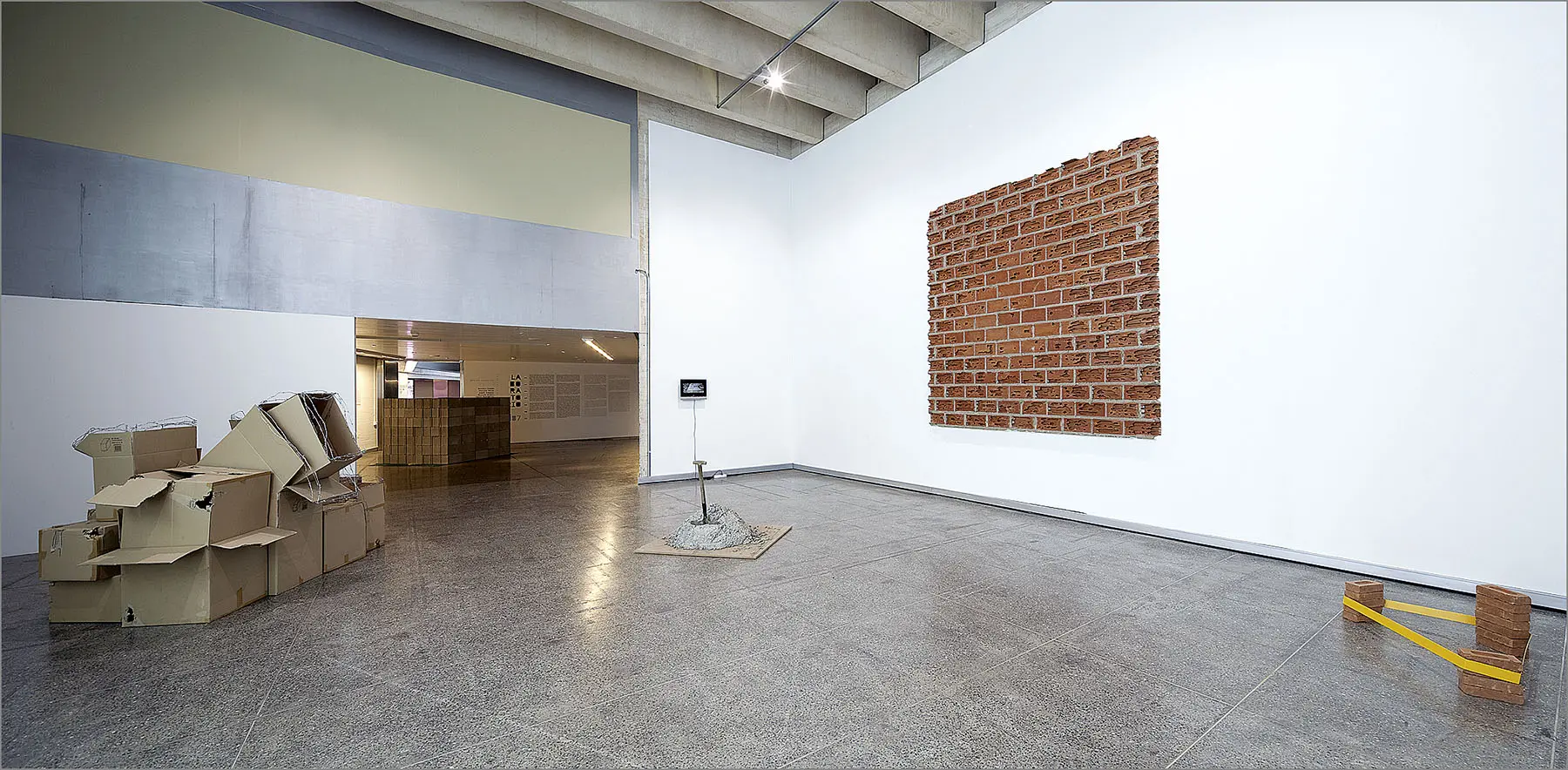
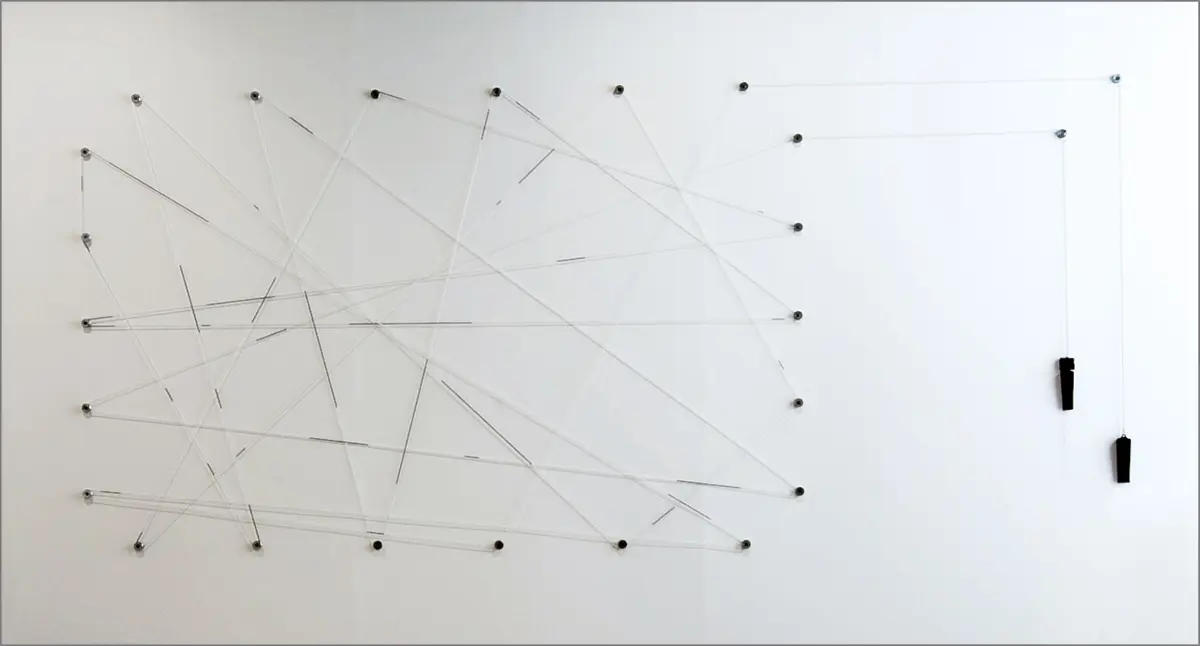
In that sense, I believe that the show Para ser construidos, located in the area of Laboratorio 987, is an interesting museographic option within the current program of exhibitions at the MUSAC, as it is an exercise in speculation rather than a proposal that closes upon itself. The whole of it is a thought maneuver that, in the words of curator Agustín Pérez Rubio, “attempts to utilize the dual conceptual and linguistic entity of the term “construction” (I would call it a condition of ambiguity and paradox) to exemplify, on the one hand, a relationship with the city and, on the other, with conditions of identity.” What is true is that the artists included here (Marcelo Cidade, Marcius Galán, André Komatsu, Nicolás Robbio, and Carla Zaccagnini) are able to corroborate and support, with the help of intelligent works that speak of incomplete processes and allude to architectural and urban spaces and their paradoxical relationships, the curator’s hypothesis concerning the permanent state of unfinished construction (and, as such, of neurotic and schizophrenic laboratory) upon which rests a cultural panorama that continuously questions itself about its identity and destiny, about its quests and discoveries, taking the past as a point of reference and interrogating a present that for many outlines an uncertain horizon. I don’t know whether the idea of installing this show in the Laboratorio 987 area of this spectacular building designed by architects Luis Moreno Mansilla and Emilio Tuñón was happenstance or was intended to take advantage (I want to believe this) space’s own semantic condition as a site for trial, rehearsal, process, investigation.
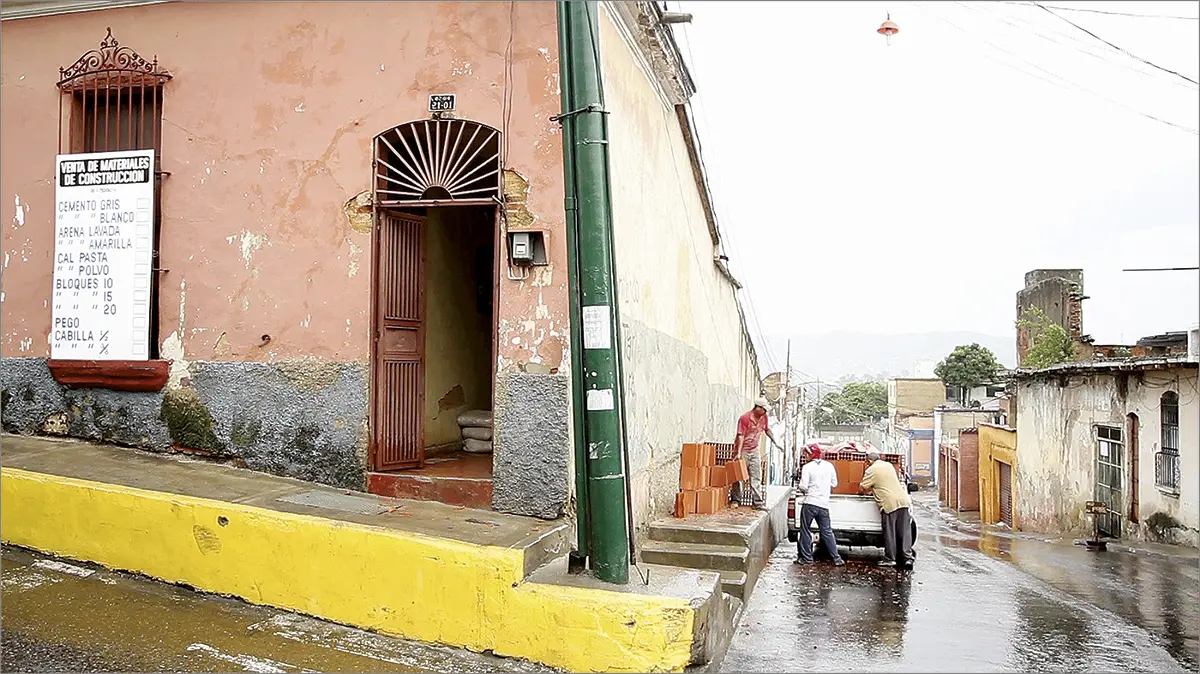
If the latter is the case, it obviously represents another success, as the curatorial thesis is corroborated in a direct dialog with that corner of reality where continued speculation flows through the sieve of a laboratory of digressions, affirmations, borrowings, and political irreverence that have cost dearly when it comes to forging a design of nationality or identity with relatively stable underpinnings. Alexander Apóstol’s work in the museum’s vestibule serves as a counterpoint to the rest of the works gathered here, and it even engages in a dialog with them from the standpoint of a critique that alludes to the spontaneous and anarchic construction of cities through the intervention of desire, necessity, and the hormonal concert of schizophrenic and cannibalistic powers. Although the artists here all come from the Brazilian scene, this show doesn’t aspire, as the curator warns, to become a map for the understanding of contemporary art in Brazil. At the most, it seeks to open perspectives for that understanding and to rehearse other ways to look at the region’s art on the basis of approaches that affect concepts such as cultural policy, the paranoid construction of identity, and the permanent state of mirror-like interplays in cultural spaces that articulate themselves in the image of others. In fact, the curator deploys the concept of “artists-proponents” to assert the idea that this is an exercise in socio-aesthetic speculation that moves between construction proper and the notion of the unfinished project. The morphologies exhibited and rehearsed corroborate the curator’s thesis and make the museographic discourse pertinent. In this way, all is manifested in terms of process, where juncture and chance play their cards.
The greatest reach, or intent, in this case, is the establishment of rather direct connections between the practice of art and its social milieu. Thus, the curator begins, not exactly in the form of a quotation but of a premise for conceptual articulation, with texts and letters by Brazilian artist Hélio Oiticica (Rio de Janeiro, 1937-1980). As is known, this art guru always sought to radicalize not only his practice but also his positions and considerations regarding art in order to establish a closer link between cultural text and political debate. Along this path, he pursued connections that skirted the stagnated, standardized designations of high and low culture, art and popular expression, in a quest that never stopped for a congruent model of dialog in several fronts of Latin American visual and meaning production.
I believe that along these lines the MUSAC’s current proposal has achieved its goals: to exhibit the assets of a striving, increasingly richer collection that does not resist local borders; to open new avenues of understanding for cultural realities operating under signs that differ greatly from those that are recognized by the hegemonic model; and to establish links between a particular production and its global resonances without cutting of the reach of a Latin American discourse that is, above all, global and universal.
ANDRÉS ISAAC SANTANA