
If one phenomenon can be said to have kept the international art scene in its thrall over the past two decades, it has been its “biennialization.” True, the first precedents date from the 1950s, when São Paulo, Cairo, and even Paris began to organize international art exhibitions under a model adapted from the Venice Biennale, which, on its part, was powerfully reborn from the ashes of WWII. Also significant for that period was Documenta, in Kassel, although at the time it was presented as an alternative to Venice both for its lack of national pavilions and its argument-based direction. But this initial phase of “biennialization” pales when compared to what took place starting in the 1980s when Havana decided to host the first art biennial of the Third World, and the rest of the planet launched enthusiastically on the same path. Sidney, Turin, Pontevedra, Istambul, Guangzhou, Lyon, Prague, Johannesburg, Shanghai, Berlin, Moscow, Seville, and even Bogotá, have added their names with uneven results to the growing list of cities with their own version of an art mega-event, initially inspired on Nineteenth-Century exhibitions.
In recent years, however, the process of “biennialization” seems on the verge of dying from its own success. There are so many different Biennials that even the São Paulo event went to the extreme, under Ivo Mezquita, of denying its condition as an art exhibit and proposing itself as an empty space devoted only to historiography and reflection about the very phenomenon of “biennalization.” In the end, the radicalism of Mezquita’s project was reduced to a hybrid of reflection space and exhibition site, but the dissatisfaction with the Biennial model that it expressed has not ceased to grow.
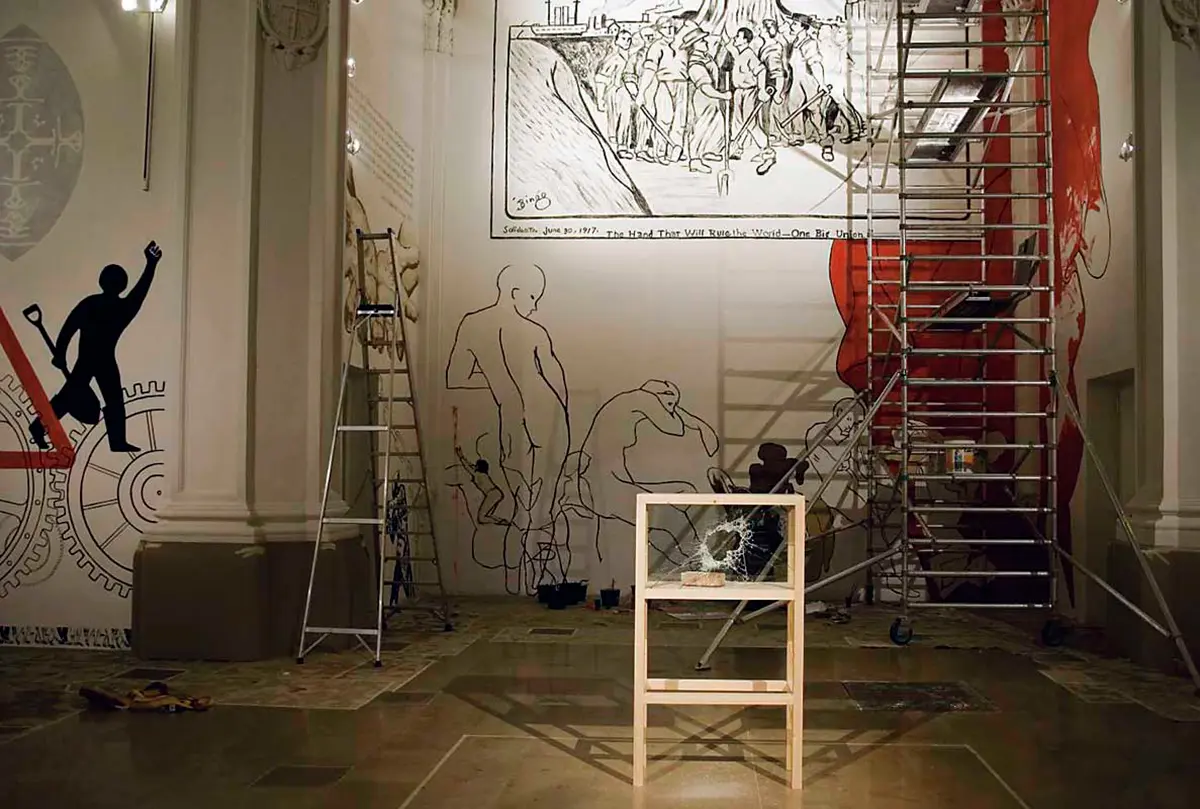
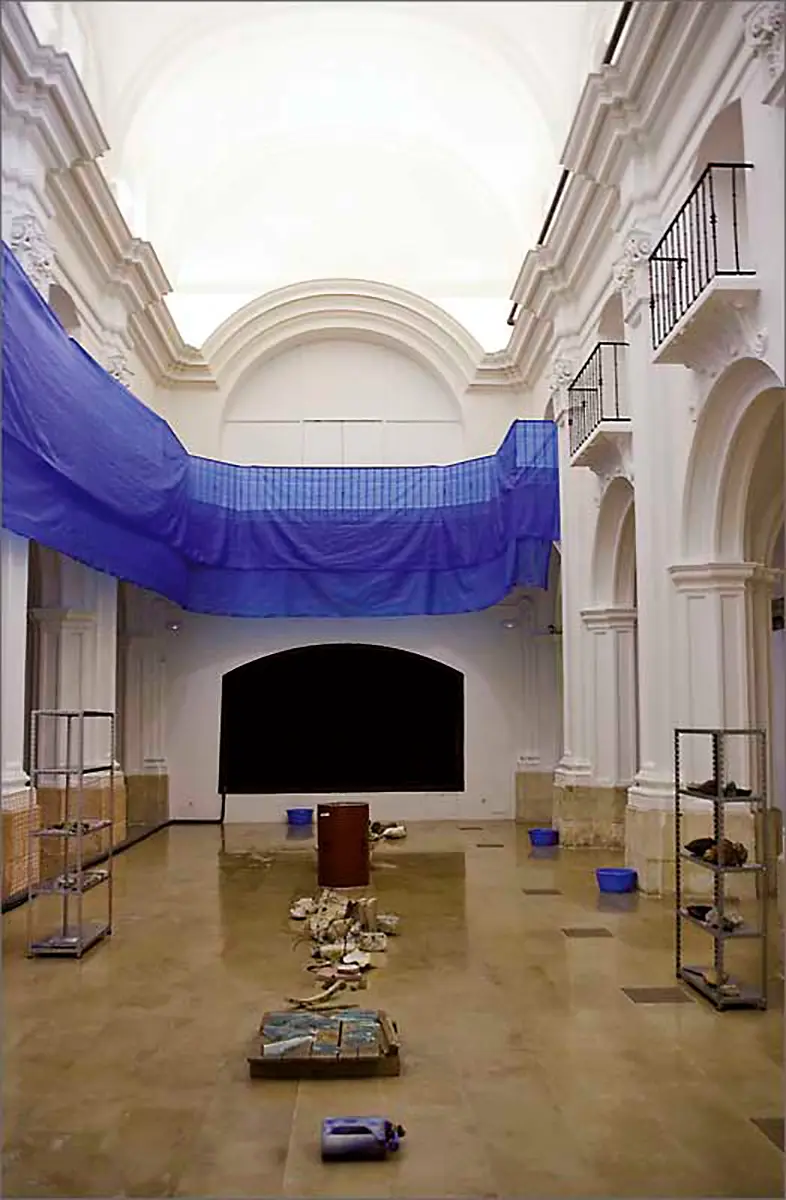
This is demonstrated by the case of Murcia, a Spanish city that, led by its top culture official, Pedro Alberto Cruz, decided three years ago to join the international art circuit by means of a project whose very structure implies a critical distance with respect to the conventional Biennial model. In fact, it is not even called a biennial but a Contemporary Art Project (PAC); it lacks pavilions or national delegations, and is clearly articulated around a well-defined curatorial project. The curator chosen for the first edition (2008) was Nicolas Bourriaud, and for the second, Mexican historian and art critic Cuauhtémoc Medina. Medina has taken things farther than Bourriaud, breaking even with the spatial and temporal parameters that are habitually assigned to a biennial.
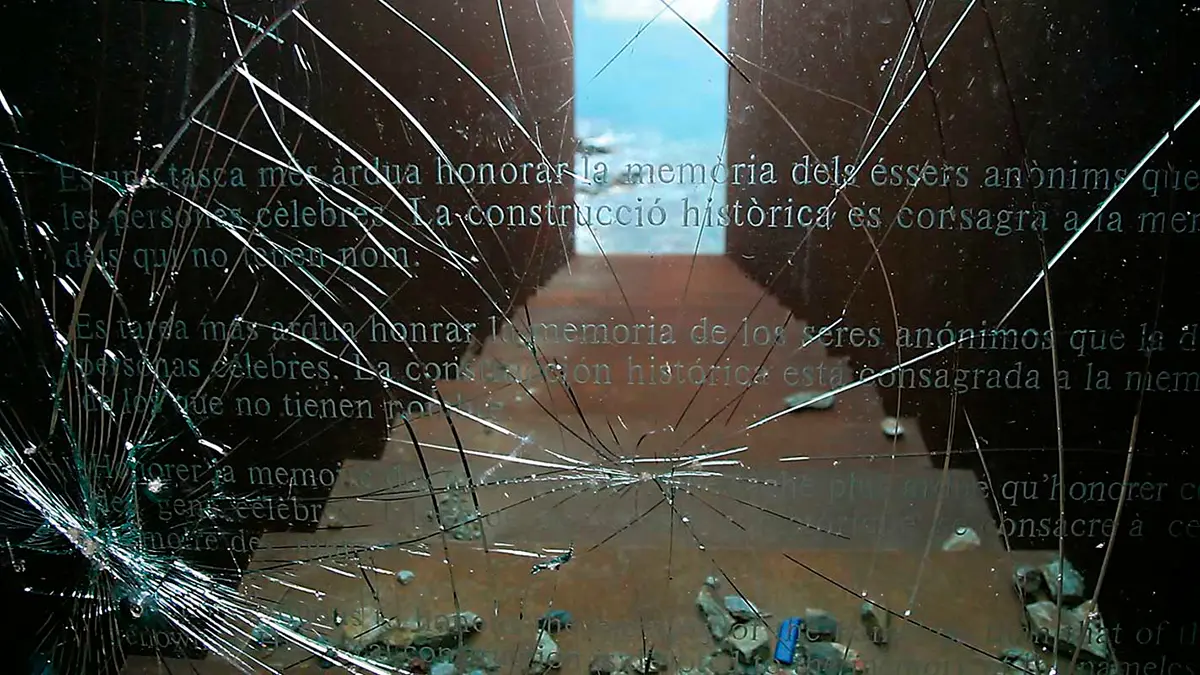
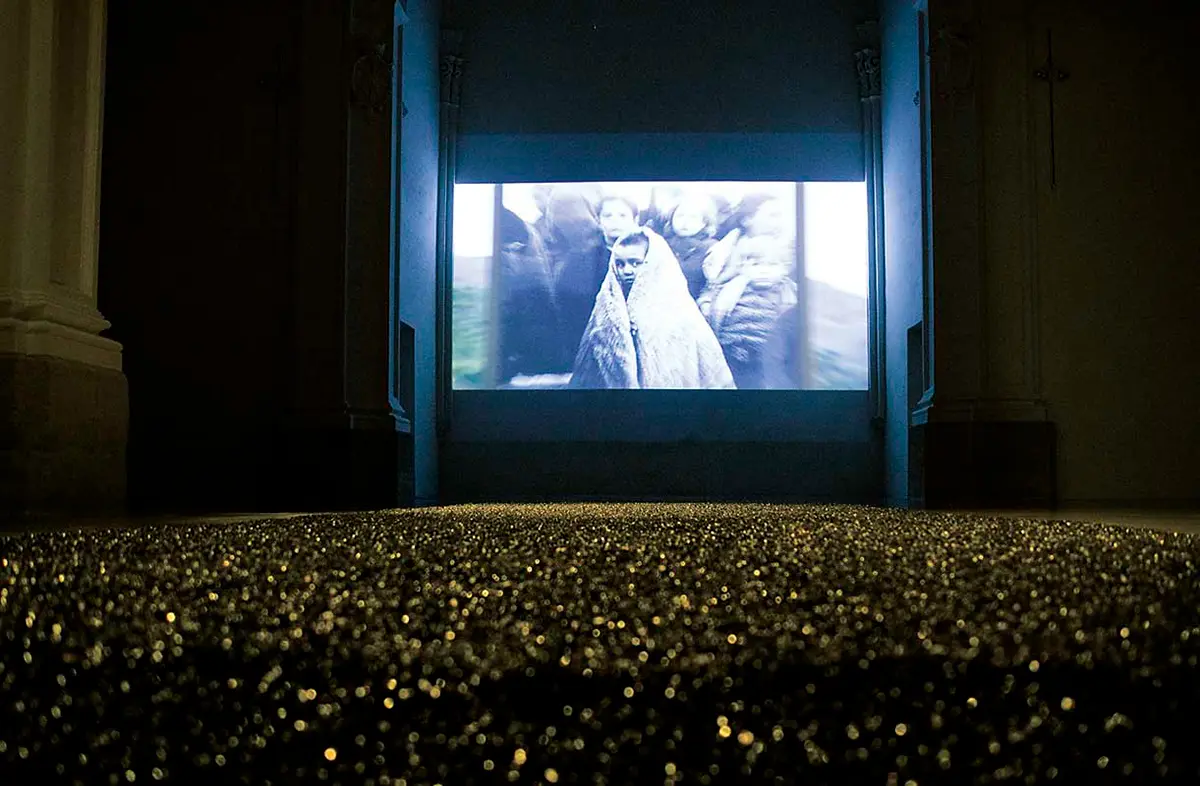
Rather than being organized as the simultaneous exhibition of many works of art over two or three months, Medina’s event is designed as a Surrealist exquisite corpse in which each artist is invited to act upon the work created by his predecessor. This restriction is followed by a restriction of space, since, instead of deploying the artworks and the artist’s interventions throughout the city’s public spaces like Bourriaud did, Medina has concentrated his version of the PAC on a single space: Sala Verónicas, a decommissioned church that at one time was part of the Verónicas Convent. The number of artists has also been drastically reduced: they are no longer counted in the dozens, as in Bourriaud’s version, but only seven: Jimmie Durham, Cristina Lucas, Bruce High Quality Foundation, Kendell Geers, Tania Bruguera, Rivane Neuenschwander, and Francis Alÿs. All of them were invited by Medina to intervene one after the other, between January and December 2010, the work of their predecessor.
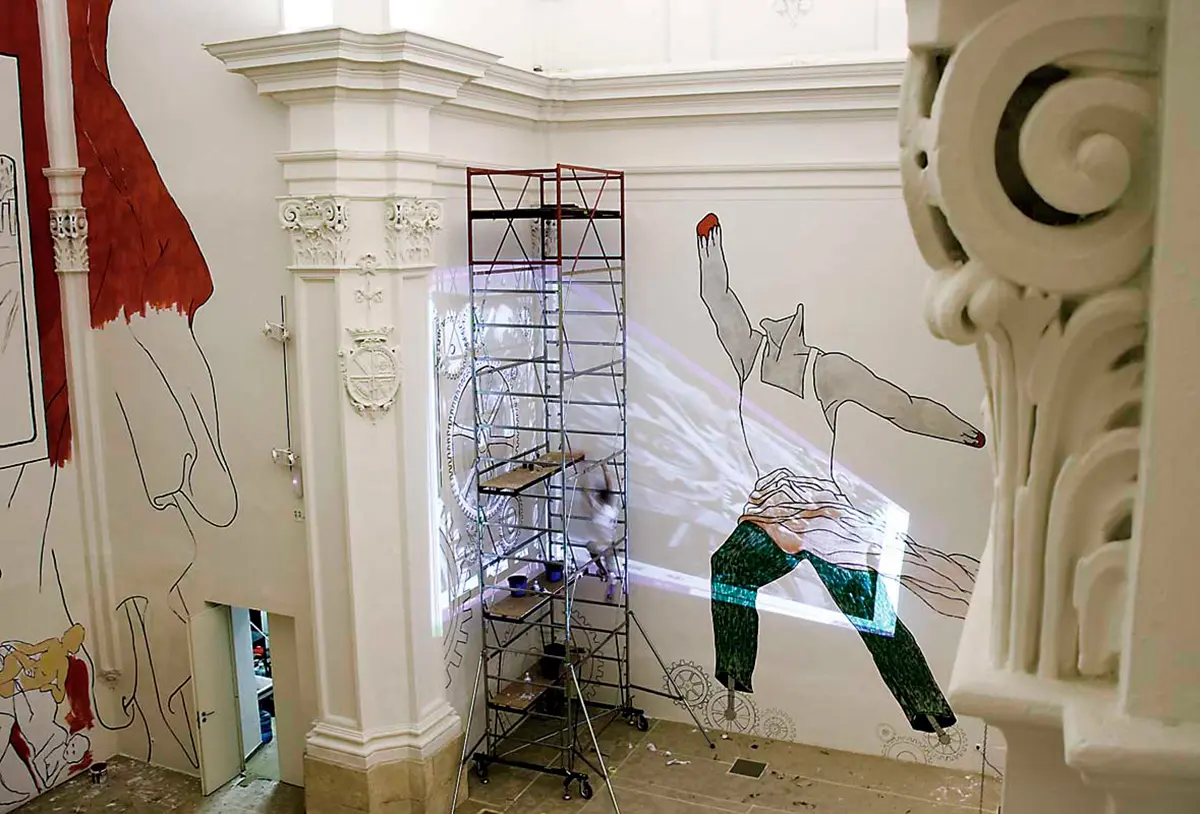
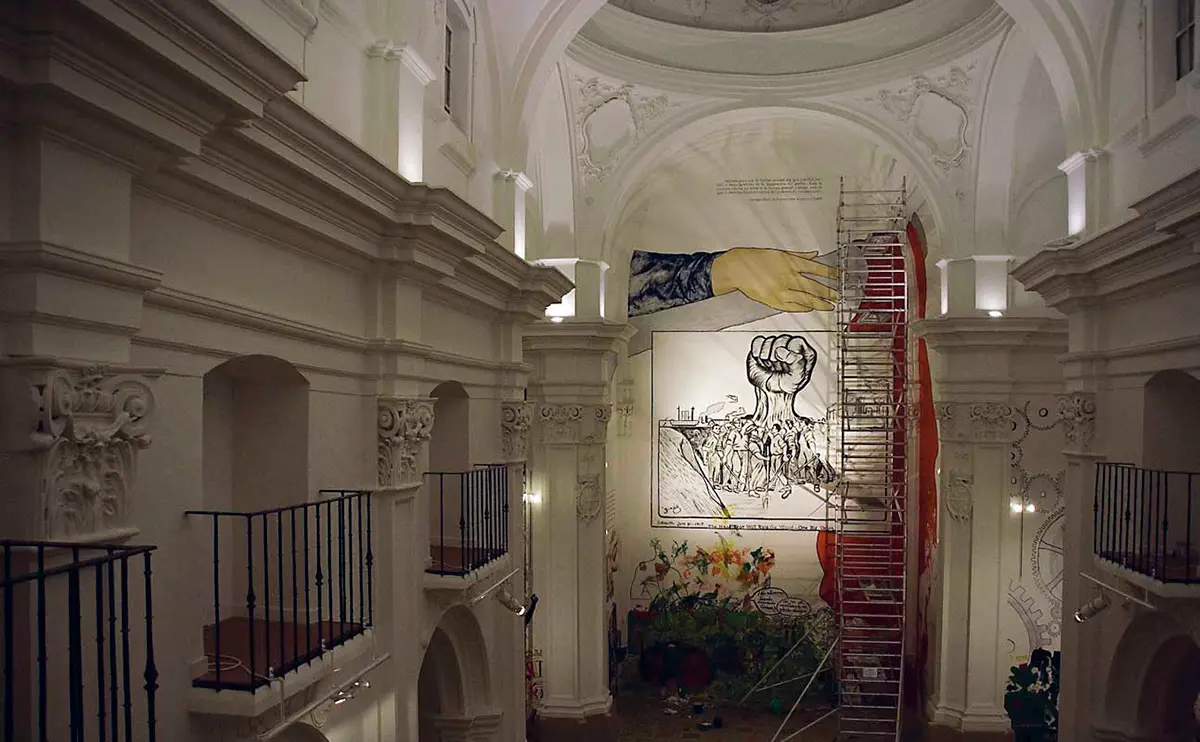
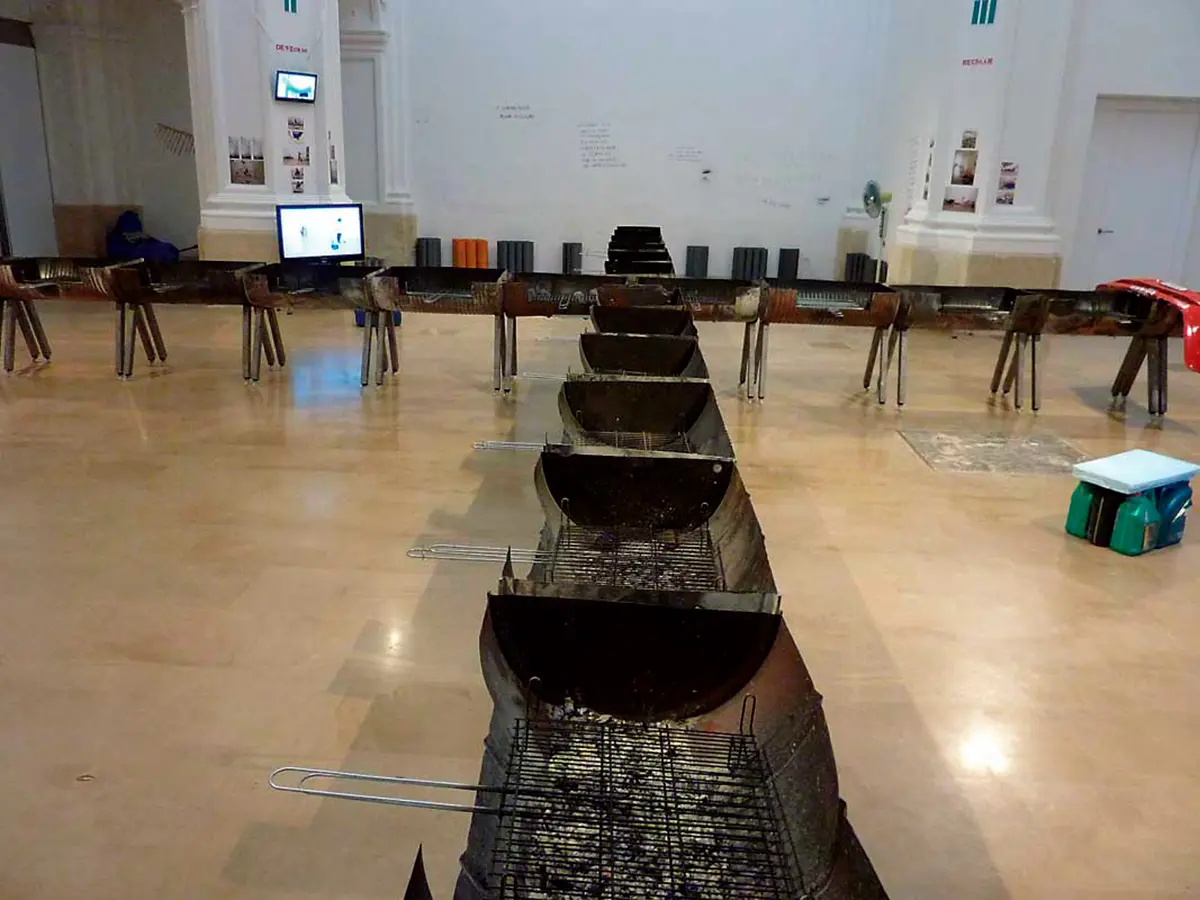
Such pre-established conditions and requirements have been criticized by those who think that they subordinate or relegate artists and make the curator the protagonist, turning him into the artist. Medina disagrees. “Starting with the moment of art-field self-consciousness represented by conceptualism,” he says “curating itself became a self-reflective faculty in mimetic relationship with an effort, engaged by artists long before then, to turn cultural and social dispositifs into objects of artistic intervention. Or at least to contaminate them with it. It is not that curators gain the status of artists, but that they adapt to the situation of art that became self-reflective in practice and not only in discourse. This shift produces moments of interaction that become visible and take distance with regards to devices that, like the exhibition of works of art, result from the imposition of social norms on the art field, even if such an imposition is not specified or subject to debate. And let us be even more explicit: the fact that artistic practice today is ruled by explicit and intentional curatorial interventions limits the literal level of artistic autonomy inscribed in the notion of the study. Meaning, in that division of labor where the artist, secluded in his or her study, operated without the appearance of intromission from the social structure. True, this is the end of a utopia. But the shift has allowed to re-inscribe the dynamics of commissioning, institutional debate, and artistic operation into a different structure. And it hasn’t done anything radically more different than to bring to the fore the tension between autonomy and heteronomy, between commission and response, between social structure and artistic role, which was already present. Only that in the modernist period, it wasn’t visible because we took for granted a social structure that settled the apparent division of attributes. It is evident that Duchamp’s gesture with his urinal is more important as the operation that made visible the fact that there couldn’t be an artistic operation without judgment and without a mediator, than as the creation of an art object.
“I feel part of this debate, but, of course, playing my role according to the need. In Dominó caníbal I have assumed openly the paradox between the curatorial and the curauthorial, and I have wondered to what degree its structure makes possible an autonomous practice on the part of artists and to what degree it creates a situation that corners them into providing a certain response. It interests me to move between “heavy-handed” interventions, to describe them broadly, and others where the important thing is to make the artist comfortable. At times I act in very heavy-handed ways, in an overt and obvious way, but even so, the figure of the cur-author who uses artists as fragments in a tapestry seems too bold and unacceptable to me. In Mexico, I was familiar with the case of Laboratorio 060, which, although it wasn’t very important historically, did posit in an open way the idea that curating is a medium with artists as its material. And since then I am very clear on the distinction between the position of the curator as an artist and the authorial function you fulfill when you are caring for something that is not yours, which as you know is the Roman judicial definition of the curator. I am very satisfied with the operation Dominó caníbal because it is clearly authorial on my part and at the same time its structure makes it impossible for my intervention to be confused with those of the artists who participate.”
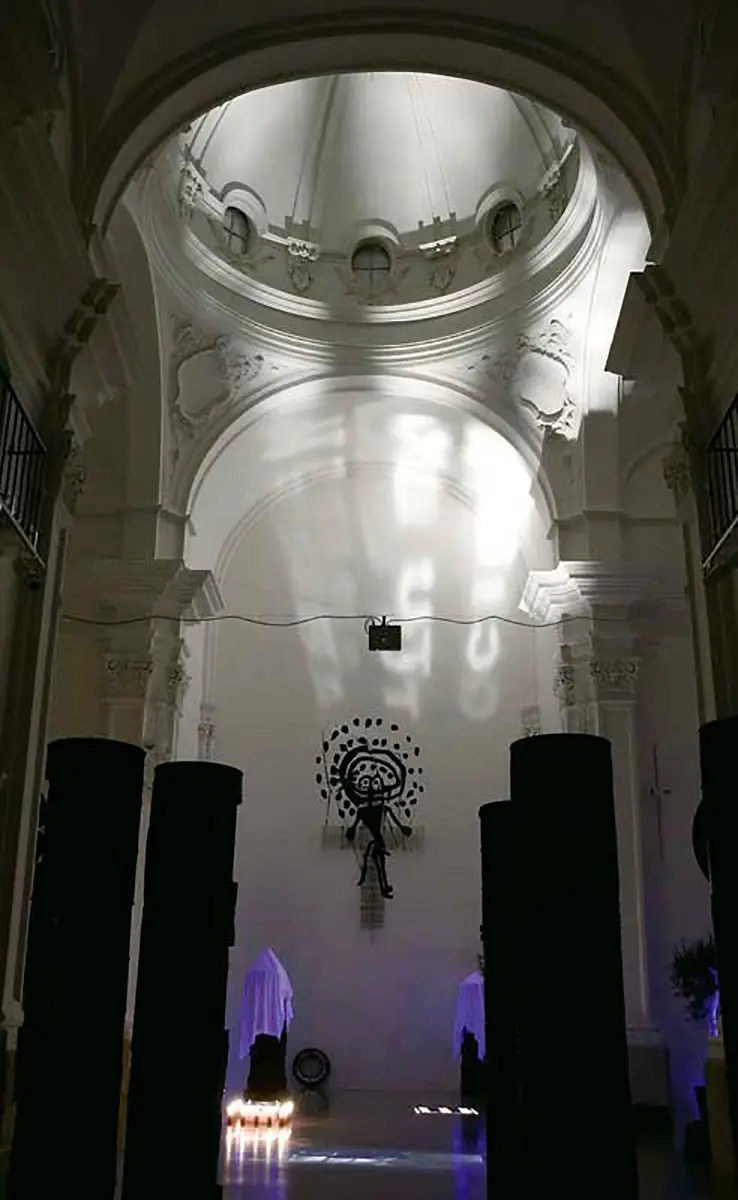
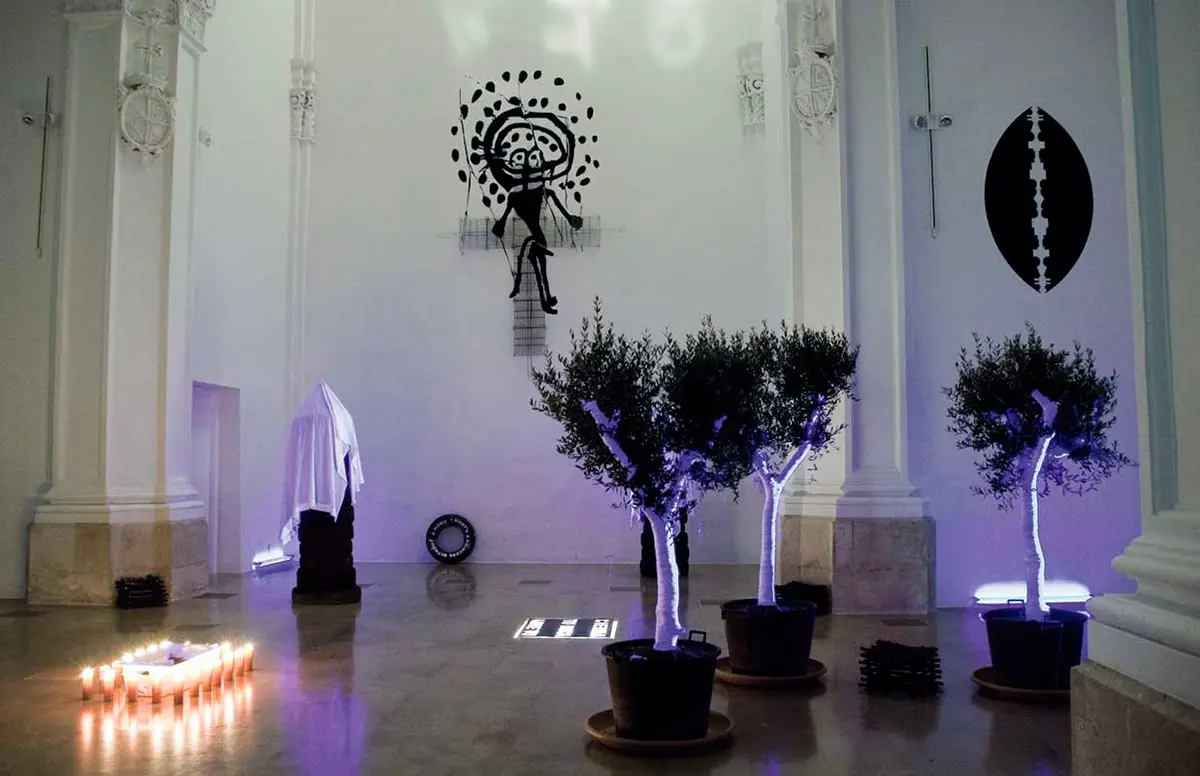
The selection of artists for Dominó caníbal posed its own problems. “I started with a list of eleven names,” Medina recalls, “that had several characteristics, among them the diversity of national and regional origins, dictated by my interest in covering a geographic path that relates to a certain post-colonial practice. This is why I had to include a Brazilian who referred to the Anthropophagic Manifesto of Oswaldo de Andrade and his cohort. I also knew from the start that I wanted to invite Francis Alÿs, because in 1991 he had produced a text titled Dominó, but since he asked to be programmed for the end I had the immediate problem of who should open the list and kick-start the operation. And I realized that for the first slot I needed a name that could be a point of reference for all, someone with a historical authority gained by having taught something to all of us and delineated a territory, someone who was like a shaman, such as Jimmy Durham. He is, in truth, a wise person, and this is neither common nor susceptible to being manufactured. When I invited him, he emailed back to say “Thanks for thinking about me. I wish I was one of those people who can think and work quickly—I am not, but I can fake it sometimes. Ha, ha, ha.” I must confess that I also very much wanted Brian Yungen, with whom I also have a very strong relationship. And he wanted to be here, but unfortunately, it proved impossible to coordinate the dates. Once the first and last slots were filled, the next problem was to cover the middle. Tania Bruguera was an obvious candidate, both because she is Cuban and for those practices of hers that can be connected in the terrain of art with a certain kind of cannibalism. Tania was also very funny and asked me to do all I could to let her eat South African artist Kendell Geers, and for her to be eaten by Rivanne Neuenschwander, from Brazil. And fortunately, she made this bold proposal with enough time for that to be arranged between them and for me to play with Kendell’s and Rivane’s dates, so that her very unique and strategic desire was accommodated. Cristina Lucas, from Spain, found her spot once it was defined that Jimmie Durham would begin the game. I am fascinated by a video of hers titled ¡Habla! where she literally takes a hammer to Michelangelo’s Moisés, and I thought she was perfect to engage with the work of that post-colonial patriarch that is Durham. As far as Kendell Geers, what I can say is that for me he has the uncommon ability to make the operations of symbolic violence evident yet with an element of political humor. It is rare for someone to be so obvious and so refined at the same time. I invited him with the idea of including someone who was able to kick the board, although I may turn out to have been entirely wrong about that and he might end up producing a very subtle intervention.
“If you think about it, all the artists selected are connected to a structure of historical or tactical interaction, where they take into account other game pieces, read them, reshape them, even if not through an appropriation in a classic way. And none of them had a problem with the structure of the game, with the idea at the beginning I thought that, except for two or three who would accept the idea freely, asking people to participate in a project where the more or less autonomous condition of their work was not guaranteed, where their work would be subjected to the tyranny of deadlines or was to be smashed—or even decorated, the riskiest option—by who knows what would be a problem. But nobody objected. They all thought this was terrifically interesting and the rules of the game were amusing to them.”
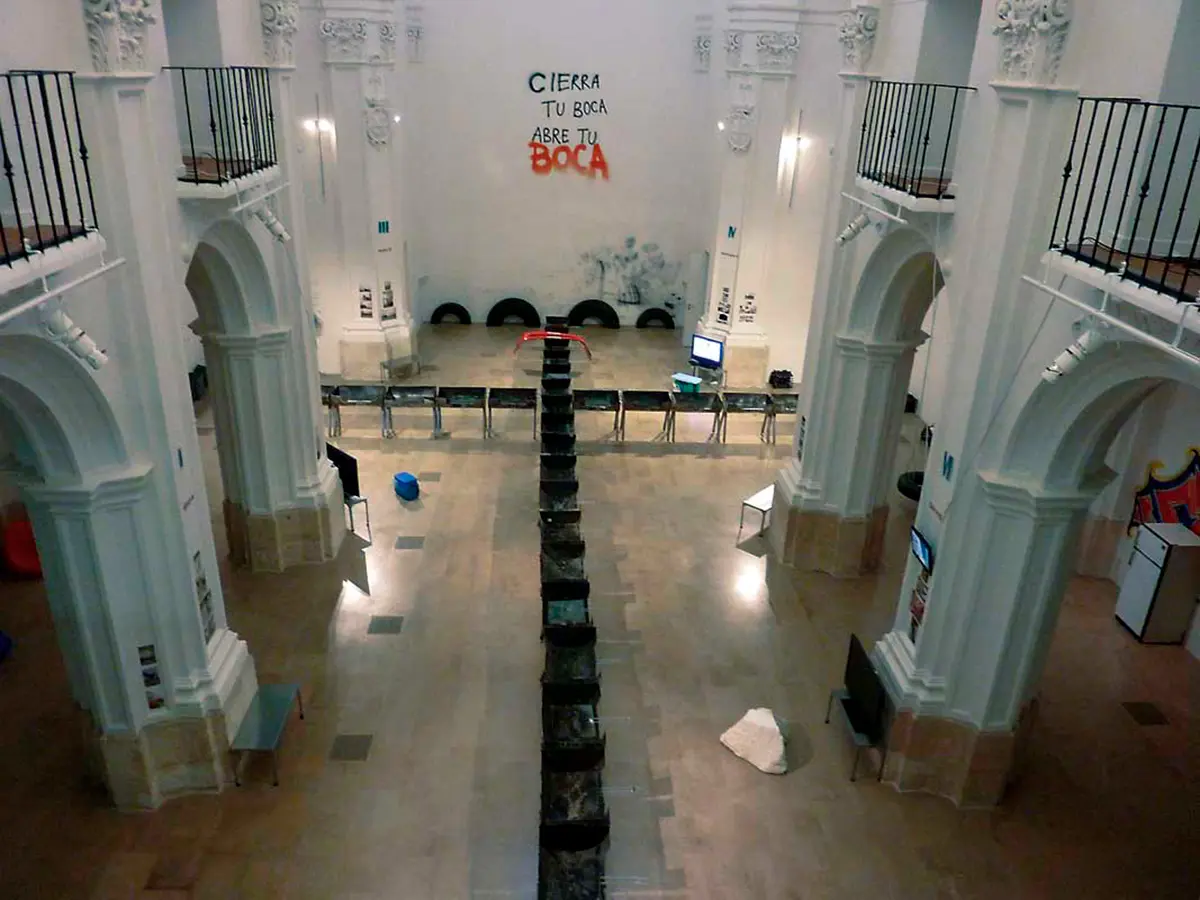
Medina finally explains why his project is titled Dominó: “The starting point was my discomfort with biennial-like exhibitions that aspire to encounter and dialogue but end up being a sequence of individual interventions where dialog only occurs in the hotels shared by the artists. And I wondered, how can we make it an authentic interlocution possible, not only to seat people down to drink and chat? Then I thought about a structure that would allow artists to take charge, even in violent terms, of the work of other artists. And I remembered that in the game of dominoes, each play is conditioned by a grid of positions that must be taken into account for the game to move forward. And why do we play so much dominoes in the Americas? Because it is a Chinese game that reached Italy through the Silk Route and then was adopted in Spain, from where it reached the Americas. And in Cuba, the game was modified and acquired 52 pieces, no longer from 0 to 6, but 0 to 9. The next step was to combine the declaration of the Anthropophagic Manifesto that “only the alien interests us” with the historical dynamics of the game of dominoes, which is a post-colonial game whose circulation through the pathways of capitalism is the fruit of interest in alien things. And I closed the circle proposing to 10 artists with a post-colonial bent to play with me a metaphorically cannibalistic version of dominoes.”
Thus, the dominoes metaphor does not summarize all the possibilities of the dispositif put in play by Cuauhtémoc Medina. “A reference I have treasured for many years as an object of envy and admiration,” Medina explains” is very important to me in this project: Serguei Kyorochi, the Cagean Soviet musician who in the 1980s, in Leningrad, founded a movement called Popular Mechanics. And who, in exact opposite to the rigors of the Brezhnev and Gromiko eras, mixed classical music, transvestites, circus folk, pop and jazz musicians, poets, and directed them from the stage in an improvised way to create something that, it seems to me—with the scarce evidence we have of those events—was the staging of a conflict with moments of the coalition, unity of style, and a pre-defined command structure. What I saw, in a film fragment about that experience, was a demonstration in practice of what the Soviet Union was not. It was, rather, what I had in mind for Dominó, to produce a game where you can legislate at certain points and then let lose the practical operations in a non-harmonic manner, in a way that never fully coalesces into a whole. I am bothered by the idea of slowing down curatorial and artistic trends. This is why I have so many problems with anyone establishing legislation, even if it is very liberal, about what should and shouldn’t be done. But this is not a defense of freedom but a belief that what can be done is something that can be demonstrated in the failure of success of a proposal.”
CARLOS JIMÉNEZ
Writer, art critic, and independent curator.