
The exhibition Off The Beaten Path: Violence, Women, and Art presented at the Museo Universitario del Chopo’s Galería Sur, includes works by 34 artists from China, Japan, Egypt, Israel, Norway, Sweden, Pakistan, France, US, Peru, and Cuba. The selection of works gambles on the multiplicity of artistic media, from drawing, printmaking, and painting to installation, video-installation, photography, sculpture, object art, and performance. The show focuses on violence against women from a geographical, political, and cultural standpoint that affords a complex and heterogeneous perspective.
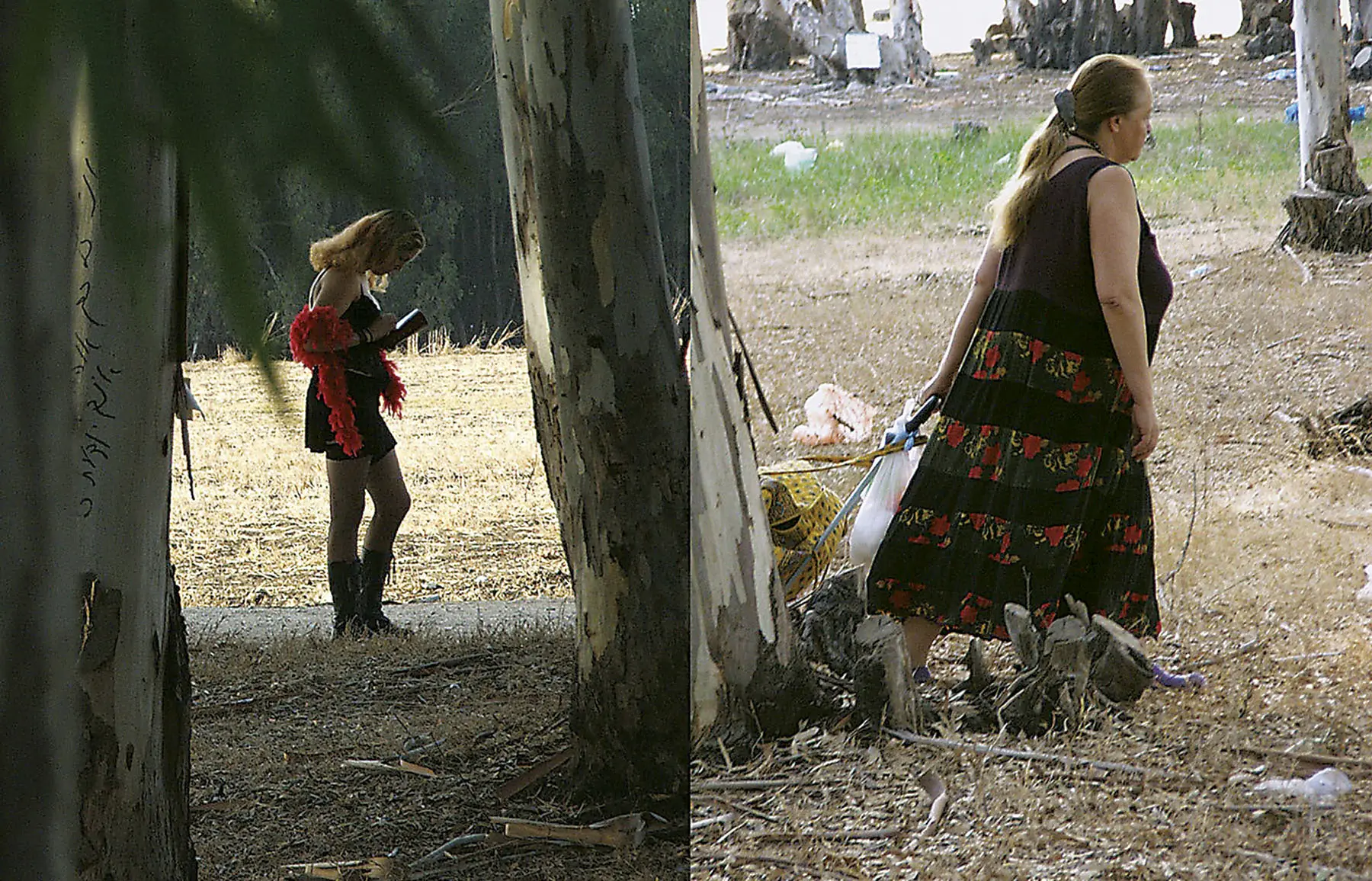
Curator Randy Jayne Rosenberg, executive director of Artworks for Change, a non-profit organization, invites us to develop an awareness of the issue of violence as it afflicts women in situations of armed conflict, forced prostitution, female infanticide, mutilation, dowry, and other absurd practices that remain unpunished in the world. Stories of harassment, rape, and death are told forcefully and without recourse to sensationalistic images by artist like Miri Nishri, from Israel, who opts for the medium of video to refer to the wave of crimes of passion that has recently risen in her country, in Esther, Queen of the Swamp, Nishri depicts a forest where Esther is embodied in a dual nature: two women, one young and one mature, alternate on the screen, ambling around the woods filled with obsessive messages of love located in the trees. They are watched and harassed by a stalker—the viewer himself. The unsettling tone of the sequences foreshadows a murder that doesn’t come and alludes to many women killed in real life by their husbands or lovers.
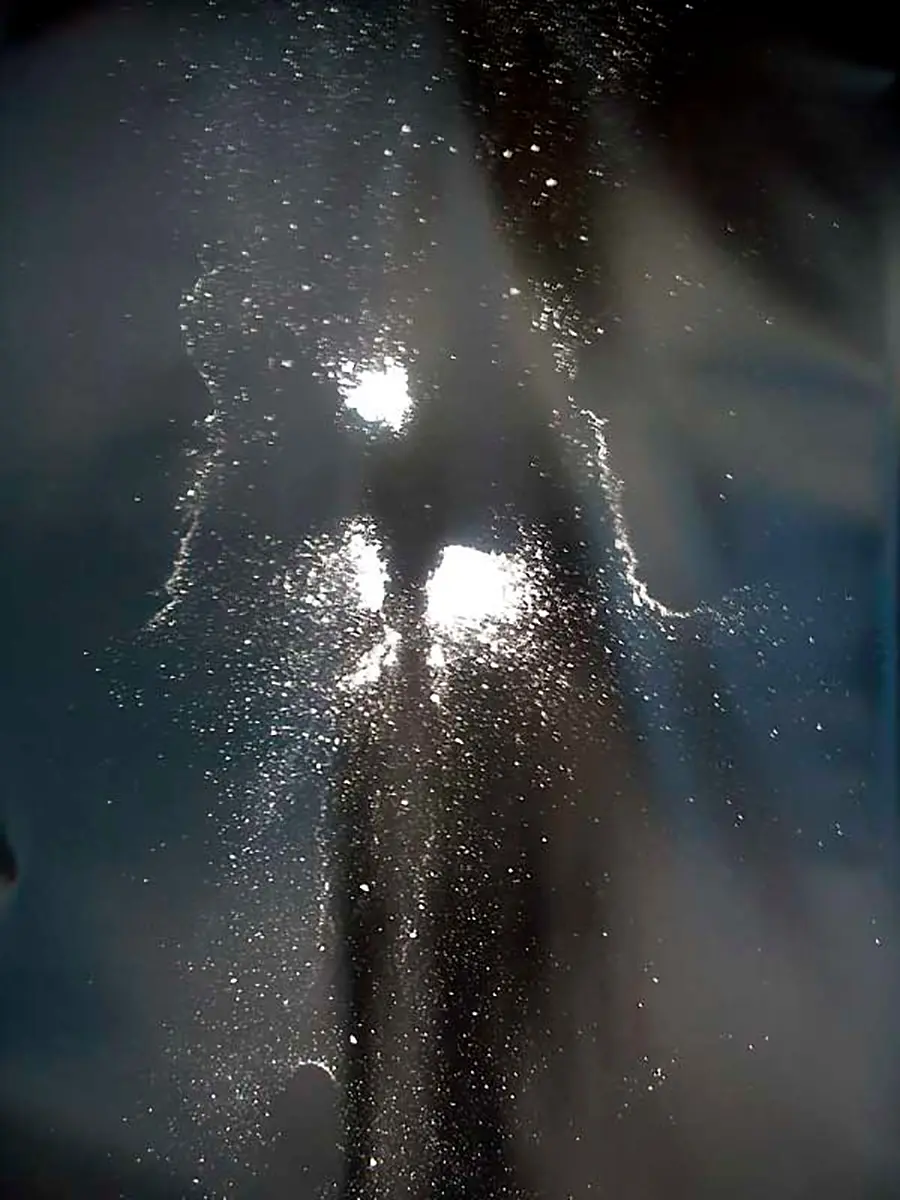
Violence against women can emerge without any apparent reason, without the pretext of war, of a totalitarian regime, or a repressive tradition. The title Hidden in the Radiant Green a Man Waits, is taken from the book Working with Available Light by Jamie Kalven, artist Patricia Evans’ husband, which describes the effects of the rape suffered by Patricia in 1988 as she jogged mid-afternoon in Chicago’s lakefront park, and expresses his sorrow and the difficult situation of accompanying a loved one through such suffering. Evans’ work, comprised of 25 black-and-white photographs printed on paper, reveals that rape can occur unexpectedly and that isolation is required for the predator to find the moment to pounce. The photographs denote a mistrust of open spaces like the lakefront park, images of sadness and desolation, and reflect the feelings of the victim, understandable only by those who have experienced them.
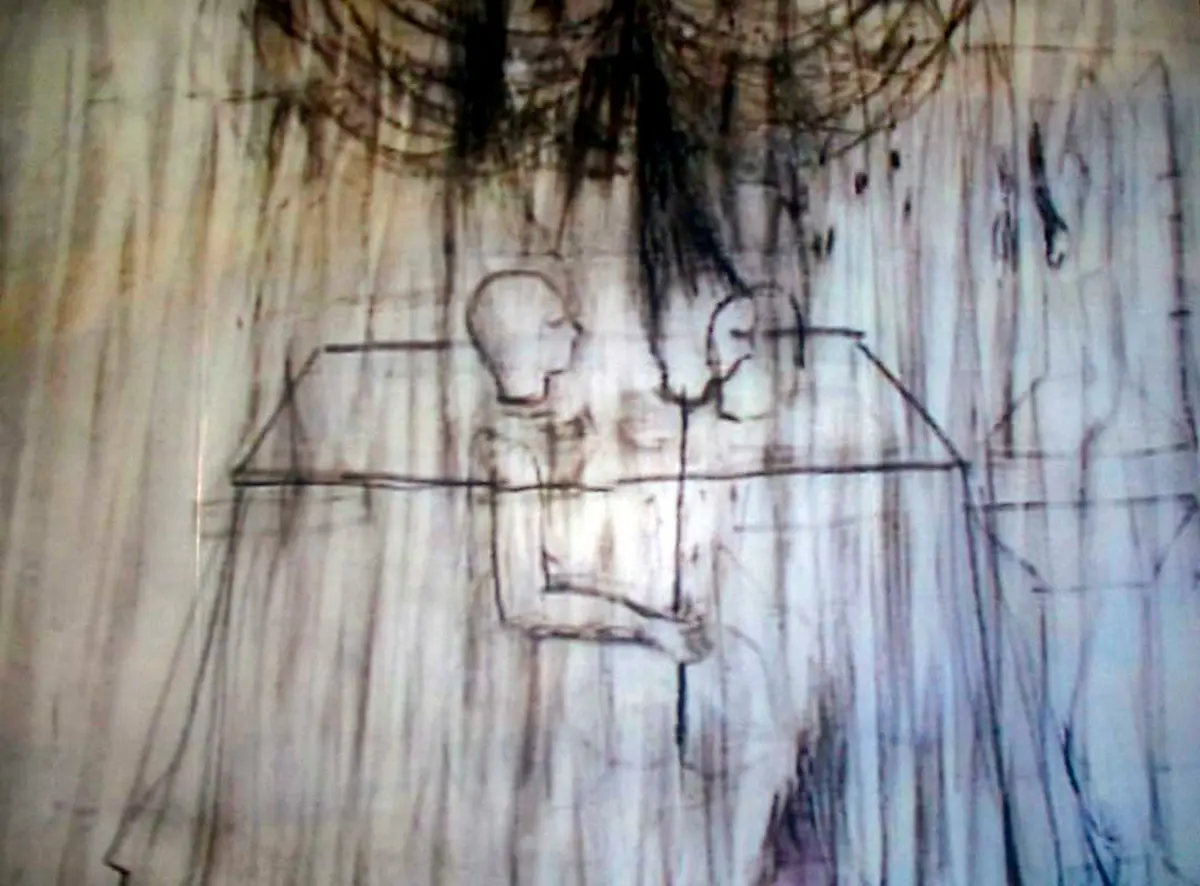
Egyptian artist Amal Kenawy presents an exploration of the basic elements of perception and technological mediation in her video animation You Will Be Killed. She uses video as her tool to bring to life pencil-on-paper figures and creates a dynamic, a constant flow of figures that build and unbuild imaginaries on the stable and foundational body of a woman. On it there emerge floors, windows, streets, buildings, animals, and later a purple-colored ink: the bloodshed by the violence that suffuses life in its entirety in time of war or peace.

Almagui Menlibayeva places herself in the concrete political context of her country, Kazakhstan, where she sees the condition of women as taking a step back after the transition towards independence from the former Soviet Union. She is disheartened by the situation and expresses it by means of absurdism in her video-installation Kissing Totems, where a young girl watches a cage containing a bird and the next image depicts the girls alongside the bird, inside the cage. Images of oppression and liberation that reveal her nostalgia for a vanished regime, in her appraisal less asphyxiating than the gilded chains around the nude body of a model, an image she recreates to denounce the degrading use of female images in a consumerist society.
Japanese artist Miwa Yanagi celebrates a hopeful vision that also verifies the aesthetic value of photography, on three large-format works from her Grandmother series, where she explores topics related to the generational gap among women. The resulting images depict three women characterized as old, located in interior spaces or in natural environments, enjoying music and reading. They appear strong and in plenitude. The project confirms the generational gap while revealing the confidence on the part of younger women on old age free from suffering or commiseration.
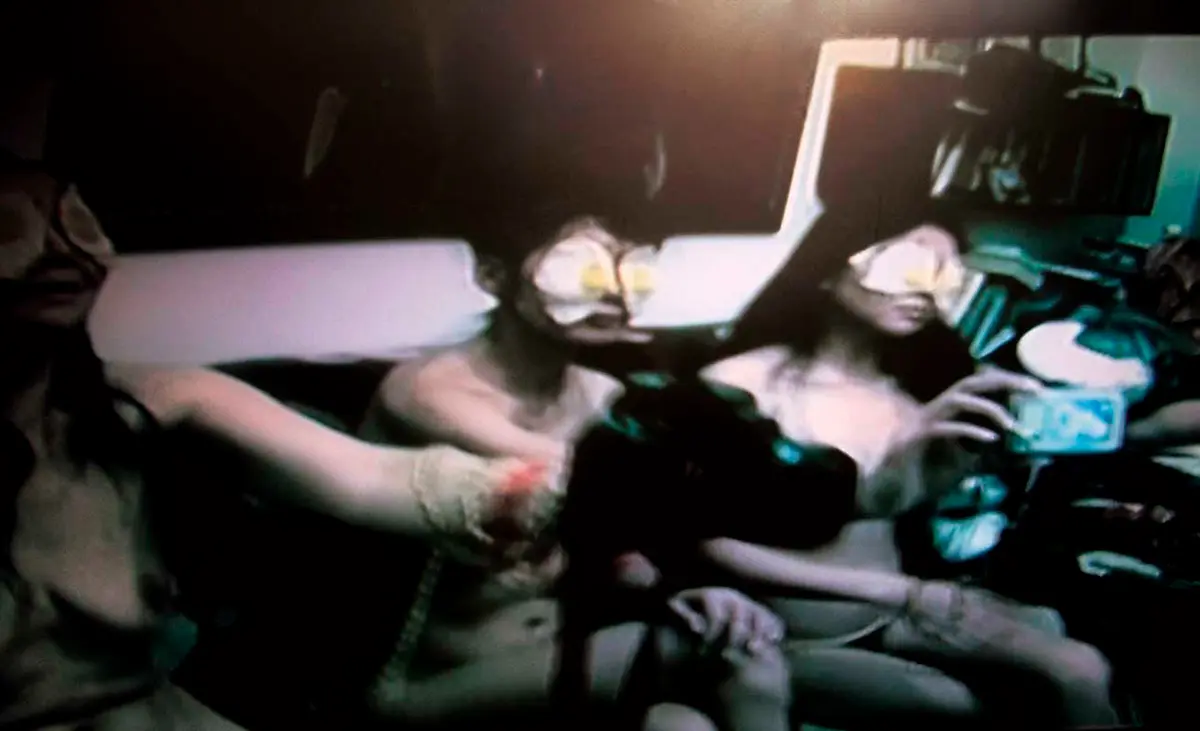
The video-installation Luz y Solidaridad, by American/Mexican artist Susan Plum, features three 10-foot brooms and a video presenting a ceremony in which women dressed in black slowly sweep and gyrate in a dance around a fountain decorated with candles that duplicate the outline with their light. Prayers and songs accompany their movement, a cleansing or curative ritual that ends in cries for justice from mothers who have lost their daughters in Ciudad Juárez, on the US/Mexico border. The breathless voice detonates the viewer’s consciousness for the thousands of women killed in an area that concentrates drug trafficking, prostitution, and migration; a realm of impunity where predators continue to victimize women without the widespread public protests having other response than dissimulation, threats, and harassment.
Presence a video performance by Norwegian artist Lise Bjorne Linnert present an almost-still image that cries incessantly to connect the world; it tells us that tone reveals more than words and compels us to use our voice with energy and intensity. The voices of those who have lived in less insidious social contexts rise in defense of women battered and mutilated by the devastating traditions of their own communities.
Rose Petals by the Swedish collective Amnesty Sweden Campaign is a large-format color photograph presenting three roses with dazzling detail and clarity; the seeming lightness of this image acquires a new weight when we note the fine-thread sutures on the delicate petals, which resemble vaginal labia. Rose Petals becomes an image of horror about the vulnerability of women and girls who are the victims of genital mutilation; it gives such an aberrant ancestral practice a poetic dimension.
Off the Beaten Path reveals that globalization has resulted in greater visibility for the campaigns and activism of women’s groups and their struggle against the structures of oppression that reproduce and generate gender violence. The show demonstrates once again that, by transcending national borders, the artistic products of periphery countries have given a new shape to the international art landscape. Art and exhibition spaces, containers of cultural symbols, admit protest; Off the Beaten Path is a mechanism of reflection that respects the borderlines of art as the main actor. The plurality and energy found in the works, in turn, maintains the value of the aesthetic experience there where the theme reasserts its universal dimension.
CONSUELO ALMADA LÓPEZ