
Left behind the resounding fiasco of the previous edition, the Biennial of Emptiness (2008), and the series of crises that since the year 2000 afflicted the institution, it would seem that the veteran São Paulo Biennial is in full recovery. In the words of the city’s Culture Secretary, Carlos Augusto Calil, at the press conference held on September 21st, four days prior to the event’s official opening, “the Biennial has resurrected.” The exhibition at the Ibirapuera Pavilion is open to the public on September 12th through December 12th, 2010.
The effort has not been minor. Under the presidency of Heitor Martins and with the decisive support of the federal, state, and municipal governments as well as the private sector, the São Paulo Biennial Foundation has been able, in little more than a year and a half, to restructure its Board, cover the debt generated by the previous edition, and set on stage a selection of works by 159 artists. It also produced a vast array of parallel activities. The most outstanding of these is the educational program directed to train 40,000 teachers from across the country as multipliers and communicators for the event. The most novel, the inclusion of six “convivial patios” conceived to foster encounter and critical debate between the Biennials various actors: curators and artists, cultural promoters, critics, and the general public. The Capacete project acts as a host organism; it is a “platform for debating the curatorial proposal, proposing a living dialog with all participants,” according to the catalog. This catalog, an indispensable tool, and record of the exhibition is a single, carefully edited volume that includes, besides the introductory text and the list of sponsors, officials, and collaborators, a presentation of every participating artist with a brief text and excellent illustrations.
The 29th Biennial has two curators: Agnaldo Farias and Moacir dos Anjos,1 both Brazilian. Five foreign co-curators 2 assisted them in the effort to structure the exhibition around the general guideline chosen for it: Art and Politics. The selection of such a label as the “umbrella concept” (as referred to by several São Paulo newspapers) is nothing new in itself. Yet, it is possible to argue that it is present as an analytical tool and avenue of approach towards artistic expression. It is just a generic platform to orient the pathway of the Biennial, and it is clear that the works on exhibit are not necessarily related to the issue. According to the curators, “…the amalgam of those two dimensions (art and politics) reasserts the exclusive place held by art in the symbolic organization of life, and its capacity to illuminate and reshape the forms hat structure the world.”3 It bears noting that literature, in its most varied forms, also has a significant weight in this exhibition, from the title, taken from a poem by Jorge de Lima, 4 to the named given to the meeting points, rest areas, a zones for the exchange of ideas, or the inclusion in the catalog of excerpts from such varied literary works as Alice in Wonderland or texts by Chico Buarque.
Brazilian and foreign artists were chosen directly by the curators, eliminating (as had happened already in previous editions) the national delegations. The emphasis is placed, first of all, on Brazil itself, with the curators express will to make clear “where was (this biennial) created at a time of worldwide geopolitical restructuring.”5 Latin America, Africa, and Asia come next. Western Europe and North America, while present, have a slighter voice than in the past.
This Biennial exhibition project was commissioned to architect Mata Bogéa. In the orthogonal spaces, strongly characterized by their structural pillars, a large ramp, and a staircase, she installed a grid of diagonals that determine a series of modules configured into an “archipelago” to host the artworks. The general plan proposes labyrinth-like pathways with an urban note that breaks with Niemeyer’s well-ordered structure, suggesting a continuing dialog between the larger container—the building—and the containers specified for each work on exhibit. With their rectilinear geometric shapes and their irregular floor plans, these spaces painted outside in various shades of gray, hold everything from a video, a group of sculptures, or an installation, giving each of them an appropriate framework and an individualized space. There aren’t any categories of hierarchies, although for obvious reasons the most significant displays are located in the ground floor. Here and there on the external walls of the “islands,” two-dimensional works are shown, mainly photographs. The display arrangement is one of the successes of this Biennial. It can be traversed in many different ways; the curators suggest six circuits organized around the titles of the terreiros. These circuits do not agglutinate the works into given zones. Much, on the contrary, the Biennial is organized as a giant grid where concepts, languages, and times intermix.
The terreiros
In Brazil, the word terreiro designates a meeting point. Open or closed, urban or rural, a street, passageway, plaza, atrium or esplanade, patio, or alley, it is eminently a public space. Here people gather, all across the country, to “dance, sing, play, fight, cry, joke, and discuss their fate…but especially to practice the various rituals of the country’s hybrid religiosity.”6 Often they are the cradle and headquarters of a Samba school and function as fields for capoeira.
In the exhibition, six conceptual and physical structures created by invited artists and architects serve as meeting points and spaces for discussion and rest for the public. They also function as the stage for the projection of films and for holding concerts and performances, literary readings, poetry recitals, forums and roundtable discussions about the art on display. Each one of these terreiros has a specific character, expressed poetically in their names. Dispersed around the building’s three levels, they are the largest referent for a series of works, also dispersed, that configure the six suggested itineraries.7 The effectiveness of this apparatus, which follows from the desire to stimulate connectivity between the public and the exhibition and to break the merely contemplative scheme when it comes to artistic expression, will only be accurately measured after the Biennial closes and can be properly assessed.
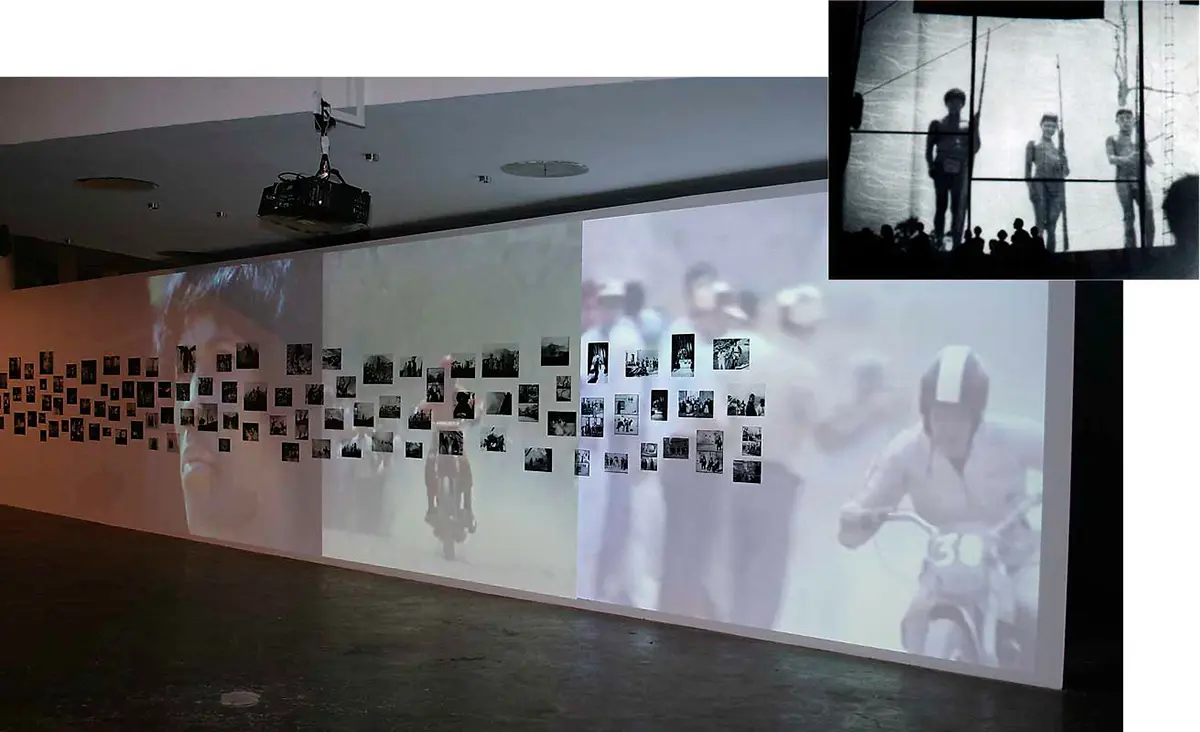
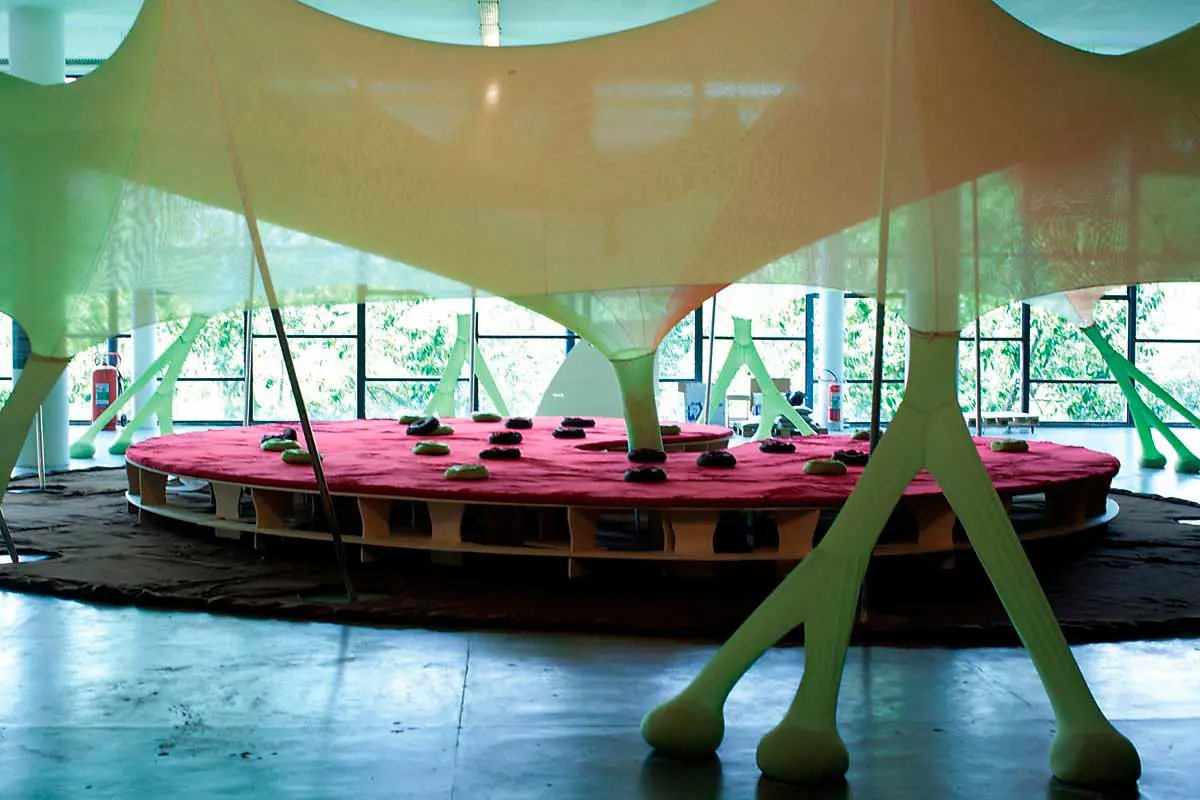
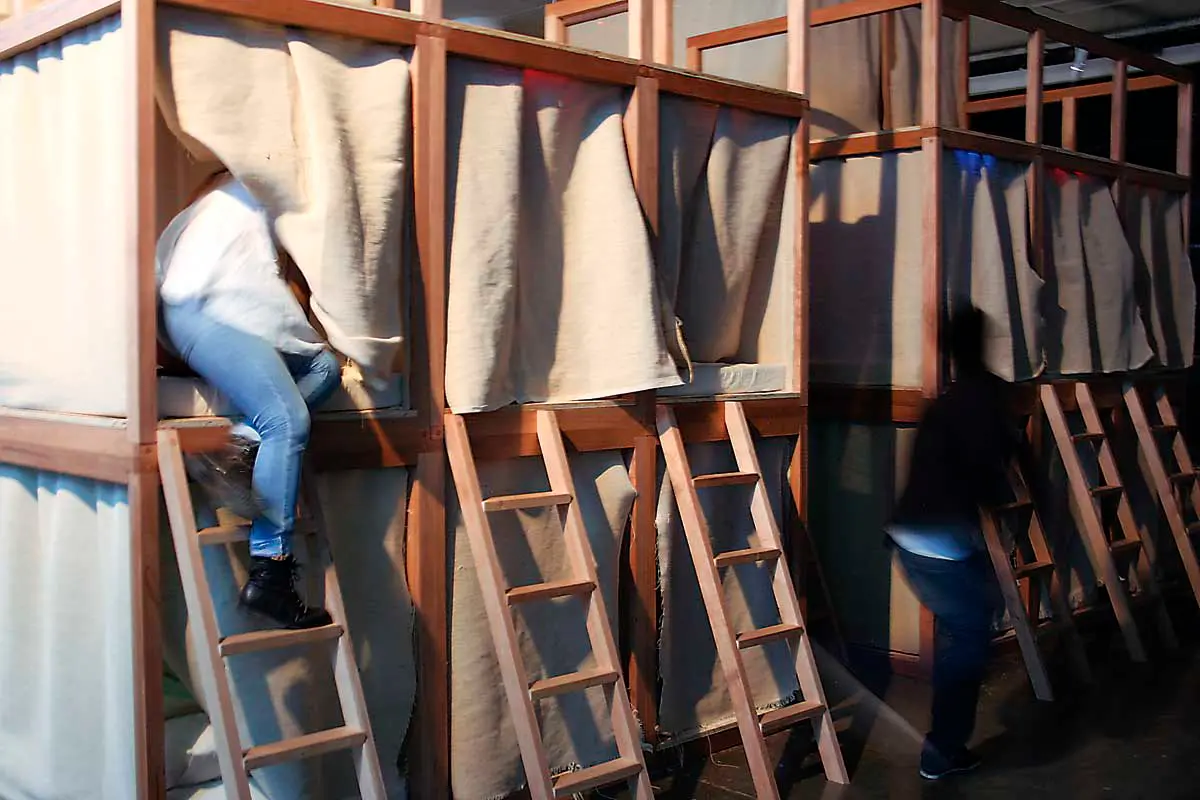
The Skin of the Invisible, designed by Slovak architect Tobias Putrih (Kranj, 1972), is devoted to images, with a continuous projection of videos; it is a modular structure in wood and cardboard whose external design is inspired on the Palacio de la Alvorada columns projected by Oscar Niemeyer as part of his emblematic buildings for Brasilia. Said, Unsaid, Forbidden,8 created by architect Roberto Loeb (São Paulo, 1941) and graffiti artist Kboco (Goiania, 1978), is a place for the spoken and sung word. It is located outside the building in front of the façade it presents to the park, and its name evokes a character from one of Guimarães Rosa’s works. I am the Street, a tribute to Rio de Janeiro’s journalist and chronicler João do Rio, was proposed by UNStudio, an architecture firm from Holland; it is a triangular structure with several levels and a central space that invites discussion with its small-auditorium feel. The Other, the Same, created by Carlos Teixera (Belo Horizonte, 1966) is articulated by several independent pieces made of cardboard, and it quotes Jorge Luis Borges; it is devoted to performances “founded on the desire of self-representation and the representation of a desired, enigmatic otherness.”9 Remembrance and Oblivion focus on the work of Ernesto Neto (Rio de Janeiro, 1964): an environment for resting done with mattresses, benches, and foam chairs expressed in the artist’s formal code under the figure of a large tree. Far Away, Right Here, conceptualized by Marilá Dardot (Belo Horizonte, 1973) and Fabio Morais (São Paulo, 1975), is a kind of labyrinth with small rooms in its perimeter and narrow passageways that converge on a large central area. Papered with the covers of famous books, space is a tribute to reading as a creative act.
It is important that the titles of the terreiros come from literary quotes and allusions, or are wordplay. In fact, it would seem that visual languages duplicate, paraphrase, or quote literary expression, be it high-cultural or popular. With a large number of exceptions and wide conceptual lassitude, the works included in the exhibition seek to engage the angles of the approach suggested in the terreiros.
The Exhibition Circuits as Suggested by the Curators and the Catalog
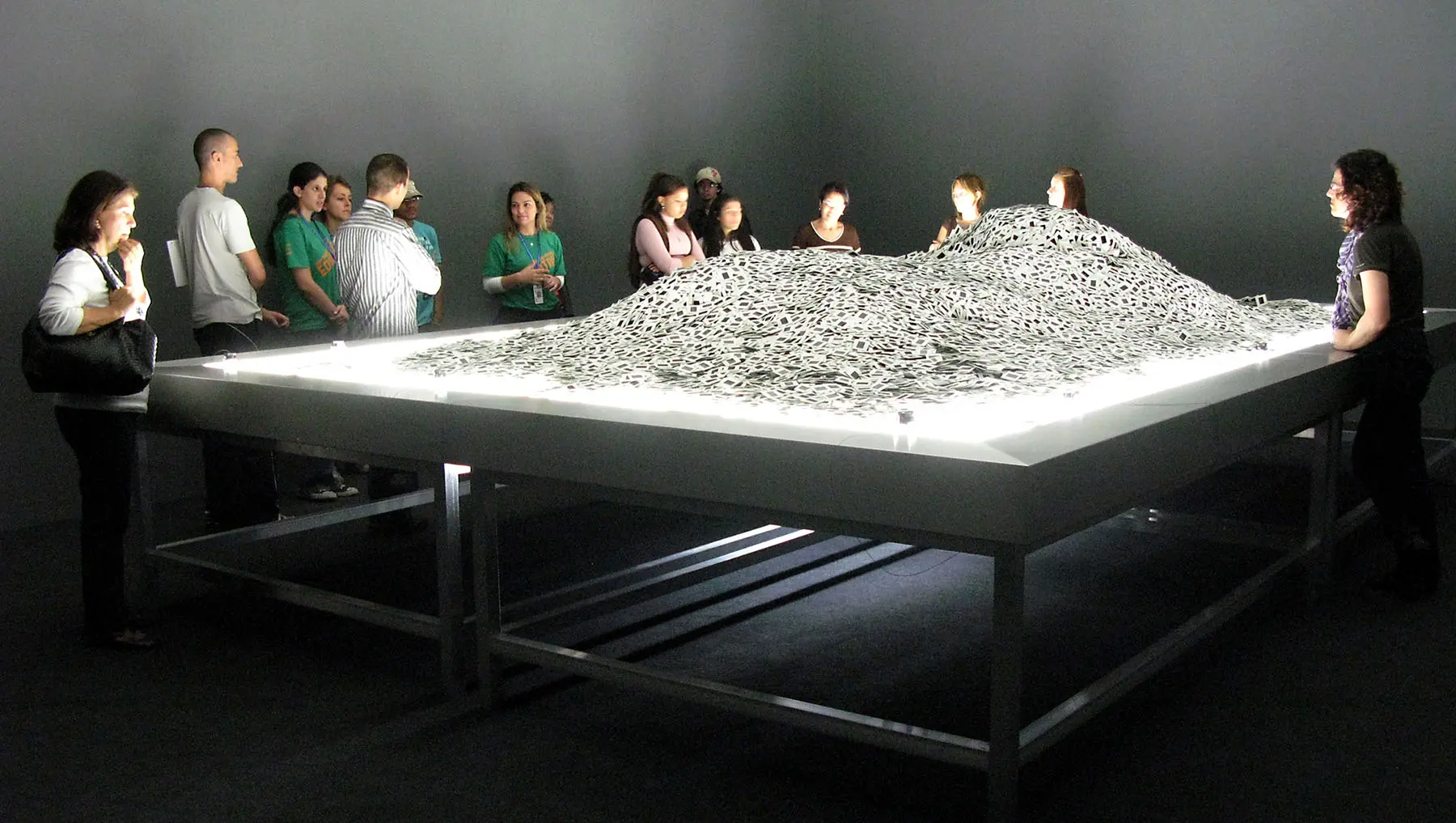
Some thirty works in the exhibition are linked to the fort terreiro mentioned above, The Skin of the Invisible. By far, this group s dominated by photography.10 The stand out in the group is Los Ojos de Gutete Emerita (1996-2000), by Alfredo Jaar (Santiago de Chile 1956), one from among twenty installations in the project dealing with the Tutsi genocide in Rwanda. The Chilean artist stages, piled up on a light table, one million transparencies—the approximate number of victims—with the image of the eyes of a woman who saw the killing of her husband and children, along with a number of magnifying glasses that allow us to examine them. We reach the darkened room through a narrow and equally dark corridor, in one of whose side walls there is a small linear, lighted text informing us of the subject matter. Jaar achieves in this way a narrative of that which cannot be narrated, using means that on the first inspection appear neutral. He does not describe the horror but uses contextual ellipsis and formal paraphrase to force us to reflect about it, shocking us at the emotional and ethical level through the vehicle of art. It is one of the important works of art in this Biennial.
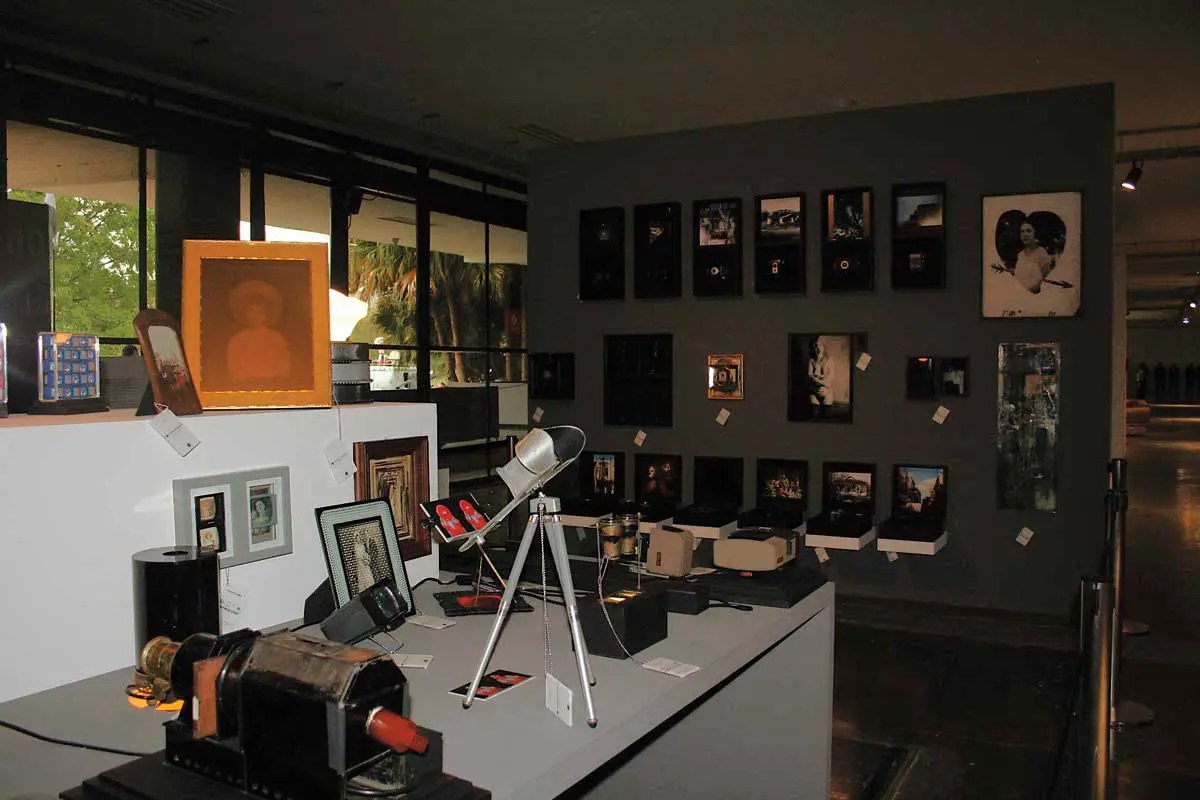
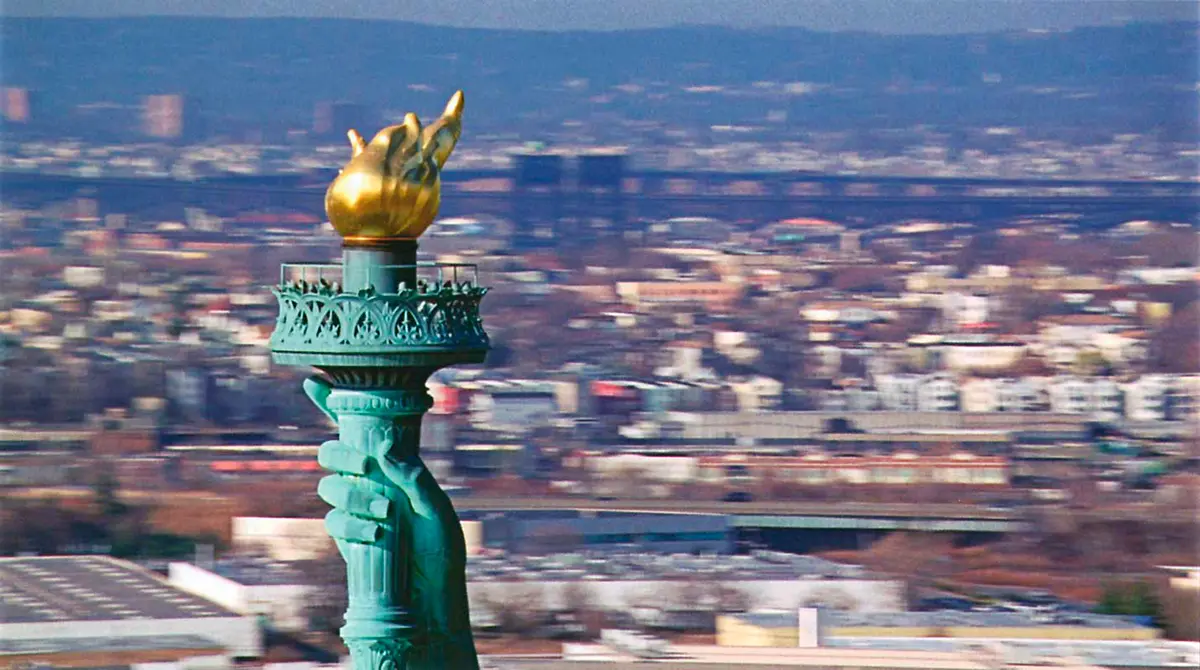
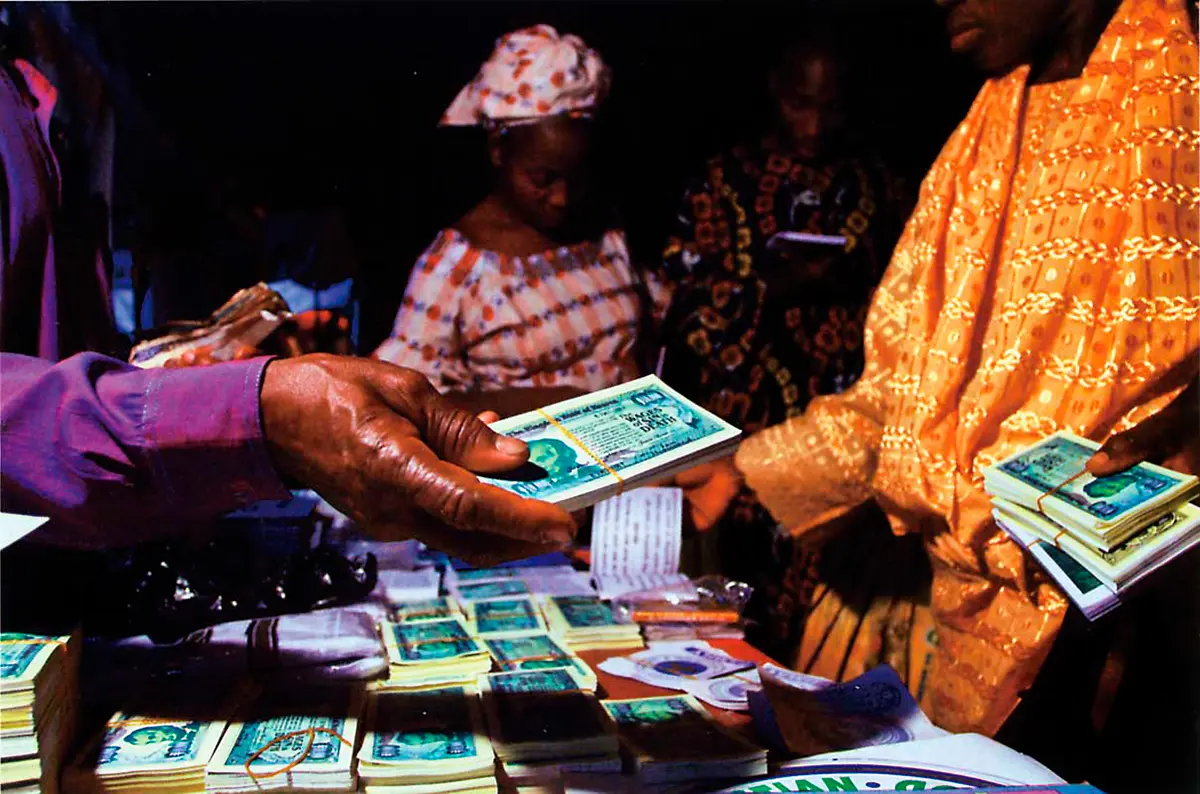
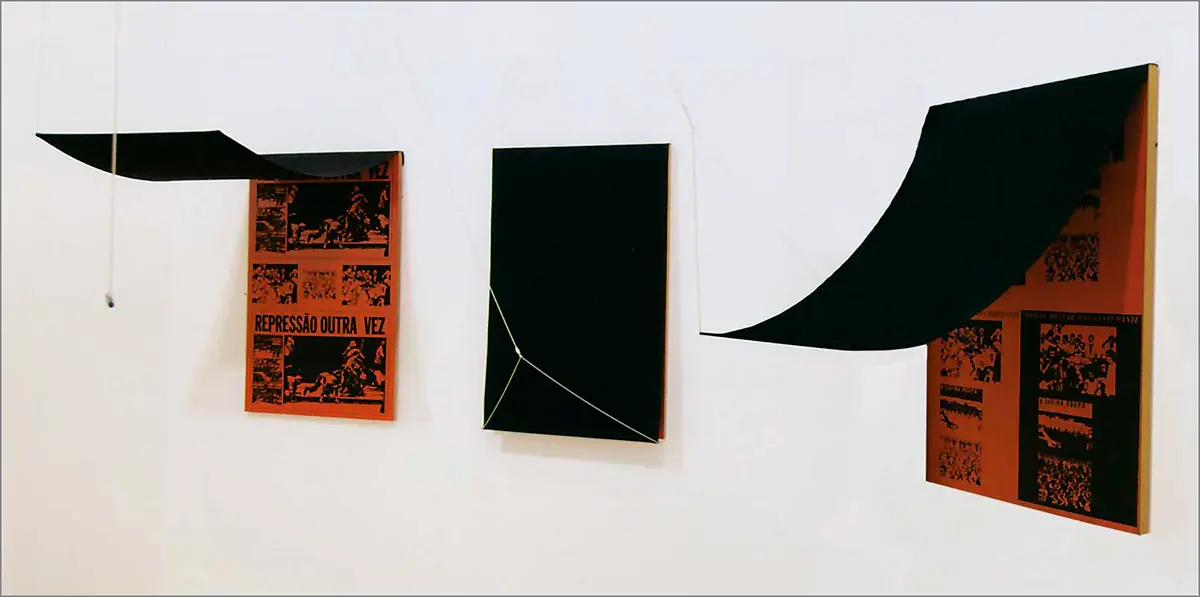
Linked to the same terreiro are the works of de Steve McQueen, Rosângela Rennó, Sophie Ristelhueber, Andrew Esiebo, and Matheus Rocha Pitta. McQueen (London, 1969) sets his film camera on a helicopter flying around the Statue of Liberty, focusing on details that common visitors don’t usually see. “Exposing images of a vastly familiar symbol in such an unexpected way, the artist suggest a stripping-out of the stable meanings present in our universal iconographic repertoire.”11 An impressive collection of objects related to photography, including tools of the trade and printed images, carefully installed, will be auctioned at the end of the Biennial: it is one of the works presented by Rosângela Rennó (Belo Horizonte, 1962), an artist concerned with the life of photographic images and their curious journeys, compiling and classifying them according to different codes of reading; the installation is titled Minus-value (auction). Photographer Sophie Ristelhueber (Paris, 1949), author of WB (2005), captured in the West Bank the barriers erected by the Israeli Defense Forces to block transit in certain roadways and impede the circulation of Palestinian vehicles; mounds of dirt and rocks where grass has sprouted over time. Are these large-format photographs the paraphrase of geography as intractable as the conflict that originates them? Nigerian artist Andrew Esiebo (Lagos, 1978) documents in his series God is Alive (2006) the nighttime preaching that takes place at various points in the Lagos-Ibadan road: psalms, prayers, and trances mingle with lively commerce between preachers and public; the photographer acts as a reporter but also as a critic of alienation Matheus Rocha Pitta (Tiradentes, Brazil, 1980) acts as an archeologist in search of the beauty suggested by abandoned objects, objects in disuse, marginal to society’s mainstream circuits. A pile of tires, an accumulation of rusted cans, paint buckets, discarded tools: such are the subjects of his most recent photographs, included in a series titled Provisional Heritage (2010). A profound sense of nostalgia emanates from them, and they are certainly conceived as artistic photography. Connected to this same group is a vast selection of works by Rio-based Portuguese artist Antonio Manuel (1947), who in the 1960s worked on altering the matrix of a newspaper to reconfigure its meaning. In Repression Again — Here is What is Left, several newspaper pages, manipulated and dyed in red against the black ink of the original printing, must be “discovered” by the viewer, who must activate a mechanism to raise the black fabric that covers them.
The seven contributions so briefly mentioned above reveal the great flexibility of the parameters used for the placement of the art and the expressive field to which the terreiros allude. If we take into account the totality of the works associated with The Skin of the Invisible, the conclusion would be the same. It is fair to wonder whether it is worth establishing such categories of instrumental analysis for an exhibition like the 19th Biennial.
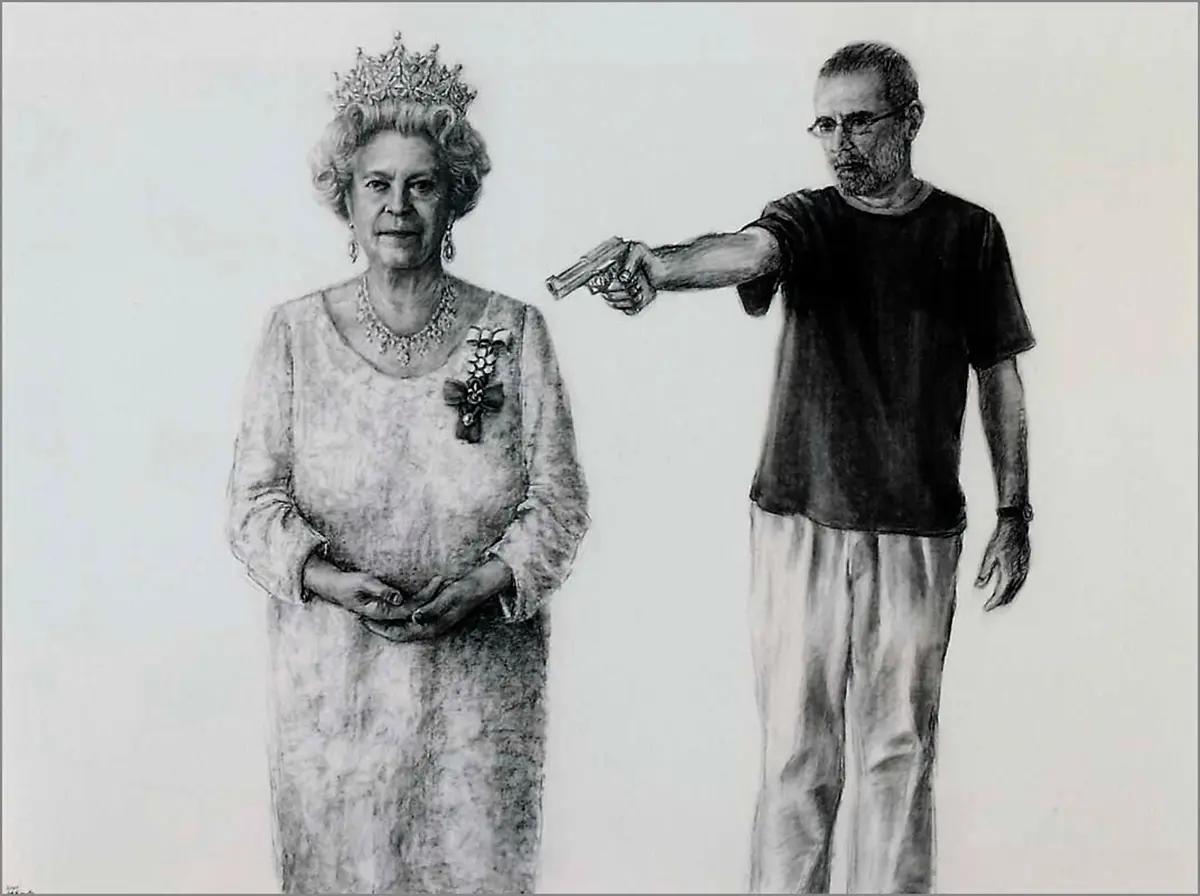
Dito, não dito, Interdito. I mentioned before the difficulties of translation presented by this wordplay originated in João Guimaraes Rosa’s novel Manuelzão e Miguelim. So, I will stick to the translation provided by the Biennial’s press office: Said, Unsaid, Forbidden. One sculpture, videos, photographs, films and photograms, photographic records of “art actions,” performances, and the record of several pixaçoes 12, a few drawings, prints, and a series of paintings are connected to this terreiro of the word. Interestingly, two works included in this group became the subject of a polemic among the public and in the news. One was a series of drawings by Gil Vicente (Recife, 1958). It is comprised of ten large-format charcoals in which the artist presents his self-portrait threatening several dignitaries: the Pope, Queen Elizabeth, former Brazilian President Fernando Henrique Cardoso, and current president Ignácio Lula, Ariel Sharon, and Kofi Anan, among others. If it weren’t for a request by the president of the São Paulo Lawyers’ Guild, who thought the drawings an “invitation to violence” and asked they be barred from the show, Vicente’s correct work would have remained mostly unnoticed, despite their privileged location in the resting area at the end of the ramp, on the third floor. The Biennial ignored the request. The other polemic—and here the work was taken down a few days after the opening—was caused by Roberto Jacoby (Buenos Aires, 1944), who invited a number of Argentinean artists to “collectively create a series of t-shirts, emblems, posters, and souvenirs, as well as roundtables and public debates for a hypothetical political campaign…”13 that ended up being the campaign of the P.T.’s candidate to the Brazilian presidency, Dilma Rouseff. In terms of historical works, we must highlight Imagen de Caracas, an art action carried out by Jacobo Borges (Caracas, 1931) in the 1960s, presented via photographs, and the graphic documents of the Grupo de Artistas de Vanguardia, which organized the show Tucumán Arde in Rosario and Buenos Aires in 1968.14 The Graphic Objects (1964-65) by Swiss-Brazilian artist Mira Schendel (Zurich, 1919 – São Paulo, 1988) are beautiful monotypes on rice paper, exhibited as objects suspended between acrylic sheets, their mage derived from a series of manuscript words. The recent series Night Matter by Rodrigo Andrade (São Paulo, 1962) displays a good command of painterly technique, between realism and surrealism; these are night scenes, darkened and empty streets populated only by forcefully chromatic points of light that introduce a phantasmagoric ambiance to the scene. La torre del ruido, by Berlin-based Yoel Días Vázquez (Havana, 1973, is a cylindrical construction, 3 meters tall, made of TV monitors that display videos of many Cuban rappers as they speak or sing in domestic spaces. The stationary camera frames them as possible interlocutors of discourses that are inevitably critical yet intelligible for the viewer of the tower, that could very well have been titled “of Babel”.
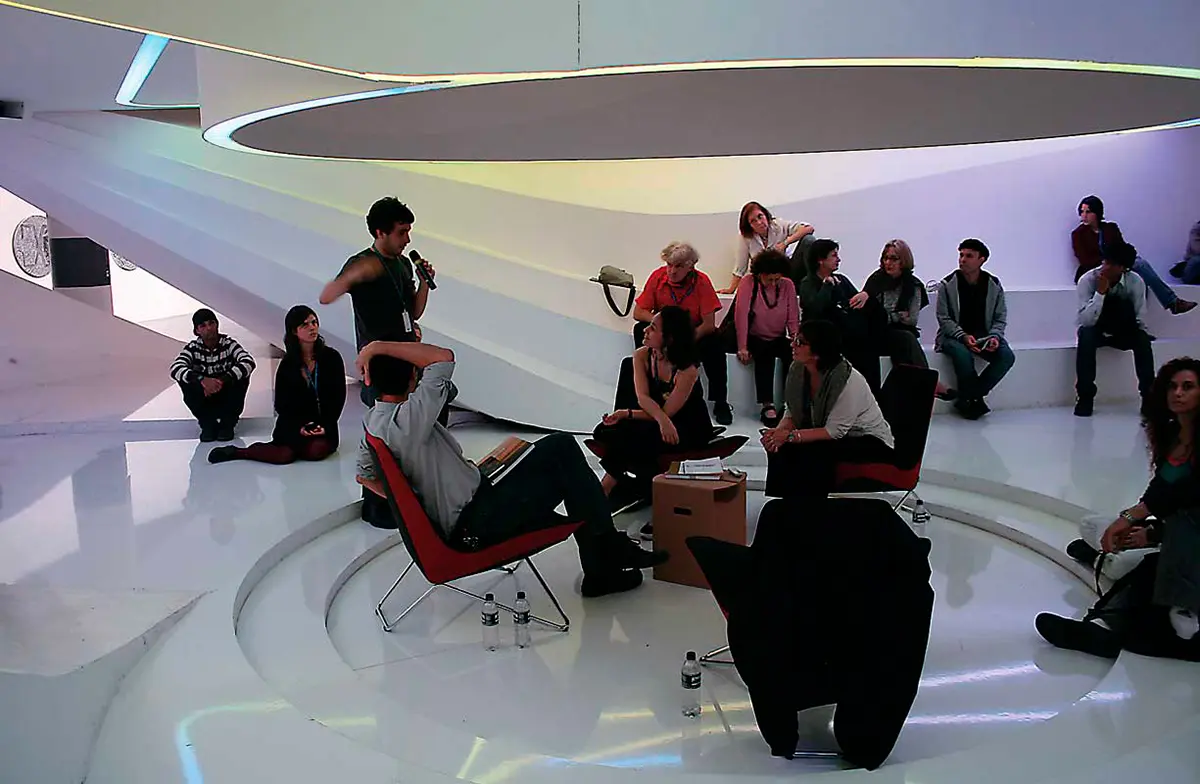
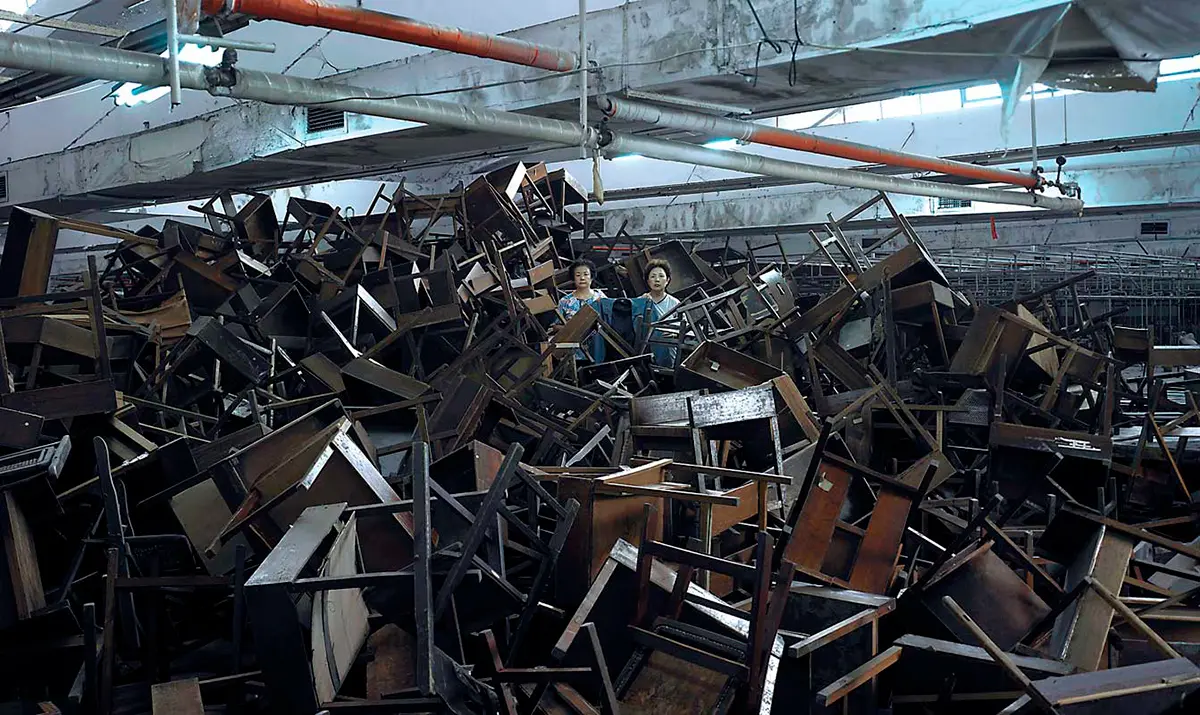
I am the Street, the terreiro and the group of works associated with it in tribute to journalist and chronicler João de Rio,15 suggest the use of public space as a principle for artistic action. Yet at least ten of the works included in this selection do not proceed in that way: for example, the films presented by Pedro Costa (Lisbon, 1959); the documentation of La familia obrera, a performance by Oscar Bony (Posadas, Argentina, 1941); Factory, a film by Chen Chieh-Jen (Taiwan, 1960); the selection of works by the Rex group16, a collective of artists based in São Paulo who between 1964 and 1967 sought alternative spaces to exhibit contemporary art, published five issues of a journal-manifesto and held artistic salons and conferences. On the other hand, other works seem more appropriate for the concept behind this terreiro: Divisor (1968), by Lygia Pape (Nova Friburgo, 1927, Rio, 2004); the action Black of Death (2007-08), by the Japanese group Chim Pom, documented in video and to be repeated in São Paulo; photographs by Otobong Nikanga (Nigeria, 1974); or the video record of actions by Ronald Duarte (Barra Mansa, 1962) in Rio de Janeiro.
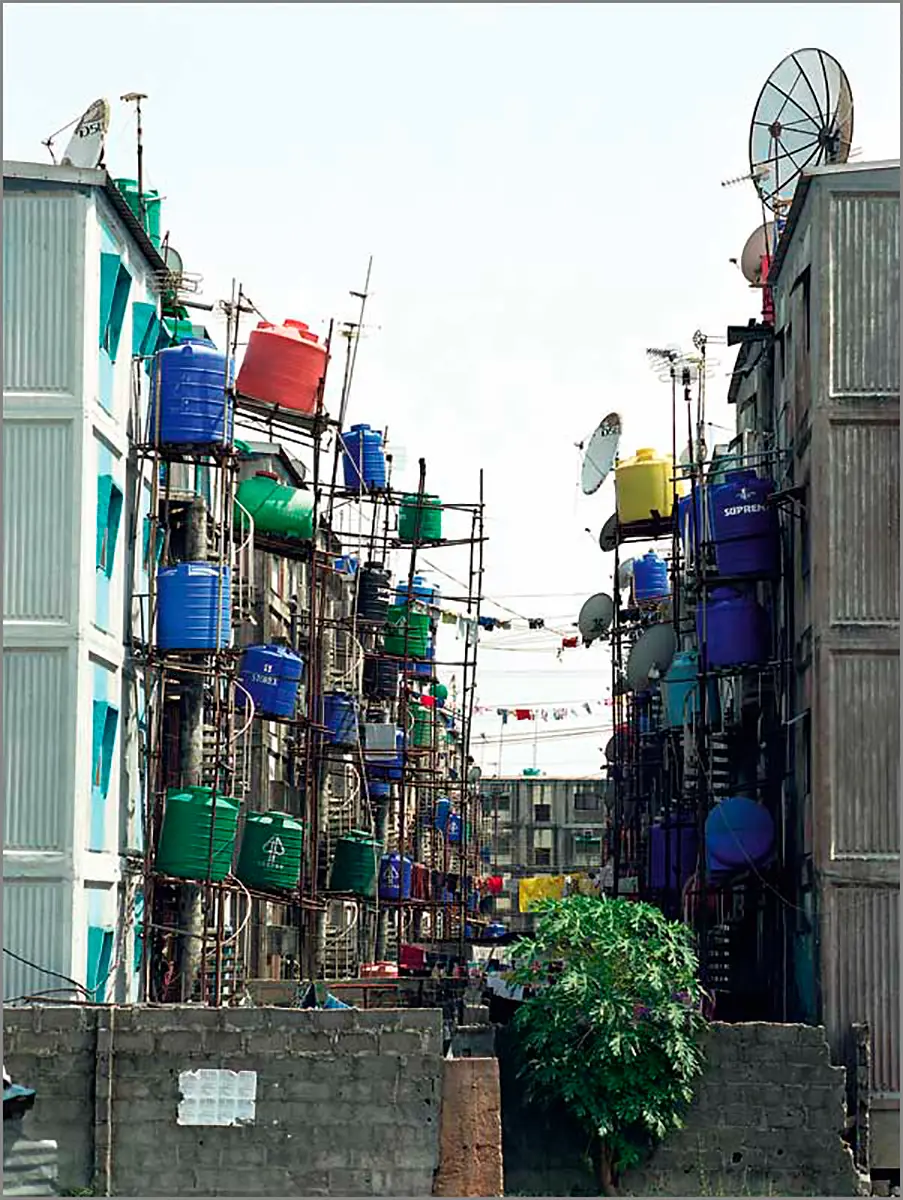
The Japanese group, formed in 2005, brought to the Biennial the video of an action at the limit of the politically correct, provocative and surprising. Several of its members stroll around Tokyo neighborhoods in cars or motorcycle, carrying the mummified corpse of a crow and broadcasting through loudspeakers noises recorded during the bird’s agony. Attracted by the sound, crows from the surrounding areas follow and fly over the performers, in an attempt to rescue the dead bird. The group is supposed to reproduce this intervention in São Paulo. Nigeria’s Otobong Nikanga (Kano, 1974. Lives and works in Paris) record through photography what has happened in a street of Dolphin Estate, Nigeria. In 1990, the government hastily built a series of housing blocks, five-story buildings without sanitation systems or electrical connections. Despite these facts, the buildings were occupied. The neighbors were forced to solve the lack of electricity and water through a jumble of external scaffolds erected to support water tanks, wiring, and TV antennas. The result is a hybrid between formal development and the forceful occupation of empty land, captures by the lens of an artist who in this way denounces the ineptitude and bad faith of the government in his country and the rickety ingenuity with which third world peoples attempt to satisfy their needs. Ronald Duarte (Barra Mansa, 1963) participates with three films of art actions carried out in Rio in the early 2000s: washing of the streets with red-colored water from a tanker truck, a line of fire on a trolley’s rails, ad the generation of a giant cloud from twenty fire extinguishers activated by a similar number of artists standing in a circle under the structure of the old Ministry of Education. This terreiro also memorializes Flavio de Carvalho (Agua Mansa, 1889 – São Paulo, 1973), an engineer graduated in England who returned to his native country and “confronted archaism and entrenched common sense in search of a modern Brazilian way of life, independent of European models”17 with such strange actions as moving against the tide of a Corpus Christi procession as an experiment in mass psychology (the multitude of the faithful, enraged, came close to lynching him).
The terreiro associated with performance art, The Other, the Same, gathers a little over twenty works of art around an extremely diffuse conceptual axis. Present in this circuit are works related to anthropology linguistics, eroticism, drug use, the history of art, and photography as portraiture. Any attempt at establishing a conceptual line would be forced. What do photographs by Miguel Ángel Rojas (Bogotá, 1946), alluding to homosexual encounters in the old Faenza theater in Colombia’s capital, have to do with Wendelien van Oldenborgh’s (Rotterdam, 1962) photographic investigations about a jeans factory in Alphaville, one of São Paulo’s most exclusive areas? Or the reconstruction of Nidos, by Hélio Oiticica (Rio, 1937-1980), a kind of lodging built with perishable materials, with Tarantism (2007), by Joachim Koester (Copenhagen, 1962), a silent film in loop featuring a number of actors dancing frantically?18 Several interventions in this circuit possess an explicitly sexual character: The Ballad of Sexual Dependency, by Nan Goldin (Washington, 1953), which is “organized as an album of the artist’s affective memory”19 of her involvement in nightlife, the punk movement, the consumption of hallucinogenics, and free sex; or the documentary made by Miguel Rio Branco (Gran Canaria, 1946; works in Rio) in the Pelourinho, Salvador de Bahía’s red-light district. The characters depicted by Zanele Muholi (Umlazi, South Africa, 1972), watching us with serenity from her large-format, black-and-white images, are rather calming, and so are several works by Amelia Toledo 9São Paulo, 1926): Glu-Glu (1968), a series of glass domes partially filled with soap water, to shake and produce multicolor bubbles, or Color Fields (1969), an installation comprised of large jute fabrics suspended at some height, “capable of lifting a body from the ground.”20
The next group of works to be visited here are connected to the terreiro titled Remembrance and Oblivion. The interventions in this circuit, by 27 artists, are connected to concepts of time, memory, physical and psychological transformations, our fruitless attempt to perpetuate a present that is already past. In front of the entrance gates to the Biennial, in the lower level of the ground floor, visitors are greeted by twelve monumental sculptures by Ai Weiwei (Beijing, 1957). These are twelve animal heads in bronze, raised over poles; the group reminds commemorates sculptures found at the Imperial Summer Palace and alludes to the twelve signs in the Chinese zodiac. A very long title21 precedes the pile of monitors that Douglas Gordon (Glasgow, 1966) installs to display his works in video or film, all at the same time, as if in a catalogue raisonné of his career. Nancy Spero (Cleveland, 1926) covers the baseboards of her exhibition space with a long frieze titled Cry from the Heart (2005), which paraphrases the cry of Egyptian women in a Ramesid entombment; mixing painting and printmaking, the artists alludes not only to her own grief22 but to the experience of millions of women widowed or orphaned as a consequence of war and catastrophe.
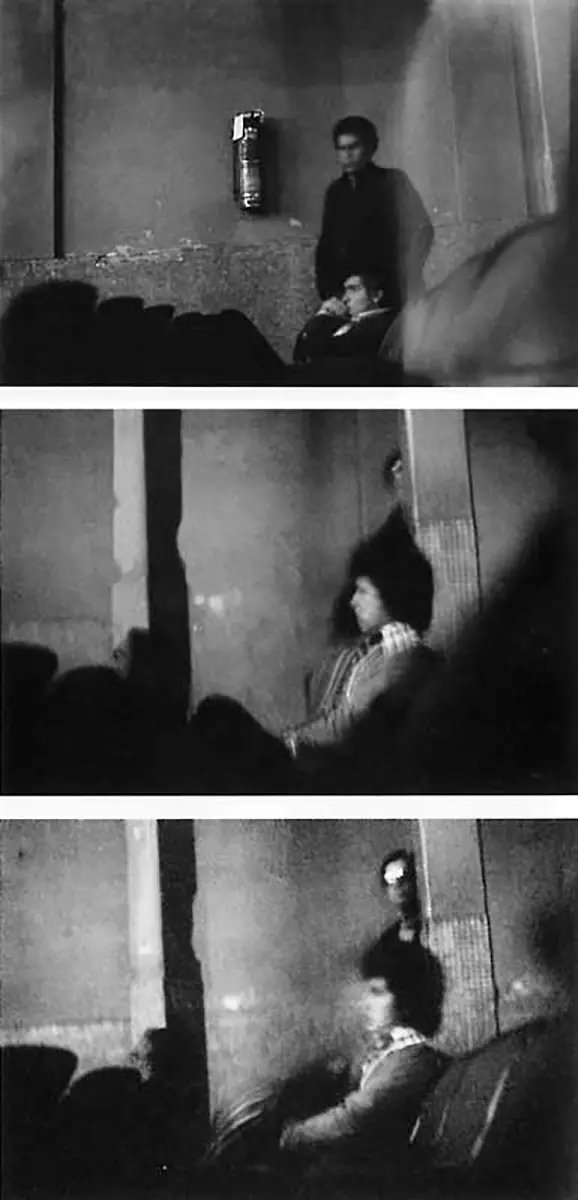
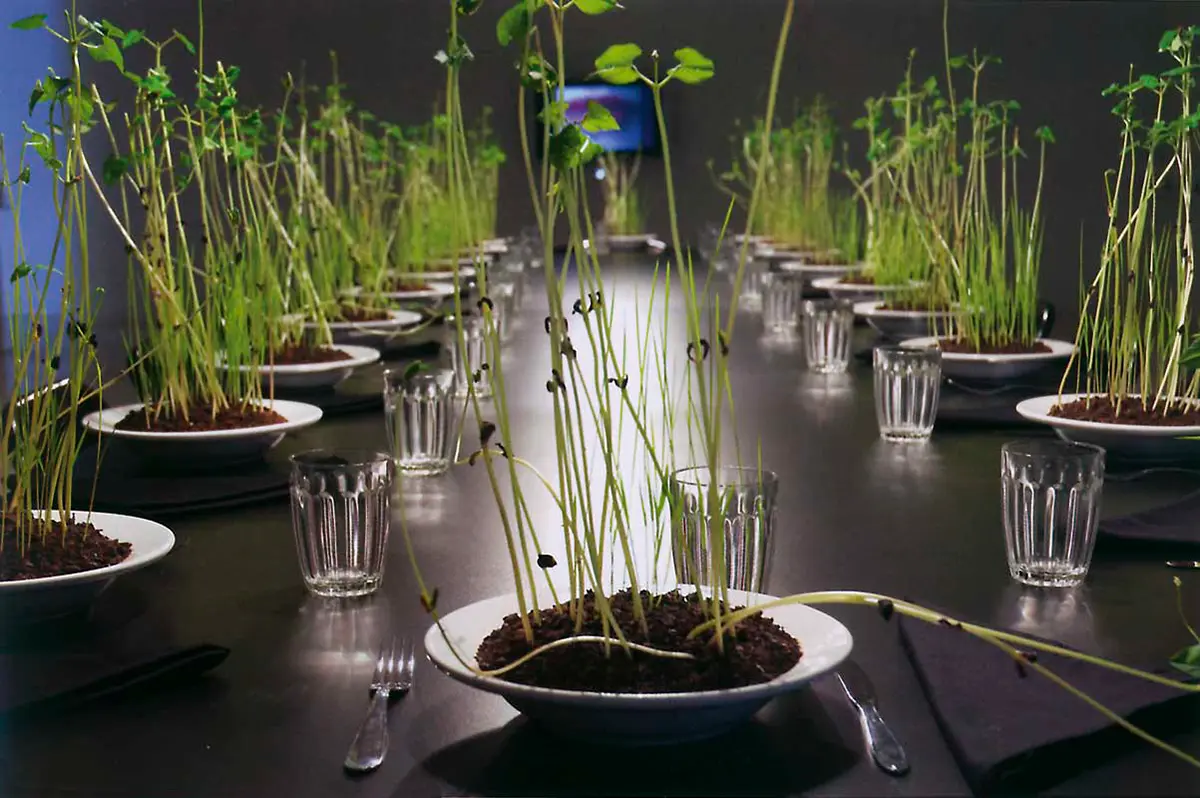
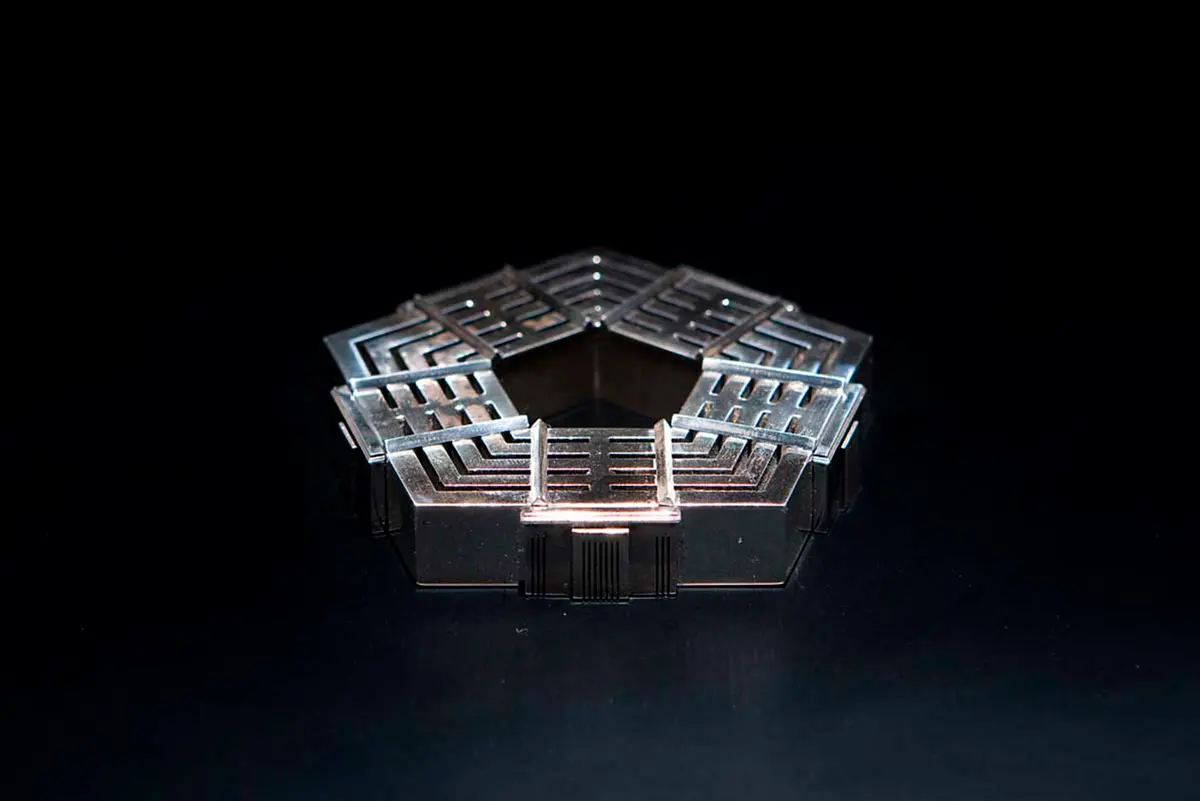
One of the few selections in this Biennial that can be properly called affecting is the space devoted to Daniel Senise (Rio, 1955). The Sun Taught Me the History is Not All is a white, empty space, its walls covered by thick modular square sheets. When the viewer looks up close, he or she perceives small color points: the fibrous matter of the sheets is comprised of layers of art catalogs and books, compressed and consolidated into a mass with water and glue. A minimum of resources that nevertheless requires a very complex degree of elaboration, places us in a space of profound aesthetic reflection. A re-editing of the 1979 installation Rice and Beans by Ana Maria Maiolino (Sclaea, Italy, 1942; lives and works in São Paulo) is also on display: a long table set with china plates in which seeds of such Brazilian staples germinate. To the back, a video shows the detail of a mouth chewing nonstop. Two installations by Latin American artists, Enrique Ježik (Argentina, 1961; works in Mexico) and Carlos Garaicoa (Havana, 1967), are connected by their subject matter. Both refer to power structures. The former reconstitutes cartography of Serb airports bombed in 1999, using small plaster models and videos with images recorded by NATO. The always refined and suggestive Garaicoa melts in silver small models of buildings that are symbolic of state power: the pentagon, the Guantanamo Naval Base, a KGB building, a couple of Cuban prison compounds. His eight-sculpture installation, which reminds us of a jewelers display case, is titled, precisely, Las Joyas de la Corona (2009). It is unclear why the unexpected video presented by Francis Alÿs (Antwerp, 1959; lives in Mexico) should be connected to the Remembrance and Oblivion circuit. It is a video montage of the artist’s attempts to “enter” or confront a tornado. The recording, surely made with a sheltered camera, includes the terrifying sound of the atmospheric phenomenon, so that the Biennial public is enveloped by the rumble and turbulence of the tornado. I guess that being in a tornado is never forgotten. Such a cataclysmic experience is undoubtedly unique, but, how does it relate to “art” or “politics”?
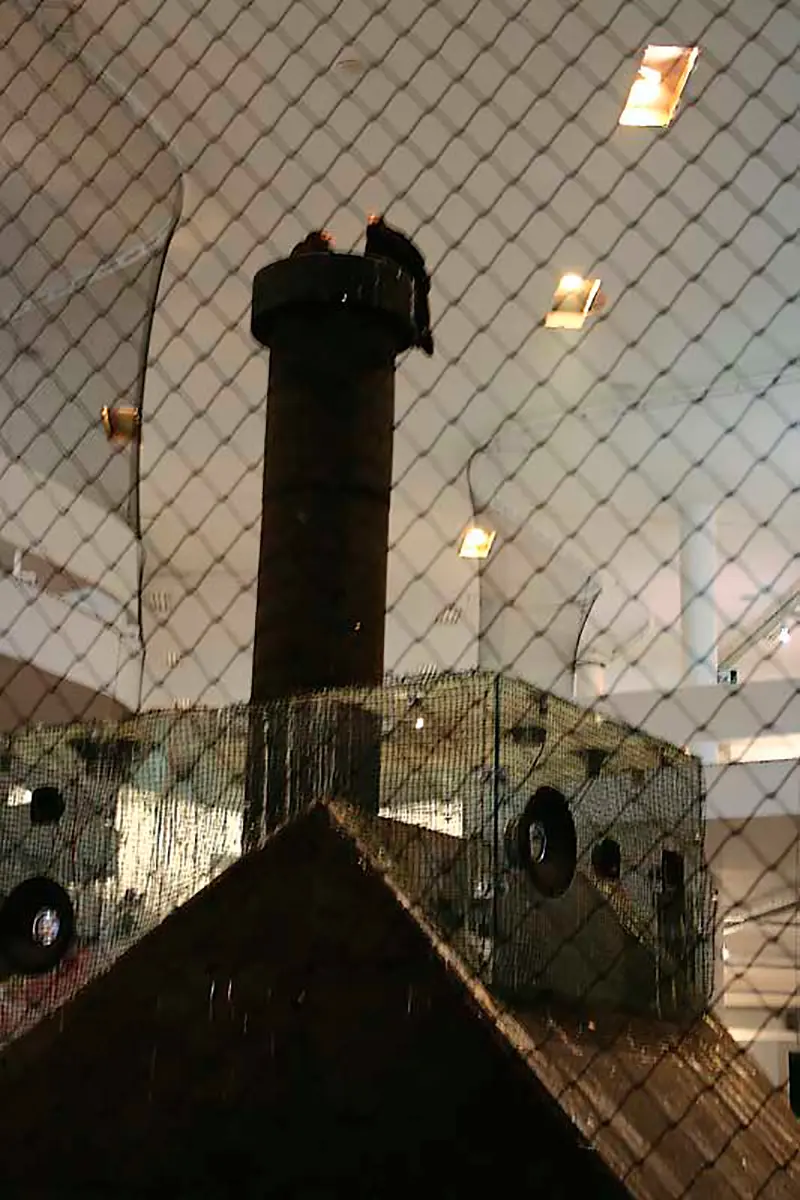
Let’s now turn our attention to some works associated with the sixth terreiro, titled Far Away, Right Here. Ana Gallardo (Rosario, 1958) intervenes with a good-humored note by installing her Un lugar para vivir cuando seamos viejos, el baile (2010), a performance including three live dancers—Conchita, Lucio, María Ascención—doing a danzón in a small stage resembling the place where they gather weekly to dance, a Mexico City market. The artist and her dancers also offer dance lessons to the public. In back, there is an improvised dance hall, and a video camera records the real action. La Menesunda, by Marta Minujín (Buenos Aires, 1943), is commemorated through a historical archive of photographs and films, and so are some actions by Chiles CADA collective. The History of the Future, a subject first approached by Milton Machado (Rio, 1947) in 1978, is expressed in drawings, texts, and three-dimensional objects: a lapis lazuli sphere and a large cubic sculpture in iron rods that fills the entirety of the ramp’s opening at the third level. Machado, an artist, and architect, reflects on an imaginary urban system shared by an Imperfect World, a Perfect World, and a More Than Perfect World, all with their own conceptual inhabitants. On the first floor, filling the opening that extends in front of the ramp, we found a work of Nuno Ramos (São Paulo, 1960): White Flag, the most disconcerting work on display. Three solid, enigmatic, somber constructions, resembling three black rock peaks, supporting speakers encased in glass cages. The entire space is outlined by a protecting white mesh, which contains three urubús 23 loose in the installation, like a birdcage in a zoo; each group of speakers broadcasts, at the same time, fragment of popular Brazilian songs. The catalog makes explicit the tense and contradictory character of Ramos’ work, which “seems to embody the ambiguities of art and culture, and the countries social contrasts.”24 Eduardo Coimbra (Rio, 1955) generated an internal sky by covering the high section of six of the building’s structural pillars with neon tubes painted with blue clouds. Unfortunately, due to the density of the “archipelago” in this sector, they were not easily seen.
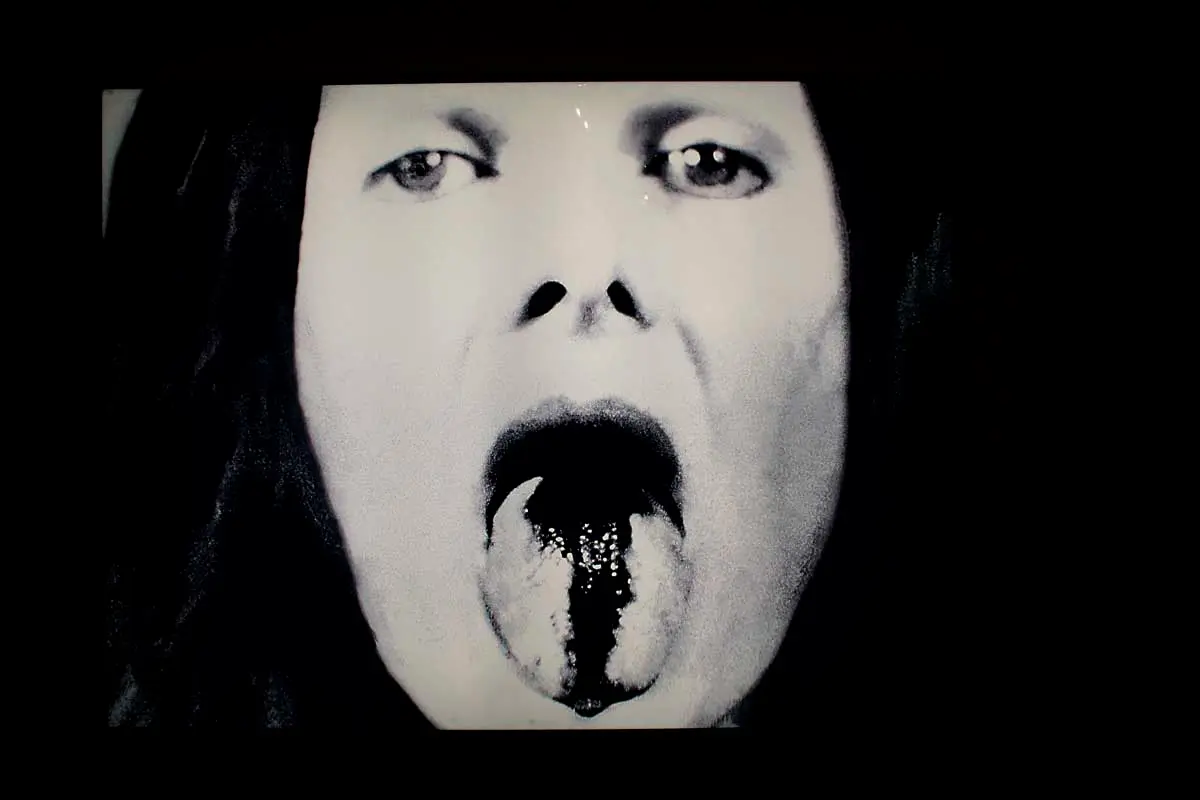
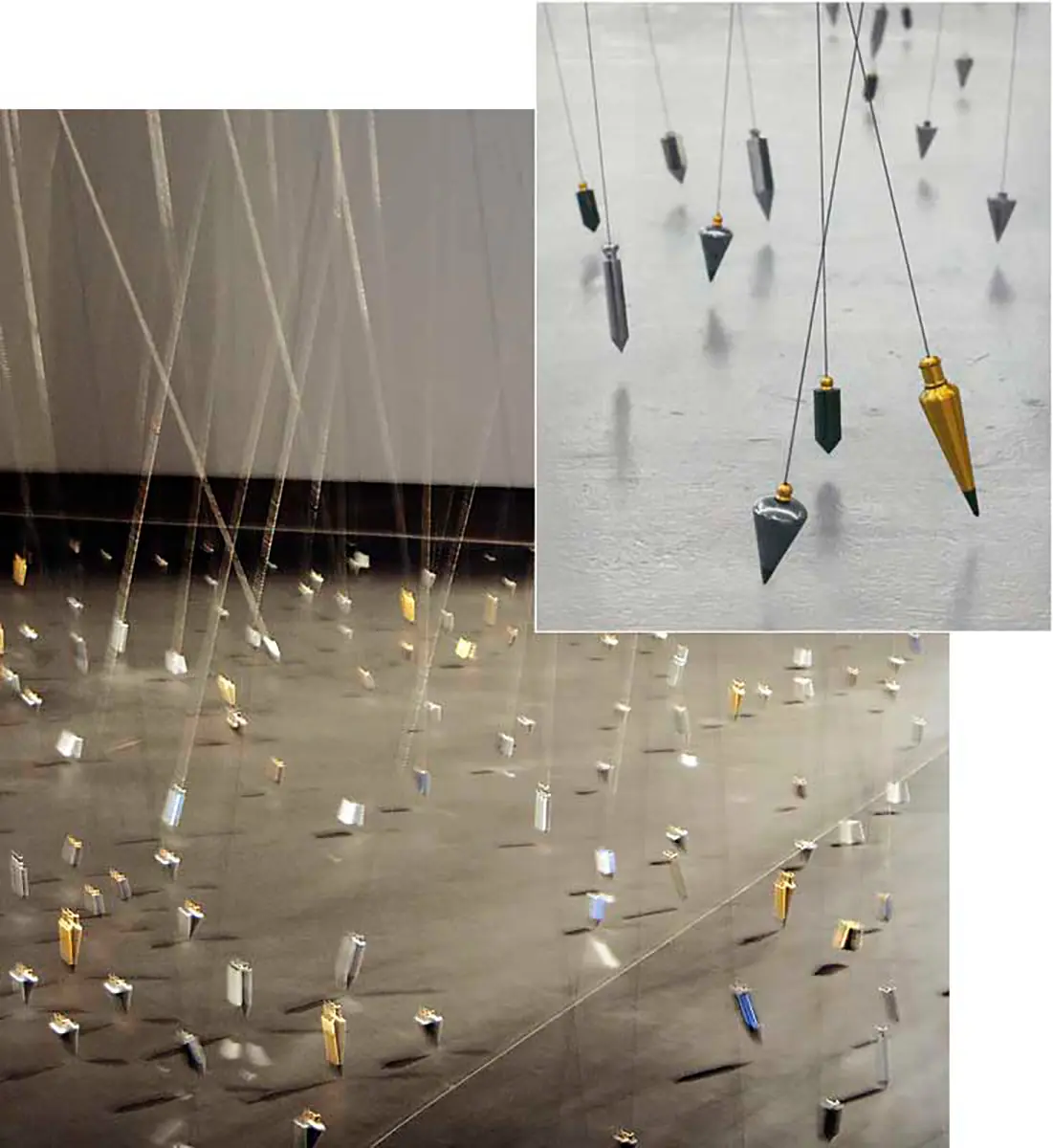
We must also refer to the participation of five artists not included in the thematic circuits of the terreiros: Paulo Bruscky, Alberto Greco, Jean-Luc Godard, Wilfredo Prieto, and Tatiana Trouvé. The first three are historical figures represented by works dated between 1963 and 1993. For his Vivo Dito, Greco (Buenos Aires, 1931 – Barcelona, 1965) has his photograph taken in plazas, streets, and patios in small towns in Spain, where he pointed out “works of art.” Bruscky (Recife, 1949) also performed art actions recorded in video or photographs, questioning the public about metaphysical matters. What is Art? What Is It For? asked a sandwich board he paraded around the streets of his native city’s downtown area. By Godard (Paris, 1930; lives in Switzerland), we saw a video created on the basis of a single photograph taken during the battle of Sarajevo, the editing “reconstructs a succession of frames and scenes accompanied by a speech by the video maker, in off, that suggests the impossibility of distinguishing between artistic production and political struggle.”25 Wilfredo Prieto (Sancti Spiritus, Cuba, 1978) had the gray, white, and black flags he had already shown at the Havana Biennial in 2003.26 Finally, Tatiana Trouvé (1968), an Italian artist living in Paris, installed her 350 Points Toward infinity (2009), previously presented in Zurich’s three hundred and fifty metal cables ending in lead weights, hanging from the exhibition hall’s ceiling, never reaching the ground. But instead of working vertically, as traditional lead weights do, they shift a few degrees in the diagonal, attracted by magnets disguised on the floor. Time and space seem to congeal in an impossible distance, yet one that is materialized in her work.
The allegory of this installation by the Italian artists is appropriate for a general characterization of this 29th Biennial. Well put together, well documented, it is but a stepping stone in the reassertion of this emblematic event. We might disagree with the a-historical character of the show—the indistinct concatenation of historical and contemporary works—or the long hours required to see videos and films, or the seeming disorganization of the presentation of artists in the catalog. But we must applaud the return of the São Paulo Biennial as an exhibition pole and a forum for important debates. ¡Tomara que dê certo!
NOTES
1. Agnaldo Farías (Itabujá, Minas Gerais, 1955). University professor. Former curator of the Museu de Arte Moderna in Rio (1998-2000), the Johannesburg Biennial (1995) and the São Paulo Biennial (1996). Moacir dos Anjos (Recife, 1963). Educated in Economics. Curator of the Recife Museu de Arte Moderna (2001-2006) and the Mercosur Biennial (2007), as well as the show Panoramic of Brazilian Art at the São Paulo MAM.
2. Chus Martínez (Spain), Fernando Alvim (Angola), Rina Carvajal (Venezuela, USA), Sarat Maharaj (South Africa), and Yuko Hasegawa (Japan).
3. Catalog of the 29th Biennial.
4. Jorge de Lima (1895-1953) Brazilian poet and writer.
5. Press releases of the 29th Biennial.
6. Catalog of the 29th Biennial, p. 26-27.
7. Altogether, the suggested circuits are longer than 10 km and require some 30 hours to complete.
8. The Portuguese word interdito means both forbidden and said between the lines.
9. Catalog of the 29th Biennial, p. 28.
10. This observation is valid for the exhibition as a whole/
11. Catalog of the 29th Biennial. p. 52.
12. This term designates the action of urban grafitti artists on façades, walls, bridges, and tunnels of Brazilian cities. No real grafitti works were included in the exhibition, only photographic or film records.
13. Catalog of the 29th Biennial.
14. The same archive was shown at the Kassel Quatrennial
15. One of the pseudonyms used by João Paulo Emilio Critovão dos Santos Coelho Barreto (1881-1921), a Rio journalist and writer.
16. Geraldo de Barros, Nelson Leiner, Carlos Fajardo, Wesley Duke Lee, Frederico Nasser, and José Resende.
17. Catalog of the 29th Biennial.
18. Koester uses an old Italian myth accoding to which the bite of a tarantula can only be cured by the spastic dance that gave origin to the tarantella.
19. Catalog of the 29th Biennial, p. 248. It is a long-lasting photographic presentation.
20. Both eorks presented in a 2010 version.
21. “Pretty Much Every Film and Video Work From About 1992 Until Now To be Seen on Monitors, Some with Headphones, Others Run Silently, and all Simultaneously”.
22. It was her first work after the death of her husband.
23. Scavenger birds are also known as chulos, jotes, zamuros negors or zopilotes. The birds were taken away a few days after the Biennial’s opening.
24. Catalog of the 29th Biennial, p. 380.
25. Catalog of the 29th Biennial, p. 36.
26. hey were not installed for the press conference on October 21st. The same happened with the participations of other important artists, such as Cildo Meireles.
MARÍA ELVIRA IRIARTE
Ph.D. in art history professor at the Universidad Finis Terrae in Santiago, Chile, member AICA.